Death Cap (Amanita phalloides): How to Recognize It
Death cap mushroom ID: greenish cap, white gills, a skirt-like ring and a buried cup. Look-alikes, myths that kill and what to do if someone eats one.
 By Flori editorial team · Updated
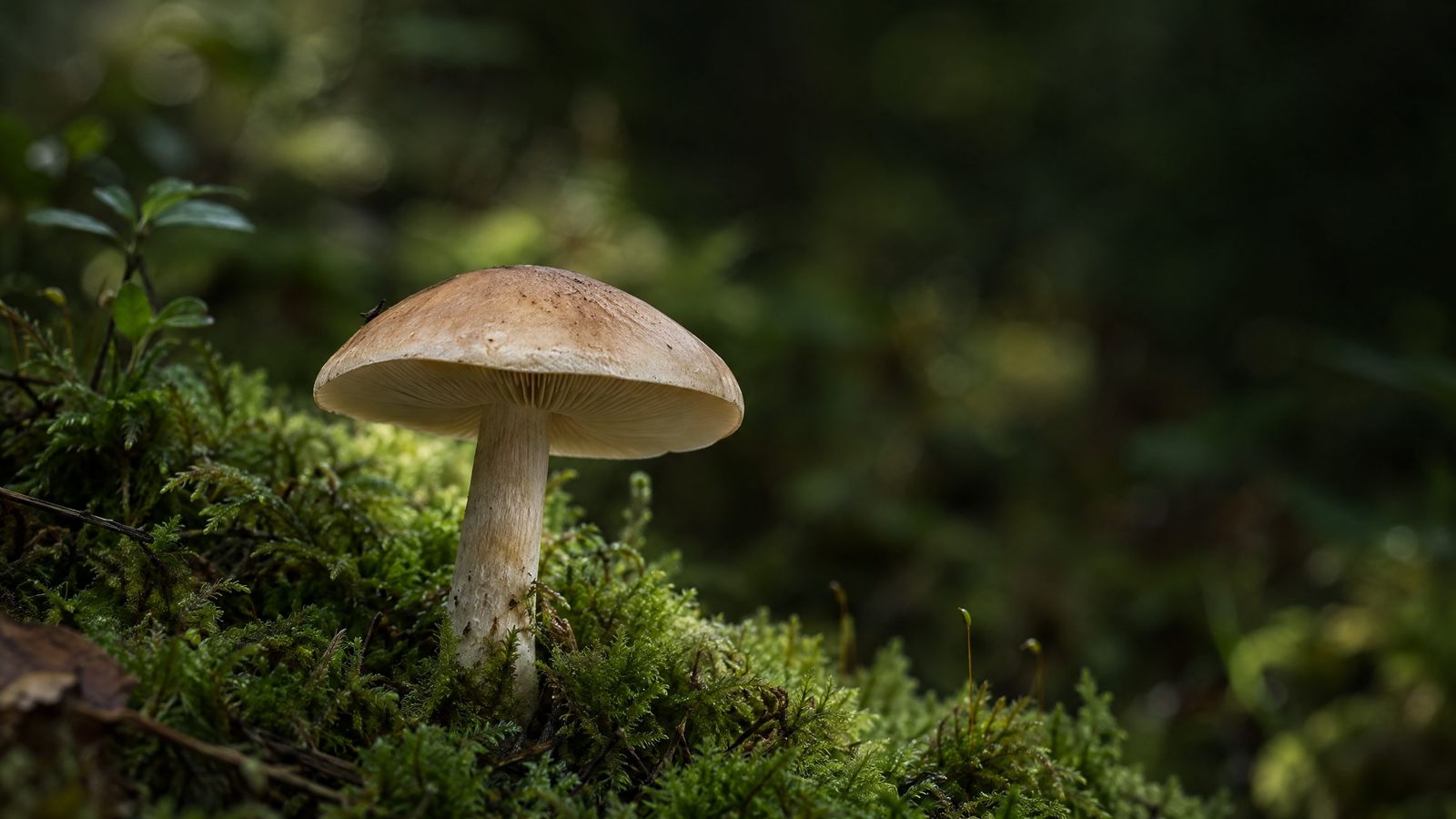
The death cap (Amanita phalloides) usually has a smooth yellowish-green to olive-brown cap, white gills, a white stem with a skirt-like ring and a sac-like cup at the base, often buried in soil. It grows near oaks, mainly in autumn. Cooking does not destroy its toxins, so never eat a wild mushroom an expert has not checked in hand.
Key takeaways
- Check the whole mushroom: the cup at the stem base is often buried and is the clue most people miss.
- Death caps grow with trees, especially oaks, in parks and gardens as well as forests, mainly in autumn.
- Cooking, drying, smell, taste, peeling, silver and photos cannot make a wild mushroom safe.
- Symptoms start 6 to 24 hours after eating and the person may seem to recover before liver damage shows.
- After eating an unknown mushroom, call the poison line at once and keep a sample.
Why is the death cap so dangerous?
The death cap (Amanita phalloides) is the one mushroom every walker, gardener and parent should be able to picture, because it looks ordinary and its poison works silently. UC Master Gardeners in Alameda County describe it as a robust, handsome mushroom that grows near oak trees and carries lethal toxins, and the Australian National Botanic Gardens warns that the poison in a single cap can be enough to kill a healthy adult. This guide gives you what most pages skip: a side-by-side look-alike table, the edibility myths that fail with this species, its Turkish names and exactly what to do in the first hour after someone eats an unknown mushroom. One rule frames everything below: these features help you avoid a death cap. They can never prove that any other mushroom is safe to eat.
How to recognize a death cap: five features
Mycologists look at the whole mushroom, from the top of the cap to the base hidden in the soil. The Australian National Botanic Gardens lists these features:
- Cap: smooth, yellowish-green to olive-brown, usually 10–15 cm (4–6 in) across but often smaller; sticky when wet and shiny when dry. Young caps can carry a few white patches. Colour is the weakest clue: the related destroying angels, which carry the same toxins, are white.
- Gills: white, and they come close to the stem without quite reaching it. The spore print is white as well.
- Stem: white, 5–15 cm (2–6 in) long, swelling into a bulb at the base.
- Ring: a loose, white, skirt-like membrane on the upper stem. Rough handling can rub it off.
- Cup (volva): a sac-like cup around the base of the stem. It is often partly buried or hidden in grass and leaf litter, and is sometimes poorly developed.
That last point is the reason so many poisonings happen. A mushroom snapped off at ground level leaves its most important clue in the soil, and a ring can be gone by the time it reaches the kitchen. Missing a feature never clears a mushroom.
Where and when does the death cap grow?
The death cap lives in partnership with tree roots, most famously oak. The Alameda County Master Gardeners note that it grows near oak trees, and the Australian National Botanic Gardens reports it appearing near oaks in many Canberra suburbs in most autumns. It is native to Europe and is an introduced species in places such as Australia, which is why it turns up in parks, avenues, school grounds and gardens with planted trees, not only in old forests.
It fruits after rain, mainly in autumn: roughly September to November in the Northern Hemisphere, including Europe, Türkiye and North America, and March to May in the Southern Hemisphere. If you have oaks nearby and children or dogs who pick things up, autumn is the season to check the lawn.
Death cap look-alikes: a side-by-side comparison
Most fatal mistakes are not careless ones. Poison Control in the US stresses that unless you are very experienced in mushroom identification, you cannot tell edible from poisonous mushrooms, and look-alikes fool people who feel sure. These are the confusions to know:
| Mushroom | What it shares with the death cap | Differences experts check | Why it is still a trap |
|---|---|---|---|
| Destroying angels (Amanita virosa in Europe; A. bisporigera group and A. ocreata in North America) | Ring, cup, white gills | White cap | Same amatoxins and just as deadly, so this is not a safer alternative |
| Field and meadow mushrooms (Agaricus species) | Similar cap and a ring on the stem | No cup at the base; gills turn from pink to brown | A death cap picked without its buried cup looks very similar from above |
| Volvariella speciosa (a paddy straw relative) | A cup at the base, gills free of the stem | No ring, pinkish-brown gills, greyer cone-shaped cap | Young buttons have not yet shown gill colour |
| Puffballs | A young death cap still in its egg can look like an immature puffball | Cut open, a puffball is solid white inside; a young Amanita shows the outline of a cap, gills and stem | Cutting is a check for experts, not a test that makes anything safe |
| Egg-stage Amanitas picked in Türkiye as yumurta mantarı (Amanita caesarea) | The closed egg stage | Cap colour, ring and gills are hidden until the egg opens | Unopened Amanita eggs of different species look alike; leave them to experts |
We do not rate any wild species as edible in this guide. If you want to learn mushrooms, learn the deadly ones first, and join a local mycological society where specimens are checked in hand.
Death cap myths that kill
- Cooking makes it safe. False. The Australian National Botanic Gardens says the toxins cannot be removed by soaking, cooking or drying, and Poison Control is equally clear that cooking does not make a poisonous mushroom safe.
- Bad mushrooms smell or taste bad. Smell and taste tell you nothing about amatoxins, and tasting an unknown mushroom is itself a risk.
- If the cap peels, a silver spoon stays bright, or insects and animals eat it, it is fine. All myths. None of these tests detects amatoxins.
- A photo or an app can confirm it. A photo misses the buried cup, the spore print and the feel of the ring. Flori can identify wild mushrooms from a photo, which helps you learn names and tell an expert what you found, but no app, Flori included, can tell you a wild mushroom is safe to eat. Our Flori app guides explain where photo identification helps and where it stops.
- I feel fine, so it was harmless. With the death cap, feeling fine for hours is exactly what to expect. See the timeline below.
Death cap poisoning: why feeling better is a warning sign
The North American Mycological Association describes amatoxin poisoning in stages. For the first 6 to 24 hours there is often no discomfort at all, while the toxins are already damaging the liver and kidneys. Then comes a phase of violent vomiting, diarrhoea and severe cramps lasting about a day. After that the person may seem to recover, and NAMA notes that patients can even be sent home. Liver and kidney failure can follow. Poison Control describes a case in which symptoms began about 12 hours after a lunch of wild mushrooms and the patient died two weeks later.
There is no home remedy and no antidote you can give. NAMA's advice is blunt: do not wait for symptoms. Treatment decisions belong to a hospital and a poison centre.
What to do if someone eats an unknown mushroom
- Call the poison line now, before any symptoms. Türkiye: UZEM 114 (Ulusal Zehir Danışma Merkezi). United States: Poison Control 1-800-222-1222. United Kingdom: NHS 111. Elsewhere, call your local emergency number. Amanita poisoning can feel better before liver damage shows, so do not wait to see what happens.
- Keep a sample. Save leftovers, uncooked pieces or more of the same mushroom from where it was picked. NAMA recommends a paper bag or waxed paper, not plastic, kept in the fridge until an expert can examine it.
- Write down the facts: who ate it, how much, when, and whether it was raw or cooked.
- Pets too. If a dog or cat may have eaten a wild mushroom, call your vet immediately; in the US the ASPCA Animal Poison Control Center can also help.
For more on safe foraging habits and the species that cause the most harm, browse our mushroom safety guides.
Frequently asked questions
Can you survive eating a death cap mushroom?
Some people do with fast hospital care, but it can be fatal. Call a poison line immediately (Türkiye UZEM 114, US 1-800-222-1222, UK 111) and do not wait for symptoms.
Does cooking destroy death cap toxin?
No. The toxins survive soaking, cooking and drying, and cooking does not make any poisonous mushroom safe.
How long after eating a death cap do symptoms start?
Usually 6 to 24 hours later. A phase of vomiting and diarrhoea can be followed by apparent recovery before liver and kidney failure.
Can a mushroom app tell me if a death cap look-alike is edible?
No. An app can suggest a name from a photo, but it cannot see the buried cup or the spore print and cannot confirm that a wild mushroom is safe to eat. Ask a local expert who can examine it in hand.
Sources
- North American Mycological Association: Mushroom Poisoning Syndromes
- North American Mycological Association: Toxicology
- Poison Control (poison.org): Mushroom poisoning: Don't invite "the death angel" to dinner
- Australian National Botanic Gardens: Deathcap mushroom (Amanita phalloides)
- UC Master Gardener Program of Alameda County: Why are mushrooms popping up in my yard?
Written and fact-checked by the Flori team. Every guide cites horticultural sources such as the RHS, university extension services and the ASPCA, and is updated when the advice changes.
General plant care information. Plants vary; when a plant is valuable or a problem spreads quickly, consult a local nursery or plant specialist.