Seasonal Plant Care Calendar: Season-by-Season Guide
A seasonal plant care calendar for houseplants: what to change in spring, summer, autumn and winter for watering, feeding, light and repotting.
 By Flori editorial team · Updated
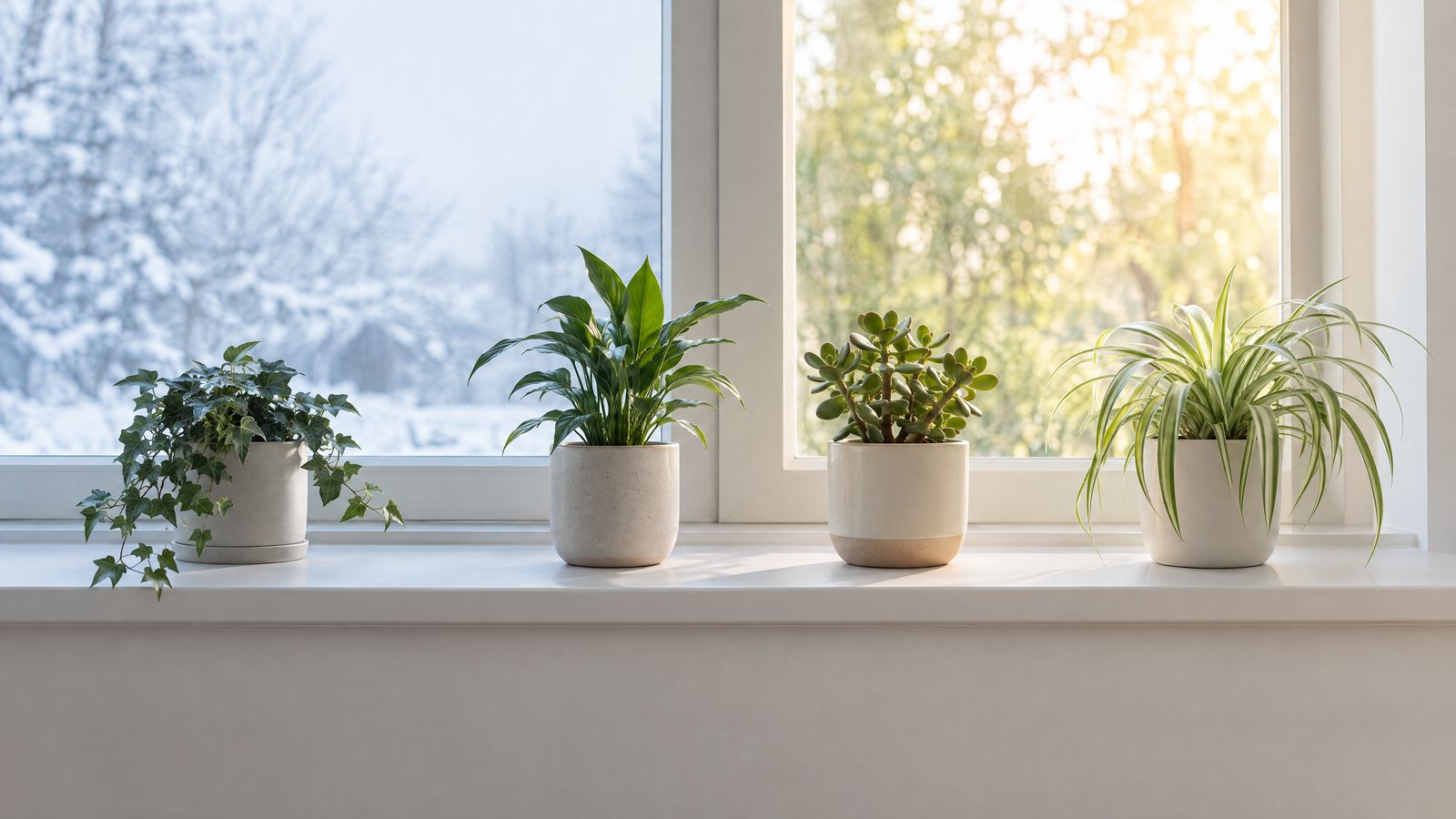
Houseplants need more water and regular feeding in spring and summer while they grow, then less of both in autumn and winter when light fades. Repot in spring, protect plants from harsh summer sun, bring outdoor plants in before nights reach 10 °C (50 °F), and in winter let soil nearly dry between waterings.
Key takeaways
- Organise care by season, and remember the southern hemisphere's seasons are reversed.
- Spring is the time to repot, prune and restart feeding.
- In summer check soil more often and keep shade lovers out of harsh sun.
- Bring plants in before nights fall to about 10 °C (50 °F), and isolate them for a few weeks.
- In winter water far less, feed little or nothing and move plants closer to the light.
Why does houseplant care change with the seasons?
A seasonal plant care calendar works because indoor plants still follow the sun. Day length, light strength and indoor heating change through the year, and with them how fast a plant grows, how much water it uses and whether fertilizer helps or hurts. The RHS puts it simply: with lower light and lower temperatures in winter, plants grow less, so they need less water. The same plant can need a drink every few days in summer and stay damp for two weeks in winter.
This calendar is organised by season, not by month, so it works wherever you live. If you are in the southern hemisphere, your seasons are reversed: spring starts around September in Sydney, Cape Town or Buenos Aires, while it starts around March in London, Texas or Istanbul. Follow the season you are actually in, and treat the light outside your window as the real signal.
Seasonal plant care at a glance
| Season | Watering | Feeding | Main jobs |
|---|---|---|---|
| Spring | Increase gradually as growth restarts | Resume at the label rate | Repot, prune leggy stems, check for pests |
| Summer | Check more often; water thoroughly when the top dries | Regular feeding while plants grow | Shade from harsh sun, rotate pots, optional time outdoors |
| Autumn | Start stretching intervals | Taper off | Bring plants in, inspect and isolate, move closer to light |
| Winter | Much less; let soil nearly dry | Little or none | Avoid radiators and cold glass, raise humidity, clean leaves |
Spring: when should you repot and start feeding again?
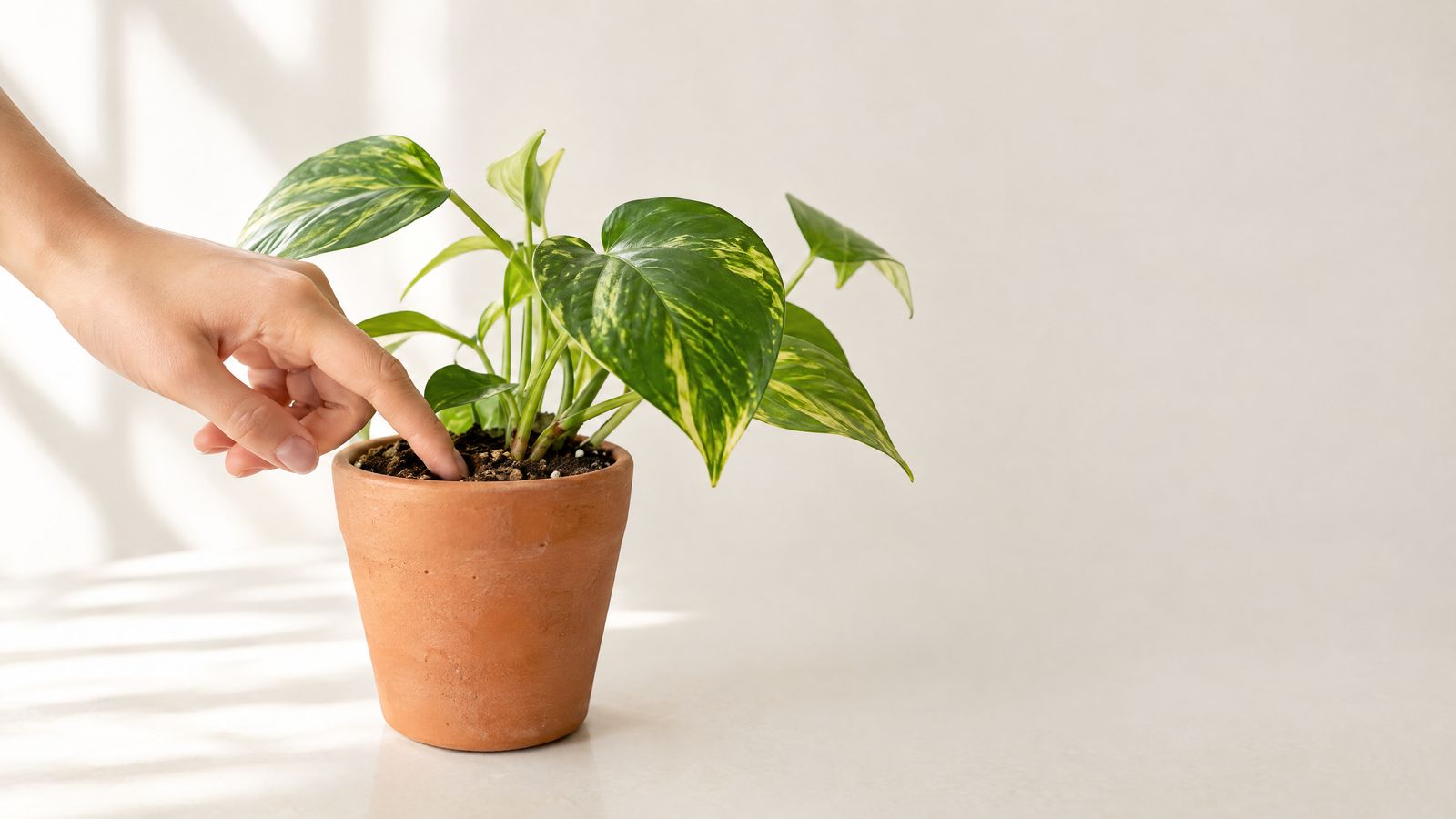
Spring is the restart. As days lengthen you will see new leaves unfurl and the soil drying a little faster. That is the cue to step watering back up, but gradually: check the soil before every watering instead of jumping straight to a summer routine. Our guide on how to water houseplants explains the finger and pot-weight checks in detail.
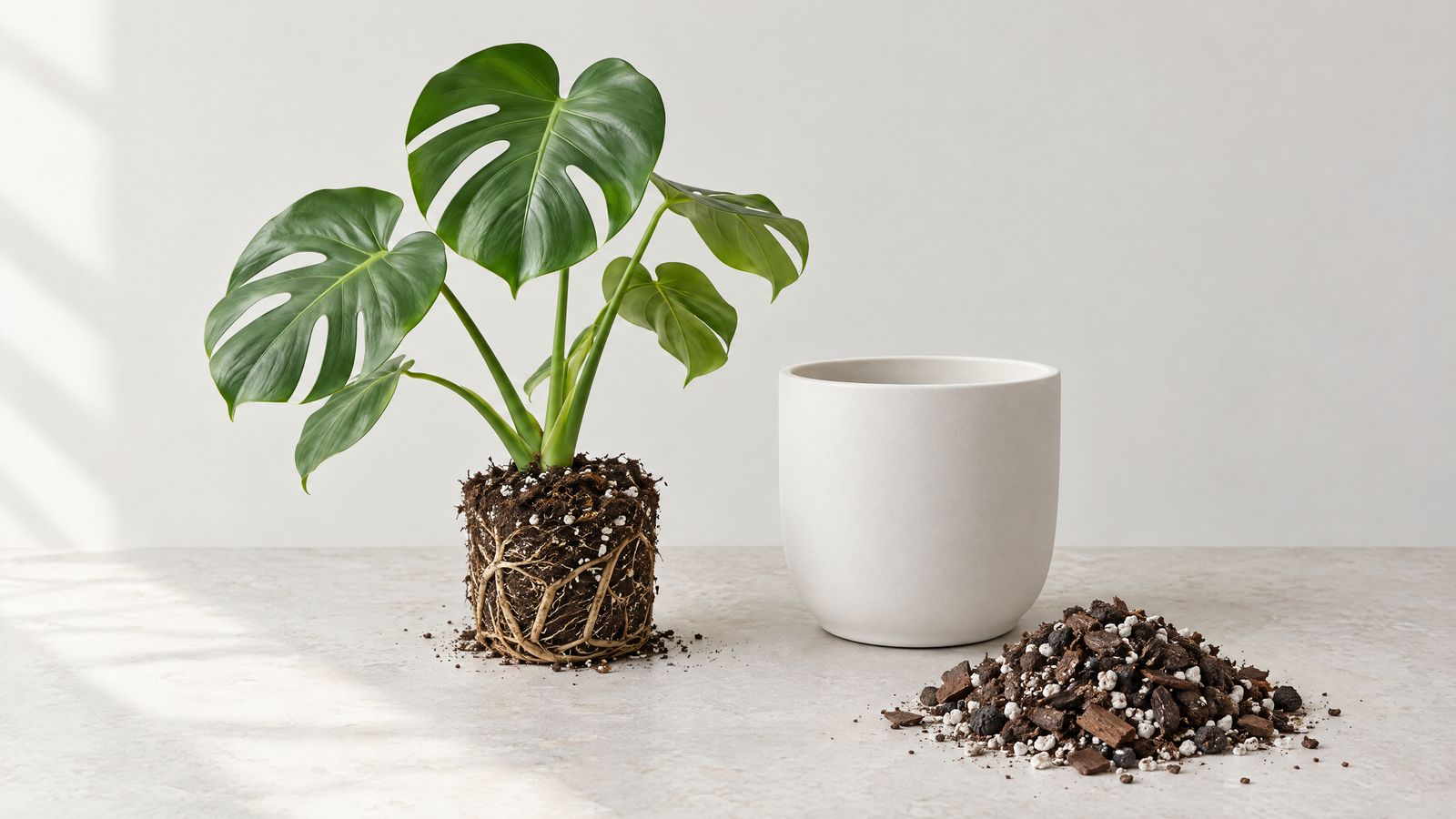
Spring is also the best time to repot. The RHS says plants are best potted on in spring, roughly every two to three years, into a pot 5–10 cm (2–4 in) wider than the current one. Going much bigger leaves a mass of wet compost around the roots. If you are unsure whether a plant needs it, see repotting without stress.
- Resume feeding once you see active growth, using a balanced houseplant fertilizer at the rate on the label.
- Trim leggy winter stems back to a healthy leaf; many can be rooted as cuttings.
- Wipe dust off leaves so they catch the stronger light.
- Check undersides of leaves and leaf joints: pests that crept along slowly in winter multiply quickly in warmth.
Summer: how do you care for houseplants in hot weather?
Summer brings the fastest growth and the fastest drying. Pots in bright rooms may need checking every few days, but check first and water second: a plant in a cool, shaded corner can still stay wet for a week. When the top few centimetres are dry, water thoroughly until it drains, then empty the saucer.
Strong sun is the other summer risk. The RHS warns that strong sunlight through glass can scorch susceptible plants, so pull ferns, calatheas and other shade lovers back from south- or west-facing windows (north-facing in the southern hemisphere) during the hottest part of the year. Turn pots a quarter turn every week or two so they grow evenly.
Can houseplants go outside for summer?
Many tropical foliage plants enjoy a summer on a shaded balcony or patio. Iowa State University Extension advises waiting until nights are reliably above 10 °C (50 °F), starting in full shade and increasing light gradually over 10 to 14 days. Never put houseplants straight into full sun; the leaves burn within days. Outdoors they dry out faster, so check soil often. Iowa State suggests a balanced water-soluble fertilizer at half strength every week or two while they are outside.
Autumn: when should you bring plants back inside?
Autumn is the transition back to restraint. Plants that spent the summer outside should come in when nights drop to around 10 °C (50 °F); Iowa State notes some are damaged below 7 °C (45 °F) and nearly all die at freezing. Before they come in:
- Inspect leaves, stems and the soil surface for scale, mealybugs, aphids and whiteflies.
- Rinse the foliage outdoors and let it dry.
- Keep returning plants apart from the rest of your collection for 3 to 4 weeks and check them often.
Our natural pest prevention guide covers what to look for and the least-toxic treatments first. If you do use a product, follow the label.
Indoors, start stretching the time between waterings and taper fertilizer off as growth slows. Light is fading, so move plants closer to the brightest windows now rather than waiting for them to stretch and pale. A Flori care reminder set for checking (not blindly watering) can help you notice when a plant's rhythm slows down.
Winter: how often should you water houseplants in winter?
Much less than in summer. NC State Extension recommends letting the soil nearly dry between waterings and checking the top 5 cm (2 in) with a finger, a wooden skewer or by lifting the pot. The RHS notes that in a cool room many houseplants can go a week or two without water. Overwatering is the classic winter mistake because wet soil stays wet for longer when light is low. If a plant is already struggling, read our root rot rescue plan.
Feeding should be little or none; the RHS suggests no more than once a month in winter, and many plants need none at all. The exception is a plant that is clearly still growing under a strong grow light.
Light, temperature and humidity in winter
- Light: light is the main limit in winter. Move plants from dim corners to the brightest window, or add a grow light. Signs of shortage are described in signs your plant needs more light. Flori's Smart light meter can show how bright a spot really is.
- Temperature: NC State suggests 18–24 °C (65–75 °F) by day with a drop of about 5 °C (10 °F) at night for most foliage plants. Keep pots away from radiators and heat vents, which crisp leaves, and from cold drafts.
- Cold glass: do not leave plants on a windowsill behind drawn curtains at night; the RHS warns that space can become very cold.
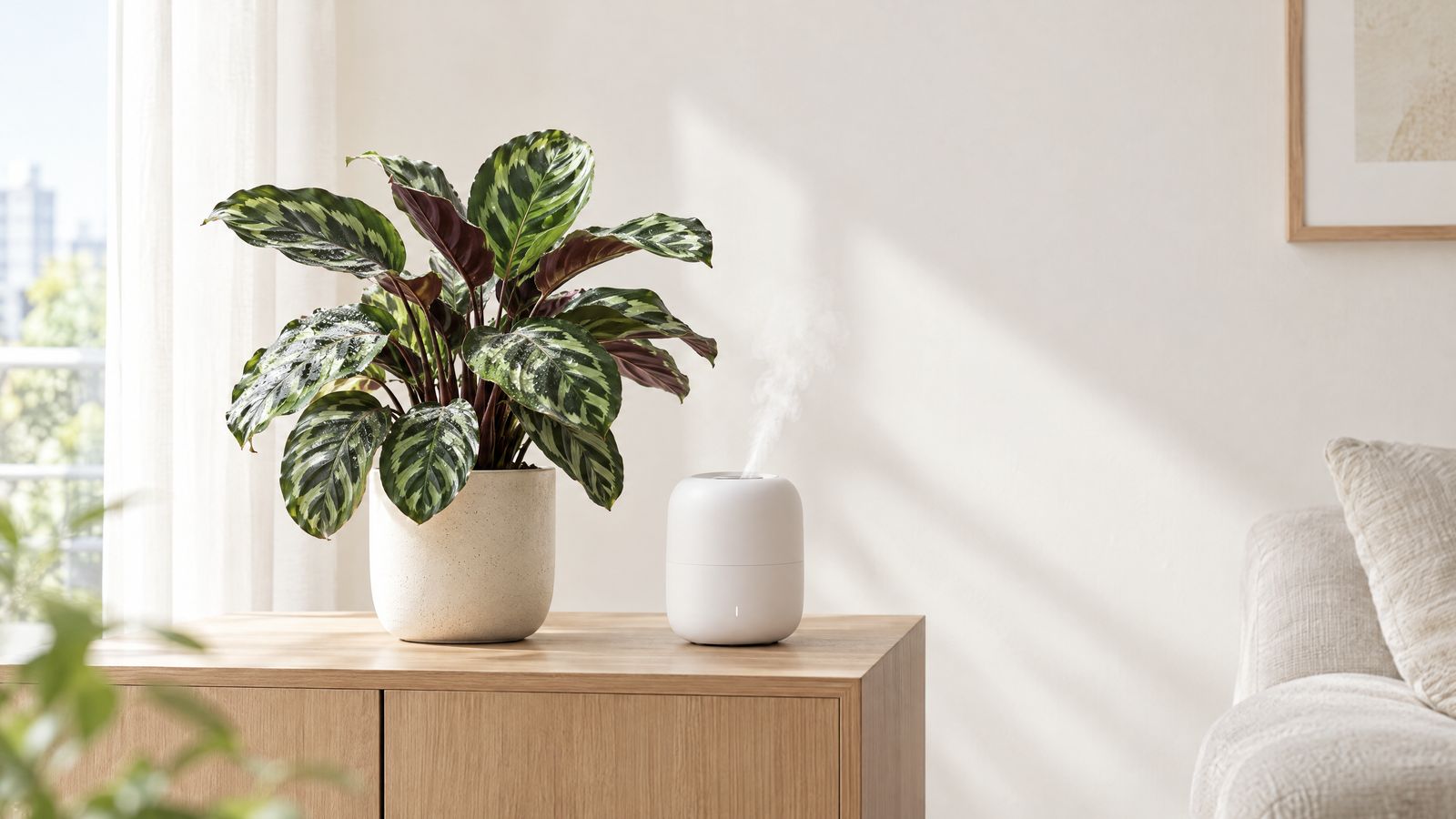
- Humidity: most houseplants prefer 40–50% relative humidity, but heated indoor air can fall below 20%. A humidifier, grouping plants or a pebble tray helps; misting only lasts a few minutes. More in our indoor plant humidity guide.
Cacti and succulents are a special case: they like a cool, bright, dry winter rest with very little water.
How to use this calendar in your own home
Treat the seasons as a reminder to look, not a set of fixed dates. A warm, bright flat may stay in "summer mode" for longer than a cool house, and a plant under grow lights may barely notice winter. At each change of season, walk round your plants and ask three questions: is it growing, how fast is the soil drying, and is the light the same as last month? Adjust water and feeding to the answers, and most seasonal problems never start.
Frequently asked questions
Should I stop fertilizing houseplants in winter?
For most plants, yes or nearly so. The RHS suggests little to no feeding in winter and no more than once a month; resume in spring when you see new growth.
Do the seasons work the same in the southern hemisphere?
The care is the same but the timing is reversed. Spring starts around September in the southern hemisphere, so follow the season and the light where you live, not a month on a northern calendar.
When is the best time to repot houseplants?
Spring, as growth restarts. The RHS suggests potting on every two to three years into a pot 5–10 cm (2–4 in) wider than the old one.
What temperature is too cold to leave houseplants outside?
Iowa State University Extension advises bringing them in when nights drop to around 10 °C (50 °F); some plants are damaged below 7 °C (45 °F).
Sources
Written and fact-checked by the Flori team. Every guide cites horticultural sources such as the RHS, university extension services and the ASPCA, and is updated when the advice changes.
General plant care information. Plants vary; when a plant is valuable or a problem spreads quickly, consult a local nursery or plant specialist.