Repotting Houseplants Without Stress: When and How
When to repot a houseplant, how much bigger the new pot should be, which potting mix to use and how to water afterwards so the plant settles in fast.
 By Flori editorial team · Updated
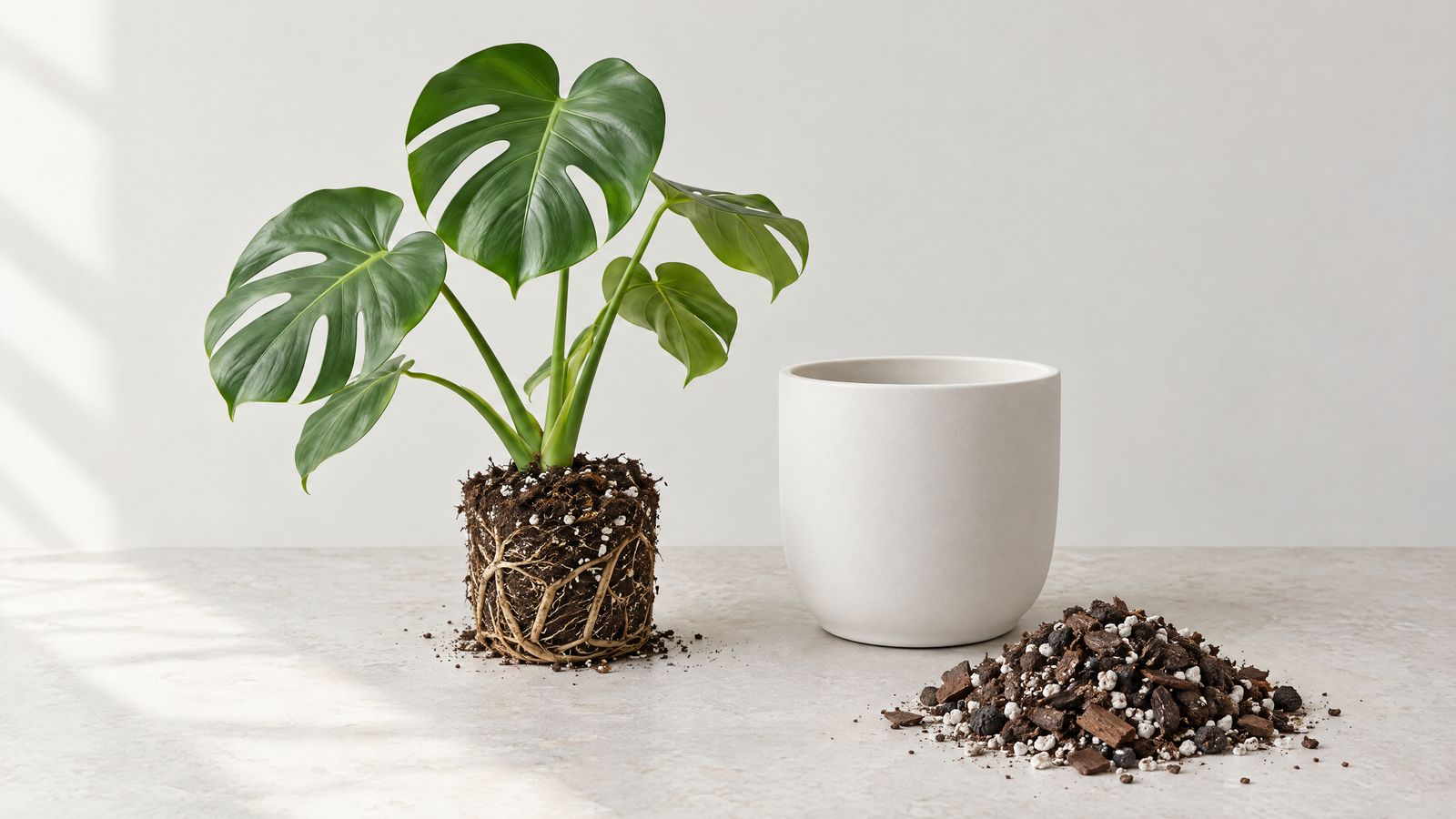
Repot a houseplant when roots circle the pot or grow out of the drainage holes, when it wilts soon after watering, or when water no longer drains properly. Do it in spring or early summer while the plant is actively growing, move up only 2.5–5 cm (1–2 in) in pot diameter, and water thoroughly afterwards.
Key takeaways
- Repot because of the roots, not the calendar: check by sliding the root ball out.
- Spring and early summer are best; avoid autumn, winter and plants that are sick or flowering.
- Choose a pot only 2.5–5 cm (1–2 in) wider, with a drainage hole and no gravel layer.
- Use fresh potting mix, keep the old planting depth and never pack wet mix down hard.
- Water thoroughly, then check moisture by touch for the first weeks.
When should you repot a houseplant?
Most people repot either too often or too late. The right time to repot a houseplant depends on what is happening at the roots, not on how long the plant has lived in its pot. Fast growers may need a new pot every year, while slow growers can go two to three years between moves, according to Clemson Cooperative Extension. The Royal Horticultural Society (RHS) adds that many container plants manage three to five years, depending on how vigorous they are, the compost they grow in and the size of the container.
Timing matters as much as need. Repot in spring or early summer, when the plant is starting into active growth and can quickly push new roots into fresh mix. The RHS advises avoiding autumn and winter, when growth slows or stops. Clemson also recommends leaving a plant alone while it is ailing, dormant or just starting to flower.
Signs your plant is root bound
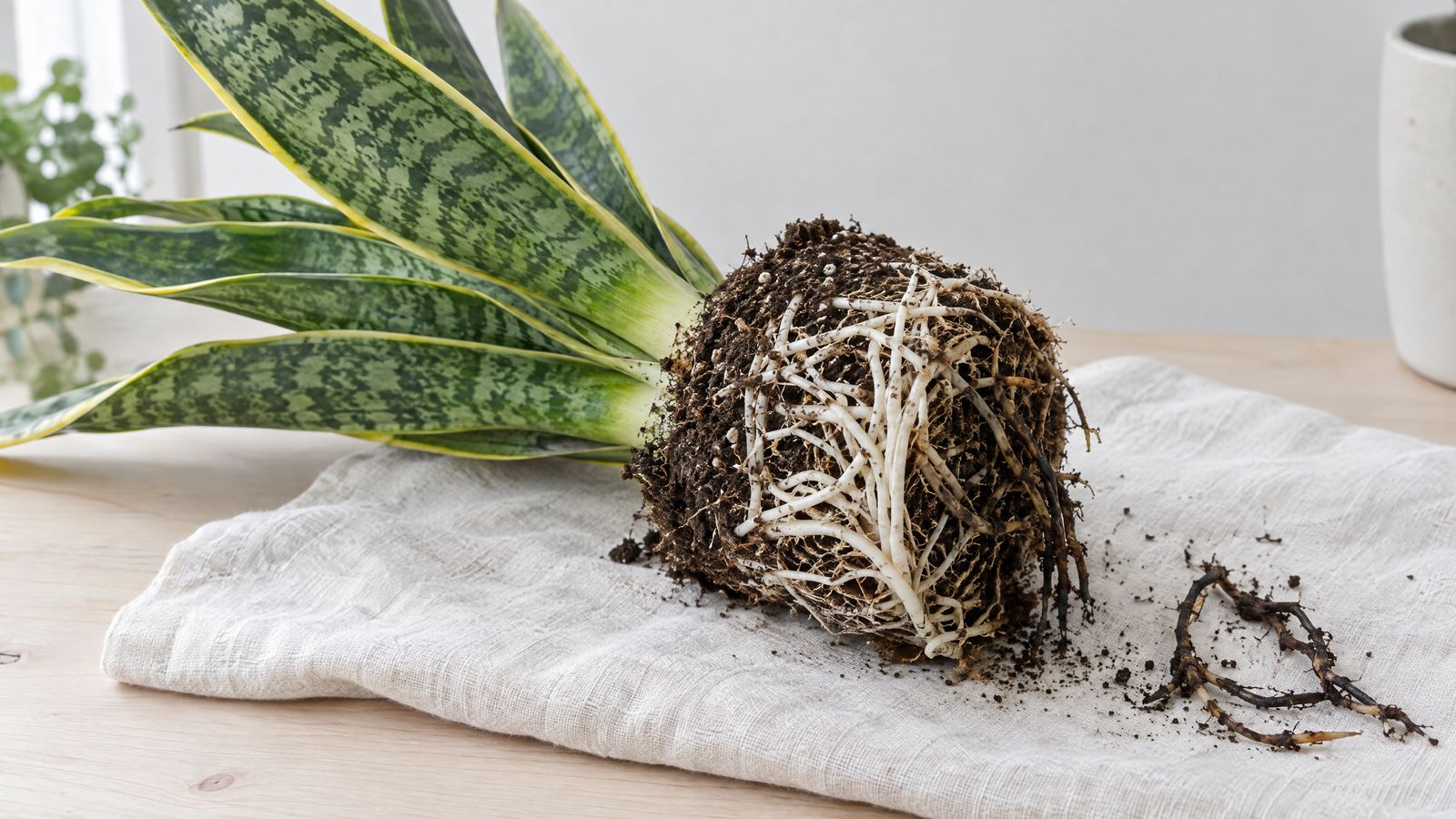
The quickest way to know is to look. Spread your fingers over the soil around the stem, tip the pot upside down and slide the root ball out. Then compare what you see with this table.
| What you see | What it means | What to do |
|---|---|---|
| White roots circling the inside of the pot in a dense mass | The plant is root bound | Repot one size up in the growing season |
| Roots growing out of the drainage holes | Roots have run out of room | Repot this spring or early summer |
| Plant wilts soon after watering or needs water far more often than before | Too little mix left to hold water | Repot into fresh mix |
| Water runs straight through or sits on top | Compacted, slumped or root-filled mix | Repot or refresh the mix |
| Mix level has sunk well below the rim | Old compost has broken down | Refresh the mix, even in the same pot |
| Roots spread loosely, plenty of mix still visible | The plant has space | Slide it back in and wait |
The RHS notes that a mass of roots spiralling around the bottom of a container, or growing out through the holes, can stop water draining properly and lead to root rot. If you find brown, mushy roots instead of firm white ones, deal with that first: our root rot rescue plan walks through it step by step.
What size pot should you use?
Go up one size only. Colorado State University (CSU) Extension and Clemson both recommend a new pot just 2.5–5 cm (1–2 in) wider in diameter than the old one. For pots under 25 cm (10 in), the RHS gives the same figure for both depth and width, and says the new pot should be no more than a third larger than the current one. Bigger jumps lead to overpotting: a small root system sitting in a large volume of mix that stays wet far longer than the roots can use.
Whatever the material, the pot needs a drainage hole. If the hole is large, CSU suggests covering it with a piece of broken pot, porous landscape fabric or a coffee filter so the mix does not wash out. Skip the old habit of adding a layer of gravel or crocks at the bottom: Clemson points out that it actually slows water movement through the pot. Decorative pots are fine as an outer cover, as long as the plant sits in an inner pot with holes and you empty any water that collects.
Which potting mix is best?
Use a good-quality potting mix, never garden soil. CSU explains that garden soil drains poorly and can carry weed seeds and disease. Typical bagged mixes combine peat or a peat substitute to hold moisture, perlite for drainage, compost and some fertilizer, and the RHS recommends peat-free multipurpose compost for most container plants. Cacti, succulents and orchids are the exceptions and do best in mixes made specifically for them.
If you are reusing an old pot, scrub it out, clean it with a 20% bleach solution and rinse it well with plain water, as CSU advises. That way you do not carry pests or disease over from the last plant.
How to repot a plant step by step
- Add a base layer. Put enough fresh mix in the bottom of the new pot so the top of the root ball will sit about 2.5 cm (1 in) below the rim.
- Remove the plant. Turn the pot upside down with the stem between your fingers and knock the rim gently against a solid edge until the root ball slides out.
- Inspect the roots. Healthy roots are white and firm. Trim off any that are black and mushy with clean scissors.
- Loosen circling roots. Tease them apart with your fingers. If they are packed too tightly, score the root ball in a few places with a sharp knife, as both CSU and Clemson suggest.
- Set the depth. Place the plant at the same depth it grew before. Do not bury the stem above its old soil line.
- Fill and settle. Add mix around the sides, firm it gently with your fingers and tap the pot on the bench to settle it. Do not pack it down hard; Clemson specifically warns against packing wet mix.
- Water thoroughly. Water until it runs out of the drainage hole, then repeat a couple of times, especially with peat-based mixes that are slow to wet. If the mix sinks, top it up to the level of the root ball.
What if the plant is too big to repot?
Large floor plants, such as a mature monstera, eventually reach the biggest pot you can lift. Instead of moving them, top-dress: Clemson suggests scraping off the top 5–8 cm (2–3 in) of old mix and replacing it with fresh mix about every other year. The RHS notes that compost slumps over time as its organic matter breaks down, so refreshing it keeps drainage and nutrition on track.
How to care for a plant after repotting
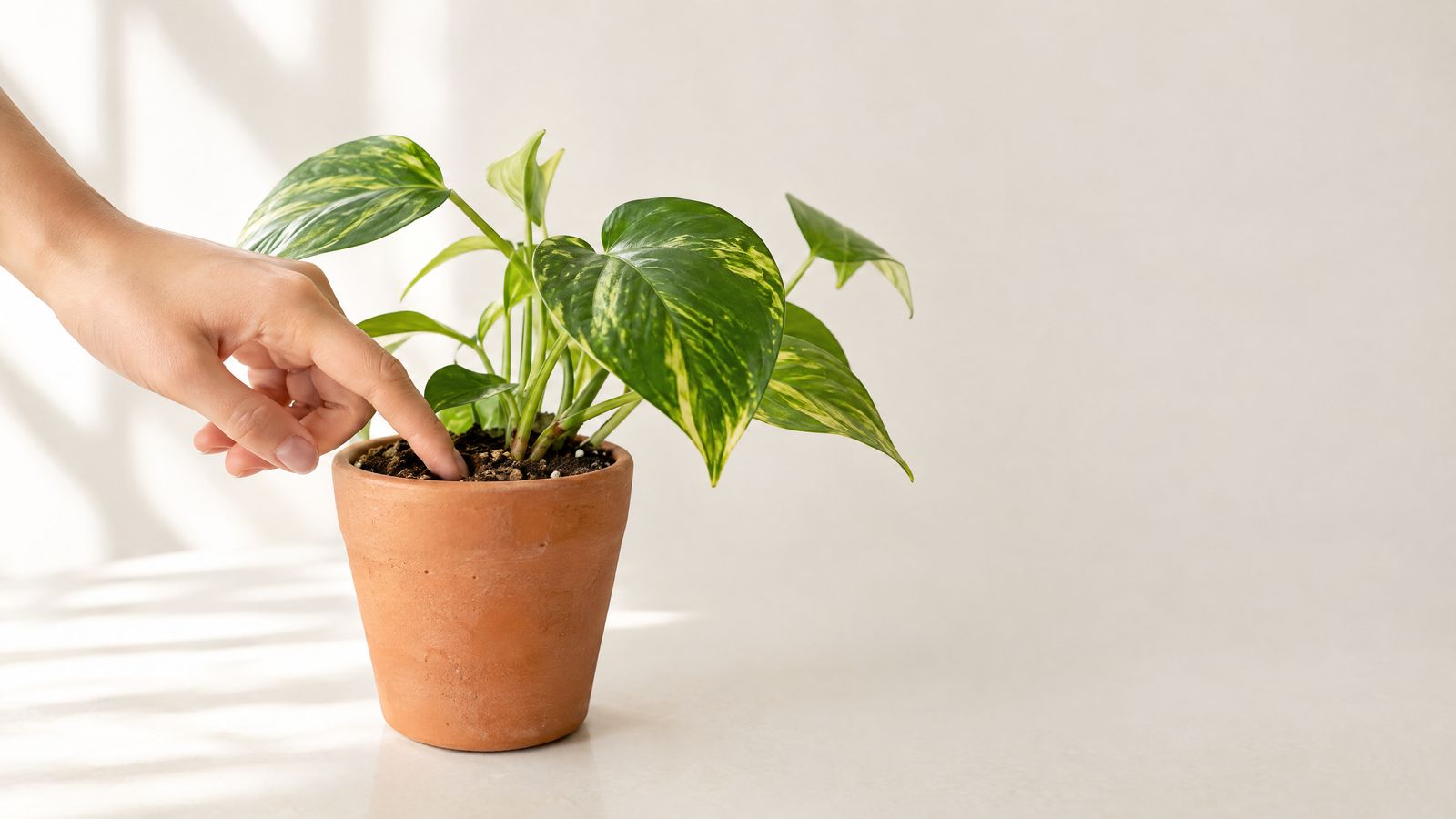
Most of the stress of repotting comes from what happens next. Keep the mix moist but not soggy, as CSU puts it, and check it with your finger before each watering instead of sticking to the old schedule. A bigger pot of fresh mix dries at a different pace from the old one, so the first few weeks are about watching rather than routine. Our guide to watering houseplants without guessing shows how to test moisture properly.
Because most bagged mixes already contain some fertilizer, there is no rush to feed straight after repotting. Keep the plant in its usual spot, away from radiators and cold draughts, so it only has one change to cope with. If it keeps declining after the move, check the roots and the watering again rather than adding fertilizer.
Flori can set a repotting reminder for each plant in your collection, so you check the roots every spring instead of guessing. If a freshly repotted plant starts to droop or yellow, describe it or send a photo to Dr. Flori for a likely cause and a recovery plan. For the rest of the year's jobs, see our seasonal plant care calendar.
Common repotting mistakes to avoid
- Jumping several pot sizes at once to save a future repot.
- Using garden soil, or reusing old mix that has slumped and compacted.
- Adding a gravel layer at the bottom of the pot.
- Burying the stem deeper than it was before.
- Repotting a plant that is sick, dormant or starting to flower.
- Pressing the mix down hard, especially when it is wet.
Frequently asked questions
How often should houseplants be repotted?
Fast growers often need it every year, while slow growers can go two to three years or longer. Check the roots each spring and repot only if they are crowded.
Can I repot a plant in winter?
It is best avoided, because growth slows or stops and new roots form slowly. Wait for spring unless the roots are rotting and the plant needs rescuing now.
Should I put gravel at the bottom of the pot for drainage?
No. Clemson Extension notes that a gravel layer slows water movement through the pot. Use a pot with a drainage hole and cover a large hole with a pot shard or a coffee filter instead.
Should I break up the roots when repotting?
Gently tease apart circling roots with your fingers. If the root ball is very tight, score it in a few places with a sharp knife, and trim any black, mushy roots.
Sources
Written and fact-checked by the Flori team. Every guide cites horticultural sources such as the RHS, university extension services and the ASPCA, and is updated when the advice changes.
General plant care information. Plants vary; when a plant is valuable or a problem spreads quickly, consult a local nursery or plant specialist.