Monstera Care: Complete Guide to Monstera Deliciosa
Monstera care made simple: bright indirect light, water when the top third is dry, 18–24 °C warmth, a moss pole, and why it is toxic to cats and dogs.
 By Flori editorial team · Updated
Monstera deliciosa grows best in bright, indirect light at 18–24 °C (64–75 °F) with moderate to high humidity. Water thoroughly once the top quarter to third of the compost is dry, feed monthly while it grows and give it a pole to climb. It is toxic to cats and dogs, so keep it out of reach.
Key takeaways
- Give monstera bright, indirect light; direct summer sun can scorch the leaves.
- Water thoroughly, then wait until the top quarter to third of the compost is dry.
- Leaf holes appear as the plant matures in good light, humidity and with support.
- Monstera deliciosa is toxic to cats and dogs (ASPCA), and its sap irritates skin.
- Overwatering and dry, heated air cause most problems.
What does a monstera need to thrive?
Monstera care comes down to four things: bright but indirect light, watering only when the compost has almost dried, warmth with humid air, and something to climb. Get those right and Monstera deliciosa, the Swiss cheese plant (also sold as split-leaf philodendron or ceriman), is one of the most rewarding houseplants you can grow. It is a climbing member of the arum family from the tropical forests of Mexico to Panama, where it clings to trees on its way up towards the light. In the wild it can reach several metres; the RHS lists an ultimate height of 4–8 m (13–26 ft), so give it room.
Monstera care at a glance
| Need | What works | Warning sign |
|---|---|---|
| Light | Bright, indirect light; a little gentle morning sun is fine | Small leaves without holes, long gaps between leaves |
| Water | Let the top quarter to third of the compost dry, then water thoroughly | Yellowing lower leaves, soggy compost, sour smell |
| Temperature | 18–24 °C (64–75 °F) is ideal; roughly 16–29 °C (60–85 °F) is tolerated | Stalled growth in a cold room, crisp edges near heaters |
| Humidity | Moderate to high | Brown, papery leaf edges |
| Feeding | Balanced liquid fertilizer monthly while growing | Pale new leaves after a long time without feed or repotting |
| Pets | Toxic to cats and dogs | Drooling, pawing at the mouth, vomiting |
How much light does a monstera need?
Monsteras want bright, indirect light: a spot a little back from a bright window, or beside a window where direct sun does not fall on the leaves for hours. The RHS warns that the leaves can scorch in direct summer sun, which shows as bleached or brown patches on the side facing the glass. Variegated forms such as 'Thai Constellation' need more light than plain green plants because their white sections cannot photosynthesise.
Too little light is the more common problem indoors. A monstera in a dim corner keeps producing small, solid leaves on long, stretched stems and leans hard towards the window. If that sounds familiar, our guide to the signs your plant needs more light will help you judge your room.
How often should you water a monstera?
There is no fixed number of days. NC State Extension recommends watering thoroughly and then letting the top quarter to third of the compost dry before watering again; the RHS says to let it almost dry out. In practice that is often every week or so in a bright, warm summer room and much less in winter, when the RHS advises keeping it just moist.
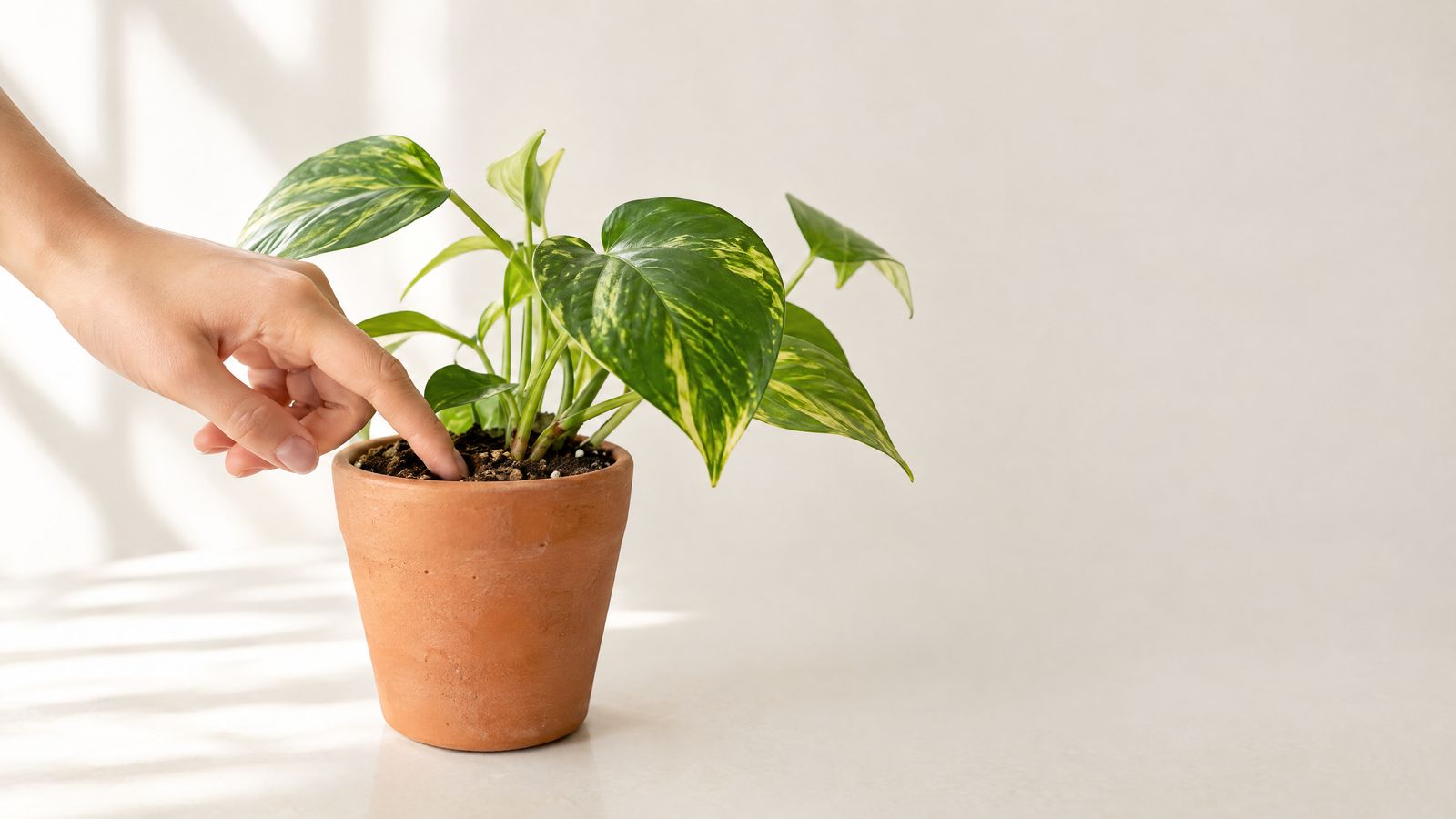
- Push a finger or wooden stick into the compost. Water only when the upper part is dry.
- Water until it runs from the drainage holes, then empty the saucer. The RHS warns that a pot left standing in water can lead to root rot.
- Lift the pot after watering and again a few days later; you will soon recognise the weight of a dry pot.
More detail on reading the soil is in how to water houseplants.
Temperature, humidity and soil
The RHS gives 18–24 °C (64–75 °F) as the comfortable range, and NC State lists 16–29 °C (60–85 °F) overall, so most heated homes are fine. Keep the plant away from cold drafts in winter and from radiators: the RHS notes that dry air or a nearby radiator can turn leaf edges brown. A humidifier, grouping plants or a pebble tray helps when the heating is on; see our indoor plant humidity guide.
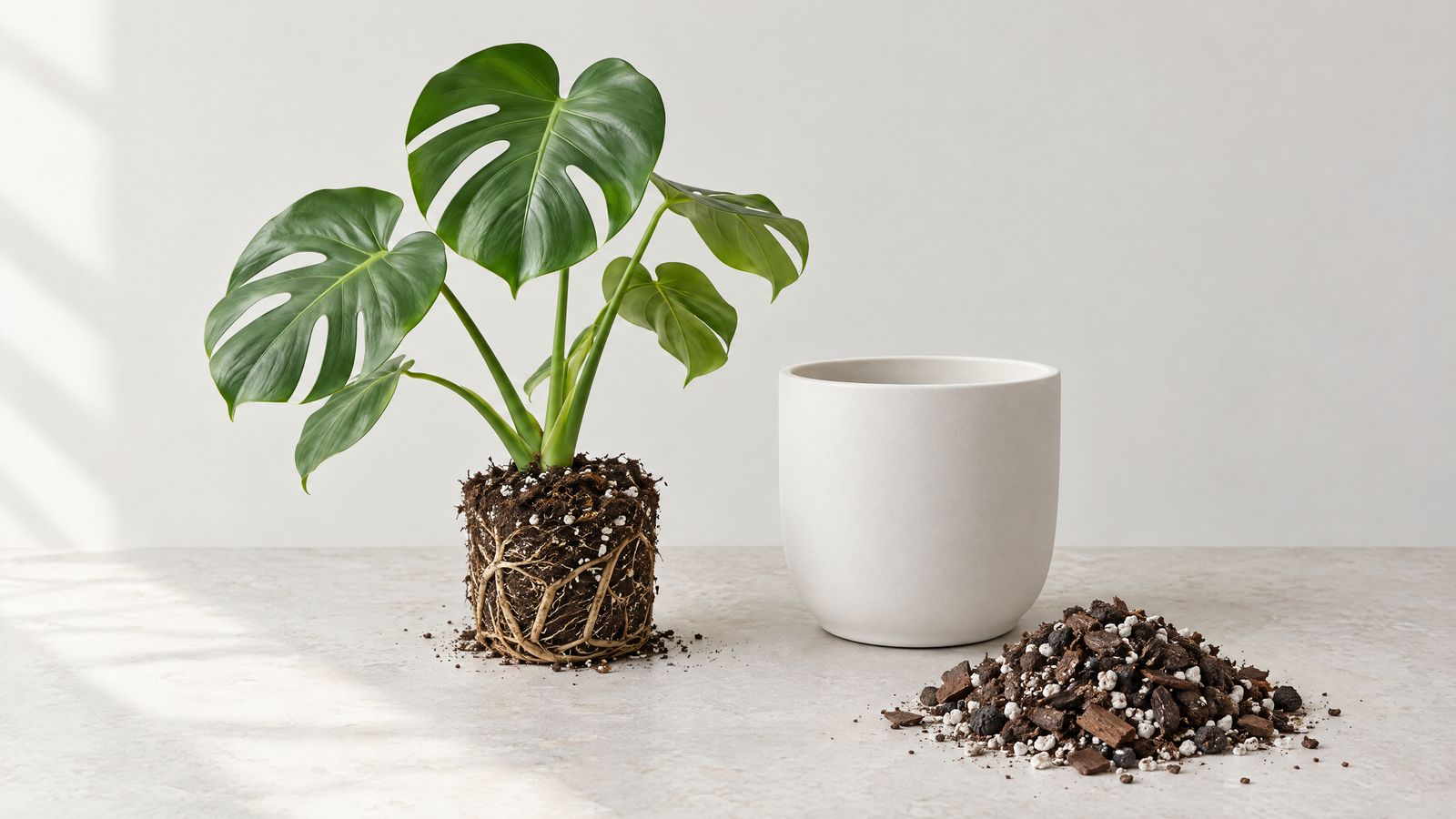
For compost, the RHS recommends a peat-free, loam-based potting mix, and NC State describes a rich, well-drained soil that holds some moisture. Many growers add bark or perlite to keep it airy. Repot in spring when roots circle the pot or push out of the drainage holes, moving up only one pot size; repotting without stress walks through the steps.
Why doesn't my monstera have holes in its leaves?
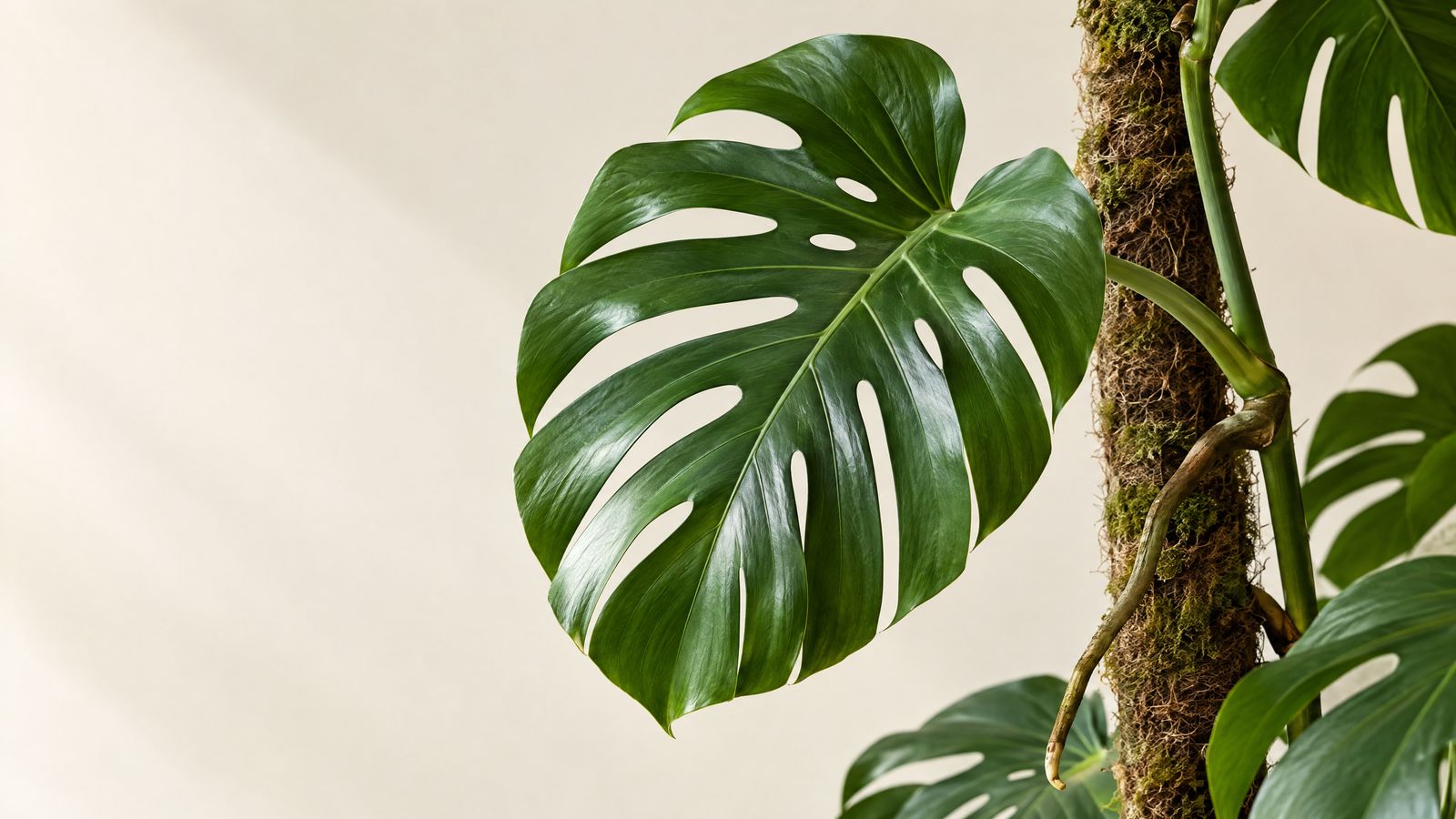
The famous holes and splits (fenestrations) only appear as the plant matures. NC State notes that young leaves have no holes, while mature leaves are perforated and often cut to the edge. The RHS adds that the biggest, most perforated leaves grow on mature plants in good light and high humidity. So if your plant is young, be patient; if it is older and still producing solid leaves, give it more light first.
Support matters too. A monstera is a climber that clings as it grows, and a plant that sprawls across the floor tends to make smaller leaves than one that can climb. A sturdy moss pole or stake, tied loosely with soft plant ties, gives it that structure.
What should I do with aerial roots?
The thick brown roots that grow from the stem are normal; in the wild they help the plant hold on to trees. Guide them onto the moss pole or down into the pot. If a few are in the way you can trim them, but there is no need to remove them all.
Is monstera toxic to cats and dogs?
Yes. The ASPCA lists Monstera deliciosa (as cutleaf philodendron) as toxic to cats and dogs. Like many arums, it contains insoluble calcium oxalate crystals, and chewing a leaf can cause intense burning and irritation of the mouth, tongue and lips, heavy drooling, vomiting and difficulty swallowing. Keep it out of reach of pets that chew plants, and if you think your pet has eaten some, contact your vet or an animal poison control service.
People should take care too. The RHS describes the plant as harmful if eaten and a skin and eye irritant, so wear gloves when pruning and wash your hands afterwards. Flori's care profile for each plant includes its toxicity, which is handy if you share your home with pets.
Common monstera problems and fixes
| Symptom | Likely cause | What to do first |
|---|---|---|
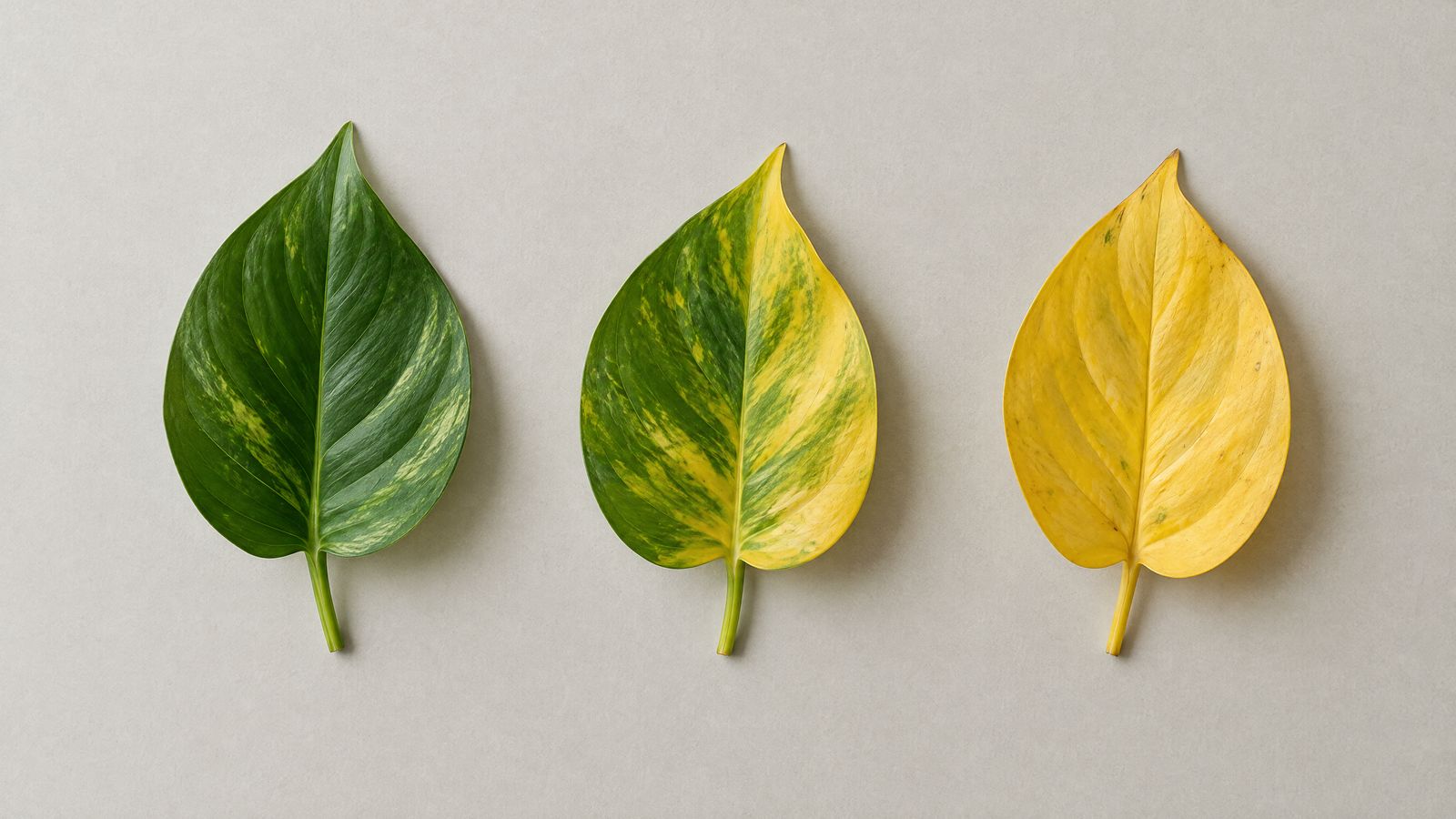
| Yellowing lower leaves, wet compost | Overwatering or poor drainage | Let it dry, empty the saucer, check the roots |
| Brown, crispy edges | Dry air or a nearby radiator | Move away from heat, raise humidity |
| Bleached or brown patches | Direct summer sun | Move back from the window |
| Small leaves without holes, leaning | Too little light, young plant | Brighter spot, add a support |
| Fine webbing, speckled leaves | Spider mites | Isolate, wipe and rinse leaves |
| Brown bumps on stems and leaf undersides | Scale insects | Isolate, remove by hand |
The RHS notes that monsteras are generally disease-free but can get scale insects and red spider mite. Start with the least-toxic options (wiping, rinsing, removing pests by hand) and, if you use any product, follow the label. For yellowing that does not fit the table, use our yellow leaves diagnosis guide; if the roots are brown and mushy, go straight to the root rot rescue plan. Dr. Flori can also help narrow it down from a photo and a few follow-up questions.
How to propagate a monstera
Monsteras are propagated from stem cuttings or by layering, and also from seed or root tips. Take a cutting with at least one node (the bump where a leaf and aerial root grow from the stem) and a leaf, then root it in water or moist compost in a warm, bright spot. Spring and summer, when the plant is growing, give the quickest results.
Frequently asked questions
Is monstera toxic to cats and dogs?
Yes. The ASPCA lists Monstera deliciosa as toxic to cats and dogs; its calcium oxalate crystals can cause mouth irritation, drooling, vomiting and difficulty swallowing. Call your vet if your pet chews it.
Why are my monstera's leaves not splitting?
Young leaves are naturally solid. Holes appear as the plant matures, and the largest, most perforated leaves grow in good light and humidity, especially when the plant can climb a support.
Should I cut off monstera aerial roots?
You do not need to. They are normal and help the plant climb; guide them onto a moss pole or into the pot, and trim only the few that are in the way.
Why are my monstera's leaves turning yellow?
The most common cause is overwatering or a pot standing in water. Let the compost dry, empty the saucer and check the roots for rot.
Sources
Written and fact-checked by the Flori team. Every guide cites horticultural sources such as the RHS, university extension services and the ASPCA, and is updated when the advice changes.
General plant care information. Plants vary; when a plant is valuable or a problem spreads quickly, consult a local nursery or plant specialist.