7 Signs Your Plant Needs More Light and How to Fix It
Leggy stems, leaning, small pale leaves and no flowers mean your plant needs more light. Learn how much light houseplants need and how to fix it.
 By Flori editorial team · Updated
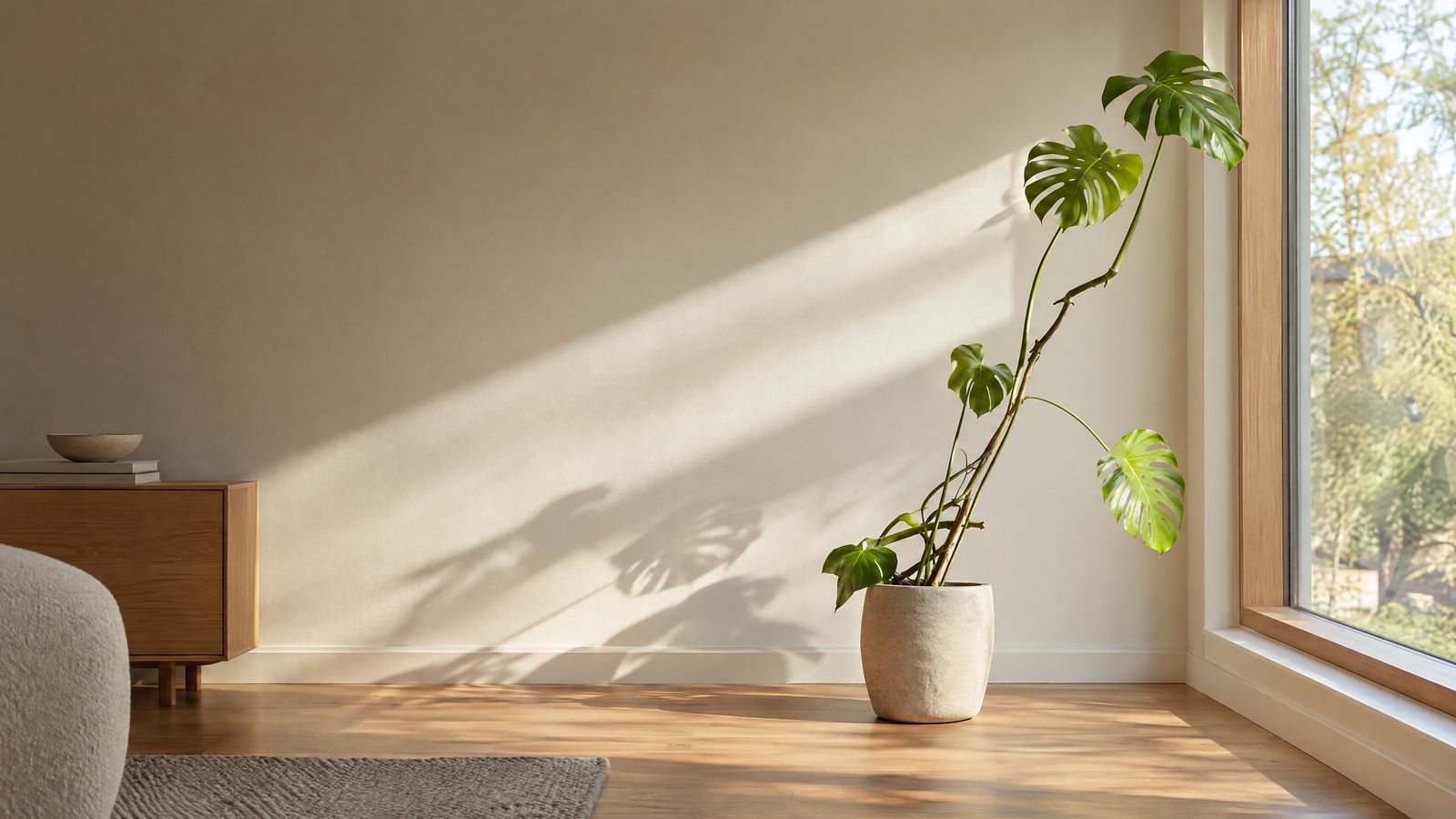
A plant that needs more light grows leggy stems with long gaps between leaves, leans toward the window, makes small pale new leaves, grows slowly, drops lower leaves, stops flowering and keeps wet soil for days. Move it closer to a bright window, rotate it, or add a grow light for 8–16 hours a day.
Key takeaways
- Leggy stems, leaning and small pale new leaves are the clearest signs of low light.
- Light drops fast with distance: a south window gives bright light only up to about 1.5 m (5 ft).
- Most houseplants, even low-light ones, look best in bright, indirect light.
- Grow lights help: run them 8 hours or more, but not over 16 hours a day.
- Raise light gradually, because sudden strong sun can bleach or scorch leaves.
How do you know if a plant is not getting enough light?
Light is the food supply of a houseplant, and it is often the most limiting factor indoors. A room can look bright to your eyes and still be dim for a plant, because our eyes adjust to low light and a plant's leaves do not. When light is short, a plant rarely dies overnight. Instead it slowly changes shape, colour and pace. Learn to read those changes and you can fix the cause before you start adjusting water, fertilizer or pots.
7 signs your plant needs more light
- Leggy, stretched stems. The gaps between leaves get longer and the stems thinner and weaker. The plant is spending energy on reaching for light instead of building sturdy growth.
- Leaning toward the window. A plant that bends hard to one side is telling you where its only good light is.
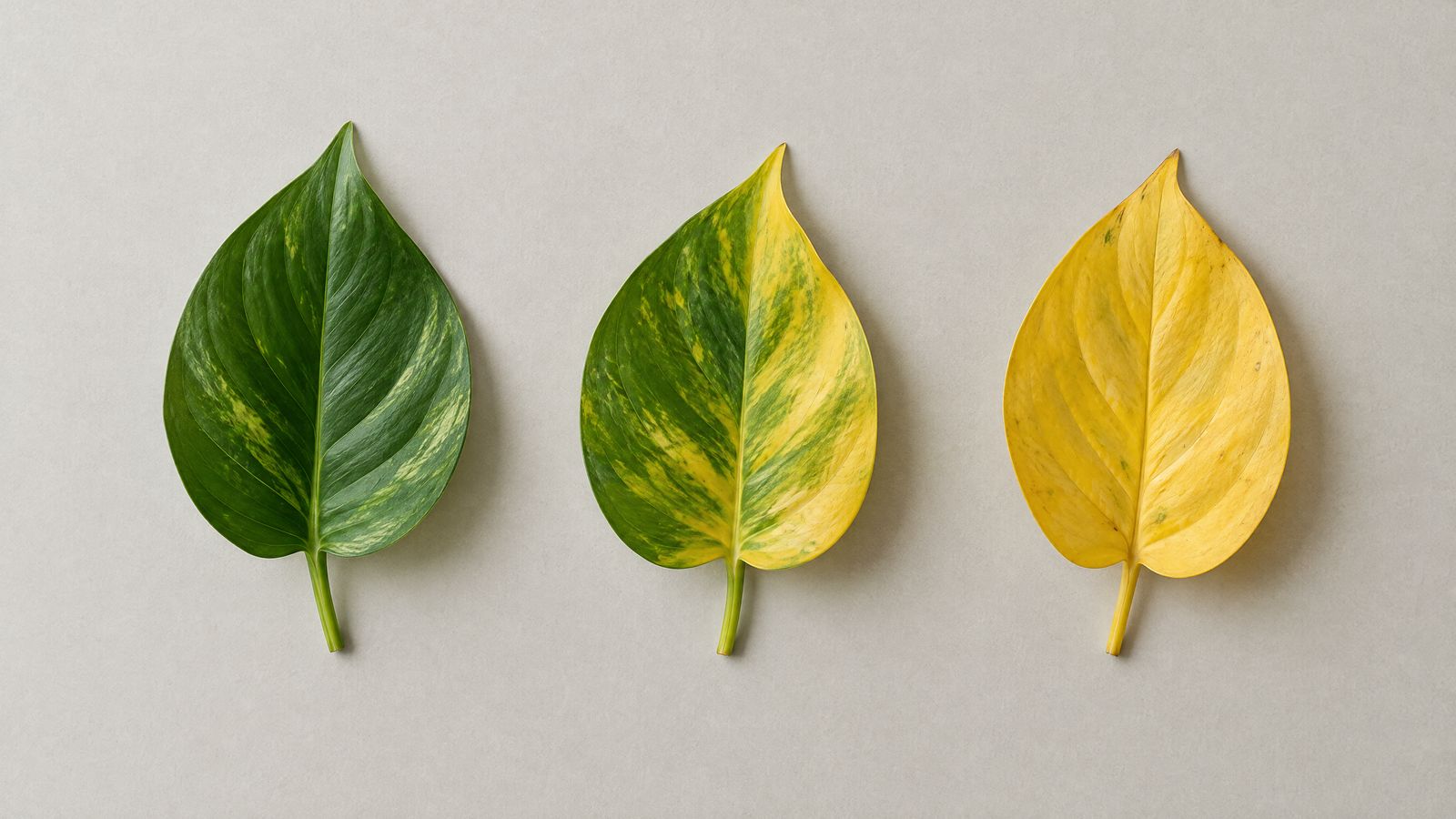
- Small, pale new leaves. New growth arrives smaller and lighter green than older leaves. On variegated plants the cream or white patterns can become less distinct.
- Slow or stalled growth. In the growing season a healthy plant puts out new leaves regularly. Weeks with nothing new, while watering and temperature have not changed, often point to light.
- Lower leaves dropping. Leaf drop is one of the symptoms of too little light listed by Iowa State Extension. Older, shaded leaves yellow and fall first.
- No flowers. Flowering plants usually need more light than foliage plants. A peace lily or African violet that stays green but never blooms is often simply too far from the window.
- Soil that stays wet for days. A plant in low light uses little water, so the potting mix stays damp much longer. That makes overwatering and root problems far more likely.
One sign alone can have other causes. Pale or yellow leaves, for example, can also come from watering problems or nutrients, which our yellow leaves diagnosis guide helps you sort out. Two or three of these signs together, though, usually mean light.
How much light do houseplants need?
Light intensity is measured in lux or foot-candles (fc). Outdoors on a sunny day it can reach around 10,000–12,000 fc, while indoor spots are far dimmer. UF/IFAS groups indoor light like this:
| Light level | Approximate light | Typical spot | Examples |
|---|---|---|---|
| Low | 250–1,000 lux (25–100 fc) | Far from windows or lit only by ceiling lights | Pothos, snake plant, ZZ plant |
| Medium | 1,000–5,000 lux (100–500 fc) | Near a window with no direct sun, such as an unshaded north window | Peace lily, spider plant |
| High | 5,000–10,000 lux (500–1,000 fc) | Near an unshaded east or west window, or a shaded south window | Many flowering plants |
| Direct sun | Over 10,000 lux (1,000 fc) | Right in front of an unshaded south or southwest window | Cacti, aloe, many succulents |
Sources do not use identical numbers: University of Illinois Extension describes typical indoor levels lower, at about 75 fc for low, 150 fc for medium and 300 fc for high light. Treat the figures as a guide, not a target. Also note that "low light" is the least a plant tolerates, not what it prefers; Iowa State points out that most houseplants, even low-light ones, look their best in bright, indirect light. A spot with that kind of light casts a clear shadow without sun rays falling on the leaves.
Window directions here assume the Northern Hemisphere. In the Southern Hemisphere, swap north and south: a north-facing window gets the most sun.
Why distance from the window matters so much
Light drops quickly as you move away from glass. Illinois Extension estimates that a south window gives bright light only up to about 1.5 m (5 ft) away, and an east or west window gives bright light only right in front of it. A few steps back into the room, the same windows give medium or low light. Curtains, window films, roof overhangs, nearby buildings and trees all cut it further. This is why a plant on a table in the middle of a sunny room can still show every sign above.
To check a spot, use a light meter. UF/IFAS notes that a handheld meter reading in lux or foot-candles is the most accurate, while phone apps are approximate but useful for comparing spots. Flori's smart light meter works the same way: take readings at leaf height in a few places and move the plant to the brightest suitable one.
How to fix low light
- Move it closer. Shifting a plant from the middle of the room to the windowsill can change its light many times over.
- Choose a brighter window. In the Northern Hemisphere, south, east and west windows give more light than north ones.
- Rotate the pot a quarter turn each time you water so all sides get light and growth stays even.
- Clean leaves and glass. Dust on both reduces the light that reaches the leaf.
- Add a grow light. Fluorescent and LED lamps are the best options, and broad-spectrum or cool white lamps suit foliage plants. Most plants need eight hours or more under lights; in very low light, 14–16 hours is enough, and avoid going over 16 hours because plants need a dark rest period. Set the height using the lamp maker's guidance.
Increase light gradually. A plant that has lived in a dim corner can scorch if you put it straight into strong sun. Iowa State lists bleached or damaged leaves, and leaves that yellow, brown and drop, as signs of too much light, and the RHS warns that strong summer sun through glass can scorch susceptible plants.
What changes in winter?
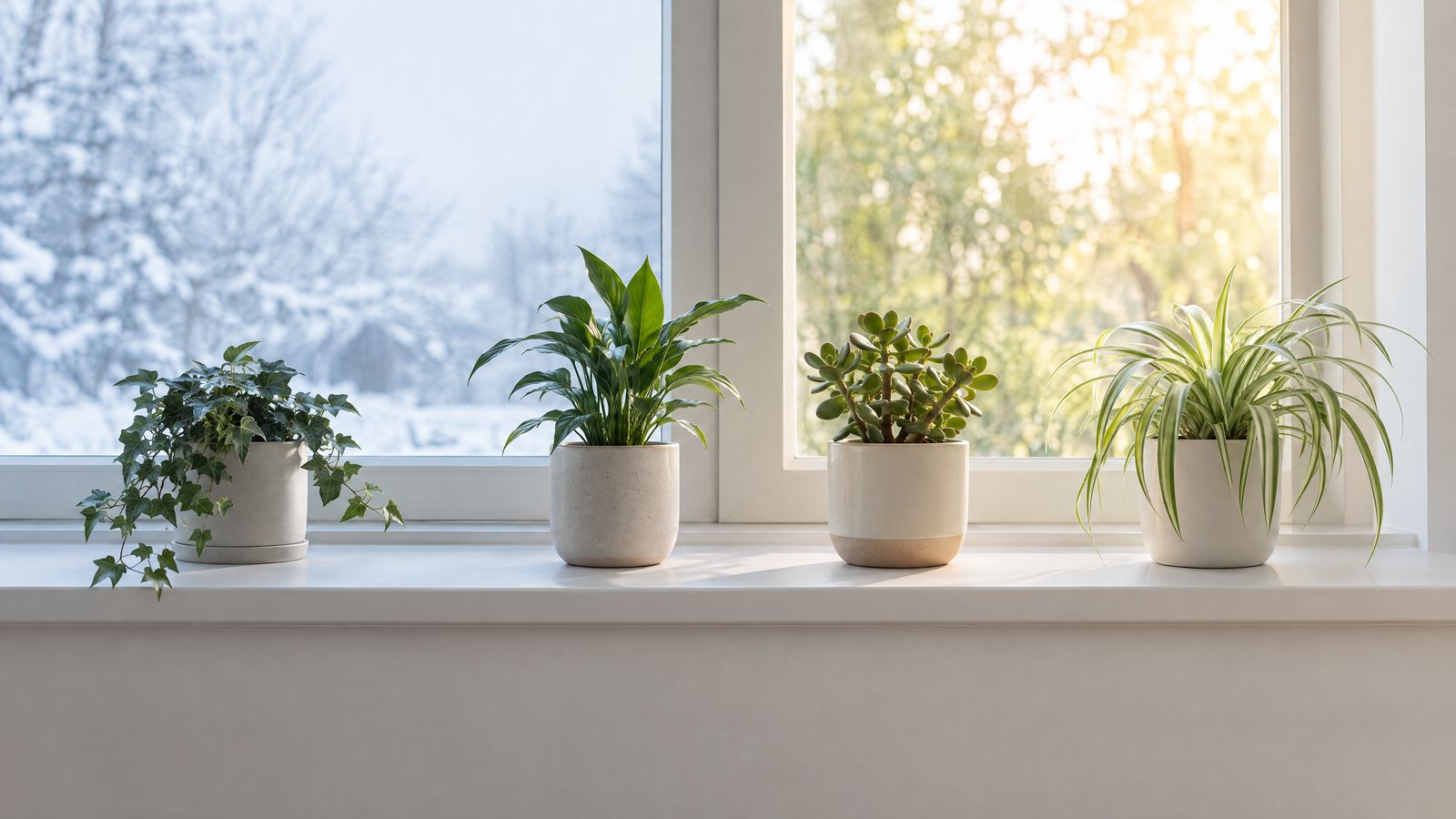
Days are shorter and daylight is weaker, so a spot that was perfect in summer may be too dim in winter. The RHS suggests giving plants full light during winter and warns that warm rooms combined with low winter light produce weak, unhealthy growth. Move plants closer to windows, consider a grow light, and water less, since plants in low light use less water. Our guide to watering houseplants and seasonal plant care calendar explain how to adjust the rest of your routine.
Can a leggy plant recover?
Stretched stems will not shrink back, but new growth will be more compact once light improves. For vining or soft-stemmed plants such as pothos, you can cut long stems back just above a leaf to encourage bushier growth. If your home is simply dim, choose plants that tolerate it; our list of beginner plants that forgive mistakes is a good place to start. And if you are not sure whether light is really the problem, Dr. Flori can ask about the plant's position and symptoms and suggest the most likely cause.
Frequently asked questions
Can a plant recover from low light stretch?
The stretched stems stay stretched, but new growth becomes more compact once light improves. You can prune long stems back just above a leaf to encourage bushier growth.
Is a north-facing window enough for houseplants?
In the Northern Hemisphere an unshaded north window gives medium light right in front of it, which suits low- and medium-light plants such as pothos or peace lily, but not cacti or most flowering plants.
How many hours a day should a grow light be on?
Most plants need eight hours or more under lights. In very low light, 14–16 hours is enough; avoid going over 16 hours, because plants need a dark rest period.
Can a plant get too much light?
Yes. Bleached, scorched, yellowing or browning leaves can mean too much light, especially when strong summer sun shines through glass or a plant is moved suddenly from shade into sun.
Sources
Written and fact-checked by the Flori team. Every guide cites horticultural sources such as the RHS, university extension services and the ASPCA, and is updated when the advice changes.
General plant care information. Plants vary; when a plant is valuable or a problem spreads quickly, consult a local nursery or plant specialist.