Yellow Leaves on Houseplants: A Diagnosis Guide
Why are your plant's leaves turning yellow? Read which leaves yellow first, check soil and roots, and match the pattern to its cause and first fix.
 By Flori editorial team · Updated
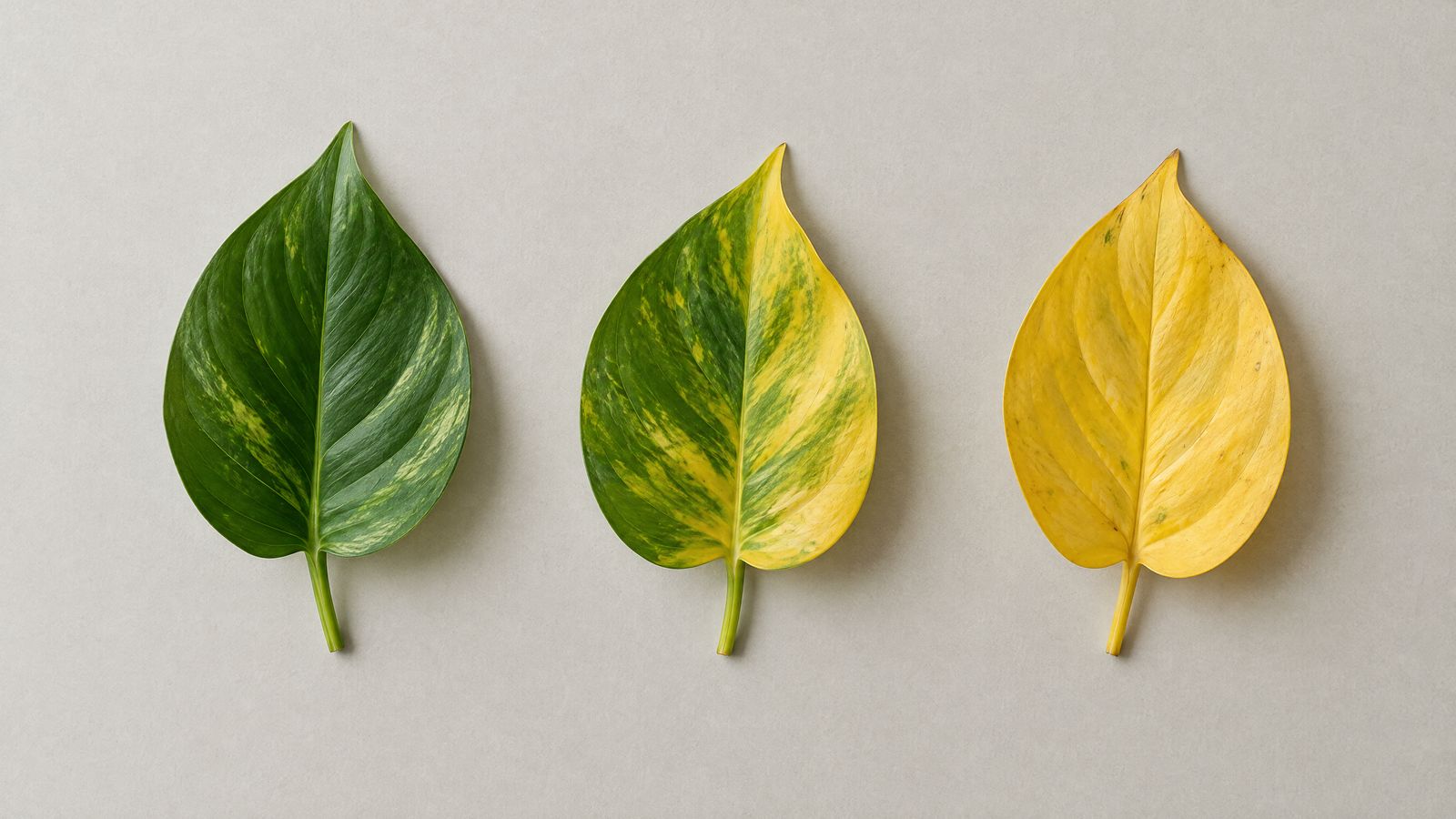
Yellow leaves on houseplants most often mean overwatering, but underwatering, too little light, cold drafts, nutrient shortages, fertilizer salts and pests cause them too. Note which leaves yellow first, whether the soil is wet or dry, and how the roots look. One old lower leaf yellowing now and then is normal ageing.
Key takeaways
- An occasional yellow leaf at the base is normal; many leaves or young leaves yellowing is not.
- Old and new leaves yellowing together usually points to overwatering, so check soil and roots first.
- Yellowing between the veins of new leaves suggests iron deficiency; even yellowing of old leaves suggests nitrogen shortage.
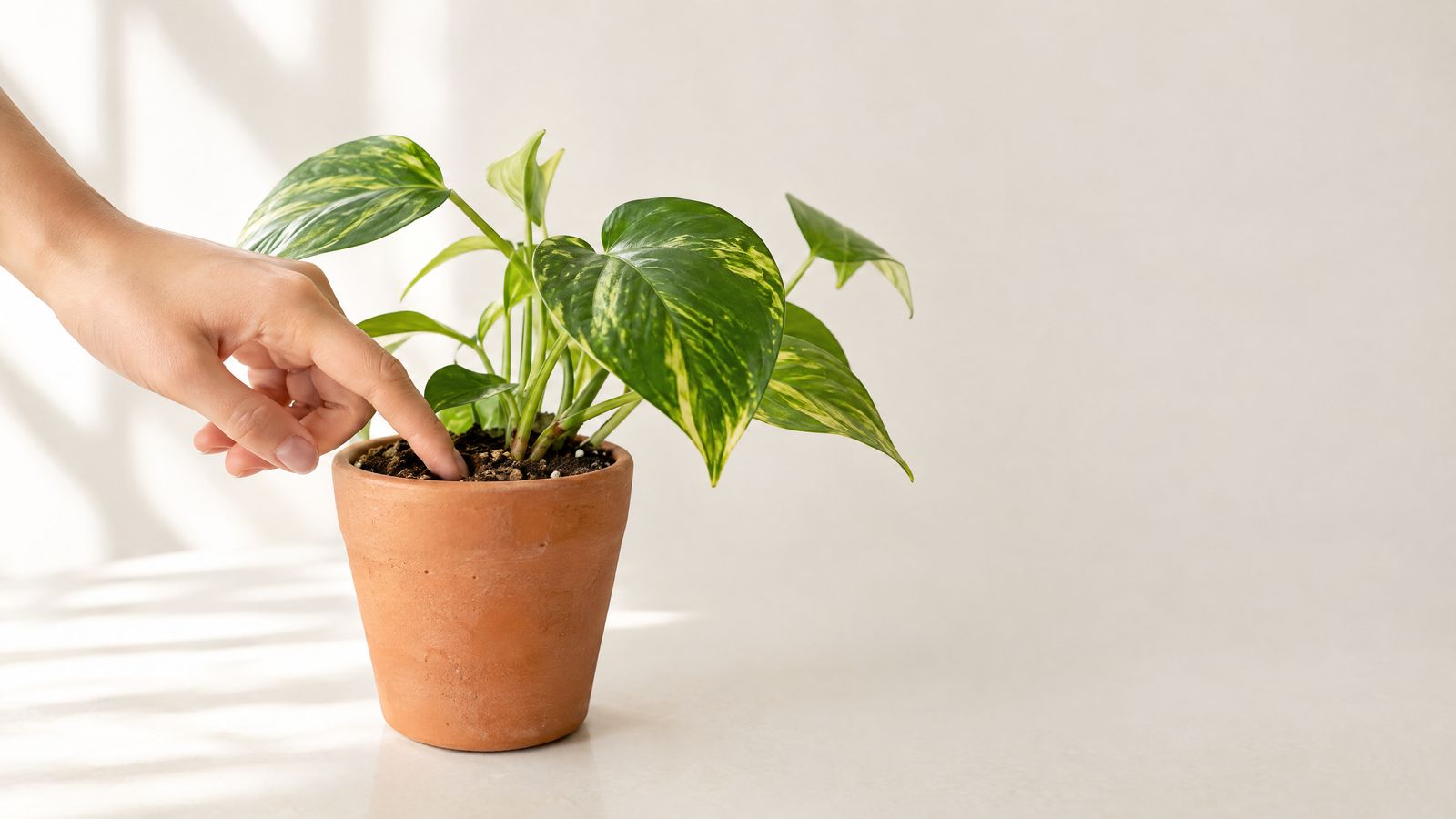
- Test the soil 2–5 cm (1–2 in) down before watering instead of watering on a schedule.
- Change one thing at a time and judge recovery by the new growth.
Why are my plant's leaves turning yellow?
Yellow leaves on a houseplant are a symptom, not a diagnosis. The same pale color can come from soggy soil, a dry root ball, too little light, a cold draft, hungry roots or sap-sucking pests. The yellowing usually leaves clues, though: which leaves turn first, how fast it spreads, what the leaf feels like and what the soil is doing. Read those clues in order and you can usually narrow the cause down to one or two possibilities before you change anything.
A single old leaf at the base turning yellow and dropping now and then is normal on a mature plant, because plants shed their oldest leaves as they grow. The RHS notes that yellowing of older leaves on evergreens is usually natural shedding, while losing young leaves is a cause for concern. Many leaves at once, or new leaves turning yellow, is the signal that something in the care or the environment needs attention.
Which leaves are yellow: old, new or all of them?
Position is the fastest clue, because it shows whether the plant is pulling resources out of old leaves or failing to supply new ones.
- Only the lowest, oldest leaves, slowly: often natural ageing, but also a sign of a plant kept too dry for a long time, too little light or a lack of nitrogen. Pot-bound plants that have used up their compost are especially prone.
- Old and new leaves at the same time: the RHS links this pattern to overwatering. Check the soil and the roots before anything else.
- Newest leaves pale or yellow between green veins: points to iron deficiency. The RHS explains that iron shortage shows first on the youngest leaves, while magnesium and manganese shortages start on older ones.
- The whole plant fading evenly: think overwatering or too little light, both listed by Clemson Extension as causes of whole-plant yellowing.
Yellow leaves: symptom, likely cause and first fix
Match the pattern you see, then confirm it by checking the soil and roots rather than guessing.
| What you see | Likely cause | First fix |
|---|---|---|
| Soft yellow leaves, soil still wet days after watering | Overwatering, possible root rot | Stop watering, lift the plant out and check the roots |
| Lower leaves yellow and crisp, pot feels light | Kept too dry for too long | Water thoroughly, then water when the top 2–5 cm (1–2 in) is dry |
| Pale, spindly growth, lower leaves dropping | Too little light | Move closer to a bright window, in steps |
| Yellowing with dry edges near a door, window or vent | Cold drafts | Move the plant away from the draft |
| Older leaves evenly yellow, same compost for years | Nitrogen shortage or exhausted compost | Feed in the growing season or repot into fresh mix |
| Yellow between the veins of new leaves | Iron deficiency | Check root health first, then feed |
| Yellow speckles, sticky residue or fine webbing | Sap-sucking pests | Inspect leaf undersides with a magnifier |
| Yellow or brown leaves, white crust on soil or pot rim | Fertilizer salt build-up | Flush with clear water, then feed at half or quarter strength |
How do I know if overwatering is the cause?
Overwatering is the most common cause of yellowing across a whole plant, according to Clemson Extension, because wet soil cuts the oxygen roots need and favors root disease. The confusing part is that a waterlogged plant often wilts, which looks like thirst, and more water only makes it worse. So test before you water:
- Push a finger into the mix. Iowa State Extension's rule is simple: if it is dry 2–5 cm (1–2 in) down, water; if you are unsure, wait at least one more day.
- Lift the pot. A pot that still feels heavy several days after watering is holding too much water.
- Check the base. Tip out water standing in saucers or decorative outer pots. The RHS suggests lifting the plant out of its pot to see whether water has collected at the bottom.
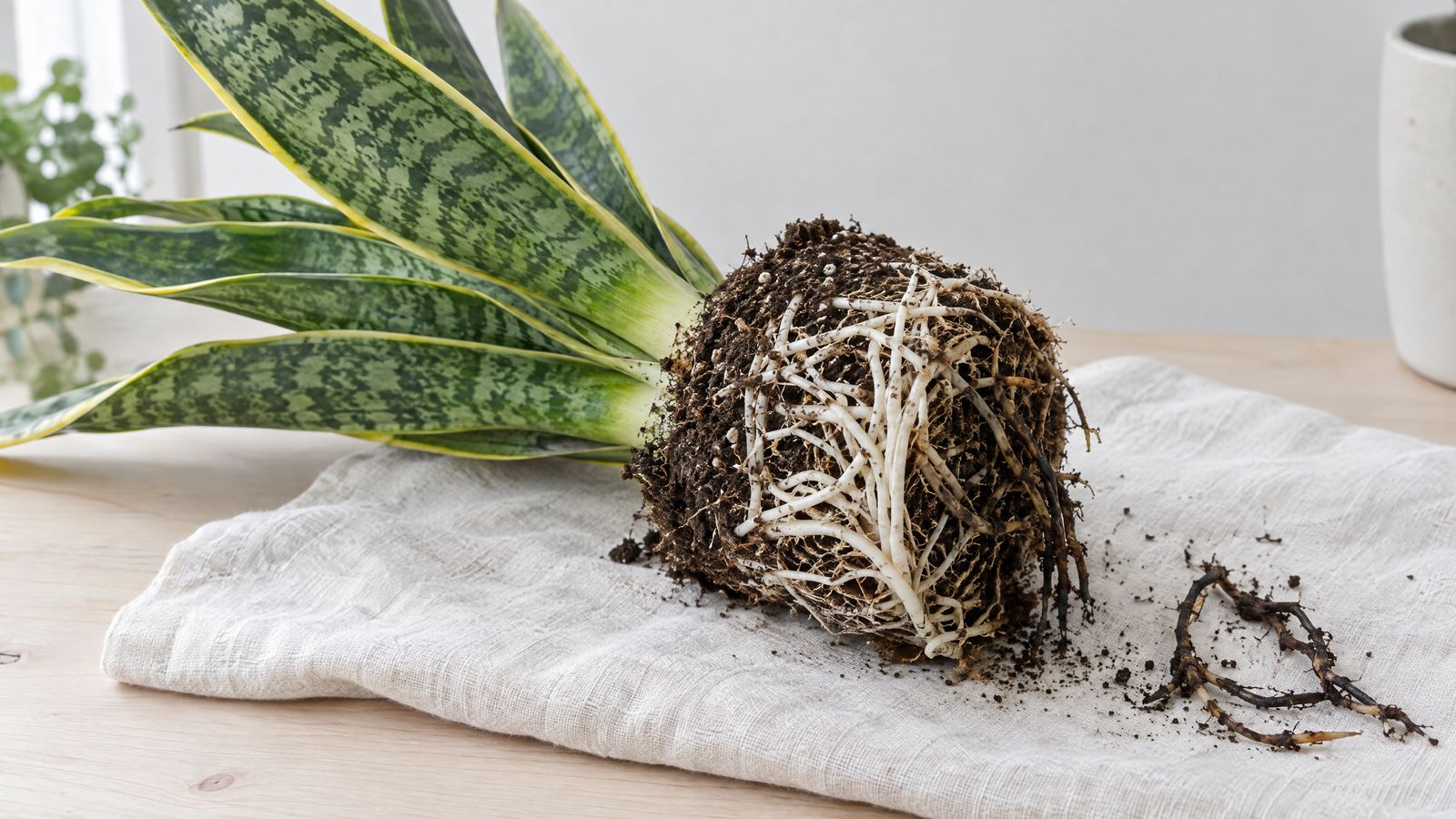
- Look at the roots. Healthy roots are firm and white or light-colored. Dark, soft, mushy roots mean rot has started.
If the roots are rotting, switch to our root rot rescue plan. If they look fine, let the mix dry more between waterings and follow our guide on how to water houseplants: water thoroughly, let it drain, and water again only when the top layer is dry.
Could it be underwatering instead?
A plant left dry for weeks also yellows, but it looks different. The RHS notes that with underwatering the older leaves at the base usually yellow and fall first, and Clemson Extension adds that chronically dry plants wilt and curl. Leaves tend to feel crisp rather than soft, the pot feels light, and the mix may shrink away from the sides. Water slowly until it runs from the drainage hole, let the pot drain completely, and then switch to a check-first routine instead of a fixed calendar.
Is it light, temperature or a draft?
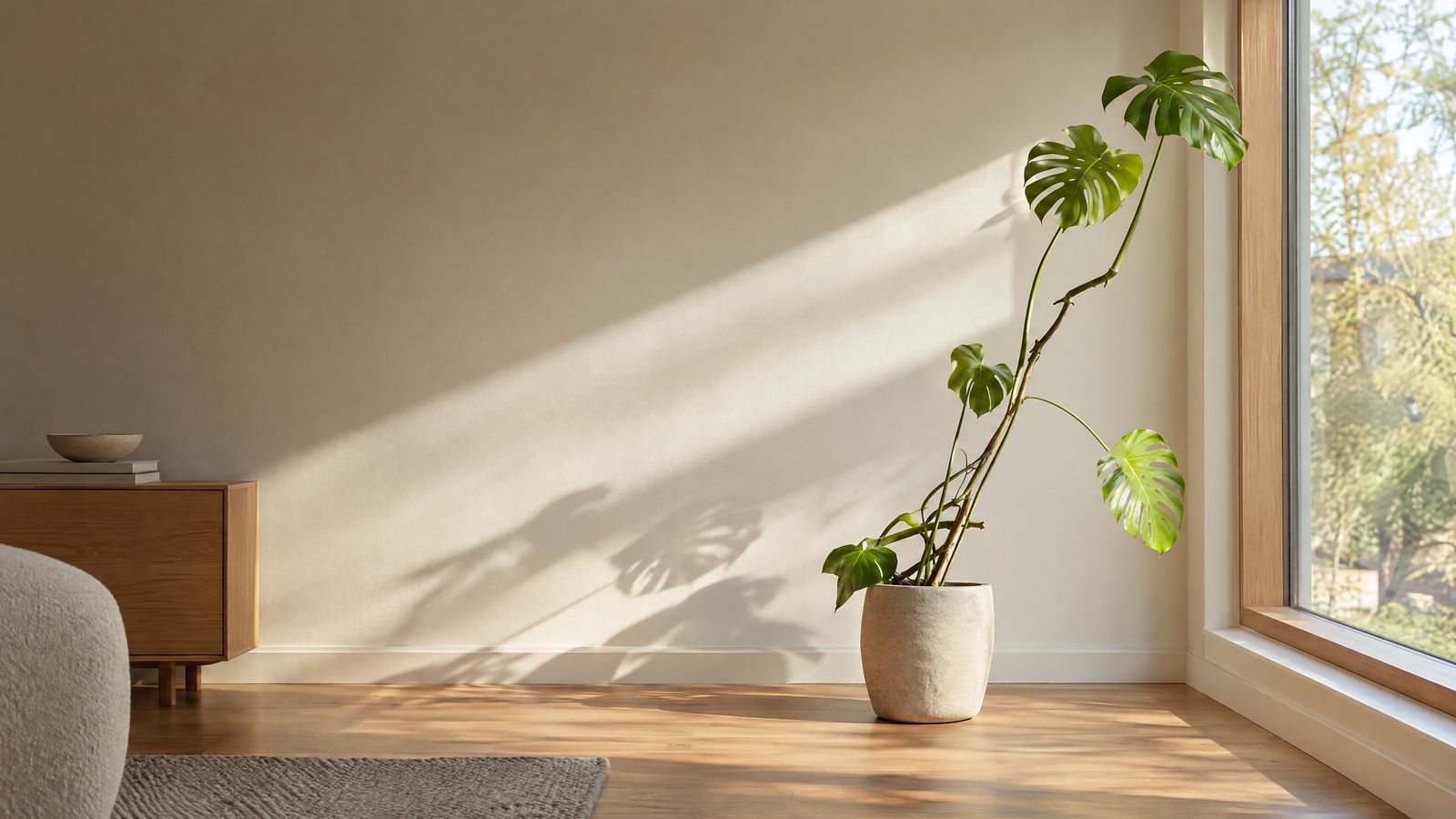
Too little light can yellow a whole plant and make lower leaves drop, often with pale, spindly new growth. Move the plant closer to a bright window, but do it gradually: Iowa State Extension warns that a sudden change in light intensity also causes leaf drop. Our guide to the signs your plant needs more light covers what to look for. Too much direct sun usually shows differently, as brown, scorched patches and a washed-out look.
Cold is the other environmental trigger. Drafts from doors, windows and air vents can cause yellowing and dry leaf edges. The RHS points out that windowsill plants get chilled when curtains are drawn on cold nights, because cold air is trapped between the glass and the curtain. Keep plants out of drafts and protect them from the cold on the way home from the shop.
Is it a nutrient problem?
Under-fed plants often develop yellow leaves. Clemson Extension notes that yellowing and dying lower leaves are generally caused by nitrogen or iron deficiency, and pot-bound plants are especially at risk. The fix is regular, gentle feeding in the growing season and repotting into fresh mix when the old compost is spent; our guide to repotting without stress walks through it.
Too much fertilizer causes yellowing as well. Salts build up and damage roots, often leaving a white or grey crust on the soil surface or the rim of a clay pot. Flush the pot with clear water until it runs from the drainage hole, and when you resume, use fertilizer at half or quarter strength and only while the plant is actively growing. Before you feed any yellowing plant, make sure its roots are healthy: damaged roots cannot take up nutrients, and feeding a plant with root rot only adds salts.
Could pests be causing the yellowing?
Sap-sucking pests such as spider mites, aphids, mealybugs and whiteflies can leave leaves speckled, mottled or yellow. Check the undersides of leaves and along the stems with a magnifying glass. Small numbers can usually be wiped or picked off, and the RHS recommends non-chemical control first. If you do use a product, choose the least-toxic option and follow the label. Our natural pest prevention guide explains a simple inspection routine.
What should I do next?
Several causes often combine, so check every factor before settling on one. Then change one thing at a time and give the plant time to respond. Leaves that have turned fully yellow rarely recover, so judge progress by the new growth, and remove yellow leaves once they come away easily. If you are torn between two causes, Dr. Flori in the Flori app asks follow-up questions about the pattern, soil and light, names the most likely cause and says how urgent it is.
Frequently asked questions
Should I cut off yellow leaves?
Yes, once a leaf is fully yellow it is unlikely to turn green again, so you can remove it when it comes away easily or with clean scissors. Fix the cause first, though, or new leaves will keep yellowing.
Can overwatering and underwatering both cause yellow leaves?
Yes. Overwatering tends to yellow old and new leaves together with soft leaves and wet soil, while underwatering usually yellows the oldest lower leaves first with crisp leaves and a light, dry pot.
Why are only the new leaves turning yellow?
Yellowing between the veins of the youngest leaves points to iron deficiency, which often happens when roots are damaged or cannot take up nutrients. Check the roots before adding fertilizer.
Will fertilizer fix yellow leaves?
Only if the cause is a nutrient shortage. If the plant is overwatered, root-damaged or already full of fertilizer salts, feeding makes things worse, so confirm the cause first.
Sources
- Clemson Cooperative Extension HGIC: Houseplant Diseases & Disorders
- RHS: Chlorosis in plants
- RHS: How to help a poorly houseplant
- Iowa State University Extension: Diagnosing Houseplant Problems Related to Poor Culture
- Iowa State University Extension: What causes leaves on my houseplant to turn yellow or brown and drop off?
Written and fact-checked by the Flori team. Every guide cites horticultural sources such as the RHS, university extension services and the ASPCA, and is updated when the advice changes.
General plant care information. Plants vary; when a plant is valuable or a problem spreads quickly, consult a local nursery or plant specialist.