Winter Houseplant Care: Light, Water, Heat
Winter houseplant care in both hemispheres: a symptom-to-fix table, how to find more light, how often to water and how to protect plants from heaters.
 By Flori editorial team · Updated
In winter, give houseplants the brightest window you have, water only when the soil has nearly dried, and skip fertilizer until spring. Keep them at about 18–24 °C (65–75 °F) by day, away from cold glass, draughts and radiators, and raise humidity, because heated air often drops well below the 40–50% most houseplants prefer.
Key takeaways
- Most winter problems come from overwatering, too little light or dry heated air.
- Move plants closer to the sunniest window: south-facing in the Northern Hemisphere, north-facing in the Southern.
- Water only when the top 5 cm (2 in) is dry and empty pot covers about 10 minutes after watering.
- Keep plants at 18–24 °C (65–75 °F) by day, away from cold glass, draughts and radiators.
- Skip fertilizer until spring, except for winter-flowering plants such as amaryllis.
How is winter houseplant care different?
Winter houseplant care comes down to three things that change at the same time: less light, slower drying soil and dry, heated air. The RHS sums up the result: problems often arise in winter because of overwatering, poor light or dry air. Winter means roughly December to February in the Northern Hemisphere and June to August in the Southern Hemisphere, but your windows and your heating matter more than the calendar. Instead of a month-by-month list, this guide starts from what your plant shows you in winter, with a symptom to cause to fix table, and then covers light, water and heat in that order. For the temperature limits in detail, see how cold is too cold for houseplants.
Winter houseplant problems at a glance
| What you see in winter | Likely cause | First fix |
|---|---|---|
| Thin, pale, stretched new growth leaning to the window | Too little light | Move closer to the brightest window |
| Old and new leaves yellowing and dropping together, soil still wet | Overwatering | Let the soil nearly dry; empty pot covers |
| Lower leaves yellow and drop, crispy edges, soil bone dry | Underwatering | Water thoroughly; move it away from any radiator |
| Brown leaf tips and edges | Dry air from heating | Group plants, use a pebble tray or humidifier |
| Blackened leaves, drooping or collapse | Cold | Move away from glass and draughts |
| Sudden leaf drop after a move or a cold night | Temperature swing | Keep the plant in one steady spot |
| Flower buds falling off an orchid | Too cold | Keep it in a warm room, away from cold glass |
The symptom signs come from the RHS guide to poorly houseplants; the temperature and leaf-drop notes from NDSU and the RHS winter care guide.
Light: the biggest winter problem
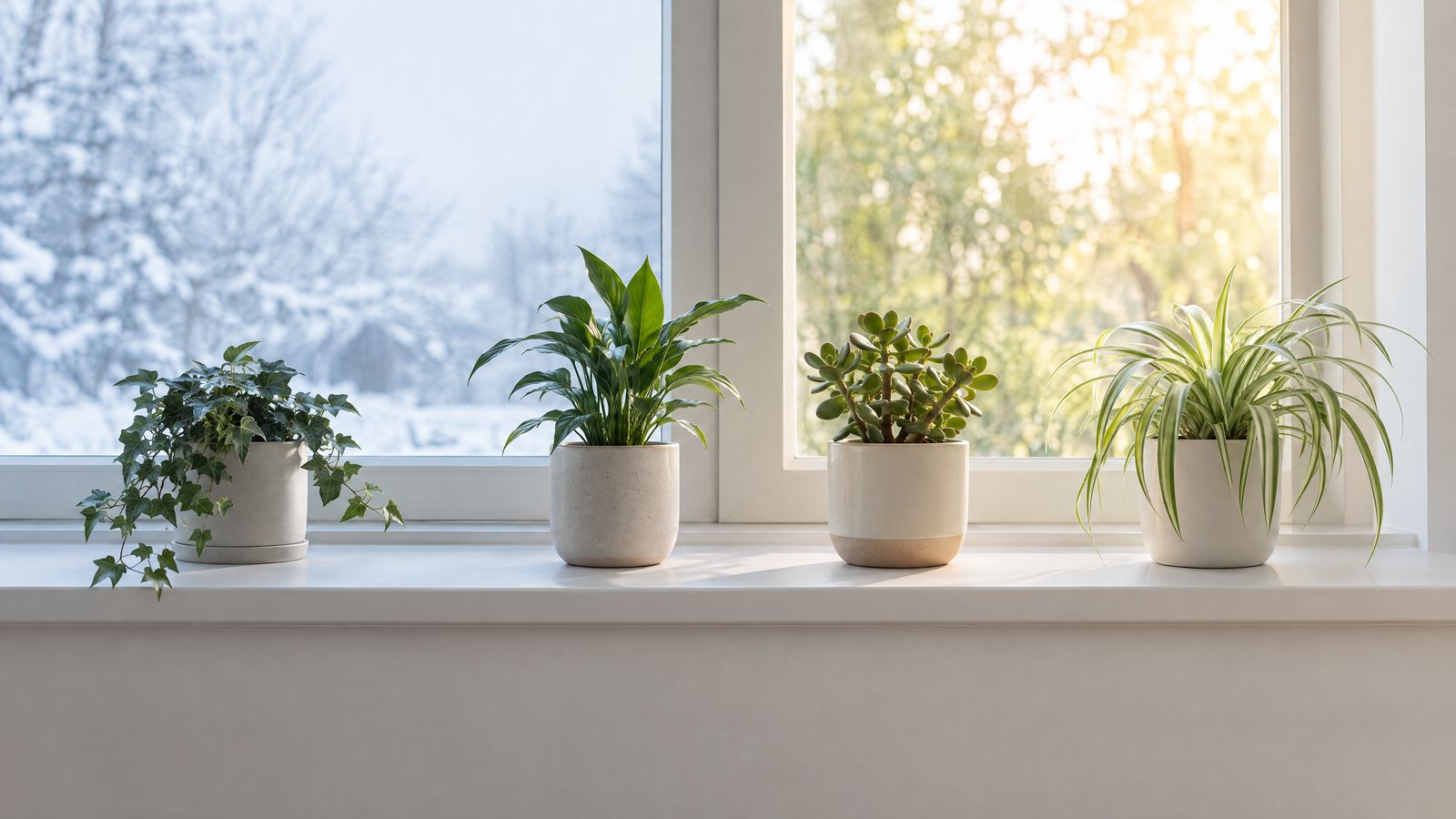
Days are short and the sun is low, so a spot that was perfect in summer can be too dark now. NC State Extension notes that north- and east-facing windows that gave good indirect light in summer may be too shady in winter. NDSU Extension says that if new growth is thin and spindly, the plant should move closer to a south-facing window. In the Southern Hemisphere the sunny side is north, so use a north-facing window instead.
- Give plants a winter holiday. The RHS suggests moving plants out of dark corners to a brighter spot for the darker months.
- Clean the leaves. NC State recommends wiping leaves with a cloth and a very mild soap solution, or a lukewarm shower; water that is too hot can scald leaves and roots. Dust also attracts insects and mites.
- Add a grow light if no window is bright enough; NC State lists it as the alternative to moving the plant.
If you are unsure how dark a spot really is, Flori's Smart light meter can measure it. The signs of a light-starved plant are covered in signs your plant needs more light.
How often should you water houseplants in winter?
Less often, but not by a fixed number of days. NC State says most houseplants do best when the soil nearly dries out between waterings in winter, and suggests three checks:
- Feel the top 5 cm (2 in) of soil with a finger.
- Push a wooden skewer into the pot and see how much damp soil clings to it.
- Lift the pot: a dry pot is noticeably lighter than a freshly watered one.
When it is time, water properly. NDSU suggests watering in the sink until water drains from the bottom, then watering once more. The RHS adds one winter habit worth copying: check decorative pot covers about 10 minutes after watering and tip out any water that has collected, because a plant standing in water through a cool week is the classic route to root rot.
Heat and dry air: what temperature and humidity do houseplants need?
Iowa State University Extension says most houseplants do well at 18–24 °C (65–75 °F) by day and 16–18 °C (60–65 °F) at night, and that temperatures below 10 °C (50 °F) or rapid swings can harm some plants. NDSU adds that sudden temperature changes can cause leaf drop. In practice that means:
- Keep leaves off cold window glass and out of the path of draughts from outside doors (Iowa State, NDSU).
- Keep pots away from radiators and hot air vents, which crisp delicate leaves (RHS, Iowa State).
- Do not leave plants on a windowsill behind closed curtains; the RHS lists it as a cold spot.
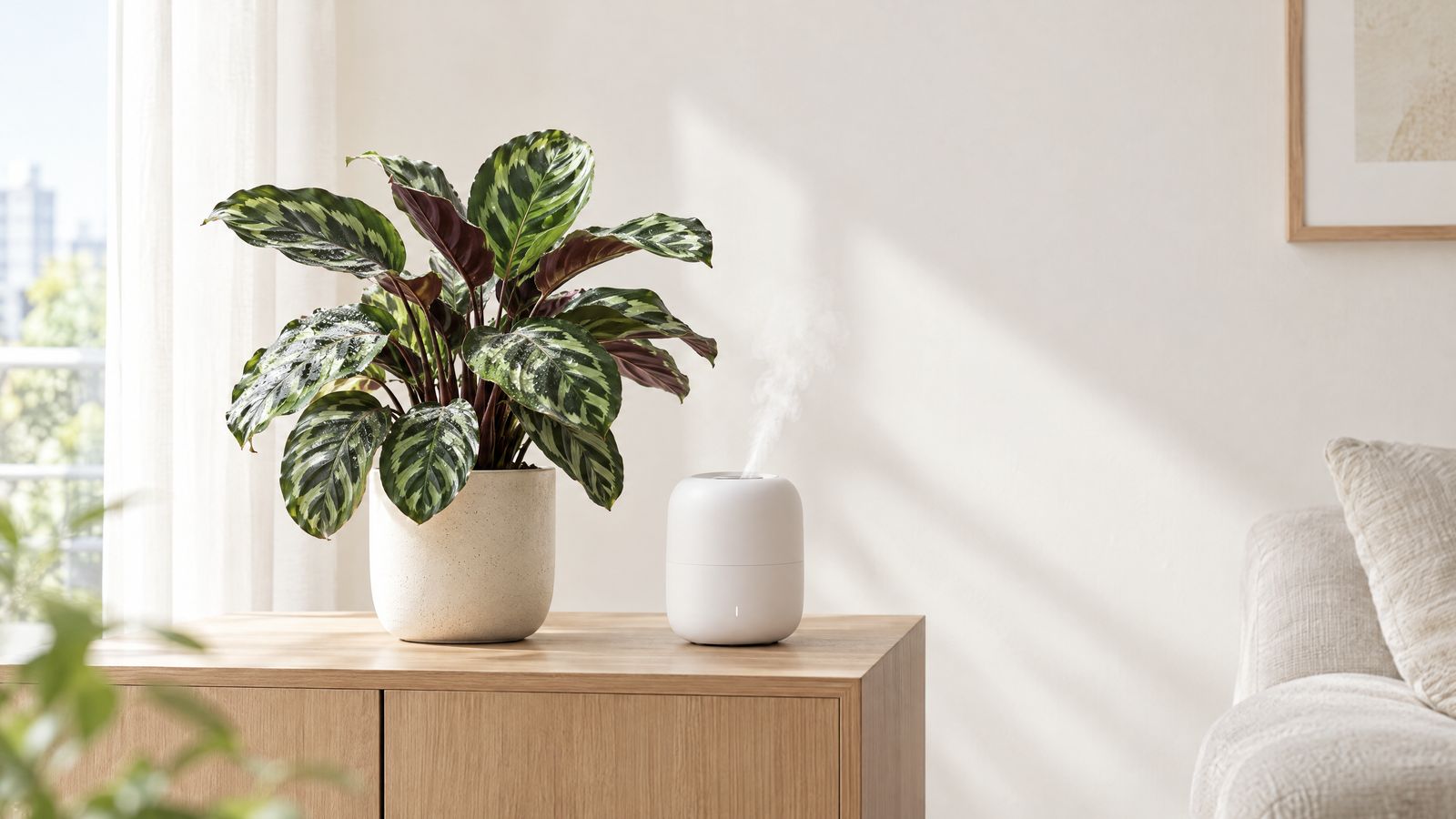
Heating also dries the air. NDSU says homes in winter can drop to 10–20% relative humidity, while most houseplants prefer 40–50%. Group plants together, stand them on a tray of wet pebbles with the pot base above the water, move humidity lovers to a bright bathroom or kitchen, or use a small humidifier. NC State notes that misting only helps for a few minutes. Our indoor plant humidity guide compares the options.
Should you fertilize or repot in winter?
For most plants, no. NDSU advises skipping fertilizer in winter because growth slows with less light and lower temperatures, and the RHS says little to no feeding is needed. NC State suggests resuming in March or April in the Northern Hemisphere; in the Southern Hemisphere that is around September or October. Save repotting for the same moment, when new growth shows the plant can use fresh soil. The seasonal plant care calendar covers what changes in spring.
The exceptions: plants that flower in winter
Some plants do their best work in the dark months, and they follow slightly different rules:
- Amaryllis (Hippeastrum): regrows in autumn; the RHS suggests a high-potash liquid feed, such as tomato food, while it grows.
- Cyclamen: water from the base and avoid overwatering, because they rot easily (RHS).
- Christmas cactus: flowers in the cooler months and is long-lived (RHS).
- Orchids: the RHS warns their flower buds can drop if they get too cold.
- Poinsettia: see poinsettia care after the holidays.
A 10-minute weekly winter routine
- Check each pot before watering, never by the calendar; empty saucers and covers.
- Look at new growth: pale and stretched means it needs a brighter spot.
- Feel for cold glass and draughts at night, and for hot air near radiators.
- Turn a few leaves over to check for pests such as spider mites.
- Wipe dusty leaves every few weeks.
If a plant still struggles, change one thing at a time, starting with watering, then light, then temperature, so you can see what helped. Flori's care reminders can prompt the weekly check, which is more useful in winter than a fixed watering day.
Frequently asked questions
Should I water houseplants less in winter?
Yes, for most plants. Lower light and cooler rooms slow growth, so soil stays wet longer. Check the top 5 cm (2 in) and water only when it has nearly dried out.
Is it OK to put houseplants near a radiator in winter?
It is better not to. Hot air from radiators and vents dries the soil fast and can crisp delicate leaves. A spot a little further away with good light is safer.
When should I start fertilizing houseplants again after winter?
When new growth appears in spring: around March or April in the Northern Hemisphere and around September or October in the Southern Hemisphere.
Why are my houseplants dropping leaves in winter?
The usual causes are overwatering, too little light, a cold draught or a sudden temperature change after a move. Check soil moisture first, then the light and temperature at the plant.
Sources
- Royal Horticultural Society: Beautiful winter houseplants and care tips
- NC State Extension: Winter considerations for houseplants
- Iowa State University Extension: What is the proper temperature for houseplants during the winter months?
- NDSU Extension: Dakota Gardener: Winter Houseplant Care
- Royal Horticultural Society: How to help a poorly houseplant
Written and fact-checked by the Flori team. Every guide cites horticultural sources such as the RHS, university extension services and the ASPCA, and is updated when the advice changes.
General plant care information. Plants vary; when a plant is valuable or a problem spreads quickly, consult a local nursery or plant specialist.