How Cold Is Too Cold for Houseplants?
Most houseplants struggle below 10 °C (50 °F) and tropicals can get chill injury without frost. Temperature bands, cold spots and when to bring plants in.
 By Flori editorial team · Updated
For most houseplants, below about 10 °C (50 °F) is too cold. They grow best at 18–24 °C (65–75 °F) by day and 16–18 °C (60–65 °F) at night, and tropical species can suffer chill injury at 10 °C (50 °F) or lower, even without frost. Cold windowsills, glass and draughts are the usual culprits.
Key takeaways
- Most houseplants like 18–24 °C (65–75 °F) by day and 16–18 °C (60–65 °F) at night.
- Below about 10 °C (50 °F), tropical plants can get chill injury even without frost.
- Windowsills behind curtains, leaves touching glass and draughts are the coldest spots indoors.
- Bring tender plants inside before nights drop to about 10 °C (50 °F): early autumn in either hemisphere.
- After a cold snap, keep the plant steady and warm, water sparingly and wait before pruning.
What temperature is too cold for indoor plants?
For most houseplants, trouble starts below about 10 °C (50 °F). Iowa State University Extension says most houseplants grow well at 18–24 °C (65–75 °F) by day and 16–18 °C (60–65 °F) at night, and that temperatures below 10 °C (50 °F) or rapid swings may harm some plants. Clemson Extension adds that several tropical species can suffer chill injury at or below 10 °C (50 °F), well above freezing. The catch is that your thermostat does not tell you what the plant feels: a windowsill on a winter night can be far colder than the middle of the room. This guide gives the temperature bands that matter, the cold spots to check, and when to bring plants in for both hemispheres.
Houseplant temperature bands at a glance
| Temperature at the plant | What happens | What to do |
|---|---|---|
| 18–24 °C (65–75 °F) by day, 16–18 °C (60–65 °F) at night | Comfortable for most houseplants | Nothing; keep it steady |
| 10–16 °C (50–60 °F) | Growth slows; fine for cool-loving plants, borderline for sensitive tropicals | Water less; move tropicals a little further from the glass |
| Below 10 °C (50 °F) | Chill injury possible on tropical species, even without frost | Move sensitive plants to a warmer room overnight |
| Near or below 0 °C (32 °F) | Freezing: leaves and stems collapse | Never leave tender plants outside or against frosty glass |
How cold can different houseplants go?
Not every plant has the same limit. A rough grouping helps:
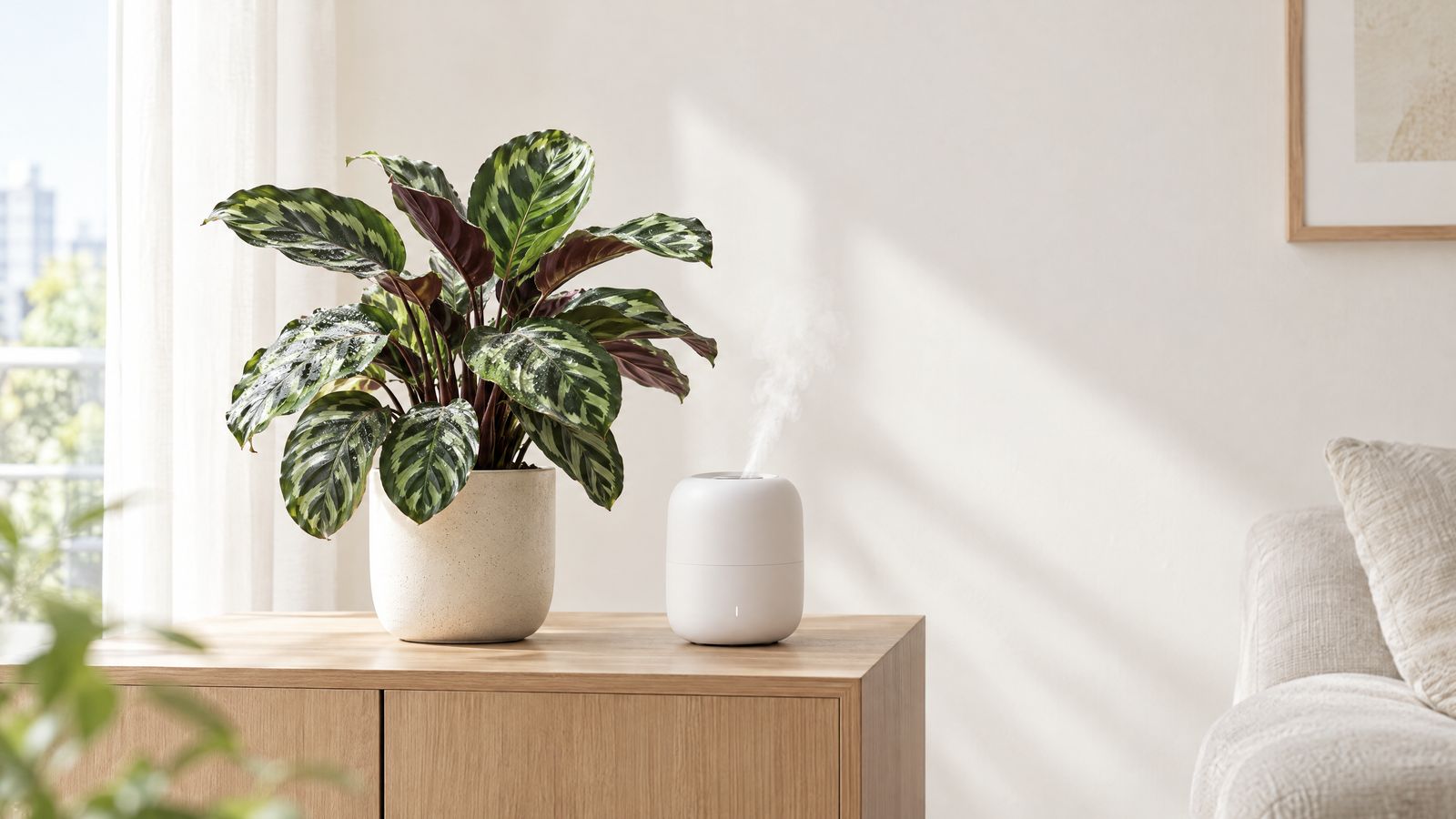
- Warmth-loving tropicals. Calathea, many aroids and other rainforest plants dislike any chill. The RHS recommends keeping calatheas at 16–21 °C (61–70 °F) and avoiding temperature swings, and notes they are easily damaged by cold.
- Warm-room flowering plants. The RHS suggests about 20 °C (68 °F) for poinsettia and for Phalaenopsis and Dendrobium orchids. Cold buds on orchids often drop.
- Cool-room plants. Indoor azaleas do best at about 10–15 °C (50–59 °F) according to the RHS, so a cool bright room helps them last.
- Desert cacti. Many actually benefit from a cool, dry winter rest; see our guide to popular cactus types for the details by type.
If you are not sure where a plant fits, its care profile should list a temperature range. Flori's care profile for each plant includes temperature alongside light, watering and humidity.
Where does the cold actually hit indoors?
Most cold damage indoors happens in a few predictable spots:
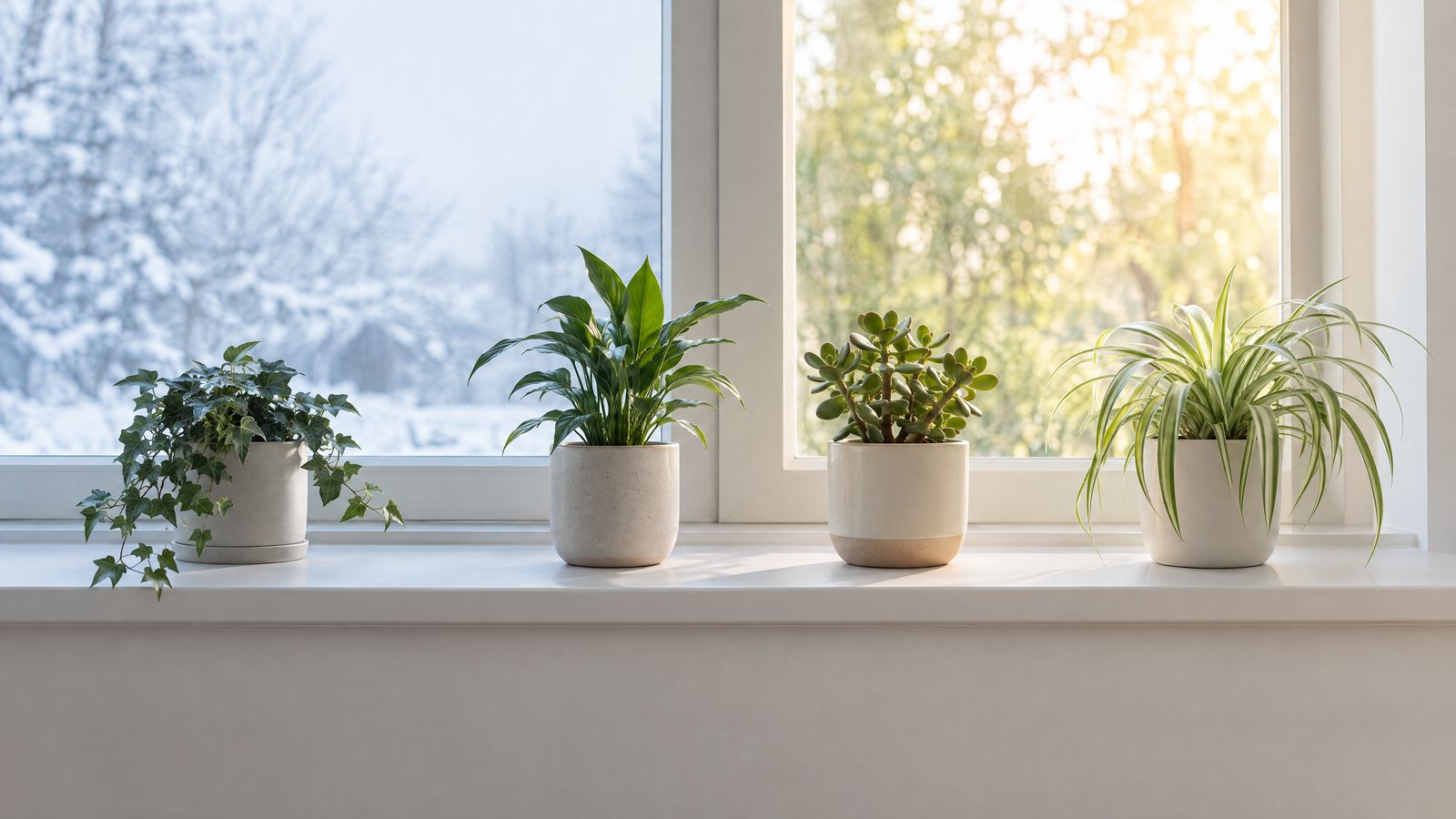
- Windowsills at night. The RHS warns that being left in the cold on windowsills and behind curtains can damage some plants. If you close the curtains, bring the plants into the room side.
- Leaves touching glass. Iowa State advises making sure foliage does not touch cold windows. Single glazing is worst.
- Draughts. Front doors, balcony doors, and windows opened for airing in winter all send blasts of cold air. Keep plants out of that path (Iowa State, RHS).
- The opposite problem: heat. Radiators, fires and hot air vents dry and crisp leaves (RHS, Iowa State). A plant moved from a cold sill straight onto a radiator shelf gets both kinds of stress.
A cheap thermometer placed beside the plant overnight tells you more than any thermostat. Check the coldest hour, usually just before dawn.
When should you bring plants back inside?
Bring tender plants indoors before night temperatures fall to about 10 °C (50 °F). Clemson Extension recommends moving them when outdoor temperatures are close to indoor temperatures, so the change is not a shock. In the Northern Hemisphere that is usually early autumn, around September to October depending on where you live; in the Southern Hemisphere it is around March to April. Watch the night forecast, not the calendar.
- Acclimatize. Clemson suggests a lightly shaded spot for a couple of days, then full shade, over about a week, so plants adjust to lower indoor light.
- Check for pests. Inspect leaves, undersides, soil and the bottom of the pot before plants join the rest of your collection.
- Expect some yellow leaves. Even with care, some leaf drop after the move is normal.
A quick checklist for cold nights
- Pull sensitive plants (calatheas, orchids in bud, anything tropical) into the room before you close the curtains.
- Leave a gap of at least a hand's width between leaves and the glass.
- Water in the morning rather than late in the evening, so roots do not sit in cold, wet soil overnight.
- When you air the room, move plants out of the stream of cold air first.
- If your heating switches off at night, remember the sill cools fastest then; check it once with a thermometer.
What does cold damage look like?
Chilled leaves often look dark, glassy or water-soaked at first, then turn brown or black and collapse. Leaves may curl, wilt or drop, and new buds may fall. Damage can show up a day or more after the cold night, so a plant that looked fine in the morning may still have been hurt. If you are unsure whether you are looking at cold, overwatering or pests, a photo and a few answers to Dr. Flori's follow-up questions can help narrow it down.
How do you help a plant after a cold snap?
- Move it to a steady 16–21 °C (61–70 °F) spot away from both glass and radiators.
- Do not repot or fertilize while it recovers.
- Water only when the top of the soil is dry. Cold, wet soil is the fastest route to root rot.
- Wait before cutting back. Once new growth appears, trim leaves that are clearly dead; stems that are still firm may recover.
Winter care beyond temperature
Plants grow less in winter, so they need less water and little or no fertilizer until spring. The RHS suggests checking pot covers about 10 minutes after watering and tipping out any water that has collected. Heated air is dry; our indoor plant humidity guide covers what helps. If you buy a plant in autumn or winter, the RHS recommends wrapping sensitive ones like calatheas well for the trip home. For the full season-by-season routine, see the seasonal plant care calendar.
Frequently asked questions
Is 15 °C (59 °F) too cold for houseplants?
Not for most. It is below the ideal range, so growth slows and plants need less water, but damage usually starts below about 10 °C (50 °F). Very sensitive tropicals such as calathea prefer at least 16 °C (61 °F).
Can houseplants recover from cold damage?
Often, yes, if the roots and stems survived. Move the plant somewhere steady and warm, water sparingly, and trim dead leaves once new growth appears.
Should I move plants off the windowsill in winter?
At night, sensitive ones yes, especially if curtains trap them against the glass. The RHS warns that windowsills and the space behind curtains can get cold enough to damage some plants.
When should I bring outdoor plants inside for winter?
Before night temperatures fall to about 10 °C (50 °F), usually in early autumn: around September to October in the Northern Hemisphere and March to April in the Southern Hemisphere.
Sources
- Iowa State University Extension: What is the proper temperature for houseplants during the winter months?
- Clemson Cooperative Extension HGIC: Prepare Houseplants to Move Back Inside
- Royal Horticultural Society: Beautiful winter houseplants and care tips
- Royal Horticultural Society: Christmas-flowering houseplants
- Royal Horticultural Society: How to grow calatheas
Written and fact-checked by the Flori team. Every guide cites horticultural sources such as the RHS, university extension services and the ASPCA, and is updated when the advice changes.
General plant care information. Plants vary; when a plant is valuable or a problem spreads quickly, consult a local nursery or plant specialist.