Mushrooms Growing in a Houseplant Pot: Harmful?
Mushrooms in a houseplant pot don't hurt the plant but are poisonous if eaten. What they are, why they appear and what to do if you have kids or pets.
 By Flori editorial team · Updated
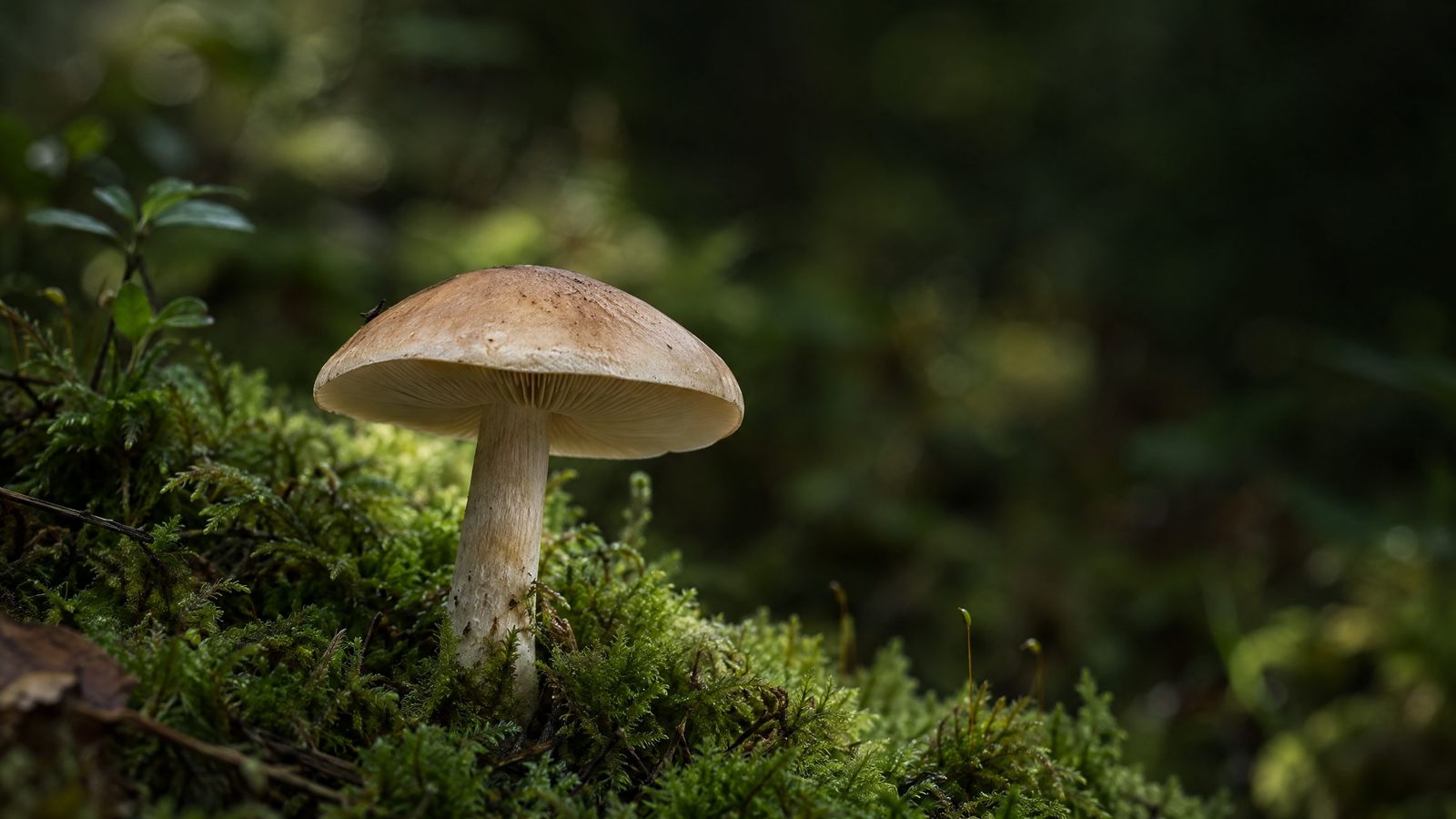
Mushrooms in a houseplant pot, usually the small yellow Leucocoprinus birnbaumii, feed on dead organic matter in the mix and do not harm the plant. They are a sign the soil stays too moist. Treat them as poisonous to people and pets: pick them off, water less, and call a poison line if anyone eats one.
Key takeaways
- The usual pot mushroom is the yellow flowerpot parasol, Leucocoprinus birnbaumii, which feeds on dead organic matter.
- It does not harm living plants, but repeated mushrooms suggest the mix is staying too wet.
- Treat every pot mushroom as poisonous; remove them daily if children or pets can reach the plant.
- Fungicides are generally ineffective; picking them off and watering less are what help.
- If anyone eats one, call a poison line now (TR 114, US 1-800-222-1222, UK 111) and keep a sample.
Why are mushrooms growing in my houseplant pot?
Finding mushrooms growing in a houseplant pot is common, and it is rarely a plant emergency. The question "are they harmful?" really has two answers, and most pages mix them up: the mushrooms are almost never harmful to the plant, but they should be treated as poisonous to the people and pets who live with it. This guide takes the two questions separately and gives you a household-by-household table of what to do.
A mushroom is only the fruiting body of a fungus that lives inside the potting mix. Most pot fungi feed on dead organic matter such as peat, bark and compost. Penn State Extension notes that the most common one indoors has spread around the world with the trade in ornamental plants and growing media, because its spores travel easily on the soil surface. A new plant or a fresh bag of compost is the usual way it gets in, and warm rooms with constantly moist mix are what make it fruit.
What is the yellow mushroom in my plant pot?
The usual suspect is Leucocoprinus birnbaumii, known as the yellow houseplant mushroom, flowerpot parasol or yellow parasol. Iowa State Extension describes it as small and lemon yellow, about 2.5–7.5 cm (1–3 in) tall, with an oval or bell-shaped cap. Penn State Extension adds that the cap is 2.5–5 cm (1–2 in) wide, oval when young and more bell-shaped with age, textured with scales or dots, on a slender yellow stalk 5–7.5 cm (2–3 in) tall. It can appear in pots and greenhouses at any time of year.
Not every pot mushroom is yellow. White, cream or brown species turn up too, and telling them apart reliably is a job for a specialist. For your safety the species does not change the advice: whatever the colour, treat any mushroom in a pot as inedible.
Are mushrooms in a pot harmful to the plant?
No. Iowa State Extension explains that the fungus breaks down dead organic matter in the potting mix, does not harm living plants, and does not need to be removed for the plant's sake. Penn State Extension goes further: by breaking down organic matter, the fungus may even release nutrients the plant can use.
The useful message is about water. Penn State Extension points out that mushrooms appearing again and again suggest the mix is too moist, which usually means the plant is being overwatered. Too much water is also the main cause of root rot, so look at the plant as well as the mushrooms: wilting while the soil is still wet, yellowing on old and new leaves at once, or a sour smell from the pot are signs to check the roots with our root rot rescue plan.
Are houseplant mushrooms poisonous to people, cats and dogs?
Treat them as poisonous. Iowa State Extension says the yellow houseplant mushroom is considered poisonous to people and animals, and Penn State Extension lists diarrhoea, vomiting, nausea and other stomach upsets among the possible symptoms. Poison Control in the US puts the wider rule simply: eating any amount of any wild mushroom could be very dangerous, and mushrooms that look alike can be very different. A mushroom that sprouted in your living room is still a wild mushroom.
The risk is not the adult who knows not to eat it. It is the toddler at floor level and the puppy or cat that chews leaves or digs in pots. Here is what to do, depending on who shares the room with the plant:
| Your household | What to do |
|---|---|
| Babies or toddlers | Pick off every mushroom as soon as you see it and check the pot daily while they keep appearing. Move the plant out of reach until the flushes stop. |
| Dogs or cats that chew plants or dig | Same as above. Remove mushrooms daily and move the pot somewhere the animal cannot reach. |
| Adults only | Removal is optional. Pick them off if you dislike the look, and wash your hands afterwards. |
| Several plants in one room | Check neighbouring pots. Penn State Extension notes that spores can travel to other plants and set up there too. |
How do I get rid of mushrooms in a houseplant pot?
You can keep them under control, but you may not get rid of the fungus completely, because most of it lives out of sight in the mix. Work through these steps:
- Pick them out. Use gloves or a paper towel, lift each mushroom out at the base, put them in a closed bag in the bin and wash your hands.
- Water less often. Let the top few centimetres of mix dry before watering again, and empty saucers and outer pots so the base never stands in water. Our guide on how to water houseplants shows how to check the mix first.
- Skip the fungicide. Iowa State and Penn State Extension both say fungicides are generally ineffective against these mushrooms. Do not pour household chemicals into the pot either.
- Repot only if you want to. Moving the plant into fresh mix is an option, but none of the extension sources we checked promise that it stops the mushrooms, and new spores can arrive with the next plant or bag of compost. If you do it, follow our steps for repotting without stress.
- Keep watching. Mushrooms often come in flushes. Check the pot every day or two while they are appearing, especially if children or pets are around.
Can an app tell me what the mushroom is?
Flori can suggest a name for a mushroom from a photo, which is a good starting point if you want to know whether you are looking at the common flowerpot parasol. But a name is not permission to eat it. No app, photo, smell, taste or colour can make a wild mushroom safe to eat, and that includes one growing in a pot. If the plant itself looks unwell, Dr. Flori can work through the watering and root questions with you from a photo. More mushroom safety guides are in our mushrooms section.
What should I do if someone eats a mushroom from a plant pot?
Do not wait for symptoms. Call a poison line now, even if the person or pet seems fine:
- Türkiye: UZEM 114 (Ulusal Zehir Danışma Merkezi)
- United States: Poison Control 1-800-222-1222
- United Kingdom: NHS 111
- Pets: your vet, or in the US the ASPCA Animal Poison Control Center on (888) 426-4435
Keep a sample: put any leftover mushroom, or another one from the same pot, in a paper bag in the fridge and take a photo, so specialists can identify it. Waiting to see how someone feels is risky because, as the North American Mycological Association explains, the most dangerous wild mushrooms such as some Amanita species cause no symptoms for 6–24 hours, and patients can seem to recover for a day before liver and kidney damage shows. Do not try home remedies; follow the advice of the poison line or doctor.
Frequently asked questions
Should I throw away a plant with mushrooms in the pot?
No. The fungus feeds on dead organic matter in the mix and does not harm living plants. Pick the mushrooms off, water less often, and check the roots only if the plant itself looks unwell.
Will repotting get rid of houseplant mushrooms?
It may help for a while, but it is not guaranteed. The fungus can live throughout the mix, and new spores can arrive with fresh compost or another plant.
My dog ate a mushroom from a plant pot. What should I do?
Call your vet or a pet poison line straight away, even if your dog seems fine, and keep a sample of the mushroom for identification. In the US the ASPCA Animal Poison Control Center is on (888) 426-4435.
Are white mushrooms in a plant pot safer than yellow ones?
No. Colour tells you nothing about safety. Treat any mushroom growing in a pot as inedible and keep it away from children and pets.
Sources
Written and fact-checked by the Flori team. Every guide cites horticultural sources such as the RHS, university extension services and the ASPCA, and is updated when the advice changes.
General plant care information. Plants vary; when a plant is valuable or a problem spreads quickly, consult a local nursery or plant specialist.