Can an App Identify Mushrooms Safely? What It Can't Do
A mushroom ID app can suggest a name from a photo, but it cannot tell you a wild mushroom is safe to eat. What apps miss and how to use one responsibly.
 By Flori editorial team · Updated
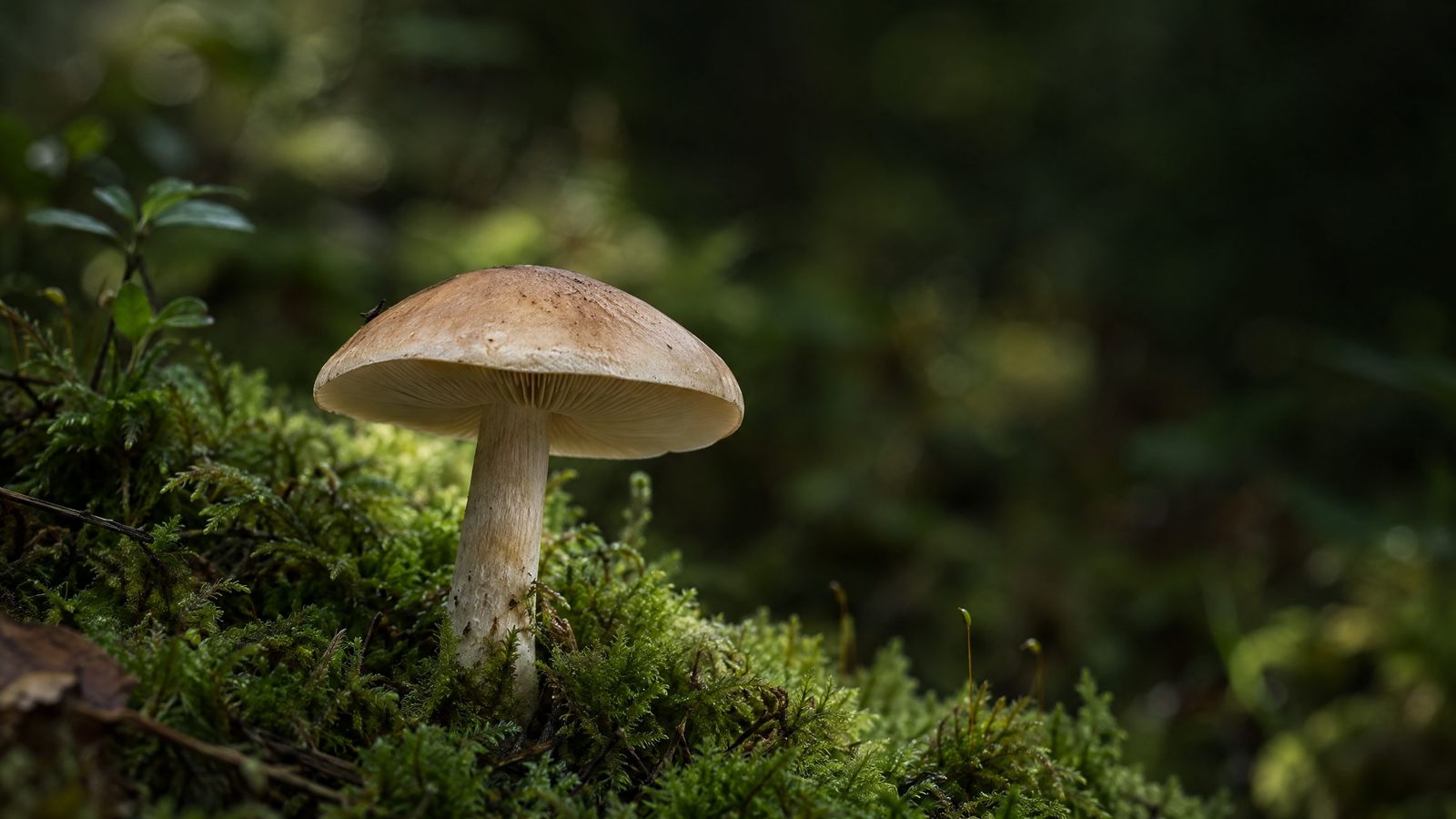
An app can suggest a likely name for a mushroom from a photo, which helps you learn and describe a find to an expert. It cannot confirm that a wild mushroom is safe to eat: photos miss buried cups, spore prints, bruising and microscopic features, and deadly species have look-alikes. Only an expert checking the mushroom in hand can decide.
Key takeaways
- Mushroom apps are good for learning names, narrowing options and recording finds.
- No app, Flori included, can tell you that a wild mushroom is safe to eat.
- Photos usually miss the buried cup, spore print, bruising, smell and microscopic features.
- Photograph the whole mushroom, including the dug-up base, and ask a local expert.
- If anyone may have eaten an unknown mushroom, call the poison line at once.
Can a mushroom identification app tell you if a mushroom is safe to eat?
No. A mushroom identification app can suggest what a mushroom probably is, and that is genuinely useful, but no app can tell you that a wild mushroom is safe to eat. This guide is an honest look from a company that makes one: what a photo captures, what it misses, a feature-by-feature table of what apps cannot see, and a simple routine for using any mushroom app without putting anyone at risk. Poison Control in the US puts the core problem plainly: unless you are very experienced in mushroom identification, you cannot tell edible from poisonous mushrooms. A phone does not change that, because the deadliest species have harmless-looking twins.
What a mushroom app can do well
Used for the right job, photo identification is a good tool:
- Learning. Getting a likely name in seconds turns a walk into a lesson. You start to notice groups, colours and habitats, and you can read up on what you saw.
- Narrowing down. A suggestion gives you a starting point to check against a field guide or a local expert, instead of a blank page.
- Recording. Photos with a name, a date and a place build a personal record of what fruits where and when.
- Talking to an expert. A clear set of photos and a likely name help a mushroom club member or poison specialist understand what you found.
- Raising a flag. If the app suggests a dangerous group, such as Amanita, that is a reason to keep children and pets away and get a proper check, not a reason to relax when it suggests something else.
Flori can identify wild mushrooms from a photo for exactly these reasons. It is a way to learn and to ask better questions, never a verdict on edibility.
What a photo cannot show
Poison Control lists what identification experts examine: the cap's shape, colour and texture, the gills or pores, the spore colour, the base of the stalk and whether it changes colour when bruised, how the cap attaches to the stalk, how the mushroom grows and what it grows on. Many of these never appear in a phone photo.
| Feature | Why it matters | Visible in a typical photo? |
|---|---|---|
| Cup (volva) at the stem base | The key clue for deadly Amanitas such as the death cap; often buried in soil | Usually not, unless the whole mushroom was dug up |
| Spore print colour | Separates large groups of look-alikes | No; it takes hours on paper |
| Bruising and colour change | Some species change colour when cut or handled | Only if you cut it and wait |
| Gill attachment and underside | Separates genera that look alike from above | Only with a separate underside shot |
| Smell and texture | Part of an expert's check, never a safety test | No |
| Host tree and substrate | Many species grow only with certain trees or on wood | Only if you photograph the surroundings |
| Microscopic features and toxins | Some species can only be separated under a microscope; toxins cannot be seen at all | Never |
Even the North American Mycological Association captions its own pictures of deadly species with a warning that they should not be used for identification. If a specialist association will not rely on a photo, you should not either.
Why look-alikes beat both apps and people
The most dangerous mistakes involve species that look right. The death cap can resemble field mushrooms once its buried cup is left behind; white destroying angels can pass for other white mushrooms; a young Amanita in its egg can look like a puffball. Our death cap guide compares these look-alikes side by side. An app sees the same angle you do, in the same light, often of a single specimen past its best, and it can be confident and wrong at the same time. A confidence score is a statement about the picture, not about the mushroom in your hand.
How to use a mushroom ID app responsibly
- Photograph the whole mushroom. Top, side and underside, plus the base after carefully digging it out, not snapping it off. Add a photo of the surroundings and note the nearest trees.
- Treat the result as a question. Read about the suggested species and, above all, about its dangerous look-alikes.
- Ask a person. For everyday identification, NAMA suggests a nearby mushroom club, nature centre, museum or the botany department of a local college or university. Experts check specimens in hand.
- Never eat a wild mushroom because of an app. Poison Control's rule is that it is never safe to eat a wild mushroom unless a mushroom identification expert says so. That applies to every app, Flori included.
What to bring to an expert
An expert can do more with the mushroom than with a photo. Bring the whole specimen, base included, in a paper bag or waxed paper rather than plastic, and keep it in the fridge if you cannot go straight away. NAMA also suggests noting where it was collected, because mushrooms from lawns, roadsides and industrial areas can carry pesticides or heavy metals. Your app photos, the place and the date make a useful record; the final word belongs to the person holding the mushroom.
Myths an app cannot rescue
Some people pair an app result with a home test to feel doubly sure. The tests are myths. Cooking does not make a poisonous mushroom safe. Smell, taste, colour, a cap that peels, a silver spoon that stays bright, and insects or animals eating a mushroom say nothing about whether it contains deadly toxins. Two unreliable checks do not add up to one reliable one.
Mushrooms in the lawn, children and pets
Parents and pet owners often reach for an app when a toddler or a dog has been near mushrooms in the garden. That is the one moment not to rely on it. If there is any chance something was eaten, call for help first and identify later. NAMA advises contacting a vet immediately if you see a pet eating a wild mushroom. Clearing mushrooms from the lawn after rain is a simpler habit than identifying each one. More safety guides are in our mushroom section.
What to do after eating an unknown mushroom
- Call the poison line now, even without symptoms. Türkiye: UZEM 114 (Ulusal Zehir Danışma Merkezi). United States: Poison Control 1-800-222-1222. United Kingdom: NHS 111. Elsewhere, your local emergency number.
- Do not wait. NAMA notes that amatoxin symptoms are delayed by 6 to 24 hours, and people can seem to recover before liver damage shows.
- Keep a sample. Leftovers or more of the same mushroom from where it was picked, in a paper bag or waxed paper, not plastic, in the fridge.
- Show the photos to the professionals, but let them decide what they mean.
Frequently asked questions
Are mushroom identification apps accurate?
They can often suggest the right group or species, but they can be confident and wrong, especially with look-alikes and poor photos. Treat any result as a starting point, never as permission to eat.
Can I eat a mushroom if the app is 99% sure?
No. A confidence score describes the photo, not the mushroom. Never eat a wild mushroom unless an expert has identified it in hand.
What photos help identify a mushroom?
Top, side and underside, the base after digging it out carefully, and the surroundings including nearby trees. Even then, a photo is not enough to judge edibility.
Who can identify a mushroom for me?
A local mushroom club, nature centre, museum or university botany department. In a suspected poisoning, call the poison line first.
Sources
Written and fact-checked by the Flori team. Every guide cites horticultural sources such as the RHS, university extension services and the ASPCA, and is updated when the advice changes.
General plant care information. Plants vary; when a plant is valuable or a problem spreads quickly, consult a local nursery or plant specialist.