
How to Tell If a Mushroom Is Poisonous: The Myths That Kill
There is no simple test for a poisonous mushroom. Silver, peeling, smell and animals are myths. What experts check, and what to do if one was eaten.
 By Flori editorial team · Updated
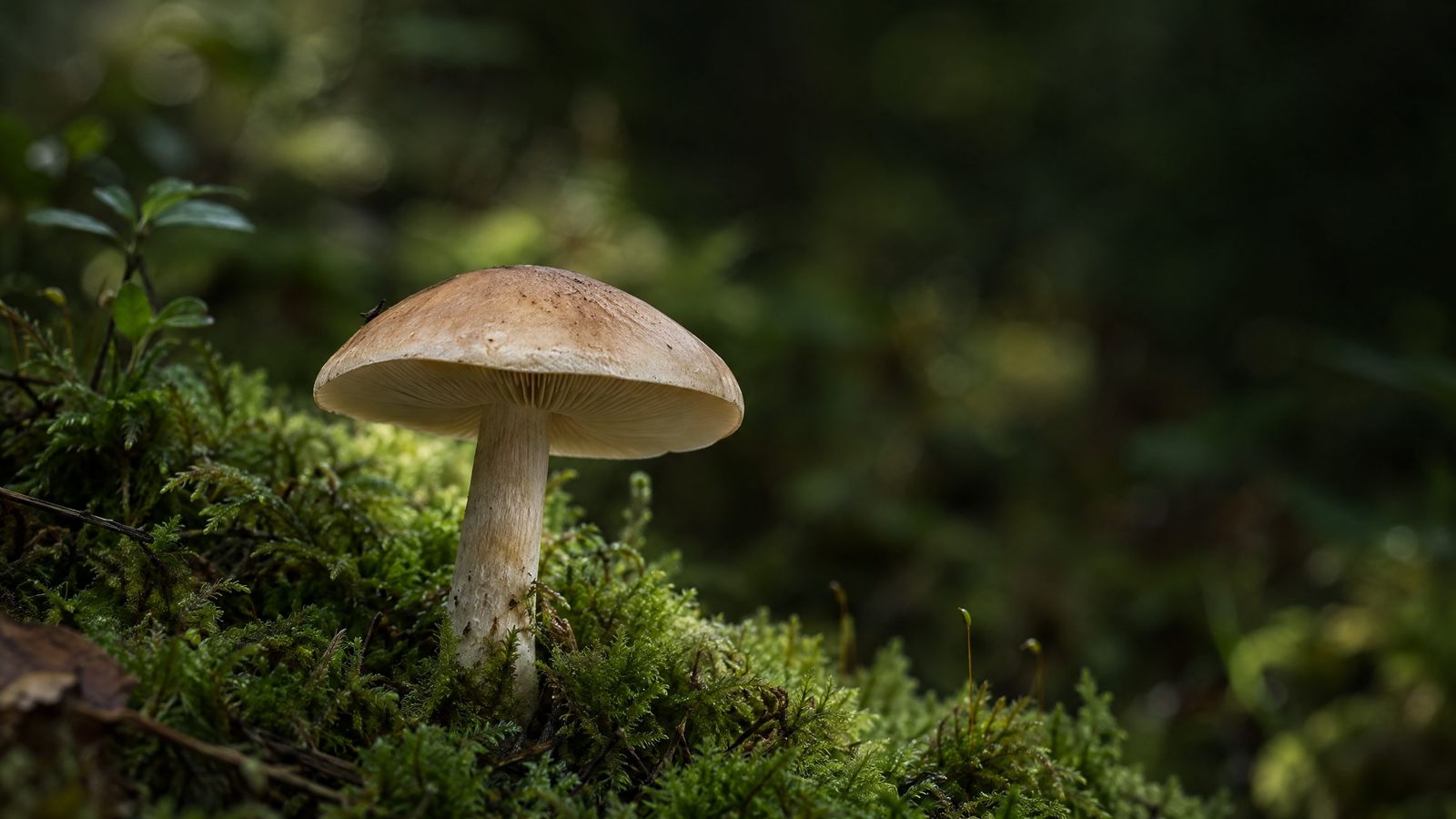
You cannot tell if a wild mushroom is poisonous with a simple test. Silver spoons, peeling caps, smell, colour, cooking and animals eating it are all myths, and a photo or app is not enough. Only an expert examining the whole mushroom can identify it. If someone ate an unknown mushroom, call a poison line now.
Key takeaways
- There is no single rule or home test that separates edible mushrooms from poisonous ones.
- Silver, peeling, smell, colour, cooking and animals eating a mushroom are myths, not tests.
- Deadly amatoxin mushrooms cause no symptoms for 6 to 24 hours and can seem to improve before liver failure.
- A photo or an app can suggest a name, but it can never make a wild mushroom safe to eat.
- After eating an unknown mushroom, call a poison line immediately and keep a sample.
Is there a simple way to tell if a mushroom is poisonous?
No. If you searched for how to tell if a mushroom is poisonous, the honest answer is that there is no simple test, trick or rule of thumb. The North American Mycological Association (NAMA) puts it plainly: there is no single visual rule that separates edible mushrooms from poisonous ones. Ohio State University Extension says the same: no test or characteristic tells them apart, so every mushroom should be treated as poisonous until it has been properly identified. This guide checks the folk tests people still use against those sources, explains why the deadliest species are so easy to get wrong, and ends with what to do if someone has already eaten an unknown mushroom.
Mushroom poison myths, checked against the sources
Most of these beliefs are old, widespread and passed down with confidence. Every one of them has been wrong in real poisonings.
| Myth | Reality |
|---|---|
| A poisonous mushroom turns a silver spoon or coin black | False. Ohio State Extension lists silver tarnishing as a myth; it says nothing about toxins. |
| If the cap peels, it is edible | False (Ohio State). Deadly species can peel easily. |
| If squirrels, slugs, insects or deer eat it, people can too | False. Animals tolerate toxins that kill people, and NAMA notes that insect damage is no guide to edibility. |
| Mushrooms growing on wood are safe | False (Ohio State). Some dangerous species grow on wood. |
| White mushrooms, or mushrooms in meadows and lawns, are safe | False. Ohio State warns that some of the most dangerous mushrooms are white. |
| Bright colours mean poison, dull colours mean safe | False. NAMA says colour is not a reliable test. |
| A pleasant smell or mild taste means it is fine | False. Smell is not reliable (NAMA), and tasting an unknown mushroom is itself a risk. |
| Cooking, boiling, drying or pickling removes the poison | False. Ohio State says parboiling, drying or pickling does not make poisonous mushrooms safe, and Poison Control notes that heat does not neutralize the toxins. |
| A clear photo or an app can confirm it is edible | False. NAMA says a single photograph is never enough for identification. |
Notice the pattern: each myth replaces identification with a shortcut. That is exactly why they are dangerous. A shortcut that works for the mushroom your grandmother picked in one valley can kill someone with a look-alike in another; Poison Control points out that knowing mushrooms in one region is not reliable for another.
Why the deadliest mushrooms are so easy to get wrong
The mushrooms behind most deaths contain amatoxins. NAMA lists them in Amanita and Galerina species, among others; the best known are the death cap (Amanita phalloides) and the white destroying angels such as Amanita virosa. They pass almost every folk test: many are pale, they can smell mild, they peel, and animals may eat them.
The timing is what makes them so treacherous. NAMA describes the course of amatoxin poisoning:
- Latent period of 6 to 24 hours. No symptoms at all, while the toxins are already damaging the liver and kidneys.
- About a day of violent stomach symptoms. Vomiting, diarrhoea and cramps.
- Apparent recovery. Around day two or three the person may seem better and even be sent home.
- Relapse. Liver and kidney failure, which can be fatal.
So "I ate it last night and I feel fine" proves nothing. Feeling better after being sick proves nothing either.
What experts actually look at
Real identification is slow and uses many features together. According to NAMA, experienced identifiers examine the structure of the cap and stem, whether there are gills, pores or teeth underneath, colour changes when the flesh is cut or bruised, the habitat and what the mushroom is growing on, and spore characteristics. Difficult cases may need a microscope or even DNA sequencing.
In practice, a reliable identification also needs the whole mushroom, including the base, which may sit in a cup-like sack below ground in Amanita species. Ohio State Extension recommends learning the poisonous species first, especially the amanitas and the false morels (Gyromitra), and joining a local mushroom club rather than learning alone.
Can a mushroom identification app tell you if it is safe to eat?
No app, and no photo, can make a wild mushroom safe to eat. A photo cannot show spores, the hidden base, the smell, or how the flesh changes colour, and close look-alikes can be one feature apart. Flori can suggest what a wild mushroom might be from a photo, which is useful for learning names, reading about a species and knowing which local expert to ask. Treat that result as a starting point for curiosity, never as permission to eat. If anyone in your home might eat a mushroom based on an app, that is the moment to involve a local expert in person.
Safer habits if you are curious about wild mushrooms
- Learn with people, not shortcuts. A local mushroom club or society can show you specimens in hand; NAMA lists affiliated clubs and volunteer identifiers.
- Learn the killers first. Knowing what a death cap and a destroying angel look like at every stage is more useful than a list of edibles.
- Keep children and pets in mind. Clear mushrooms from lawns where toddlers and dogs play; NAMA notes that dogs are particularly susceptible to some toxins. For pets, call your vet or ASPCA Animal Poison Control.
- Be careful with market wild mushrooms too. A wild mushroom sold at a stall is only as safe as the knowledge of the person who picked it; if in doubt, buy cultivated mushrooms.
- Keep a sample. Ohio State advises saving a sample of any wild mushroom eaten, so it can be identified if someone becomes ill.
For more on species, look-alikes and seasons, browse our mushroom guides, and see the Flori app guides for what identification apps can and cannot do.
What to do if someone ate an unknown mushroom
Act now, even if the person feels completely well. Poison Control and NAMA both stress not waiting for symptoms, because amatoxin poisoning can stay silent for hours and can seem to improve before liver damage shows.
- Call a poison line immediately. In Türkiye call UZEM on 114. In the US call Poison Control on 1-800-222-1222. In the UK call NHS 111. Elsewhere, call your local poison centre or emergency number.
- Keep a sample. Save any leftover mushrooms, raw or cooked, in a paper bag, plus photos of where they grew. This helps experts identify the species.
- Do not wait for symptoms and do not try home remedies. Follow the instructions of the poison centre or doctor.
For a pet that ate a mushroom, call your vet or ASPCA Animal Poison Control straight away.
Frequently asked questions
Does a silver spoon turn black with poisonous mushrooms?
No. Ohio State University Extension lists silver tarnishing as a myth. It tells you nothing about whether a mushroom is poisonous.
If an animal eats a mushroom, is it safe for people?
No. Animals can tolerate toxins that are deadly to people, and NAMA says insect damage is no guide either. Only a proper identification by an expert counts.
Does cooking make a poisonous mushroom safe?
No. Ohio State says boiling, drying or pickling does not make poisonous mushrooms safe, and Poison Control notes that heat does not neutralize mushroom toxins.
Can I eat a wild mushroom if an app identifies it as edible?
No. NAMA says a single photograph is never enough for identification. Use an app to learn names, and ask a local expert who can examine the whole mushroom in person.
What should I do if my child or I ate a wild mushroom?
Call a poison line now, even without symptoms: UZEM 114 in Türkiye, 1-800-222-1222 in the US, NHS 111 in the UK. Keep any leftover mushroom for identification.
Sources
- North American Mycological Association: Wild Mushroom Safety: Identification, Cooking, and Poison Awareness
- North American Mycological Association: Mushroom Poisoning Syndromes
- Ohio State University CFAES: Wild Mushrooms (PLPATH-GEN-11)
- Poison Control (poison.org): Mushroom poisoning: Don't invite "the death angel" to dinner
Written and fact-checked by the Flori team. Every guide cites horticultural sources such as the RHS, university extension services and the ASPCA, and is updated when the advice changes.
General plant care information. Plants vary; when a plant is valuable or a problem spreads quickly, consult a local nursery or plant specialist.