
Sticky Leaves on Houseplants: What Causes It
Sticky houseplant leaves almost always mean honeydew from aphids, scale, mealybugs or whiteflies. How to find the culprit, clean the leaves and stop it.
 By Flori editorial team · Updated
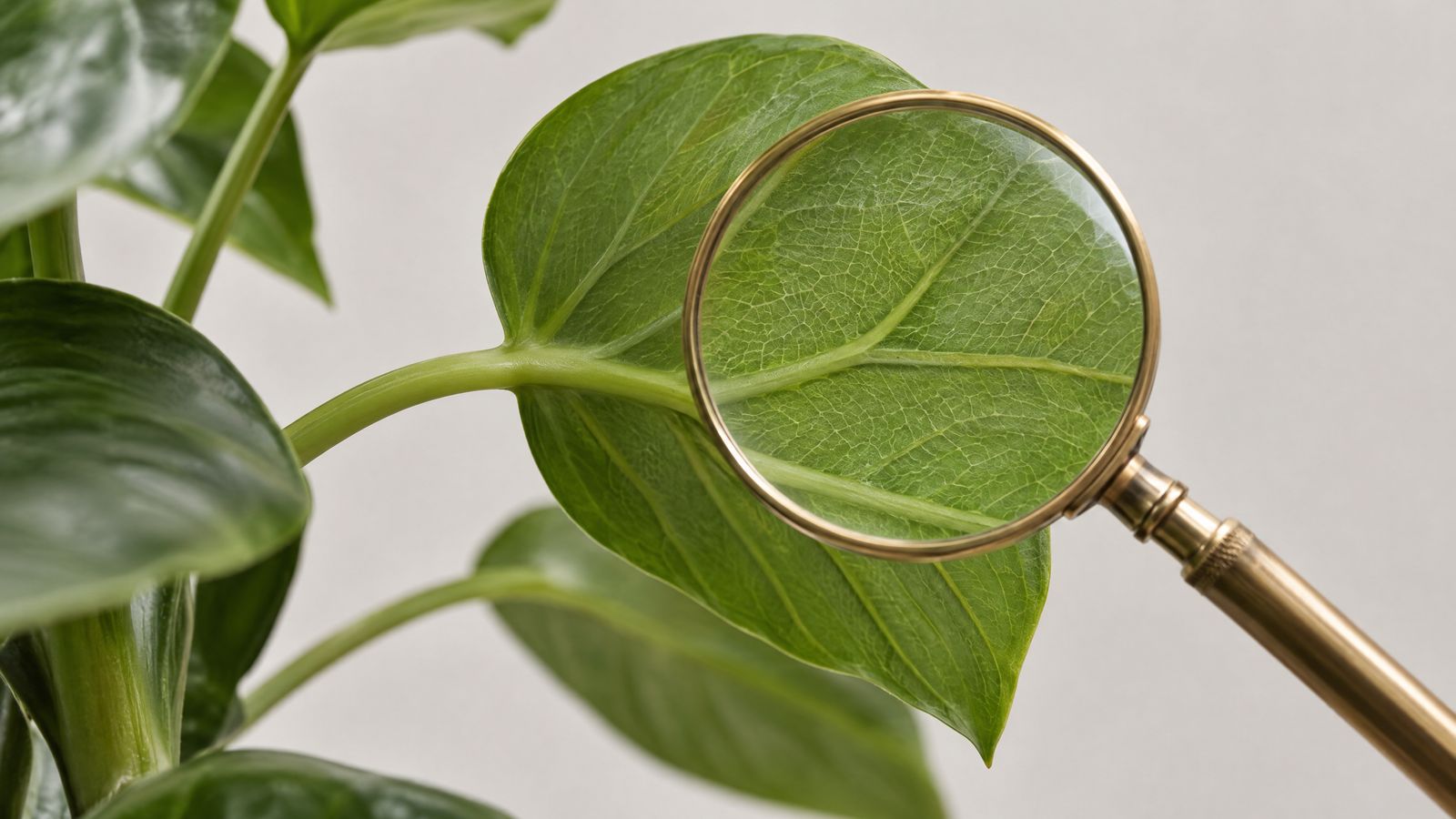
Sticky leaves on a houseplant are usually honeydew, the sugary waste of sap-feeding insects: aphids, soft scales, mealybugs or whiteflies. Look on the leaves and stems directly above the sticky patch to find them. Wipe off the pests and the residue, treat least-toxic first, and check again weekly. A few plants, like hoya, are sticky from their own flowers.
Key takeaways
- Honeydew from aphids, soft scales, mealybugs and whiteflies is the usual cause of sticky leaves.
- Honeydew drips down, so the insects are on the leaves and stems above the sticky spot.
- Black sooty mould on sticky leaves blocks light; it wipes off once the insects are under control.
- Armoured scales and spider mites do not make honeydew, so stickiness narrows down the suspects.
- Some plants, such as hoya, can have sticky flowers; that is normal and needs no treatment.
Why are my plant's leaves sticky?
Sticky leaves on houseplants are one of the most useful clues a plant can give you, because the list of causes is short. In most cases the stickiness is honeydew, the sugary liquid that sap-sucking insects excrete as they feed. UC IPM names the honeydew makers: aphids, soft scales, mealybugs, whiteflies, and outdoors also leafhoppers and psyllids. This guide gives you a culprit-by-culprit table, a quick way to find the insects, how to clean the leaves and the sooty mould that often follows, and the one common case where sticky leaves are completely normal.
Where does honeydew come from?
Sap-feeding insects pierce the plant and drink far more sugary sap than they can use, then excrete the excess. UC IPM notes that both young and adult insects produce it. Because it drips, honeydew lands on the leaves, stems, windowsill or floor below the insects. The first rule is therefore simple: when you find a sticky leaf, look at the leaves and stems directly above it, especially the undersides and the joints where leaves meet the stem.
Which pest is it? Sticky leaves, culprit by culprit
| What you find above the sticky patch | Likely culprit | First step |
|---|---|---|
| Small soft pear-shaped insects in clusters on new shoots and buds; curled new leaves | Aphids | Rinse or wipe them off and check twice a week |
| Brown or tan rounded bumps on stems and along leaf veins that do not move | Soft scales | Rub or pick them off; treat with horticultural oil if widespread |
| White, cottony or waxy clumps in leaf joints and under leaves | Mealybugs | Swab with rubbing alcohol on a cotton bud |
| Tiny white flying insects that rise in a cloud when you touch the plant | Whiteflies | Isolate the plant and inspect leaf undersides for nymphs |
| Black, sooty coating on leaves | Sooty mould growing on honeydew | Find and control the insects, then wash the leaves |
| Ants walking up and down the stems | Ants farming one of the insects above | Treat the insects; block the ants' route |
| Sticky drops only on or under the flowers, no insects anywhere | The plant's own sticky flowers (for example hoya) | Nothing; wipe surfaces below if needed |
What the stickiness rules out
Stickiness also tells you what you are probably not dealing with. UC IPM explains that armoured scales, the flat scales with a removable cover, do not produce honeydew; soft scales, which are rounder and whose shell is their body, do. Spider mites are not on the honeydew list either: they leave pale specks and fine webbing instead, which our guide to spider mites on houseplants covers. Fungus gnats and thrips are not on that list either. So if the leaves are sticky, focus your search on aphids, soft scale, mealybugs and whiteflies.
Is sooty mould harmful?
The black film that often appears on sticky leaves is sooty mould, a fungus that grows on honeydew. UC IPM notes that it does not infect the plant, but it blocks light, which reduces photosynthesis and can stunt growth, age leaves early and make them drop. It washes off with a strong stream of water or with mild soap and warm water. It will keep coming back, though, until the insects making the honeydew are under control, so treat the cause first and clean second.
How to treat sticky leaves step by step
- Isolate the plant. All four honeydew makers spread to neighbours. Move the plant away and check the plants that stood next to it.
- Remove what you can by hand. Colorado State Extension says rubbing or picking off scales works where the infestation is not widespread, and mealybugs can be swabbed with alcohol. Rinse aphids off in the shower, covering the soil. Prune shoots that are heavily infested.
- Clean the leaves. Wipe away honeydew and sooty mould with a soft cloth and lukewarm water, supporting each leaf from below. Clean leaves make it easy to see whether new honeydew is appearing.
- Use a least-toxic spray if needed. Colorado State lists insecticidal soap as a dilute spray of one to three percent, warning that soaps can injure some plants, so test a small area first. For mealybugs it mentions dilute alcohol sprays of 25 to 50 percent, again tested on a small area because alcohol can burn leaves. UC IPM says thorough coverage with horticultural oil gives good control of most scales, best timed when the young crawlers are active. Soap and oil work only on insects they coat, so expect to repeat.
- Follow the label. Check that your plant and pest are on the label of any product, and follow it for dilution, interval and safety.
- Check weekly. Fresh honeydew is the easiest sign that insects are still there. If the leaves stay clean for a few weeks, you are done.
A tip for scale: UC IPM notes that dead scales do not ooze fluid when squished, so press a few with a fingernail before deciding whether you need another round.
When sticky leaves are normal
Not every sticky plant is infested. NC State Extension notes that hoya flowers may produce a sticky sap, so drops on or below a flowering wax plant are normal and need no treatment. If the stickiness is only around the flowers, and you see no insects, no sooty mould and no ants, leave the plant alone and just wipe the shelf. If there is no plant or insect explanation at all, think about the obvious: a sprayed leaf shine product, a splash of juice or sap from a recent cut.
How to stop the stickiness coming back
- Quarantine new plants. Colorado State recommends keeping new plants in a separate area for at least three weeks and inspecting them before they join the others.
- Inspect plants brought in from a balcony or garden, since aphids and whiteflies often travel indoors on them.
- Make a weekly check a habit. Our natural pest prevention guide has a five-minute routine, and the guide to aphids on plants goes deeper into the most common honeydew maker.
Not sure which insect you are looking at? Flori's Lab tools for pest analysis and the Dr. Flori chat can work from a close photo of the stem or leaf underside and suggest a recovery plan, and care reminders help you keep up the weekly checks until the leaves stay clean.
Frequently asked questions
Is sticky residue on leaves harmful to the plant?
The honeydew itself mostly causes trouble by feeding sooty mould, which blocks light and can make leaves drop. The insects producing it weaken the plant by feeding on sap, so they are the real problem.
How do I clean sticky leaves?
Wipe them with a soft cloth and lukewarm water, supporting each leaf from below. UC IPM says sooty mould washes off with water or mild soap and warm water. Control the insects first or the stickiness returns.
Why are there ants on my houseplant?
Ants feed on honeydew and protect the insects that make it from predators, according to UC IPM. Ants on a plant usually mean aphids, scale, mealybugs or whiteflies are present nearby.
My hoya is sticky but has no bugs. Is that normal?
Yes, if the stickiness is around the flowers. NC State Extension notes that hoya flowers may produce a sticky sap. Check for insects and sooty mould to be sure.
Sources
Written and fact-checked by the Flori team. Every guide cites horticultural sources such as the RHS, university extension services and the ASPCA, and is updated when the advice changes.
General plant care information. Plants vary; when a plant is valuable or a problem spreads quickly, consult a local nursery or plant specialist.