Brown Leaf Tips: Why They Happen and What to Do
Brown leaf tips on houseplants come from dry air, uneven watering, salt build-up or fluoride. Match your pattern in our table and fix the real cause.
 By Flori editorial team · Updated
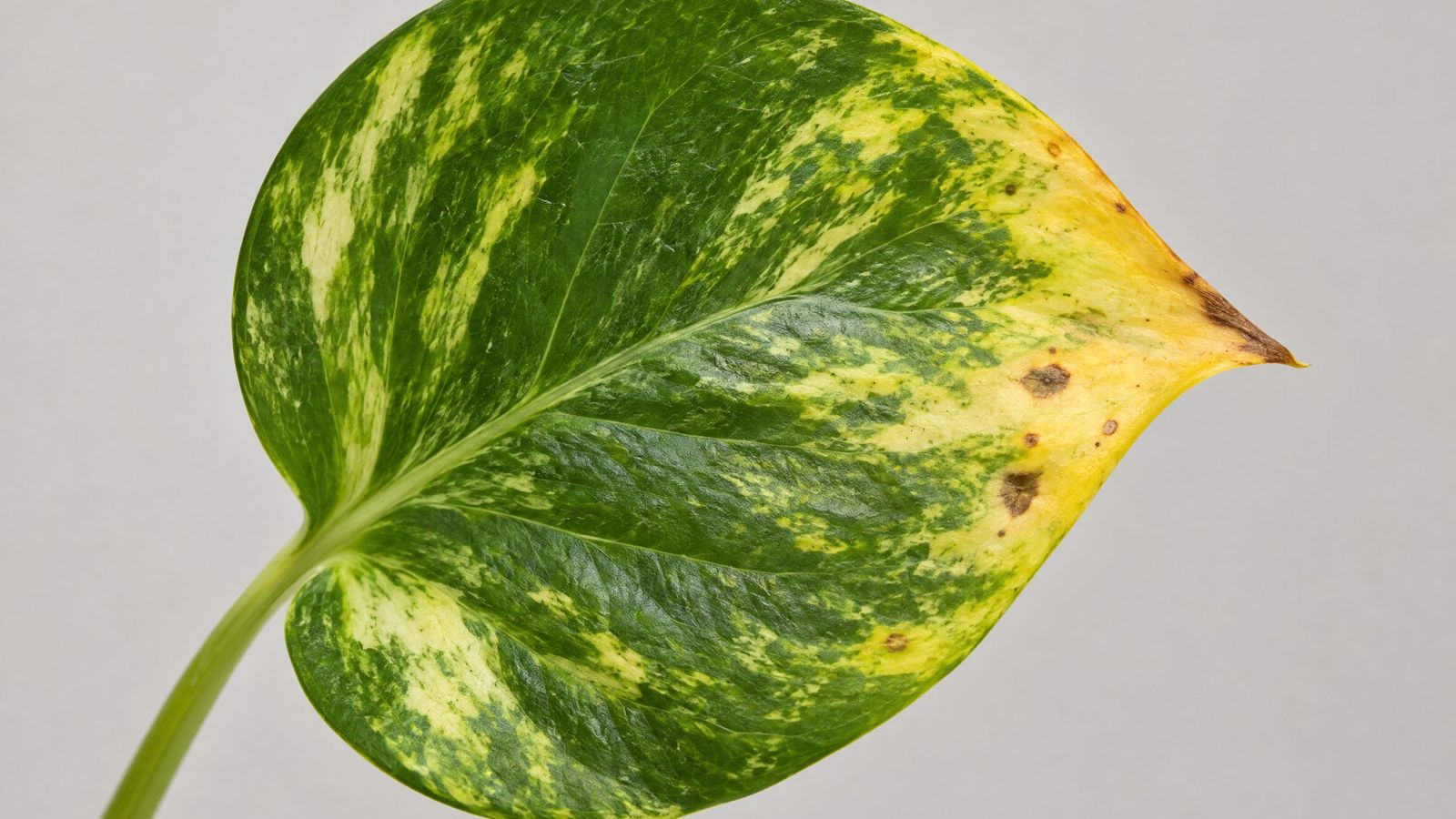
Brown leaf tips usually mean dry air, especially in the heating season, but uneven watering, fertilizer salt build-up and fluoride or chlorine in tap water cause them too. Check the compost first, look for white crust on the soil, move plants away from heaters and raise humidity. Trimming hides the damage; only fixing the cause stops new browning.
Key takeaways
- Low humidity is the most likely cause of brown tips, especially when the heating is on.
- Letting compost dry out too long between waterings browns tips and edges too.
- A white or grey crust on the soil or pot rim points to salt build-up from fertilizer or water.
- Dracaena, spider plant, peace lily, prayer plant and several palms are sensitive to fluoride in tap water.
- Trim brown tips for looks, but judge any fix by the new leaves.
Why are my plant's leaf tips turning brown?
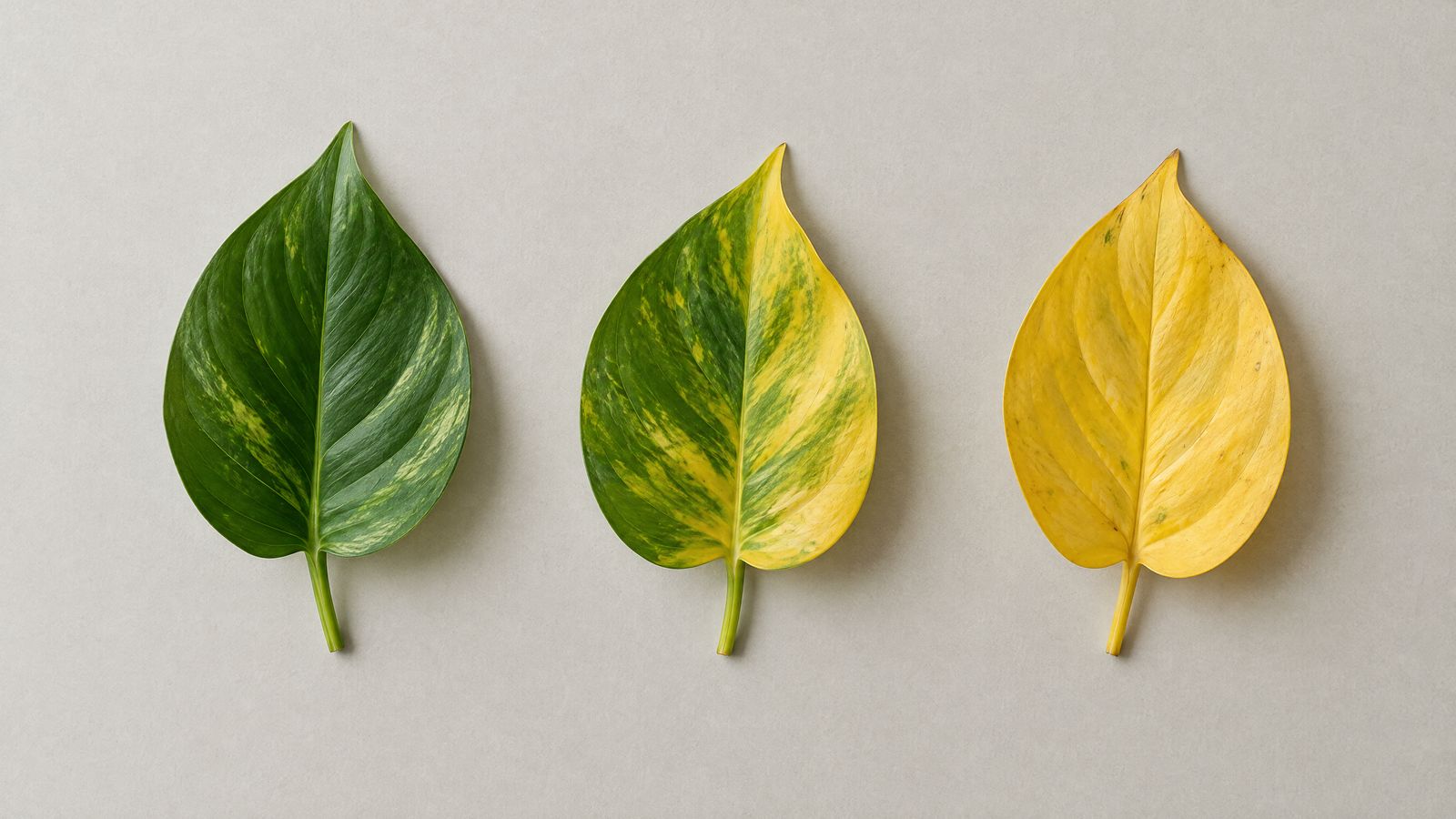
Brown leaf tips are one of the most common houseplant complaints, and they almost never have a single cause. Iowa State University Extension names four usual suspects: low humidity (the most likely), inconsistent watering, too much fertilizer, and chemicals such as chlorine or fluoride in the water. The trick is to read the pattern: which leaves, how much of each leaf, and what changed recently. This guide gives you a symptom, cause and fix table, the plants most prone to brown tips, and a simple order to test the causes, so you fix the real problem instead of buying a humidifier you may not need. If the leaves are turning yellow rather than brown, start with our yellow leaves diagnosis guide instead.
Brown tips: symptom, likely cause and first fix
| What you see | Likely cause | First fix |
|---|---|---|
| Thin brown tips and edges, worse in winter, plant otherwise healthy | Dry air, often from heating (Iowa State, RHS) | Group plants, use a pebble tray or humidifier; move away from radiators |
| Crispy brown edges with wilting, compost dry several centimetres down | Underwatering or long dry spells between waterings (RHS, Iowa State) | Water thoroughly, then check the compost before each watering |
| White or grey crust on the soil or pot rim, tips brown on many leaves | Salt build-up from fertilizer or hard water (Clemson) | Flush the pot with plain water; feed less |
| Steady tip burn on dracaena, spider plant, peace lily or palms despite good care | Fluoride or chlorine in tap water (Iowa State, Arkansas) | Switch water source; rinse perlite before potting |
| Brown, scorched patches on the sunny side, worst on pale variegated parts | Sun scorch (RHS) | Move out of strong direct sun |
| Brown in the middle of leaves, old and new leaves yellowing at once, soggy compost | Overwatering (RHS) | Empty the outer pot, let the compost dry, check the roots |
Notice that true tip browning sits at the end and along the edges of the leaf. Brown patches in the middle of the leaf point elsewhere: the RHS lists browning in the middle of leaves among the signs of overwatering, and if the compost smells sour or the roots are soft, follow our root rot rescue plan.
Is dry air the cause?
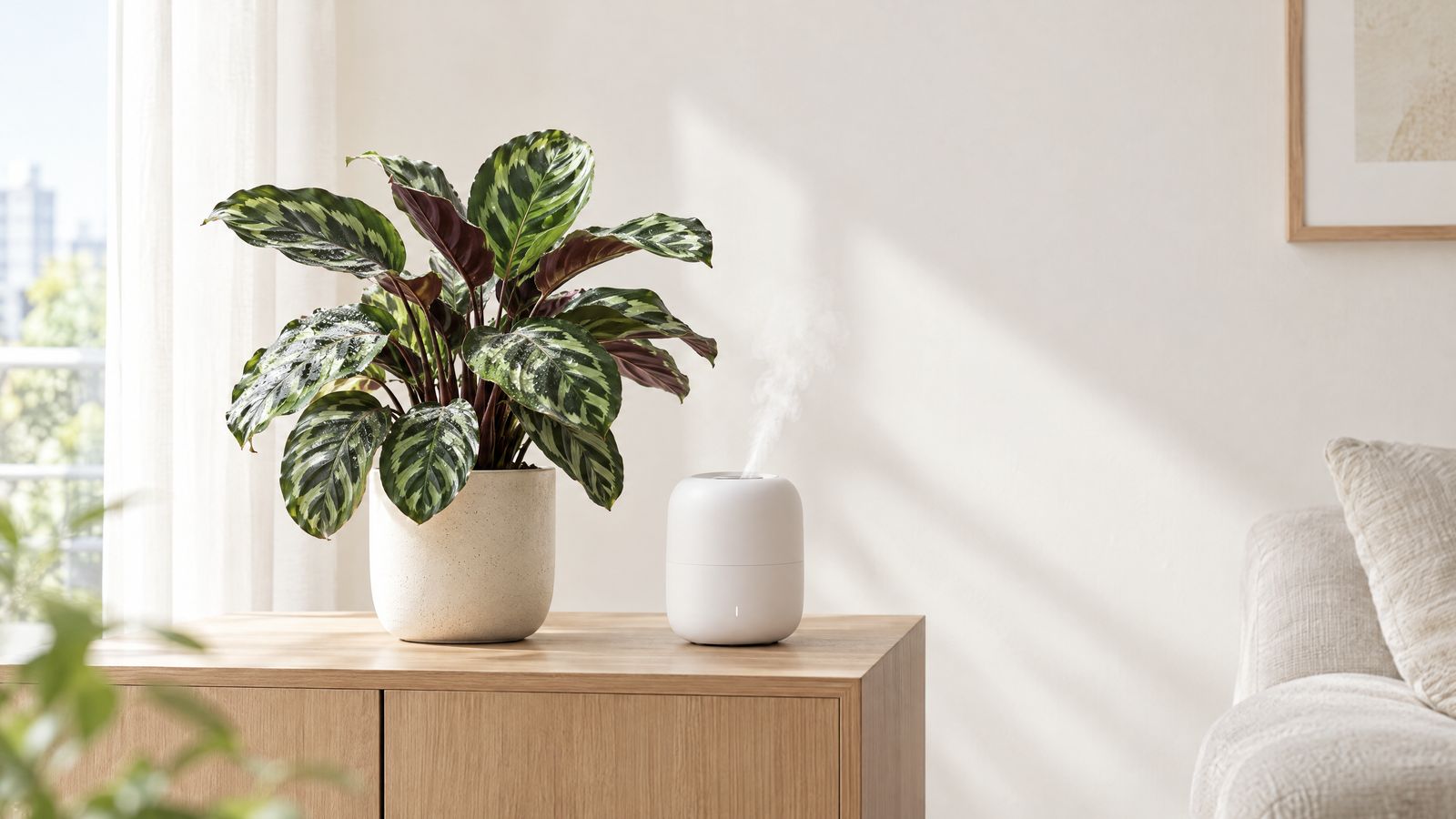
Usually, yes. The RHS calls brown leaf tips and edges a classic sign of low air humidity, especially in winter when the heating is on, and warns that plants next to radiators often end up with scorched leaves. University of Nebraska-Lincoln Extension explains why: heating produces warm air with little moisture, and while health guidance suggests 30–50% indoor humidity for people, many homes fall well below that, whereas many houseplants do best at around 70–80%. Winter means December to February in the Northern Hemisphere and June to August in the Southern; the problem follows the heating season, not the calendar.
What helps, according to these sources: a humidifier, grouping plants so their leaves share moisture, and a pebble tray with the water kept below the base of the pot. Nebraska Extension says misting is not an effective fix, because you would have to mist constantly and wet leaves invite leaf spot. Our indoor humidity guide compares the options in detail.
Could watering be the cause?
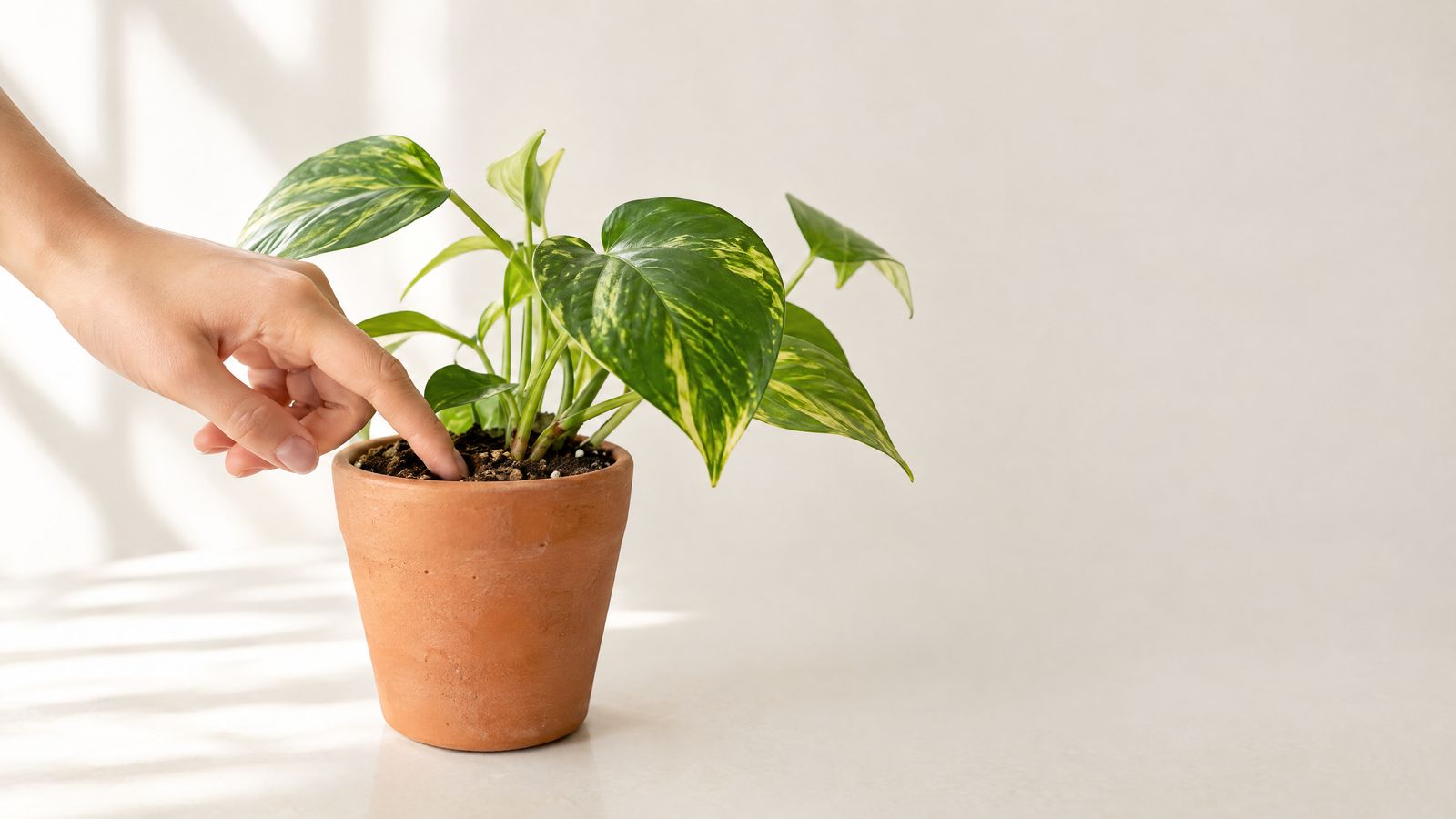
Iowa State notes that letting plants dry out too long between waterings causes brown tips and edges, and the RHS adds wilting and quickly fading flowers to the picture. Push a finger a few centimetres (about 1 in) into the compost: if it is very dry, water thoroughly until water runs from the drainage holes. Overwatering can look similar, because rotting roots cannot deliver water either. If the compost is wet and the plant still wilts, stop watering and check the roots. Our guide to watering houseplants explains how to find a rhythm without a fixed schedule; Flori's care reminders can then prompt you to check rather than to water blindly.
Is it fertilizer or tap water?
Clemson Extension lists salt accumulation among the causes of brown tips and margins, with a clear sign to look for: white to grey crusty deposits on the soil surface or the rim of the pot. Its fixes are to drench the pot periodically to leach salts out, empty the saucer, avoid over-fertilizing, scrape off salt crusts and add fresh soil, and repot into new potting soil from time to time. Clemson also suggests letting tap water stand at room temperature for 24 hours before use for plants sensitive to chlorine, and using rainwater when you can.
Fluoride is the sneakier one. University of Arkansas Extension says dracaenas are very sensitive to fluoride toxicity: fluoride accumulates in the leaf tips, causing tip burn and browning. Tap water is the usual source, but superphosphate, perlite and some peats can add it too. Arkansas recommends water from a non-fluoridated supply for sensitive plants, rinsing perlite with 2–3 times its volume of water before mixing it into compost, and keeping soil pH at 6.0–6.5. Its list of sensitive plants includes corn plant and other dracaenas, ti plant, prayer plant, peace lily, spider plant, parlor palm, areca palm, kentia palm and cast iron plant. Iowa State names spider plant, ti plant, dracaena, prayer plant and calathea.
Should you cut off brown tips?
You can. Iowa State says trimming the brown parts with scissors improves the look, but browning will continue unless you fix the cause. Follow the leaf's natural shape and leave a thin line of brown so you do not cut into healthy tissue. Arkansas notes that fluoride damage is seldom fatal, and the RHS advises keeping leaves that are mostly green until new growth appears. Judge your fix by the new leaves, not the old ones: damaged tips do not turn green again.
In what order should you test the causes?
- Check the compost with a finger. Bone dry or soggy? Fix watering first.
- Look at the soil surface and pot rim for white crust. If you see it, flush the pot and feed less.
- Check the spot: radiator, heater vent, cold draught or hot window? Move the plant.
- Raise humidity in the heating season by grouping plants or using a humidifier.
- Change the water for a sensitive species if tips keep browning after all of the above.
Change one thing at a time and give it a few weeks. If you are not sure which pattern you are looking at, Dr. Flori in the Flori app can ask follow-up questions from a photo and suggest the likely cause.
Frequently asked questions
Should I cut off brown leaf tips?
Yes, if you like: trim along the leaf's natural shape and leave a thin brown edge so you do not cut healthy tissue. Trimming only hides the damage, so fix the cause too.
Does misting stop brown tips?
Not really. Nebraska Extension says misting is not an effective way to raise humidity and wet leaves can encourage leaf spot; grouping plants, pebble trays or a humidifier work better.
Why do my dracaena and spider plant get brown tips even with good care?
Both are sensitive to fluoride and other chemicals in tap water. Try a different water source, rinse perlite before potting and keep soil pH around 6.0–6.5.
Will brown tips turn green again?
No. Damaged tissue stays brown, so judge whether your fix works by the new leaves that grow after the change.
Sources
- Iowa State University Extension: Why does my houseplant have brown leaf tips and edges?
- Royal Horticultural Society: How to help a poorly houseplant
- Clemson Cooperative Extension HGIC: Houseplant Diseases & Disorders
- University of Nebraska-Lincoln Extension, Lancaster County: Houseplants and humidity
- University of Arkansas Cooperative Extension: Plant Health Clinic Newsletter, Issue 11 (dracaena fluoride toxicity)
Written and fact-checked by the Flori team. Every guide cites horticultural sources such as the RHS, university extension services and the ASPCA, and is updated when the advice changes.
General plant care information. Plants vary; when a plant is valuable or a problem spreads quickly, consult a local nursery or plant specialist.