
Caesar's Mushroom vs Fly Agaric and Death Cap
Caesar's mushroom (Amanita caesarea) next to the fly agaric and the death cap: season, trees, the egg-stage trap, myths and what to do after a mistake.
 By Flori editorial team · Updated
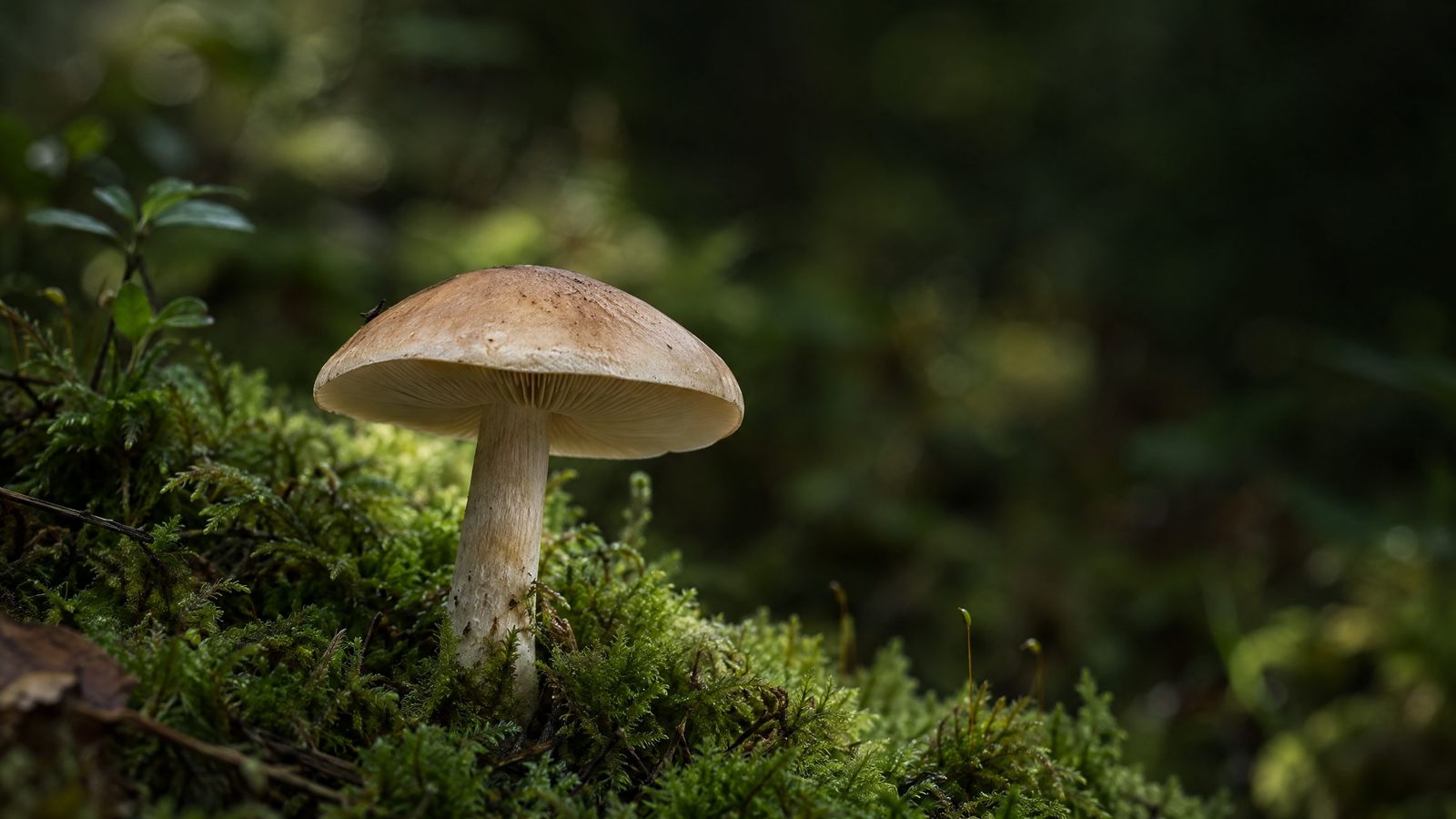
Caesar's mushroom (Amanita caesarea), yumurta mantarı in Turkish, is an Amanita, the same genus as the fly agaric and the deadly death cap. It grows under oak and sweet chestnut from late summer, like the death cap, and closed Amanita eggs look alike from outside. Only an expert checking gills, ring and cup in hand can tell them apart.
Key takeaways
- Caesar's mushroom belongs to the same genus as the death cap and the fly agaric, and grows with oak and chestnut.
- The closed egg stage that people traditionally pick is the most dangerous moment: Amanita eggs look alike from outside.
- Fly agaric caps range from reddish-orange to yellow and the death cap can look yellowish-green, so colour alone proves nothing.
- Death cap symptoms start 6 to 24 hours after eating; feeling fine at first is not a good sign.
- After eating an unknown mushroom, call the poison line at once and keep a sample.
Why Caesar's mushroom is a risky one to learn
Caesar's mushroom (Amanita caesarea), known as yumurta mantarı ("egg mushroom") in Türkiye, is a famous Mediterranean mushroom with a famous problem: it is an Amanita, the same genus as the death cap and the fly agaric. In an article on the species, Kew mycologist David Pegler stresses that collectors must take great care not to confuse it with the death cap, the destroying angel and the fly agaric. This guide puts the three side by side, explains why the egg stage that people traditionally pick is the most dangerous moment, and ends with what to do if someone eats an unknown mushroom. As in our guide to edible wild mushrooms and their look-alikes, we do not list Caesar's mushroom as edible here. Telling it from its deadly relatives is expert work done with the mushroom in hand, never from a photo or an article.
When and where does Caesar's mushroom appear?
Pegler describes Amanita caesarea as a species of warm, dry Mediterranean places, typically under oak or sweet chestnut, appearing from late summer onwards. Its range is restricted: it may reach slightly into eastern Europe but not further north. In practice, that means oak and chestnut woods after summer and autumn rain.
Two facts make that timing risky. First, the death cap also lives with oaks and fruits mainly in autumn, roughly September to November in the Northern Hemisphere, so the same woods can hold both in the same weeks. Second, the name travels further than the mushroom. Mycologist Tom Volk of the University of Wisconsin-La Crosse writes that true Amanita caesarea is generally accepted not to occur in North America; the American "Caesar's" mushrooms are different species, so European descriptions and traditions do not transfer.
Caesar's mushroom, fly agaric and death cap: what experts check
All three share the Amanita body plan. Volk explains it: young mushrooms grow inside a universal veil; when the mushroom expands, the bottom of the veil stays behind as a cup-shaped volva at the base and the top is often left as patches on the cap. Amanitas have gills free of the stem and a white spore print. Because they share so much, experts check several features together on the whole mushroom, never one clue. The table shows what our sources say about each feature and why none of them is a shortcut; our death cap guide covers that species in more detail.
| Feature experts check | What the sources say | Why it is not a shortcut |
|---|---|---|
| Cap colour | Fly amanita caps range from reddish-orange and orange to yellow, with whitish warts (Ohio State). The death cap is yellowish-green to olive-brown, sometimes light brown (ANBG). | Colours overlap between species and are the weakest clue. |
| Gills | Free of the stem in Amanitas (Volk); white in the death cap (ANBG). | In the egg stage the gills are hidden inside. |
| Ring | The death cap has a loose, white, skirt-like ring that can be rubbed off (ANBG). | A missing ring never clears a mushroom. |
| Cup at the base (volva) | Left by the universal veil (Volk); in the death cap often partly buried in soil or leaf litter (ANBG). | A mushroom snapped off at ground level leaves its cup in the soil. |
| Spore print | White in Amanitas (Volk), including the death cap (ANBG). | Edible and deadly Amanitas share it. |
| Trees and season | Caesar's mushroom: oak or sweet chestnut from late summer (Pegler). Death cap: near oaks, mainly in autumn (ANBG). | The same woods and the same weeks. |
| Poisoning | Fly agaric: symptoms within 30 minutes to 2 hours. Death cap: delayed 6 to 24 hours, then liver damage (NAMA). | By the time symptoms show, the mistake is made. |
Read the table as a list of reasons to stop, not as a recipe. Missing a feature never clears a mushroom, and seeing one never proves a species.
Why the egg stage is the most dangerous moment
As the Turkish name suggests, many collectors look for the closed egg stage, before the cap breaks out. Every Amanita starts this way inside its universal veil, and the Australian National Botanic Gardens describes the young death cap as wrapped in a smooth white skin. From outside, a Caesar's egg, a fly agaric button and a death cap egg can look the same, because the cap colour, gill colour and ring that separate them are hidden inside. Telling them apart at this stage is an expert's job, and no home test makes an egg safe. If you find closed eggs under oak or chestnut, treat them as unknown Amanitas and leave them.
Myths that fail with Amanitas
Our guide on how to tell if a mushroom is poisonous covers these in depth; with Amanitas they are especially dangerous.
- Bright means poison, plain means safe. The death cap is a dull yellowish-green to olive-brown, while fly agaric caps are reddish-orange to yellow. Colour proves nothing.
- Peeling the cap, a silver spoon, smell or taste will tell. Ohio State Extension is clear that there is no test or characteristic to distinguish edible from poisonous mushrooms.
- Cooking makes it safe. The Australian National Botanic Gardens says death cap toxins are extremely stable and are not removed by cooking, soaking or drying.
- My family always picked them. Volk notes that Amanita is definitely not recommended for beginners, because every year people are poisoned believing they picked an edible species.
- An app confirmed it. Flori can identify wild mushrooms from a photo, which helps you learn names and describe a find to an expert, but no app, Flori included, can tell you a wild mushroom is safe to eat. A photo cannot show a buried cup or the inside of an egg; see can an app identify mushrooms.
How the poisonings differ
The North American Mycological Association (NAMA) describes fly agaric and panther cap poisoning as starting 30 minutes to 2 hours after eating, with nausea and vomiting followed by confusion, visual distortion, delusions and sometimes convulsions or deep drowsiness. NAMA notes that dogs and especially cats can die from it. Death cap poisoning works the other way round: no symptoms for 6 to 24 hours while the liver is already being damaged, then severe vomiting and diarrhoea, then an apparent recovery before liver and kidney failure. The Australian National Botanic Gardens notes that one cap can kill a healthy adult. A late start is not reassuring; it is the warning sign.
What to do if someone eats an unknown mushroom
- Call the poison line now, before any symptoms. Türkiye: UZEM 114 (Ulusal Zehir Danışma Merkezi). United States: Poison Control 1-800-222-1222. United Kingdom: NHS 111. Elsewhere, call your local emergency number. Amanita poisoning can feel better before liver damage shows, so do not wait to see what happens.
- Keep a sample. Save leftovers, uncooked pieces or more of the same mushroom from where it was picked, in a paper bag in the fridge, for an expert to examine.
- Write down the facts: who ate it, how much, when, and whether it was raw or cooked.
- Pets too. If a dog or cat may have eaten a wild mushroom, call your vet immediately.
Frequently asked questions
Is Caesar's mushroom edible?
We do not rate it as edible. It belongs to the same genus as the deadly death cap, and closed eggs of different Amanitas look alike, so any wild Amanita needs an in-hand check by a local expert; never eat one based on a photo or an app.
How do you tell Caesar's mushroom from fly agaric?
Not reliably by eye or from a photo. Fly agaric caps range from reddish-orange to yellow, and young Amanitas all start inside a universal veil, so the decision belongs to an expert who examines the gills, ring and cup in hand.
When does yumurta mantarı come up?
Caesar's mushroom appears from late summer onwards in warm Mediterranean oak and sweet chestnut woods. The death cap grows with oaks in the same season, so timing proves nothing.
What should I do if someone ate a wild Amanita?
Call the poison line at once (Türkiye UZEM 114, US 1-800-222-1222, UK 111), keep a sample and do not wait for symptoms. Death cap symptoms can take 6 to 24 hours to start.
Sources
- D. N. Pegler (Royal Botanic Gardens, Kew), Mycologist: Useful fungi of the world: Caesar's mushroom and the Christmas mushroom
- Tom Volk, University of Wisconsin-La Crosse: Amanita caesarea, Caesar's mushroom (Fungus of the Month)
- Ohio State University CFAES: Wild Mushrooms (PLPATH-GEN-11)
- North American Mycological Association: Mushroom Poisoning Syndromes
- Australian National Botanic Gardens: Deathcap mushroom (Amanita phalloides)
Written and fact-checked by the Flori team. Every guide cites horticultural sources such as the RHS, university extension services and the ASPCA, and is updated when the advice changes.
General plant care information. Plants vary; when a plant is valuable or a problem spreads quickly, consult a local nursery or plant specialist.