Evergreen Shrubs That Keep Gardens Green in Winter
Which evergreen shrubs give scent, berries or solid green in winter? Sarcococca, mahonia, skimmia, pittosporum and holly compared, with pet safety.
 By Flori editorial team · Updated
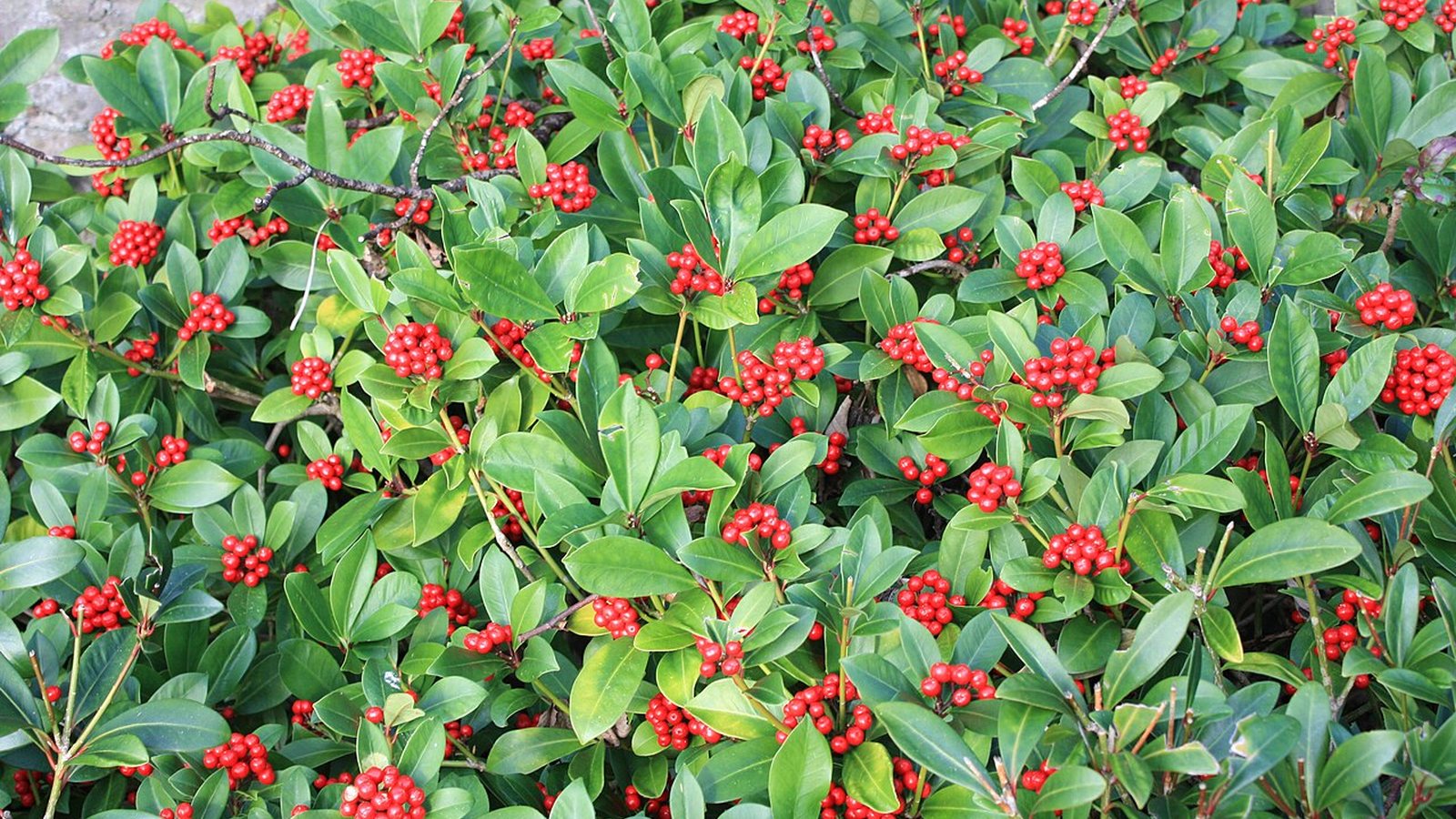 Photo: Ardfern · CC BY-SA 3.0
Sarcococca, mahonia, skimmia, pittosporum and holly keep gardens green in winter, but each gives something different: scent, flowers, berries or structure. Evergreen only means the leaves stay on; check hardiness, shade tolerance and pet safety, because holly and boxwood are toxic to cats and dogs while mahonia and pittosporum are not.
Key takeaways
- Evergreen means leaves stay on, not that the shrub is frost-proof.
- Sarcococca and mahonia flower in winter; skimmia gives red berries, but only female plants with a male nearby.
- Pittosporum is great on mild coasts but usually needs winter protection in cold areas.
- ASPCA lists holly and boxwood as toxic to cats and dogs; mahonia and Japanese pittosporum as non-toxic.
- Shelter from cold, drying wind matters as much as the shrub you pick.
On this page8
- Which shrubs stay green and useful in winter?
- Evergreen shrubs for winter at a glance
- Which evergreens flower or smell good in winter?
- Which evergreen shrub gives winter berries?
- What about solid green structure and hedging?
- Can evergreen shrubs live in pots over winter?
- Are evergreen shrubs safe for cats and dogs?
- A quick buying checklist
Which shrubs stay green and useful in winter?
Five dependable evergreen shrubs for a winter garden are sarcococca, mahonia, skimmia, pittosporum and holly. The catch most lists skip: "evergreen" only means the leaves stay on. It says nothing about how much frost a shrub takes, how much shade it wants or whether it is safe for a dog. This guide sorts the shrubs by what each one actually gives you in winter (scent, flowers, berries, or just solid green) and what it needs to get there.
Winter differs by place. On the Aegean and Mediterranean coasts of Türkiye almost anything evergreen is fine; in inland Anatolia a hard freeze can scorch exposed leaves; a temperate northern garden (the UK, the north-eastern US) sits between the two. In the Southern Hemisphere the same advice applies to June to August. When a source gives a hardiness limit, it is stated below.
Evergreen shrubs for winter at a glance
| Shrub | What it gives in winter | Typical height | Light | Pets (ASPCA) |
|---|---|---|---|---|
| Sarcococca (Christmas box) | Small, scented white flowers | 1–2 m (3–6½ ft) | Part or full shade | Check the listing for your species |
| Mahonia | Fragrant yellow flowers, then purple-black berries | 1.5–5 m (5–16 ft), depending on species | Some shade | Oregon grape: non-toxic |
| Skimmia | Red berries on female plants | Up to 1.5 m (5 ft); compact types 40–70 cm (16–28 in) | Part to deeper shade | Check the listing |
| Pittosporum | Glossy, often colourful foliage | 1–6 m (3–20 ft) | Full sun or light shade | Japanese pittosporum: non-toxic |
| Holly (Ilex) | Dense green leaves, berries on some | Varies widely by type | Depends on the type | American holly: toxic |
Heights come from the RHS growing guides; the label at the nursery matters more than any list, because cultivars differ a lot.
Which evergreens flower or smell good in winter?
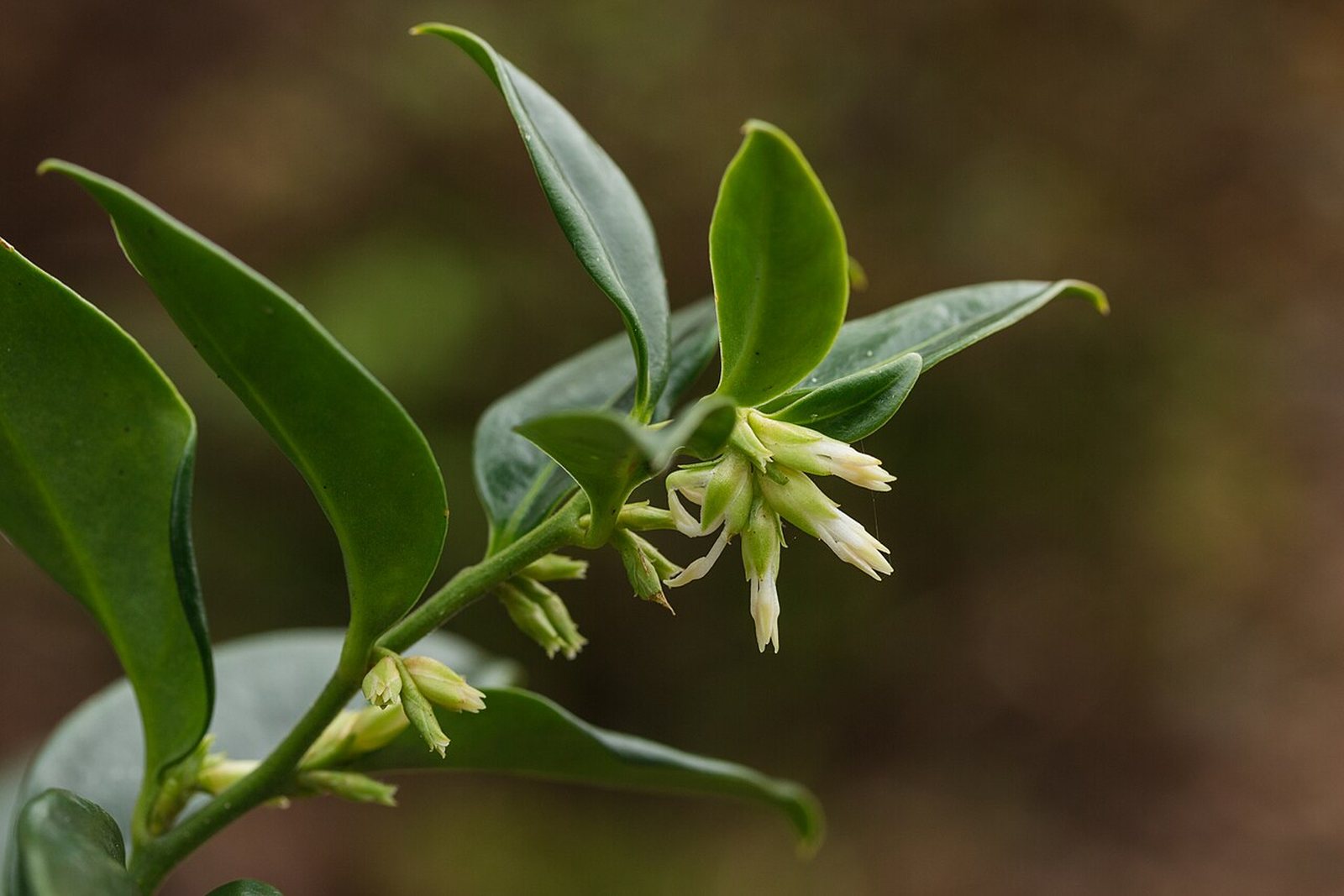
Sarcococca flowers in winter, and most species have fragrant white flowers. S. confusa is the most strongly scented, while S. saligna has unscented flowers, so check the name before you buy for scent. Most are hardy, but S. wallichii is only hardy in mild areas that stay reliably above -5 °C (23 °F). It wants partial or full shade and, once established, copes with dry shade, which makes it one of the few evergreens that solves the dark corner under a tree.
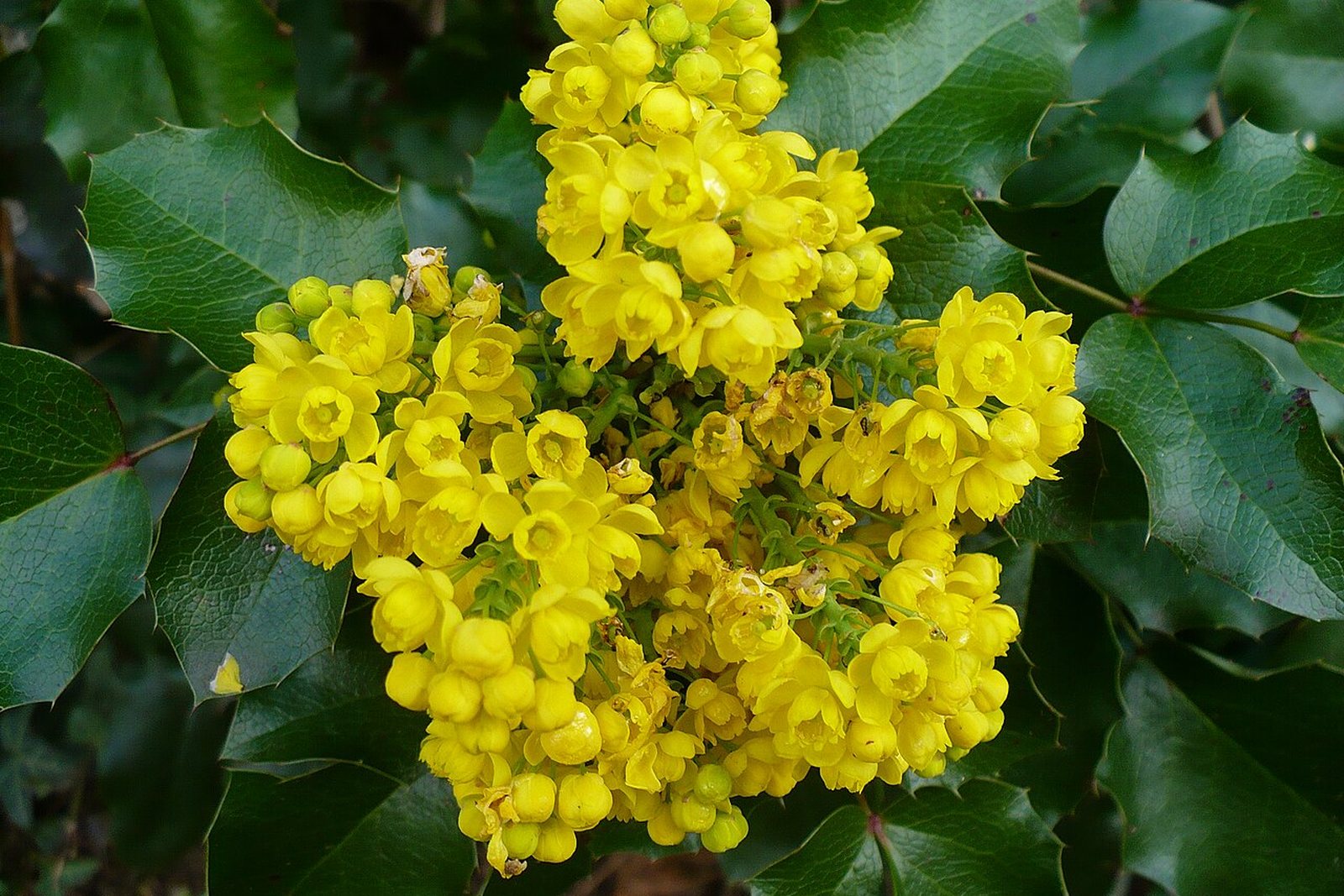
Mahonia flowers from autumn to spring with bright yellow, fragrant flowers that feed early pollinating insects, followed by purple-black berries. The RHS says it grows and flowers best with some shade and tolerates sun only if the soil stays moist. Plant it in shelter away from cold, drying winds, which cause scorch, and mulch for frost protection. Do not deadhead if you want the berries.
Which evergreen shrub gives winter berries?
Skimmia is the compact answer. Female plants carry red berries (sometimes black or white) through autumn and winter, but they only set them with a male plant nearby; one male can serve several females. Skimmia japonica subsp. reeversiana is hermaphrodite and berries alone. The label tells you whether a plant is male, female or hermaphrodite, so buy a pair or the right one. Skimmias do not need acid soil; the RHS says yellowing leaves usually point to dryness rather than alkaline soil.
Hollies also come in sexes, so a berry-less holly may simply be male. Ask the nursery whether the plant you are buying berries on its own, and read the label.
What about solid green structure and hedging?
Pittosporum is the structural choice where winters are mild. The RHS says larger types reach 2–6 m (6⅔–20 ft) and smaller ones 1–2 m (3⅓–6⅔ ft), and that it makes a good hedge, trimmed 2–3 times in the growing season with the last cut in August. Many are hardy in a sunny spot sheltered from wind, but P. tobira and its dwarf form usually need winter protection in cold areas, and some will not reliably survive outdoors except in mild coastal or inner-city areas. That makes it excellent for the Aegean and Mediterranean coast and risky for inland Anatolia unless the pot can be moved under cover.
Holly forms dense, dark growth, but the family runs from low shrubs to trees, so choose the cultivar and its mature size, not just the word "holly".
Can evergreen shrubs live in pots over winter?
Yes, with care. Roots in a pot freeze harder than roots in the ground, and evergreens keep losing water through their leaves all winter. A few rules that follow from the sources:
- Choose compact types for containers: small skimmias in 9–12 cm (3½–4 in) pots suit winter window boxes, and the RHS suggests moving container plants under cover or wrapping them in fleece on cold nights.
- Pot a skimmia into a container only 2.5–5 cm (1–2 in) larger all round, and repot in spring after two to three years.
- Put tender types (pittosporum, S. wallichii) in the most sheltered spot, against a house wall away from wind.
- Mulch the base of mahonia and other shrubs for frost protection, and water newly planted evergreens in their first year or two if the weather stays dry.
Are evergreen shrubs safe for cats and dogs?
Not all of them. The ASPCA lists American holly as toxic to dogs, cats and horses, with diarrhoea, depression and vomiting as the signs, and boxwood (Buxus) as toxic to dogs and cats, with vomiting and diarrhoea. Mahonia (Oregon grape) and Japanese pittosporum are listed as non-toxic to dogs and cats. For sarcococca and skimmia, look up your exact species on the ASPCA list before you buy, and remember that the ASPCA says eating any plant material can cause vomiting and an upset stomach. If a pet chews a shrub and seems unwell, call your vet.
A quick buying checklist
- Match light first: shade means sarcococca, skimmia or mahonia; sun means pittosporum.
- Check the label for hardiness, final height and, for berries, male, female or hermaphrodite.
- Plant in shelter, away from cold, drying winds.
- Confirm pet safety on the ASPCA list if you have a cat or dog.
- For a hedge, pick the cultivar by its mature size, not by the nursery pot.
If you are not sure what an existing shrub is, the Flori app can identify a plant from a photo and show its care profile, including toxicity. For flowers that stay open in the cold, see winter-hardy flowers; for frost nights, how to protect garden plants from frost; and for pots on a terrace, plants that survive winter on a balcony. Pet owners should also read plants toxic to dogs.
Frequently asked questions
Which evergreen shrub flowers in winter?
Sarcococca flowers in winter with fragrant white blooms, and mahonia has fragrant yellow flowers from autumn to spring, according to the RHS.
Do skimmia berries need a male plant?
Female skimmias need a male nearby to set berries, and one male can serve several females. Skimmia japonica subsp. reeversiana is hermaphrodite and berries alone.
Can pittosporum survive frost?
Many are hardy in a sunny, sheltered spot, but Pittosporum tobira usually needs winter protection in cold areas, says the RHS.
Are evergreen shrubs poisonous to pets?
Some are. The ASPCA lists American holly and boxwood as toxic to dogs and cats, and mahonia and Japanese pittosporum as non-toxic. Call your vet if a pet chews one.
Which flowers survive frost and keep blooming in winter? Pansies, hellebores and hardy cyclamen compared, with pet toxicity and a planting checklist.
Sources
Written and fact-checked by the Flori team. Every guide cites horticultural sources such as the RHS, university extension services and the ASPCA, and is updated when the advice changes. How we write our guides
General plant care information. Plants vary; when a plant is valuable or a problem spreads quickly, consult a local nursery or plant specialist.