Grow Lights for Houseplants: A Simple Guide
Choose an LED or T5 grow light, hang it 30–60 cm (12–24 in) above the leaves, run it 12–14 hours on a timer, and read the plant to fine-tune it.
 By Flori editorial team · Updated
For most houseplants, a full-spectrum LED grow light works best. Hang LEDs about 30–60 cm (12–24 in) above the leaves, or fluorescent tubes 15–30 cm (6–12 in), and run them 12–14 hours a day on a timer, never more than 16. Small, pale leaves mean more light; leaves curling under mean less.
Key takeaways
- LEDs are the best all-round choice; fluorescent T5 tubes are a good budget option; skip incandescent bulbs.
- Keep LEDs 30–60 cm (12–24 in) and fluorescents 15–30 cm (6–12 in) from the leaves.
- Run lights 12–14 hours a day on a timer, between 8 and 16 hours; plants need darkness too.
- Small leaves and long, thin stems mean too little light; leaves curling under mean too much.
- Measure at leaf level with a light meter or a phone app instead of trusting your eyes.
Do houseplants need a grow light?
Many do, at least in winter. Iowa State University Extension calls light the most limiting growth factor for plants indoors, notes that even the brightest windowsill gets only a fraction of outdoor light, and says nearly all houseplants would benefit from some supplemental light in winter, when days are short. A grow light is not complicated: you need the right type of lamp, at the right distance, for the right number of hours, on a timer. This guide covers exactly those four settings with numbers from extension services, plus how to tell from the plant whether you got them right. If you are still deciding whether light is your problem at all, start with our signs your plant needs more light; this page picks up where that one ends.
Which type of grow light should you buy?
| Type | Good for houseplants? | Distance from leaves | Notes |
|---|---|---|---|
| LED | Best all-round choice | 30–60 cm (12–24 in) | Efficient, runs cool, long life, output does not fade like fluorescent |
| Fluorescent tube (T5 is the most efficient) | Good, especially for foliage and seedlings | 15–30 cm (6–12 in) | Little heat, but intensity drops; replace tubes every one to two years |
| Incandescent bulb | No | Not recommended | Hot, inefficient, short-lived, low intensity, mostly red light |
| HID (metal halide, high-pressure sodium) | Rarely practical at home | Much farther away | Very bright but big, hot, power-hungry and expensive |
Iowa State Extension rates LEDs as producing more light with less energy and running cooler than fluorescents, which is why they dominate today. Fluorescents are still a fine budget option, and Iowa State recommends high-output, full-spectrum T5 tubes if you go that route. Ordinary incandescent bulbs are the one choice to skip.
Full spectrum, pink or white light?
Many grow LEDs emit mostly red and blue light, which is why they glow pink or purple. They work, but they make a living room look like a nightclub and make it hard to judge a leaf's real colour. Iowa State notes that some LEDs have a narrow range of wavelengths and suggests full-spectrum fixtures, or mixing warm and cool lamps, to improve the usable light. For houseplants in a room you live in, a full-spectrum white LED is usually the best compromise.
- Colour temperature (Kelvin): lower numbers are redder (warm white), higher numbers are bluer (cool white). Iowa State notes that blue-rich fluorescent light is good for foliage and seedlings but weaker for flowering and fruiting.
- Lumens vs PPF: lumens describe brightness to human eyes, not to plants. Iowa State points out that grow LEDs often list PPF (photosynthetic photon flux), which is a better measure of usable light.
How far should a grow light be from plants?
Iowa State Extension gives 15–30 cm (6–12 in) from the foliage for fluorescent fixtures and 30–60 cm (12–24 in) for LEDs in most cases. Start in the middle of the range, then follow the lamp maker's instructions and the plant's response. A small clip-on lamp for one plant needs to be closer than a large panel lighting a whole shelf. Raise the light as the plant grows so the distance to the top leaves stays the same.
How many hours a day should a grow light be on?
Iowa State recommends about 14 hours a day as a general rule, says 12 to 14 hours is a good length of time for most species, and advises staying between 8 and 16 hours. Plants also need a period of darkness to grow properly, so leaving lights on around the clock is not better. Plug the lamp into a timer so the schedule is the same every day, including when you are away.
- Low-light plants in a reasonably bright room: the lower part of the 8 to 16 hour range is usually enough.
- Plants with no useful daylight (a dark hallway or shelf): 12 to 14 hours, up to 16.
- Flowering plants: keep the dark period. Iowa State notes that for some species it is essential for flowering and fruiting.
How do you measure the light your plant gets?
Your eyes are bad at judging light, because they adjust. A light meter at leaf level is more reliable, and Iowa State says a physical meter or a smartphone app both work. For scale, University of Nebraska–Lincoln Extension describes low-light areas as having less than 75 foot-candles, the light needed for reading (about 800 lux). Advanced growers use DLI (daily light integral), which combines intensity and hours. Iowa State gives the formula: DLI = PPFD × hours × 0.0036. Flori's light setup includes a Smart light meter, so you can compare a windowsill with the shelf under your new lamp before you move a plant.
How to tell if the light is right
| What the plant shows | Meaning | What to change |
|---|---|---|
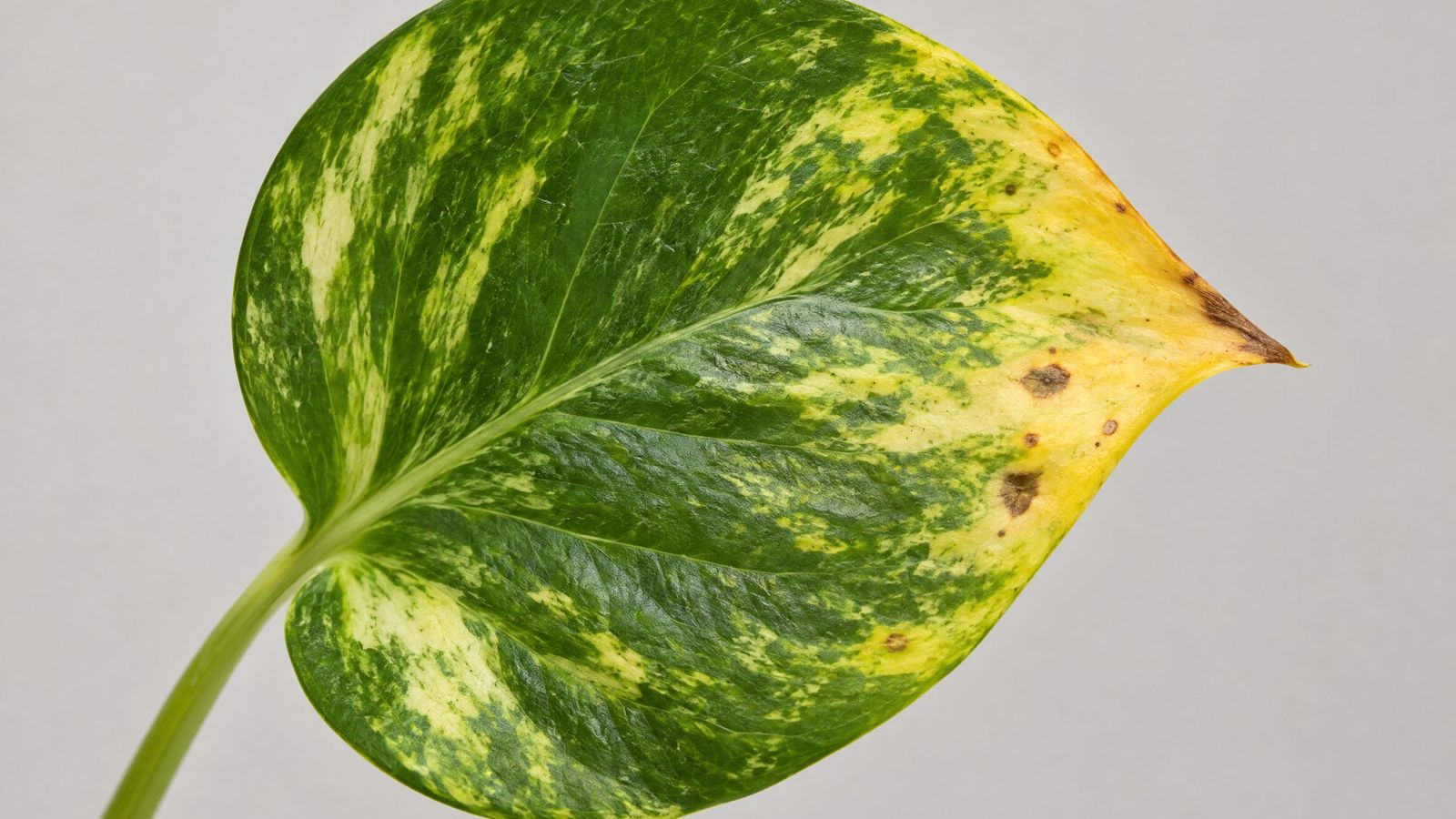
| Small leaves, long thin stems, paler colour | Not enough light | Move the lamp closer or add hours (up to 16) |
| Leaves curl under; new leaves undersized | Too much light | Raise the lamp or shorten the schedule |
| Compact new growth with normal colour | About right | Keep the setup; adjust the height as it grows |
The first and second rows come straight from extension guidance: UNL lists small leaves, long thin stems and lighter colour as signs of insufficient light, and Washington State University Extension lists leaves curling under with undersized new leaves as too much light, fixed by moving the plant farther from grow lights. For more on that symptom, see our guide to curling leaves.
A quick buying checklist
- Size the lamp to the plants. One plant needs a clip-on or bulb; a shelf needs a bar or panel that covers its whole width, so the plants at the ends are not left in shade.
- Look for full spectrum and a PPF figure rather than a big lumen or watt number.
- Check the tube type. Iowa State notes that T8 and T12 fluorescent tubes are being phased out and that T5 tubes cannot share a fixture with them, so buy tubes and fixture together.
- Budget for a timer if the lamp has none built in. It is the single thing that makes a grow light work reliably.
- Keep electrics dry. Hang the lamp so that water from the watering can or a mister cannot reach plugs and cables.
Water, food and winter routine under lights
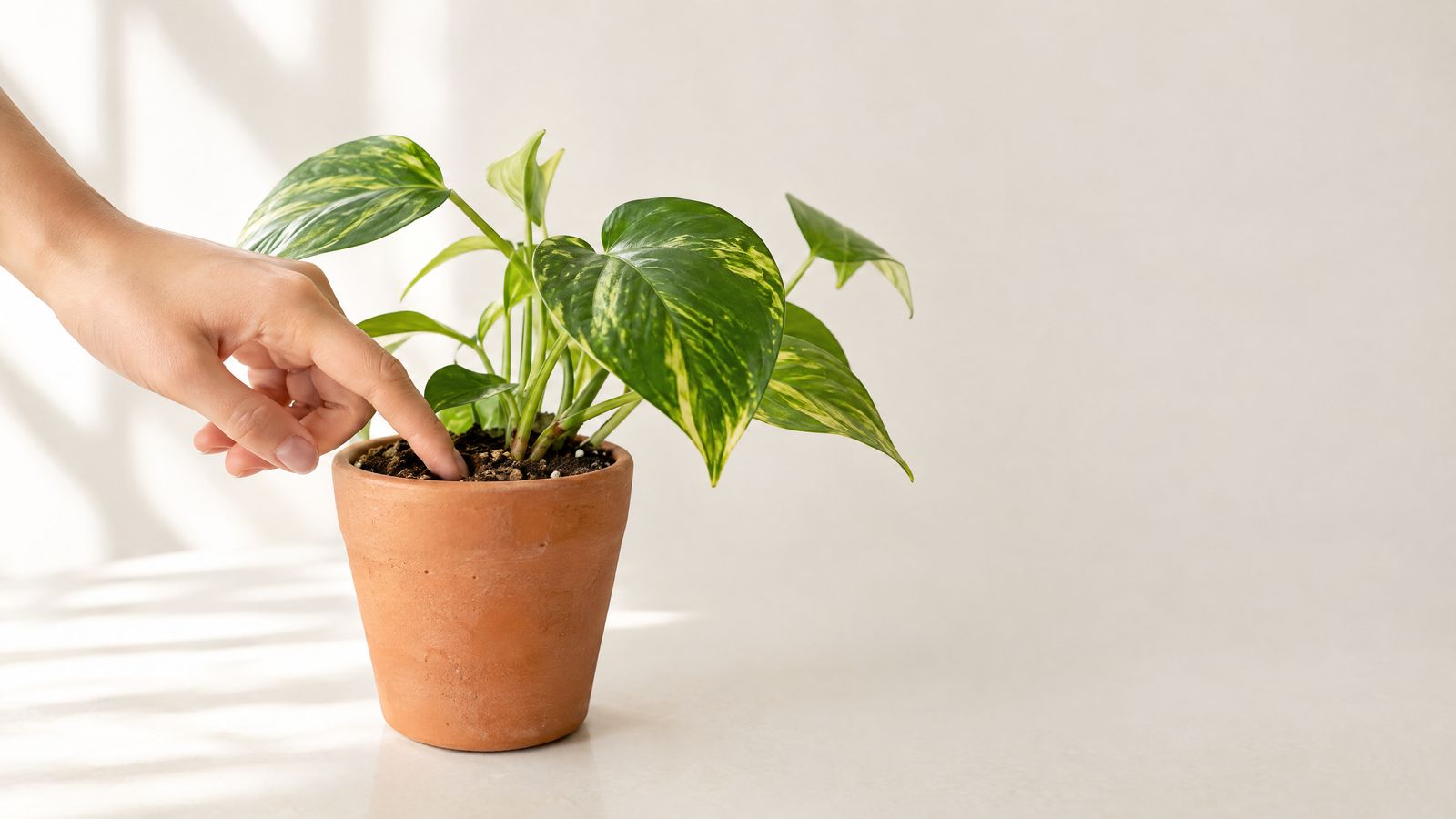
A plant under a lamp grows more than one in a dim winter corner, so it uses more water. Do not switch to a fixed schedule; check the soil as usual (our watering guide explains how). Rotate pots a quarter turn now and then if the lamp lights them from one side. Plants without a lamp still follow the slower winter rhythm in the seasonal plant care calendar.
Frequently asked questions
Can I use a normal LED bulb as a grow light?
A bright, full-spectrum white LED can help foliage plants, especially close up. Iowa State notes that lumens describe brightness to people, not plants; grow lights that list PPF give a better picture of usable light.
Can I leave a grow light on 24 hours a day?
No. Plants need a dark period to grow properly. Iowa State recommends 12 to 14 hours for most species and no more than 16.
How far should an LED grow light be from plants?
Iowa State Extension gives 30–60 cm (12–24 in) from the foliage for LEDs in most cases. Start in the middle and adjust to the lamp maker's guidance and the plant's response.
Do grow lights replace sunlight completely?
They can for many foliage houseplants on a shelf with no useful daylight, given 12 to 16 hours a day. Iowa State notes that vegetables need very high light levels, so fruiting plants are much harder to grow under lamps alone.
Sources
- Iowa State University Extension: Sources of Supplemental Light for Indoor Plants
- Iowa State University Extension: How to Set Up Supplemental Lights for Indoor Plants
- Iowa State University Extension: How to Determine How Much Supplemental Light to Provide for Indoor Plants
- University of Nebraska–Lincoln Extension: Guide to Growing Houseplants (G2205)
- Washington State University Extension: What Can Go Wrong With Houseplants (C064)
Written and fact-checked by the Flori team. Every guide cites horticultural sources such as the RHS, university extension services and the ASPCA, and is updated when the advice changes.
General plant care information. Plants vary; when a plant is valuable or a problem spreads quickly, consult a local nursery or plant specialist.