Rare Houseplants That Are Actually Easy to Grow
Unusual houseplants that are easy to grow: sweetheart hoya, mini monstera, satin pothos and watermelon peperomia, with light, water and pet safety.
 By Flori editorial team · Updated
Sweetheart hoya, mini monstera (Rhaphidophora tetrasperma), satin pothos and watermelon peperomia look like collector plants but grow well in bright, indirect light at normal room temperatures. All four hate wet soil, so water only when the top of the mix dries. For pets, sweetheart hoya and watermelon peperomia are listed as non-toxic.
Key takeaways
- Many plants sold as rare look unusual but need only ordinary houseplant care.
- Sweetheart hoya and watermelon peperomia are non-toxic to cats and dogs according to the ASPCA.
- Satin pothos and mini monstera contain calcium oxalate and are toxic to pets.
- All four want bright, indirect light and rot in soil that stays wet.
- Check the Latin name before buying: mini monstera is sold under several trade names.
Which rare houseplants are actually easy to grow?
Plenty of houseplants sold as rare or collector plants are unusual to look at but ordinary to grow. The ones worth buying as a beginner share three traits: they cope with normal room temperatures, they forgive a missed watering more than an extra one, and they do not need a greenhouse to stay alive. This list checks four unusual-looking plants against the NC State Extension Gardener Plant Toolbox and gives each one's pet status from the ASPCA plant list, because a striking plant is no bargain if it is toxic to the cat that sleeps beside it. For the classic easy plants, see our beginner plants that forgive mistakes.
Four unusual houseplants at a glance
| Plant | Light | Watering | Temperature | Cats and dogs |
|---|---|---|---|---|
| Sweetheart hoya (Hoya kerrii) | Bright, or dappled sun | Let the soil dry somewhat; hates wet soil | 18–27 °C (65–80 °F) | Non-toxic (ASPCA) |
| Mini monstera (Rhaphidophora tetrasperma) | Bright indirect, a little direct sun | When the top 2.5 cm (1 in) is dry | 18–27 °C (65–80 °F) | Toxic (calcium oxalate, NC State) |
| Satin pothos (Scindapsus pictus) | Bright indirect, no direct sun | Moist but well drained | 18–29 °C (65–85 °F) | Toxic (ASPCA) |
| Watermelon peperomia (Peperomia argyreia) | Bright indirect, tolerates part shade | When the top of the soil dries; never soggy | Warm; dislikes cold draughts | Non-toxic (ASPCA) |
Sweetheart hoya: the heart-leaf plant that wants to be ignored
Sweetheart hoya has thick, fleshy, heart-shaped leaves, and NC State notes it is often sold as a rooted single-leaf cutting around Valentine's Day. It is rated easy and low maintenance, but slow. The key fact for care is in the leaves: they store water, so the plant tolerates dry soil but not wet soil, and overwatering can cause root rot. Use a pot with good drainage and let the mix dry somewhat between waterings. NC State recommends 18–27 °C (65–80 °F); cooler rooms slow growth and flowering.
- Do not cut the long bare stems. New leaves and flowers form on them.
- Be patient with flowers. Young plants can be slow to bloom. When they do, the small waxy pink flowers are fragrant at night, and their nectar can stain fabric.
- Pets: the ASPCA lists sweetheart hoya as non-toxic to dogs, cats and horses.
Mini monstera: the fast one
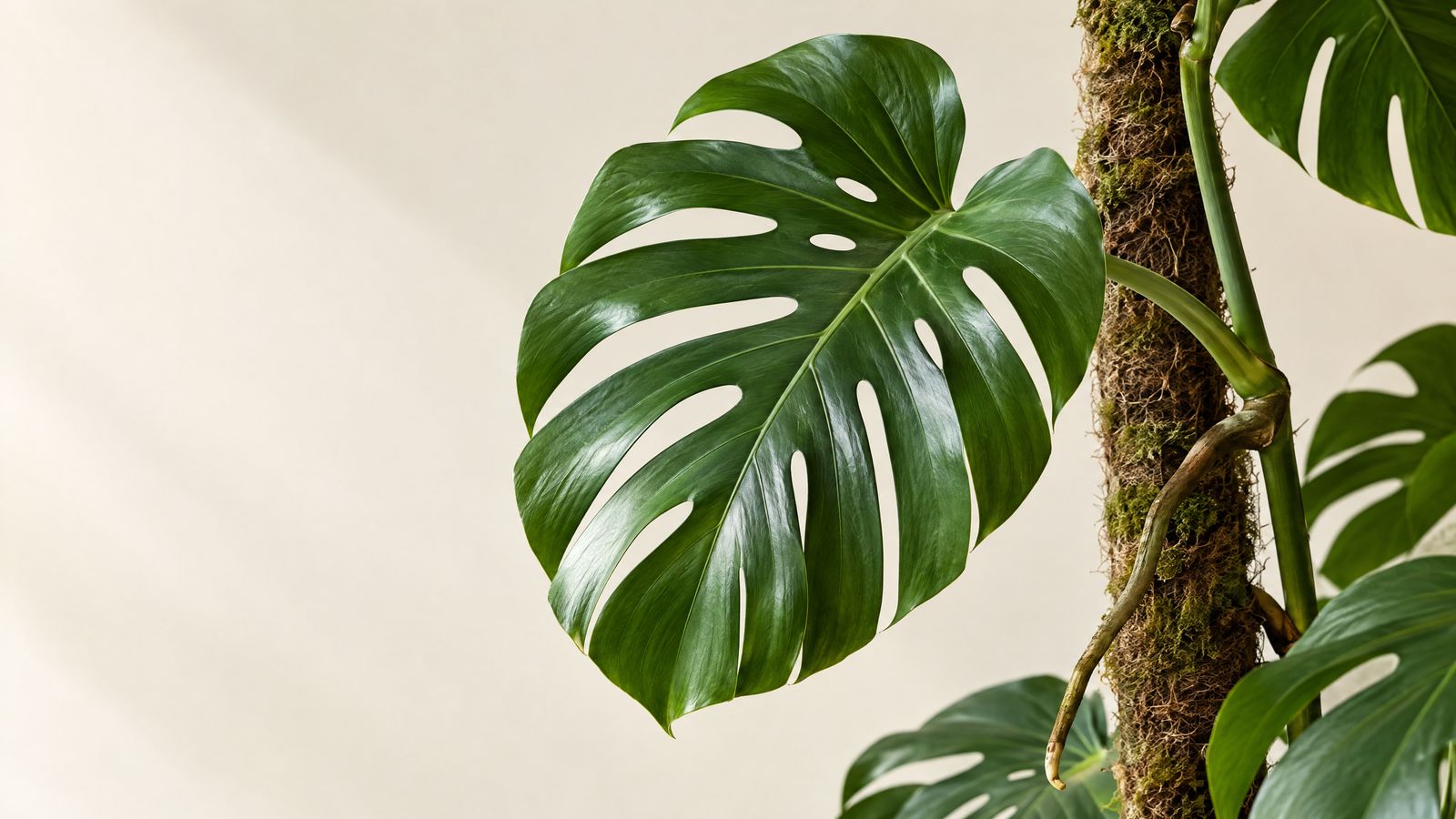
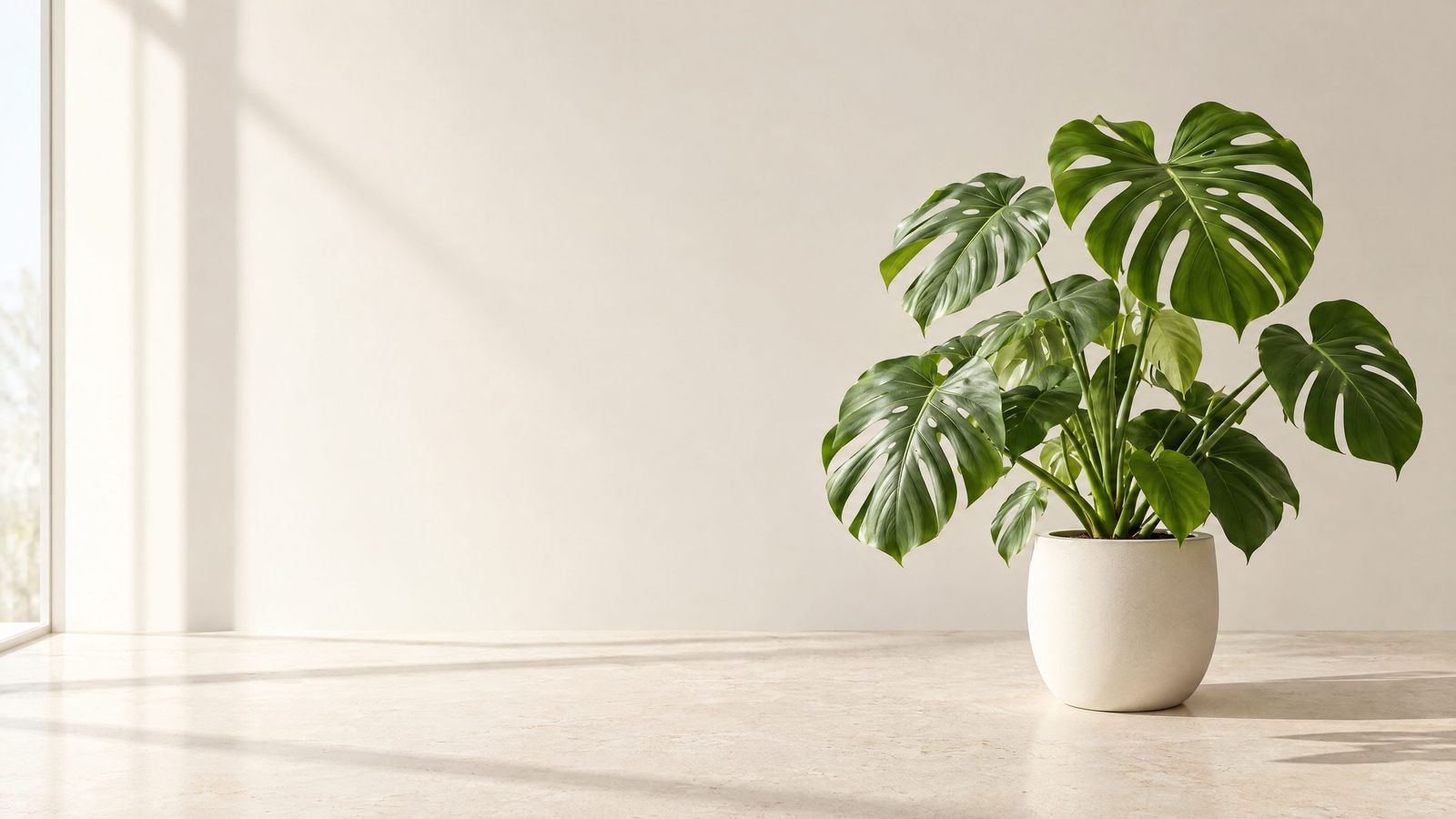
Rhaphidophora tetrasperma looks like a small monstera, with split, holed leaves that appear at an earlier age than on Monstera deliciosa. NC State notes that it is neither a true monstera nor a philodendron, though it is in the same family, and that it is also sold as 'Monstera Ginny' or 'Philodendron Ginny'. It is rated easy, low maintenance and fast growing. Give it bright, indirect light (a little direct sun is fine, too much burns the leaves) and water when the top 2.5 cm (1 in) of mix is dry. It does best at around 60% humidity and away from draughts. As a climber with aerial roots it wants a moss pole or trellis, and NC State gives its size as 0.6–4.5 m (2–15 ft) tall, so plan for height. If you want the real thing, our monstera care guide compares well.
Pets: NC State lists it as a problem for cats, dogs and children because it contains calcium oxalate crystals, which can cause mouth irritation, drooling and stomach upset. We did not find it on the ASPCA list, so treat it as toxic and wear gloves when you prune.
Satin pothos: silver spots, simple needs
Satin pothos has dark green leaves splashed with silver-grey, on stems that trail from a shelf or climb a stake. NC State rates it moderate maintenance and slow growing, so it is the least foolproof plant here, but its needs are simple. It wants bright, indirect light and does not tolerate direct sun. Keep the mix moist but well drained, at 18–29 °C (65–85 °F). Indoors it reaches about 45–90 cm (1.5–3 ft). The leaves tell you what is wrong: NC State notes that yellow leaves suggest overwatering and curling leaves suggest underwatering. Pinch the stems to keep it bushy, and root the cuttings to make new plants. Watch for scale, mites and mealybugs.
Pets: the ASPCA lists satin pothos as toxic to dogs, cats and horses. It contains insoluble calcium oxalates, which can cause mouth pain and swelling, drooling, vomiting and difficulty swallowing. Hang it out of reach.
Watermelon peperomia: small, striped and pet-safe
Watermelon peperomia has round, glossy leaves striped like a watermelon rind on red stalks, and stays under about 20 cm (8 in) tall, so it fits a desk or a narrow shelf. NC State rates it easy and low maintenance. Give it bright, indirect light; it tolerates partial shade. Let the top of the soil dry before watering and water less in winter, because it dislikes both soggy and very dry soil, and overwatering leads to root rot. It grows slowly and rarely needs repotting, since it does well slightly root-bound. Keep it away from cold draughts.
Pets: the ASPCA lists watermelon peperomia as non-toxic to dogs and cats, which makes it one of the easiest unusual plants for a home with pets. More options are in our list of pet-safe houseplants for cats and dogs.
What these four have in common, and what kills them
Every plant on this list has the same weak point: wet soil. NC State warns about root rot from overwatering for all four. Use a pot with a drainage hole, check the mix before every watering, and water less in winter, when low light means the mix dries much more slowly. Move plants a little closer to a bright window then, but keep the leaves off cold glass and away from radiators. If a plant wilts while its soil is wet, go straight to our root rot rescue plan.
How to buy an unusual plant without buying trouble
- Check the Latin name. Trade names overlap: mini monstera is sold under several names. Flori can identify a plant from a photo and show its care profile, including toxicity, before you take it home.
- Look under the leaves and at the soil. Scale, mites and mealybugs travel on new plants.
- Keep a new plant apart for a few weeks before it joins the rest of your collection.
- Match the plant to the room, not the photo. Bright, indirect light suits all four; none of them is a dark-corner plant.
Frequently asked questions
Is mini monstera a real monstera?
No. Rhaphidophora tetrasperma is in the same family as Monstera deliciosa but is a different genus. It is sold as mini monstera, 'Monstera Ginny' or 'Philodendron Ginny'.
Which unusual houseplants are safe for cats?
Of the plants in this list, the ASPCA lists sweetheart hoya (Hoya kerrii) and watermelon peperomia (Peperomia argyreia) as non-toxic to cats and dogs. Satin pothos is listed as toxic.
Will a single-leaf sweetheart hoya grow into a vine?
Hoya kerrii is often sold as a rooted single-leaf cutting and grows slowly. Give it bright light, let the soil dry somewhat between waterings and be patient.
Why are the leaves on my satin pothos curling?
NC State notes that curling leaves on satin pothos suggest underwatering, while yellow leaves suggest overwatering. Check the soil before you change anything.
Sources
- NC State Extension Gardener Plant Toolbox: Hoya kerrii
- NC State Extension Gardener Plant Toolbox: Rhaphidophora tetrasperma
- NC State Extension Gardener Plant Toolbox: Scindapsus pictus
- NC State Extension Gardener Plant Toolbox: Peperomia argyreia
- ASPCA: Toxic and Non-Toxic Plants (Sweetheart Hoya, Satin Pothos, Watermelon Peperomia)
Written and fact-checked by the Flori team. Every guide cites horticultural sources such as the RHS, university extension services and the ASPCA, and is updated when the advice changes.
General plant care information. Plants vary; when a plant is valuable or a problem spreads quickly, consult a local nursery or plant specialist.