Amaryllis and Paperwhites for Christmas Bloom Indoors
Pot amaryllis and set paperwhites on pebbles in November for Christmas bloom. Timing, setup, floppy stems, pet toxicity and aftercare for both bulbs.
 By Flori editorial team · Updated
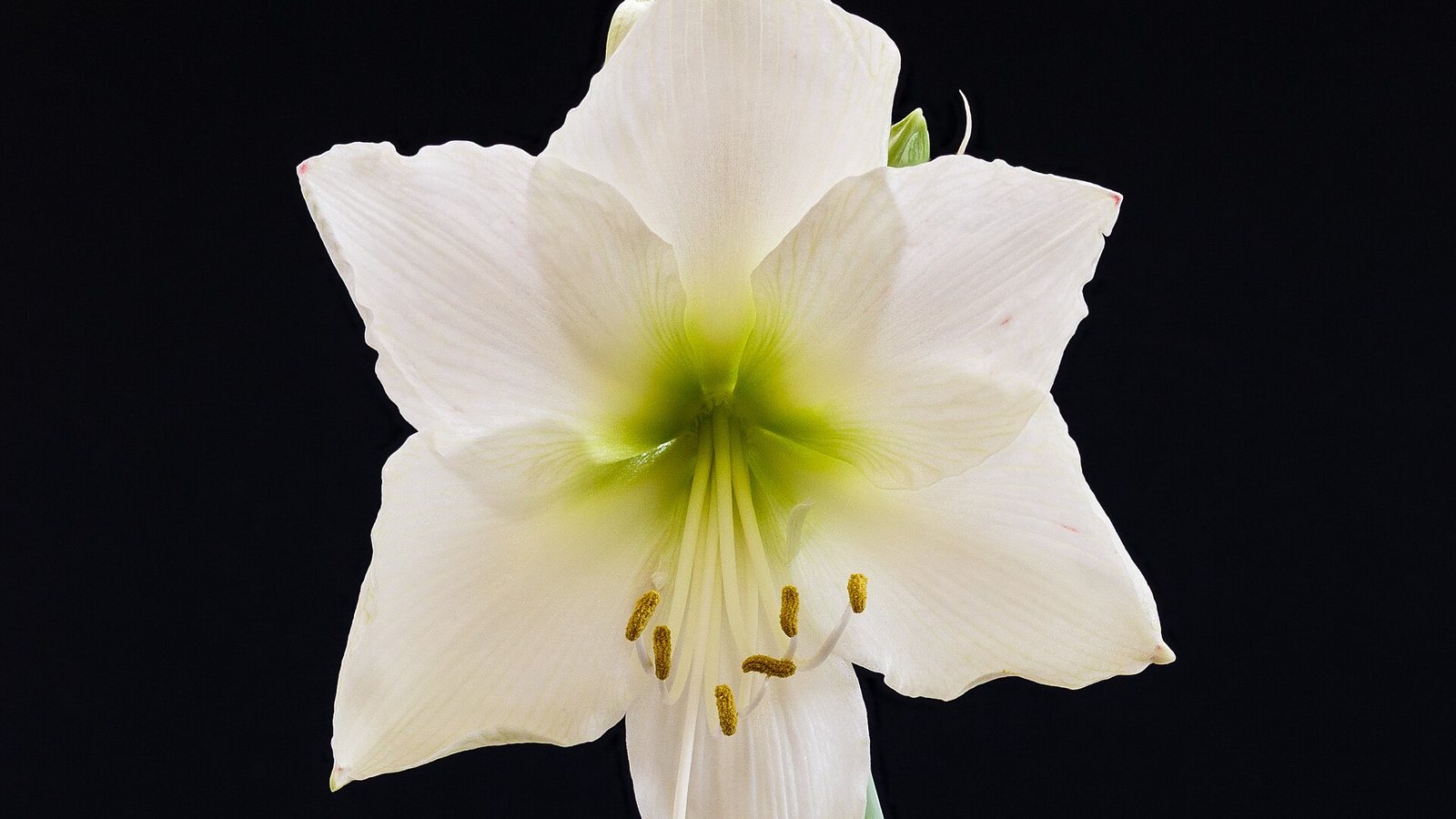 Photo: Agnes Monkelbaan · CC BY-SA 4.0
Pot amaryllis in early to mid-November, bulb half above the soil, in a snug pot at 21–24 °C (70–75 °F). Set paperwhites on pebbles with water just touching the bulb bases. Both flower in about 4 to 8 weeks. Keep them away from pets: the ASPCA lists both as toxic to cats and dogs.
Key takeaways
- Start amaryllis and paperwhites about 4 to 8 weeks before the date you want flowers; early to mid-November suits Christmas in the north.
- Pot amaryllis in a snug pot with the bulb half above the soil; set paperwhites on pebbles with water just touching the bulb bases.
- Floppy paperwhite stems come from heat and too little light: keep them cool and bright.
- Both plants are toxic to cats and dogs, and the bulbs are the most poisonous part.
- Keep amaryllis growing after bloom, then give it 8 to 10 weeks of dormancy to flower again.
On this page6
When do you plant amaryllis and paperwhites for Christmas?
For Christmas flowers you start about two months ahead: pot amaryllis and set paperwhites on pebbles in early to mid-November, and both are in bloom by the holidays. This guide gives the timing for each bulb, the exact setup and the two problems everyone hits (floppy stems and bulbs that will not flower again), plus the safety point many gift guides skip: both plants are toxic to cats and dogs, and the bulbs are the most poisonous part.
A note on hemispheres. In the Northern Hemisphere, Christmas is in midwinter and these bulbs are classic indoor winter colour. In the Southern Hemisphere, Christmas is in summer; the same method works, but count back from the date you want flowers instead of following the month, and keep the pot out of the hottest room, because heat shortens the flowers.
| Amaryllis (Hippeastrum) | Paperwhite narcissus | |
|---|---|---|
| Planted in | Soil, bulb half above the surface | Pebbles and water, or soil |
| Start for Christmas | Early to mid-November (Iowa State, Clemson) | About 4 to 6 weeks before you want flowers (Illinois) |
| Time to flower | 3 to 8 weeks, depending on the bulb's origin | 4 to 6 weeks |
| Temperature to grow | 21–24 °C (70–75 °F) | 10–16 °C (50–60 °F) for a week or two, then a warm, bright room |
| To keep flowers longer | About 18 °C (65 °F), out of direct sun | Cooler room, out of direct sun |
| Cats and dogs (ASPCA) | Toxic | Toxic |
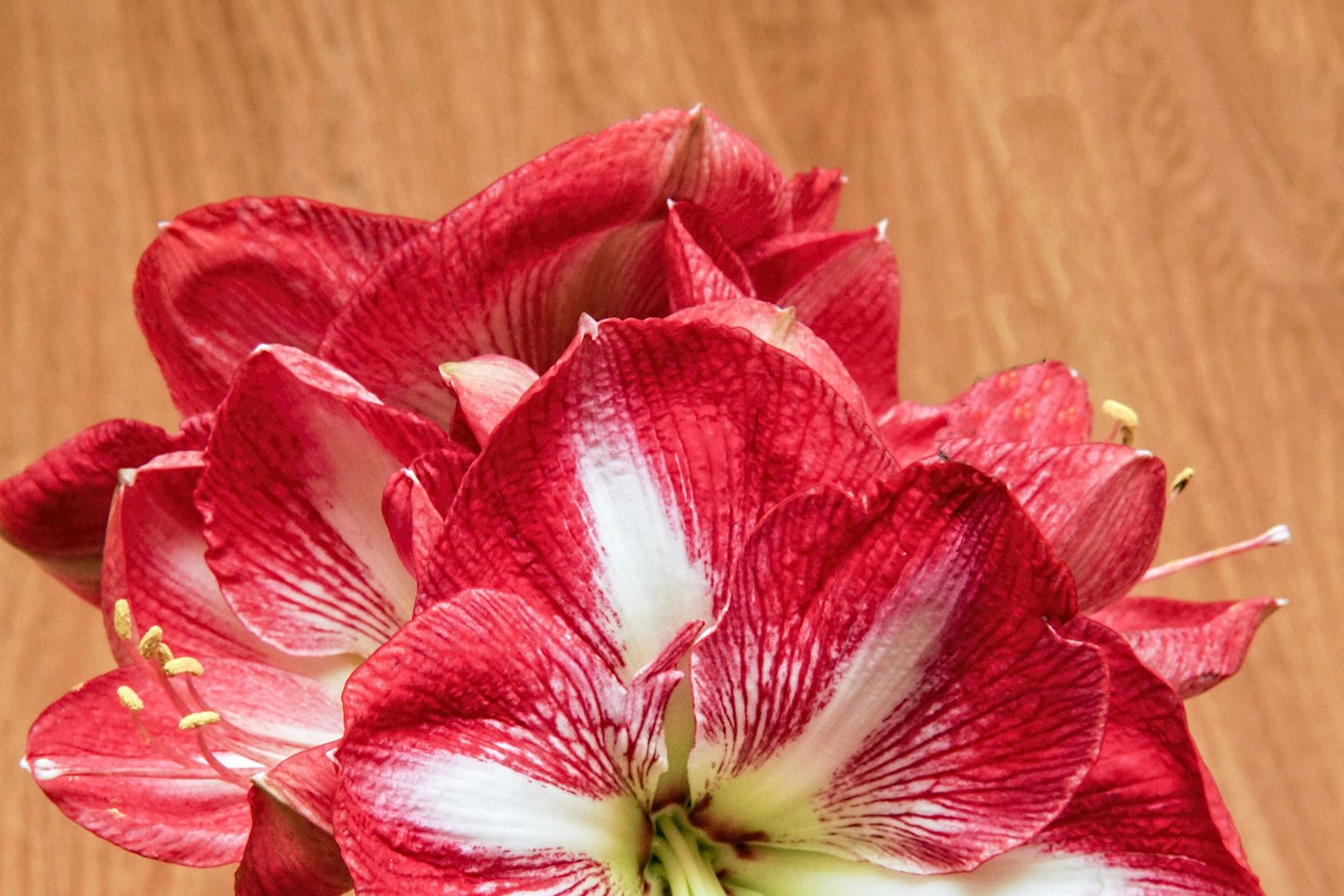
How do you pot an amaryllis bulb?
- Choose a snug pot. Clemson and Iowa State both say 2.5–5 cm (1–2 in) wider than the widest part of the bulb, with drainage holes. A heavier pot resists tipping when the tall flower stalk appears.
- Use free-draining mix. A good potting mix works; Clemson suggests equal parts peat and perlite. Iowa State notes that the coir disks in many kits hold too little mix, so ordinary potting soil usually does better.
- Leave the shoulders out. Leave one-third to one-half of the bulb above the surface (Clemson). Iowa State leaves the top half exposed and about 2.5 cm (1 in) of space below the rim. A dry bulb top helps avoid red blotch.
- Water once, then go light. Water thoroughly after potting and let it drain. Clemson waits a week before watering again, then keeps the mix slightly moist; Iowa State keeps it barely moist until growth appears, then waters more often as it grows.
- Warm, then sunny. Keep it at 21–24 °C (70–75 °F) while roots and the flower stalk grow. Give at least four hours of direct sun a day once growing, ideally in a south-facing window (Clemson, northern hemisphere), and turn the pot every few days so the stalk stands straight. Stake a stalk that leans badly.
Bulb origin matters: Iowa State says South African bulbs flower 3 to 5 weeks after potting and Dutch bulbs 6 to 8 weeks, so read the label. Once blooms open, move the plant out of direct sun to a cooler room to make the flowers last. If you are choosing plants for a gift, our Christmas plants to give guide compares amaryllis with pet-safe alternatives.
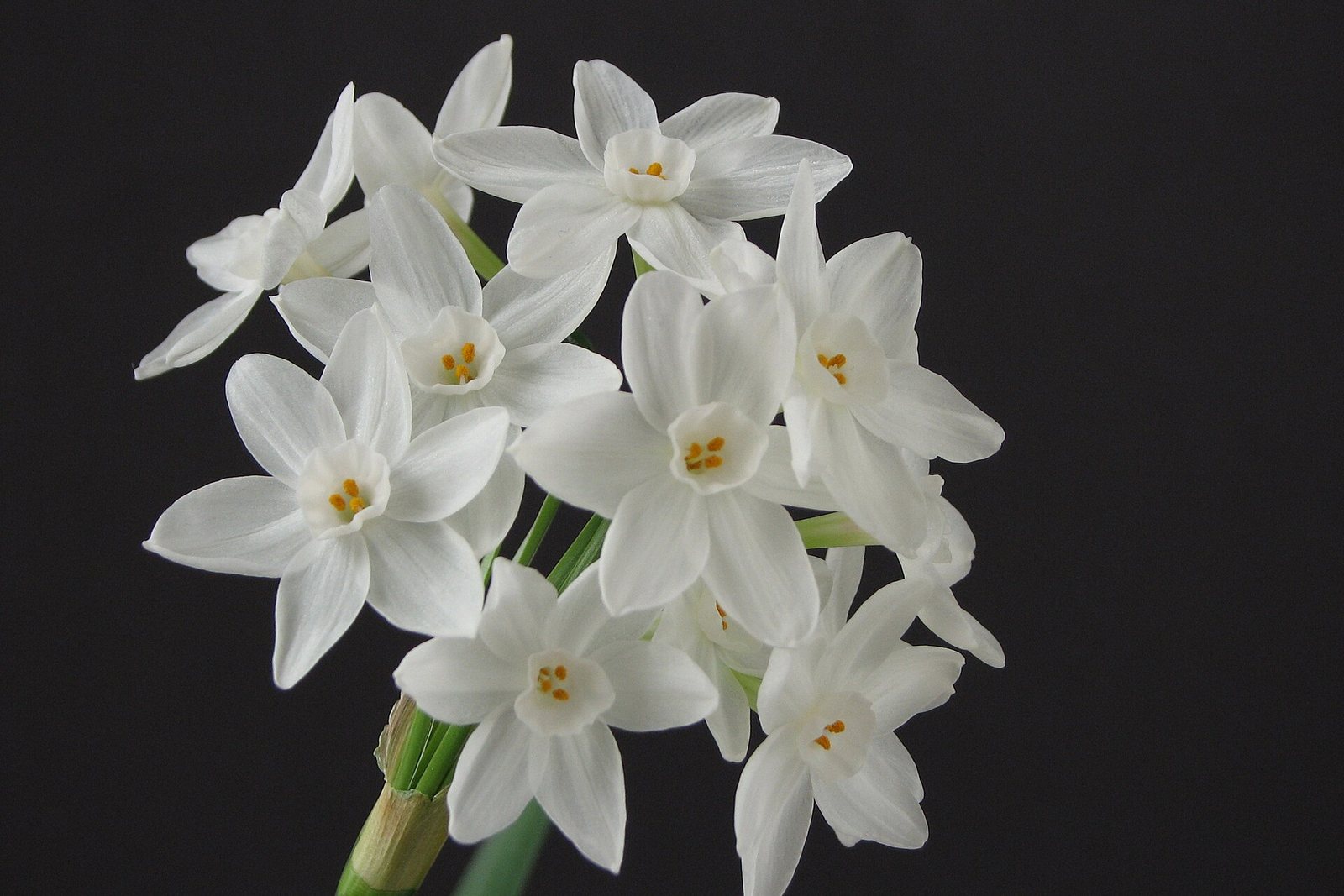
How do you grow paperwhites on pebbles?
Paperwhites are the easiest forcing bulb, because they need no chilling and no soil. Illinois Extension describes the method.
- Layer stones. Put at least 2.5–5 cm (1–2 in) of gravel or stones in a container without needing a drainage hole, set the bulbs pointed side up on top, close together but not touching, and add more stones to hold them, leaving the tips exposed.
- Add water to the base of the bulbs. Fill until the water just reaches the bottom of the bulbs and keep it at that level. Do not submerge the bulbs, which makes them rot.
- Start cool. Illinois suggests 10–16 °C (50–60 °F) for a week or two to encourage roots, then a warm, bright place around 21 °C (low 70s °F).
- Expect flowers in 4 to 6 weeks (Illinois); UF/IFAS gives 4 to 8 weeks. When the buds swell, move the container somewhere cooler and out of direct sun to prolong the flowers.
For flowers all winter, Illinois suggests planting a new batch every 10 days. Soil works too: plant the bulbs about 2.5 cm (1 in) apart with only the tips showing and keep the mix moist.
Why are my paperwhite stems floppy?
Paperwhites flop when they grow too fast. Heat and too little light stretch the stalks until they cannot hold the flowers. To avoid it, Illinois suggests keeping the plants in the cool end of the range, in the 15–20 °C (60s °F), and giving them as much light as possible. A tall container supports the stems, and stakes or a loose tie hold up any that lean. Illinois also describes adding a little alcohol to the water to shorten the plants, but warns against beer or wine and notes that too much damages them, so cooler and brighter is the safer fix. Use the same logic as in our guide to leggy plants: stretched growth means too little light or too much warmth.
Are amaryllis and paperwhites toxic to pets?
Yes, both are. The ASPCA lists amaryllis as toxic to dogs and cats, with vomiting, drooling, diarrhoea, abdominal pain, depression and tremors, and lists narcissus (which includes paperwhite) as toxic too, with vomiting, drooling and diarrhoea, and with convulsions, tremors and heart rhythm problems after larger amounts. For both, the bulbs are the most poisonous part. Clemson adds that all parts of amaryllis are poisonous to people and pets if eaten in large quantities.
If you share a home with a curious cat or dog, put the pot on a high shelf or choose a safer plant. If a pet has chewed any part, call your vet or the ASPCA Animal Poison Control Center on (888) 426-4435. Our guide to Christmas plants toxic to pets covers the other holiday plants.
How do you care for amaryllis after it blooms?
- Cut the stalk. Cut each faded flower stem just above the bulb (Clemson) or 2.5–5 cm (1–2 in) above it (Iowa State) and leave the leaves.
- Keep it growing. Keep the plant in a sunny window for several months, with the mix slightly moist and a regular balanced feed; Iowa State feeds every 2 to 4 weeks at half strength. The leaves recharge the bulb for next year.
- Give it a rest. To flower again, the bulb needs 8 to 10 weeks of dormancy: stop watering and feeding, let the leaves yellow, and store the pot in a cool place. Iowa State gives 10–13 °C (50–55 °F). When a flower bud appears, move it to a sunny spot and resume watering.
Paperwhites forced in water are usually treated as one-use; the guides I checked do not describe reflowering them. Our winter houseplant care guide helps with the rest of the plants through the dark months, and the flowering houseplants list has longer-lived choices.
Set a reminder in Flori for the post-bloom feed and the start of dormancy so the bulb gets its rest on time.
Frequently asked questions
How long do amaryllis take to bloom?
Iowa State says South African bulbs flower 3 to 5 weeks after potting and Dutch bulbs 6 to 8 weeks. Clemson gives 4 to 8 weeks for bulbs potted in early to mid-November.
How long do paperwhites take to bloom?
Illinois Extension says paperwhites typically bloom 4 to 6 weeks after planting. For continuous flowers, plant a new batch every 10 days.
Are amaryllis and paperwhites poisonous to cats and dogs?
Yes. The ASPCA lists both amaryllis and narcissus (paperwhite) as toxic to cats and dogs, and the bulbs are the most poisonous part. Call your vet or the ASPCA hotline, (888) 426-4435, if a pet has chewed one.
Why are my paperwhites falling over?
They grew too fast in a warm, dim spot. Illinois Extension suggests keeping them in the 60s °F (15–20 °C) with as much light as possible, and staking or tying any that lean.
Can I make amaryllis bloom again next year?
Yes. Keep it growing in a sunny window after the flowers fade, then give it 8 to 10 weeks of dormancy, as Clemson and Iowa State describe, before resuming water.
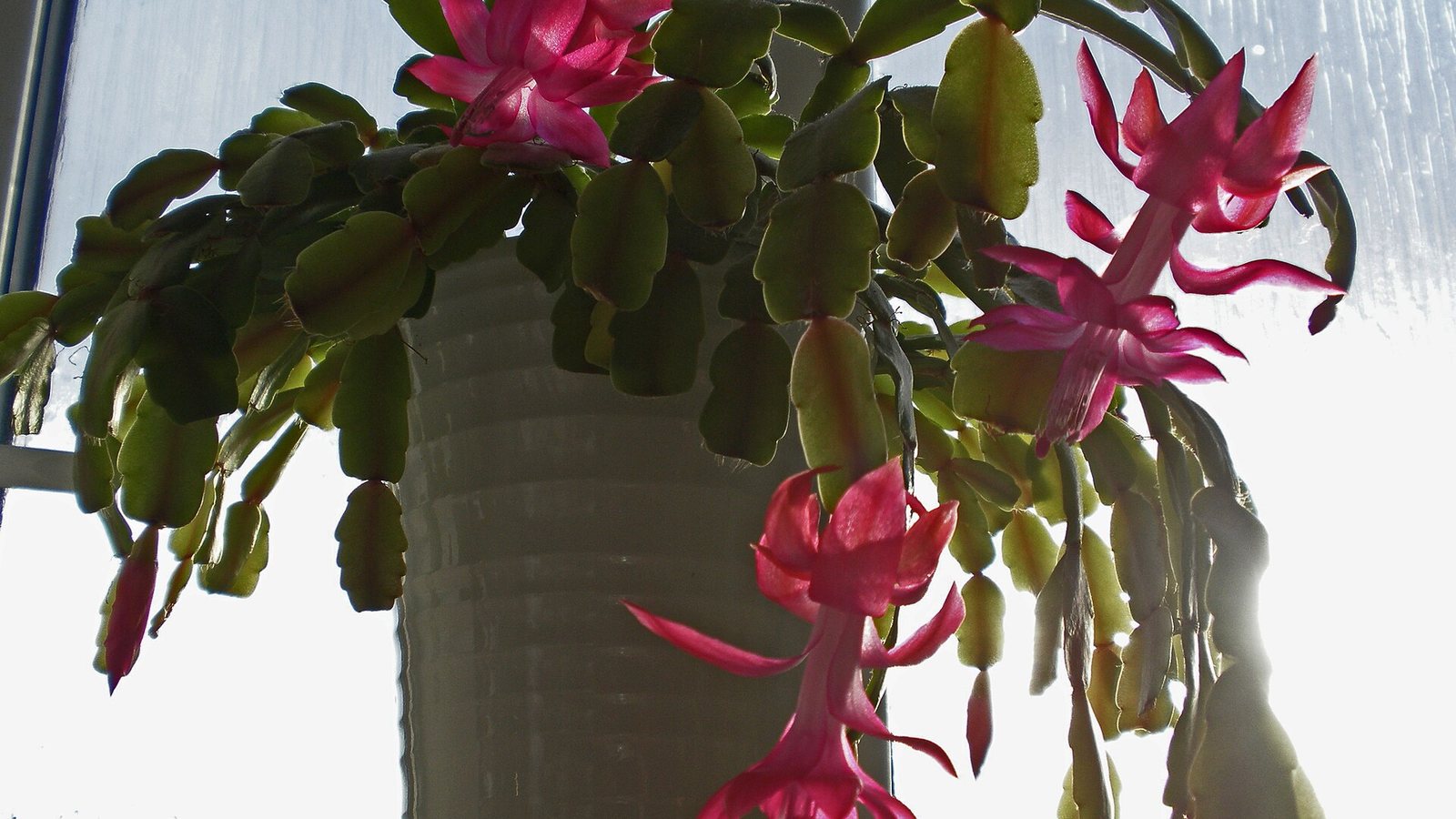
The best Christmas and New Year gift plants, with the room temperature each needs and which are safe for cats and dogs, for both hemispheres.
Sources
Written and fact-checked by the Flori team. Every guide cites horticultural sources such as the RHS, university extension services and the ASPCA, and is updated when the advice changes. How we write our guides
General plant care information. Plants vary; when a plant is valuable or a problem spreads quickly, consult a local nursery or plant specialist.