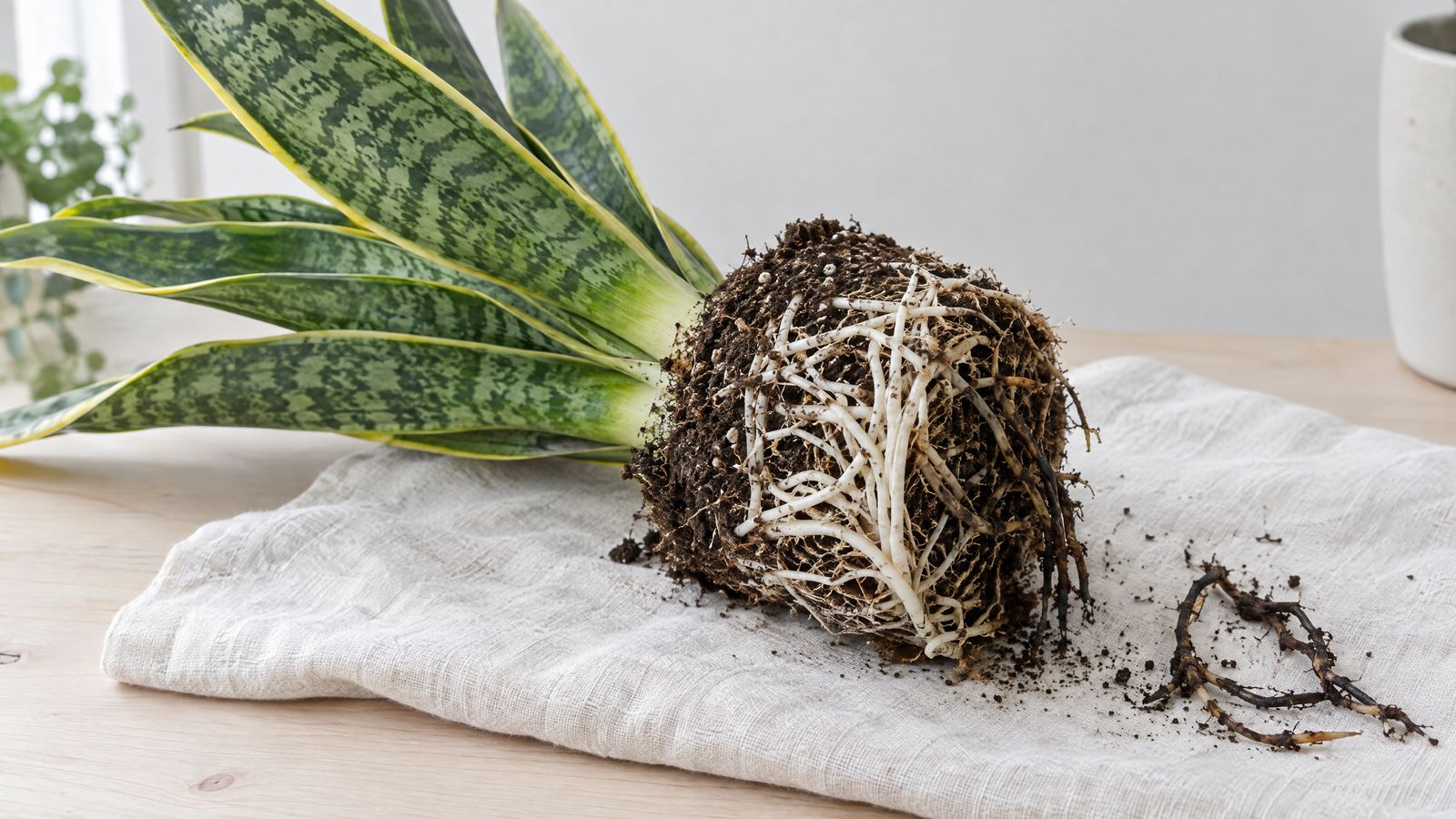
Best Soil Mix for Houseplants: Recipes by Plant Type
The best houseplant soil is a soilless mix of peat or coir with perlite, bark or coarse sand. Tested recipes for foliage plants, aroids and orchids.
 By Flori editorial team · Updated
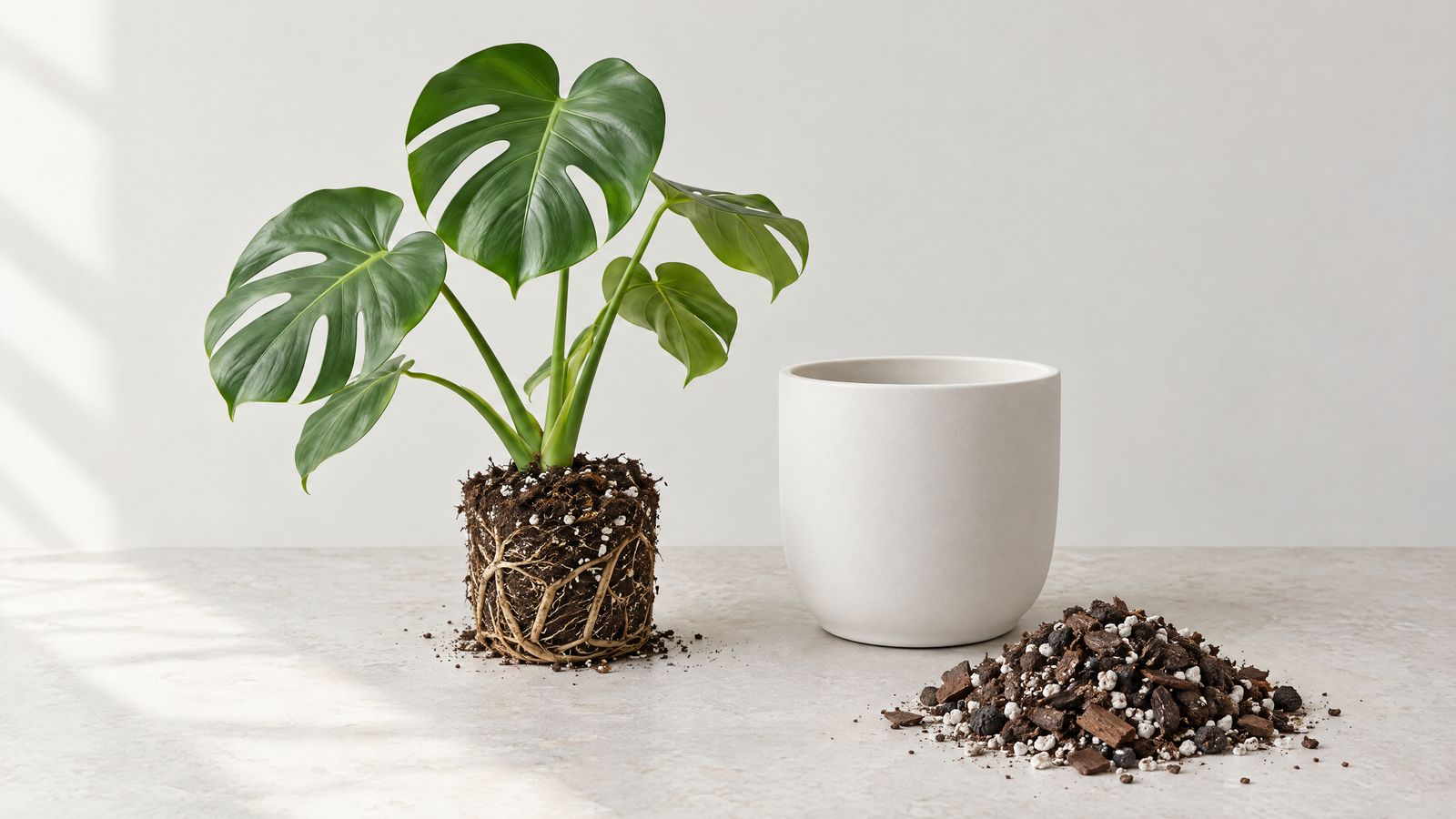
The best soil mix for most houseplants is a soilless potting mix: peat or rinsed coir for moisture, plus perlite, pine bark or coarse sand for air, for example two parts peat to one part perlite and one part coarse sand. Monstera and philodendron like extra bark; orchids need a bark mix. Never use garden soil.
Key takeaways
- Good potting mix holds the plant up, keeps some moisture, lets air reach the roots and is free of pests and weed seeds.
- Garden soil is not recommended for pots: it carries too many organisms and packs down.
- Climbing aroids such as monstera and philodendron do well with equal parts fine bark, peat and perlite.
- Orchids need a bark-based orchid mix; ordinary potting soil leads to root rot.
- Potting mix breaks down and compacts, so refresh it every two to three years.
What is the best soil mix for houseplants?
The best soil mix for most houseplants is not soil at all. Clemson Cooperative Extension explains that most commercial potting mixes are soilless: peat moss or coconut coir combined with perlite or vermiculite, sometimes with bark or sand. Bagged mixes work, but they vary a lot, and one mix does not suit every plant. This guide gives tested recipes by plant group from university sources, explains what each ingredient does, and shows when a mix has worn out. If you grow succulents and cacti, they need a much grittier mix; see our guide to the best soil for succulents and cacti.
What makes a good potting mix?
Clemson lists four requirements for a quality container mix:
- It is dense enough to support the plant.
- It holds nutrients well.
- It lets water and air pass through readily, yet keeps enough moisture.
- It is free of insects, diseases and weed seeds.
The third point is the balancing act. Roots need water, but they also need air. The Royal Horticultural Society (RHS) explains that when plants sit in water for long periods, the air spaces in the compost fill with water and the roots can drown. That is why the RHS insists that every container has a drainage hole, and why a good mix always contains something coarse.
Why not use garden soil?
Clemson says garden soils contain too many bacteria and are generally not recommended for container plants. Unlike bagged mixes, which can be used straight away, garden soil would first have to be pasteurised to kill disease organisms, insects and weed seeds, and then amended with bark, peat, perlite or sand to improve its structure. For a few houseplants, that effort is rarely worth it. A bag of fresh potting mix is cleaner and lighter.
What does each ingredient do?
| Ingredient | Main job | Notes from the sources |
|---|---|---|
| Peat moss | Holds water and nutrients | The classic base of soilless mixes (Clemson); the RHS recommends peat-free composts |
| Coconut coir | Peat replacement | A popular, lower-cost and more sustainable alternative; rinse it thoroughly first to avoid salt problems (Clemson) |
| Perlite | Opens air spaces | Part of most recipes below (Clemson) |
| Vermiculite | Alternative to perlite in peat-lite mixes | Used in the Cornell foliage mix (Clemson) |
| Pine or fir bark | Coarse structure and air | Key in mixes for aroids, bromeliads and orchids (Clemson, Missouri Botanical Garden) |
| Coarse sand or grit | Drainage and weight | Use horticultural grit or sharp sand, not builders' sand (RHS) |
| Loam (soil-based compost) | Weight and stability | Peat-free, loam-based compost suits top-heavy plants (RHS) |
Bagged mixes often include a slow-release fertiliser that lasts a few months, Clemson notes, but they are usually low in trace elements, so regular feeding in the growing season still matters.
Soil mix recipes by plant type
All recipes below are by volume, so a cup, a scoop or a bucket all work as one part. They come from Clemson Extension, which also reproduces two mixes developed at Cornell University; the Cornell versions include lime and fertiliser for growers, but the base ingredients are what matter at home.
| Plants | Mix (by volume) | Source |
|---|---|---|
| Most foliage plants | 2 parts peat, 1 part perlite, 1 part coarse sand; or 1 part peat, 1 part pine bark, 1 part perlite | Clemson |
| Ferns, begonia, prayer plant (Maranta), ficus, pilea, snake plant (Sansevieria), pelargonium, coleus | Cornell foliage mix: 2 parts sphagnum peat, 1 part vermiculite, 1 part perlite | Clemson (Cornell) |
| Monstera, philodendron, hoya, peperomia, dieffenbachia, bromeliads | Cornell epiphytic mix: equal parts fine fir bark, sphagnum peat and perlite | Clemson (Cornell) |
| All-purpose foliage mix used at Clemson | 2 parts pine bark, 1 part peat, 1 part sand | Clemson |
| Moth orchids (Phalaenopsis) | Commercial bark-based orchid mix (fir bark, sometimes charcoal and perlite); never ordinary potting mix | Missouri Botanical Garden |
| Tall, top-heavy plants | Peat-free, loam-based compost for weight | RHS |
| Plants that need extra drainage | Your usual mix plus horticultural grit or sharp sand | RHS |
Two notes. Interestingly, the Cornell lists put the snake plant in the foliage mix and cacti in the bark-rich epiphytic mix; for most home growers a grittier succulent mix is still the safer choice for both, because it dries faster. And for monstera, the bark-rich mix pairs well with the care in our monstera care guide. If an orchid in old, broken-down bark has stopped flowering, our guide on why an orchid is not blooming covers repotting it.
The RHS also suggests checking whether a plant prefers acid or alkaline conditions; acid-loving plants turn yellow in the wrong compost. The Clemson mix is adjusted to a pH of about 6.0 with dolomitic lime, which suits most foliage plants.
How do you know the potting mix is worn out?
Potting mix does not last forever. The RHS explains that compost degrades and compacts over time, reducing the air reaching the roots, which can promote disease. It recommends potting on every two to three years, ideally in spring, into a pot 5–10 cm (2–4 in) wider. Signs it is time:
- Water runs straight through, or sits on the surface and drains slowly.
- Green algae grows on the surface, which the RHS says can mean the compost has turned sour.
- The mix has shrunk away from the pot sides or feels dense and heavy.
- Roots circle the pot or grow out of the drainage holes.
Our guide to repotting without stress covers the step-by-step. If the roots are already brown and soft, start with the root rot rescue plan instead. Flori's Lab tools include soil checks, and a repotting reminder helps you notice when a mix is two or three years old.
Good soil still needs good watering
Even the best mix stays wet too long if you water on a fixed schedule. Water when the surface of the compost is dry, let excess drain away and never leave pots standing in water; our guide to how to water houseplants explains how to check.
Frequently asked questions
Can I use garden soil for houseplants?
It is not recommended. Clemson Extension says garden soil contains too many bacteria for containers and would need pasteurising and amending first; a fresh soilless potting mix is cleaner and drains better.
What is a good homemade potting mix?
For most foliage plants, mix 2 parts peat or rinsed coir, 1 part perlite and 1 part coarse sand by volume. For monstera and philodendron, use equal parts fine bark, peat and perlite.
Is coco coir better than peat?
Coir is a popular, lower-cost and more sustainable alternative to peat and works in the same recipes. Rinse it thoroughly with water before use to avoid salt build-up.
How often should houseplant soil be replaced?
Every two to three years, ideally in spring. Compost breaks down and compacts over time, reducing the air that reaches the roots.
Sources
Written and fact-checked by the Flori team. Every guide cites horticultural sources such as the RHS, university extension services and the ASPCA, and is updated when the advice changes.
General plant care information. Plants vary; when a plant is valuable or a problem spreads quickly, consult a local nursery or plant specialist.