Black Spots on Leaves: Causes and Treatment
Black spots on leaves can be leaf spot disease, sooty mould, cold damage, root rot or rose black spot. Tell them apart and treat the right cause first.
 By Flori editorial team · Updated
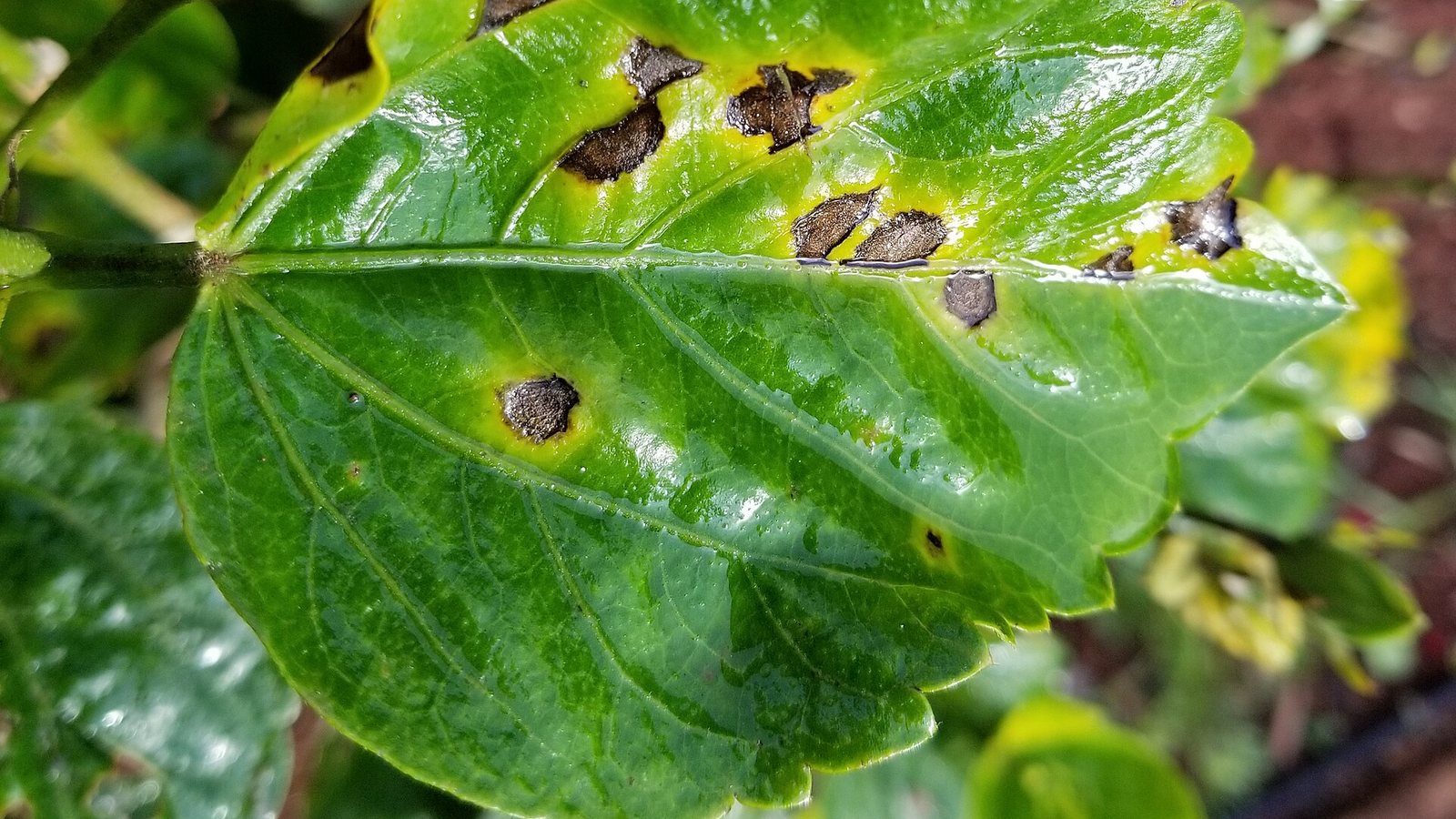 Photo: Scot Nelson · CC0
Black spots on leaves usually come from fungal or bacterial leaf spot, cold damage, overwatering or sooty mould growing on insect honeydew. If the black wipes off, look for insects. Spots with yellow rims point to leaf spot disease. Sudden blackening after a cold night is cold damage. Remove badly spotted leaves and fix the cause.
Key takeaways
- Black that wipes off is sooty mould: control the aphids, scale or mealybugs that feed it.
- Dark spots with yellow margins suggest fungal leaf spot; water-soaked spots suggest bacteria.
- Remove spotted leaves, water the compost not the foliage and give the plant more air.
- Sudden blackening after a cold night is cold damage; soft dark patches with wet compost mean checking the roots.
- Fungicides are rarely needed indoors; if you use one, choose the least-toxic option and follow the label.
On this page9
- What causes black spots on leaves?
- Black spots on leaves: what you see, the cause and the fix
- Does the black wipe off? It may be sooty mould
- Spots with a yellow ring: fungal or bacterial leaf spot
- How to treat black spots caused by leaf spot disease
- Black leaves after a cold night
- Could overwatering cause black spots?
- Black spot on roses and garden plants
- When to ask for a second opinion
What causes black spots on leaves?
Black spots on leaves have several quite different causes, and the treatment depends entirely on which one you have. On houseplants the usual suspects are fungal or bacterial leaf spot, cold damage, root problems from overwatering and sooty mould growing on insect honeydew. In the garden, black spot of roses is the classic case. The good news is that each one leaves a different pattern. This guide puts them side by side in one table, with a quick test for each, so you can tell them apart before you cut, spray or repot.
Start with three questions. Does the black come off when you rub it with a damp cloth? Is there a yellow ring around each spot? And did the spots appear after a cold night, a spell of heavy watering or a new pest?
Black spots on leaves: what you see, the cause and the fix
| What you see | Likely cause | First fix |
|---|---|---|
| Black film or crust that wipes off, leaves sticky underneath | Sooty mould on honeydew from sap-sucking insects | Find and control the insects, then wipe the leaves |
| Round brown to black spots with a yellow margin, sometimes in rings, tiny black dots in the dead tissue | Fungal leaf spot | Remove spotted leaves, improve air flow, keep leaves dry |
| Water-soaked, dark spots, often with a yellow halo, drying reddish-brown | Bacterial leaf spot | Remove affected leaves, keep foliage dry and warm |
| Leaves blackening and collapsing after a cold night or a draughty spot | Cold damage | Move to a warmer place away from cold glass |
| Dark, soft patches in the middle of leaves or at the stem base, compost wet for days | Overwatering, possible root rot | Stop watering and check the roots |
| Dark patches on outdoor rose leaves, yellowing around them, early leaf fall | Rose black spot | Clear fallen leaves, prune out infected stems in spring |
Does the black wipe off? It may be sooty mould
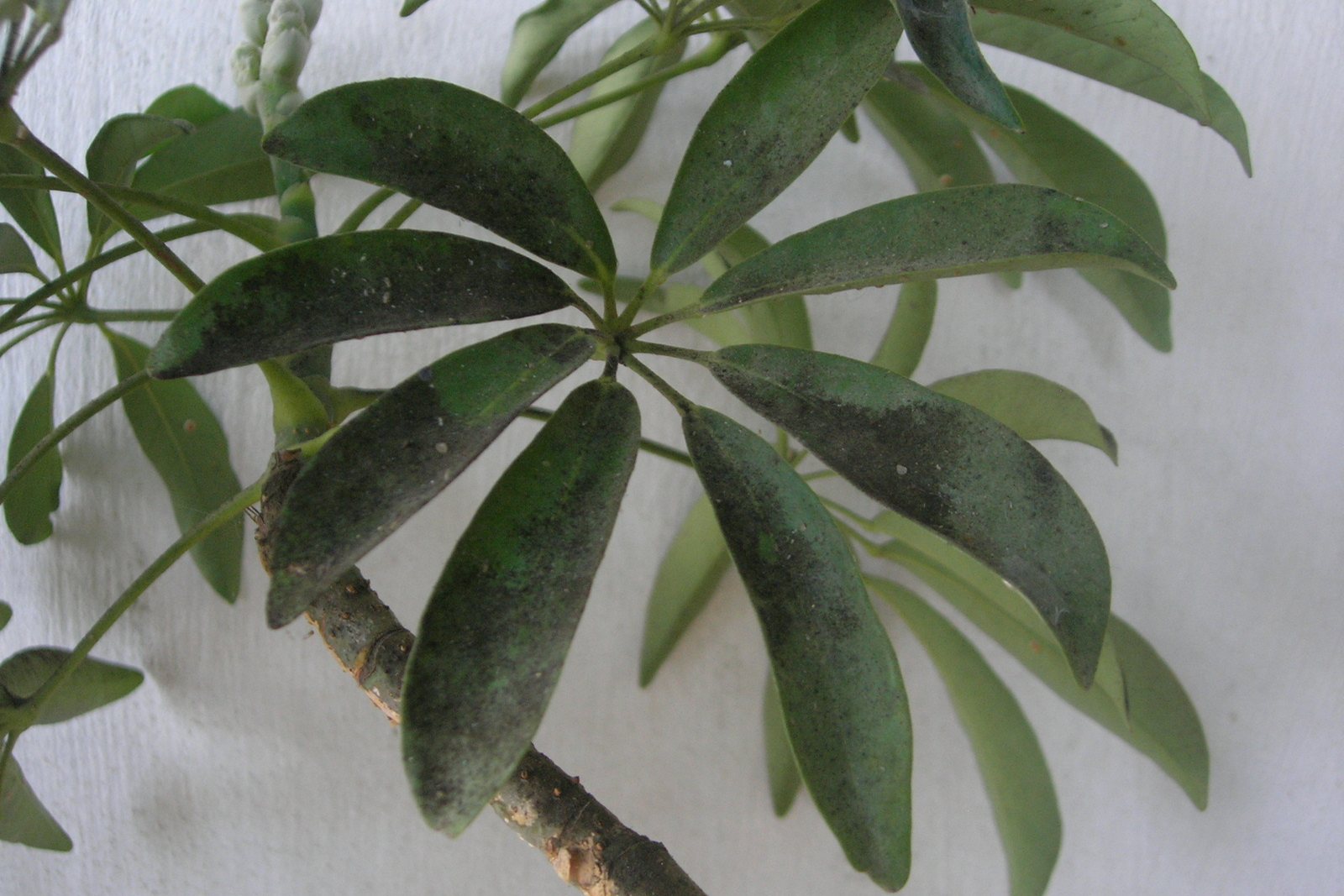
If a damp cloth lifts the black away and the leaf underneath is green, you are looking at sooty mould. Iowa State Extension explains that these fungi do not infect the plant: they grow on the sugary honeydew excreted by aphids, scales, mealybugs and other sap-feeding insects. The coating is mainly a cosmetic problem, though a heavy layer blocks light from the leaf.
Wiping it off is only half the job. Iowa State stresses that control is aimed at the insects, since the mould returns as long as the honeydew does. Look on stems and leaf undersides for small brown bumps (scale), white cottony tufts (mealybugs) or clusters of soft green or black insects (aphids). Our guides to sticky leaves on houseplants and aphids explain how to deal with each, starting with the least-toxic methods.
Spots with a yellow ring: fungal or bacterial leaf spot
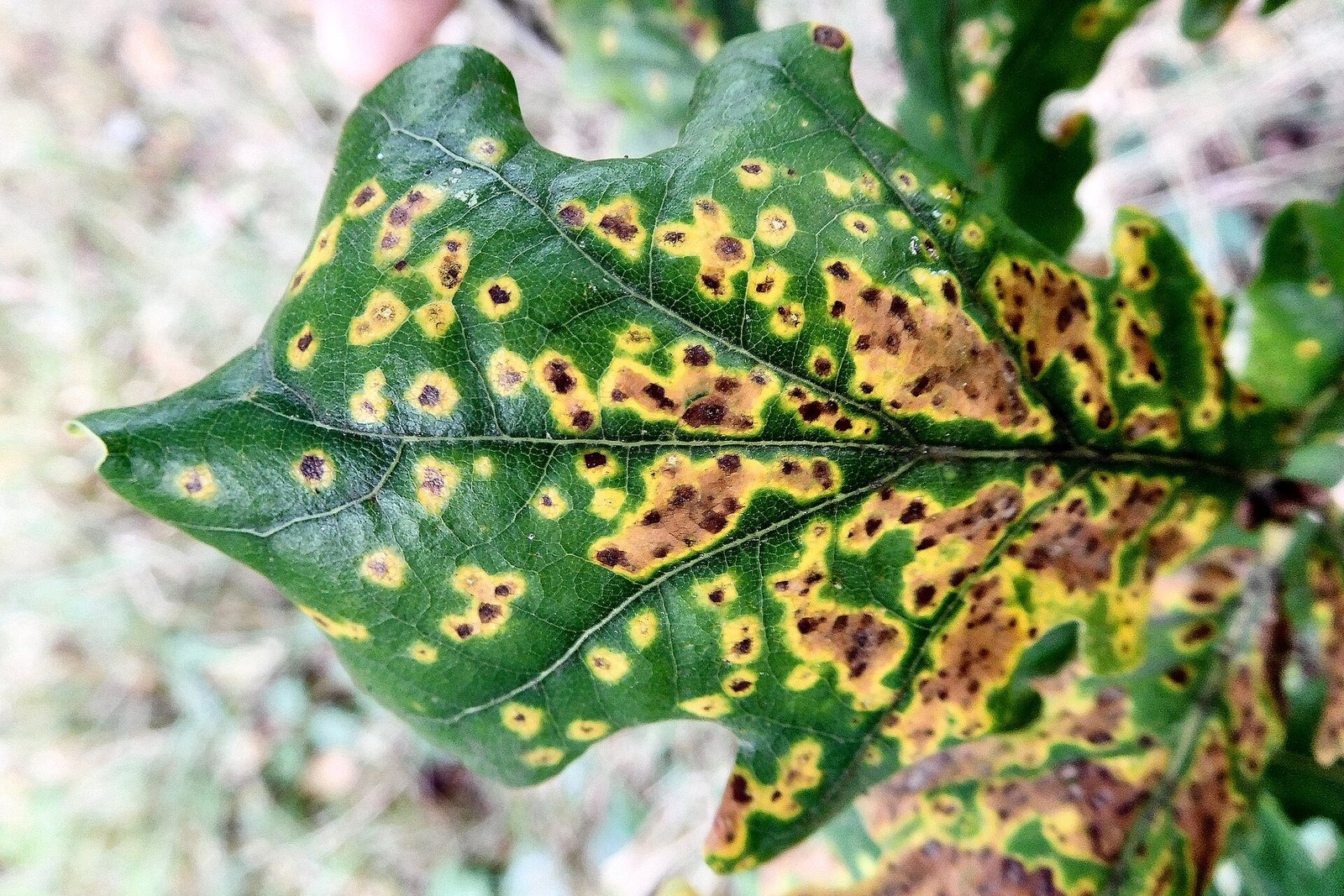
When the black is part of the leaf itself and will not wipe off, look closely at the edge of each spot. Clemson Extension describes fungal leaf spots on houseplants as small, brown spots with yellowish margins, which can enlarge into a target pattern and may carry tiny black fruiting bodies in the dead tissue. The RHS gives the same clue: dark spots with yellow margins may be fungal leaf spot.
Bacterial leaf spot looks wetter. Clemson describes water-soaked spots, sometimes with a yellow halo, that dry out and turn reddish-brown in dry conditions. Both kinds spread in water, so splashing the leaves when you water, crowded plants and cool, still air all help them along.
How to treat black spots caused by leaf spot disease
- Remove the worst leaves. Cut off spotted leaves with clean scissors and bin them, rather than leaving them in the pot. The RHS notes that badly affected leaves will not recover.
- Keep the leaves dry. Water the compost, not the foliage, and stop misting until the plant is clear. Clemson advises avoiding splashing water on the leaves.
- Give the plant space. Move it away from its neighbours to improve air circulation, which both the RHS and Clemson recommend.
- Keep it warm. For bacterial spot, Clemson also advises avoiding low temperatures and crowding.
- Watch the new growth. Old spots will not disappear. If new leaves come in clean, the treatment is working.
Fungicides are rarely needed indoors. The RHS advises against using them on houseplants and recommends better growing conditions instead; Clemson lists products, including copper soap, for persistent fungal spots, applied only after the infected parts are removed. If you do use one, choose the least-toxic option, check that it is approved for houseplants where you live and follow the label exactly.
Black leaves after a cold night
If the black appeared suddenly, over a day or two, think about temperature. The RHS lists blackened leaves, leaf droop and whole-plant collapse as symptoms of cold damage, often in unheated rooms such as porches in winter. It also warns that plants on windowsills can be chilled when curtains are drawn at night and trap cold air between the curtain and the glass. Cold-damaged patches are usually on the side nearest the window or door, and they appear at once rather than spreading slowly.
Move the plant somewhere warmer, cut off leaves that have turned black and mushy and wait for new growth before judging the damage. Our guide on how cold is too cold for houseplants gives the minimum temperatures for common plants.
Could overwatering cause black spots?
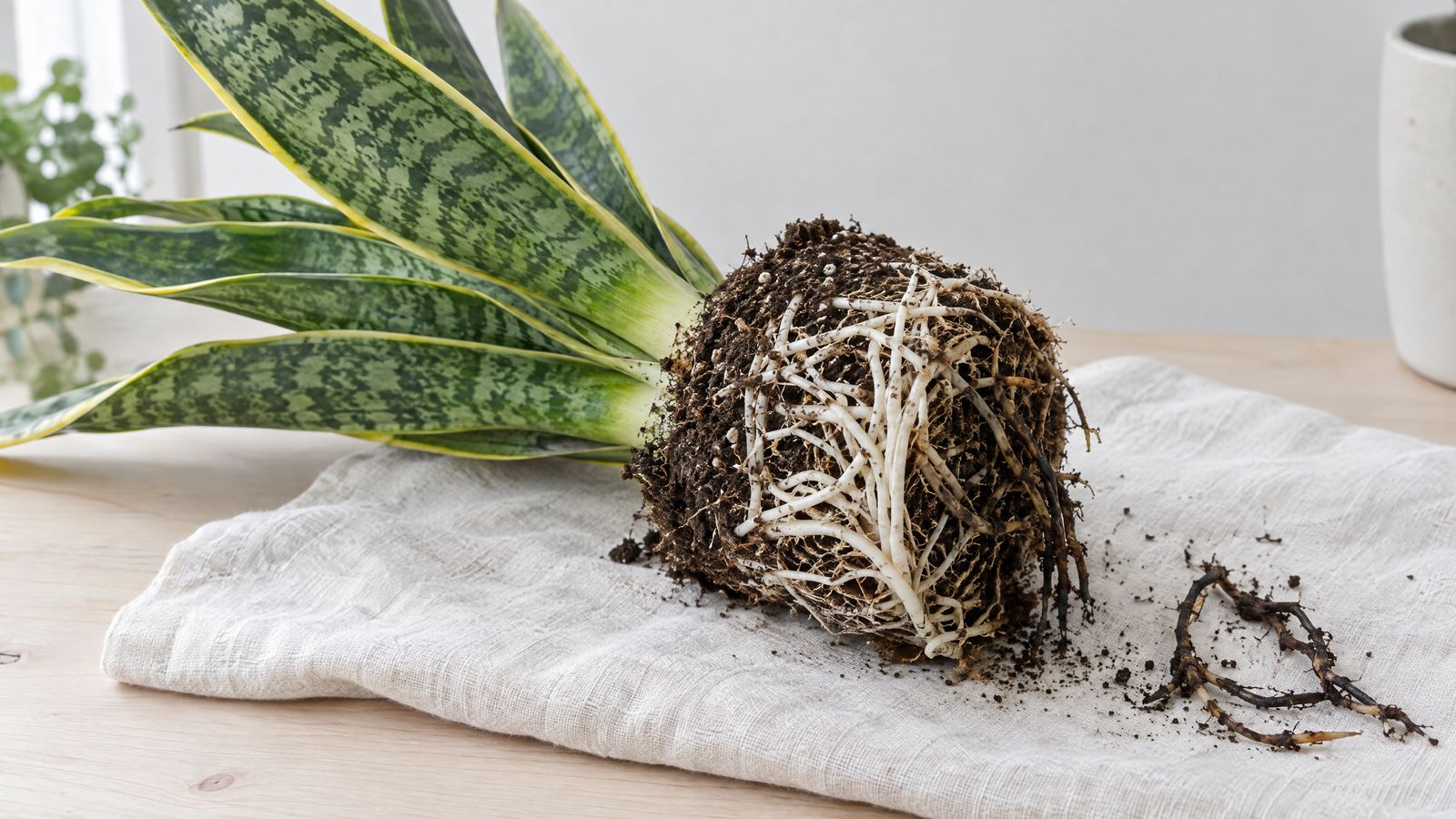
Yes, indirectly. The RHS notes that overwatering often causes browning in the middle of leaves, and that dark, soft roots indicate poor root health. Clemson adds that root rot can show as wilting and stems that darken and rot at soil level. On many plants these patches look black rather than brown, especially when they are soft. Feel the compost: if it has been wet for days, slide the plant out and look at the roots before you treat the leaves. Our root rot rescue plan covers what to do if you find rot.
Black spot on roses and garden plants
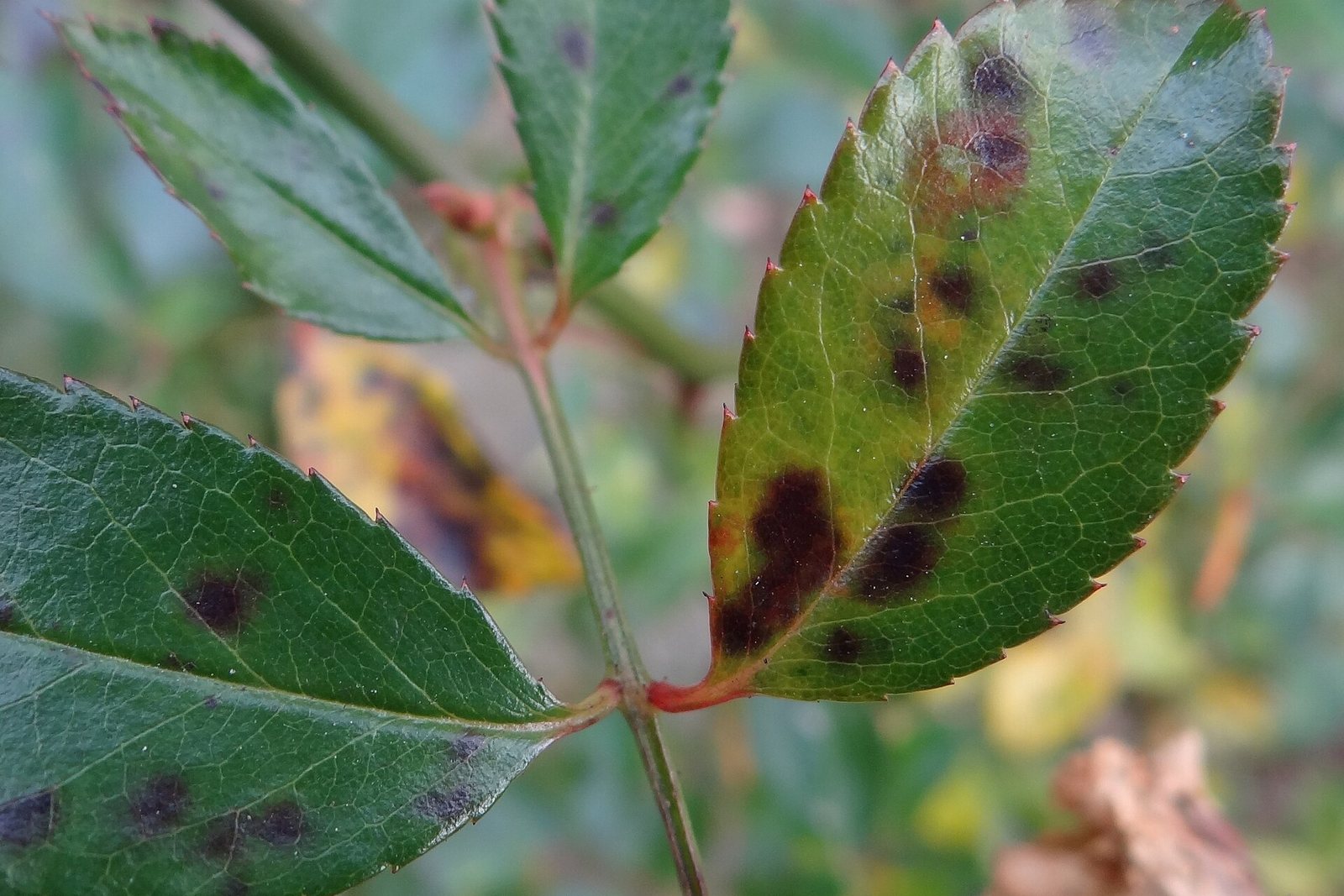
Outdoors, the best-known cause is rose black spot, which the RHS calls the most serious disease of roses. The fungus Diplocarpon rosae produces dark patches on the upper surface of the leaves, often with yellowing around them, and infected leaves fall early. Its spores spread in water, so wet seasons make it worse, and it survives on fallen leaves and stem infections. The RHS advises collecting fallen leaves in autumn, pruning out infected stems in spring before the leaves open and choosing resistant varieties, while noting that resistance often does not last. It recommends against fungicides.
When to ask for a second opinion
If the spots do not match any row in the table, or you see more than one pattern, take a clear photo of the top and underside of an affected leaf and the stem base. Dr. Flori can work from that photo, ask follow-up questions about watering and temperature and tell you how urgent it is. Our guide to diagnosing a plant disease from a photo explains which shots help most.
Frequently asked questions
Should I remove leaves with black spots?
Yes, cut off badly spotted leaves with clean scissors and bin them. The spots will not fade, and removing them reduces the spores or bacteria that can spread to new leaves.
Can black spots on leaves spread to other plants?
Fungal and bacterial leaf spots can, mainly through splashing water. Move the affected plant away from others, keep its leaves dry and clean your scissors after use.
Why are there black spots on my plant but no pests?
Then sooty mould is unlikely. Check for yellow-rimmed spots (leaf spot disease), a recent cold night or draught (cold damage) and wet compost with soft roots (overwatering).
Is sooty mould harmful to my plant?
It does not infect the plant, but a thick layer blocks light. Wipe it off with a damp cloth and deal with the insects producing the honeydew, or it will come back.
Sources
Written and fact-checked by the Flori team. Every guide cites horticultural sources such as the RHS, university extension services and the ASPCA, and is updated when the advice changes. How we write our guides
General plant care information. Plants vary; when a plant is valuable or a problem spreads quickly, consult a local nursery or plant specialist.