How to Diagnose a Plant Disease From a Photo
Diagnose a plant disease from a photo: the five shots to take, a symptom to cause table, what a picture cannot show and what to do first.
 By Flori editorial team · Updated
You can diagnose many plant problems from a photo if it shows the right things: the whole plant, both sides of the worst leaf, the stem at the soil line and, if it wilts in wet soil, the roots. Add when you last watered and any recent changes. Many apparent diseases turn out to be watering, light or pest problems.
Key takeaways
- One close-up of a brown spot is rarely enough: photograph the whole plant, both leaf sides, the stem base and the soil.
- Write down when you last watered and what changed recently; a photo cannot show soil moisture or a cold night.
- Many problems that look like disease are overwatering, poor light, dry air, salt buildup or pests.
- A photo cannot show roots inside a pot or tiny mites, so confirm with a hands-on check.
- While you wait for an answer, isolate the plant, remove badly affected leaves and keep the foliage dry.
Can you really diagnose a plant disease from a photo?
Often, yes, as long as the photo shows the right things. Many of the problems people photograph as a plant disease turn out to be care problems. The Royal Horticultural Society (RHS) notes that houseplant trouble often arises in winter from overwatering, poor light or dry air, and Iowa State University Extension calls overwatering a common reason houseplants fail. A good set of photos lets you, an expert or an app separate a fungal leaf spot from sun scorch, fertiliser salt burn or a pest. This guide gives you what most pages skip: a five-shot photo checklist, a symptom to likely cause table built from extension sources, and an honest list of what a picture cannot show.
Five photos to take before you ask for a diagnosis
A single blurry close-up of one brown spot is the most common reason a diagnosis goes wrong. Take these in daylight, without flash:
- The whole plant in its usual spot. It shows the window, the pot, how stretched the plant is and whether the damage is on one side. RHS links weak, spindly growth and pale leaves to too little light, and brown scorched patches to too much direct sun.
- A close-up of the worst leaf, top side, with part of a healthy leaf in the frame for comparison.
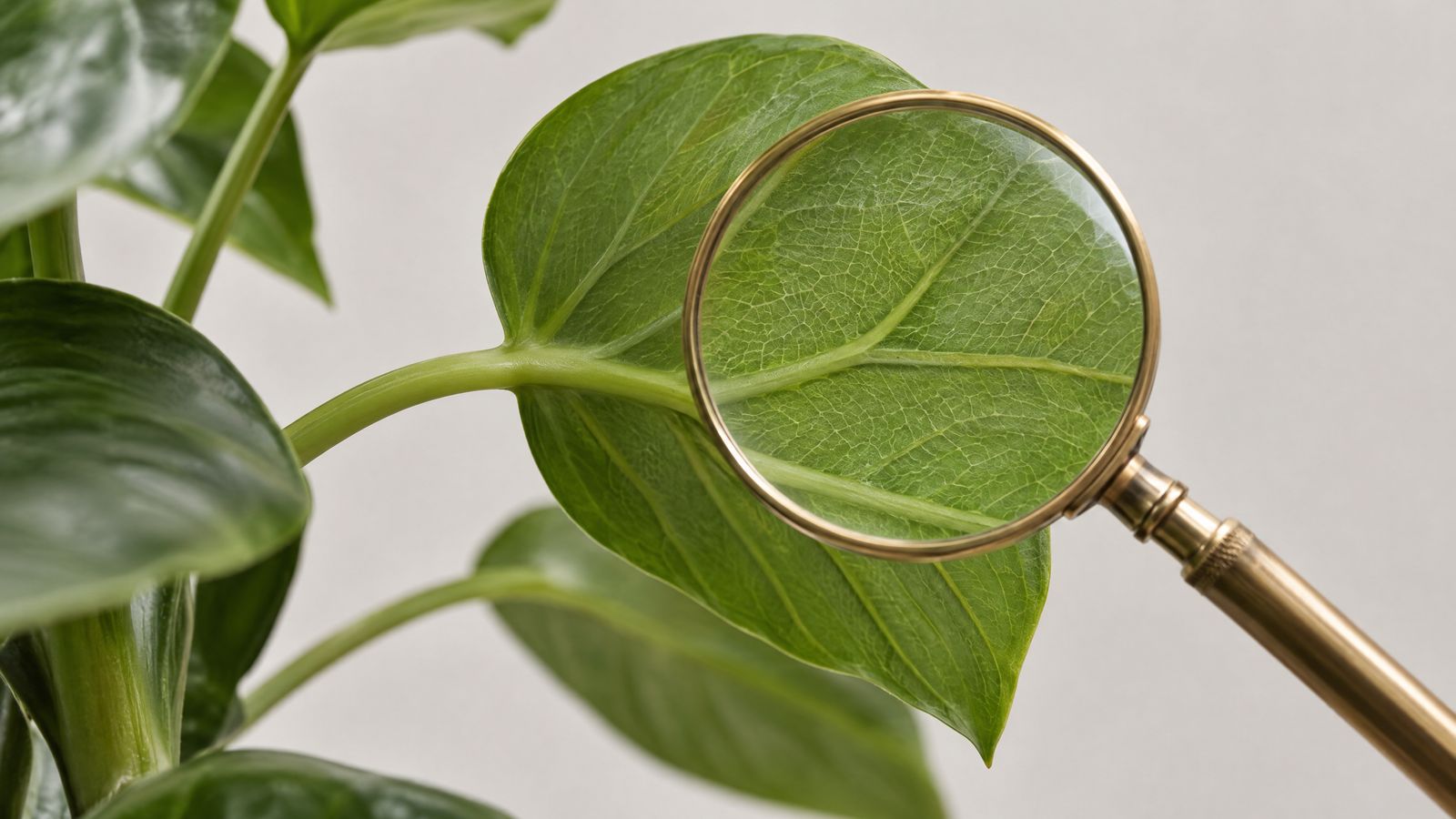
- The underside of the same leaf. Iowa State Extension notes that spider mites, mealybugs, scale and whiteflies all feed mostly on leaf undersides.
- The stem at the soil line and the soil surface. Clemson Cooperative Extension describes root and stem rot as wilting with stems girdled near the soil line, and a white or grey crust on the soil or pot rim points to salt buildup.
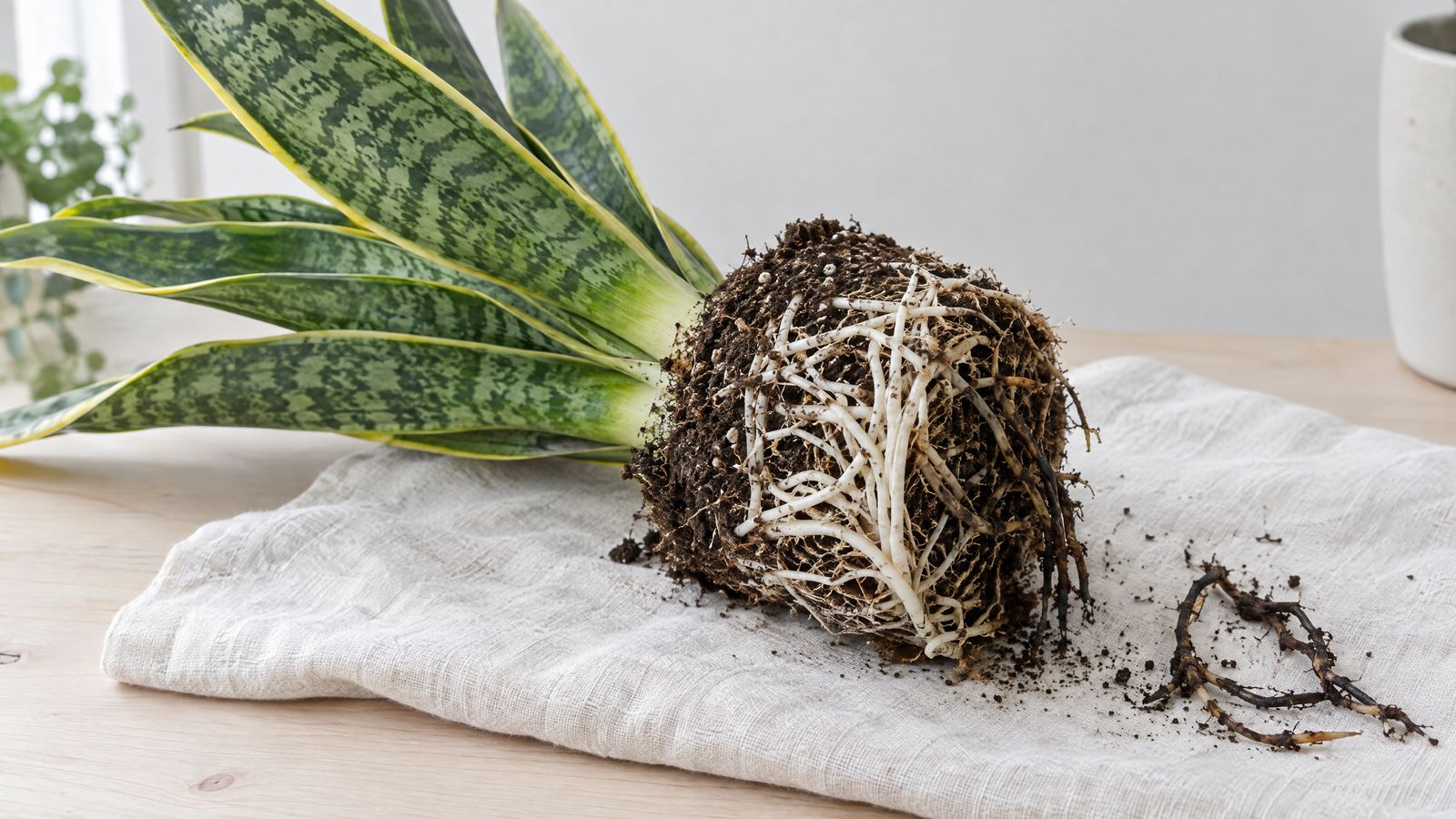
- The roots, if the plant wilts in damp soil. Slide it out of the pot. RHS lists dark, mushy roots as a sign of overwatering.
Then note three facts no photo can hold: when you last watered, whether the soil is wet or dry a few centimetres (about 1 in) down, and whether anything changed recently, such as a move, a new pot, a cold draught or a dose of fertiliser.
Symptom, likely cause and how to confirm it
Use this table to read your own photos. It gives the most likely cause, not the only one, and the check that settles it.
| What the photo shows | Likely cause | How to confirm |
|---|---|---|
| Small brown spots with yellowish margins, sometimes in rings, with black dots in the dead tissue | Fungal leaf spot | Spots appear on new leaves; foliage stays wet or plants are crowded |
| Water-soaked spots, sometimes with a yellow halo | Bacterial leaf spot | Spots enlarge and merge in wet conditions |
| Leaf tips turn yellow, then tan, then dark brown, and the browning spreads | Anthracnose | Often starts at wounds or damaged tips |
| White powdery coating or dry, papery brown spots | Powdery mildew | The white coating smears off on a finger |
| Wilting in wet soil, stem soft at the soil line | Root and stem rot | Roots are brown to black and soft |
| Brown tips and edges with a white crust on soil or pot rim | Salt buildup from fertiliser | Recent heavy feeding; crust is visible |
| Corky swellings on the leaves | Oedema from low light and too much moisture | Swellings do not spread like leaf spots |
| Fine pale mottling, webbing in bad cases | Spider mites | Tap a leaf over white paper and watch for moving specks |
| Cottony white masses in leaf joints | Mealybugs | Sticky honeydew or black sooty mould nearby |
| Small bumps along stems and veins | Scale insects | Light infestations lift off with a fingernail |
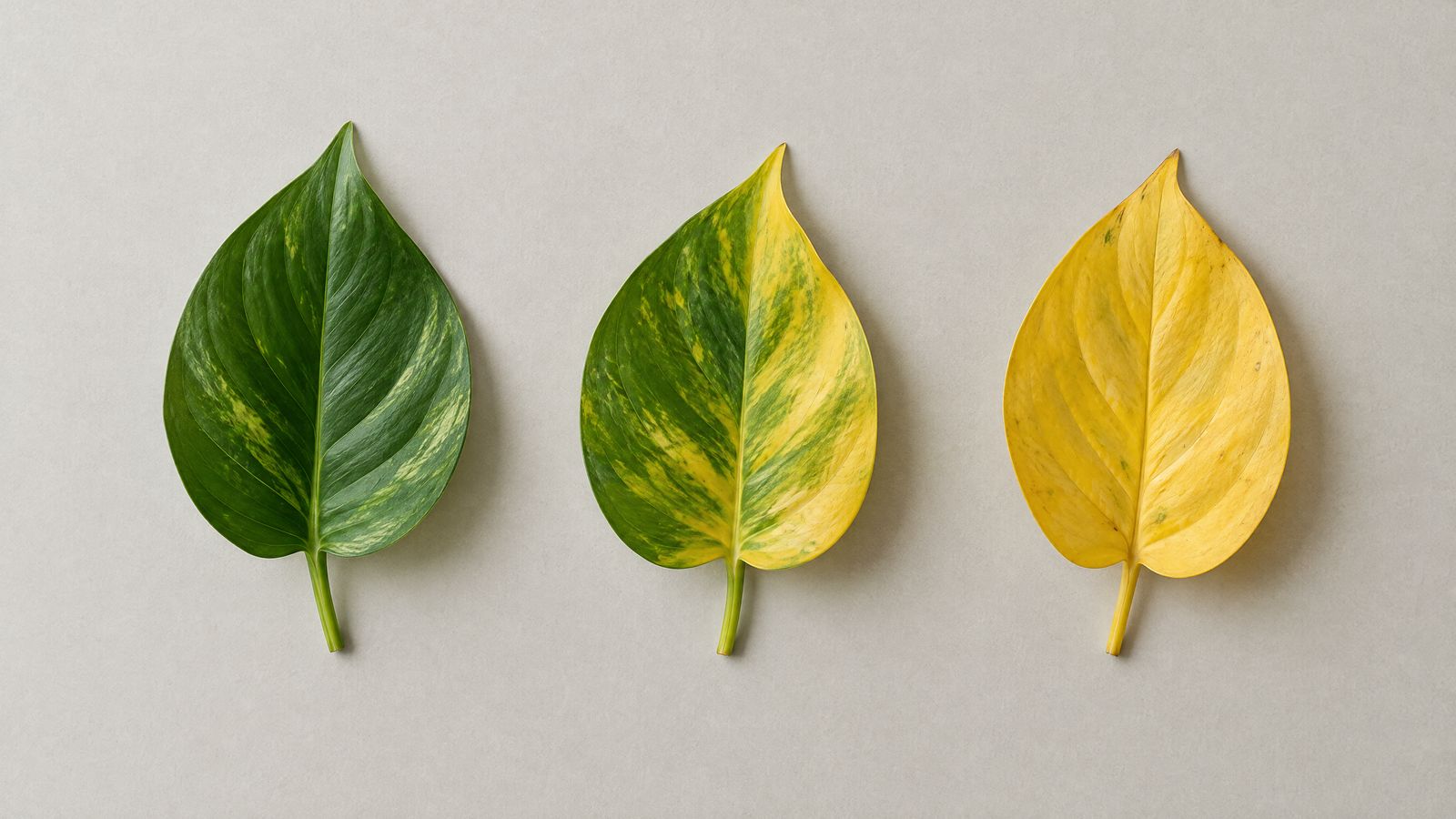
| Older lower leaves yellow and drop, soil dry | Underwatering | Soil is dry several centimetres down |
The disease descriptions come from Clemson Extension, the pest signs from Iowa State Extension and the watering signs from RHS. If yellowing is your main symptom, our yellow leaves diagnosis guide narrows it down further, and sudden leaf drop has its own guide on plant leaves falling off.
A photo diagnosis in the app, step by step
In Flori, open Dr. Flori and send your photos, or describe the problem in words if you cannot get a sharp shot. Dr. Flori asks follow-up questions much like the ones above about watering, light and recent changes, then names the likely cause, says how urgent it is and gives a recovery plan. If the plant needs watching, the Plant Hospital keeps it under a follow-up plan, and a reminder for progress photos lets you compare the same leaf a week later. The Free plan includes 2 diagnoses a month and Annual Premium makes them unlimited.
Whatever tool you use, three habits make the answer better:
- Answer follow-up questions precisely. "I water every Sunday" is more useful than "I water normally".
- Send the underside and the stem base, not only the most dramatic leaf.
- Photograph again after a week. A spot that stays the same size is usually old damage; one that keeps spreading is active.
What a photo cannot show
A picture is a strong first step, but some problems only reveal themselves in hand:
- Roots inside the pot. If the plant wilts in wet soil, you need to look at them yourself.
- Soil moisture. Dry-looking surface soil can be soaking below. RHS recommends pushing a finger a few centimetres into the compost before you water.
- Tiny pests. Spider mites are hard to see with the naked eye; Iowa State suggests the paper-tap test, and RHS recommends checking plants, especially new ones, with a hand lens.
- Overlapping causes. Iowa State notes that poor care often leads to plant stress, which makes plants prone to pests and disease. A leaf spot on an overwatered plant needs both problems fixed.
- Temperature history. RHS links blackened, collapsing leaves to cold damage and wilting and crisping to heat stress; the photo shows the result, not the night it happened.
What to do first while you wait for an answer
- Isolate the plant. Iowa State advises isolating infested plants so pests do not spread to the rest of your collection.
- Remove badly affected leaves. Clemson recommends removing and destroying infected plant parts. RHS suggests keeping leaves that are still mostly green until new growth appears.
- Keep the foliage dry. Stop misting and water the soil, not the leaves. Clemson notes that splashing water spreads fungi and that good air circulation helps.
- Fix the care problem behind it. Check soil moisture before every watering, move a scorched plant out of direct sun and a pale, stretched one closer to the light.
- Hold off on sprays. RHS advises against using fungicides on houseplants. If you do use a pest or disease product, start with the least toxic option and always follow the label.
If the roots turn out to be soft and dark, go straight to our root rot rescue plan. If you find small green or black insects clustered on new growth, see aphids on plants for gentle ways to clear them.
Frequently asked questions
Can an app diagnose a plant disease from a photo?
It can narrow down the likely cause well when the photos show the whole plant, both sides of a damaged leaf and the stem base, and you add your watering details. It cannot see roots inside the pot or soil moisture, so confirm with a hands-on check.
What is the best photo to take of a sick plant?
Take several: the whole plant in its spot, the top and underside of the worst leaf, the stem at the soil line and the roots if it wilts in wet soil. Use daylight and no flash.
Are brown spots on leaves always a disease?
No. Salt buildup from fertiliser, sun scorch, cold damage and splashes of cold water can all cause spots or brown edges, and overwatering often comes first.
Should I spray a fungicide as soon as I see spots?
No. RHS advises against fungicides on houseplants. Remove badly affected leaves, keep foliage dry, improve airflow and fix watering first; if you use any product, choose the least toxic option and follow the label.
Sources
- Clemson Cooperative Extension HGIC: Houseplant Diseases & Disorders
- Iowa State University Extension: Diagnosing Houseplant Problems Caused by Insect Pests
- Iowa State University Extension: Diagnosing Houseplant Problems Related to Poor Culture
- Royal Horticultural Society: How to help a poorly houseplant
Written and fact-checked by the Flori team. Every guide cites horticultural sources such as the RHS, university extension services and the ASPCA, and is updated when the advice changes.
General plant care information. Plants vary; when a plant is valuable or a problem spreads quickly, consult a local nursery or plant specialist.