Cut Christmas Tree Care: Keep It Fresh Longer
Pick a fresh cut tree, recut the trunk if needed, refill plain water daily and keep it from heat: a fresh tree lasts about three to four weeks.
 By Flori editorial team · Updated
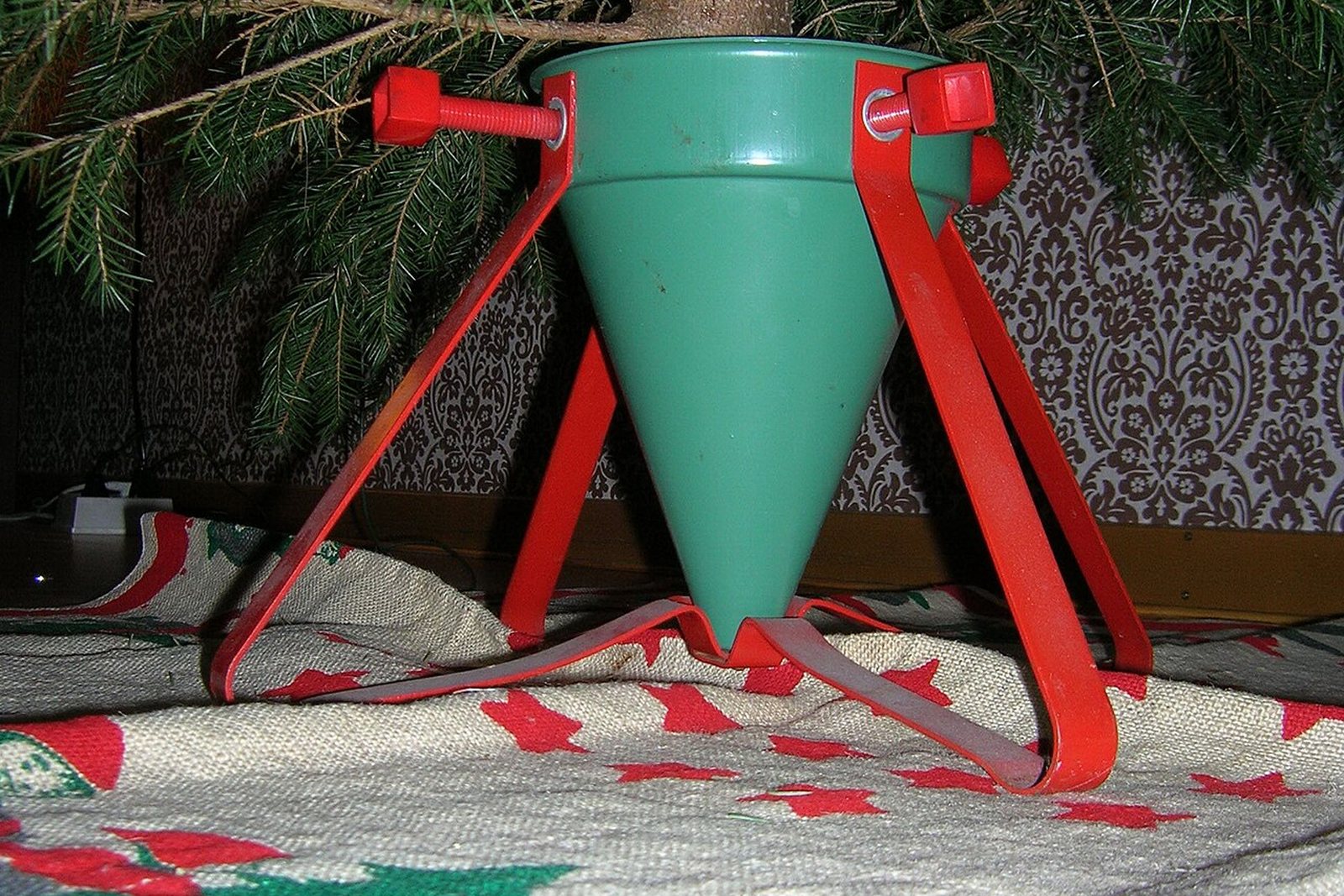
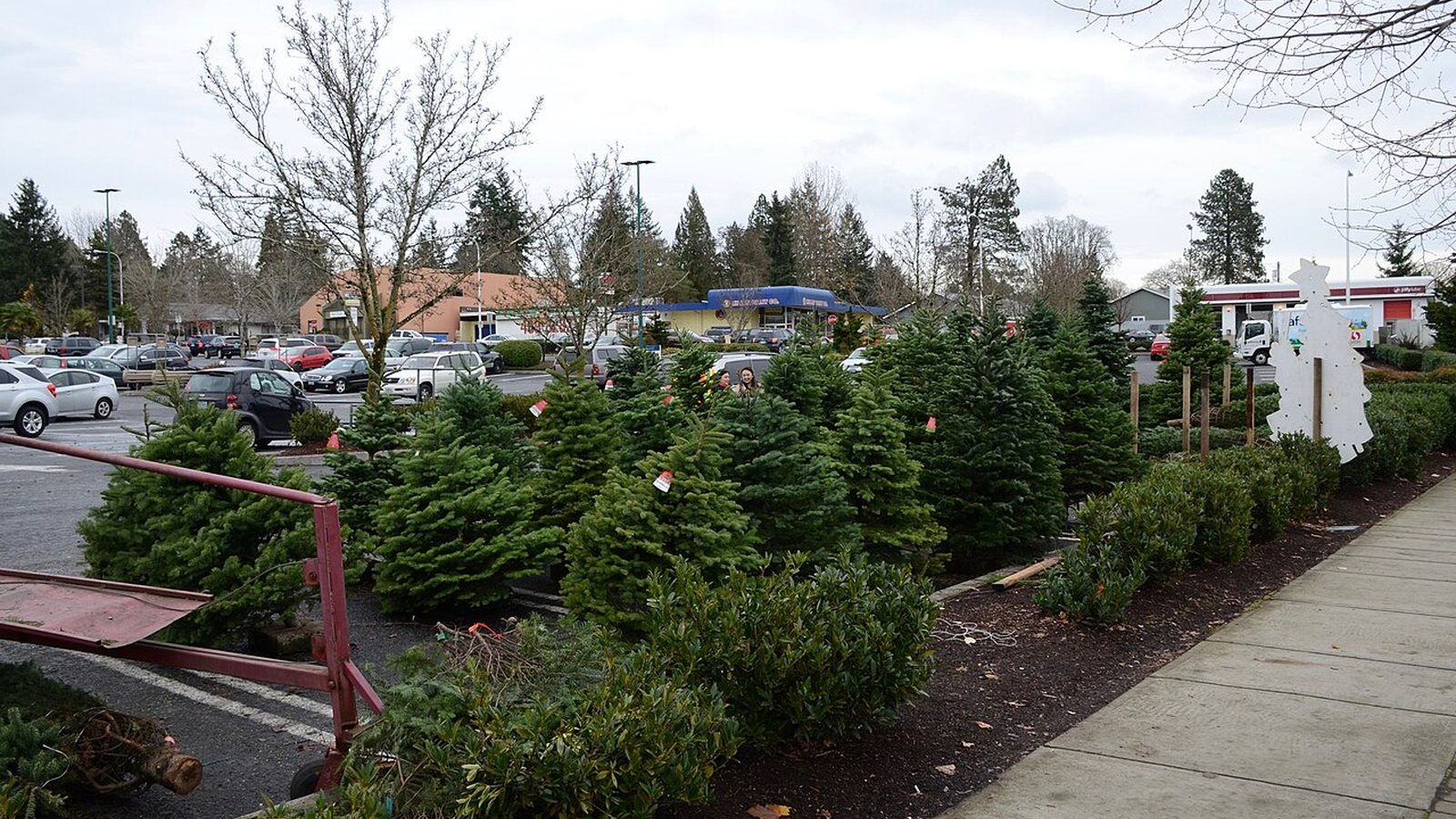 Photo: Steve Morgan · CC BY-SA 3.0
Choose a tree with bendy needles that stay on when tugged, recut the trunk if it was cut over 12 hours ago, and stand it in plain water at once. Refill the stand daily so the water always covers the trunk base, and keep it away from heat. A fresh tree lasts about three to four weeks.
Key takeaways
- Test before buying: needles should bend, stay attached when tugged and barely fall when the base is bounced.
- Recut about 6 mm (1/4 in) off the base if it was cut more than 12 hours ago, then put it in water straight away.
- Allow about 1 litre of water per 2.5 cm of trunk diameter, and refill daily so the water covers the trunk base.
- Add nothing to the water: sugar, aspirin, bleach and gels do not help.
- A fresh tree lasts about three to four weeks; never burn it afterwards, recycle it.
On this page7
- How do you pick a fresh cut Christmas tree?
- What should you do in the first 24 hours?
- How much water does a cut tree need?
- Does anything in the water help?
- Where should you put the tree, and what about lights?
- How long does a cut Christmas tree last?
- What do you do with it afterwards, and is it safe for pets?
How do you pick a fresh cut Christmas tree?
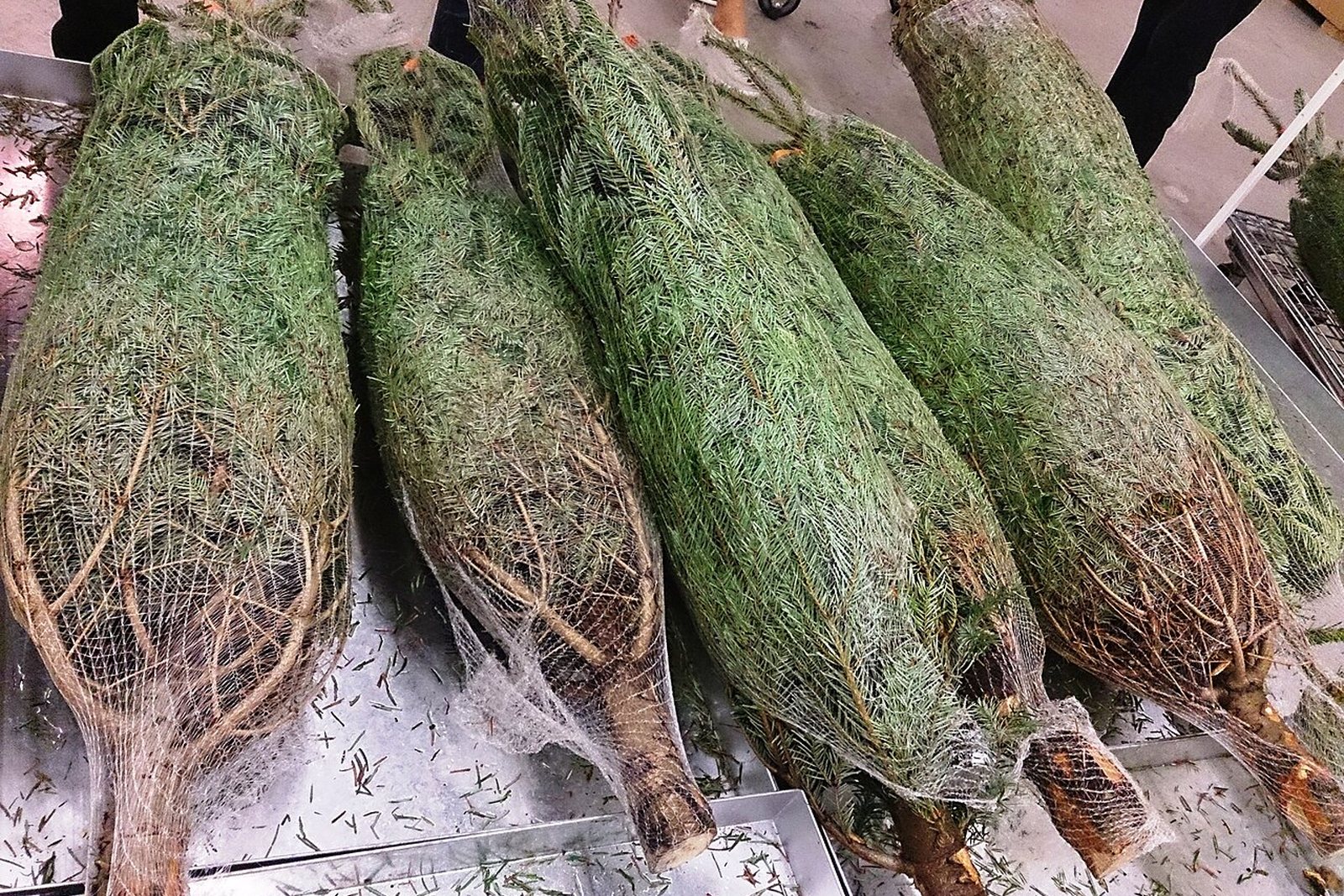
The tree you buy matters more than anything you do afterwards, because a tree cut weeks ago has already dried out. This guide is only about a cut tree, one sawn off at the base and sold without roots. If yours has roots, read live Christmas tree care instead, which also covers cut trees in general. Here we focus on choosing a fresh one and keeping it that way, using Penn State Extension, Iowa State Extension and the Royal Horticultural Society (RHS). Iowa State warns that trees in commercial lots may have been cut and stored for 4 weeks or more, so test before you pay.
| Test | How to do it | Good sign |
|---|---|---|
| Run your hand over a branch | Bend the outer needles and branches | Needles are pliable, branches bend without snapping (Iowa State) |
| Tug the needles | Pull a branch gently through your fingers | Flexible needles that stay firmly attached (Penn State) |
| Bounce the trunk | Lift the tree and bounce the base on the ground | Only a few needles fall (Iowa State) |
| Look at the colour | Check the needles on the outside | No dull, lifeless green needles that pull out easily (Penn State) |
Do not worry about a few brown needles deep inside the tree: Penn State says all needled evergreens shed their oldest needles every year. Also check that the trunk is straight and fits your stand, and measure your room first, because Iowa State notes trees look smaller outdoors than they do indoors. The RHS suggests asking the seller where the tree was grown and buying a locally grown one, ideally from a grower. In Türkiye, ask the seller when and where the tree was cut. Nordmann fir (Abies nordmanniana, Turkish Kafkas göknarı) is a species the RHS describes as dark green and very slow to drop needles, while Norway spruce (Picea abies) smells good but drops needles quickly.
What should you do in the first 24 hours?
Treat the tree like a cut flower and get its trunk into water fast. If you cannot set it up right away, Penn State and Iowa State both say to stand the trunk in water in a cool, shaded, sheltered place such as an unheated garage or shed, because sun and wind dry it out. When you bring it in:
- Check when it was cut. Penn State says a tree cut in the past 12 hours needs no new cut. If longer, saw a disk about 6 mm (1/4 in) off the base, straight across, never at an angle or into a V. Iowa State says to remove an inch (about 2.5 cm) or more, and the RHS also says about 2.5 cm.
- Shake it out. Penn State says to knock the base on the ground and make sure loose needles are gone before the tree comes indoors.
- Put it in water straight away, in a stand that fits the trunk without whittling it down. Iowa State explains that the outer wood under the bark takes up most of the water.
How much water does a cut tree need?
A lot, especially in the first week. Penn State says the stand's basin should hold 1 quart of water per inch of trunk diameter, which is about 1 litre per 2.5 cm, and that most trees need a stand holding at least 1 gallon, about 4 litres. A trunk 10 cm (4 in) across therefore needs a basin of about 4 litres, and most trees need at least that anyway. Top it up every day. Iowa State says to check once or twice a day, and the RHS says to top up whenever the level drops.
The key rule is that the water must always cover the base of the trunk. Iowa State says that if the level falls below the bottom of the trunk, uptake drops sharply or stops. Penn State adds a catch: some stands still hold water after the trunk base is exposed, so do not judge by whether the stand looks full.
Does anything in the water help?
No, and this is the part worth sharing. Penn State says clean water is all a cut tree needs. Water temperature does not change uptake, and Penn State's list of things that do not help, or hurt, is long.
| Popular trick | What the extension says |
|---|---|
| Sugar, honey, molasses, aspirin, bleach, soft drinks | Do not add them (Penn State, Iowa State) |
| Floral or commercial preservatives | Not needed (Penn State) |
| Drilling a hole in the trunk base | Does not improve uptake (Penn State) |
| Water-holding gels | Not beneficial, can reduce the water available (Penn State) |
| Anti-transpirant sprays | Little effect indoors (Penn State) |
| Flame-retardant spray | Keeping the tree watered works better; some retardants can damage needles (Penn State) |
Penn State sums it up: keeping the tree's moisture level high is the single most important factor in reducing needle loss.
Where should you put the tree, and what about lights?
Keep it away from fireplaces, heaters, heat vents and direct sunlight, say Penn State and the RHS. Heat makes a tree lose moisture and drop needles, and Penn State says cooler rooms slow the drying and cut daily water use. That matters in Turkish apartments with a radiator under the window, and for southern hemisphere readers whose Christmas falls in summer: the warmer the room, the more often you will refill the stand. On lights, Penn State says LED lights give off less heat than older types, and to switch every light off when nobody is at home.
How long does a cut Christmas tree last?
Iowa State says a fresh, well-cared-for tree should last about three to four weeks indoors, and the RHS also says about four weeks. Penn State gives no day count: freshness depends on when it was cut, the species and how well the moisture is kept up. Remove the tree when its needles become dry and brittle (Iowa State), or when needles snap or fall off when you run your fingers along a branch (Penn State).
What do you do with it afterwards, and is it safe for pets?
Do not burn it. Iowa State warns that dry evergreen branches can explode when burned and can cause a house fire, and that burning builds up creosote that can cause a chimney fire. Instead, take off all lights, tinsel and ornaments, then recycle it. Iowa State suggests a plastic bag under the stand to catch needles on the way out, community collection, chipping for mulch, boughs as winter mulch over perennials, or leaving it outdoors for wildlife. The RHS says to shred it or use a local collection scheme, which turns it into mulch or compost.
The ASPCA says that eating any plant material may cause vomiting and gastrointestinal upset in dogs and cats. We could not open its Christmas tree entry for this guide, so check it before relying on a specific species. Sweep up needles, keep cables out of reach (more in Christmas plants toxic to pets), and call your vet or the ASPCA Animal Poison Control Center on (888) 426-4435 if an animal chews the tree. If a child swallows needles or a decoration, call UZEM (Ulusal Zehir Danışma Merkezi) on 114 in Türkiye.
- Buy: bendy needles, few fall when bounced, straight trunk.
- Day one: trunk in water, new cut if over 12 hours, shake out.
- Every day: water above the trunk base, plain water only.
- After: take lights off, do not burn it, recycle it.
Flori can identify a conifer from a photo if you want to know which tree you bought. For something that lives after the holidays, see the best plants to give for Christmas.
Frequently asked questions
How do I know if a Christmas tree is fresh?
Needles should be flexible and stay firmly attached when you tug a branch, and only a few should fall when you bounce the trunk. Brown needles deep inside are normal.
How long does a cut Christmas tree last indoors?
Iowa State says about three to four weeks for a fresh, well-cared-for tree, and the RHS says about four weeks. Remove it when the needles become dry and brittle.
Should I cut the trunk before putting the tree in water?
If the tree was cut within the past 12 hours, Penn State says no. Otherwise saw about 6 mm (1/4 in) off the base, straight across, then stand it in water.
Can I burn my Christmas tree after the holidays?
No. Iowa State warns that dry evergreen branches can explode when burned and cause a house fire, and that burning builds up creosote. Recycle or chip it instead.
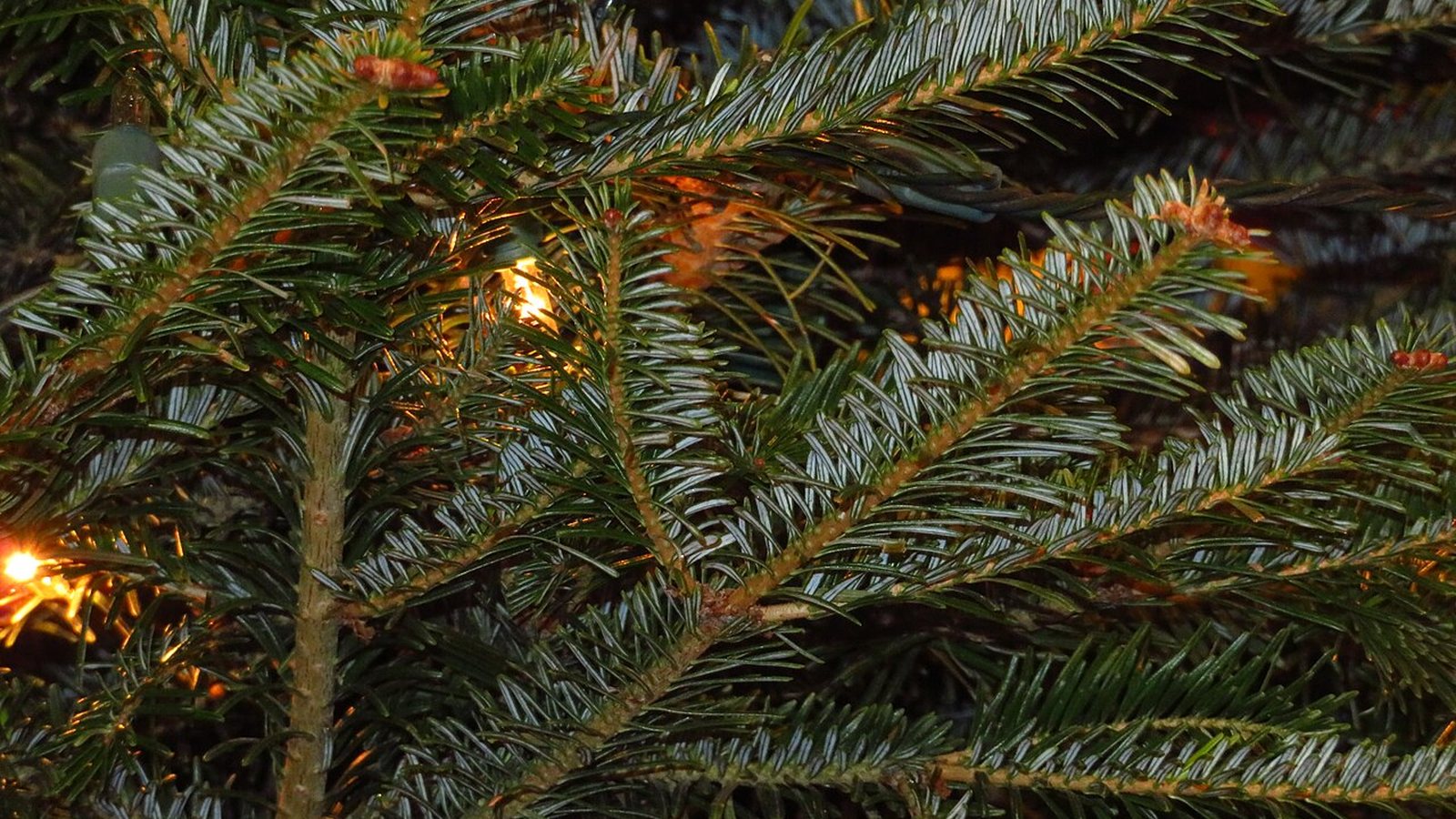
Keep a Christmas tree alive: fresh cut and plain water for cut trees, a few days indoors for potted ones, and what to do after New Year.
Sources
Written and fact-checked by the Flori team. Every guide cites horticultural sources such as the RHS, university extension services and the ASPCA, and is updated when the advice changes. How we write our guides
General plant care information. Plants vary; when a plant is valuable or a problem spreads quickly, consult a local nursery or plant specialist.