Rosemary Christmas Tree: Keep It Alive Indoors
Keep a rosemary Christmas tree alive: bright cool spot, water only when dry, no foil trap, then plant out after frost. Safe for cats and dogs.
 By Flori editorial team · Updated
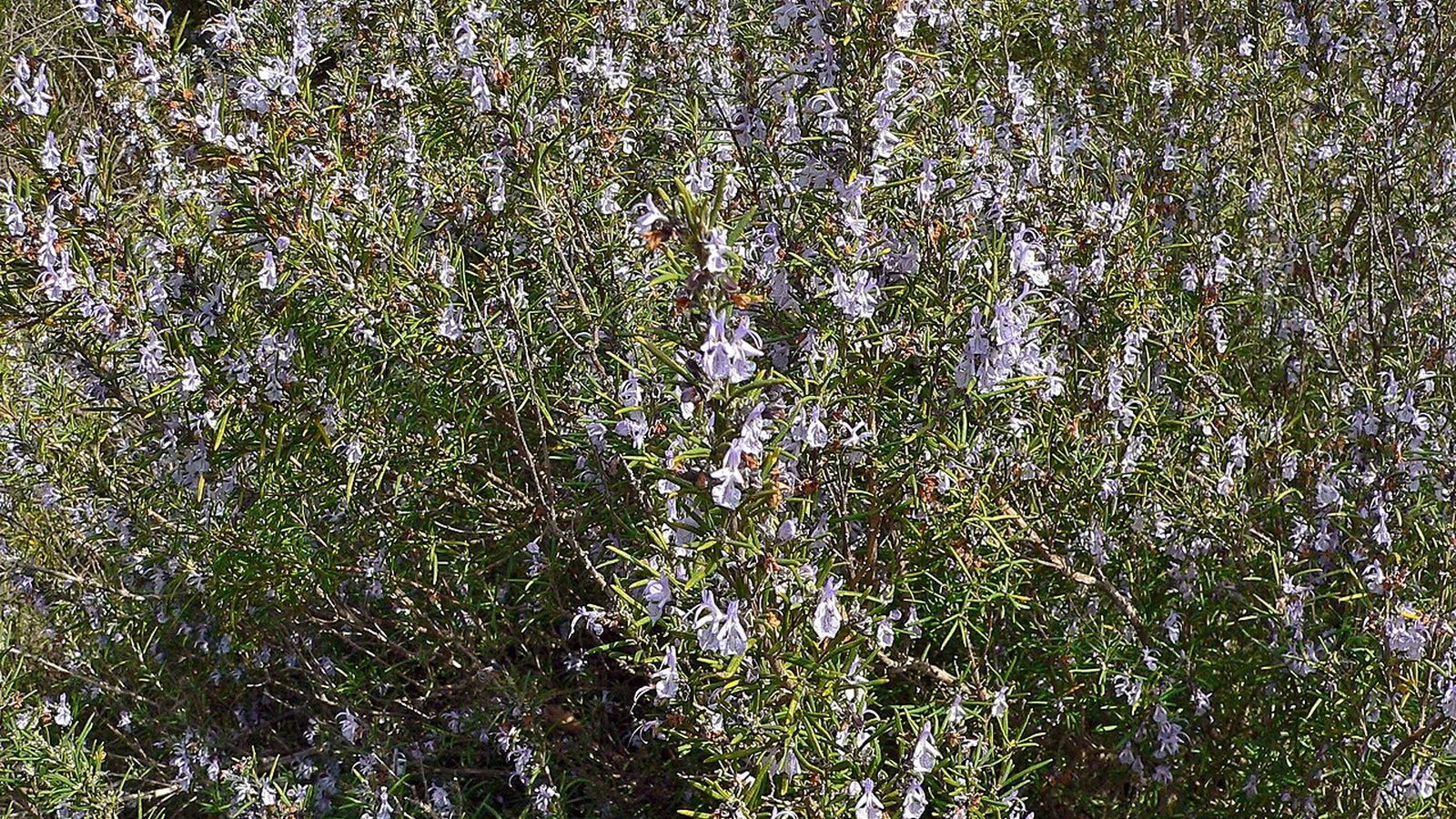 Photo: Bernard DUPONT from FRANCE · CC BY-SA 2.0
Keep a rosemary Christmas tree in your brightest, coolest spot, ideally 6 hours of direct sun and no warmer than 18 °C (65 °F). Water thoroughly only when the top 2.5 cm (1 in) is dry, remove the foil and empty the saucer. It is non-toxic to pets, and can go outside after frost.
Key takeaways
- Most rosemary trees die from too little light, too much water or a hot room, not from bad luck.
- Check the soil 2.5 cm (1 in) down and water only when it is dry; remove the foil sleeve so the pot drains.
- Keep it cool (18 °C or below), bright and away from radiators; skip winter fertiliser.
- It can live on after the holidays and go outside once the danger of frost has passed.
- The ASPCA lists rosemary as non-toxic to dogs, cats and horses.
On this page9
- Why does a rosemary Christmas tree die so often, and how do you keep yours alive?
- Where should it sit: light and heat?
- How often should you water it?
- Does misting help a rosemary tree?
- What are the signs something is wrong?
- Can you prune and shape the tree?
- What do you do with it after the holidays?
- Is a rosemary Christmas tree safe for pets?
- Quick checklist
Why does a rosemary Christmas tree die so often, and how do you keep yours alive?
A rosemary Christmas tree is an ordinary rosemary (Salvia rosmarinus) clipped into a cone at the nursery and often sold wrapped in foil. It is a sun-loving Mediterranean shrub, not a houseplant, so most of them die from the same three mistakes: too little light, too much water and too much heat. Here is the short version you can screenshot, followed by the reasons.
| Rule | Do this | Not this |
|---|---|---|
| Light | Brightest window you have; at least 6 hours of direct sun if possible | A dim shelf or a dark corner |
| Heat | A cool, bright room, 18 °C (65 °F) or below | Next to a radiator, heat register or fireplace |
| Water | Check 2.5 cm (1 in) down; water thoroughly only when dry | A fixed daily splash |
| Pot | Remove the foil; drain the saucer | Leaving it standing in water |
| Feeding | No fertiliser in winter | Holiday plant food |
In Türkiye it is sold as biberiye yılbaşı ağacı. This guide uses the Royal Horticultural Society (RHS), UF/IFAS, Iowa State Extension, University of Wisconsin Extension and the ASPCA. Sources vary on the details, so where they differ you will see a range.
Where should it sit: light and heat?
Light is the biggest factor. Iowa State Extension says indoor rosemary needs at least six hours of direct sunlight, and UF/IFAS says to keep a topiary in full sun and to rotate it weekly so that every side gets light. University of Wisconsin Extension adds a second rule that surprises people: keep it cool, in a bright spot where the temperature does not exceed 65 °F (18 °C), away from heat registers and radiators, with a south- or west-facing window as the likely best choice. A heated living room with a dim window is the worst place; an unheated hallway or sun porch with a bright window is better. If you have no sunny window, the Wisconsin guide suggests artificial light that does not give off heat. To measure a window, see how much light houseplants need.
How often should you water it?
Less often than you think. UF/IFAS says to water only when the soil is dry to the touch, about once a week or so, because rosemary is drought tolerant and dislikes wet soil. University of Wisconsin Extension says to check the soil once or twice a week by putting a finger about 2.5 cm (1 in) into the pot, and to water thoroughly only if it is dry. Iowa State says not to let water collect in the saucer. The RHS says the same of rosemary generally: it hates wet roots, especially in winter.
The foil sleeve is a hidden trap. Wisconsin says to remove it to prevent waterlogging and to stand the pot on a drip tray; UF/IFAS says you can keep it on if you monitor the soil, swap it for a bow or remove it. Either way, the water must be able to run out. If the soil never dries between waterings, read overwatering vs underwatering.
Does misting help a rosemary tree?
A little, and not often. The advice that you must mist several times a day is a myth, and constantly damp foliage is exactly what a Mediterranean herb does not want. University of Wisconsin Extension suggests misting once a week or running a humidifier in a dry room. Because the room is the real problem, not the leaves, moving the tree away from the heater does more than any spray bottle. The RHS and UF/IFAS give no misting routine for rosemary, so treat humidity as a minor extra.
What are the signs something is wrong?
| What you see | Likely cause | What to do |
|---|---|---|
| Needles brown and dry, soil bone dry | Too dry or too much heat | Water thoroughly once, move away from the heater |
| Needles dull, soil still damp, pot heavy | Too much water, trapped foil | Remove the foil, empty the saucer, let the soil dry |
| Lanky, pale, slow growth | Not enough light | Move to the brightest window or add a light |
| Fine webbing or pale speckles | Spider mites | Isolate it and treat; see below |
Iowa State says to check indoor rosemary often for spider mites and other indoor pests. Look at the undersides and the stem joints; the fix is in spider mites on houseplants. Use the least toxic option first and follow the label of anything you buy.
Can you prune and shape the tree?
Yes, but lightly. UF/IFAS says the cone shape is created by careful pruning at the nursery and that it will change as the plant grows and you take cuttings, which it calls natural. Iowa State says to prune as needed during the growing season to keep the shape, and to do it in late spring and mid-summer. In practice that means no heavy winter haircut, just snipping a few sprigs for the kitchen if the plant is healthy. Do not cut into old, bare wood on the lower trunk.
What do you do with it after the holidays?
You do not have to throw it away. University of Wisconsin Extension says to move it outdoors in spring, after the danger of frost has passed, and repot it into fresh potting mix. Outdoors it likes full sun, and it needs free-draining soil. The RHS says established plants, those that have been in place for two or three years, survive down to about -8 °C (18 °F), but cold winds and hard frosts can still damage or even kill them. Container plants are more exposed than plants in the ground, so the RHS says to group pots, wrap them in bubble wrap or move them to a sheltered spot; for a long-term pot it recommends one at least 30 cm (1 ft) wide and deep, with drainage holes and up to 25% grit in the compost. Iowa State notes rosemary is not winter hardy there, so in a cold climate it goes in and out each year.
Climate decides the rest. On the Aegean and Mediterranean coasts of Türkiye, winter lows rarely approach -8 °C, so a rosemary can often stay outside in a sunny pot; in inland and eastern Anatolia and in a temperate northern country such as the UK or Germany, the plant needs to be brought in or wrapped when frosts come. In the southern hemisphere Christmas falls in summer, so the tree can simply live outdoors in the sun until its own cold season arrives. Wisconsin says to feed outdoors with a water-soluble fertiliser every three weeks, and not at all in winter. The related guide to growing herbs indoors in winter covers what else will cope on a sill.
Is a rosemary Christmas tree safe for pets?
Yes. The ASPCA lists rosemary as non-toxic to dogs, cats and horses. That makes it an easier choice than holly, mistletoe or poinsettia; see Christmas plants toxic to pets. Be aware that a large amount of any plant can still upset a pet's stomach, and ornaments, tinsel and lights on the tree are a separate risk. If a pet is unwell after chewing anything, call your vet. For other gift options, see the best plants to give for Christmas.
Quick checklist
- Put it in the brightest, coolest place you have.
- Remove the foil and use a drip tray.
- Check the soil with a finger; water only when dry.
- No fertiliser in winter, no heavy pruning.
- Plan its move outside after the last frost.
Frequently asked questions
Can a rosemary Christmas tree live outside?
Yes, in spring after frost, in full sun and free-draining soil. The RHS says established plants survive down to about -8 °C (18 °F), but pots are more exposed, so shelter them in hard frost.
Why is my rosemary tree turning brown?
Brown, dry needles with dry soil point to drought or heat; dull needles with damp soil point to overwatering or trapped foil. Check the soil and the room temperature before you do anything else.
Should I mist my rosemary Christmas tree?
Rarely. University of Wisconsin Extension suggests once a week or a humidifier. Moving it away from heaters matters more, and constant damp foliage does not suit a Mediterranean herb.
Is a rosemary Christmas tree toxic to cats or dogs?
The ASPCA lists rosemary as non-toxic to dogs, cats and horses. Decorations on the tree are a separate risk; call your vet if a pet seems unwell.
The best Christmas and New Year gift plants, with the room temperature each needs and which are safe for cats and dogs, for both hemispheres.
Sources
Written and fact-checked by the Flori team. Every guide cites horticultural sources such as the RHS, university extension services and the ASPCA, and is updated when the advice changes. How we write our guides
General plant care information. Plants vary; when a plant is valuable or a problem spreads quickly, consult a local nursery or plant specialist.