Drooping Plant: Causes and Quick Fixes
Why is my plant drooping? Check the soil first: dry means thirst, wet means root trouble. Our table covers heat, cold, pot-bound roots and quick fixes.
 By Flori editorial team · Updated
A drooping plant is usually either short of water or has roots damaged by too much water, and the two look alike. Feel the soil first: if it is dry, water thoroughly and it should perk up within hours. If it is wet, do not water; check the roots. Heat, cold, crowded roots and fertilizer salts are other causes.
Key takeaways
- Always feel the soil before you water a drooping plant: wilting in wet soil means the roots are in trouble.
- A thirsty plant usually recovers within hours of a thorough watering; one that stays limp in wet soil does not.
- Heat, cold draughts, pot-bound roots and fertilizer salt buildup can all cause drooping.
- Very dry mix repels water: water twice with a 30-minute gap, or soak the pot.
- Change one thing at a time and keep green leaves until new growth appears.
Why is my plant drooping?
A drooping plant is telling you that water is not reaching its leaves, but not why. The two most common causes are opposites: the soil is too dry, or it has been wet for so long that the roots are damaged and can no longer take water up. Both make leaves hang limp, and watering fixes one while making the other worse. Clemson Extension warns about exactly this: wilting does not always mean a plant needs water, and watering a plant with damaged roots can make the problem worse. This guide starts with the one check that separates the two, then gives a symptom → cause → quick fix table for the rest.
First check: is the soil dry or wet?
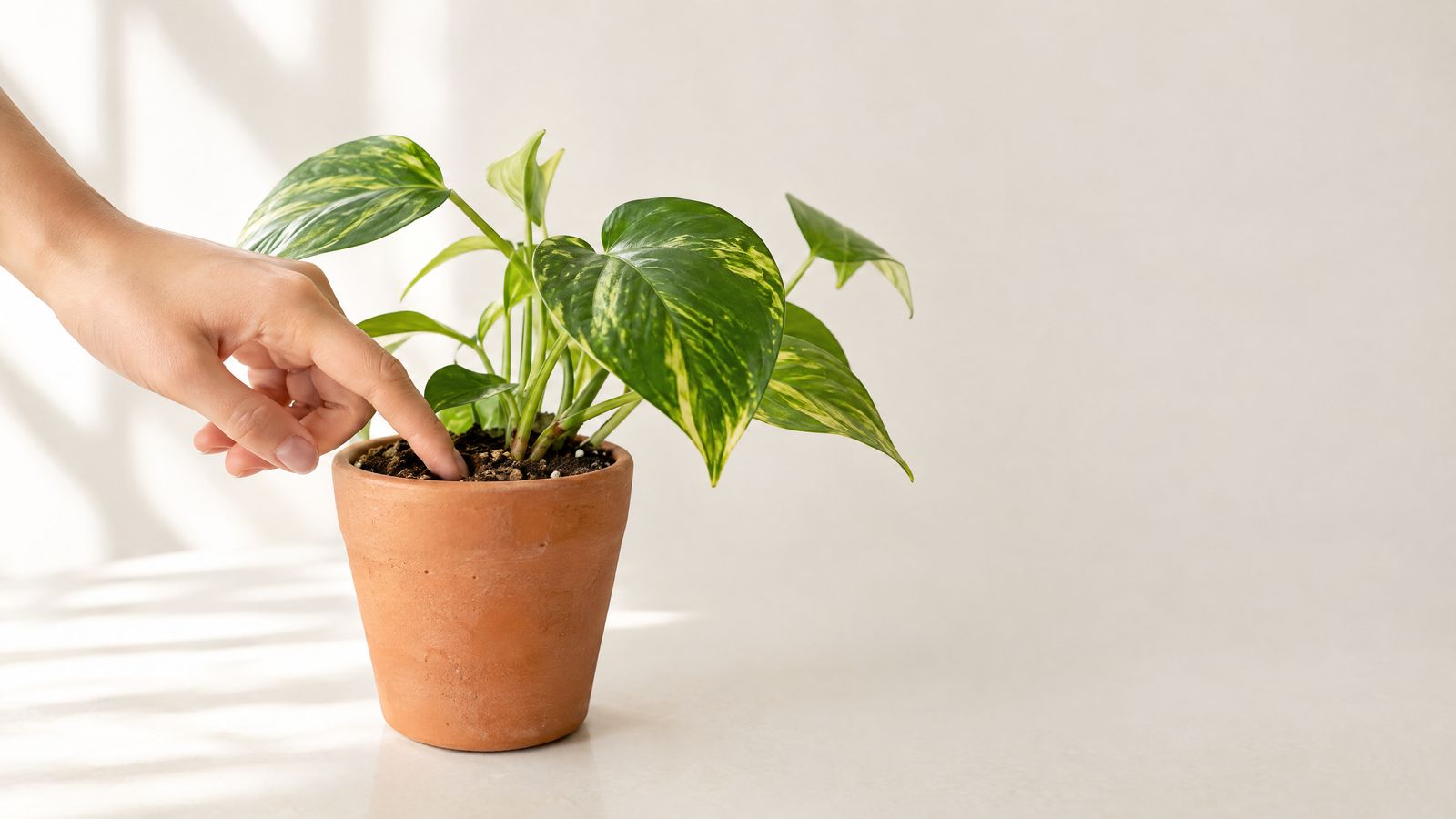
Before you do anything else, push a finger a few centimetres into the mix and lift the pot.
- Dry and light: the plant is probably thirsty. This is the good news case: once the roots get water, most plants stand up again within hours.
- Wet or heavy: do not water. The RHS notes that wilting from overwatering is easy to mistake for thirst, especially in winter when growth slows, and Iowa State Extension warns that wilting caused by a damaged root system tempts people to water even more.
- Damp but not soggy: look for other causes in the table below, such as heat, cold or a crowded root ball.
If you water on a fixed day of the week, that habit alone can explain both cases; our guide on how often to water houseplants shows how to set check days instead.
Drooping plant: causes and quick fixes
| What you see | Likely cause | Quick fix |
|---|---|---|
| Dry, light pot; limp leaves, sometimes crisp brown edges | Underwatering (RHS) | Water thoroughly until it drains; if the mix is bone dry, water twice or soak the pot |
| Wet soil; limp leaves, old and new leaves yellowing together | Overwatering (RHS, Clemson) | Stop watering, empty the saucer, check the roots |
| Stem brown or black and soft at soil level; roots brown to black | Root and stem rot (Clemson) | Cut out infected roots if only a few are affected and repot in fresh mix |
| Leaves wilting, rolling or bleaching in a hot, sunny room | Heat (RHS) | Move to a cooler spot out of strong direct sun |
| Blackened leaves, drooping or collapse after cold; often in an unheated porch | Cold damage (RHS) | Move somewhere warmer, away from cold glass and draughts |
| Roots fill the pot; mix dries within days and the plant wilts between waterings | Pot-bound (Clemson) | Repot into a larger pot |
| Wilting after regular feeding; white or grey crust on the soil or pot rim | Fertilizer and salt buildup (Clemson) | Flush with plain water; repot in fresh mix if severe |
Quick fixes for the first 24 hours
- If the mix is dry, water slowly until water runs out of the drainage hole. Very dry mix can shed water down the sides, so Clemson suggests watering once, waiting 30 minutes and watering again, or standing the pot in a sink of water until the surface is moist. Iowa State suggests soaking the root ball for about 30 minutes. Let it drain fully and empty the saucer.
- If the mix is wet, tip out any water standing in the cover pot or saucer. The RHS suggests lifting the plant out to see whether water has collected at the bottom of the pot. Leave it to dry and do not feed it.
- If the room is hot, move the plant out of the direct sun and away from heaters; check the soil, since heat dries pots fast.
- If it has been cold, move it into a warmer room, away from windows and doors. Our guide on how cold is too cold for houseplants gives the limits for common plants.
- Give it a day. A thirsty plant usually recovers within hours. If it is still limp the next day after a good watering, or if it drooped in wet soil, check the roots.
Why is my plant drooping after watering?
If a plant droops even though you water it regularly, or perks up less each time, overwatering is the prime suspect. Clemson Extension explains that too much water deprives roots of oxygen and kills them, and with fewer working roots the plant wilts in wet soil. Iowa State adds that if you are unsure, wait at least one more day before watering.
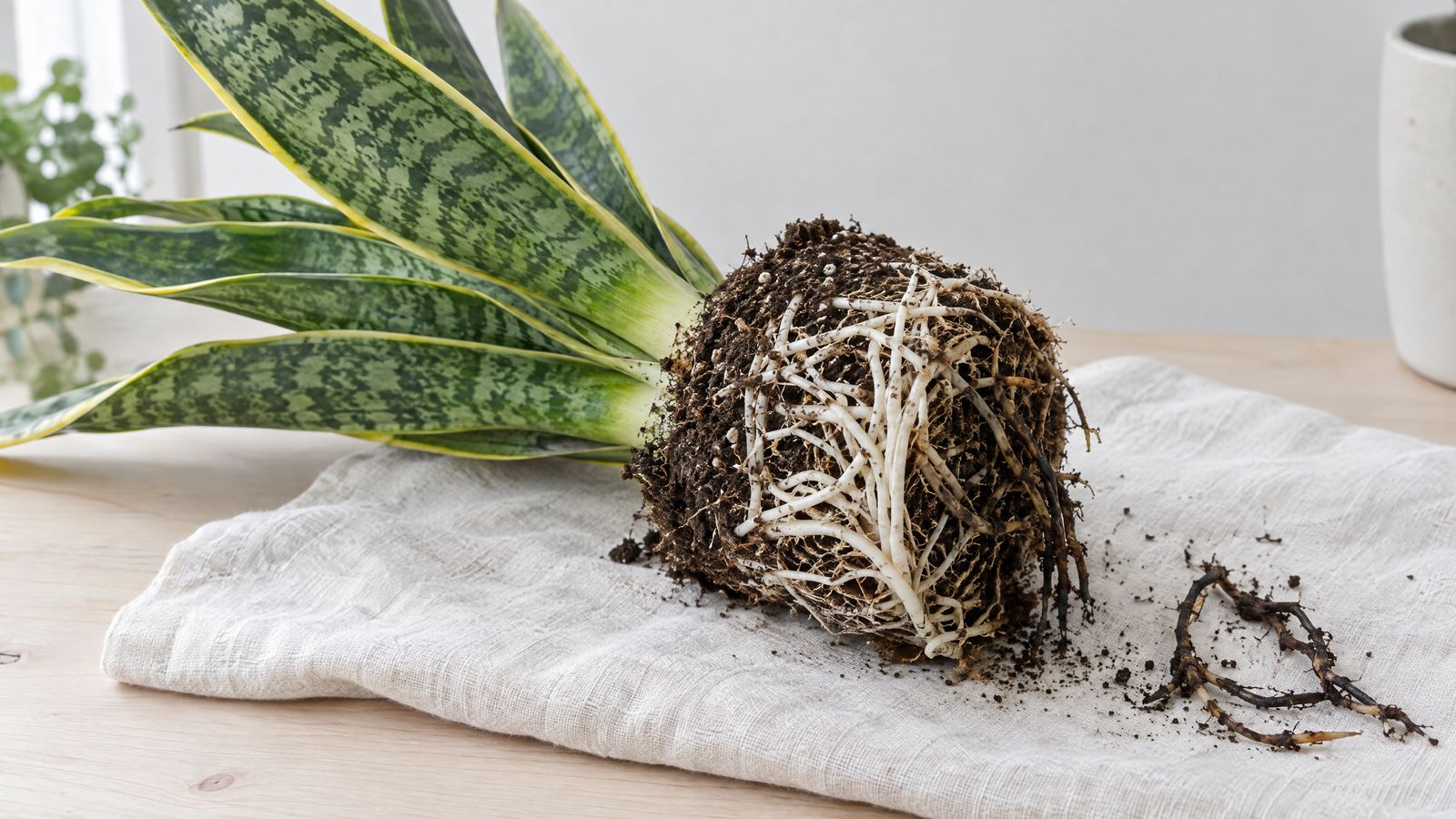
Slide the plant out of its pot and look. Healthy roots are firm and light-coloured. The RHS lists dark, mushy roots as a sign of overwatering, and Clemson describes root rot as roots turning brown to black and soft, sometimes with the stem girdled by brown or black tissue near the soil line. If you find that, follow our root rot rescue plan straight away. Clemson notes that if only a few roots are infected, you can cut them out and repot in fresh, sterile mix.
Why is my plant drooping after repotting or moving?
A plant that wilts soon after repotting may have lost some roots in the move, and a plant moved to a sunnier or warmer spot loses water faster than before. Keep it out of strong direct sun, water when the top of the mix dries rather than keeping it soaked, and hold off on fertilizer: Iowa State advises feeding only during active growth, and too much fertilizer can itself cause wilting. If leaves also start to fall, our guide to plant leaves falling off explains how long adjustment drop should last.
If you cannot tell which cause fits, Dr. Flori in the Flori app can look at a photo, ask when you last watered and how the soil feels, and tell you how urgent the problem is. A drooping plant you want to watch closely can go into the Plant Hospital with a follow-up plan.
Can a drooping plant recover?
Usually, yes. The RHS notes that many houseplants recover quickly once their growing conditions are improved. A few habits help:
- Change one thing at a time, so you can see what worked.
- Keep mostly green leaves until new growth appears; the RHS says removing them can delay recovery. Cut off leaves that are completely brown, yellow or shrivelled.
- Keep the plant apart from your other plants until you know the cause.
- Skip routine treatments. The RHS advises fixing light, watering and compost before reaching for feeds or sprays.
Recovery is harder when most roots are dark and mushy, or when the stem has gone soft at the base. Then the plant cannot take up water however you treat the leaves. Clemson notes that fungicides often cost more than a new plant, so focus on fresh mix, a clean pot and careful watering.
Frequently asked questions
How long does it take a drooping plant to recover after watering?
A plant that drooped from thirst usually stands up again within hours of a thorough watering. If it is still limp the next day and the soil is moist, the roots are likely damaged and need checking.
Why is my plant drooping even though the soil is wet?
Most often because roots have been sitting wet and are damaged or rotting, so they cannot take up water. Clemson Extension notes that watering such a plant makes the problem worse; stop watering and check the roots.
Should I cut off drooping leaves?
No, not while they are still mostly green. The RHS says to keep green leaves until new growth appears and to remove only leaves that are completely brown, yellow or shrivelled.
Can heat make a plant droop?
Yes. The RHS lists wilting, rolling and bleached or crispy leaves as signs of heat stress, common in hot sunny rooms in midsummer. Move the plant somewhere cooler and check the soil.
Sources
- Royal Horticultural Society: How to help a poorly houseplant
- Clemson Cooperative Extension HGIC: Indoor Plants – Watering
- Clemson Cooperative Extension HGIC: Houseplant Diseases & Disorders
- Iowa State University Extension: Diagnosing Houseplant Problems Related to Poor Culture
- Iowa State University Extension: How to care for houseplants
Written and fact-checked by the Flori team. Every guide cites horticultural sources such as the RHS, university extension services and the ASPCA, and is updated when the advice changes.
General plant care information. Plants vary; when a plant is valuable or a problem spreads quickly, consult a local nursery or plant specialist.