How Often Should You Water Houseplants?
How often to water houseplants depends on plant type, pot, mix, light and season. Use our schedule table to set check days, then let the soil decide.
 By Flori editorial team · Updated
There is no fixed number of days. Check houseplants regularly and water most leafy plants when the mix is dry about 2.5 cm (1 in) down, and succulents when it is completely dry. Expect to water more often in a warm, bright room, in summer and in small or terracotta pots, and far less in a cool winter room.
Key takeaways
- Set check days, not watering days: the soil decides whether you water.
- Thin-leaved plants dry out fastest; succulents and other water-storing plants slowest.
- Terracotta, small pots, loose mixes, warmth and bright light all shorten the interval.
- Most houseplants need water far less often in a cool winter room than in summer.
- A pot that suddenly needs water much more often may be root-bound.
How often should you water houseplants?
There is no fixed number of days, and the same plant can need water far more often in July than in January, or the other way round if you live in the Southern Hemisphere. Nebraska Extension gives an example of how wide the range is: a plant that needed water once a day outdoors in high summer may need it only once a week or less indoors in winter. So instead of handing you a calendar, this guide shows what sets the rhythm for your plant: its type, its pot, its potting mix, the season and the room it lives in. Use the schedule table below to decide how often to check, and let the soil make the final call. For the technique itself (how much to pour, drainage and water quality), see our guide on how to water houseplants.
Iowa State University Extension puts the principle neatly: do not water on a fixed schedule, but check for water on a regular schedule. Clemson Extension agrees that there is no pat answer, because the amount and frequency depend on the species, its stage of growth, where it stands, the type and size of the pot, the potting mix and the weather.
Why do fixed watering schedules fail?
A schedule assumes the root ball dries at the same speed every week. It does not. Clemson Extension lists the factors that change it:
- Leaves and roots: plants with large or very thin leaves, or fine surface roots, need water more often than succulents, which store water in fleshy leaves and stems.
- Growth stage: plants need less water after a burst of new growth or heavy flowering, and while they are dormant.
- Location: a warm, dry, sunny spot needs water more often than a cool spot in low light.
- Pot material: porous clay pots lose moisture through their sides, so they need water more often than glazed or plastic pots.
- Plant and pot size: a large plant in a small pot needs water more often than a small plant in a large pot.
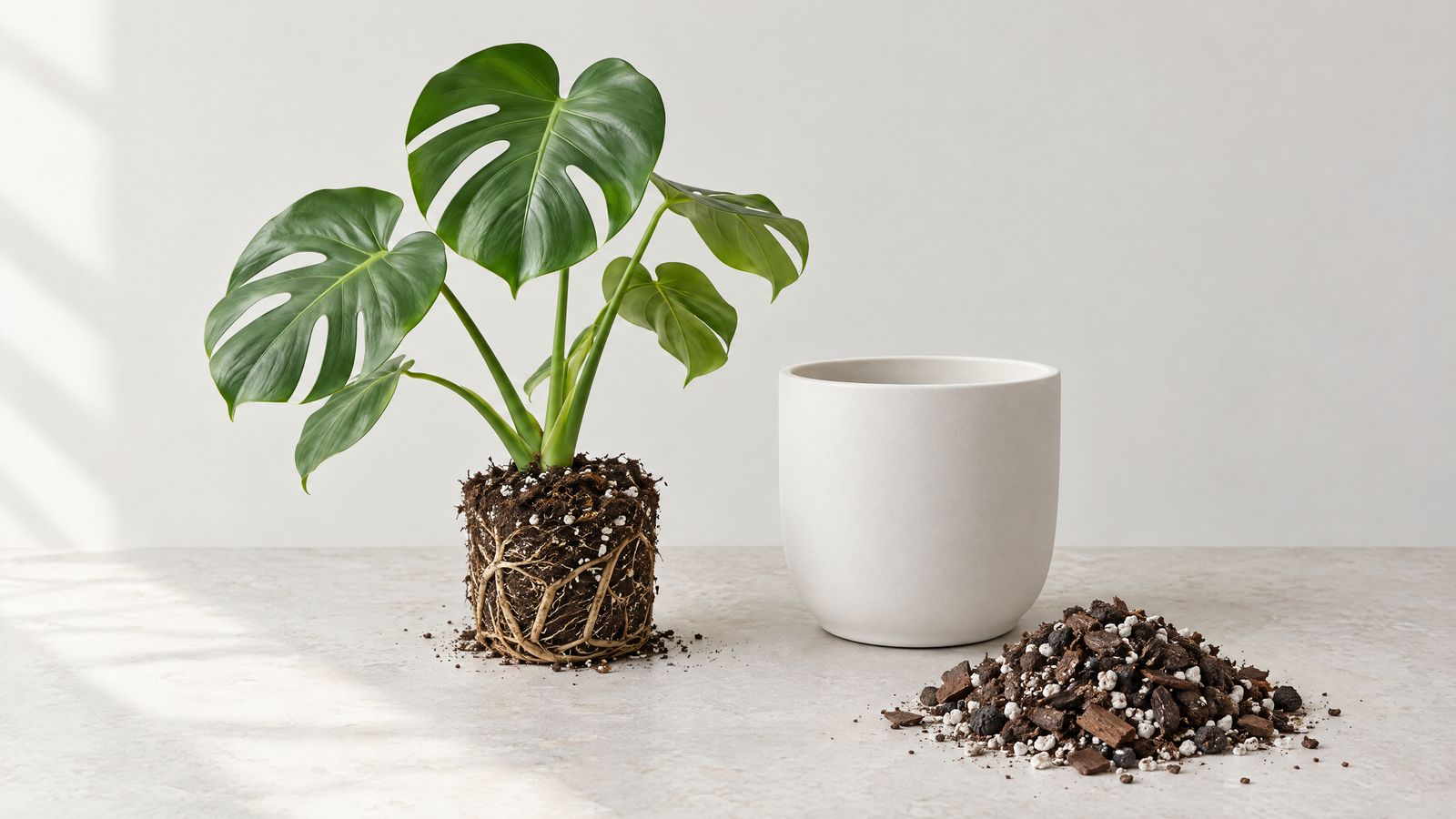
- Potting mix: heavy, fine-textured or peat-rich mixes hold more water than loose mixes of bark, sand and perlite.
Change any one of these and the right interval changes too. That matters: Iowa State calls improper watering the number one reason people have problems with houseplants, and Clemson names overwatering as the main cause of death of potted plants.
Watering schedule by plant group
Use this table to set how dry the mix should be before you water, and how your checks should change through the year.
| Plant group | Examples | Water when | Growing season | Winter |
|---|---|---|---|---|
| Thin or large leaves, fine roots | Ferns, calathea, peace lily | The surface just starts to feel dry | Check most often; these dry fastest | Check less often, but do not let them go bone dry |
| Typical leafy houseplants | Pothos, monstera, philodendron | The mix is dry about 2.5 cm (1 in) down | Regular checks; warm, bright rooms speed drying | Noticeably less often |
| Succulents and other water-storing plants | Jade plant, aloe, snake plant | The mix is completely dry | Less often than most houseplants | Least often of all; a cool, bright spot suits cacti |
Iowa State Extension says jade plants and other succulents should not be watered as often as most houseplants, and should get less water in autumn and winter than in spring and summer. Nebraska Extension adds that cacti and many succulents prefer a cool winter of 13–16 °C (55–60 °F), but not below 7 °C (45 °F); in a room that cool they need very little water. For the right mix for this group, see the best soil for succulents and cacti.
How do the pot, mix and room change the rhythm?
Two plants of the same species can need water at very different intervals. This shows which side yours sits on.
| Dries faster: check more often | Dries slower: check less often |
|---|---|
| Unglazed terracotta pot | Plastic or glazed ceramic pot |
| Large plant in a small pot | Small plant in a large pot |
| Loose mix with bark, sand or perlite | Heavy, fine or peat-rich mix |
| Warm, sunny spot | Cool spot with low light |
| Near a radiator with the heating on | Cool, unheated room in winter |
| Active growth in spring and summer | Dormancy, or just after heavy flowering |
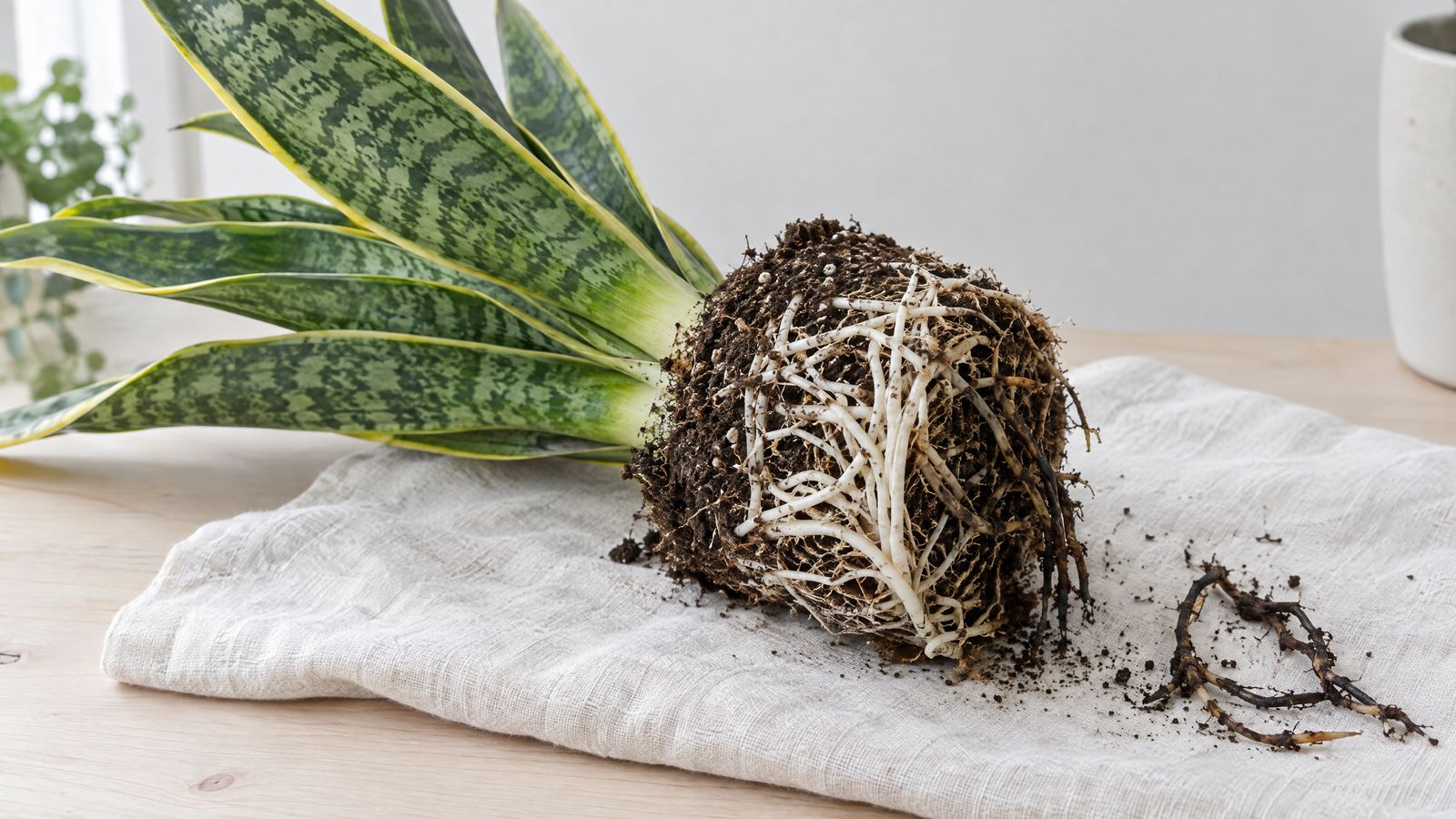
Two patterns are worth knowing. If a pot that used to last a week suddenly needs water every few days, the roots may have filled it: Clemson notes that a pot-bound plant has too little soil left to hold water, and the fix is a larger pot (see repotting without stress). If a pot barely dries at all, the plant may be in too little light to use the water; read the signs your plant needs more light before you water again.
How often to water in winter and in summer
Iowa State Extension says houseplants generally need water less often in winter than in spring and summer. Shorter days slow growth, and the RHS notes that plants in cool rooms need less water than those in warm rooms. In a cool room in winter, the RHS says most houseplants can even go a week or two without water while you are away, as long as the room stays above the minimum the plant tolerates.
Central heating is the exception. The RHS points out that pots can dry out faster in winter when heating lowers the humidity, so a plant on a windowsill above a radiator may need water as often as in summer, while the same plant in a cool bedroom needs very little. Check each spot on its own merits.
In summer, plants are more active and dry out faster, according to the RHS. Plants moved outdoors for the warm months dry faster still; when they come back in, return to indoor checks.
A simple checking routine
- Pick check days, not watering days. Twice a week is easy to remember for most collections; a care reminder in Flori works well as a prompt to look, not an order to pour.
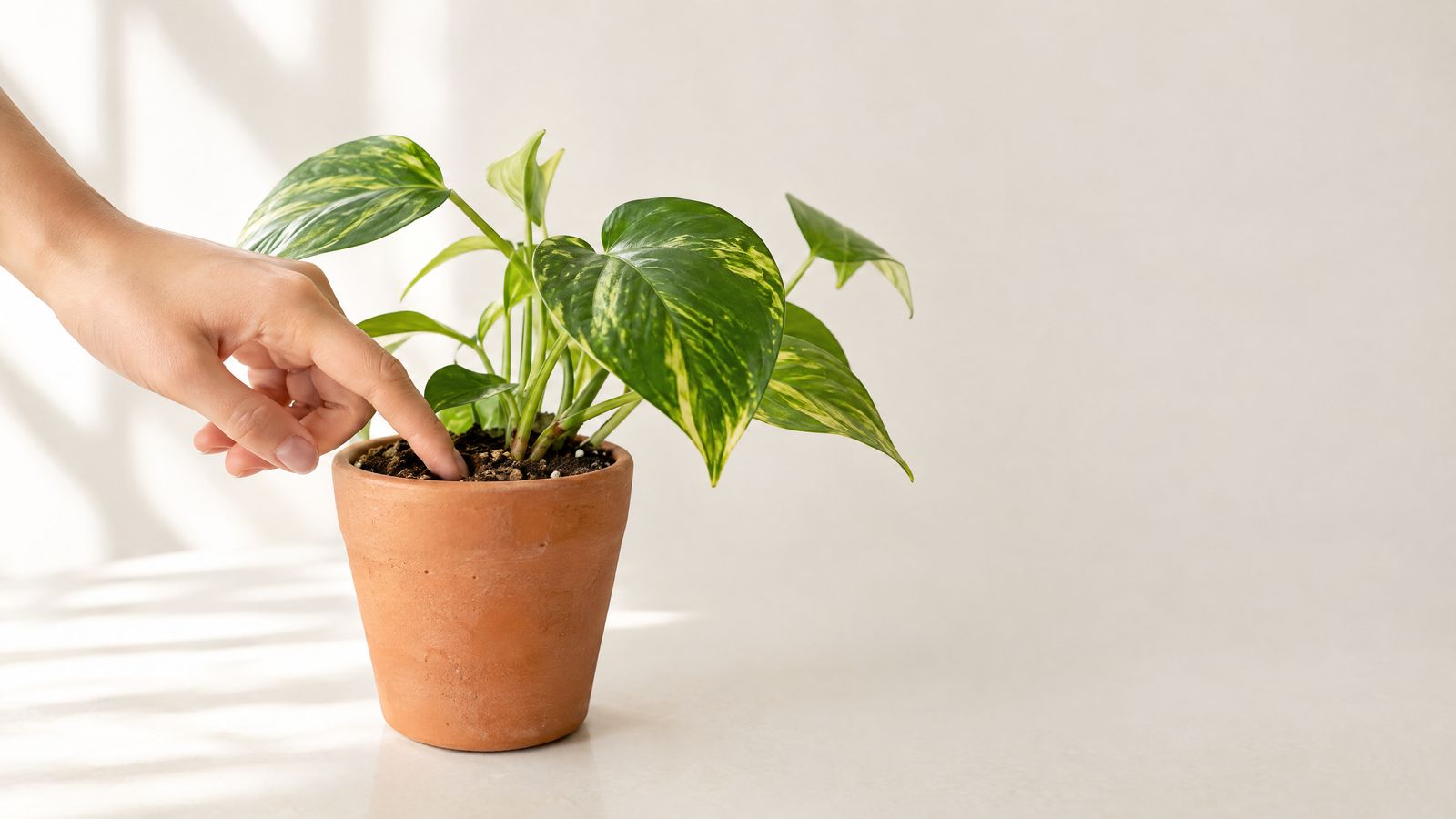
- Feel the mix. Iowa State says to water when the soil is dry to the touch about 2.5 cm (1 in) down; Clemson suggests pushing a finger in to the first joint. If it still feels damp, Iowa State advises waiting at least one more day.
- Use weight and sound. Pots get clearly lighter as they dry, and Clemson notes that a clay pot sounds dull when the mix is moist and hollow when it needs water. Moisture meters vary widely in accuracy, so confirm with your finger.
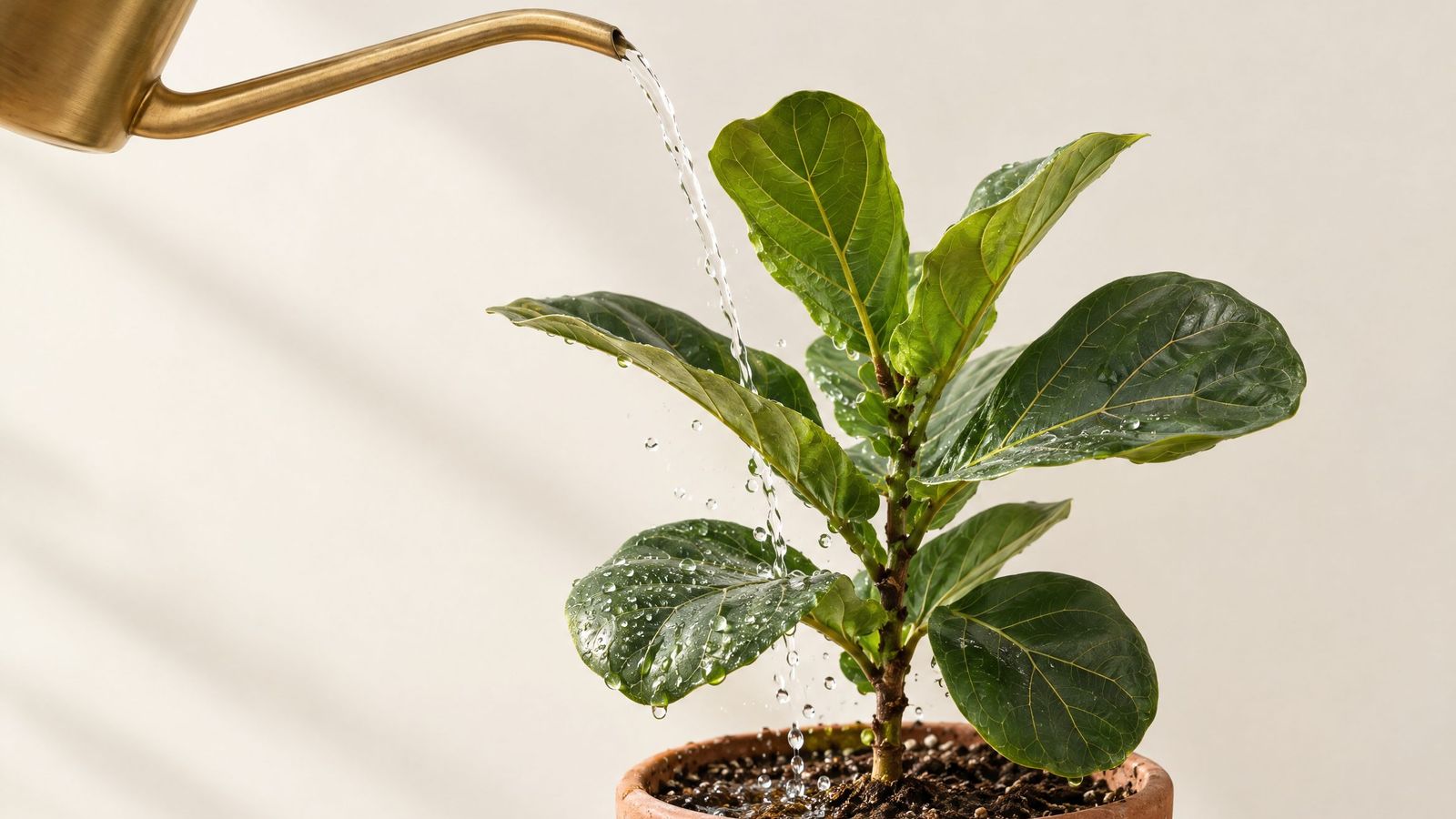
- Water thoroughly when you do water, until water runs out of the bottom, then empty the saucer after 30–45 minutes, as Iowa State recommends.
- Note the date. After a few rounds you will know each plant's real interval in each season. The care profile for each plant in Flori shows whether it prefers to stay lightly moist or dry out between waterings.
Signs your watering rhythm is off
Watering too often shows as mix that never dries, yellowing leaves and a plant that wilts while the soil is wet. Clemson warns that wilting does not always mean a plant needs water: roots damaged by too much water cannot take it up, and watering makes it worse. If that sounds familiar, follow our root rot rescue plan.
Watering too rarely shows as a light pot, mix shrinking from the sides and wilting in dry soil. Clemson advises not letting soil get excessively dry; if it has, water once, wait 30 minutes and water again, or stand the pot in a sink of water until the surface is moist, then let it drain fully. Then shorten the gap between checks rather than the gap between waterings.
Frequently asked questions
Is it better to water houseplants once a week?
Only if the soil says so. A weekly watering suits some plants in some seasons, but Iowa State Extension advises checking on a regular schedule and watering only when the mix is dry about 2.5 cm (1 in) down.
How often should I water houseplants in winter?
Usually much less often than in summer, because growth slows. Plants in a cool room may need water only every week or two, while pots near a radiator can still dry fast, so check each spot.
Why does my plant need water so often all of a sudden?
Common reasons are warmer weather, more light, a move next to heating or roots that have filled the pot. Clemson Extension notes that a pot-bound plant has too little soil to hold water and should be moved to a larger pot.
Do terracotta pots need watering more often?
Yes. Clay is porous and loses moisture through its sides, so plants in unglazed terracotta need water more often than the same plants in plastic or glazed pots.
Sources
- Clemson Cooperative Extension HGIC: Indoor Plants – Watering
- Iowa State University Extension: How to care for houseplants
- Iowa State University Extension: How often should houseplants be watered during the winter months?
- Nebraska Extension: Winter Care of Indoor Plants
- Royal Horticultural Society: How to grow houseplants
Written and fact-checked by the Flori team. Every guide cites horticultural sources such as the RHS, university extension services and the ASPCA, and is updated when the advice changes.
General plant care information. Plants vary; when a plant is valuable or a problem spreads quickly, consult a local nursery or plant specialist.