Flower Meanings: What Each Flower Says
Flower meanings for roses by colour, carnations, tulips, lilies and more, why lists disagree, and which popular bouquet flowers are toxic to cats and dogs.
 By Flori editorial team · Updated
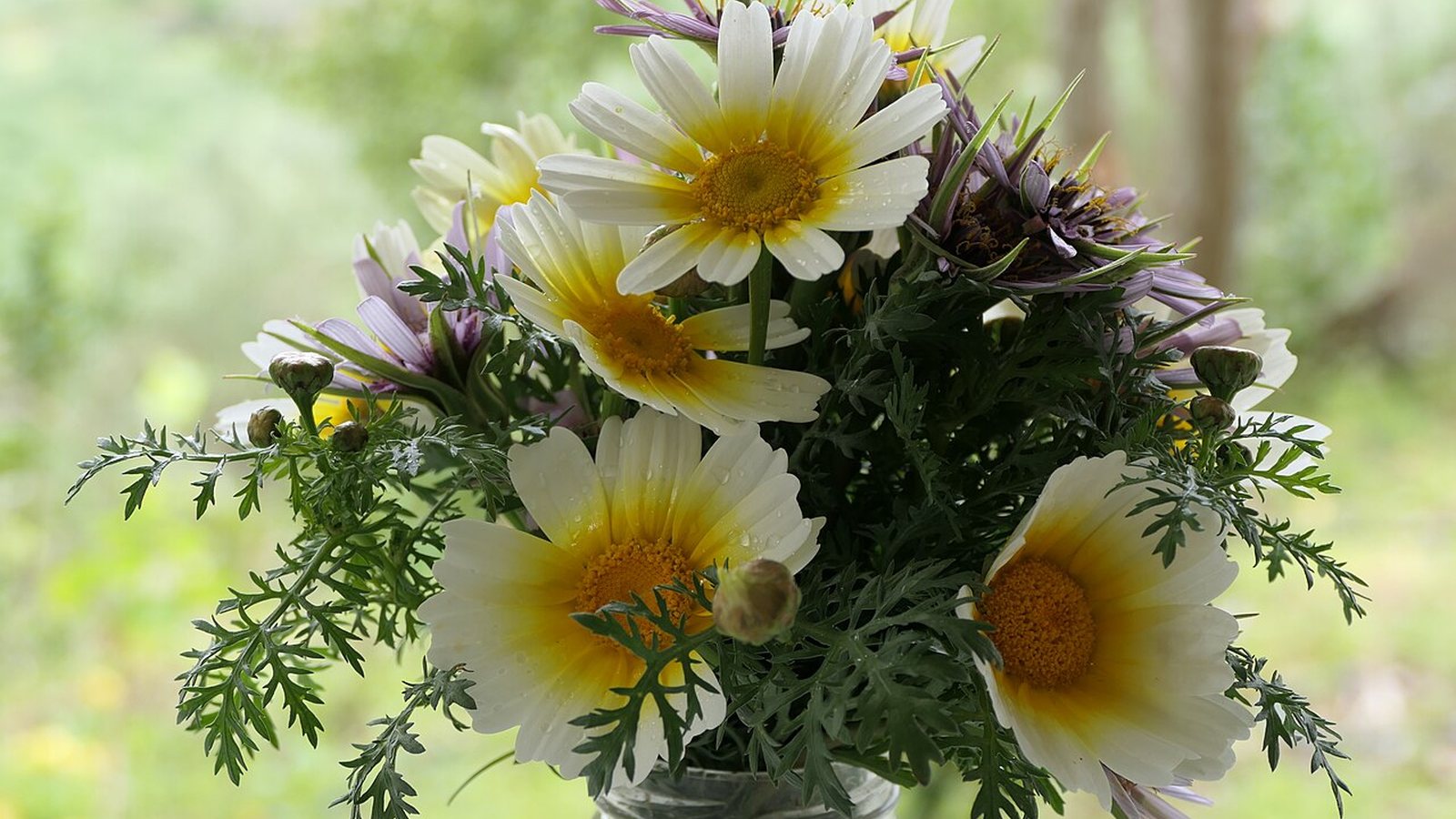 Photo: Petro Stelte · CC BY-SA 4.0
Flower meanings come from the Victorian language of flowers: red rose for love, white for innocence, striped carnation for refusal, forget-me-not for memory. But lists disagree, since the same flower can mean different things by colour and culture. Before gifting, check the colour and also whether the flower is toxic to pets.
Key takeaways
- Flower meanings are traditional associations, not fixed rules; colour often changes the meaning.
- Reliable bets: red rose and tulip for love, white flowers for purity, forget-me-not for remembrance, daffodil for new beginnings.
- Sources disagree on some flowers: a yellow rose is friendship in one list and jealousy in another.
- Several favourite bouquet flowers, including lilies, tulips, daffodils and hyacinths, are toxic to pets.
- Roses and sunflowers are non-toxic to cats and dogs, according to the ASPCA.
On this page8
- What do flowers mean?
- What do different rose colours mean?
- Flower meanings at a glance (and which are safe for pets)
- Which flowers say thank you, sorry or good luck?
- Where does the language of flowers come from?
- Why do flower meaning lists disagree?
- Are flowers safe for pets? What to know before gifting
- How do you choose flowers for a message?
What do flowers mean?
Flower meanings are traditional messages that people attached to flowers, mostly through Victorian-era dictionaries of the language of flowers. A red rose says love, a white lily says purity, a striped carnation says refusal. This guide gives you a screenshot-ready table of the meanings you are most likely to need, explains where the meanings come from, and adds something most lists skip: whether the bouquet is safe to bring into a home with a cat or dog.
One honest warning first. There is no official code. Iowa State University Extension, which publishes a long list of flower meanings, says sources vary, that flowers can carry several meanings, and that colour often changes the meaning. Treat the table below as traditional symbolism you can use with a smile, not a rulebook.
What do different rose colours mean?
Roses are the clearest case of colour changing the message, and also of lists disagreeing.
| Rose colour | Common meaning |
|---|---|
| Red | Love (Iowa State); love and passion (Clemson) |
| Pink | Grace, admiration and gratitude (Clemson); perfect happiness (Iowa State) |
| White | Innocence and purity (both lists) |
| Yellow | Friendship, gladness and joy (Clemson); fading love or jealousy (Iowa State) |
| Dark crimson | Mourning (Iowa State) |
That yellow row is the myth worth busting: if someone tells you a yellow rose always means friendship, or always means jealousy, they are quoting one list. Clemson reads it as friendship and joy, Iowa State as fading love; if the meaning matters, add a card.
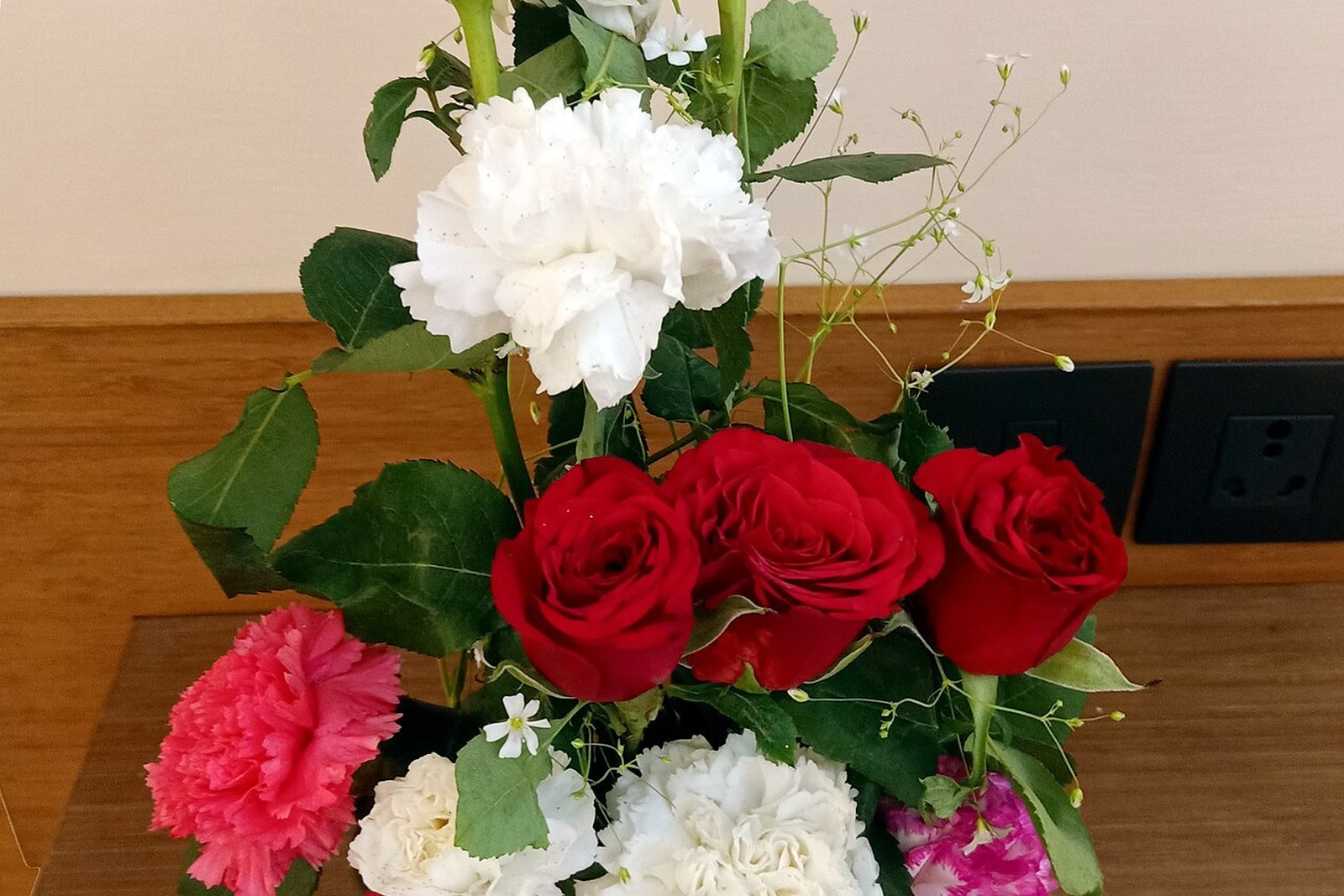
Flower meanings at a glance (and which are safe for pets)
Meanings below are drawn from the Iowa State and Clemson lists where both agree or one is clear. The last column is the ASPCA listing for cats and dogs.
| Flower | Meaning | Cats and dogs (ASPCA) |
|---|---|---|
| Red rose | Love, passion | Non-toxic |
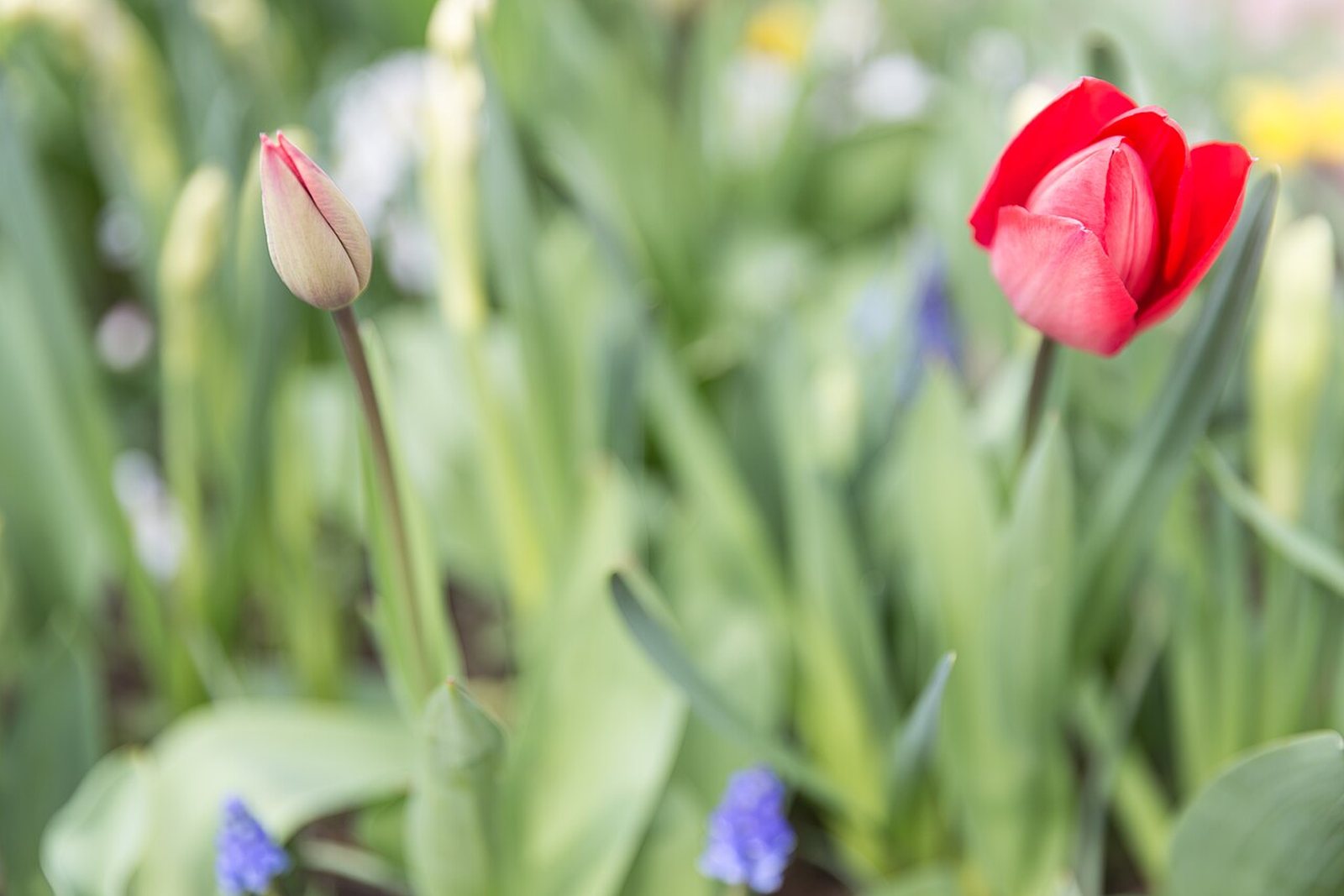
| Tulip | Perfect, enduring love; red tulip is a declaration of love | Toxic (bulb most); tulipalin A and B |
| Daffodil | New beginnings and good fortune (Clemson); regard (Iowa State) | Toxic (bulb most) |
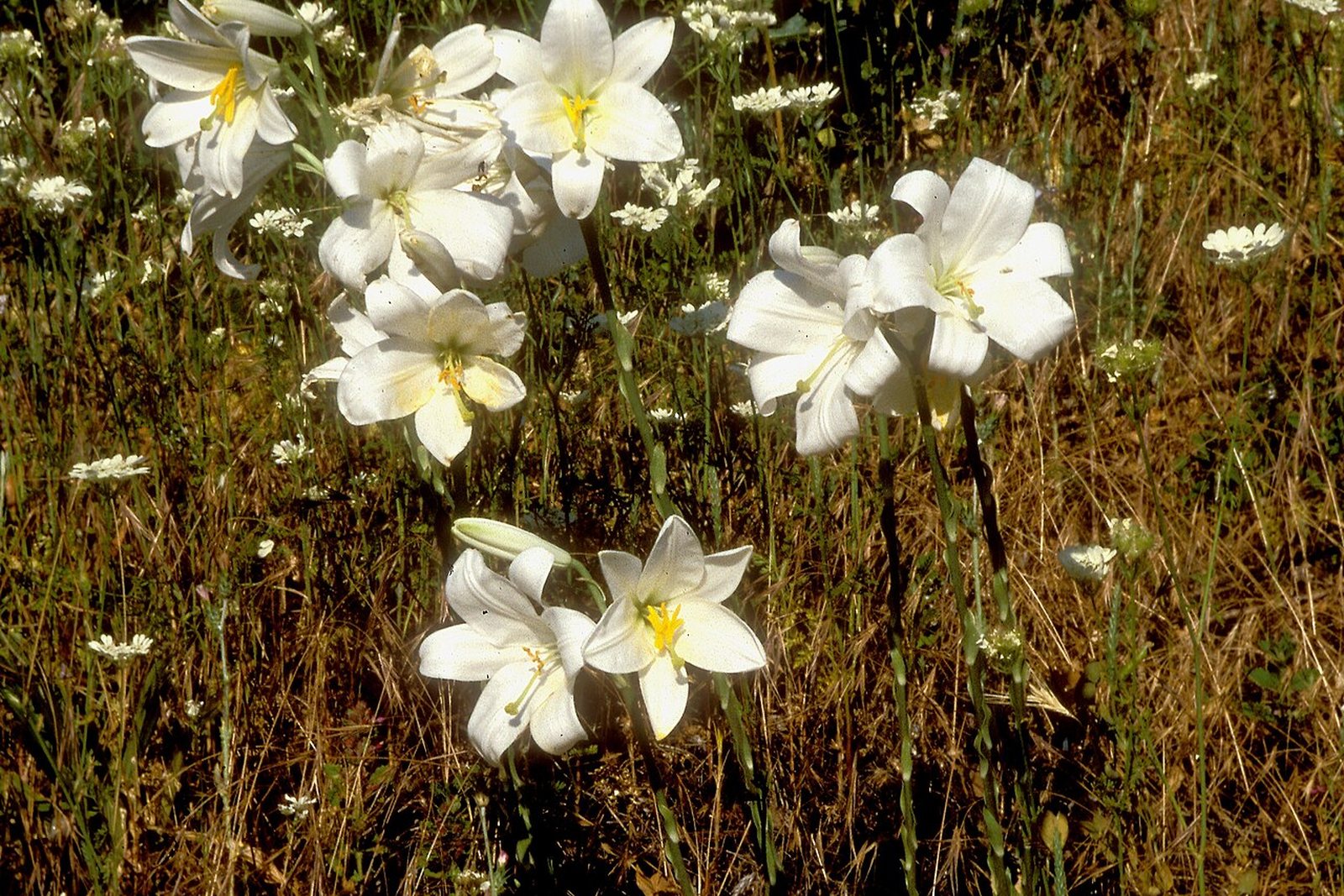
| Lily (white) | Purity, majesty | Lilium: toxic to cats, kidney failure; not to dogs |
| Carnation | Fascination; pink for a mother's love, white for good luck; striped for refusal | Toxic (mild stomach upset, skin irritation) |
| Daisy | Innocence, loyal love, true friendship | Not checked here |
| Peony | Happy marriage, bashfulness | Toxic |
| Hyacinth | Sincerity; purple for sorrow or apology | Toxic |
| Lily of the valley | Sweetness, return to happiness | Toxic (heart signs) |
| Hydrangea | Gratitude (and in some lists, coldness) | Toxic |
| Chrysanthemum | White for truth, red for love (Iowa State) | Toxic |
| Forget-me-not | True love, memory | Not checked here |
Which flowers say thank you, sorry or good luck?
Sometimes you need a message rather than a flower. Iowa State's list gives these traditional matches:
- Thank you: sweet pea (thanks for a lovely time), hydrangea (gratitude for understanding), a bouquet of mature roses (gratitude).
- Sorry: purple hyacinth (apology, sorrow).
- Friendship: iris (friendship, faith, hope), ivy (friendship, affection).
- Good luck: bells-of-Ireland, and a white carnation as a woman's good-luck gift.
- Farewell: cyclamen (resignation, farewell) and sweet pea.
- Remembrance: forget-me-not (true love, memory) and violet (modesty).
The same list adds a small warning: a withered bouquet stands for rejected love, and dead leaves for sadness. Do not give flowers that are past their best as a message.
Where does the language of flowers come from?
Clemson Cooperative Extension says floriography was introduced to European culture in 1718 by Lady Mary Wortley Montagu, and that the practice originated in the symbolism of China and Middle Eastern countries. In 19th-century Europe and the US, it adds, Victorian households kept floriography books to decode the flowers they received, because strict etiquette discouraged open talk of love or rejection. So a bouquet could say things a person could not. For readers in Türkiye, that origin story has a familiar ring: flower symbolism was not invented in London. Meanings also differ by culture: Iowa State notes that Chinese, Hebrew, English and Dutch associations are not the same, so a flower can carry another message in another tradition.
Why do flower meaning lists disagree?
- No single dictionary. The Victorian books were written by different authors, so the same flower got different entries.
- Colour and form. Pink, red and white carnations are three messages; a striped carnation is yet another (refusal or regret in Iowa State's list).
- Different eras. Iowa State lists the yellow rose as fading love or jealousy, while Clemson gives friendship, gladness and joy.
- Culture. A chrysanthemum that says truth in one list may be tied to mourning elsewhere.
When two lists disagree, go with the meaning the receiver will likely understand, and put the message on a card. If you are curious which flowers are said to bring luck, our guide to plants said to bring luck checks that folklore against facts.
Are flowers safe for pets? What to know before gifting
The ASPCA lists lilies (Lilium) as toxic to cats, with kidney failure as the clinical sign, even though they are listed as non-toxic to dogs. Tulips, daffodils and hyacinths are toxic to dogs and cats, and for tulips and daffodils the bulb holds the most toxin. Carnations cause mild stomach upset and sometimes skin irritation; chrysanthemums can cause vomiting, drooling and loss of coordination. Roses and sunflowers are listed as non-toxic.
If you live with a cat, choose roses, sunflowers or a bouquet without lilies, and keep any lily pollen and petals out of reach. For the full lists, see our guides to plants toxic to cats and pet-safe houseplants for cats and dogs. If your pet eats a bouquet, call your vet or ASPCA Animal Poison Control straight away; a consultation fee may apply. Flori can identify a flower from a photo and show its care profile and toxicity, which is handy when a gift arrives without a label.
How do you choose flowers for a message?
- Decide the message first: love, thanks, apology, congratulations, sympathy.
- Pick the flower, then the colour. Red rose or red tulip for romance; pink for gratitude; white for sympathy and purity; yellow for cheer.
- Skip meanings that could sting: striped carnations, orange lilies and marigolds appear on some lists with negative readings.
- Check the home. Cat at home means no lilies; dog or child likely to chew means no bulbs.
- Add a card. It resolves every disagreement above.
Flowers that bloom indoors can say the same things for months; flowering houseplants shows which ones and how to keep them blooming.
Frequently asked questions
What does a red rose mean?
Love, and in some lists passion. Iowa State Extension gives love and Clemson gives love and passion. It is the most consistent meaning on any list.
What does a yellow rose mean?
It depends on the list. Clemson gives friendship, gladness and joy; Iowa State gives fading love or jealousy. Today it is most often read as friendship.
Which flower means new beginnings?
Daffodil, according to Clemson Extension, which also lists good fortune. Iowa State gives regard and unequalled love instead, so add a card if the message matters.
Are lilies dangerous for cats?
Yes. The ASPCA lists lilies (Lilium) as toxic to cats, with kidney failure as the clinical sign. Call your vet or ASPCA Animal Poison Control right away if a cat chews one.
Are the meanings the same in every country?
No. Iowa State notes that Chinese, Hebrew, English and Dutch associations differ, so check the culture of the person you are giving flowers to.
Money tree, jade, lucky bamboo and more: where each luck story comes from, how to keep the plant thriving, and which ones are toxic to cats and dogs.
Sources
- Iowa State University Extension: Flowers and their meanings: the language of flowers
- Clemson Cooperative Extension HGIC: The secret language of flowers for Valentine's Day
- ASPCA: Toxic and non-toxic plants (lily, tulip, daffodil, carnation, chrysanthemum, hyacinth, peony, hydrangea, lily of the valley, rose, sunflower)
Written and fact-checked by the Flori team. Every guide cites horticultural sources such as the RHS, university extension services and the ASPCA, and is updated when the advice changes. How we write our guides
General plant care information. Plants vary; when a plant is valuable or a problem spreads quickly, consult a local nursery or plant specialist.