How to Grow Hyacinths in Water Indoors
Grow hyacinths in water indoors: set a prepared bulb on a hyacinth glass, keep the water below the base, root it in the dark, then bring it to the light.
 By Flori editorial team · Updated
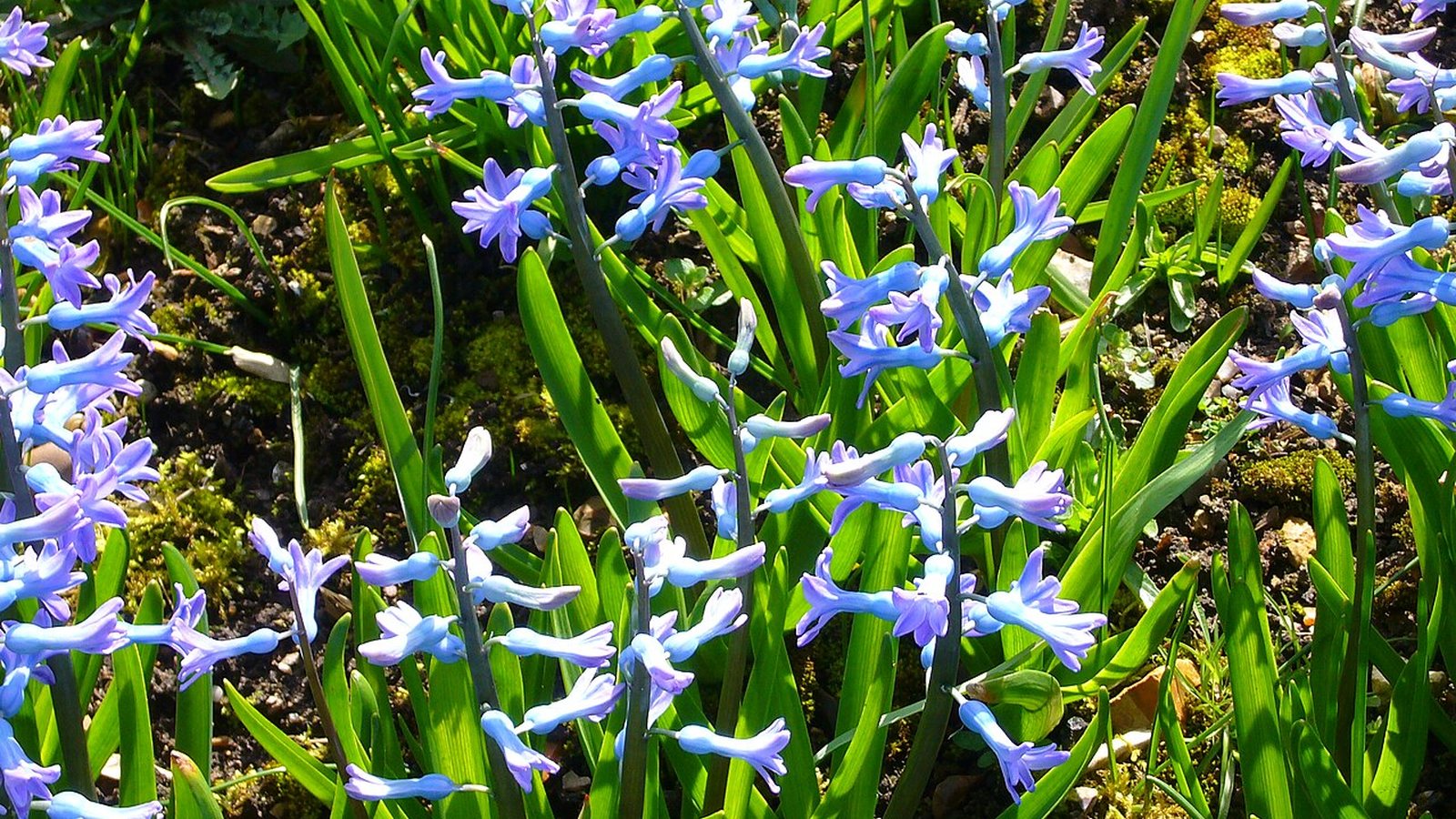 Photo: Magnus Manske · CC BY-SA 3.0
Set a prepared hyacinth bulb on a hyacinth glass with the water just below its base, never touching it. Keep it cool and dark until roots fill the glass and the flower stem appears, then move it to a bright room. Allow 10 to 12 weeks in all. Hyacinths are toxic to pets.
Key takeaways
- Use a prepared, flowering-size bulb and a glass that holds it above the water.
- Water must stay just below the base of the bulb: if it touches, the bulb rots.
- Keep it cool and dark until the glass is full of roots, then move it into light; allow 10 to 12 weeks in all (RHS).
- Bulbs forced in water are usually discarded after flowering.
- Hyacinth is toxic to dogs and cats (ASPCA) and a skin irritant (RHS): wear gloves and keep it out of reach.
On this page9
- How do you grow hyacinths in water indoors?
- What are the stages, and how long does each take?
- What do you need?
- How do you set up a hyacinth bulb in water, step by step?
- What if the bulb is not pre-chilled?
- How do you look after the water?
- What can go wrong, and what to do?
- Can you plant the bulb again after it flowers?
- Are hyacinths poisonous to cats and dogs?
How do you grow hyacinths in water indoors?
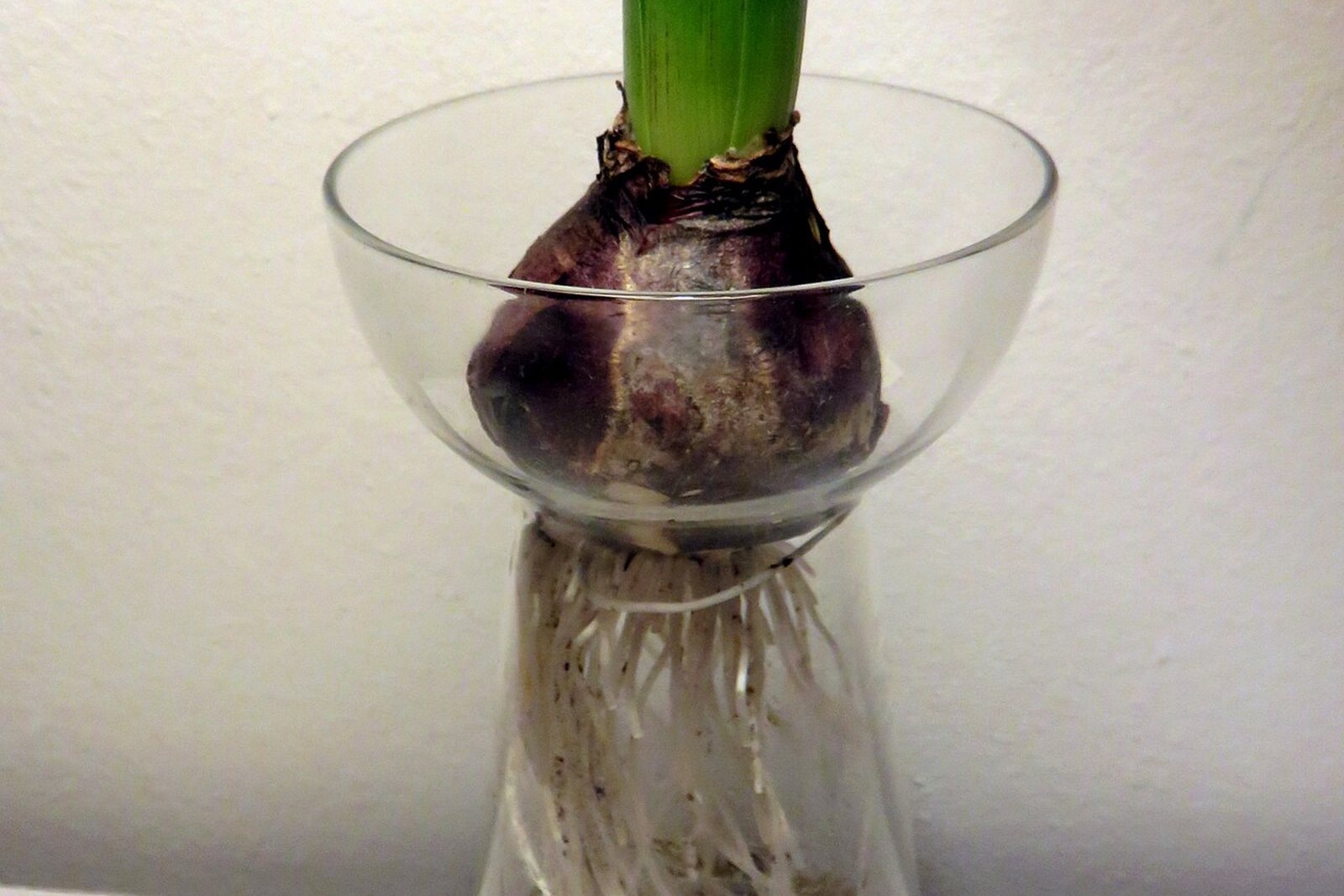
Set a prepared (pre-chilled) hyacinth bulb on a hyacinth glass or any narrow-necked jar so that the water stays just below the base of the bulb. Keep it cool and dark until the glass is full of roots and the flower stem is showing, then bring it into a bright room. The RHS says to allow 10 to 12 weeks from potting to flowers; Iowa State says blooms open 2 to 4 weeks after the move into light. The one rule that matters: the bulb must never sit in the water, or it rots.
If you start in mid-November in the Northern Hemisphere, that timetable points to flowers in late winter, not at Christmas (the RHS says Christmas flowers need planting in September). In the Southern Hemisphere, count back from the date you want flowers instead of following the month.
What are the stages, and how long does each take?
| Stage | What happens | Temperature | Time |
|---|---|---|---|
| 1. Chilling (only if the bulb is not pre-chilled) | Bulb in a paper bag, away from ripening fruit | 4–7 °C (40–45 °F) | 12–15 weeks (Iowa State) |
| 2. Rooting in the dark | Bulb on the glass, roots grow down into the water | Cool and dark (RHS) | Until the glass is full of roots and the flower stem emerges |
| 3. Greening | Move to low-to-medium light | 10–16 °C (50–60 °F), general forcing advice (Iowa State) | Usually 4–5 days, until shoots turn green |
| 4. Flowering | Bright light, away from direct sun | 16–18 °C (60–65 °F) | 2–4 weeks (Iowa State) |
The RHS counts the whole process from potting to flowers at 10 to 12 weeks for prepared bulbs. Sources count the stages a little differently, so use the table as a guide and watch the bulb rather than the calendar.
What do you need?
- A prepared, flowering-size bulb. Prepared bulbs are sold in autumn for this purpose. Purdue says bargain bulbs are often too small to bloom, so choose a large, firm one.
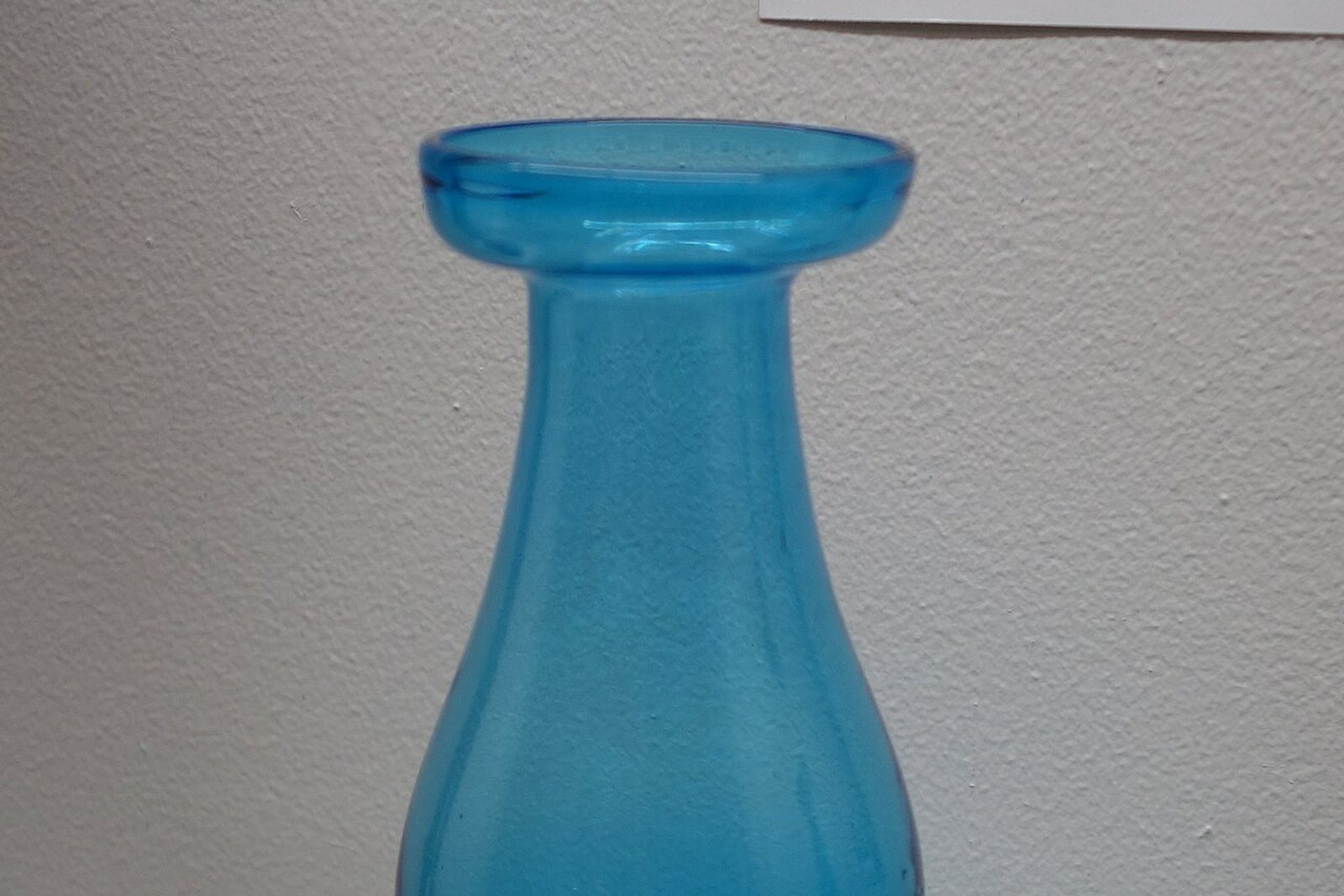
- A hyacinth glass or a jar. The classic hourglass-shaped glass holds the bulb at the top (Iowa State). Any container with a neck narrow enough to suspend the bulb over water works, or use a glass half-filled with pebbles, marbles or gravel.
- Clean water and a cool, dark place such as an unheated room or a cupboard.
- Gloves. The RHS lists hyacinth as a skin irritant, so wear gloves when handling the bulbs.
How do you set up a hyacinth bulb in water, step by step?
- Fill the glass with water to about 6 mm (1/4 in) below the base of the bulb (Purdue); the RHS says just below the base.
- Place the bulb pointed end up in the neck of the glass, so the base hovers above the water and the roots can grow down into it.
- Move it somewhere cool and dark and leave it. Roots appear first, then the shoot.
- Check the water often in the first week, because the level can drop below the roots quickly (Iowa State), and top it up so only the roots touch it.
- When the glass is full of roots and the flower stem emerges, bring it out gradually into light and warmth (RHS).
- Turn the glass now and then so the stem grows upright (Iowa State).
- When it flowers, keep the glass in a cool, bright spot out of direct sun, and keep checking the water level.
What if the bulb is not pre-chilled?
Then it needs its winter first. Iowa State says to chill it in a paper bag at 4–7 °C (40–45 °F) for 12 to 15 weeks, away from ripening fruit, because the ethylene gas fruit gives off can inhibit flowering. Check the bag often for drying or excess moisture, and remove any bulb that rots or shrivels. Purdue gives a general figure for forcing bulbs of at least 10 weeks of cool storage, with roots forming before top growth. Prepared bulbs have had this done for you, which is why they are the easier choice, and why a bulb bought in mid-November and chilled yourself will not flower until spring.
How do you look after the water?
Add water as needed, and replace it once or twice a week or whenever it turns cloudy (Iowa State). The RHS says a small piece of charcoal is optional, to keep the water sweet, and that no feeding is needed for bulbs grown in water. Keep the base dry above the water line: if water touches the bulb it rots, and the roots need only enough water to reach them. Once the flowers open, keep the glass out of direct sun; Purdue says cooler conditions help blooms last longer.
What can go wrong, and what to do?
| Problem | Likely cause | What to do |
|---|---|---|
| Bulb turns soft and smells | Water touching the base | Lower the water; discard a rotted bulb (Iowa State) |
| Tall stem leans or tips | Top-heavy bloom, loose support | Bury the bulb in gravel above the water line, or use a glass that supports it (Iowa State) |
| Flower stays in the leaves | Not enough stretch | Cover with a paper cup or cone until it rises (Purdue) |
| No roots or poor growth | Bulb too small or not chilled enough | Use a larger prepared bulb next time |
| Cloudy water | Bacteria or algae | Replace the water |
Can you plant the bulb again after it flowers?
Do not count on it. Iowa State says bulbs forced in water should be discarded after bloom, and the RHS says they are usually discarded after flowering, though you can plant them in the garden to see what happens the next year. Forcing in water uses up the bulb's reserves, so enjoy it as a single-season display. If you want bulbs that come back, plant them in the garden in autumn instead; our spring bulb planting times guide explains when.
Are hyacinths poisonous to cats and dogs?
Yes. The ASPCA lists hyacinth (Hyacinthus orientalis) as toxic to dogs, cats and horses, with intense vomiting, diarrhoea (occasionally bloody), depression and tremors. The page does not say which part is most toxic, so keep the whole bulb and glass out of reach. If a pet has chewed a bulb, call your vet straight away, or ASPCA Animal Poison Control on (888) 426-4435 (a fee may apply). For other bulbs and winter plants, see our guide to Christmas plants toxic to pets.
If you want other bulbs indoors, amaryllis and paperwhites are set up differently, and houseplants you can grow in water is about foliage plants instead of bulbs. If you are unsure which bulb you have, Flori can identify a flowering plant from a photo and show its toxicity.
Frequently asked questions
How long does a hyacinth take to bloom in water?
The RHS allows 10 to 12 weeks from potting prepared bulbs to flowers. Iowa State says blooms open 2 to 4 weeks after the bulb is moved into light.
Should the bulb touch the water?
No. Keep the water just below the base of the bulb. If water touches the bulb it will rot; only the roots should reach it.
Can I replant a hyacinth after growing it in water?
It is unlikely to flower well again. Iowa State says bulbs forced in water should be discarded, and the RHS says they are usually discarded, though you can try planting them in the garden.
Are hyacinth bulbs safe around pets?
No. The ASPCA lists hyacinth as toxic to dogs, cats and horses, with vomiting, diarrhoea and tremors. Keep bulbs and glasses out of reach and call your vet if a pet chews one.
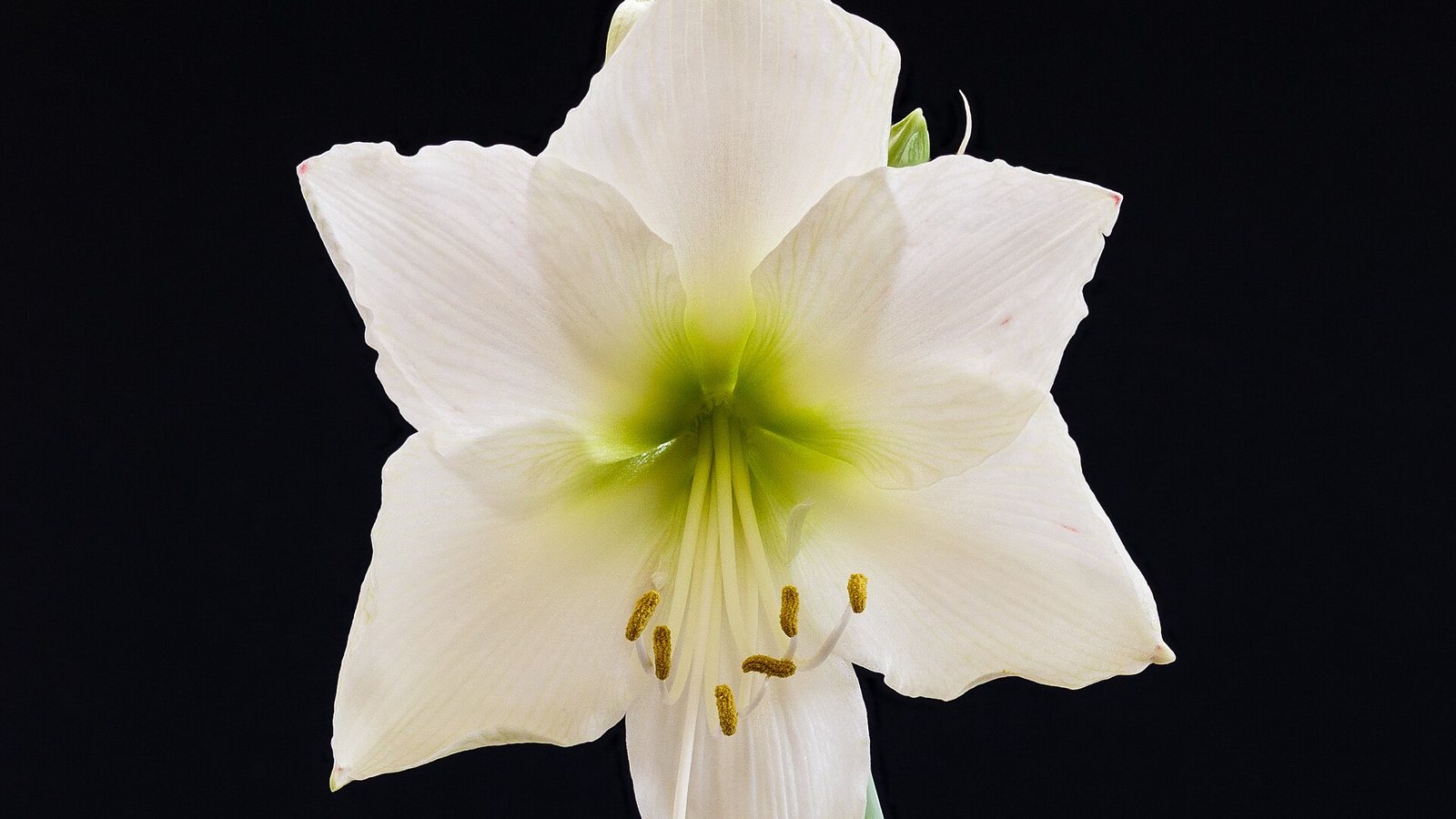
Pot amaryllis and set paperwhites on pebbles in November for Christmas bloom. Timing, setup, floppy stems, pet toxicity and aftercare for both bulbs.
Sources
Written and fact-checked by the Flori team. Every guide cites horticultural sources such as the RHS, university extension services and the ASPCA, and is updated when the advice changes. How we write our guides
General plant care information. Plants vary; when a plant is valuable or a problem spreads quickly, consult a local nursery or plant specialist.