How to Pick a Healthy Poinsettia: Shop Checklist
A screenshot-ready poinsettia checklist: bracts, tiny flowers, leaves, soil, the shop's cold spots and how to get it home without chilling it.
 By Flori editorial team · Updated
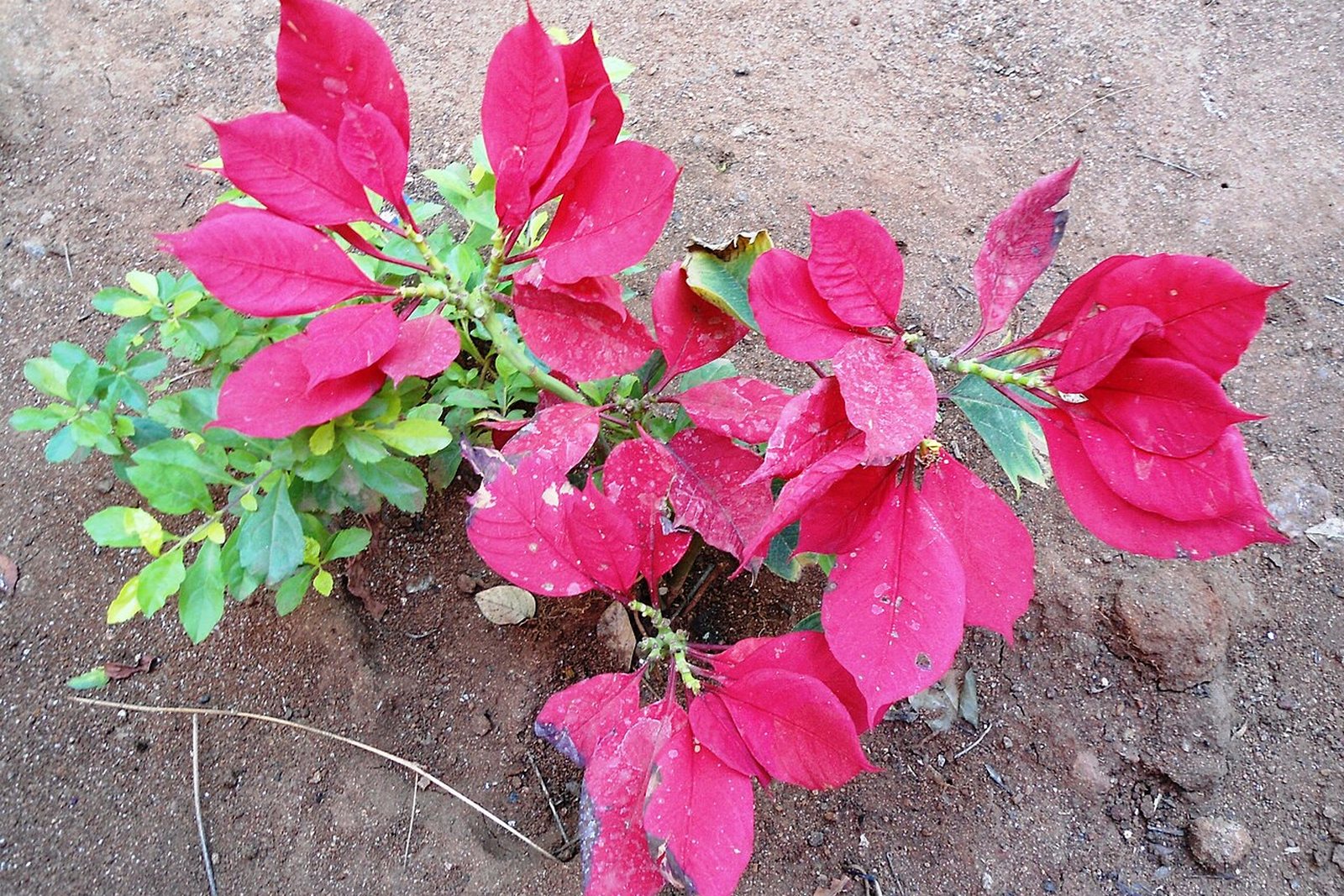
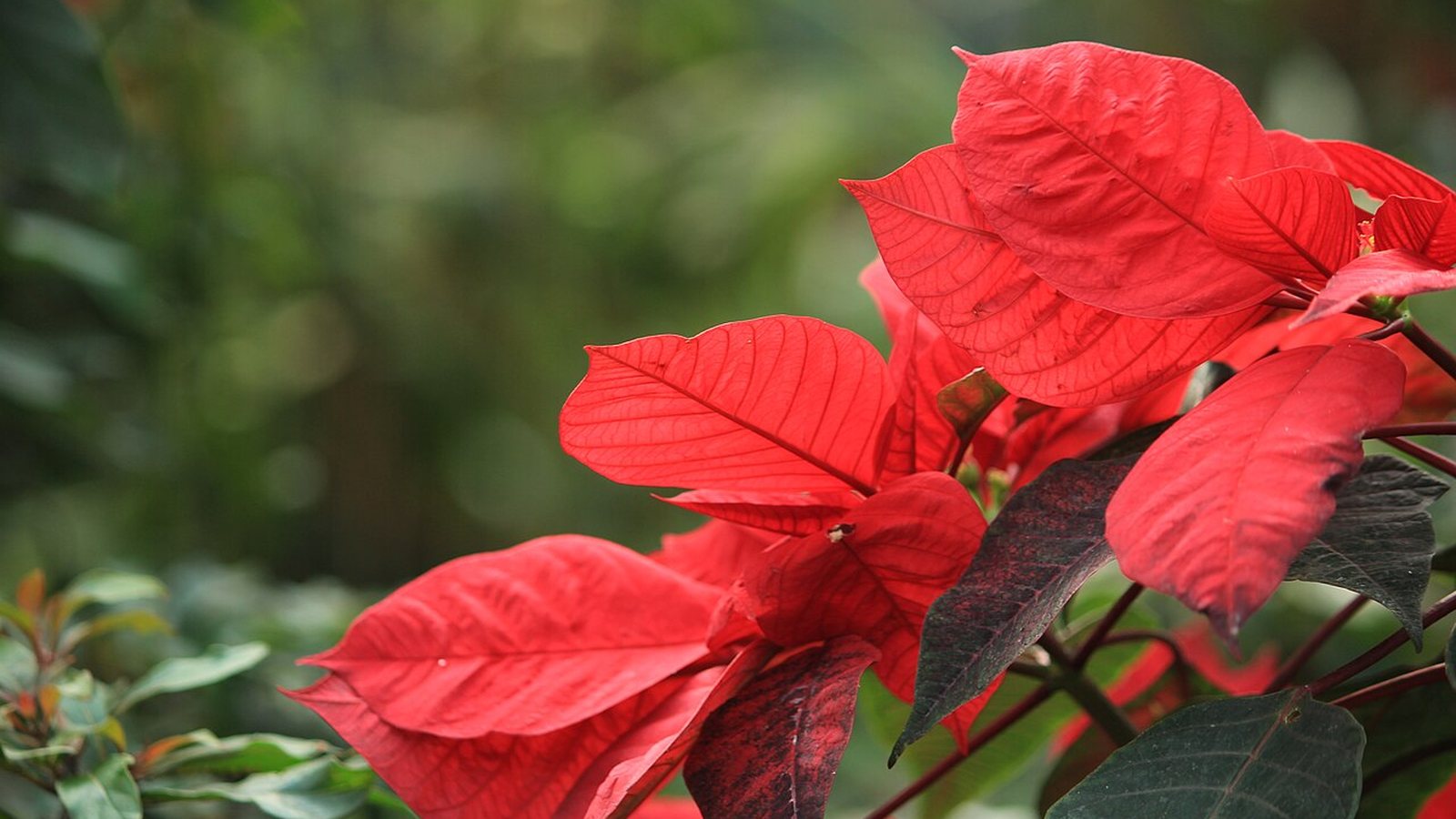 Photo: Manojk · CC BY-SA 3.0
Pick a poinsettia with fully coloured bracts, tight green or red-tipped centres, dark green leaves down to the soil and no sleeve. Avoid ones from cold, draughty spots, since below 10 °C (50 °F) leaves drop. Wrap it for the trip and go straight home.
Key takeaways
- Choose fully coloured bracts, fresh tight centres and dark green leaves down to the soil line; skip drooping or yellow plants.
- Yellow pollen on the small centres means the plant is ageing, though newer cultivars can hide it.
- Avoid plants from draughty doors or outdoor stalls: chilling below 10 °C (50 °F) causes leaf drop.
- Wrap the plant for the trip home and unwrap it as soon as you are inside.
- Poinsettia is toxic to cats and dogs, though the ASPCA calls its toxicity over-rated.
On this page10
- What should you check before buying a poinsettia?
- The poinsettia shop checklist
- What are the bracts and what are the flowers?
- How tall and full should the plant be?
- Why does the display spot in the shop matter?
- How do you get a poinsettia home without chilling it?
- Where should you put it once you are home?
- Is it safe to bring a poinsettia home if you have pets or children?
- Should you buy a coloured or a white poinsettia?
- What if it starts to drop leaves in the first week?
What should you check before buying a poinsettia?
Check five things in under a minute: the colour on the bracts, the little yellow centres, the leaves down to the soil, the soil itself and where the plant has been standing. A poinsettia that looks perfect on the shelf can already be chilled, and a chilled plant drops its leaves in your living room a week later. The checklist below is built from extension services (Illinois, NC State, Clemson) and the RHS, so you can screenshot it and take it to the shop. If you already own a poinsettia, our poinsettia care guide covers the rest of the season.
The poinsettia shop checklist
| Check | Buy it if | Walk away if |
|---|---|---|
| Bracts (the coloured “petals”) | Fully and evenly coloured, bright | A lot of green around the edges, or faded, torn, curling |
| True flowers (small centres) | Tight, green or red-tipped, fresh | Dusted with yellow pollen: the plant is ageing |
| Leaves | Dark green all the way down to the soil line | Fallen, yellow, spotted or drooping leaves |
| Shape | Full and balanced from every side | Lopsided, thin or leggy |
| Soil | Moist but not soggy | Wet soil and a wilted plant: possible root rot |
| Leaf undersides | Clean | Aphids or whiteflies |
| Packaging | No sleeve, or sleeve removed | Plants kept in paper or plastic sleeves, or crowded together |
| Where it was displayed | Indoors, away from doors | Cold draughty entrances or outdoor stalls |
What are the bracts and what are the flowers?
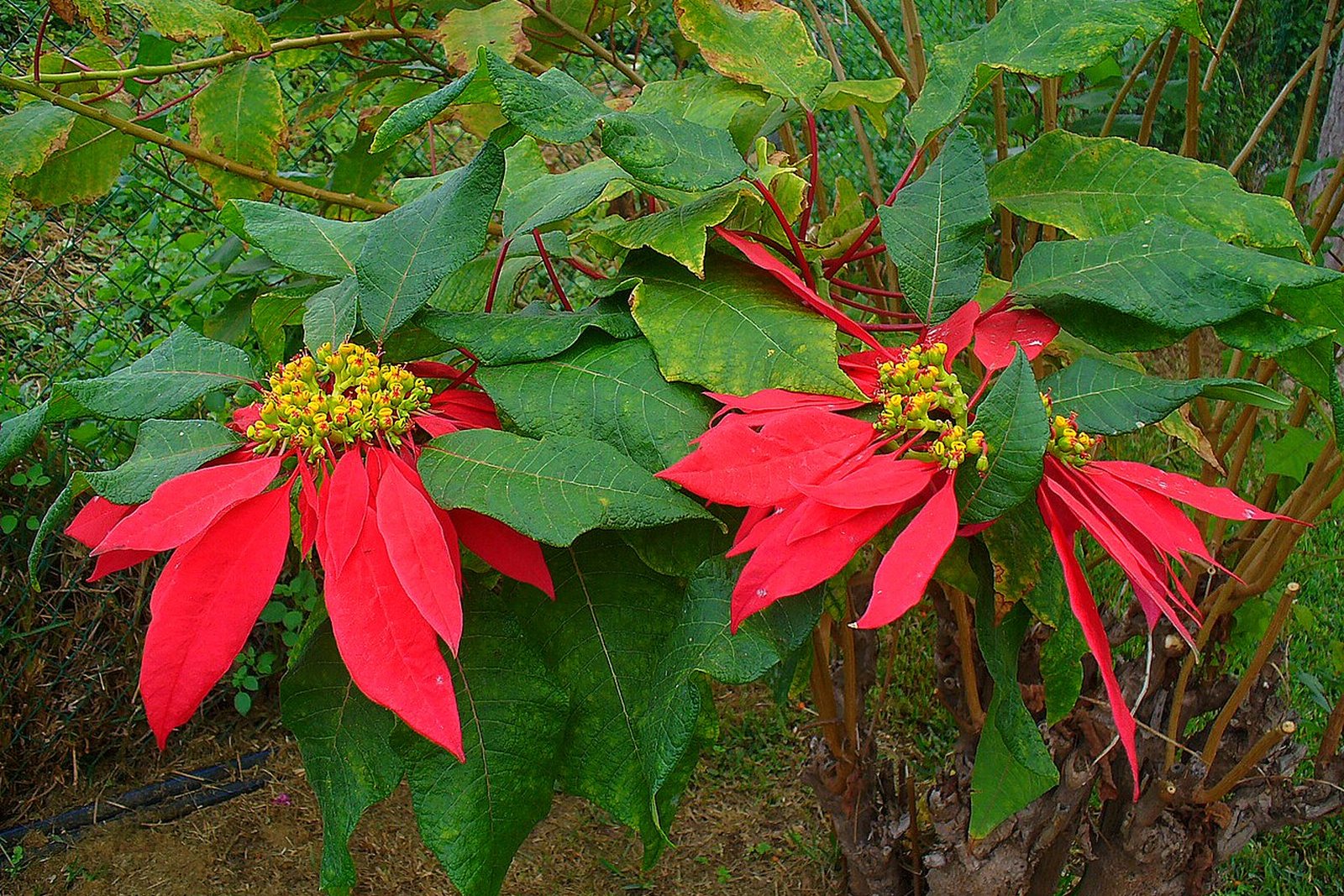
The bright red, pink or cream parts are not petals. Illinois Extension explains that they are modified leaves called bracts, and that the true flowers are the small greenish-yellow clusters called cyathia in the centre. That matters when you shop. Illinois says cyathia that are green or red-tipped and fresh-looking hold their display longer than ones already dusted with yellow pollen. NC State adds a caveat: newer cultivars hold their cyathia longer, which can make the plant's age harder to judge, so use the leaves and bract colour as well.
How tall and full should the plant be?
Illinois Extension says to look for a plant that is full and balanced from every side, and about 2½ times taller than its container's diameter. Clemson adds that stems should be stiff, with no signs of wilting, breaking or drooping. Crowded plants on a shelf can lose bracts early, so pick one with room around it. A plant that is leggy, sparse on one side or thin at the base will not improve at home.
Why does the display spot in the shop matter?
Poinsettias are tropical plants from Mexico and they do not like cold. The RHS says they need a minimum temperature of 13–16 °C (55–60 °F) and warns that cold, draughty atriums and chilly pavements cause shock, so avoid plants displayed there. Clemson warns of chilling injury and early leaf drop when temperatures drop below 10 °C (50 °F). In practice, skip plants near the automatic doors, on outdoor tables or on stalls on a cold day. If a plant has already wilted or dropped leaves and bracts soon after purchase, the RHS says it was likely chilled before you bought it, and it may keep declining.
How do you get a poinsettia home without chilling it?
- Buy on a mild day if you can. The RHS recommends this, since the trip home is easier than in frost.
- Ask for it to be wrapped. Illinois Extension says to sleeve or cover the plant when outdoor temperatures are below 10 °C (50 °F); the RHS suggests wrapping over the top or using a bag.
- Go straight home. The RHS advises getting it to the car quickly and into the house as soon as you can, not leaving it in a cold parked car.
- Unwrap as soon as you are inside. A plant left in a sleeve deteriorates quickly.
Where should you put it once you are home?
Give it a bright spot with no direct sun. Clemson recommends at least 6 hours of bright, indirect light a day and says direct sun may fade the bracts. Keep it away from radiator-heated window sills, a cold gap behind the curtains, draughty hearths and unheated rooms, as the RHS advises. NC State suggests keeping it between 13 and 24 °C (55–75 °F), while Clemson says daytime temperatures should not go above 21 °C (70 °F). For more on winter positions, see where to put houseplants in winter, and for temperature limits, how cold is too cold.
Is it safe to bring a poinsettia home if you have pets or children?
Mostly yes, but keep it out of reach. The ASPCA lists poinsettia (Euphorbia pulcherrima) as toxic to dogs and cats, with irritant sap that can irritate the mouth and stomach and sometimes cause vomiting; it also says the plant's toxicity is generally over-rated. The RHS notes that breaking a leaf or stem releases a milky sap that can irritate skin and eyes, so wash your hands after handling it. If a pet eats some, call your vet; for a person, follow your local poison line. Our Christmas plants toxic to pets guide compares the others, and checking plant toxicity before you buy shows how to confirm any plant in advance. Flori's plant care profile lists toxicity for each plant too.
Should you buy a coloured or a white poinsettia?
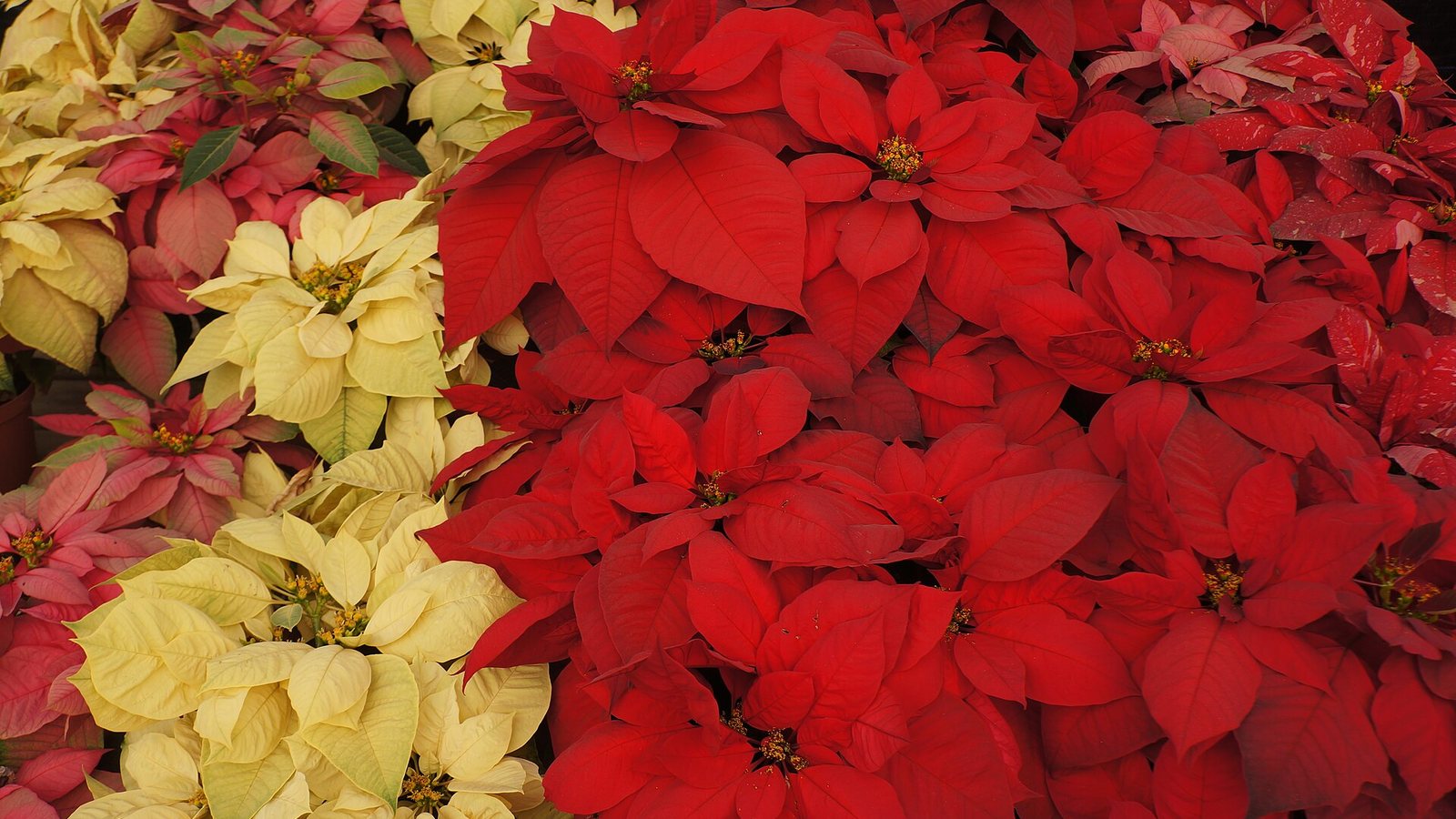
Colour is a matter of taste: the checks above apply to red, pink, cream and marbled plants alike. Just make sure the bract colour is even across the plant. If you are choosing a plant as a gift, the best plants to give for Christmas lists other options that tolerate a cold doorstep better.
What if it starts to drop leaves in the first week?
A few lower leaves yellowing is not unusual after a move, but fast loss of leaves and bracts usually means it was chilled or placed by a draught or a radiator. Move it somewhere steady and bright, check the soil is moist but not soggy, and do not feed it while it is in bloom, as Clemson advises. If it keeps dropping, take it back to the shop with the receipt: the RHS's point about plants chilled before purchase is exactly the situation a shop should understand.
Frequently asked questions
How do I pick a healthy poinsettia?
Look for fully coloured bracts with little green at the edges, tight green or red-tipped centres, dark green leaves down to the soil, moist soil and a full, balanced shape. Skip plants in sleeves or from cold draughty spots.
Why do poinsettias drop leaves after I buy them?
Usually chilling, either in the shop or on the way home. The RHS says a plant that wilts or drops leaves soon after purchase was likely chilled before you bought it.
What are the flowers on a poinsettia?
The coloured parts are bracts, which are modified leaves. The true flowers are the small greenish-yellow clusters (cyathia) in the centre, and fresh ones last longer than ones dusted with pollen.
Is poinsettia poisonous to pets?
The ASPCA lists it as toxic to dogs and cats. The sap can irritate the mouth and stomach and sometimes cause vomiting, but the ASPCA says its toxicity is generally over-rated. Call your vet if a pet eats some.
Poinsettia care for the whole season: how to buy one, keep its colour through the holidays without leaf drop, and grow and rebloom it afterwards.
Sources
Written and fact-checked by the Flori team. Every guide cites horticultural sources such as the RHS, university extension services and the ASPCA, and is updated when the advice changes. How we write our guides
General plant care information. Plants vary; when a plant is valuable or a problem spreads quickly, consult a local nursery or plant specialist.