
Morels and False Morels: How Not to Confuse Them
When and where morels appear, how experts tell them from false and half-free morels, the parboiling myth and what to do after a mistake.
 By Flori editorial team · Updated
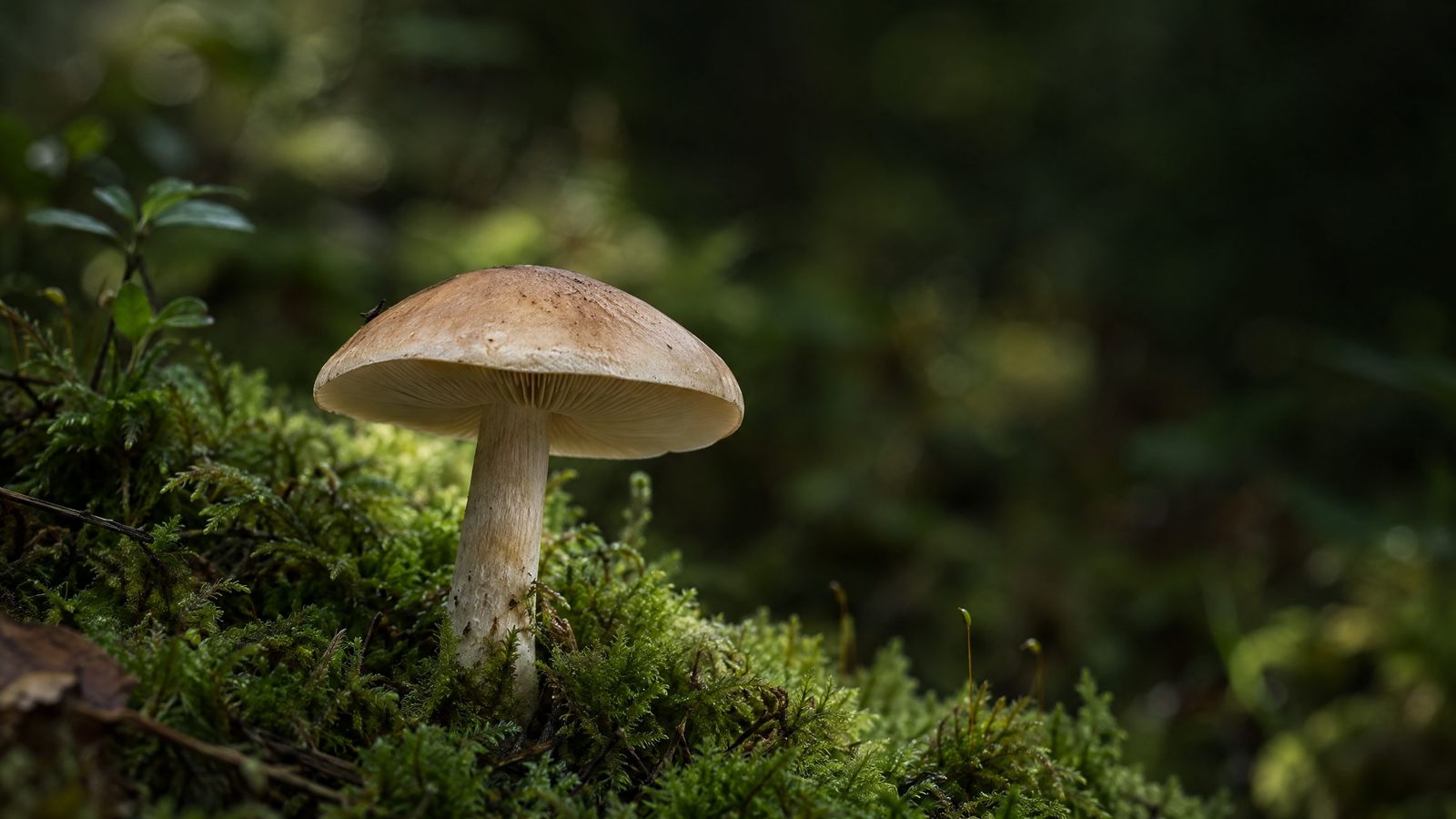
Morels (Morchella), kuzugöbeği in Turkish, are spring mushrooms of hardwood woods, old orchards and burned ground. False morels (Gyromitra) appear in the same weeks and contain gyromitrin, which can damage the liver, kidneys and blood. Cap shape, cap attachment and a hollow stem are what experts check, but only an expert holding the mushroom can decide.
Key takeaways
- Morels are spring mushrooms, and false morels are common at the same time, so the season proves nothing.
- Experts compare the cap surface, how the cap joins the stem and whether the stem is hollow, never one feature alone.
- Parboiling does not make false morels safe: the toxin is volatile and even the fumes have made cooks ill.
- Even true morels cause illness when eaten raw or undercooked, so this guide treats them as not edible.
- After eating an unknown mushroom, call the poison line at once and keep a sample.
When do morels come up, and why are false morels a problem?
Morels (Morchella), called kuzugöbeği in Turkish, are the famous honeycomb-capped mushrooms of spring. They have a dangerous companion: false morels (Gyromitra, sahte kuzugöbeği in Turkish), which grow in the same season and contain a toxin that can be fatal. Our guide to edible wild mushrooms and their look-alikes gives the short version. This one goes further: when and where morels appear, a third look-alike most lists skip (the half-free morel), what experts look at when they cut a specimen in half, and the cooking myths that keep putting people in hospital. We do not list any morel as edible here. Raw or undercooked morels make people ill, and telling them from false morels is expert work done with the mushroom in hand.
When and where do morels grow?
Nebraska Extension describes morels as spring mushrooms, usually appearing from March to June depending on the climate and region. That is the Northern Hemisphere calendar; south of the equator, spring falls in the opposite months. They grow in hardwood forests, especially with ash, elm and apple trees, and also in old orchards and burned forests, often in soil that has been disturbed or recently burned. Mycologist Tom Volk, who wrote his PhD on the morel life cycle, notes that in his part of Wisconsin morels normally appear in early May, and that at one well-known foray most were found under recently dead elms, but also under living ash and oak. Ohio State Extension puts the Ohio season at late March to mid-May.
Two warnings come with that calendar. First, Volk points out that false morels are also common at this time of year, so finding something in spring under an elm proves nothing. Second, US Poison Control warns that learning to identify mushrooms in one region or country is not reliable for another. A morel tradition from Anatolia, the Balkans or the American Midwest does not travel with you.
True morel, half-free morel and false morel: what experts check
Experts look at several features together on the whole mushroom, usually after cutting it in half from top to bottom. The table shows what our sources describe. Use it to understand why an expert is needed, not as a checklist to clear a mushroom yourself.
| Feature | True morel (Morchella) | Half-free morel (Morchella punctipes) | False morel (Gyromitra) |
|---|---|---|---|
| Cap surface | A uniform network of ridges and pits (Nebraska) | A true morel species, listed by Nebraska Extension | Irregular and lobed (Nebraska) |
| How the cap joins the stem | Attached to the stem (Nebraska) | Only partly attached; the lower part of the cap hangs free (Nebraska) | Not fused to the stalk except at the very top (Volk) |
| Inside of the stem | Hollow (Nebraska, Volk) | Expert check after cutting | Irregular or only partly hollow (Nebraska) |
| Under the microscope | No oil droplets in the spores | Expert check | Spores with two oil droplets (Volk) |
| Toxin | Unknown; causes upset when raw or undercooked (NAMA) | Morels as a group cause upset raw or undercooked (NAMA) | Gyromitrin, which breaks down into monomethylhydrazine (NAMA) |
Notice how much depends on the inside of the mushroom and on a microscope, and how a half-free morel sits between the two groups. Some people also count Verpa species as false morels, Volk notes, and the North American Mycological Association (NAMA) lists Verpa among the relatives that can cause stomach upset. A photo of the outside shows none of this, which is why no app, Flori included, can tell you a morel is safe to eat. An app can suggest a name to learn and show an expert; see can an app identify mushrooms.
Why are false morels so dangerous?
NAMA explains that gyromitrin breaks down into monomethylhydrazine (MMH), a volatile, highly toxic compound also used as rocket fuel. Because it is volatile, the same dish can leave one person untouched and poison another, and in Europe it has sometimes been only the cooks who died. NAMA adds that the line between a harmless and a lethal amount is very slim, and that gyromitrin is a known carcinogen. Symptoms start 2 to 24 hours after eating: headache, abdominal pain, severe diarrhoea and vomiting, and in severe cases damage to the liver, kidneys and red blood cells, which can be fatal. Our mushroom poisoning symptoms guide puts this timeline next to the other syndromes.
Morel myths that fail
- Parboiling makes false morels safe. Volk describes people who parboil false morels and throw away the water, and reports of people getting sick just from inhaling the vapours. He compares eating them to Russian roulette, because toxin levels vary so much between populations. Ohio State says plainly: do not eat false morels.
- Cooking fixes everything. US Poison Control warns that cooking does not make a poisonous mushroom safe, and that the fumes of some poisonous mushrooms can poison you.
- True morels are always fine. NAMA notes that even morels cause upset if eaten raw or not thoroughly cooked, and Ohio State says morels may cause illness in some people.
- It is spring, so it must be a morel. False morels share the season. More myths are covered in how to tell if a mushroom is poisonous.
How to handle a morel-like find
- Photograph it where it grows, then pick the whole mushroom, base included, if local rules allow. Our guide on whether it is safe to pick wild mushrooms explains how.
- Keep each kind in its own paper bag, away from food, children and pets.
- Take it to a local mushroom club or an experienced identifier who can cut it, check the stem and, if needed, look at spores.
- Never taste, cook or dry it to test it.
What to do if someone eats an unknown mushroom
- Call the poison line now, before any symptoms. Türkiye: UZEM 114 (Ulusal Zehir Danışma Merkezi). United States: Poison Control 1-800-222-1222. United Kingdom: NHS 111. Elsewhere, call your local emergency number. Do not wait to see what happens: Amanita poisoning can feel better before liver damage shows, and false morel symptoms can take up to 24 hours.
- Keep a sample. Save leftovers, uncooked pieces or more of the same mushroom in a paper bag in the fridge so an expert can examine it.
- Write down the facts: who ate it, how much, when, and whether it was raw or cooked.
- Pets too. If a dog or cat may have eaten a wild mushroom, call your vet immediately.
Frequently asked questions
When is morel season?
Morels are spring mushrooms, usually appearing from March to June in the Northern Hemisphere depending on climate and region. False morels are common at the same time, so the season never confirms a find.
How do you tell a morel from a false morel?
Experts compare the cap surface, how the cap joins the stem and whether the stem is hollow, usually after cutting the mushroom in half, and sometimes check spores under a microscope. No single feature is enough, so a local expert must examine it in hand.
Does parboiling make false morels safe?
No. Their toxin is volatile, toxin levels vary between populations, and people have been poisoned just by the cooking vapours. Do not eat false morels.
Are morels edible?
We do not rate them as edible. Even true morels cause illness when raw or undercooked, and they share the season with poisonous false morels, so never eat one based on a photo, an app or this guide.
Sources
- Nebraska Extension Backyard Farmer: Morel Mushroom Hunting
- Tom Volk, University of Wisconsin: Morchella, the morel (Fungus of the Month, April 1997)
- North American Mycological Association: Mushroom Poisoning Syndromes
- Ohio State University CFAES: Wild Mushrooms (PLPATH-GEN-11)
- Poison Control (poison.org): Mushroom poisoning: Don't invite "the death angel" to dinner
Written and fact-checked by the Flori team. Every guide cites horticultural sources such as the RHS, university extension services and the ASPCA, and is updated when the advice changes.
General plant care information. Plants vary; when a plant is valuable or a problem spreads quickly, consult a local nursery or plant specialist.