
Mushrooms in Your Lawn or Garden: Harmless or Dangerous?
Mushrooms in the lawn rarely harm grass, but some are deadly if eaten by children or pets. Why they appear, which matter and how to remove them safely.
 By Flori editorial team · Updated
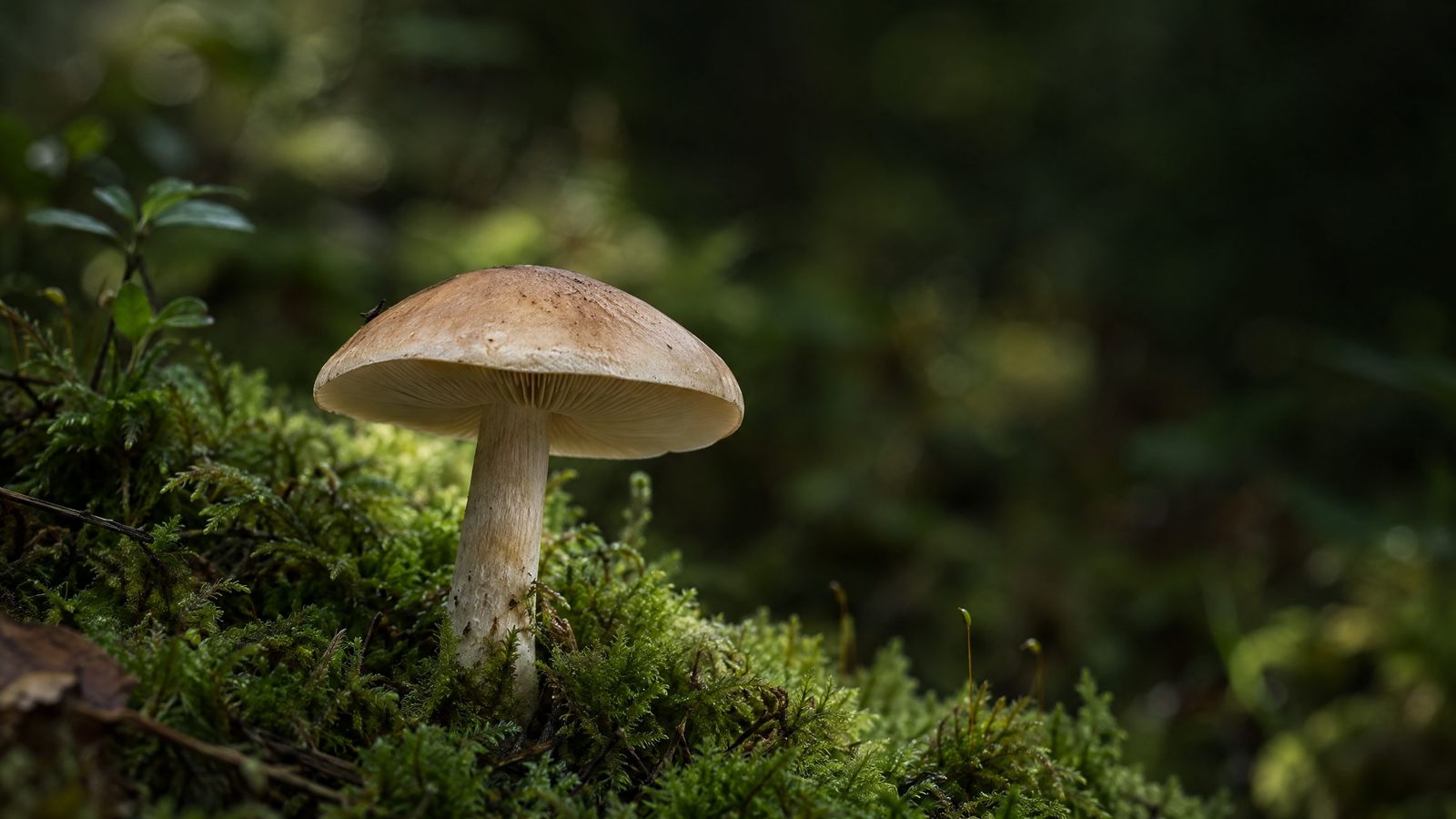
Mushrooms in a lawn or garden are usually harmless to the grass: they are the fruit of fungi breaking down buried wood, roots and thatch, and they fade when the weather dries. The danger is to people and pets, because some lawn mushrooms are poisonous. Remove them with gloves if children or dogs use the area.
Key takeaways
- Lawn mushrooms are the fruiting bodies of fungi feeding on dead roots, stumps, thatch or mulch.
- Most do not damage the grass; fairy rings and fungi at the base of a struggling tree are the exceptions.
- Nothing you spray will stop them for good; they disappear when the buried wood is used up.
- Some lawn and garden mushrooms are deadly, so treat every one as poisonous to children and pets.
- If anyone eats one, call a poison line now and keep a sample; do not wait for symptoms.
Why are mushrooms growing in my lawn?
Mushrooms in a lawn or garden usually appear after a run of wet, mild weather, often overnight. Are they harmless or dangerous? The honest answer has two halves that most pages blur together: for the grass they are almost always harmless, but for a toddler or a dog they can be dangerous. This guide separates the two, with a table of what you are likely to see and what to do, and ends with what to do if someone eats one.
A mushroom is only the fruiting body of a fungus. The fungus itself lives in the soil as a network of fine threads that feeds on dead organic matter. Clemson University's Home & Garden Information Center and Iowa State University Extension both point to the same food sources: old tree roots, stumps, buried wood, lawn thatch and mulch. When the soil stays moist and cool, the fungus fruits; when the weather turns dry or cold, the mushrooms vanish again.
Are lawn mushrooms bad for the grass?
Usually not. Clemson says most mushrooms do not damage the lawn, and Iowa State says most cause no harm to grass, soil or nearby plants, so no action is required. UC Master Gardeners in Alameda County go further: fungi help break down organic matter and many form partnerships with plant roots, so mushrooms often point to soil rich in organic matter.
There are two exceptions worth knowing:
- Fairy rings. Clemson describes circles or arcs of dark green or dying grass, from about 30 cm (1 ft) to many metres across. The fungus is not a grass parasite, but its threads can make the soil repel water, causing dry patches.
- Mushrooms at the base of a tree. UC Master Gardeners note that some fungi, such as honey fungus (Armillaria), attack living plants, and mushrooms around a tree's base can mean the tree is in trouble. Ask an arborist to look at it.
Common lawn and garden fungi at a glance
| What you see | Harm to lawn or plants | What to do |
|---|---|---|
| Scattered toadstools after rain | None | Leave them, or rake them up if children or pets use the lawn |
| A ring or arc of mushrooms, dark green or dead grass | Can cause dry patches | Aerate, water deeply; be patient |
| Puffballs, ink caps, stinkhorns, bird's nest fungi | None | Remove for looks or safety; they pass when the weather dries |
| Slime moulds (not true fungi) on grass or mulch | None | Rake or mow; Iowa State says they are managed the same way |
| Clusters at the base of a tree or stump | May signal a declining tree | Have the tree checked |
| Mushrooms under oaks and other trees | None to the lawn | Remove with gloves: deadly species grow here |
Are mushrooms in the yard dangerous to children and pets?
This is the half that matters. Lawns and gardens are not a "safe" habitat; Ohio State University Extension lists "mushrooms in meadows are safe" and "white mushrooms are safe" among the myths. Some examples from the sources:
- Death cap (Amanita phalloides) and destroying angels. UC Master Gardeners, writing about mushrooms in home yards, note that these grow near oak trees and cause most mushroom poisonings. See our guide to the death cap mushroom.
- Green-spored parasol (Chlorophyllum molybdites). Ohio State says it often grows in large fairy rings in lawns and is poisonous, and NAMA notes it causes severe stomach upset and can poison pets too.
- Galerina and Lepiota species. Small brown or white mushrooms that UC Master Gardeners list as poisonous garden species.
Young children are the group most at risk. UC Master Gardeners cite California figures of about 1,038 mushroom poisoning cases between November 2016 and January 2018, and 433 of them (41.7%) were children under six. Dogs are at risk too: the North American Mycological Association (NAMA) notes that dogs often investigate and eat mushrooms in yards, and UC Master Gardeners pass on the UC Davis advice to assume that any wild mushroom a dog finds is toxic.
How do you get rid of mushrooms in the lawn?
You cannot remove the fungus, only its mushrooms. Iowa State says nothing applied to the ground will prevent them; they keep coming back in damp spells, sometimes for several years, and stop for good once the buried wood or roots they feed on are used up. What you can do:
- Pick or rake them as they appear, especially before children play or dogs go out. UC Master Gardeners suggest wearing nitrile gloves, putting them in a paper bag in the green or garden waste bin, then washing your hands.
- Mow them off if they are scattered; Iowa State lists this as a simple option. Rake up the pieces afterwards.
- Reduce the food and the damp. Remove thick thatch, avoid overwatering, and dig out buried wood or old stumps where you can.
- For fairy rings, be patient. Clemson suggests aerating, and watering to soak the soil for several hours over several days. Replacing the affected soil is a last resort. Fungicides only suppress fairy rings; if you use one, follow the label exactly or hire a licensed professional.
Do not compost lawn mushrooms in a heap where pets can dig, and never leave a pile where a small child can reach it.
Can I use an app to check if a lawn mushroom is safe?
An app can help you learn a name, never decide whether something is safe to eat. NAMA says a single photograph is never enough for identification and there is no single visual rule that separates edible mushrooms from poisonous ones. Flori can suggest what a lawn mushroom might be from a photo, which is useful for reading up on it and knowing what to ask a local expert, but treat that as curiosity, not permission. Our guides on how to tell if a mushroom is poisonous and what mushroom apps can and cannot do explain why. If mushrooms are sprouting indoors instead, see mushrooms growing in a houseplant pot.
What to do if a child, adult or pet eats a lawn mushroom
Act now, even if they seem fine. The deadliest mushrooms cause no symptoms for many hours and can seem to improve before liver damage shows.
- Call a poison line immediately. In Türkiye call UZEM on 114. In the US call Poison Control on 1-800-222-1222. In the UK call NHS 111. Elsewhere, call your local poison centre or emergency number.
- Keep a sample. Pick a few of the same mushrooms, including the base, and keep them in a paper bag (not plastic), plus a photo of where they grew. UC Master Gardeners suggest refrigerating a pet sample.
- Do not wait for symptoms and do not try home remedies; follow the poison centre's or doctor's advice.
For a dog or cat, call your vet or ASPCA Animal Poison Control straight away; UC Master Gardeners note that pet symptoms can be delayed 12 hours or more.
Frequently asked questions
Do mushrooms in the lawn mean something is wrong?
Usually not. They mean there is buried organic matter, such as old roots, stumps or thatch, and the soil has been moist. Most cause no harm to grass, soil or plants.
Will fungicide get rid of lawn mushrooms?
Not for good. Iowa State says nothing applied to the ground will prevent them. Fungicides can only suppress fairy rings; if you use one, follow the label.
My dog ate a mushroom from the garden. What should I do?
Call your vet or ASPCA Animal Poison Control now, without waiting for symptoms, which can be delayed 12 hours or more. Keep a sample in a paper bag.
Are white mushrooms in the lawn safe?
No. Ohio State lists 'white mushrooms are safe' as a myth; some of the deadliest mushrooms are white. Treat every lawn mushroom as poisonous.
Sources
- Clemson Cooperative Extension HGIC: Mushrooms in Lawns
- Iowa State University Extension: How do I get rid of mushrooms in my yard or garden bed?
- UC Master Gardener Program of Alameda County: Why are mushrooms popping up in my yard?
- Ohio State University CFAES: Wild Mushrooms (PLPATH-GEN-11)
- North American Mycological Association: Wild Mushroom Safety
Written and fact-checked by the Flori team. Every guide cites horticultural sources such as the RHS, university extension services and the ASPCA, and is updated when the advice changes.
General plant care information. Plants vary; when a plant is valuable or a problem spreads quickly, consult a local nursery or plant specialist.