Powdery Mildew on Plants: Prevention and Treatment
How to spot powdery mildew on houseplants and garden plants, what causes it (not wet leaves), and how to treat it, starting with the least-toxic steps.
 By Flori editorial team · Updated
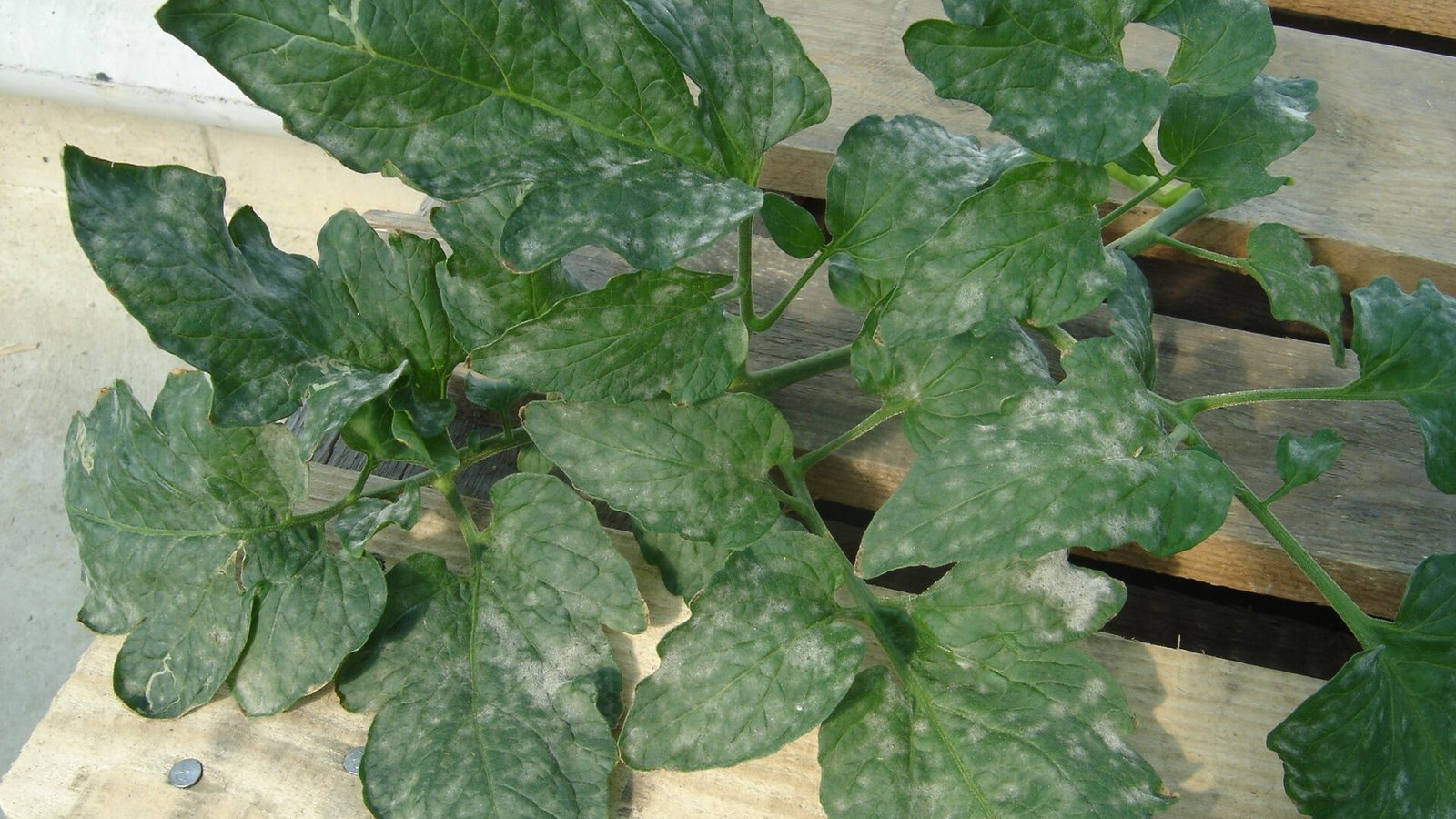 Photo: Dollymoon · CC BY-SA 3.0
Powdery mildew is a fungal disease that coats leaves with white powdery spots. It thrives in mild temperatures, humid but still air and low light, and does not need wet leaves. Isolate the plant, cut off infected leaves, improve air flow and light, water evenly, and use a labelled fungicide only if those steps fail.
Key takeaways
- White powder that smears and comes back is powdery mildew; dust wipes off for good.
- Each powdery mildew fungus attacks a narrow group of plants, so it rarely jumps between unrelated species.
- Unlike most leaf diseases it does not need wet leaves: still air, shade and mild temperatures favour it.
- Indoors, cultural steps (isolate, prune, more light and air flow, no misting) are usually as effective as sprays.
- If you spray, never combine oil and sulfur within two weeks, avoid temperatures above 32 °C (90 °F) and follow the label.
On this page7
What does powdery mildew look like?
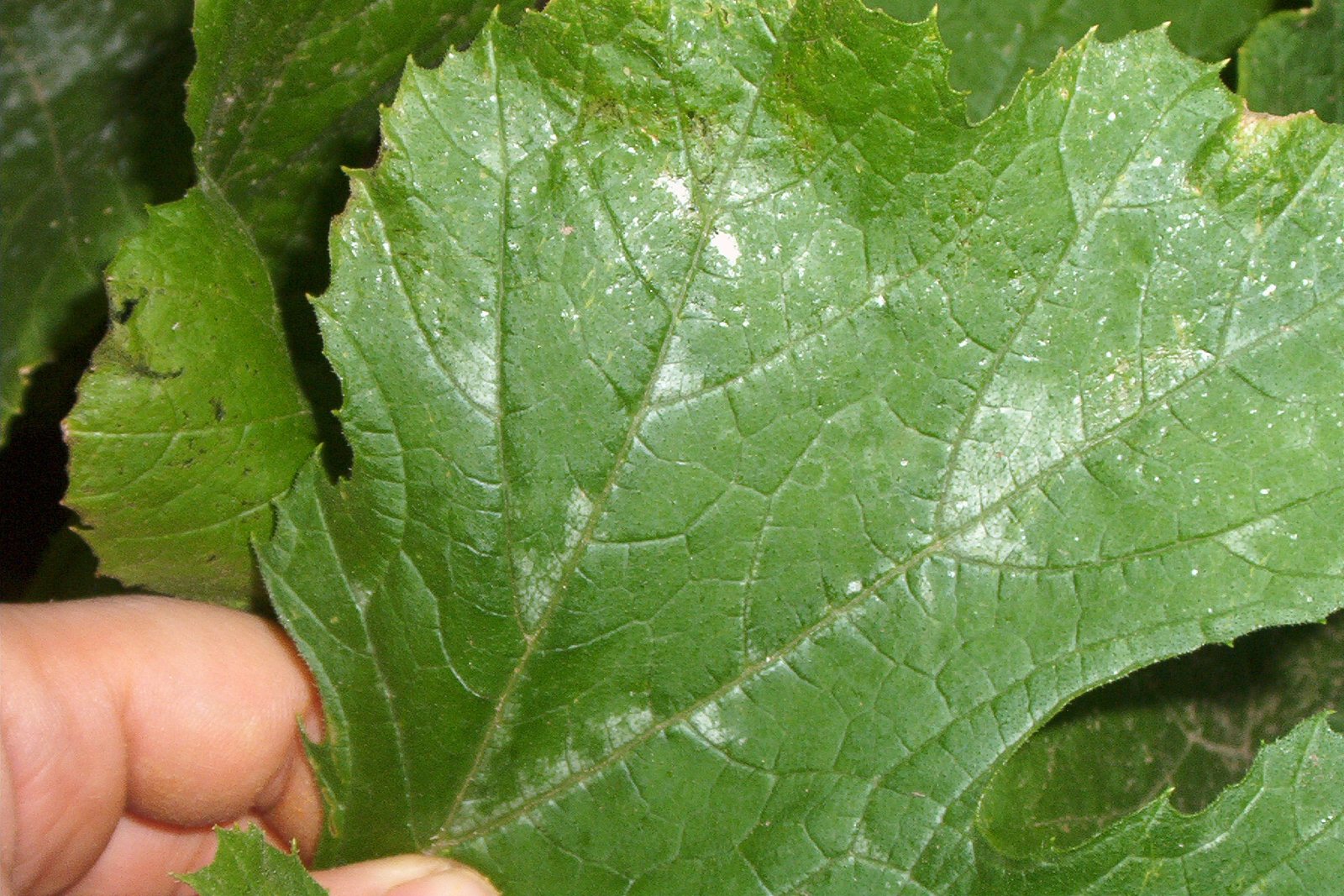
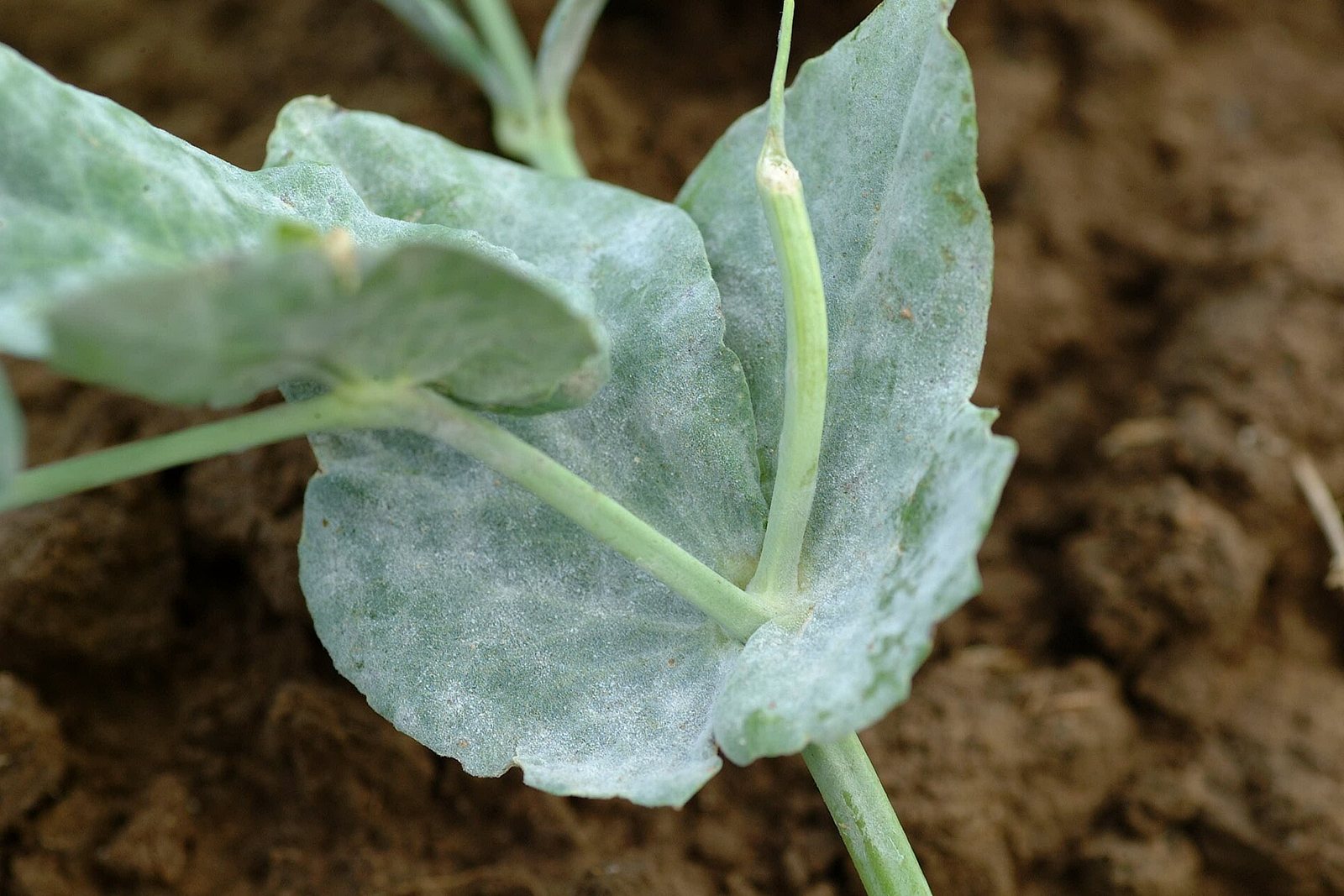
Powdery mildew on plants starts as small, roughly round spots of white or greyish powder on the leaves, usually on the upper surface. Within days the spots grow and merge until the leaf looks dusted with flour. Purdue's plant diagnostic lab notes that indoors it is often mistaken for dirt or dust. Stems, buds and flowers can be coated too, and badly infected leaves turn yellow or brown, dry out and drop. This guide covers both houseplants and garden plants, with a look-alike table and a treatment plan that starts with the least-toxic steps, because most of the advice online jumps straight to sprays.
A quick test: rub a spot gently with a damp tissue. Dust wipes off and leaves clean green tissue. Powdery mildew smears and comes back in the same place a few days later, often with a slightly yellow or distorted patch underneath. Clemson Extension adds that leaves may curl, twist or discolour before any white growth is visible.
Which plants get powdery mildew?
Almost any plant can, but each powdery mildew fungus has a narrow host range. The Royal Horticultural Society (RHS) explains that the mildew on peas is a different species from the one on apples, so a mildewed rose will not infect your courgettes. That is why the disease seems to target the same few plants every year.
- Houseplants: Purdue lists African violet, begonia, ivy, jade plant and kalanchoe as common indoor hosts, mostly in winter.
- Garden plants: roses, phlox, delphiniums, honeysuckle, oak, laurels, rhododendrons and azaleas (RHS).
- Fruit and vegetables: apples, grapes, gooseberries, blackcurrants, peas, cucumbers, squash, pumpkins and melons (RHS, UC IPM).
Is it powdery mildew or something else?
| What you see | Likely cause | How to tell |
|---|---|---|
| Flat white powder that smears and returns | Powdery mildew | Spots grow and merge; leaf beneath may yellow or curl |
| Grey film that wipes off cleanly | Household dust | Even layer on all upper leaves, no spots, no return |
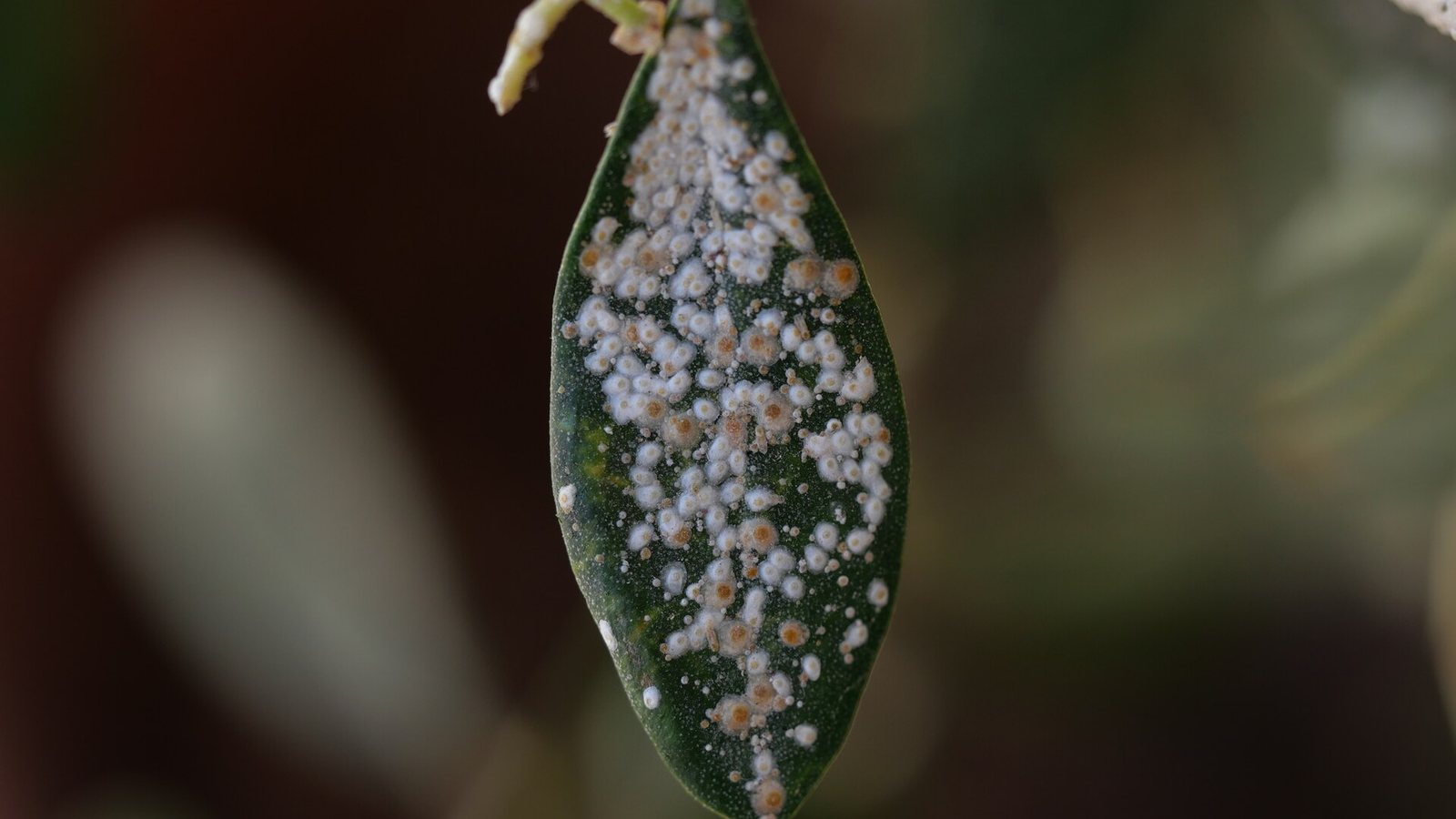
| White cottony tufts in leaf joints | Mealybugs | Tufts are raised; under a lens you see small insects, often with sticky honeydew |
| Fine webbing and pale speckles | Spider mites | Tiny moving dots on the undersides; see our weekly pest check |
| White crust on the soil or pot rim | Fertilizer or water salts | On the soil and pot, not on leaves |
If you are unsure, a clear close-up photo helps. Our guide on how to diagnose a plant disease from a photo explains what to capture.
What causes powdery mildew?
Unlike most leaf diseases, powdery mildew does not need wet leaves. UC IPM explains that its spores can germinate and infect without free water, and that long periods of water on the leaf surface actually kill or inhibit some types. What it likes is the opposite of what many people expect:
- Mild temperatures. UC IPM gives 16–27 °C (60–80 °F) as the favoured range; spores and growth suffer above about 32 °C (90 °F). Purdue notes indoor outbreaks around 21 °C (70 °F), which is a normal room.
- Humid air with still air. High relative humidity favours spore production (Clemson), and plants against walls and fences, where air barely moves, are often heavily infected (RHS).
- Shade and low light. Shade favours the disease and direct sunlight harms the spores (UC IPM). Indoors, low winter light plays the same role.
- Stressed or soft growth. The RHS says plants under regular but intermittent drought stress are more susceptible, and too much nitrogen fertilizer produces soft growth that infects easily.
Spores spread on air currents, so one infected plant can seed its neighbours. Outdoors the fungus survives winter on green shoots and fallen leaves and starts again in spring; indoors it can carry on all year.
How do you get rid of powdery mildew?
Start with the steps that change the conditions. Purdue says cultural controls are usually just as effective as chemical treatments indoors and are the preferred option.
- Isolate the plant at the first sign, away from other houseplants.
- Remove infected parts. Cut off coated leaves and shoots and put them in the bin, not the compost. Clean the blades afterwards.
- Improve air flow. Space plants out, prune crowded growth and keep the plant where air moves gently.
- Give more light. Move houseplants to a brighter spot; plant garden susceptibles in full sun.
- Stop misting and water the soil, not the leaves (Purdue). Outdoors, the RHS suggests watering in mid-morning in dry spells so leaves do not stay wet into the evening.
- Water evenly so the plant is never stressed by cycles of drought, and pause high-nitrogen feeding.
- Clear fallen leaves in autumn to reduce next spring's spores.
A plant that is coated all over may not be worth saving. Purdue suggests discarding badly infected plants and, if you want to keep the variety, starting a new one from a cutting of clean, healthy growth.
If you would like a second opinion before cutting, Dr. Flori in the Flori app can look at a photo, ask follow-up questions and tell you how urgent it is, and the Plant Hospital keeps the plant on a follow-up plan while it recovers.
Do you need a fungicide?
Often not, and advice differs. The RHS recommends against fungicides in gardens because of wider environmental effects, and does not recommend homemade mixtures because they are unregulated and usually untested. Extension services list several lower-toxicity options for when cultural steps are not enough, especially on very susceptible crops such as squash and cucumbers:
- Horticultural, neem or jojoba oil: UC IPM says oils work best on mild to moderate infections.
- Sulfur: preventive only; it works before symptoms appear.
- Potassium bicarbonate and Bacillus subtilis products are also listed (Clemson, UC IPM).
Safety rules from UC IPM and Clemson: never apply oil within two weeks of a sulfur spray (or the reverse), never spray oil or sulfur above 32 °C (90 °F) or on drought-stressed plants, and cover both leaf surfaces. Choose a product whose label lists your plant and indoor use if it is a houseplant, test it on a few leaves first, keep pets and children away until it dries, and always follow the label.
How do you prevent powdery mildew coming back?
Prevention is mostly placement. Give susceptible plants the brightest spot they tolerate, leave space between pots, and avoid tucking them against walls or behind curtains. Choose mildew-resistant varieties of roses, phlox, cucumbers and squash where you can; Clemson notes that resistance is not immunity, but it helps. Check the plants that had mildew last year every week from spring, and act on the first spot. If you prune roses in late winter, removing old infected shoots then also removes overwintering fungus; our rose pruning guide shows where to cut. For more symptoms and causes, browse our plant problems guides.
Frequently asked questions
Is powdery mildew harmful to people or pets?
The sources used here describe it as a plant disease and say nothing about risk to people or pets. The bigger concern is fungicides, so keep pets and children away from treated plants until the spray has dried and follow the label.
Can a plant recover from powdery mildew?
Yes, if you act early. Infected leaves will not turn clean again, but new growth stays healthy once you remove affected parts and fix light, air flow and watering. Badly coated plants are often better replaced with a cutting of healthy growth.
Does misting help or hurt?
It does not help. Purdue advises against misting plants with powdery mildew and recommends watering the soil rather than the leaves, while raising air flow.
Should I put mildewed leaves in the compost?
No. The fungus can survive on fallen leaves and release spores the next season, so bin or destroy infected material instead of composting it.
Stop spider mites, mealybugs, scale and fungus gnats early: quarantine new plants, check leaf undersides weekly and use the least-toxic fix first.
Sources
Written and fact-checked by the Flori team. Every guide cites horticultural sources such as the RHS, university extension services and the ASPCA, and is updated when the advice changes. How we write our guides
General plant care information. Plants vary; when a plant is valuable or a problem spreads quickly, consult a local nursery or plant specialist.