Spring Repotting and Feeding Checklist for Houseplants
A spring checklist for houseplants in both hemispheres: check, decide who needs repotting, repot, flush salts, then start feeding at the right time.
 By Flori editorial team · Updated
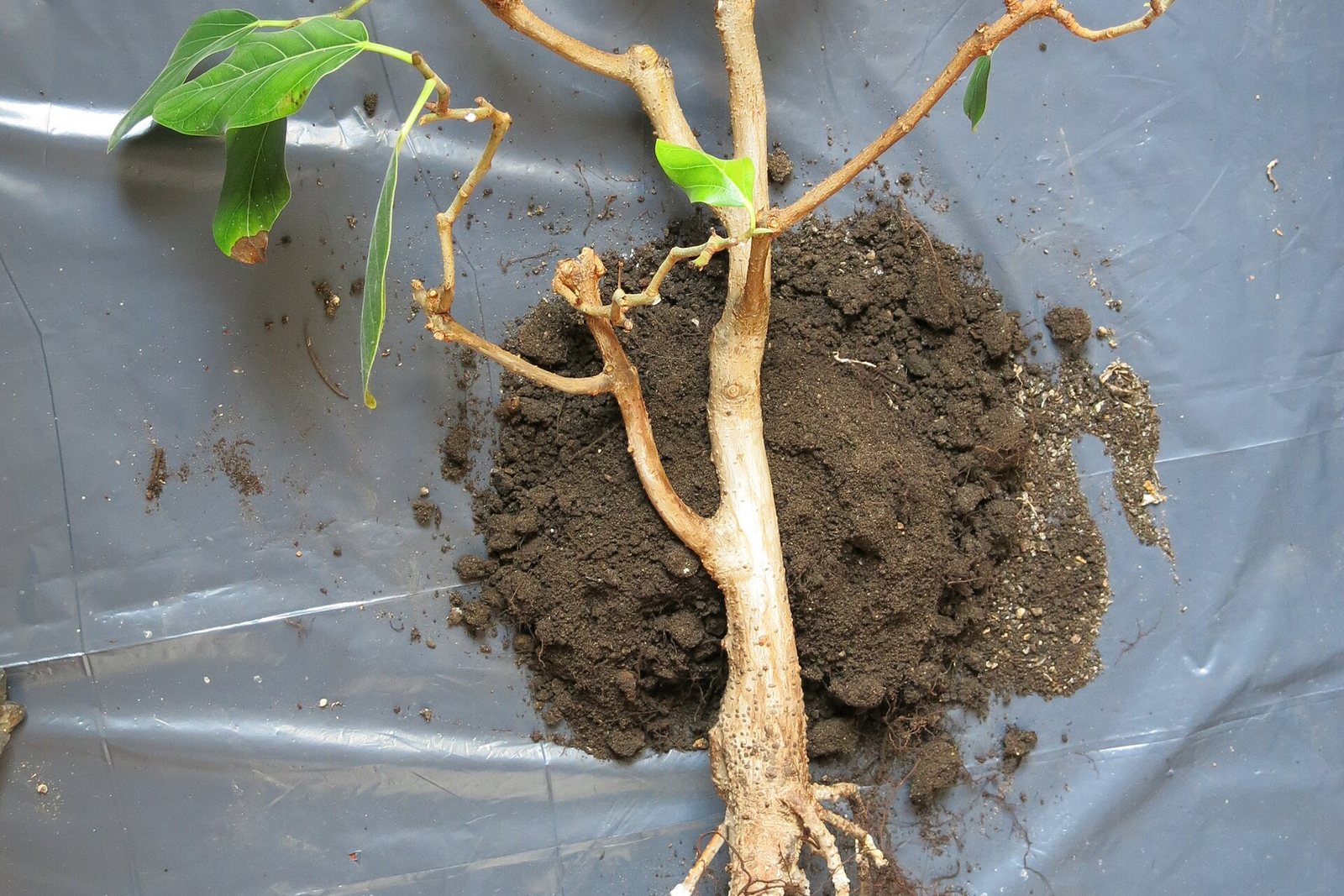
 Photo: Tangopaso · Public domain
In spring, check houseplants for pests and light problems, repot only those that are root-bound or in worn-out mix, and flush salts from the rest. Start feeding when new growth appears, but wait 2–4 weeks after repotting and never feed dry soil. Spring is March to May in the north, September to November in the south.
Key takeaways
- Do the jobs in order: check, decide, repot, flush, then feed.
- Repot only plants with circling roots, fast-drying or compacted mix; the RHS suggests every two to three years.
- Move up one pot size: 2.5–5 cm (1–2 in) wider for most plants.
- Wait 2–4 weeks after repotting before regular feeding, and always water dry soil before fertilizing.
- Southern Hemisphere spring is now (September to November); northern readers can use the list from late winter.
On this page8
- What should you do for houseplants in spring?
- The spring checklist at a glance
- Step 1: Check your plants after winter
- Step 2: Decide which plants really need repotting
- Step 3: Repot in early spring
- Step 4: Flush the pots you did not repot
- Step 5: Start feeding at the right time
- Step 6: Adjust watering as the days lengthen
What should you do for houseplants in spring?
Spring is when houseplants wake up, and it is the best time to repot and start feeding again. Iowa State Extension explains that houseplants grow more vigorously as temperatures warm and days lengthen, which is why late winter or early spring is the preferred time to repot. This spring repotting and feeding checklist puts the jobs in the right order, because doing them in the wrong order (feeding a plant you are about to repot, or repotting one that does not need it) is the most common spring mistake. It works in both hemispheres: in the Northern Hemisphere spring runs roughly March to May, in the Southern Hemisphere September to November, so readers in Australia, New Zealand, South Africa or South America can use it right now and northern readers can save it for the end of winter.
The spring checklist at a glance
| When | Job | Why |
|---|---|---|
| End of winter | Check light, clean leaves, look for pests | Winter weakens plants and hides problems |
| First signs of new growth | Decide which plants need repotting | Repot only root-bound or worn-out plants |
| Early spring | Repot, or refresh the mix | New roots spread quickly while the plant is growing |
| Same weeks | Flush salts in plants you are not repotting | Clears a winter's build-up before feeding |
| 2–4 weeks after repotting | Start feeding | Fresh mix already contains some fertilizer |
| Through spring | Increase watering as growth speeds up | Longer days mean faster drying |
Step 1: Check your plants after winter
Before you touch a pot, look at each plant in good daylight. Remove dead or yellow leaves, wipe dust off large leaves so they can use the stronger spring light, and check leaf undersides and new shoots for pests, which often build up unnoticed in warm, dry winter rooms. Our weekly pest prevention plan shows what to look for. Note which plants stretched or leaned during winter; they need a brighter spot now, not more food.
Step 2: Decide which plants really need repotting
Not every plant needs a new pot every spring. The RHS suggests repotting every two to three years, ideally in spring. Look for these signs:
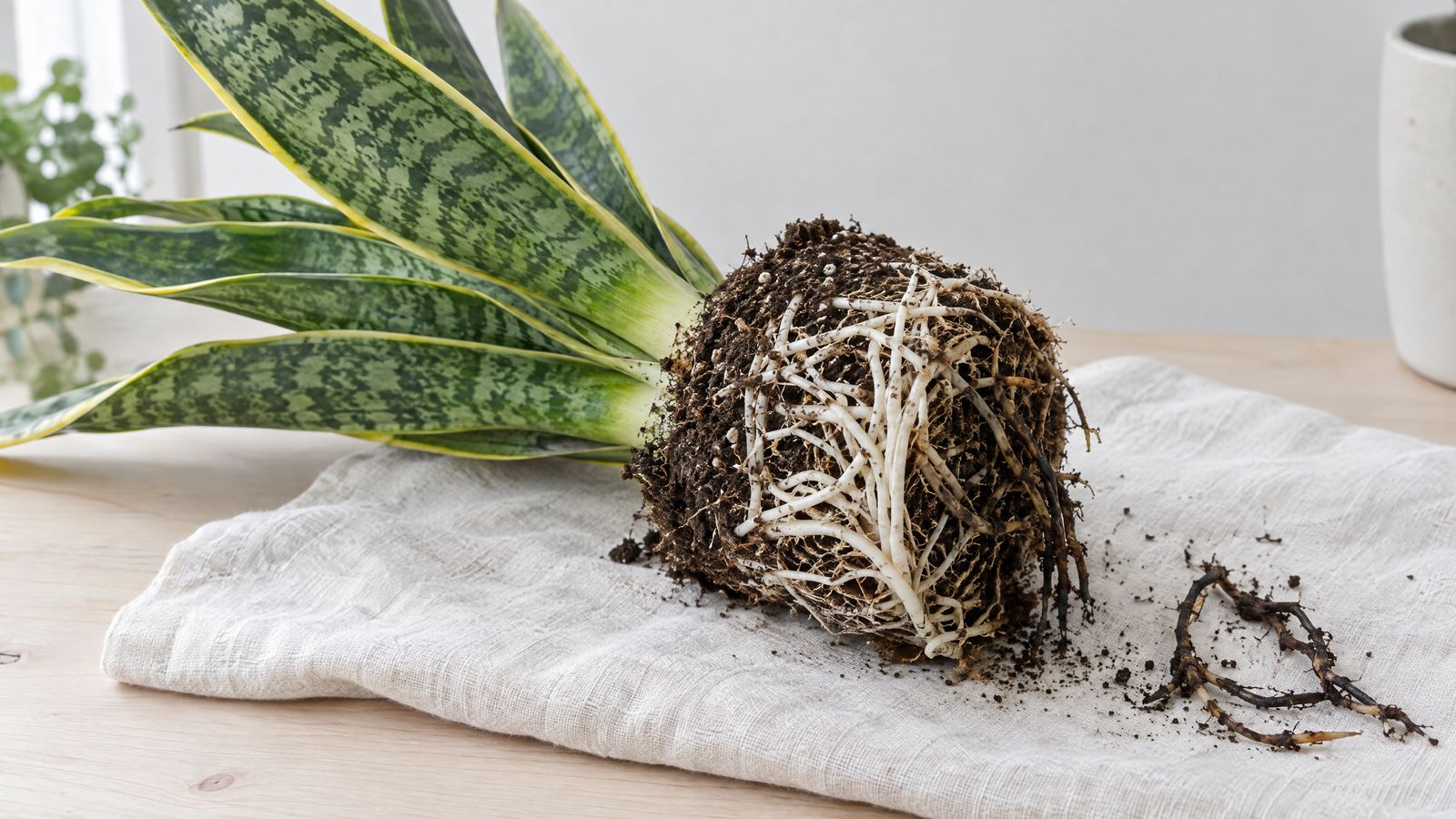
- Roots circling the pot as a white mass when you slide the root ball out, or roots growing from the drainage holes (Colorado State Extension).
- The plant is top-heavy, growth has slowed, or the mix dries out very quickly (Iowa State).
- The mix has broken down and compacted, or water sits on top instead of soaking in.
- Algae on the compost surface, which the RHS says suggests the compost has turned sour.
If roots are still loose with plenty of mix around them, put the plant back and skip to feeding. Large plants that are hard to move can stay in their pot; scrape away the top few centimetres of old mix and replace it with fresh.
Step 3: Repot in early spring
Have everything ready before you start: fresh potting mix suited to the plant (see our soil mix recipes), a pot with drainage holes, and clean tools. Move up only one size, or two at most (Iowa State); Colorado State suggests a pot 2.5–5 cm (1–2 in) wider, and the RHS allows 5–10 cm (2–4 in) for larger plants. A reused pot should be scrubbed clean first; Colorado State suggests a 20% bleach solution, then a thorough rinse.
Check the roots as you go: healthy roots are white and firm, black mushy ones should be cut off. If you find a lot of rot, follow our root rot rescue plan instead. Set the plant at its original depth, leave the soil surface 6–12 mm (1/4–1/2 in) below the rim so water can soak in (Iowa State), water thoroughly and keep the mix moist but not wet. For the full technique, see repotting without stress.
Step 4: Flush the pots you did not repot
A winter of watering and leftover feed can leave salts in the mix, seen as a white crust on the soil or pot rim. Nebraska Extension suggests leaching pots every 4–6 months: take a sink or bath, slowly pour through about twice the pot's volume of water, let it drain fully, and wait until the soil dries to its usual level before watering again. Spring is a convenient moment to do it, just before feeding starts.
Step 5: Start feeding at the right time
Feeding begins when growth begins. Iowa State says most houseplants need fertilizer once or twice a month from early spring, while the RHS gives liquid feed once or twice a month through the growing season. Two timing rules keep you out of trouble:
- After repotting, wait. Iowa State recommends 2–4 weeks before regular feeding, since most potting mixes already contain fertilizer; many plants need little or none for the first few months.
- Never feed dry soil. The RHS warns this can burn the roots, so water first.
Plants you did not repot can start as soon as you see new leaves. Use a balanced houseplant fertilizer at the label rate or weaker; the RHS suggests a higher-nitrogen feed for foliage plants and a higher phosphorus and potassium feed for flowering plants. Flori's care reminders can track repotting and fertilizing dates per plant, so a plant repotted this week gets its first feed reminder at the right time.
Step 6: Adjust watering as the days lengthen
Growing plants in warmer, brighter rooms use water faster than in winter, and fresh mix in a bigger pot dries differently from the old one. Check the soil with a finger rather than keeping your winter schedule. Our seasonal plant care calendar shows how the routine changes again in summer.
Frequently asked questions
Can I repot and fertilize on the same day?
It is better not to. Iowa State Extension recommends waiting 2–4 weeks after repotting before regular feeding, because most fresh potting mixes already contain some fertilizer.
Do all houseplants need repotting every spring?
No. The RHS suggests every two to three years. Repot only plants with circling roots, roots out of the drainage holes, or mix that dries out very fast or has compacted.
What if I miss spring?
Repotting can be done at other times of year, Iowa State notes, but late winter to early spring works best because the plant is about to grow. Early summer is still fine; avoid the autumn and winter rest period where you can.
Is it spring for houseplants if I live in the Southern Hemisphere?
Yes. What matters is lengthening days and rising temperatures, so in the Southern Hemisphere the same checklist applies from about September to November.
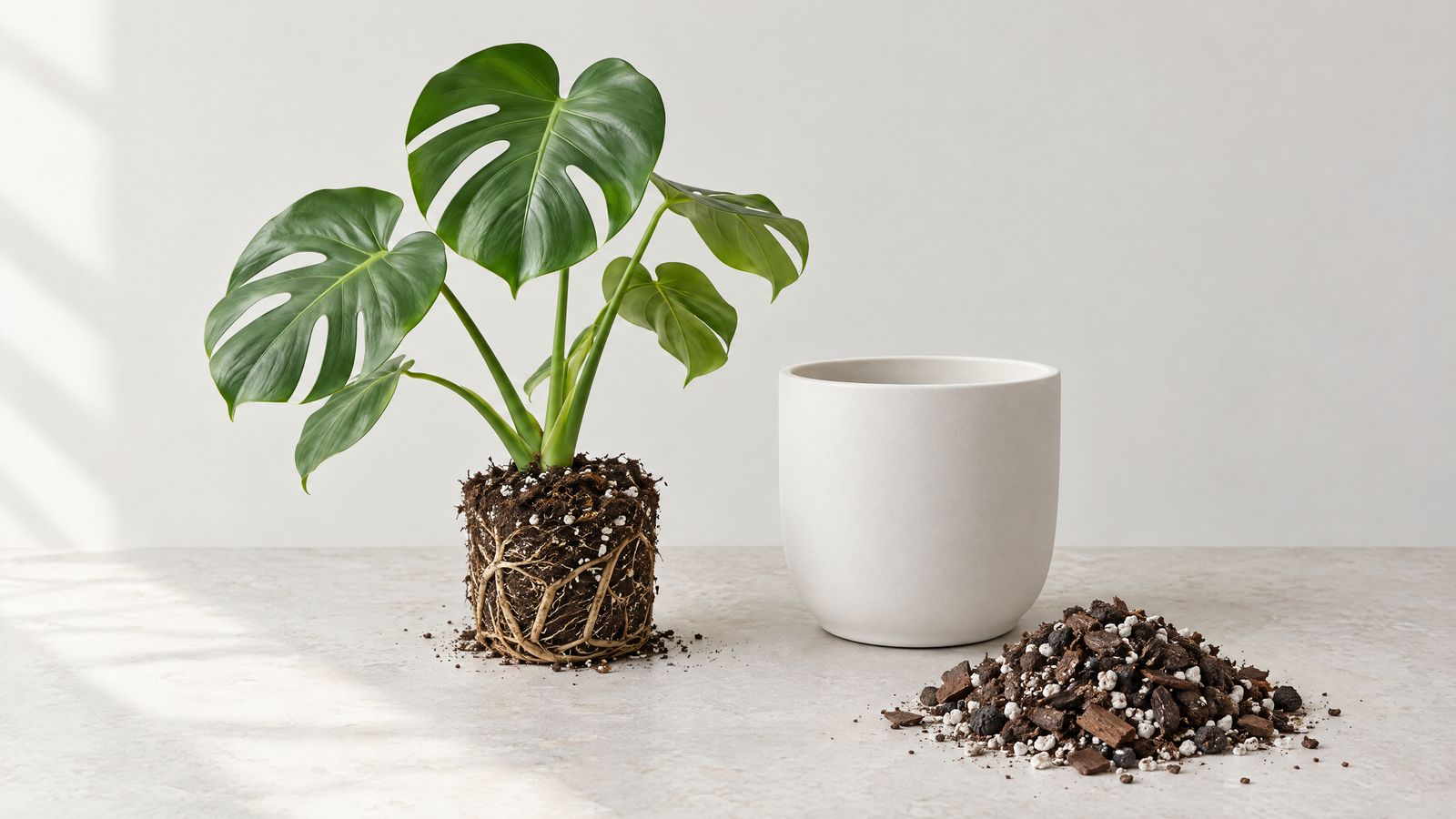
When to repot a houseplant, how much bigger the new pot should be, which potting mix to use and how to water afterwards so the plant settles in fast.
Sources
Written and fact-checked by the Flori team. Every guide cites horticultural sources such as the RHS, university extension services and the ASPCA, and is updated when the advice changes. How we write our guides
General plant care information. Plants vary; when a plant is valuable or a problem spreads quickly, consult a local nursery or plant specialist.