How to Propagate Pothos in Water
How to propagate pothos in water: where to cut, why the node matters, how long rooting takes, fixes for rotting cuttings and moving them to soil.
 By Flori editorial team · Updated
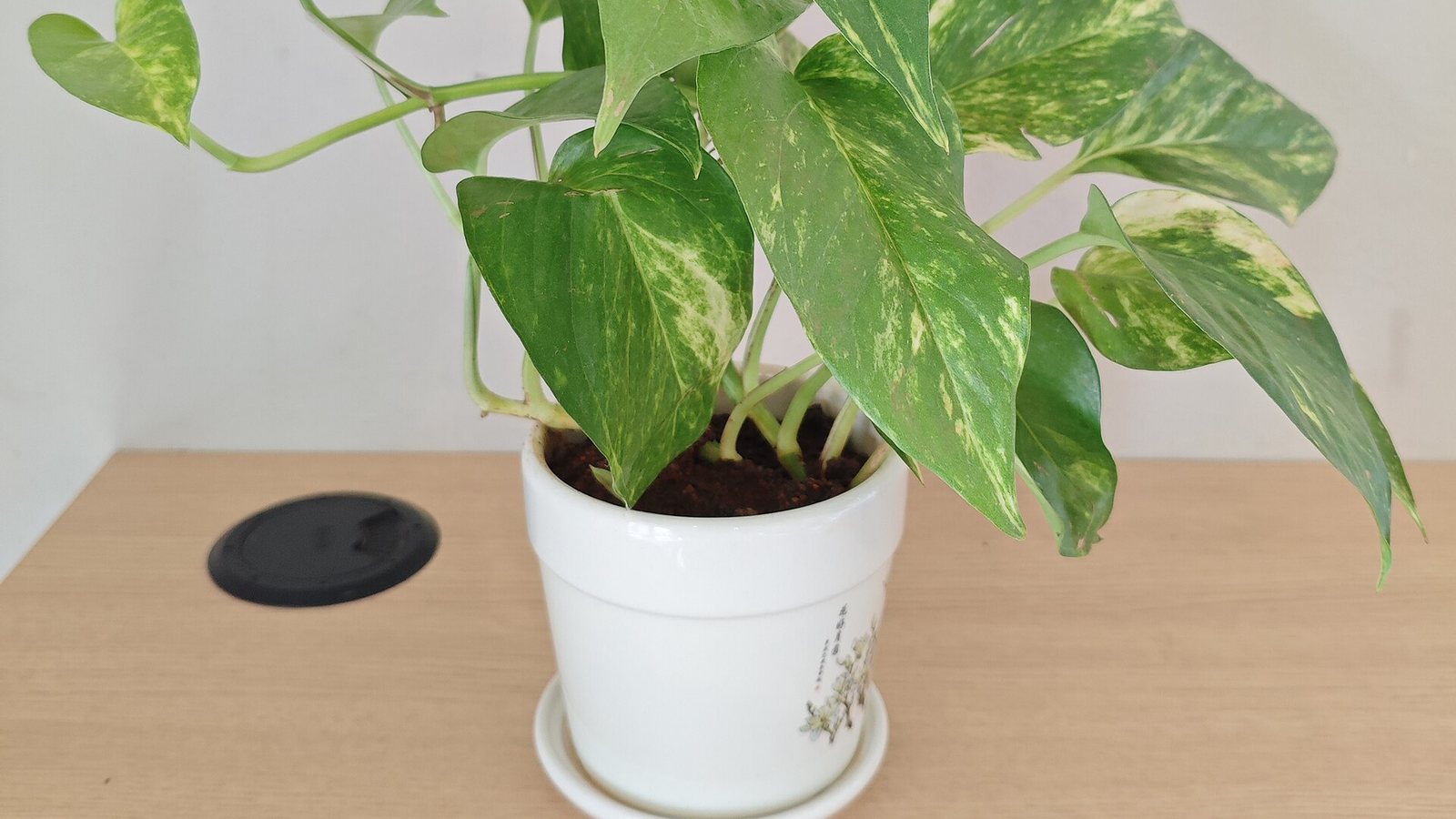
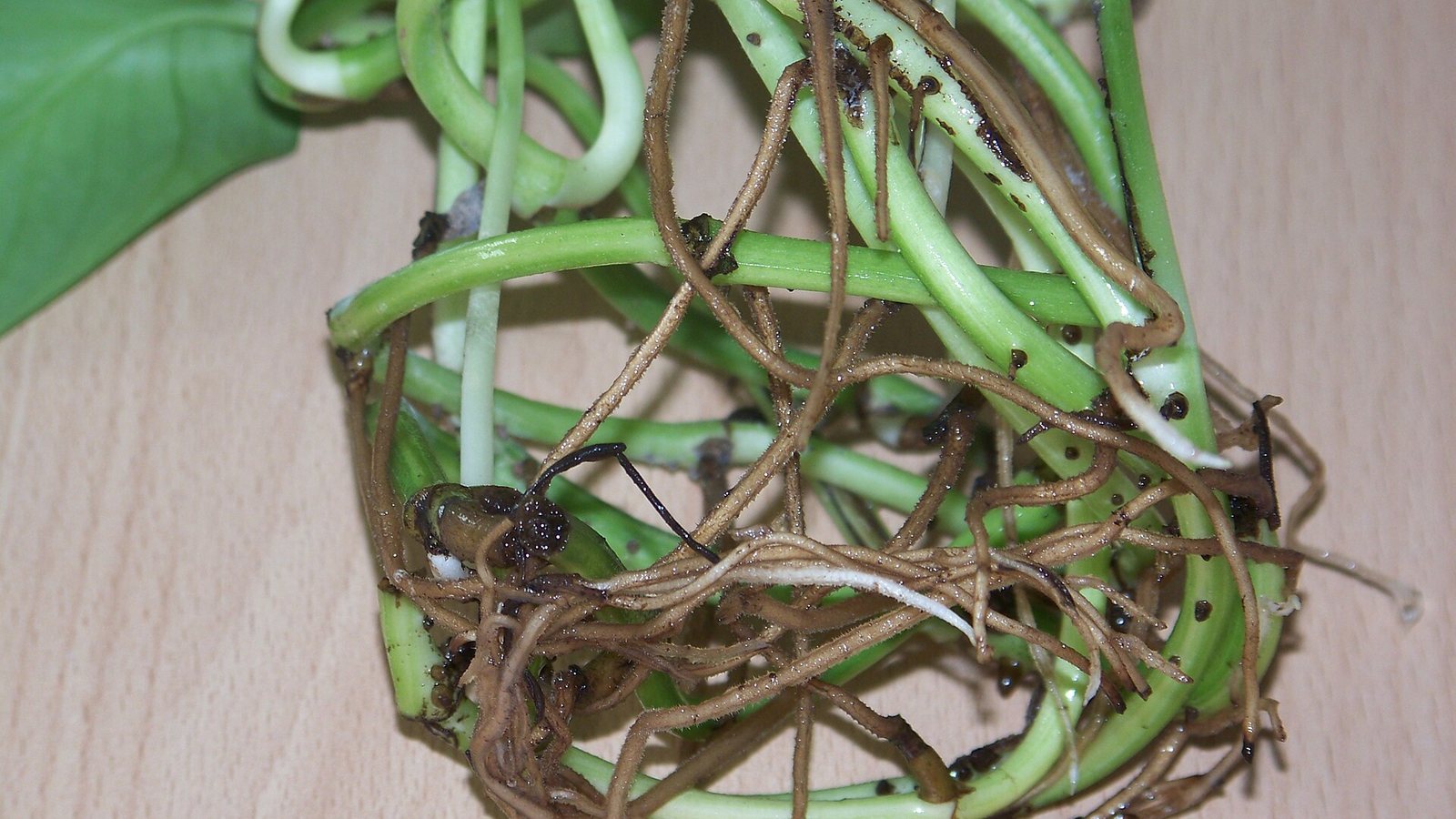 Photo: Asabengurtza · CC BY-SA 3.0
Cut an 8 to 13 cm (3 to 5 in) piece of vine just below a node, remove the lowest leaves and stand it in a jar so at least one node is under water. Keep it in bright, indirect light, change the water every 3 to 5 days and expect roots in about two weeks.
Key takeaways
- Every cutting needs at least one node, where the leaf meets the stem; a leaf without a node will not root.
- Keep leaves out of the water and change it every 3 to 5 days to prevent rot.
- Roots usually appear in one to two weeks in a warm, bright spot, slower in cool rooms.
- Pothos is toxic to cats and dogs (ASPCA), so keep jars of cuttings out of reach.
On this page8
- Can you propagate pothos in water?
- What is a node and why does it matter?
- How to propagate pothos in water, step by step
- How long does it take for pothos to root in water?
- Why is my pothos cutting not rooting or rotting?
- How do you move rooted cuttings into soil?
- Can pothos live in water permanently?
- Is pothos safe for cats and dogs?
Can you propagate pothos in water?
Yes. Pothos (Epipremnum aureum) is one of the easiest houseplants to propagate in water: NC State Extension notes that the vines root easily in water, and its own photos show cuttings rooting after about two weeks. All you need is a healthy vine, clean scissors and a glass jar. This guide covers the one thing that decides success (the node), the steps, a timeline, a troubleshooting table for cuttings that rot or refuse to root, and how to move rooted cuttings into soil without losing them.
What is a node and why does it matter?
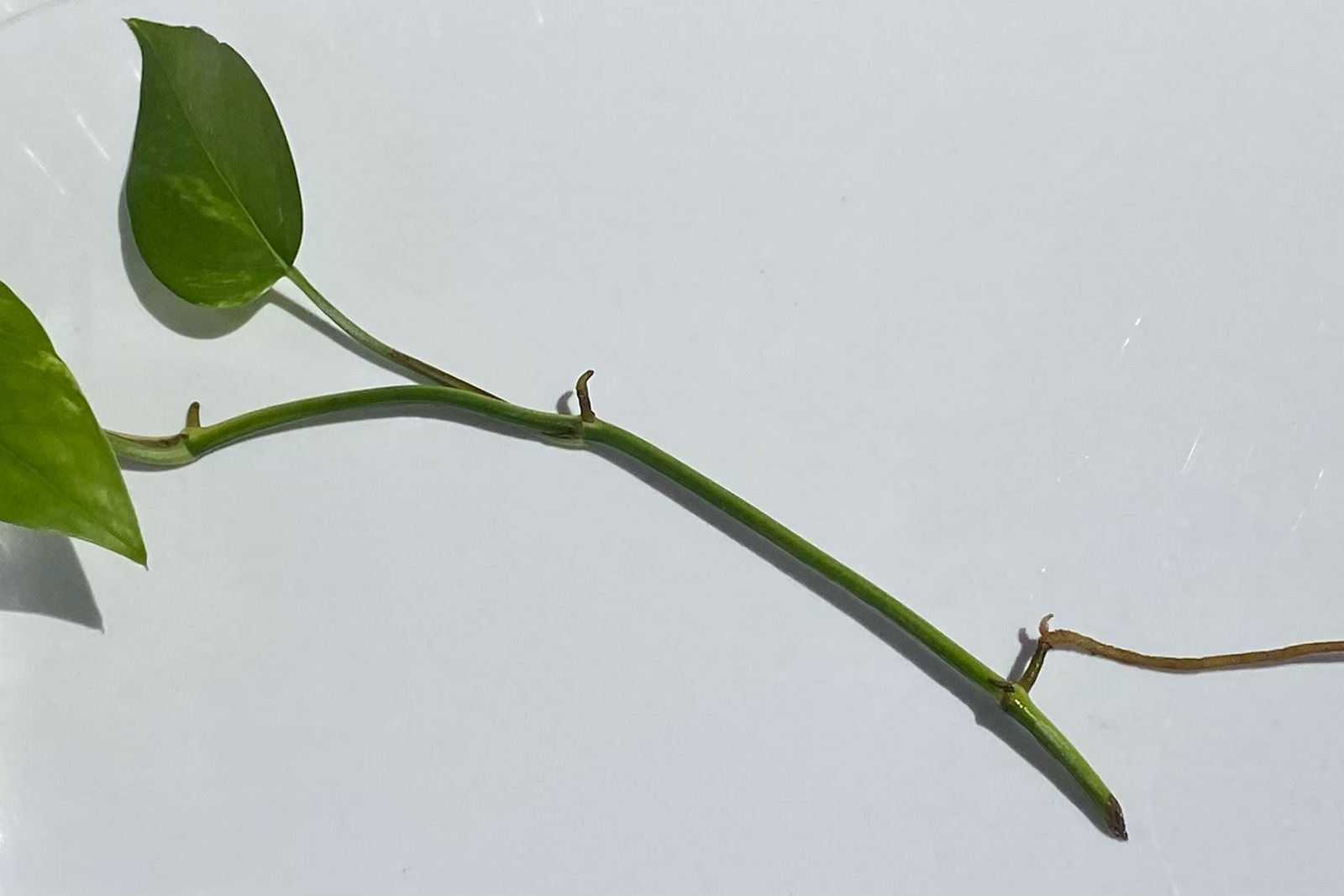
A node is the slightly thickened point on the stem where a leaf joins it. On pothos you will often see a small brown nub there: an aerial root. Penn State Extension notes that pothos has aerial roots at the nodes, and NC State describes the plant climbing by these brown aerial roots. That is where new roots come from. Clemson Extension says a cutting should have at least one node to root properly. A leaf with a piece of stalk but no node may stay green in water for weeks, yet it will not grow roots or a new vine.
How to propagate pothos in water, step by step
- Pick the right time. Penn State says stem cuttings succeed best in the growing season, from spring through summer. Cuttings taken in autumn or winter can still root in a warm, bright room, just more slowly.
- Choose a healthy vine. Look for firm stems and green leaves with no signs of pests or rot. A long, leggy vine is ideal, because trimming it also tidies the mother plant.
- Cut below a node. The University of Illinois suggests tip cuttings of about 8 to 13 cm (3 to 5 in) with four to six leaves, cut directly below a leaf node with sharp, clean snips. You can also cut a long vine into several pieces, as long as each one has at least one node and one leaf.
- Remove the lowest leaves. Illinois advises removing the bottom two to four leaves. Any leaf left below the waterline tends to rot and cloud the water, so strip the part of the stem that will sit in the jar.
- Place it in water. Use a clear glass or jar so you can watch the roots. Submerge at least one node and keep the remaining leaves above the rim. Room-temperature tap water is fine.
- Give it light and warmth. Pothos likes bright, indirect light, according to NC State, and Penn State warns that direct sun yellows the leaves. Clemson gives a comfortable range of 16 to 21 °C (60 to 70 °F) at night and 21 to 29 °C (70 to 85 °F) in the day. Avoid cold windowsills and heating vents.
- Change the water. Illinois recommends fresh water every 3 to 5 days. Rinse the jar if it turns slimy.
How long does it take for pothos to root in water?
In warm, bright conditions the first white root tips usually appear within one to two weeks, and NC State shows cuttings with roots after two weeks. Cool rooms, low light and cuttings with a single node take longer. Roots then lengthen and start to branch over the following weeks. Patience matters more than tricks: as long as the stem stays firm and the leaves stay green, the cutting is working.
| Stage | What you see | What to do |
|---|---|---|
| First days | No visible change | Keep the node under water, change water every 3 to 5 days |
| About 1 to 2 weeks | White root tips at the node | Leave the cutting alone; do not pull it out to check |
| Following weeks | Roots lengthen and branch | Keep the water fresh; get pots and mix ready |
| Several branching roots | A small root system | Pot up into a well-drained houseplant mix |
Why is my pothos cutting not rooting or rotting?
| Problem | Likely cause | Fix |
|---|---|---|
| No roots after several weeks | No node under water, or a cold, dark spot | Check that a node is submerged; move to a warmer, brighter place |
| Cloudy, smelly water | Leaves or stem rotting under water; water not changed | Remove submerged leaves, rinse the jar, change the water more often |
| Stem soft and brown at the base | Rot | Cut above the soft part, just below a healthy node, and start again in fresh water |
| Leaves turning yellow | Leaf touching the water, too much direct sun, or an old leaf being shed | Keep leaves out of the water and move out of direct sun |
| Pale leaves, little variegation | Too little light | NC State notes low light can reduce variegation; give brighter, indirect light |
How do you move rooted cuttings into soil?
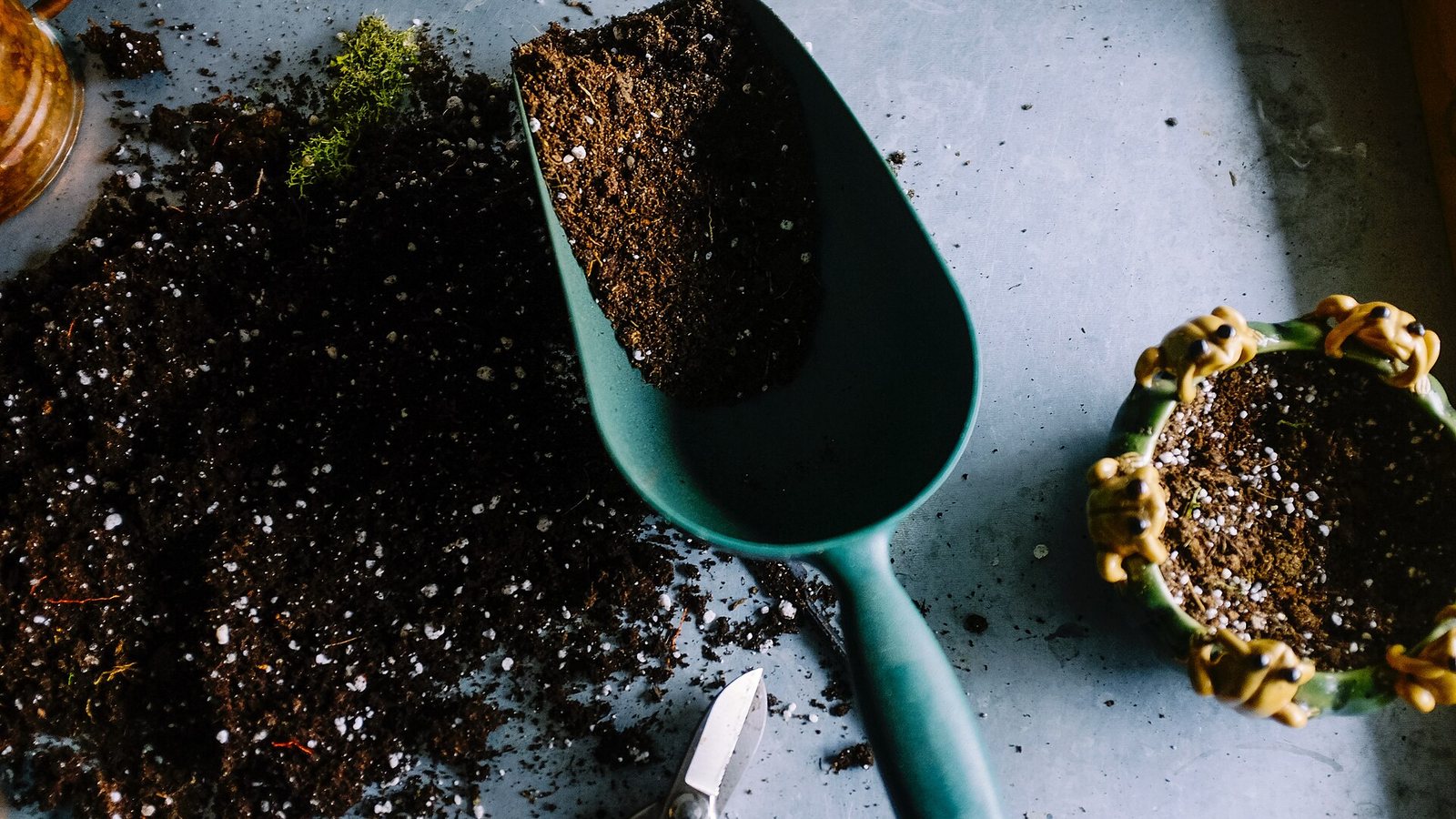
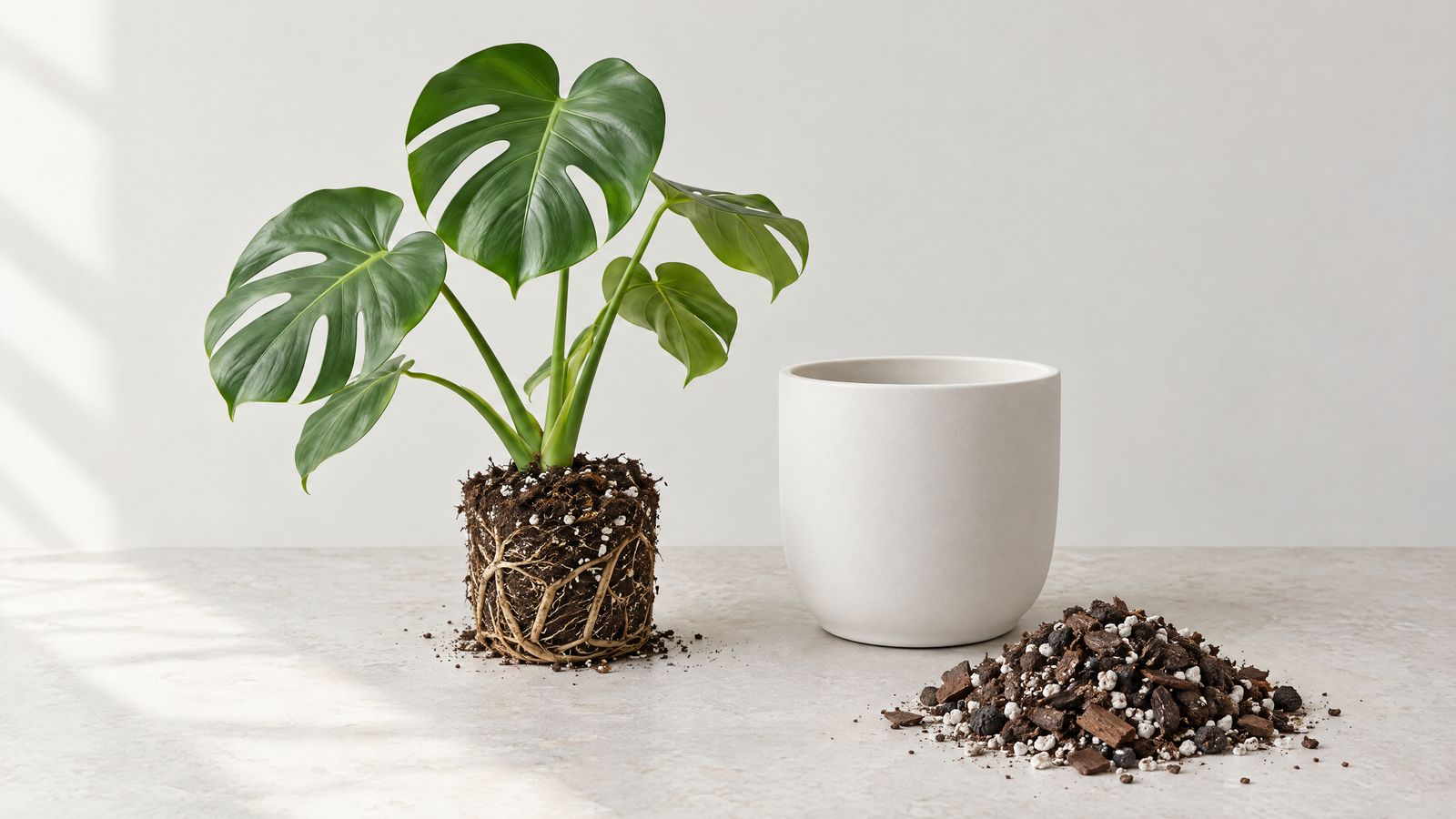
Once a cutting has several healthy, branching roots, it is ready for a pot. Use a small pot with a drainage hole and a free-draining houseplant mix (our guide to the best soil mix for houseplants has recipes). For a fuller plant, put three to five rooted cuttings in the same pot.
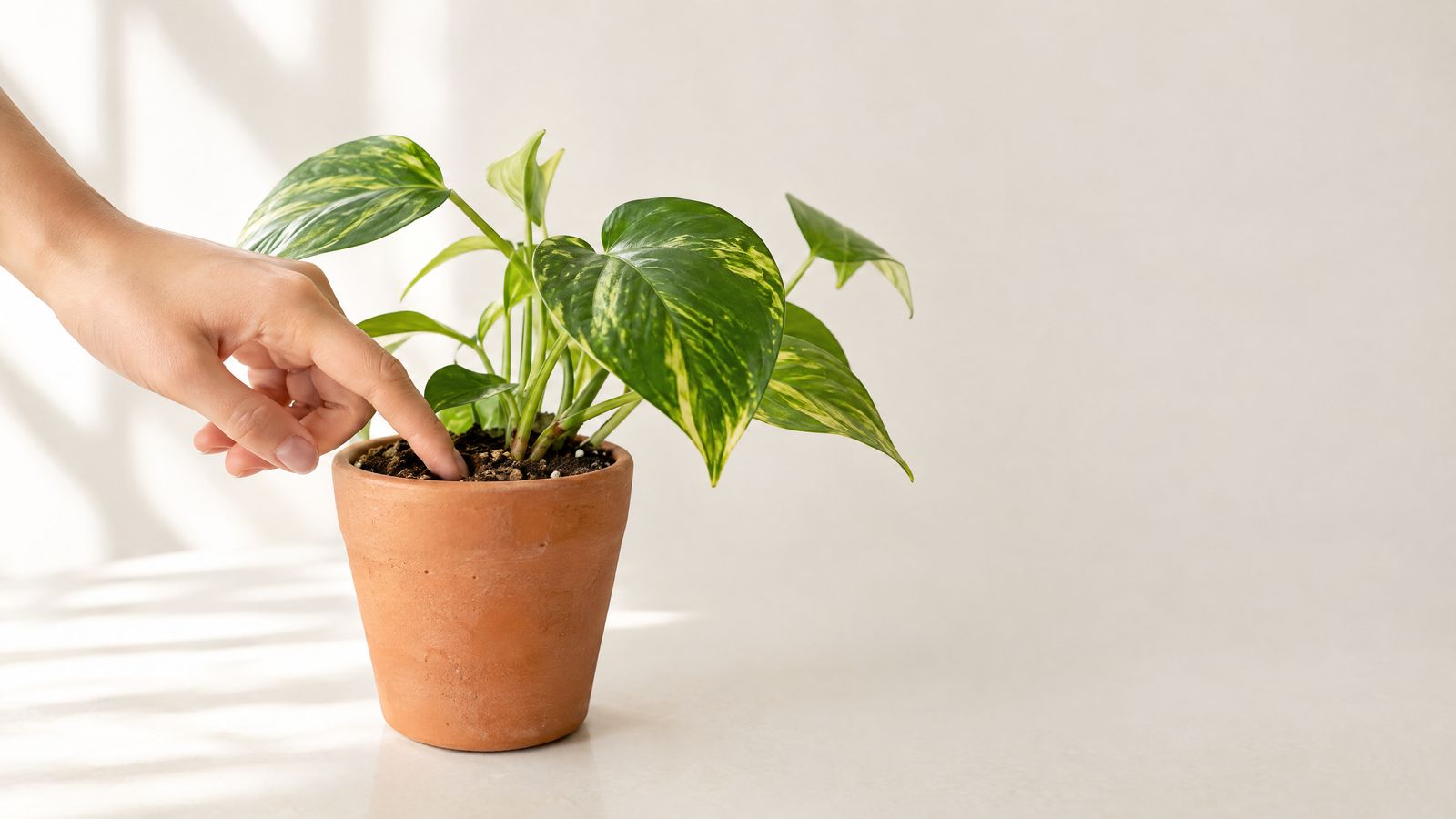
Roots that grew in water are used to constant moisture, so handle them gently and keep the mix lightly moist, not soggy, for the first couple of weeks while they adjust. After that, water like any pothos: Penn State says to water when the soil is dry and warns that too much water leads to root rot. If you are unsure how to judge that, read how to water houseplants. Penn State also suggests turning the pot weekly for even growth and potting pothos up into a slightly larger container each spring; our repotting guide explains how.
Can pothos live in water permanently?
A rooted cutting can stay in water for a long time and makes an easy windowsill display, as long as you keep changing the water and keep the leaves out of it. Plain water contains very few nutrients, though, so growth is usually slower than in a pot of mix. If you want a large, bushy plant, move it to soil while the roots are still young, because the longer roots grow in water, the harder the switch tends to be.
Is pothos safe for cats and dogs?
No. The ASPCA lists golden pothos as toxic to dogs and cats. It contains insoluble calcium oxalates, which can cause pain and burning in the mouth, heavy drooling, vomiting and difficulty swallowing. Penn State notes that all parts of the plant are poisonous, though not lethal, to people and pets. Keep jars of cuttings on a shelf pets cannot reach, and see our list of houseplants toxic to cats for other plants to watch. If a cutting fails and you are not sure why, Dr. Flori in the Flori app can look at a photo and suggest what went wrong.
Frequently asked questions
Can I propagate pothos from just a leaf?
No. A leaf without a piece of stem and a node may stay green in water, but it will not grow roots or a new vine. Always include at least one node.
How often should I change the water?
Every 3 to 5 days, as the University of Illinois recommends, and sooner if the water turns cloudy or smells.
When should I move my pothos cutting to soil?
When it has several healthy, branching roots. Pot it in a small pot with drainage and keep the mix lightly moist for the first couple of weeks.
What is the best time of year to take pothos cuttings?
Spring and summer, the growing season, when Penn State says stem cuttings are most successful. Cuttings still root in winter in a warm, bright room, only more slowly.
Sources
- NC State Extension Gardener Plant Toolbox: Epipremnum aureum
- Clemson Cooperative Extension HGIC: How to grow pothos indoors
- Penn State Extension: Pothos as a houseplant
- University of Illinois Extension: Grow your houseplant collection through propagation
- ASPCA: Golden Pothos (toxic and non-toxic plants)
Written and fact-checked by the Flori team. Every guide cites horticultural sources such as the RHS, university extension services and the ASPCA, and is updated when the advice changes. How we write our guides
General plant care information. Plants vary; when a plant is valuable or a problem spreads quickly, consult a local nursery or plant specialist.