Why Are My Plant's Leaves Turning Brown?
Whole leaves or patches turning brown? Match the pattern (crispy, soft, scorched, spotted) to its cause: water, sun, cold or disease, and fix it.
 By Flori editorial team · Updated
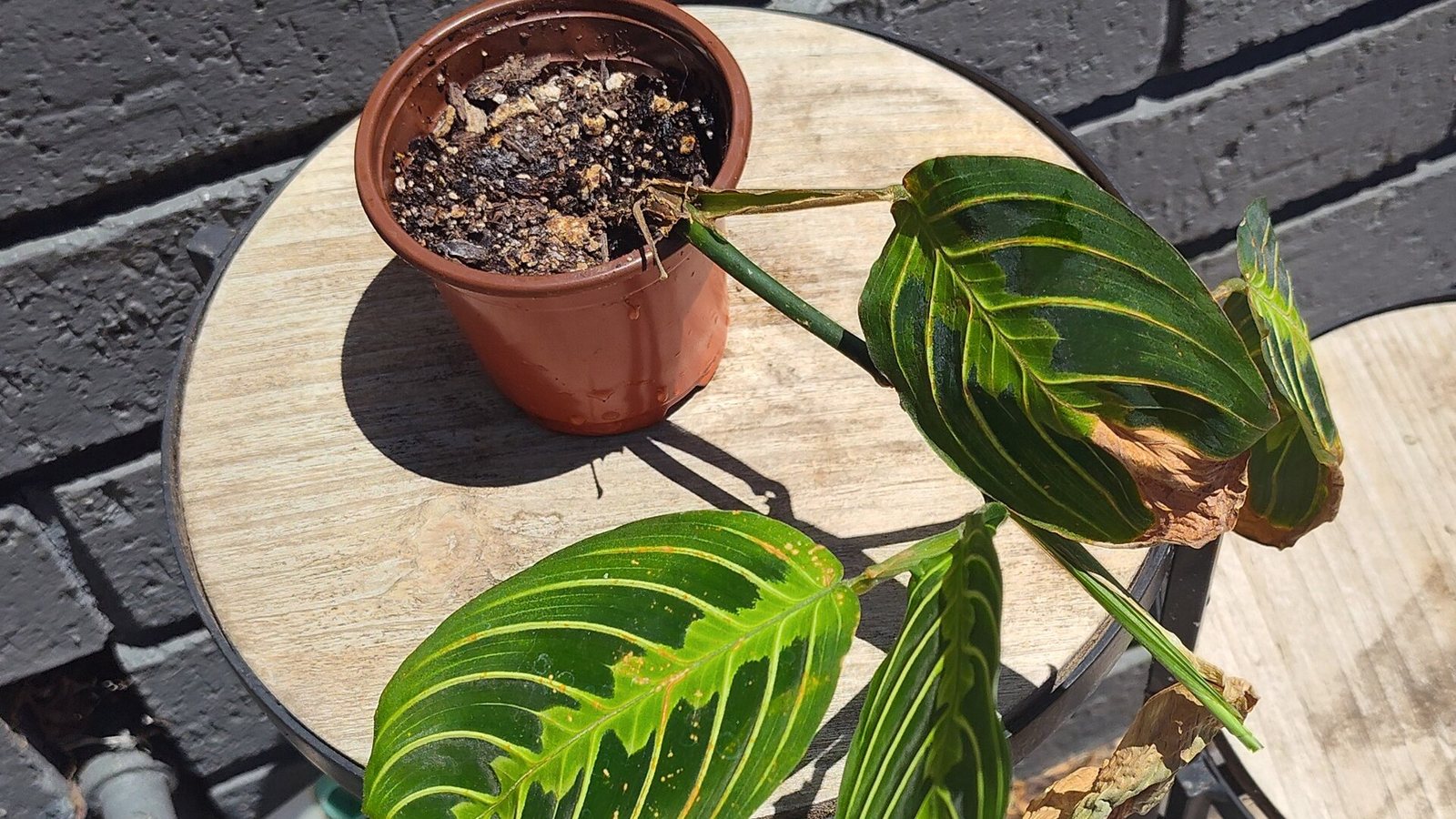 Photo: Lexilovescaffeine · CC0
Whole brown leaves usually mean underwatering if they are dry and crispy, or overwatering and root rot if the compost is wet and patches are soft. Scorched patches on the sunny side point to sun scorch, dark leaves after a chill to cold damage, and spreading spots with yellow margins to leaf spot disease. Feel the compost first.
Key takeaways
- Dry, crispy brown leaves with dry compost point to underwatering; soft brown patches with wet compost point to overwatering.
- Brown, scorched patches on the window side, worst on pale variegated parts, are sun scorch.
- Leaves that darken and droop after a cold night or draught have cold damage.
- Small brown spots with yellow margins that grow and merge suggest a leaf spot disease.
- Cut off fully brown leaves; they will not recover, but keep mostly green ones until new growth appears.
On this page7
Why are my plant's leaves turning brown?
When whole leaves or large patches of a leaf turn brown, the plant is telling you that part of it has died, and the pattern of that browning is the best clue to why. Crispy brown leaves on a dry plant, soft brown patches on a wet one, scorched patches on the sunny side and dark leaves after a cold night all have different causes and opposite fixes. This guide sorts brown leaves by what they look like, with a pattern, cause and fix table built from Royal Horticultural Society (RHS) and university extension advice. It is about whole leaves and patches. If only the tips and edges are brown, our guide to brown leaf tips covers that narrower problem.
Brown leaves: pattern, likely cause and first fix
| What the browning looks like | Likely cause | First fix |
|---|---|---|
| Whole leaves dry, crisp and brown; plant wilted; compost dry well below the surface; lower leaves go first | Underwatering (RHS, Clemson) | Water thoroughly, then check the compost before every watering |
| Brown patches in the middle of leaves; old and new leaves yellowing together; compost wet; dark, mushy roots | Overwatering and root rot (RHS, Clemson) | Tip out standing water, let the compost dry, check and trim the roots |
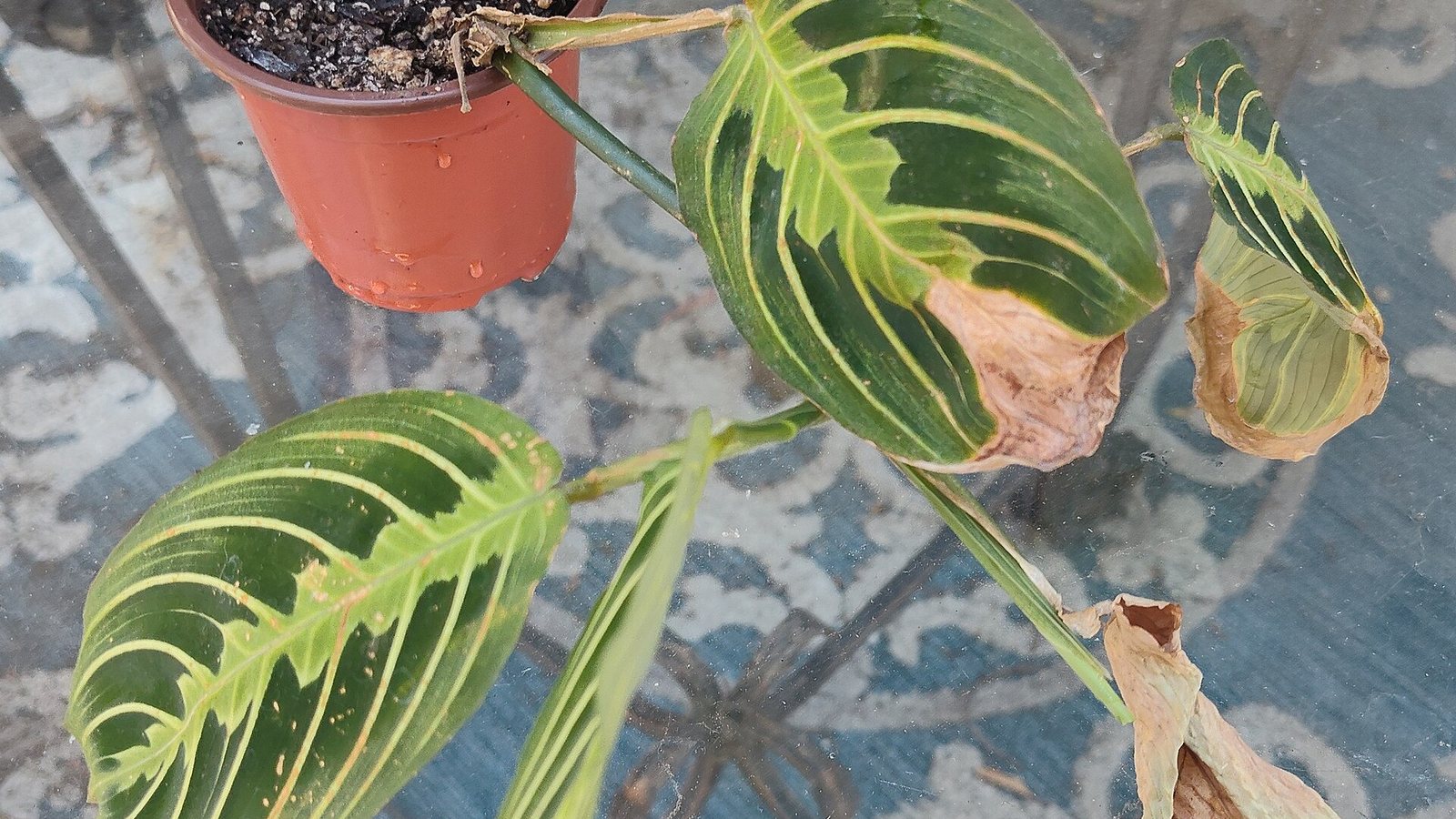
| Brown, scorched patches on the side facing the window, washed-out look, worst on pale variegated parts | Sun scorch (RHS) | Move out of strong direct sun |
| Leaves darkening or blackening and drooping after a cold night, a draughty door or a cold porch | Cold damage (RHS, Iowa State) | Move somewhere warmer, away from cold glass and draughts |
| Leaves bleached, rolled or crispy in a very hot room | Heat stress (RHS) | Move to a cooler spot, away from heaters and hot glass |
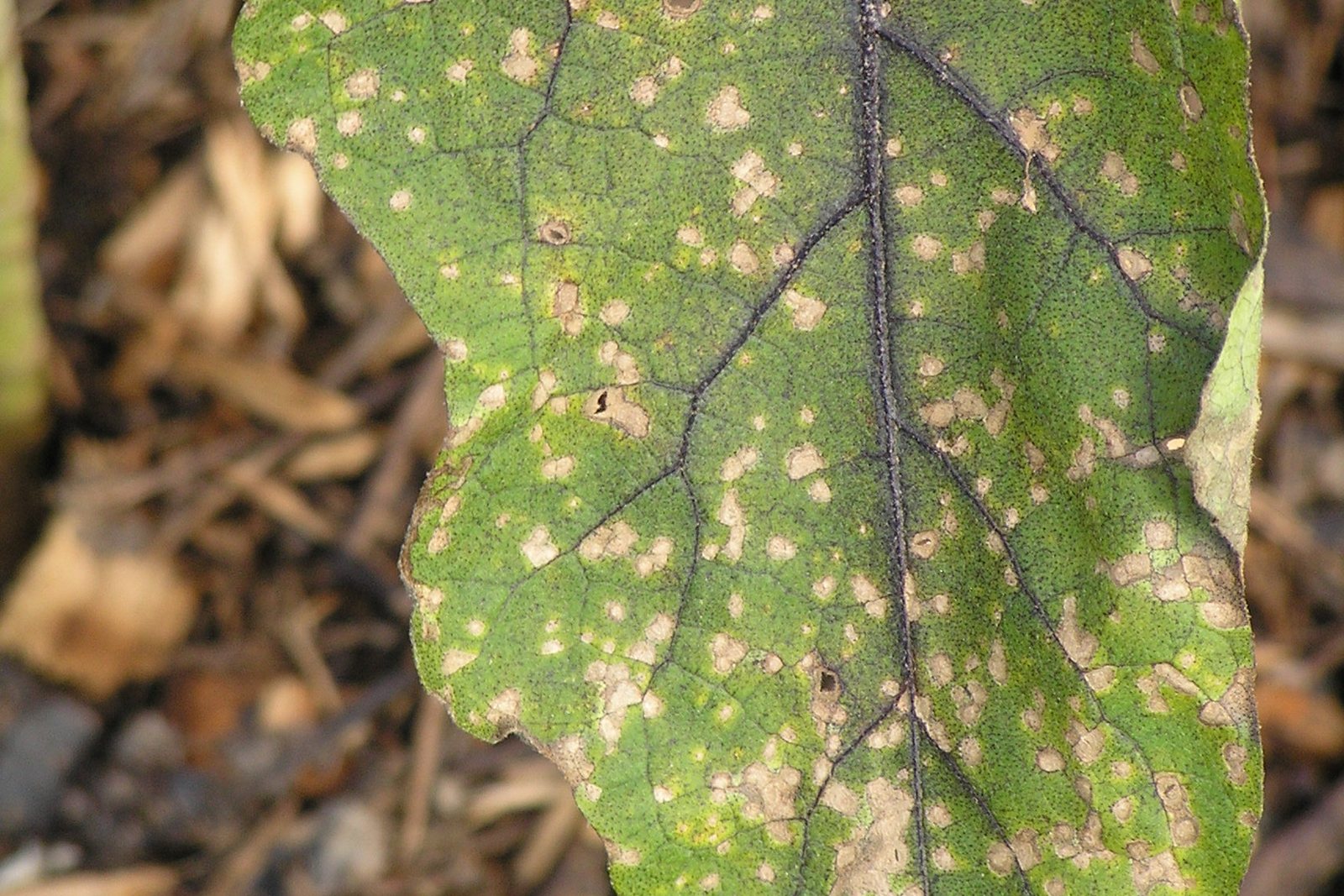
| Small brown spots with yellowish margins, sometimes in rings, that merge until the leaf dies | Fungal leaf spot (Clemson) | Remove affected leaves, improve air flow, keep water off the foliage |
| Water-soaked spots, sometimes with a yellow halo, drying to reddish-brown | Bacterial leaf spot (Clemson) | Remove affected leaves, avoid cold, crowding and wet leaves |
| Lower leaves yellowing, then browning and dying, on a plant that has been in the same pot for years | Nutrient shortage, often in a pot-bound plant (Clemson) | Feed regularly in the growing season and repot into fresh compost |
| White or straw-coloured patches after watering | Cold water spots (Clemson) | Use room-temperature water and keep it off the leaves |
Iowa State University Extension warns that these problems often combine: a plant moved to a cold, dim corner and watered as before can show several at once. Check every possible cause before deciding.
Dry and crispy, or soft and wet?
Start with your fingers. Push one a few centimetres (about 1 in) into the compost, as the RHS suggests, and feel a browning leaf.
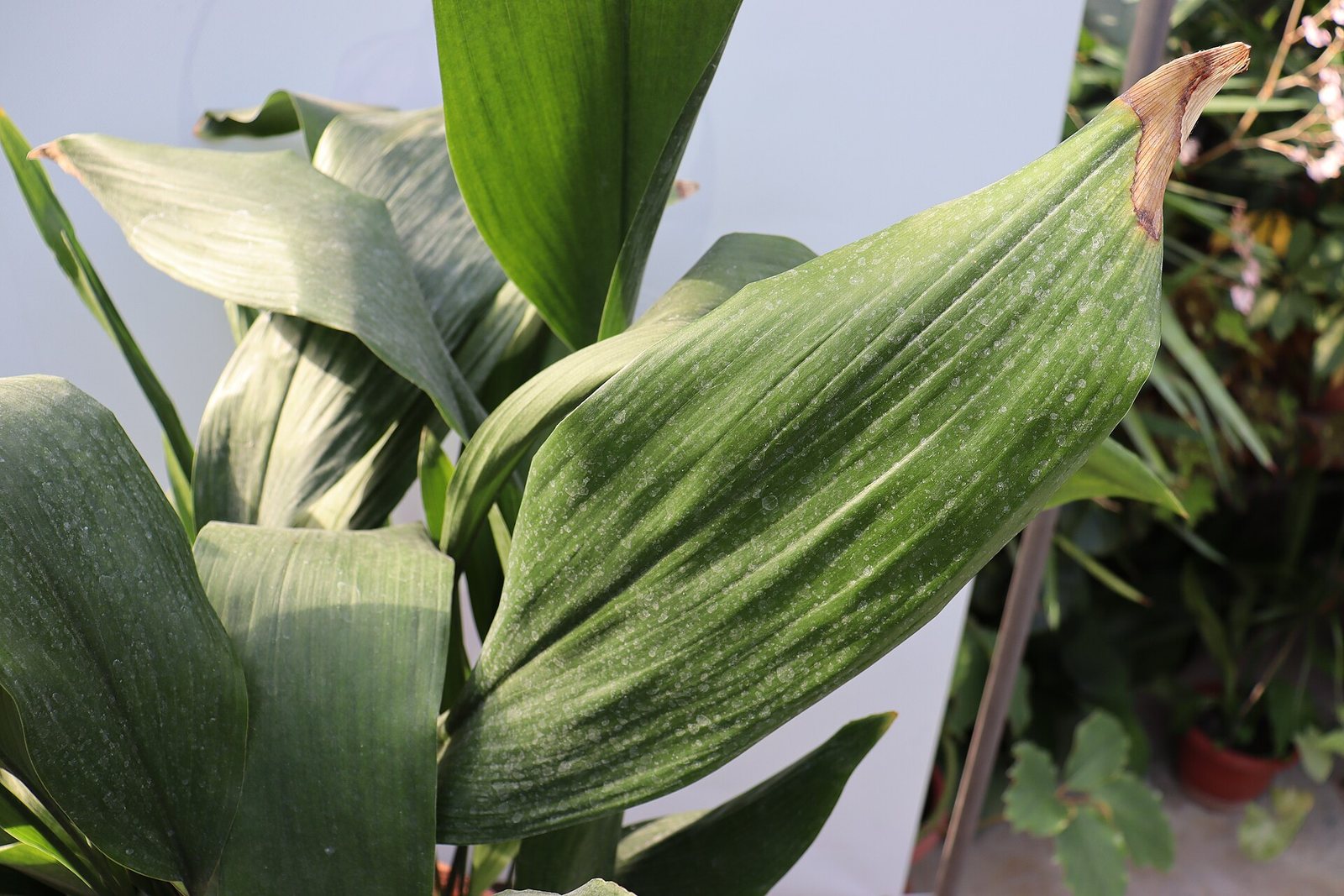
Dry compost and papery leaves point to underwatering. The RHS lists wilting and brown, crispy leaf edges, with older leaves at the base often yellowing and falling first, and Clemson notes that lower leaves yellow and die when plants stay too dry for a long time. Water until it runs from the drainage holes, empty the saucer after half an hour and water again when the compost is dry, rather than on a fixed schedule.
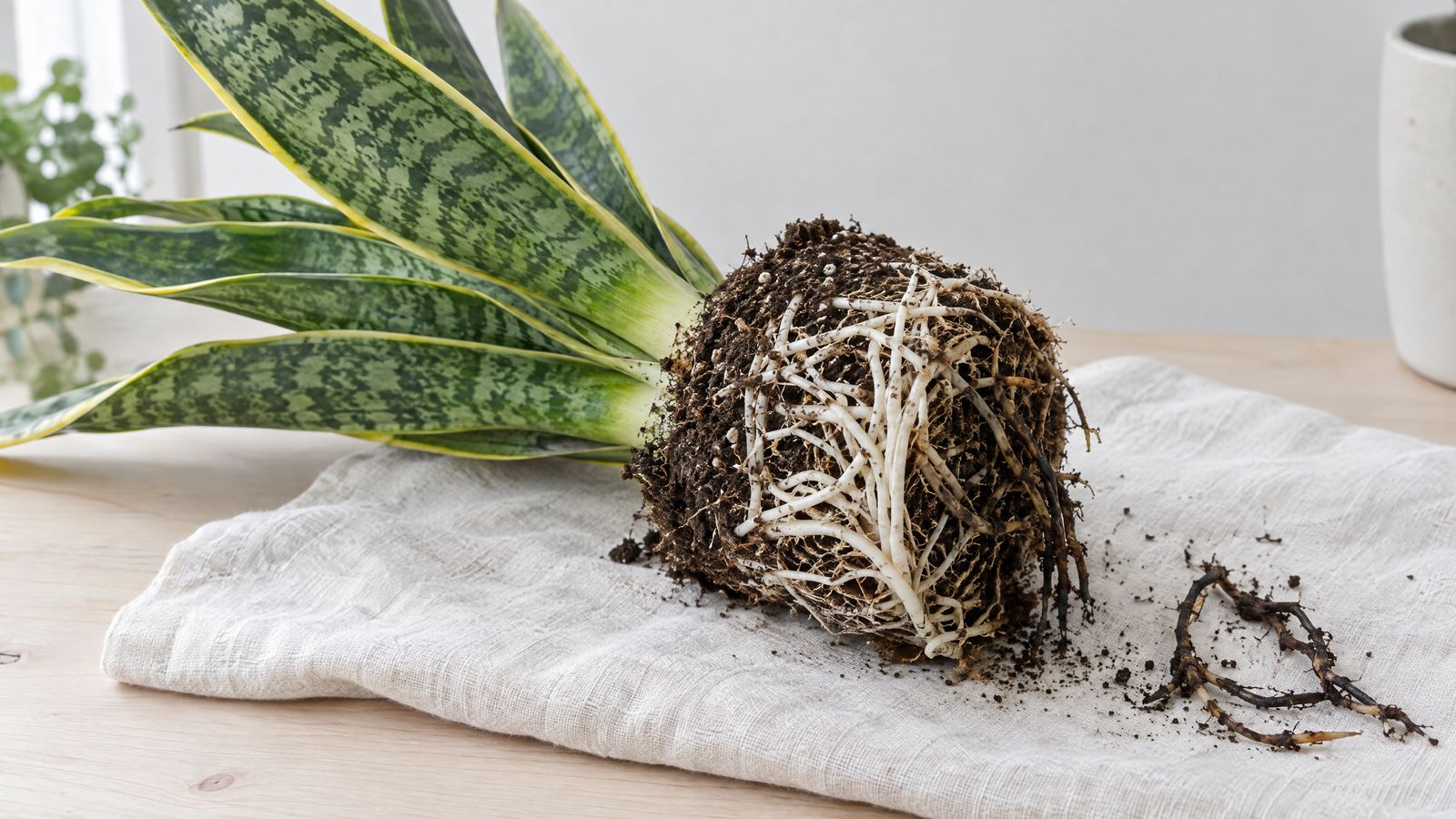
Wet compost and soft brown patches point the other way. The RHS describes overwatering as wilting that looks like thirst, with old and new leaves yellowing and dropping together, browning in the middle of leaves and dark, mushy roots. Clemson explains that overwatering cuts the oxygen roots need and favours root disease: infected roots turn brown to black and may be soft, and a stem can show a dark ring at soil level. Lift the plant from its pot and look. A few soft roots can be cut out and the plant repotted into fresh compost; Clemson advises discarding a plant whose roots are mostly dark, soft and dead. Our root rot rescue plan walks through the steps.
Is it sun, cold or heat?
Where the plant stands often explains brown leaves that watering does not.
- Sun scorch. The RHS says strong direct sun, such as a south-facing window in summer, causes brown, scorched patches and a washed-out look, most often on the paler parts of variegated leaves. In the Southern Hemisphere the sunniest window faces north. Shrivelled leaves on a shade-loving plant also suggest the spot is too bright.
- Cold. The RHS links blackened, drooping leaves and collapse to cold, common in unheated porches in winter and on windowsills behind closed curtains, which trap cold air against the glass. Iowa State adds blasts of cold air from doors, windows and vents, and cold exposure on the way home from the shop. Our guide on how cold is too cold for houseplants gives temperature bands.
- Heat and dry air. The RHS notes that very hot rooms can make leaves wilt, roll, bleach or turn crisp, and that radiators can scorch leaves. Iowa State says low humidity causes browning and eventual leaf drop, a common problem when the heating is on.
Move the plant first and change the watering only if the compost tells you to. Iowa State advises changing light levels gradually when you move a plant, so a shade plant rescued from a sunny sill should not go straight into a dark corner.
Brown spots that spread: is it a disease?
Spots that start small and grow are more likely to be a disease than a care problem. Clemson describes fungal leaf spots as small brown spots with yellowish margins, sometimes in a ring or target pattern, with tiny black dots in the dead tissue; the spots can merge until the whole leaf dies. Bacterial leaf spots begin water-soaked, sometimes with a yellow halo or a sticky ooze, and dry to reddish-brown. Anthracnose often starts at the tip, turning it yellow, then tan, then dark brown, and can spread around the leaf.
Clemson's first steps for all of them are cultural: remove and dispose of affected leaves, improve air circulation, avoid splashing water on the foliage and do not mist plants with anthracnose. The RHS does not recommend fungicides on houseplants. If you do decide to use a product, choose the least toxic option, check that it is approved for indoor plants and follow the label exactly. Speckled, dull leaves with fine webbing underneath are a different story: see our guide to spider mites.
Should you cut off brown leaves?
Yes, once they are fully brown. The RHS advises cutting off mouldy, shrivelled, completely brown or completely yellow leaves with clean secateurs, because they will not recover. Keep leaves that are still mostly green until new growth appears, since removing them early can slow recovery. On a leaf with only a brown patch, you can trim the dead area for looks, but the brown tissue itself will never turn green again.
What should you do first?
- Feel the compost. Very dry: water thoroughly. Wet and sour: check the roots.
- Look at the position. Hot sun, cold glass, a draughty door or a radiator? Move the plant.
- Look closely at the spots. Rings, halos or tiny black dots suggest disease; remove those leaves and keep the foliage dry.
- Check the pot. Roots circling the bottom and years in the same compost point to feeding and repotting.
- Change one thing at a time and judge the result by new leaves over two to four weeks.
If the browning comes with yellowing, our yellow leaves diagnosis guide helps separate the causes. Not sure what you are looking at? Dr. Flori in the Flori app can ask follow-up questions about a photo and suggest the likely cause and how urgent it is.
Frequently asked questions
Should I cut off brown leaves?
Cut off leaves that are completely brown, shrivelled or mouldy, because the RHS says they will not recover. Keep leaves that are still mostly green until new growth appears.
Can brown leaves turn green again?
No. Brown tissue is dead. Fix the cause and judge the result by the new leaves that grow afterwards.
Why are the bottom leaves of my plant turning brown?
Lower leaves go first when a plant stays too dry for a long time, and Clemson Extension also links yellowing and browning lower leaves to nutrient shortage in pot-bound plants. Check the compost and the roots.
Is it overwatering or underwatering?
Feel the compost a few centimetres down. Dry compost with crispy leaves means underwatering; wet compost with soft brown patches and yellowing old and new leaves means overwatering.
Sources
Written and fact-checked by the Flori team. Every guide cites horticultural sources such as the RHS, university extension services and the ASPCA, and is updated when the advice changes. How we write our guides
General plant care information. Plants vary; when a plant is valuable or a problem spreads quickly, consult a local nursery or plant specialist.