How to Prune Apple, Pear and Olive Trees in Winter
Prune apple and pear trees while dormant, removing 10–20% of the canopy; prune olives lightly in late winter to early spring. Timing for both hemispheres.
 By Flori editorial team · Updated
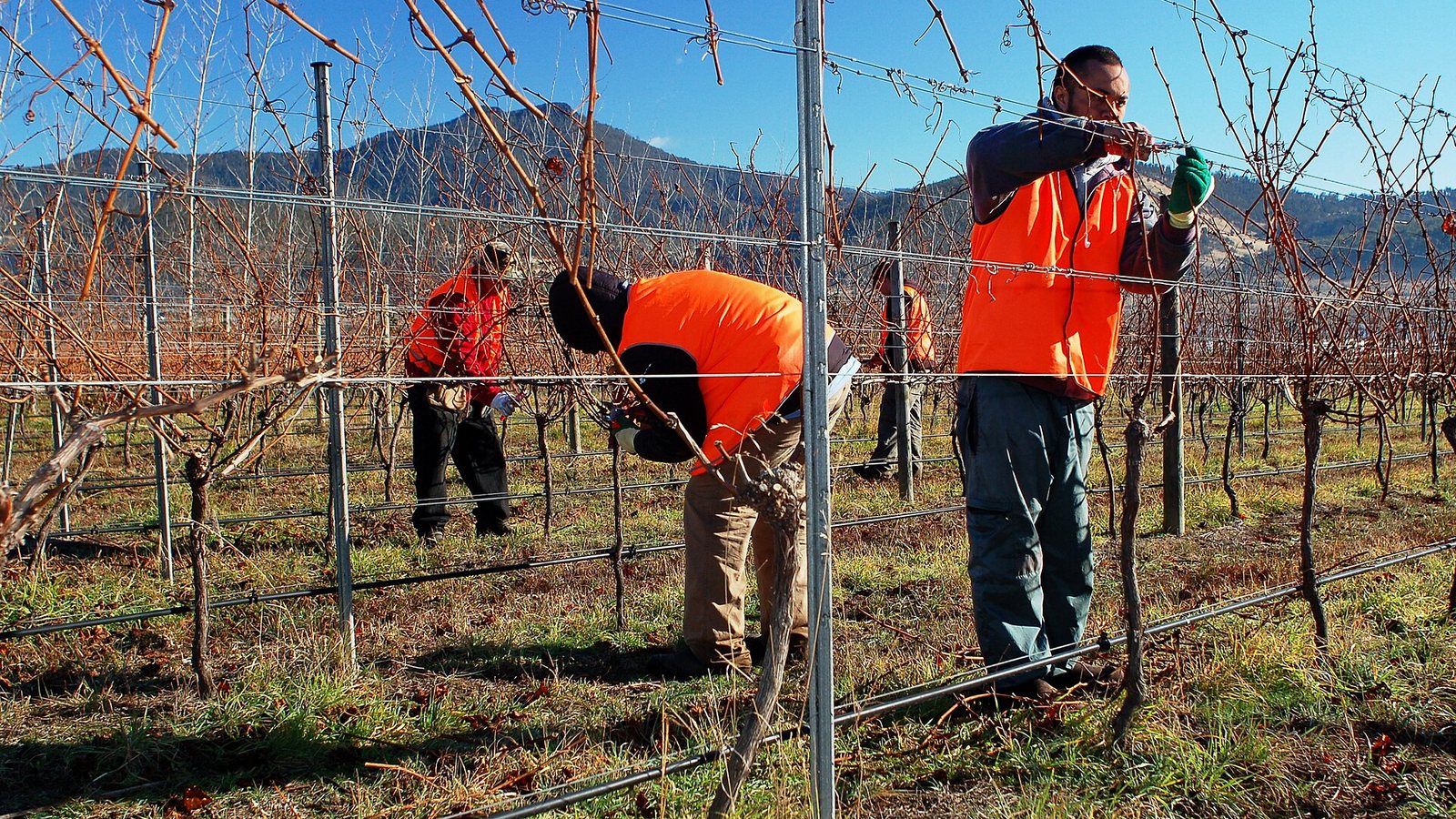
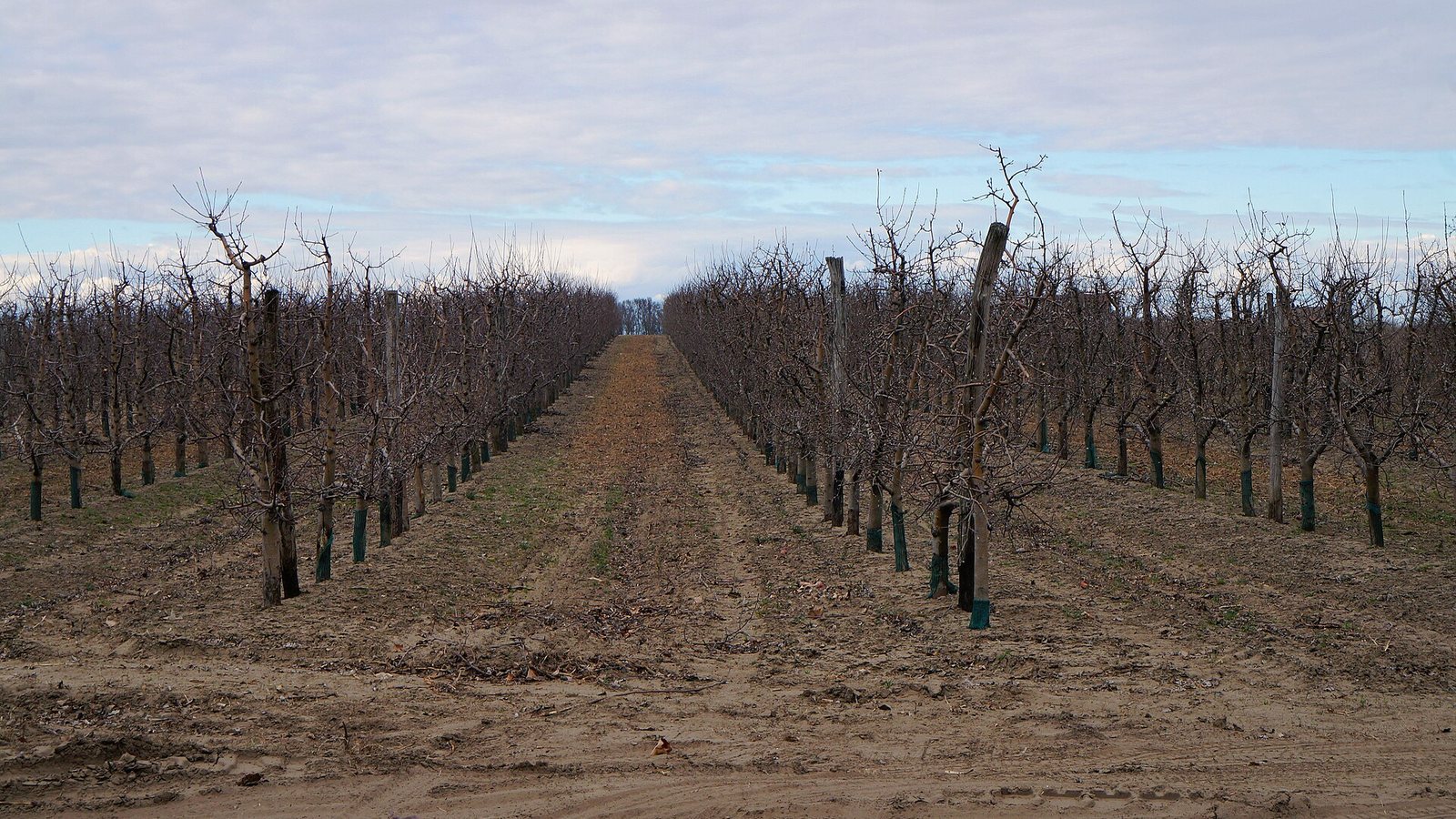 Photo: Jozefsu · CC BY-SA 4.0
Prune established apple and pear trees in winter while dormant, after leaf fall and before buds burst, removing only 10–20% of the canopy: dead wood first, then crossing and central shoots. Prune olives lightly in late winter to early spring, keeping an open centre. Roughly December to February in the north, June to August in the south.
Key takeaways
- Prune apples and pears while dormant, after leaf fall and before buds burst, taking only 10–20% of the canopy.
- Cut dead, diseased and crossing wood first, then open the centre and shorten last year's growth by a quarter to a third.
- Pears and apples can carry fire blight: prune only while dormant and disinfect tools between cuts.
- Prune olives lightly each year in late winter to early spring, aiming for an open centre that lets in light.
- Plums and cherries are not winter-pruned; use a different guide for them.
On this page6
When do you prune apple, pear and olive trees in winter?
Apples and pears are pruned in winter while the tree is dormant, after the leaves have fallen and before the buds burst; olives are pruned at the end of winter into early spring. That is the short answer, and both timings depend on your hemisphere, so this guide gives the season rather than the month: the dormant months are roughly December to February in the Northern Hemisphere and June to August in the Southern. It covers how much to cut, which branches go first, how pears differ because of fire blight, and why olives follow different rules from apples.
The RHS gives the apple and pear window as November to early March in the UK, while the tree is dormant. If you also grow vines or roses, our guides to pruning grapevines and pruning roses cover those separately.
| Tree | Best time | Northern Hemisphere | Southern Hemisphere | Style |
|---|---|---|---|---|
| Apple, pear (established) | Dormant season, after leaf fall, before buds burst | About December to February | About June to August | Open-centred crown, light cuts (10–20%) |
| Olive | Late winter to early spring | About February to April | About August to October | Open centre, light yearly pruning |
| Plum, cherry | Not winter: early spring or mid-summer (RHS) | Different guide | Different guide | Avoids silver leaf |
The months are for temperate climates; watch the tree rather than the calendar. Apple and pear buds start to swell in late winter, and that is the sign to finish.
How do you prune an apple or pear tree in winter?
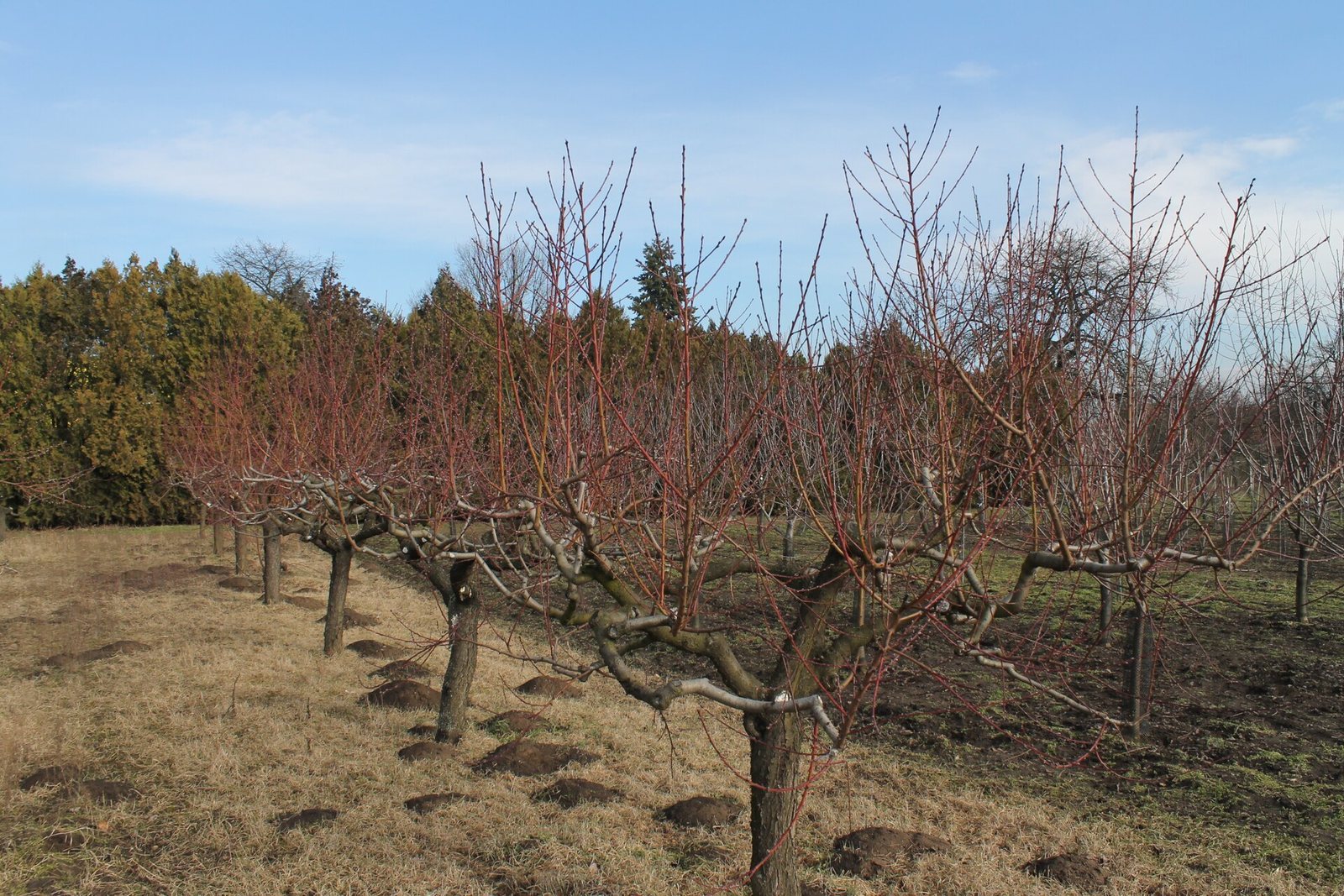
The RHS says routine winter pruning should remove about 10–20% of the canopy, and that pruning harder produces a mass of vigorous upright growth called watershoots. It applies to established bush, standard and half-standard trees, usually from four or five years after planting. Younger trees need formative pruning, and restricted forms such as cordons and espaliers are pruned in summer. Work in this order:
- Remove dead, diseased and damaged wood first. Cut out apple canker on stems where you can.
- Take out crossing shoots, keeping the better-placed, outward-facing one.
- Clear the centre. Remove strong shoots growing into the middle of the tree. The aim is an open crown with about five main branches.
- Remove low, downward-growing branches that get little light, cutting back to an upward branch or the trunk.
- Shorten last year's growth on the main branches by a quarter to a third, cutting just above an outward-facing bud. This encourages branching and fruiting spurs.
- Leave young side-shoots unless they cross or sit closer than 10–15 cm (4–6 in) at the base.
Then treat the tree by how it fruits. On older spur-bearing trees, thin overcrowded spurs to about 10–15 cm (4–6 in) apart. On tip-bearers and partial tip-bearers such as 'Bramley's Seedling', 'Discovery' or 'Worcester Pearmain', shorten long fruited branches by up to a quarter, cutting back to a strong younger side-shoot nearer the trunk, and take care not to remove too much fruiting wood. If you do not know which kind you have, prune lightly and use the 10–20% rule. Sharp secateurs, loppers and a pruning saw, a stable ladder, gloves and eye protection are all you need.
Is pruning pears different?
The RHS winter method applies to both apples and pears. The extra concern with pears, and apples too, is fire blight, a bacterial disease. Clemson says to prune out blackened twigs and cankered branches during the dormant season, because pruning during the growing season may spread the disease. It advises cutting at least 20–30 cm (8–12 in) below any sign of infected tissue, disinfecting tools between cuts with a 10% bleach solution (1 part household bleach to 9 parts water) or 70% alcohol, and removing all suckers from the base, which are more susceptible and can carry infection into the trunk. Burn or bury infected prunings promptly, where local rules allow. Clemson also says to avoid excess nitrogen fertiliser, which promotes soft growth that is easily infected.
How do you prune an olive tree?
Olives are less demanding than apples. A UC Master Gardener answer says to prune in late winter to early spring, take out suckers growing from the roots, dead branches and some interior branches, and keep the tree to an open-centre shape that lets in air and sunlight; ornamental trees can instead be trained on a central leader. It recommends light pruning each year. Researchers at the University of California describe the main value of pruning as opening the canopy for light penetration: no light, no flowers, no fruit.
- Prune lightly. Remove a few interior branches every year, not half the tree at once. Pruning a lot in one year invites a flush of upright shoots.
- Keep the light in. Cut crowded inner branches so sun reaches the middle of the tree.
- Know the "on" and "off" years. Olives are prone to alternate bearing, a heavy crop one year and a light crop the next. UC researchers note that winter is the usual pruning time but that delaying until bloom lets growers see the crop before deciding how hard to cut. For a home tree, the simple rule is: prune lightly every year and cut less after a light-flowering year.
- Wait out the cold. In an area with hard frosts, lean to the later end of the late winter to early spring window, so that fresh cuts are not hit by frost. This is a precaution rather than something the cited pages state.
The sources do not agree on a single date for olives, since commercial and garden advice differ, so use your local extension service for the exact week.
What mistakes should you avoid?
| Mistake | Result | Do this instead |
|---|---|---|
| Cutting more than a fifth of the apple canopy | A mass of watershoots, little fruit (RHS) | Keep to 10–20% a year |
| Leaving stubs | Dead ends that collect disease | Cut just above a bud or back to a branch |
| Pruning pears in the growing season | May spread fire blight (Clemson) | Prune while dormant, disinfect tools |
| Over-pruning an olive in one go | Soft regrowth, fewer fruit | Light yearly cuts |
| Using the same method on plums | Risk of silver leaf (RHS) | Prune plums in early spring or mid-summer |
How to keep the pruning on schedule
The best prune is the one you do at the right time every year. Set a pruning reminder in Flori for the dormant months of your hemisphere, and use the seasonal planning in our seasonal plant care calendar to line it up with the rest of the garden. For a pest or disease you cannot name, pick the least-toxic option first, as described in our natural pest prevention guide, and follow the label on any product you use.
Frequently asked questions
What month do you prune apple trees?
Prune while the tree is dormant, which the RHS puts at November to early March in the UK. In practice that is about December to February in the Northern Hemisphere and June to August in the Southern.
How much can I prune off an apple tree?
The RHS says routine winter pruning should remove about 10–20% of the canopy. Pruning harder produces a mass of vigorous upright watershoots.
When should olive trees be pruned?
A UC Master Gardener answer says late winter to early spring. Prune lightly each year and keep an open centre so light reaches the middle of the tree.
Is it safe to prune pears in summer?
It is riskier. Clemson says pruning during the growing season may spread fire blight, so prune during the dormant season and disinfect tools between cuts.
Can I use the same winter method on plums?
No. The RHS says to prune plums in early spring or mid-summer to avoid silver leaf, so plums need a separate guide.
When and how to prune a grapevine in winter, in both hemispheres: rod and spur vs Guyot compared, step-by-step cuts, young vines and the mistakes to avoid.
Sources
Written and fact-checked by the Flori team. Every guide cites horticultural sources such as the RHS, university extension services and the ASPCA, and is updated when the advice changes. How we write our guides
General plant care information. Plants vary; when a plant is valuable or a problem spreads quickly, consult a local nursery or plant specialist.