Balcony Vegetable Garden for Beginners
Start a balcony vegetable garden: match crops to your hours of sun, choose deep pots with drainage, use potting mix, water daily and feed on a schedule.
 By Flori editorial team · Updated
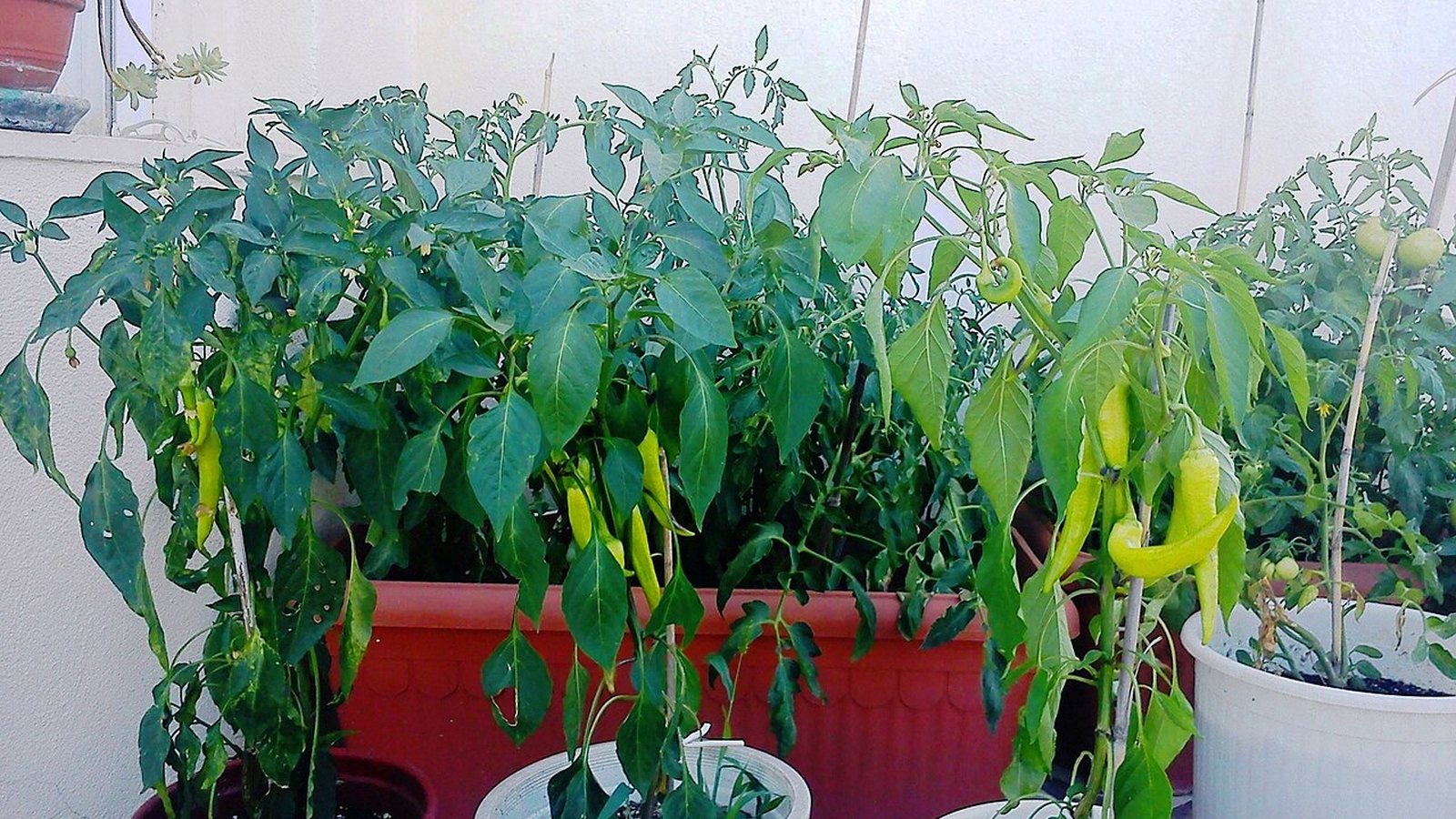 Photo: Soultouko · CC BY-SA 4.0
Count your direct sun first: most vegetables need at least 5 to 6 hours, leafy crops less. Use large pots at least 15 to 20 cm (6 to 8 in) deep with drainage holes, lightweight potting mix rather than garden soil, check watering daily and start with salad leaves, radishes, herbs, dwarf beans or a bush tomato.
Key takeaways
- Count hours of direct sun first: fruiting crops need at least 5 to 6, leafy crops tolerate less.
- Use big pots with drainage holes, at least 15 to 20 cm (6 to 8 in) deep; bigger pots need watering less often.
- Use potting mix, not garden soil, and check watering daily, twice on hot or windy days.
- Start with salad leaves, radishes, herbs, dwarf beans or one bush tomato.
- Check your balcony's weight limit before filling it with wet pots.
On this page10
- Can you really grow vegetables on a balcony?
- Step one: count your hours of sun
- Step two: choose pots that suit vegetables
- Step three: use potting mix, not garden soil
- How often should you water balcony vegetables?
- What and when should you feed?
- Which vegetables should a beginner start with?
- How do you deal with wind, pests and space?
- Common beginner mistakes
- A simple first-month plan
Can you really grow vegetables on a balcony?
Yes, and a beginner can get a real harvest from a few pots. The three things that decide success are how many hours of direct sun your balcony gets, how big the pots are, and how reliably you water. Pick crops to match your sun, start with six or fewer plants, and the rest is routine. This guide is the spring-to-summer starter plan; for cold-season crops see our winter vegetables for balcony pots.
Climate matters. On the Mediterranean and Aegean coasts of Türkiye the growing season is long and pots dry out fast in summer sun and wind, so watering is your main job. In inland Anatolia, in the UK or in northern Europe the season is shorter, spring frosts can last into the planting period, and you may need to move pots under cover. Sources used here are the RHS, Clemson Extension and UNH Extension; the RHS advice is written for the UK and the others for the eastern United States.
Step one: count your hours of sun
Stand on the balcony in the morning, noon and late afternoon and note when the sun hits. UNH Extension says most vegetables need at least 6 hours of direct sun a day, and Clemson says fruiting vegetables need at least 5 hours and do better with 8 to 10. Leafy and root crops tolerate partial shade. The RHS balcony advice adds that even with no direct sun but good light you can try mizuna, spinach and radishes.
| Direct sun on your balcony | Good beginner crops |
|---|---|
| 8 to 10 hours (south-facing, open) | Bush tomatoes, chillies and peppers, cucumbers on a trellis, basil |
| 5 to 6 hours | Dwarf beans, salad leaves, herbs, a bush tomato with luck |
| Little direct sun, bright light | Lettuce, spinach, rocket (arugula), radishes, mizuna, chard, herbs |
Step two: choose pots that suit vegetables
Clemson says containers must be big enough for a full-grown plant and at least 6 to 8 in (15 to 20 cm) deep for rooting. The RHS tells balcony growers to choose larger pots rather than lots of small ones, because bigger pots need watering less often. For a tomato plant the RHS suggests one plant per 30 to 45 cm (12 to 18 in) pot. Every pot needs drainage holes; Clemson stresses that roots must not sit in standing water. Our guides to choosing the right pot and terracotta, plastic and ceramic pots help you pick the material.
Check your balcony's weight limit before you buy large pots; the RHS reminds balcony gardeners that wet compost is heavy, and you will also carry bags of it up the stairs.
Step three: use potting mix, not garden soil
Both Clemson and UNH say garden soil is too heavy for containers. Use a lightweight potting mix. Clemson's home recipe is equal parts peat moss, potting soil and coarse sand or perlite plus slow-release fertiliser, and the RHS suggests a peat-free multi-purpose mix for annual crops, replaced each year.
How often should you water balcony vegetables?
Often, and the answer depends on the pot, the wind and the weather. Clemson says water until it runs out of the drainage holes, and check containers at least once a day, twice on hot, dry or windy days. UNH says to water thoroughly when the top of the mix has dried to about 0.6 cm (¼ in). A simple finger test beats a schedule: push a finger a couple of centimetres into the mix and water if it is dry. A self-watering pot or grouping pots together, which the RHS says gives mutual shade, makes the routine easier.
What and when should you feed?
Clemson says a potting mix with fertiliser already added feeds plants for about 8 to 10 weeks. After that, give a water-soluble fertiliser every 2 to 3 weeks at the label rate. UNH suggests more frequent dilute feeding after 3 to 4 weeks, so sources differ: start with the label of your product and do not exceed it. The NPK numbers guide explains what the three numbers mean.
Which vegetables should a beginner start with?
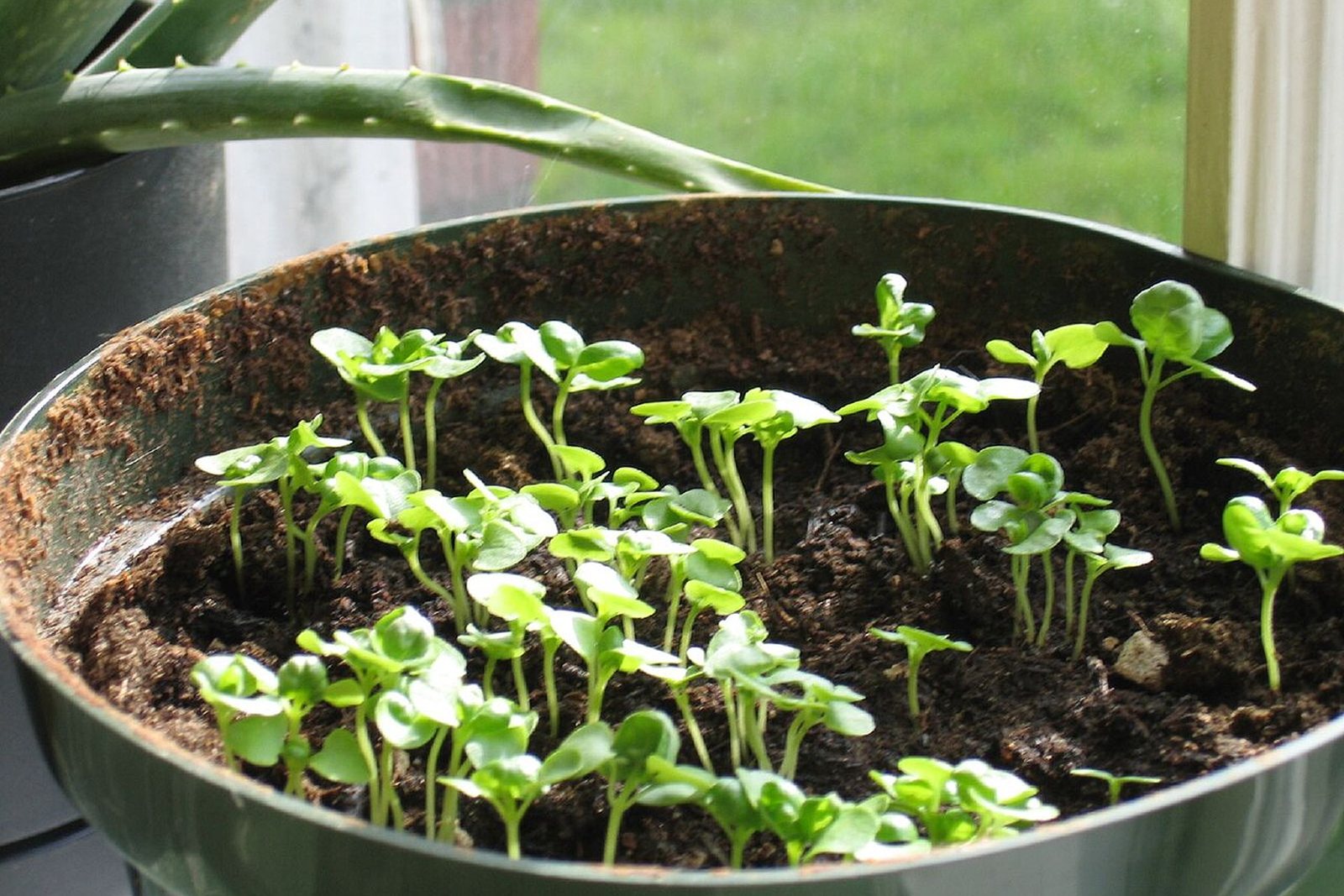
- Salad leaves and cut-and-come-again greens (lettuce, mesclun, spinach, chard, rocket): UNH says harvest every few days and replant fast-growing greens and herbs every 3 to 4 weeks for a continuous supply.
- Radishes and carrots: Clemson lists these among compact crops that suit containers.
- Dwarf beans: named by the RHS as a good balcony crop.
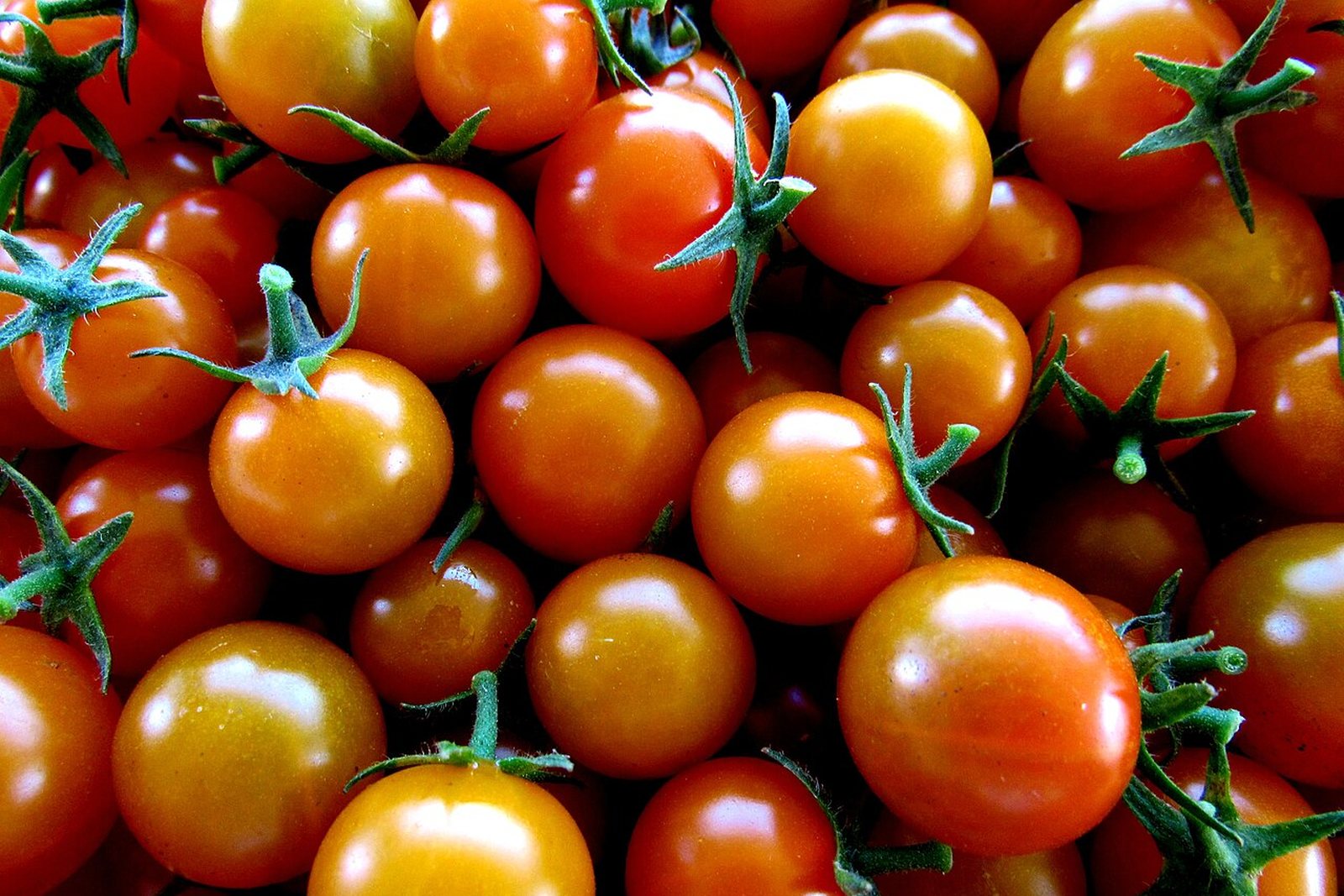
- Bush tomatoes: the RHS recommends a couple on a balcony. Choose miniature or bush varieties, as UNH advises, and support them with a cage. If flowers drop without fruit, heat and cold nights are the usual cause.
- Chillies and peppers: the RHS says sheltered, sunny spots suit chillies.
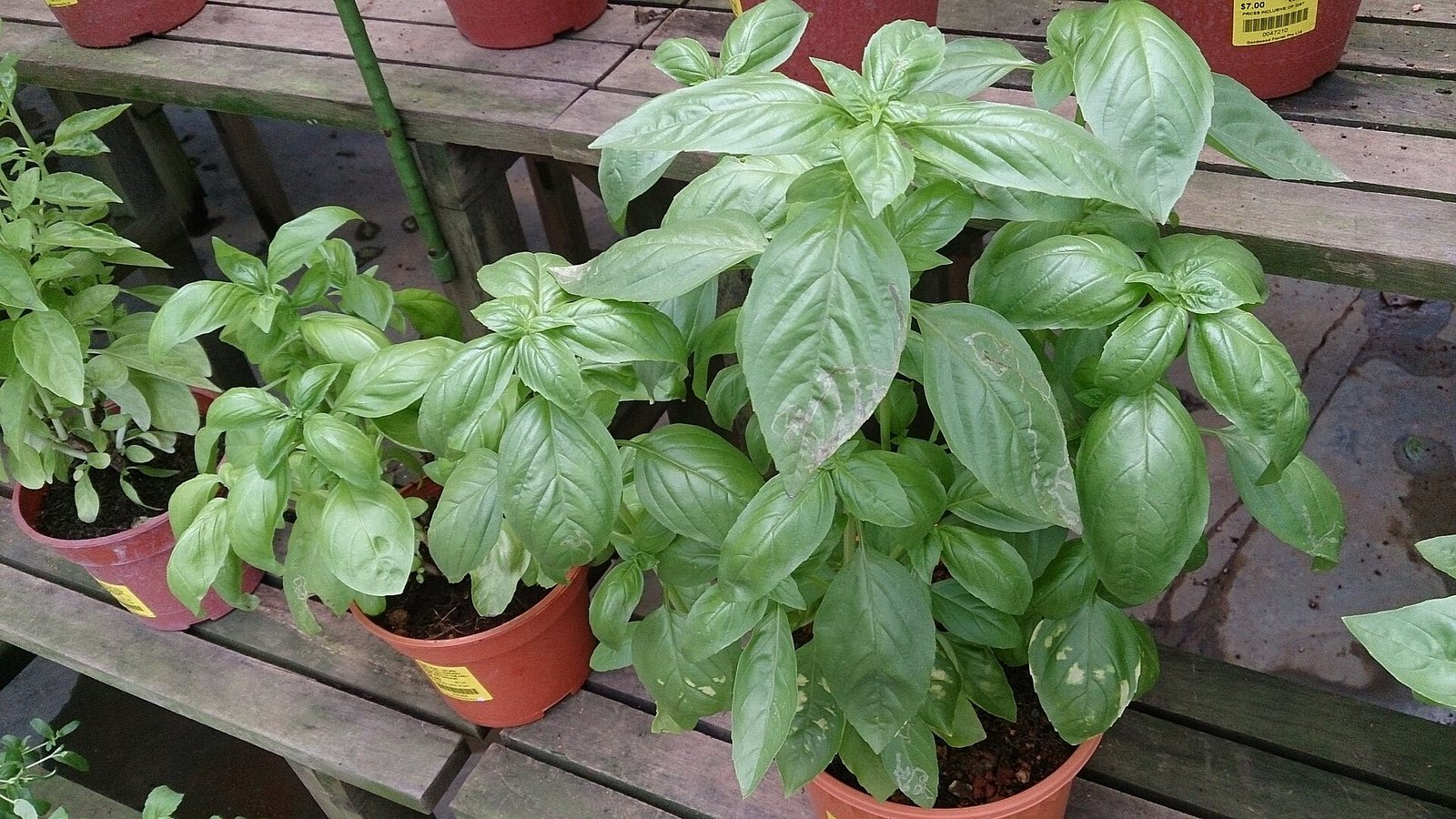
- Herbs: basil, cilantro and mint are quick wins; see starting a windowsill herb garden.
Clemson notes that dwarf varieties mature early but usually yield less than standard ones, so do not expect a market harvest from a tiny pot.
How do you deal with wind, pests and space?
The RHS notes that low-growing plants reduce wind damage in exposed spots, and that natural predators are scarce at height, so check plants often and remove pests by hand as soon as you see them. Space plants so the outer leaves of mature plants just touch, UNH advises. Overcrowding a balcony makes it hard to move around and, in the RHS's words, reduces relaxation, so grow what you like to eat.
Common beginner mistakes
- Garden soil in pots. Clemson and UNH both warn that it is too heavy.
- Pots without drainage holes. Roots sitting in standing water suffer.
- Many small pots. The RHS advises fewer, larger pots because they need watering less often.
- Overcrowding. Leave room so mature outer leaves just touch.
- Forgetting to water on hot or windy days. Check twice on those days.
A simple first-month plan
- Map your sun for one day.
- Buy two large pots with drainage and potting mix.
- Plant one fruiting crop (a bush tomato or chilli) if you have 5 or more hours of sun, and a pot of salad leaves either way.
- Water daily by finger test, more on hot or windy days.
- Start light feeding when the mix's own fertiliser runs out, as per the label.
- Note what worked and add a third crop next month.
A photo of each pot helps you spot patterns, and with the Flori app you can identify a plant you are unsure of or ask Dr. Flori about a leaf problem from a description or photo.
Frequently asked questions
What vegetables grow best on a balcony for beginners?
Salad leaves, radishes, herbs, dwarf beans and a bush tomato or chilli if you have enough sun. The RHS and Clemson both name these compact crops as container-friendly.
How much sun does a balcony vegetable garden need?
Most vegetables need at least 5 to 6 hours of direct sun, according to Clemson and UNH Extension. Leafy and root crops tolerate partial shade.
How big should pots be for balcony vegetables?
At least 15 to 20 cm (6 to 8 in) deep, and larger for tomatoes: the RHS suggests one tomato plant per 30 to 45 cm (12 to 18 in) pot. All pots need drainage holes.
Can I use garden soil in balcony pots?
No. Clemson and UNH Extension both say garden soil is too heavy for containers; use a lightweight potting mix.
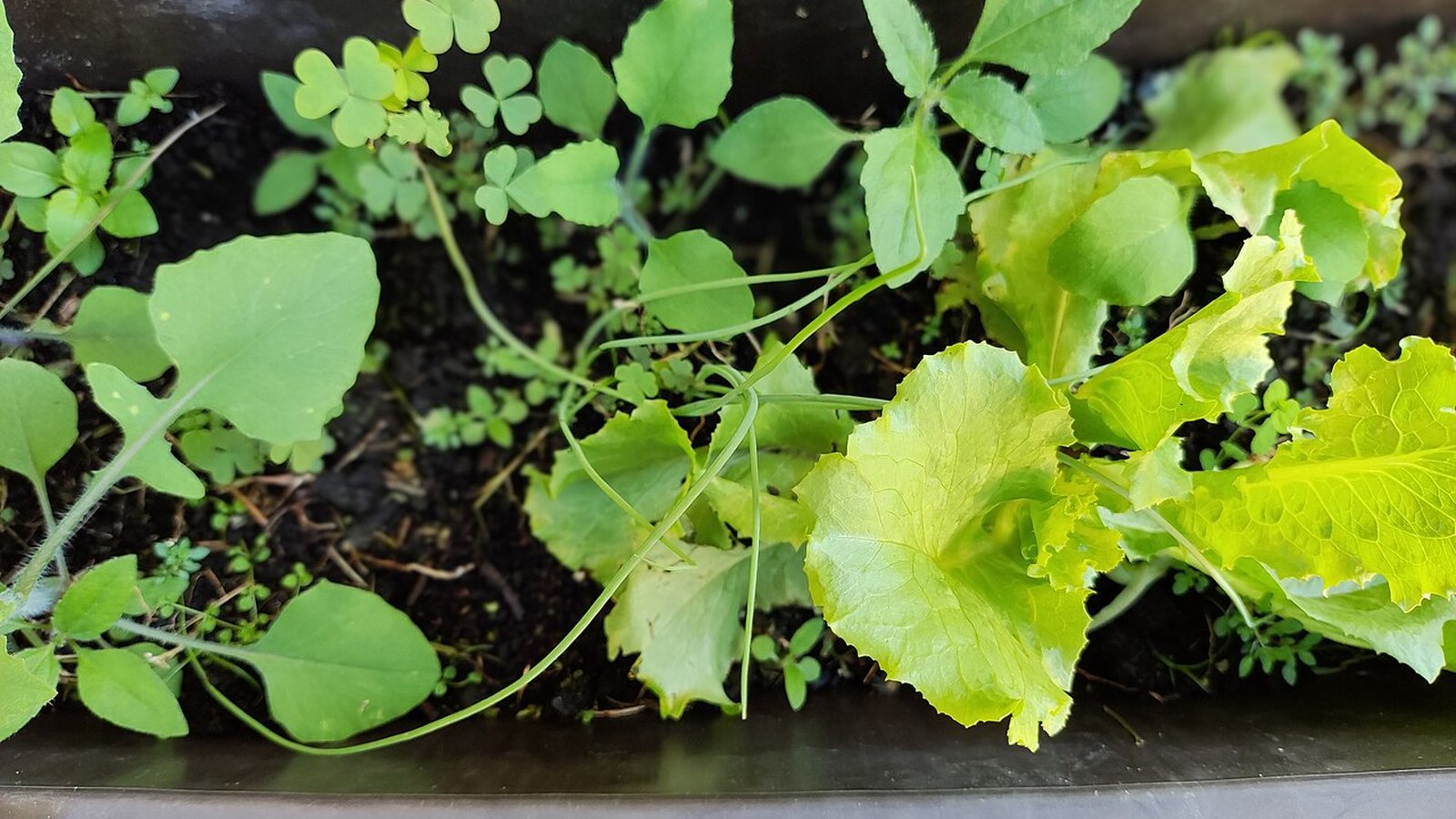
Lettuce, rocket and spinach can grow in balcony pots all winter. See when to sow, pot sizes, frost cover and a fix-it table for coastal and inland climates.
Sources
Written and fact-checked by the Flori team. Every guide cites horticultural sources such as the RHS, university extension services and the ASPCA, and is updated when the advice changes. How we write our guides
General plant care information. Plants vary; when a plant is valuable or a problem spreads quickly, consult a local nursery or plant specialist.