Starting a Windowsill Herb Garden: Light, Pots, Herbs
Start a windowsill herb garden that lasts: the sunniest window, the right pots and mix, watering herb by herb, and which herbs are safe around pets.
 By Flori editorial team · Updated
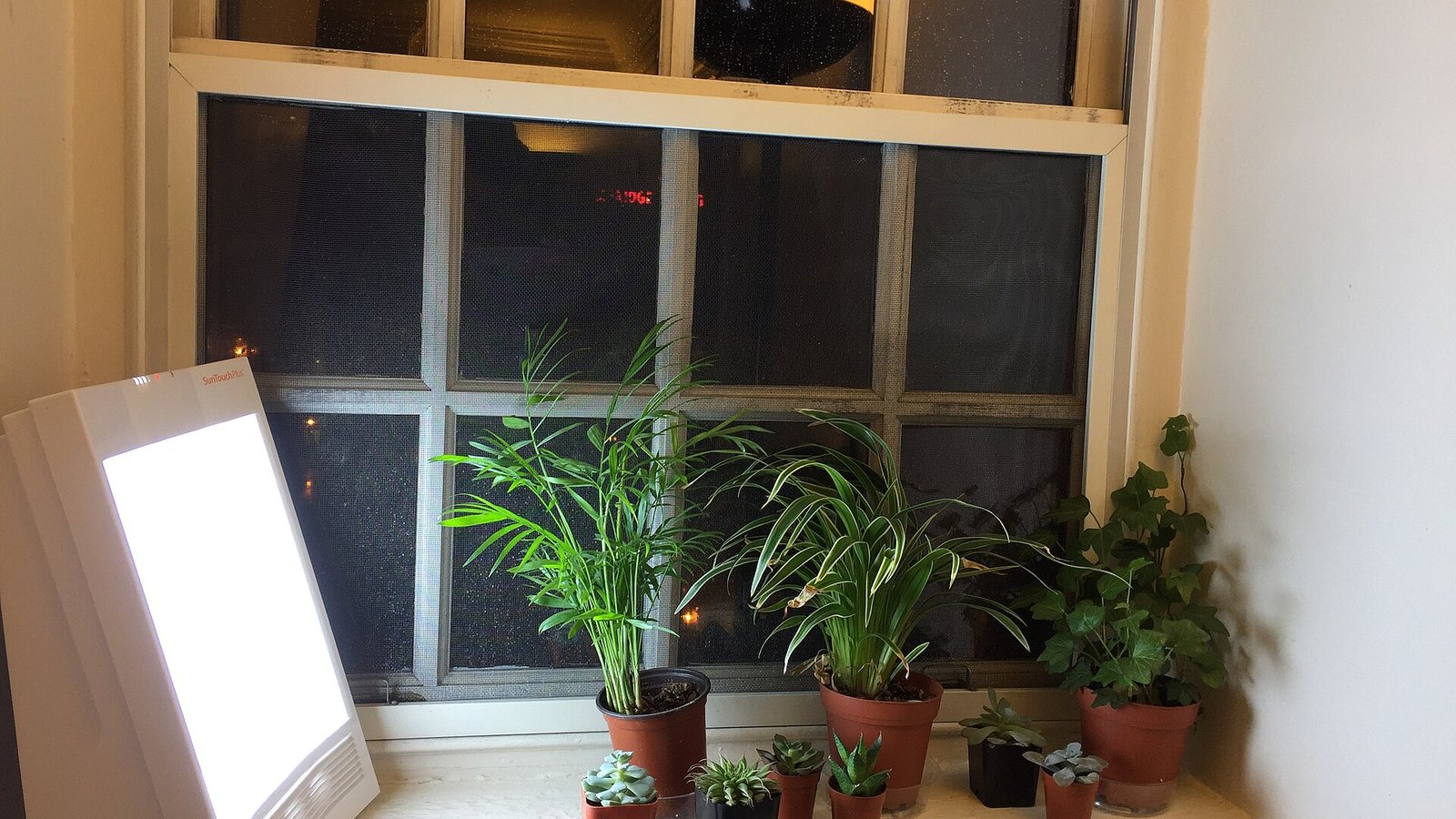
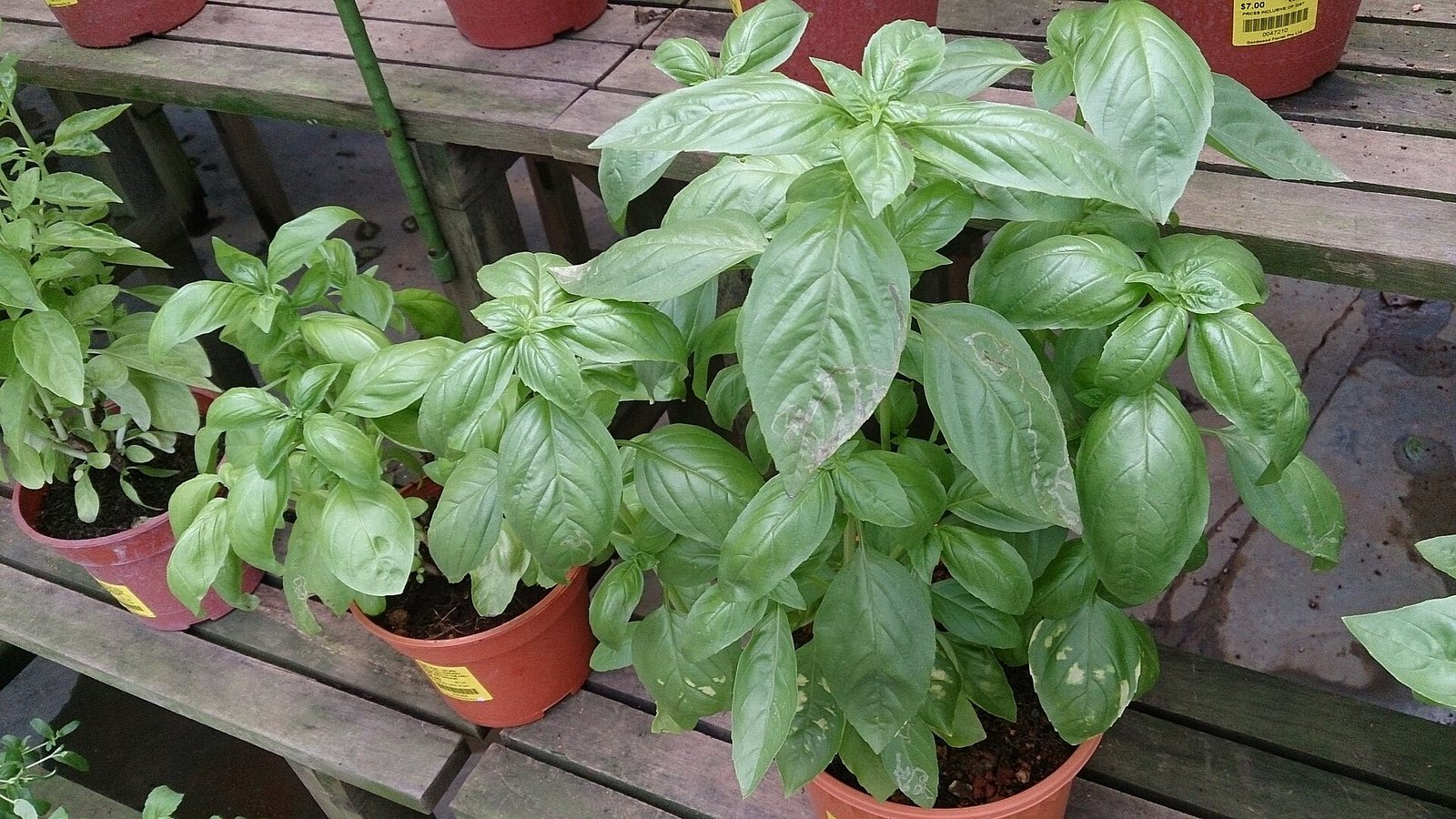 Photo: Mokkie · CC BY-SA 3.0
Put your herbs in your sunniest window: most need about 6 hours of direct sun, or a grow light for 14–16 hours a day. Use pots with drainage holes and a free-draining mix, keep days around 18–21 °C, feed lightly every two weeks and pick little and often. Start with chives, parsley, thyme or rosemary.
Key takeaways
- Light decides everything: most herbs want about 6 hours of direct sun, so use your sunniest window or a grow light.
- Rosemary, thyme and bay want the most sun; chives, lemon balm and coriander cope with 2–6 hours.
- Use pots with drainage holes and a gritty, free-draining mix; let rosemary, thyme and oregano dry slightly, but never let basil dry out.
- Keep basil above 10 °C (50 °F) and away from cold glass in winter.
- Basil, rosemary and thyme are non-toxic to cats and dogs; mint, oregano, chives and parsley are toxic (ASPCA).
On this page8
Can you grow herbs on a windowsill?
Yes, and a windowsill herb garden is one of the easiest ways to have fresh basil, parsley or chives all year. The catch is light: indoors it is the one thing herbs almost never get enough of. This guide goes herb by herb, with a table of the light, watering and pet safety each one needs, so you can choose the herbs that suit your window instead of buying a mixed tray and watching half of it fade.
Penn State Extension sums up the basics: most herbs need about 6 hours of direct sun, pots with drainage holes and a potting mix that drains well. Get those three right and most other problems never start.
Which window is best for growing herbs indoors?
Use the sunniest window you have. In the Northern Hemisphere that is a south-facing window; in the Southern Hemisphere (Australia, New Zealand, South Africa) it is a north-facing one. West- and east-facing windows give a few hours of sun and suit the herbs that tolerate less light. A window facing away from the sun is too dim for most herbs without extra light.
Herbs that are short of light grow thin and leggy, make smaller leaves and lose their aroma, Penn State notes. Turn the pots regularly so every side gets its share. If your windows are shaded or it is winter, a grow light does the job: Penn State suggests two 40-watt cool white fluorescent tubes 15–30 cm (6–12 in) above the plants for 14–16 hours a day. Modern LED grow lights work too; our grow lights guide explains how to choose one and how far to hang it.
Which herbs grow best on a windowsill?
Choose by your light first. Penn State lists bay, rosemary and thyme as the herbs that need the most direct sun, while lemon balm, chives and coriander (cilantro) tolerate lower light and manage with 2–6 hours. It also advises skipping herbs with big root systems, such as horseradish, fennel and lovage.
| Herb | Light | Watering | Cats and dogs (ASPCA) |
|---|---|---|---|
| Basil | Full sun, warm spot | Never let it dry out completely | Non-toxic |
| Rosemary | Most sun you have | Let the mix dry slightly | Non-toxic |
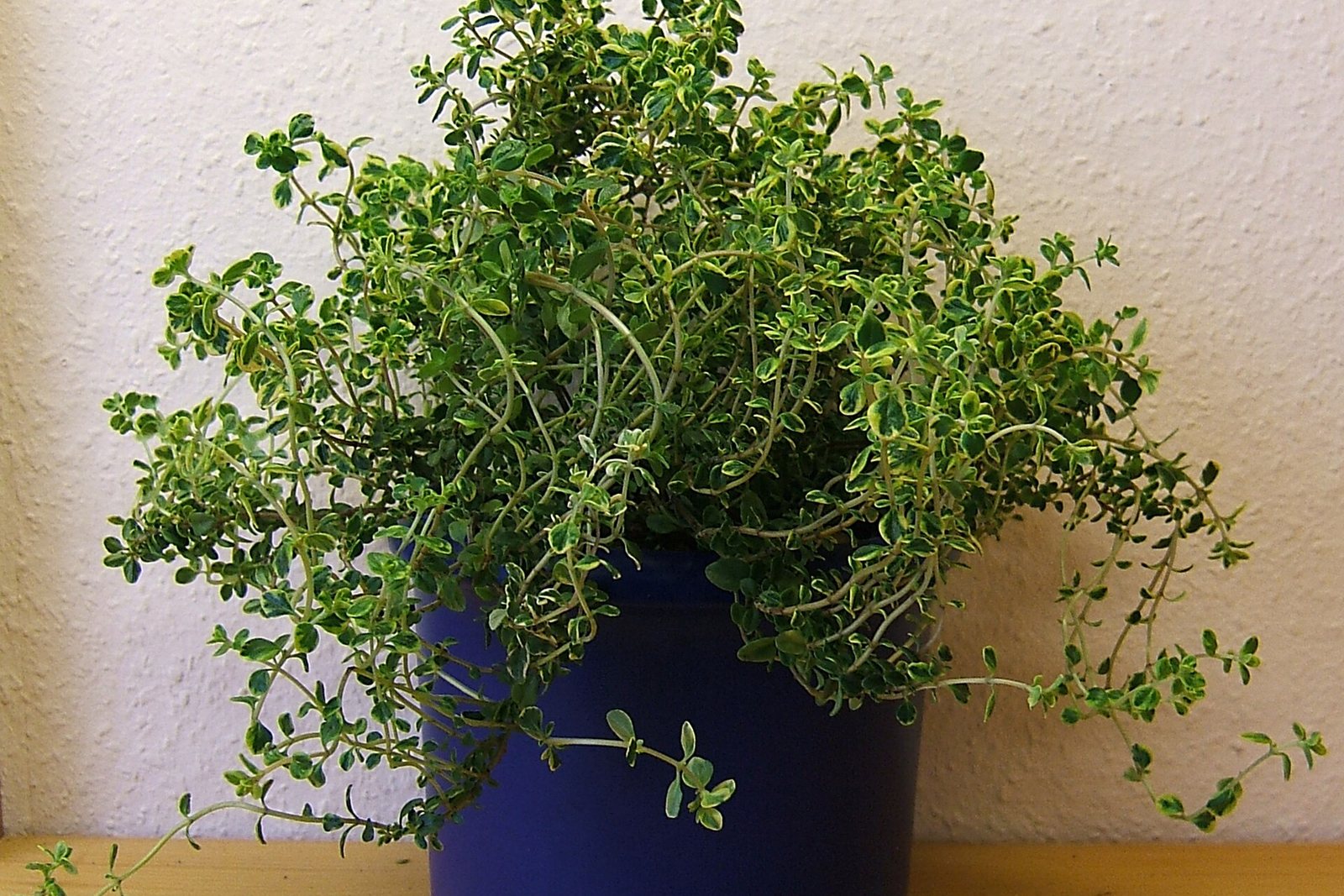
| Thyme | Most sun you have | Let the mix dry slightly | Non-toxic |
| Oregano | Sunny | Let the mix dry slightly | Toxic: mild vomiting and diarrhoea |
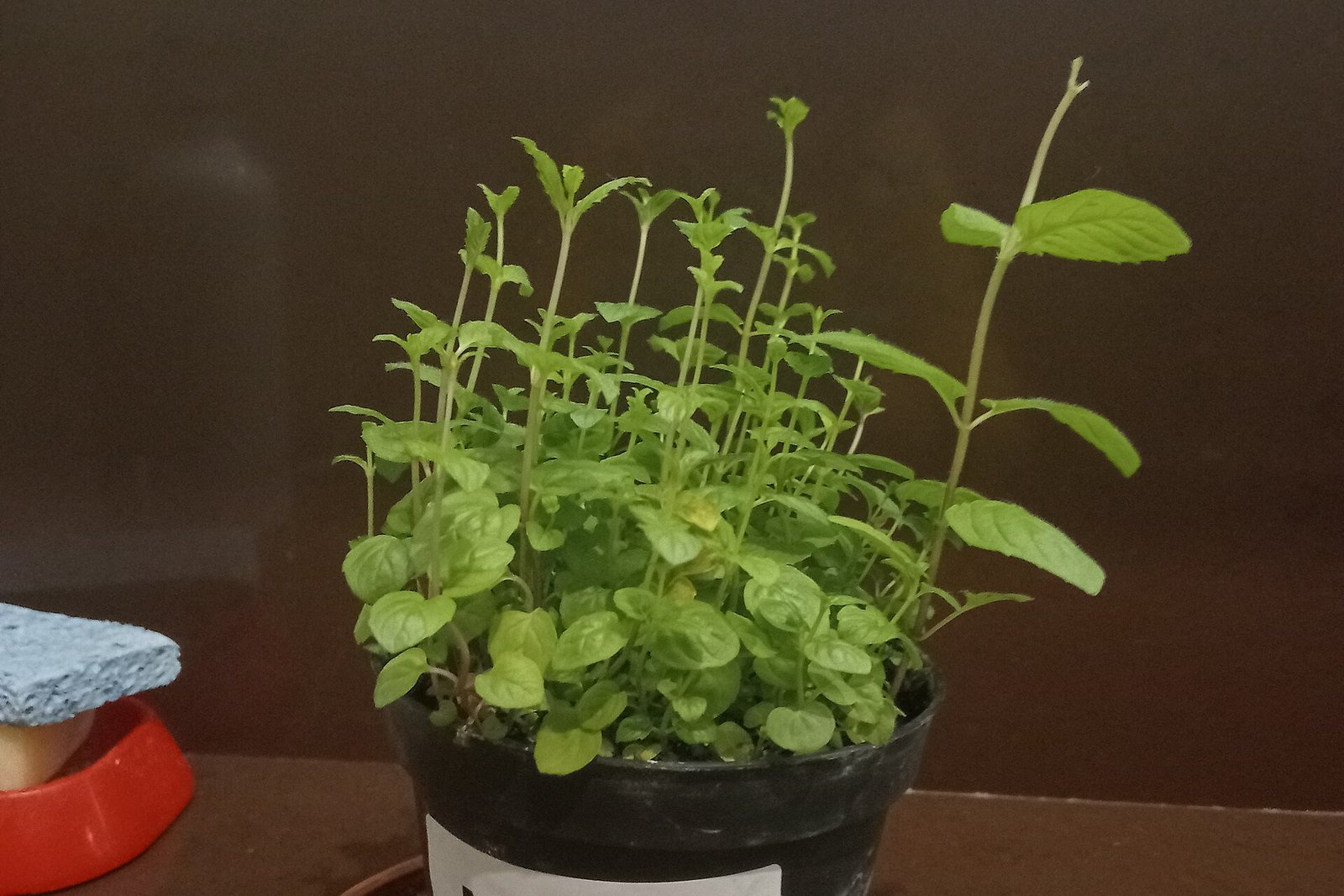
| Mint | Bright | Keep moist | Toxic: vomiting and diarrhoea if a lot is eaten |
| Chives | Tolerates lower light | Water when the top starts to dry | Toxic: can damage red blood cells |
| Parsley | Tolerates some shade | Water when the top starts to dry | Toxic in large amounts: sun sensitivity |
If you share your home with a cat or dog, put the toxic herbs where pets cannot chew them, or stick to basil, rosemary and thyme. Penn State also warns that tarragon is toxic to dogs and cats. Our pet-safe houseplants list has more plants that are safe to keep at nose height.
What pots and soil do herbs need?
Every pot needs a drainage hole. Herbs sitting in water rot quickly, and the RHS warns that putting a small herb into an oversized pot can make it rot too. Pick a pot only a little bigger than the root ball, with a saucer to protect the sill.
For the mix, the RHS recommends a gritty, free-draining compost, adding up to 25% coarse grit or perlite by volume, and deep containers that give herbs a long root run. Herbs with a taproot, such as dill and borage, need deep pots, Penn State adds. Our soil mix guide explains what grit and perlite do.
A note on supermarket herbs: the pots are packed with many seedlings grown fast and soft, and the RHS finds them too lush to settle easily. They last longer if you split the clump into two or three smaller pots of fresh mix.
How often should you water herbs on a windowsill?
Water when the potting mix starts to dry, not on a fixed day. Penn State groups the herbs like this: bay, marjoram, oregano, sage, thyme and rosemary should dry slightly between waterings, while basil should never dry out completely. The RHS rule for herbs in pots is the same idea: keep the compost moist, but never soggy.
Push a finger into the mix: if the top 2 cm (about 1 in) is dry, water slowly until a little runs out of the hole, then empty the saucer after a few minutes. Herbs on a sunny sill in summer may need water every few days; the same pots in winter can go a week or more. If you tend to forget, a watering reminder in the Flori app for each pot helps, since the herbs on one sill rarely dry at the same speed.
What temperature do indoor herbs like?
Penn State gives 18–21 °C (65–70 °F) by day and 13–16 °C (55–60 °F) at night as the ideal. Many herbs survive cooler spells, but basil cannot take temperatures below 10 °C (50 °F), so keep it off a cold winter windowsill and away from the glass on frosty nights. Cold draughts from the window can stunt herbs. Central heating dries the air; grouping pots together or standing them on a tray of damp pebbles helps.
Feeding and picking
Herbs need only a little food. Penn State suggests a low dose of water-soluble fertiliser every two weeks while they are growing, and warns that feeding more often can reduce aroma and flavour. The RHS recommends a balanced feed for leafy growth rather than a high-potassium one, which pushes flowers.
Pick little and often: pinching the tips keeps basil and mint bushy and gives you a steady supply. Wash leaves before you use them. Mint is the exception to the long-term pot rule: the RHS says it does not do well in pots for long, so replant generous pieces of root into fresh, rich mix when it looks straggly.
What pests attack indoor herbs?
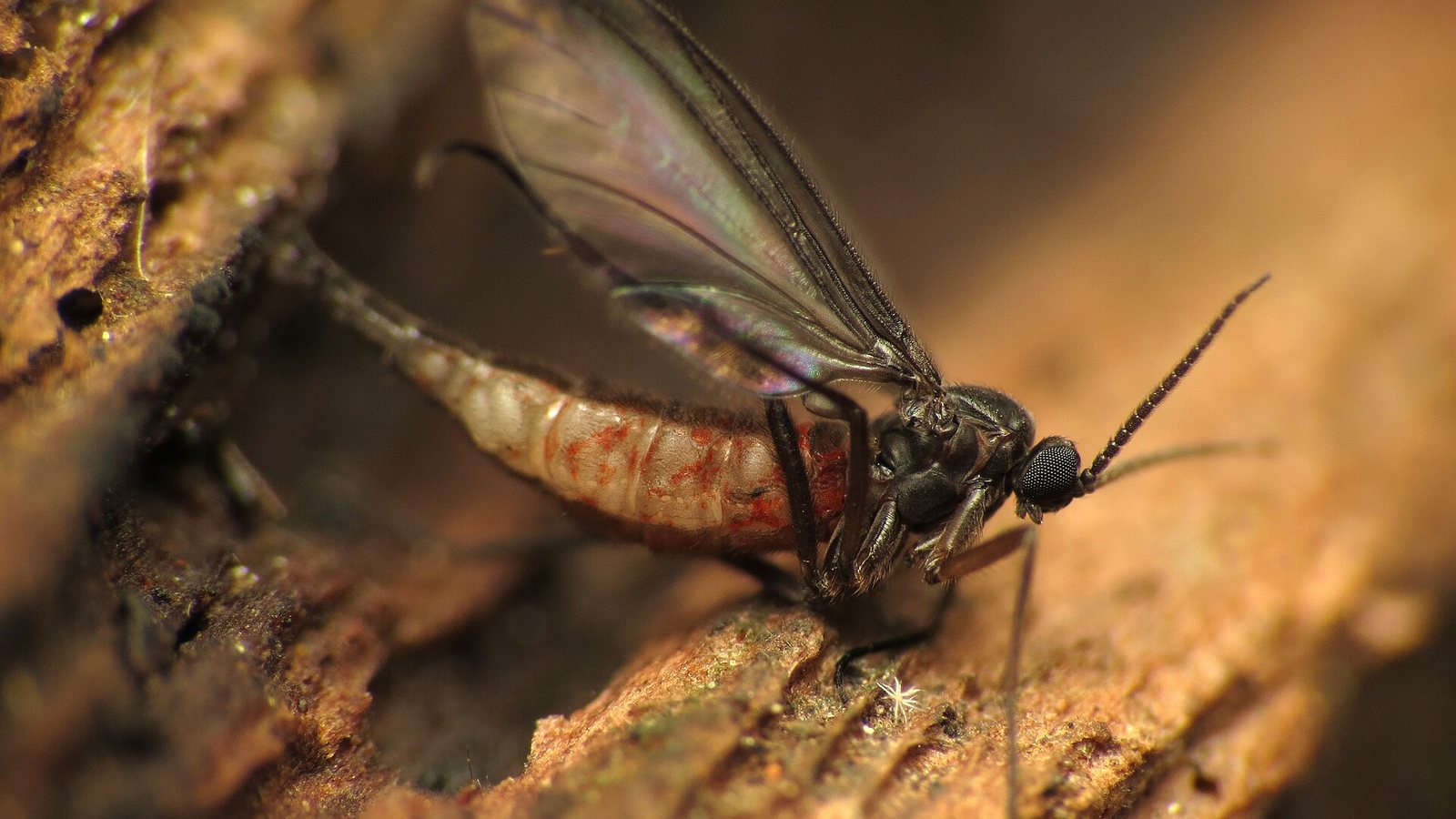
The two most common are fungus gnats, tiny flies that breed in wet potting mix, and aphids on soft new shoots. Penn State starts with simple controls: yellow sticky traps and drier watering for gnats, and cutting off and binning shoots crowded with aphids. Sprays such as neem oil are a last resort for leaves you plan to eat; if you use one, choose a product labelled for edible herbs and follow the label. Our fungus gnats guide explains how to break their cycle.
Frequently asked questions
What are the easiest herbs to grow on a windowsill?
Chives, parsley, thyme and rosemary are forgiving starters. Chives and parsley cope with less light, while rosemary and thyme are happy in a sunny window that dries them out a little between waterings.
Why is my windowsill basil dying?
Usually cold, too little light or drying out. Basil needs full sun, stays healthy only above 10 °C (50 °F) and should never dry out completely, so a cold winter windowsill is a hard place for it.
Can herbs grow in a north-facing window?
In the Northern Hemisphere a north window is too dim for most herbs. Try chives or parsley close to the glass, or add a grow light for 14–16 hours a day. In the Southern Hemisphere the north window is the sunny one.
Are kitchen herbs safe for cats?
Not all of them. The ASPCA lists basil, rosemary and thyme as non-toxic to cats and dogs, but mint, oregano, chives and parsley as toxic. Keep those out of reach.
Choose an LED or T5 grow light, hang it 30–60 cm (12–24 in) above the leaves, run it 12–14 hours on a timer, and read the plant to fine-tune it.
Sources
Written and fact-checked by the Flori team. Every guide cites horticultural sources such as the RHS, university extension services and the ASPCA, and is updated when the advice changes. How we write our guides
General plant care information. Plants vary; when a plant is valuable or a problem spreads quickly, consult a local nursery or plant specialist.