How to Make a Kokedama Step by Step
Make a kokedama moss ball in 7 steps: what you need, plants that suit it, and how to tell when it needs water by weight, not guesswork.
 By Flori editorial team · Updated
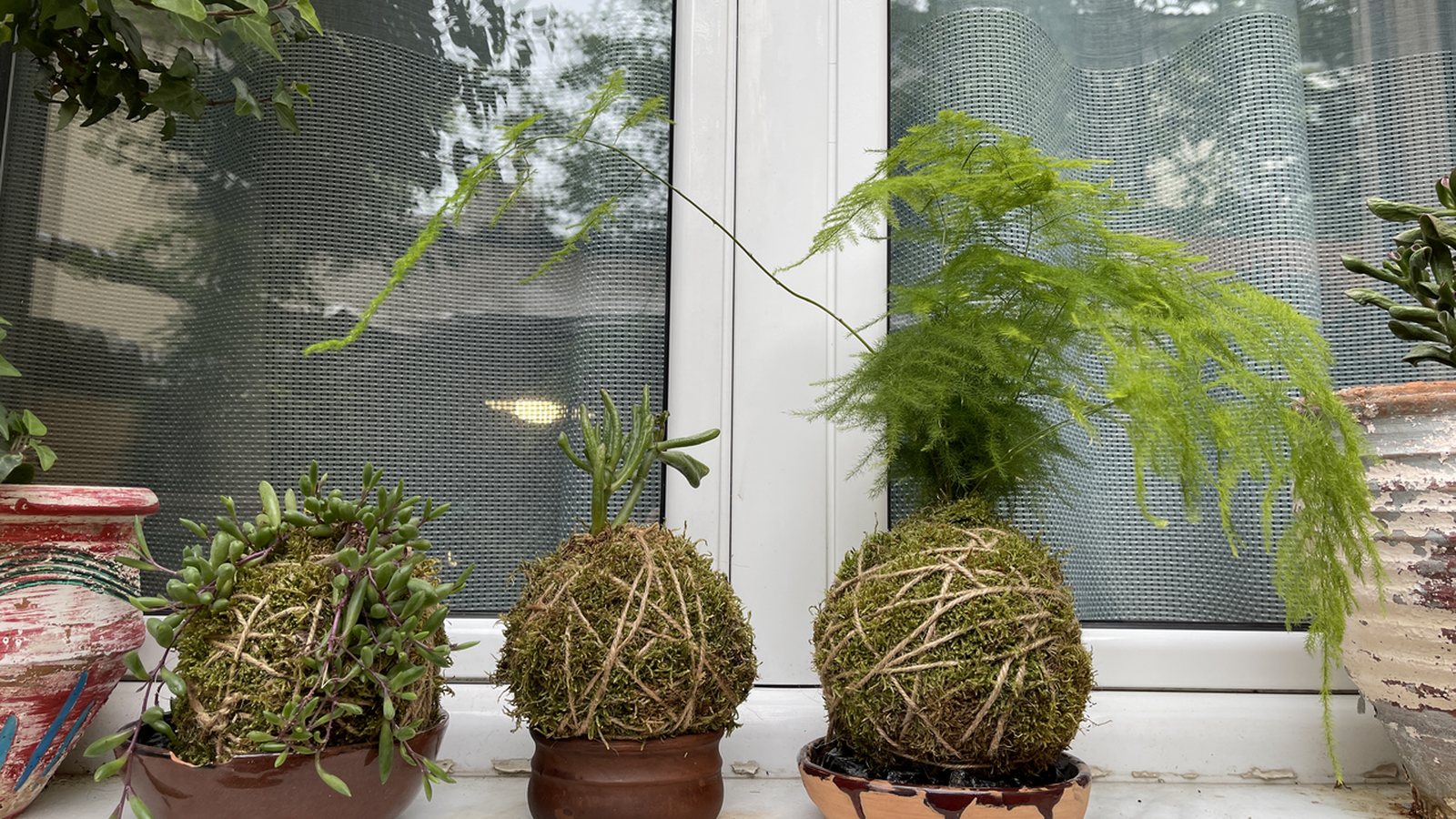 Photo: George Balatsos · Public domain
To make a kokedama, pack a plant's roots into a firm ball of damp potting soil, wrap it in moist sheet moss and tie it with string. Choose a small, slow-growing plant, then water by soaking the ball in a bowl until it feels heavy, and soak again when it feels light.
Key takeaways
- Pick a small, slow-growing plant that tolerates some drying, such as pothos, philodendron, peperomia or a fern.
- Mix the soil until it just holds together, split the ball, lay the roots inside, wrap in moss and tie in all directions.
- Water by soaking, not pouring: 5-20 minutes depending on the source, until the ball feels heavy.
- Lift it to check: a light ball is thirsty, and a heavy ball needs no water.
- Thirsty or fast-growing plants dry out too quickly and make poor first kokedamas.
On this page7
- How do you make a kokedama, and does it really keep a plant alive?
- What do you need to make a kokedama?
- How do you make a kokedama step by step?
- Which plants suit a kokedama, and which do not?
- How do you water a kokedama, and how do you know when it is thirsty?
- What goes wrong with a kokedama?
- Should you try an outdoor kokedama?
How do you make a kokedama, and does it really keep a plant alive?
A kokedama is a plant grown without a pot: the root ball is packed into a ball of damp soil, wrapped in moss and tied with string. It works, with one condition that most tutorials skip: the ball is small and the roots are exposed, so it dries out far faster than a normal pot and the whole project depends on picking a plant that copes with that and on watering by soaking. This guide gives the materials, the steps, a table of plants that suit it (and the ones that do not) and a simple way to tell when it needs water. If you like moss projects, our terrarium build guide is the glass-jar cousin.
What do you need to make a kokedama?
The Missouri Botanical Garden lists very few things, and you probably own most of them:
- A small plant with a modest root system (a pothos or philodendron cutting is ideal).
- Potting soil. For plants that need a lot of water or are badly root-bound, Penn State Extension suggests mixing in about one third akadama (a bonsai clay) or clay cat litter; Illinois Extension uses 70% potting mix or peat moss to 30% akadama.
- Sheet moss (sphagnum or similar), or Spanish moss.
- Waxed string, twine or clear fishing line, plus scissors.
- A bowl or bucket, gloves, and a saucer or a hook to display it.
How do you make a kokedama step by step?
- Soften the moss. Soak it in warm water until pliable. Illinois Extension soaks it for an hour, then squeezes out the extra water.
- Make the soil ball. The Missouri Botanical Garden uses about 2 cups of potting soil (roughly 470 ml) for a ball around 10 cm (4 in) across. Add water slowly until the soil just holds together when pressed. It should stay in one piece if you toss it gently.
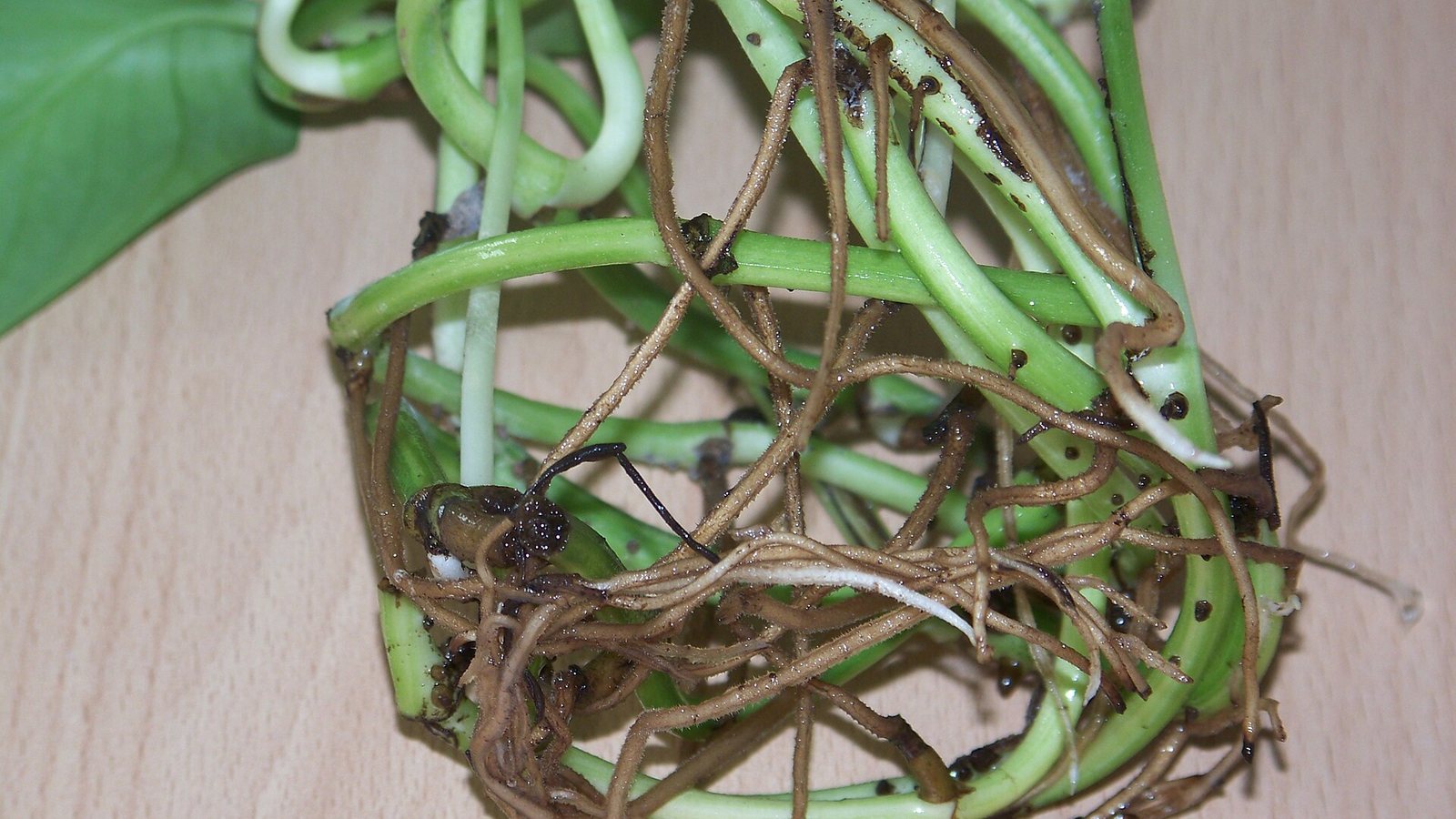
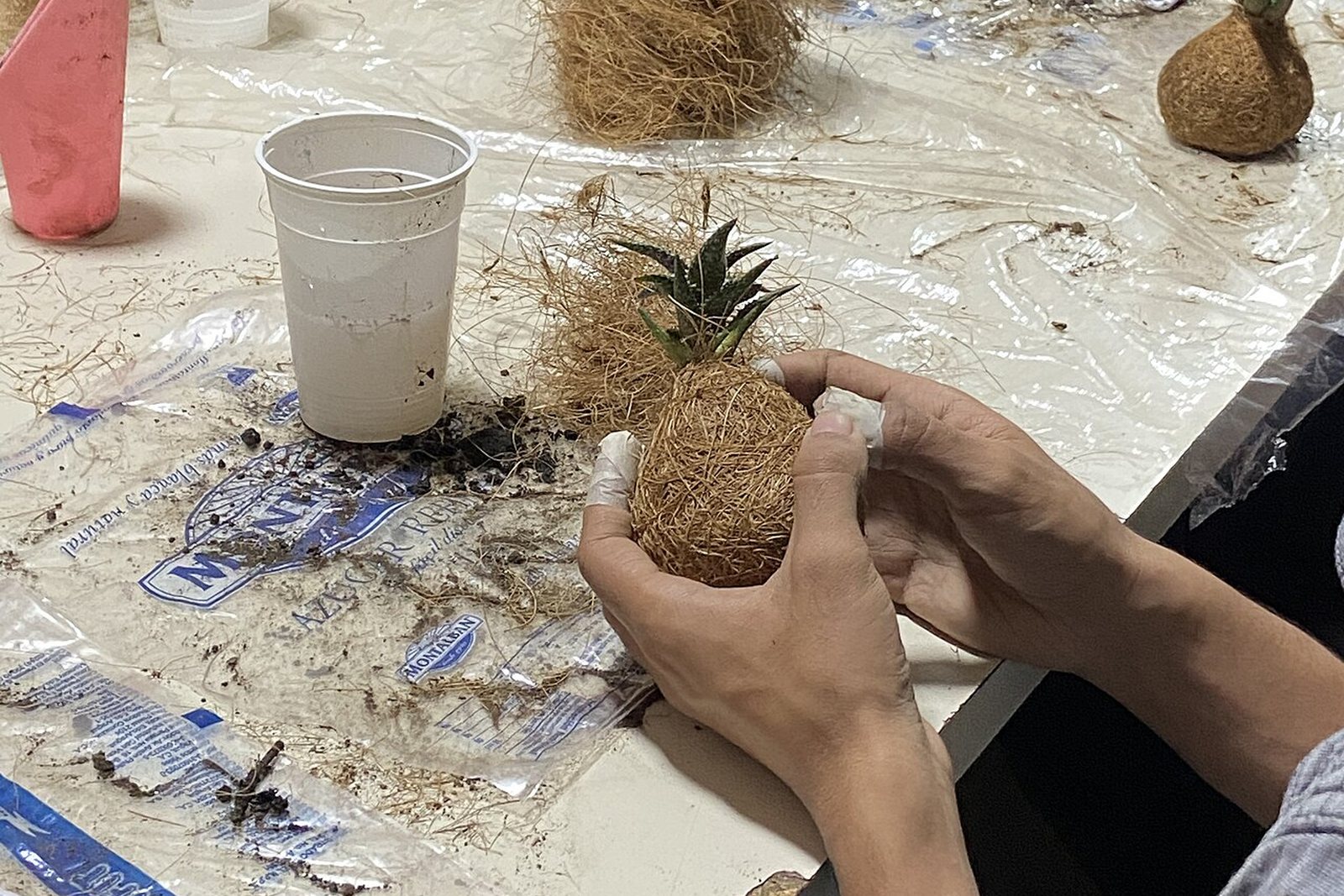
- Prepare the plant. Take it out of its pot and shake off as much old soil as you can so most of the roots are free.
- Plant it. Split the soil ball in half, lay the roots in the centre and press the halves back together around them.
- Wrap in moss. Lay a moss sheet green side out on a table, set the ball in the middle and gather the moss up around it, leaving the stems free.
- Tie it. Wind string around the ball in all directions, snug but not crushing, and knot it. To hang it, start at the top and leave a long tail for the hanger.
- Display it. Put it on a shallow dish, or hang it, and give it a first soak.
Protect the surface underneath: Penn State warns that damp moss can mark furniture, so use a tray or saucer.
Which plants suit a kokedama, and which do not?
The Missouri Botanical Garden says to choose plants with small root systems or slow growth, and Penn State says plants that tolerate some drying suit the method best. Thirsty plants dry out too fast and need constant checking.
| Good choices | Why | Light |
|---|---|---|
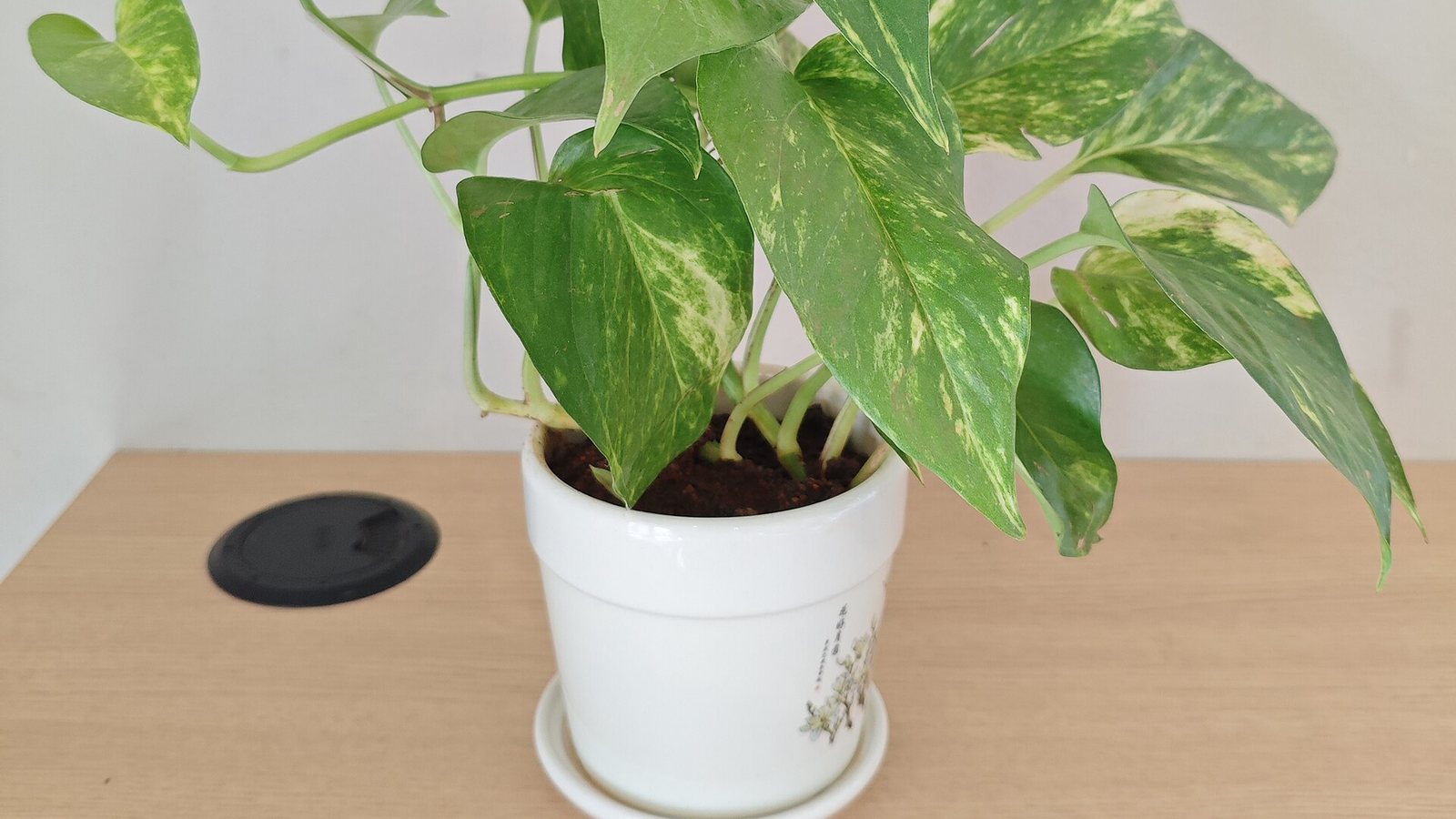
| Pothos, philodendron, peperomia, creeping fig | Small roots, forgiving | Shade to bright indirect (MBG) |
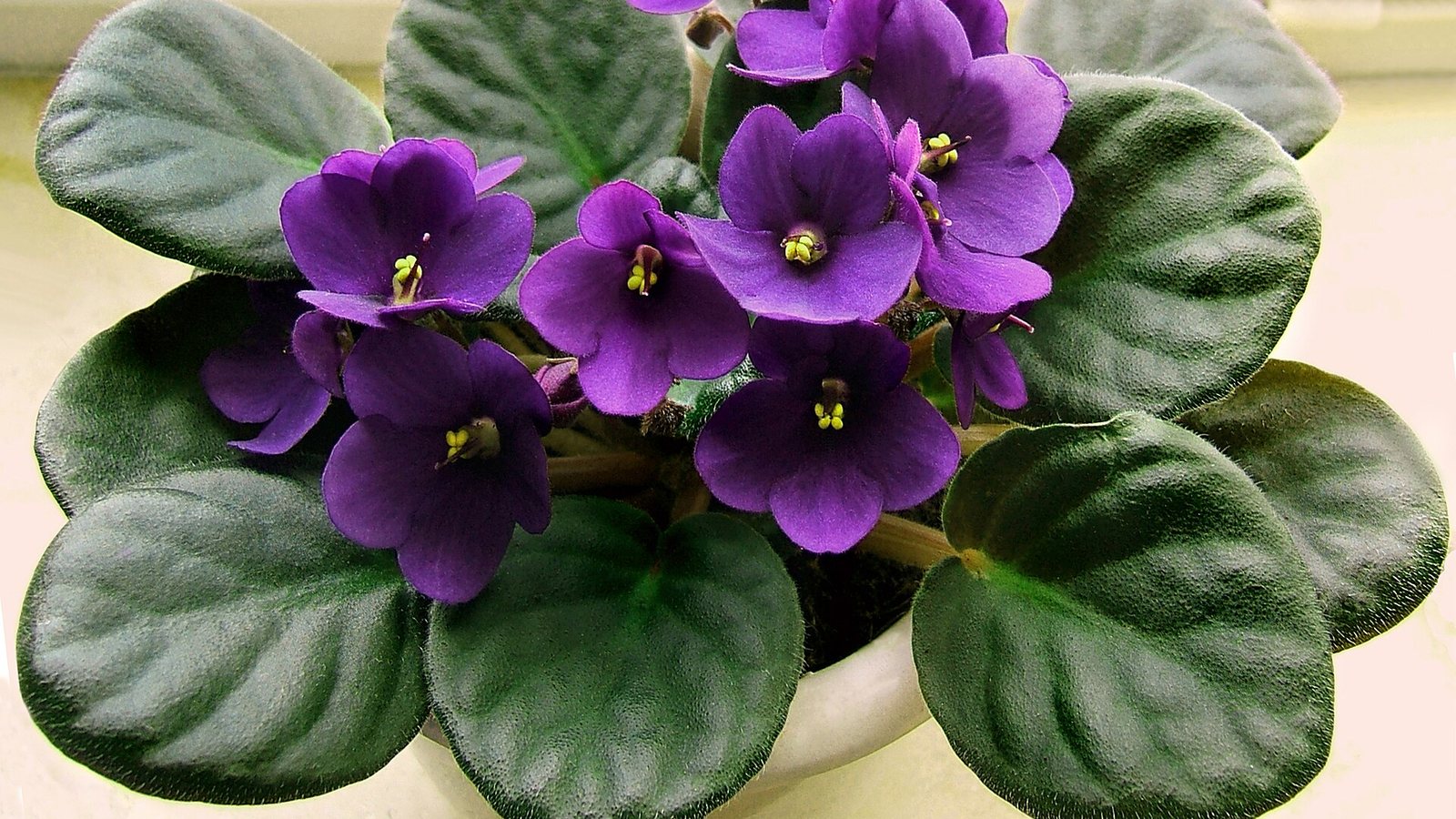
| Ferns, prayer plant, African violet | Like a humid, moist ball | Shade (MBG) |
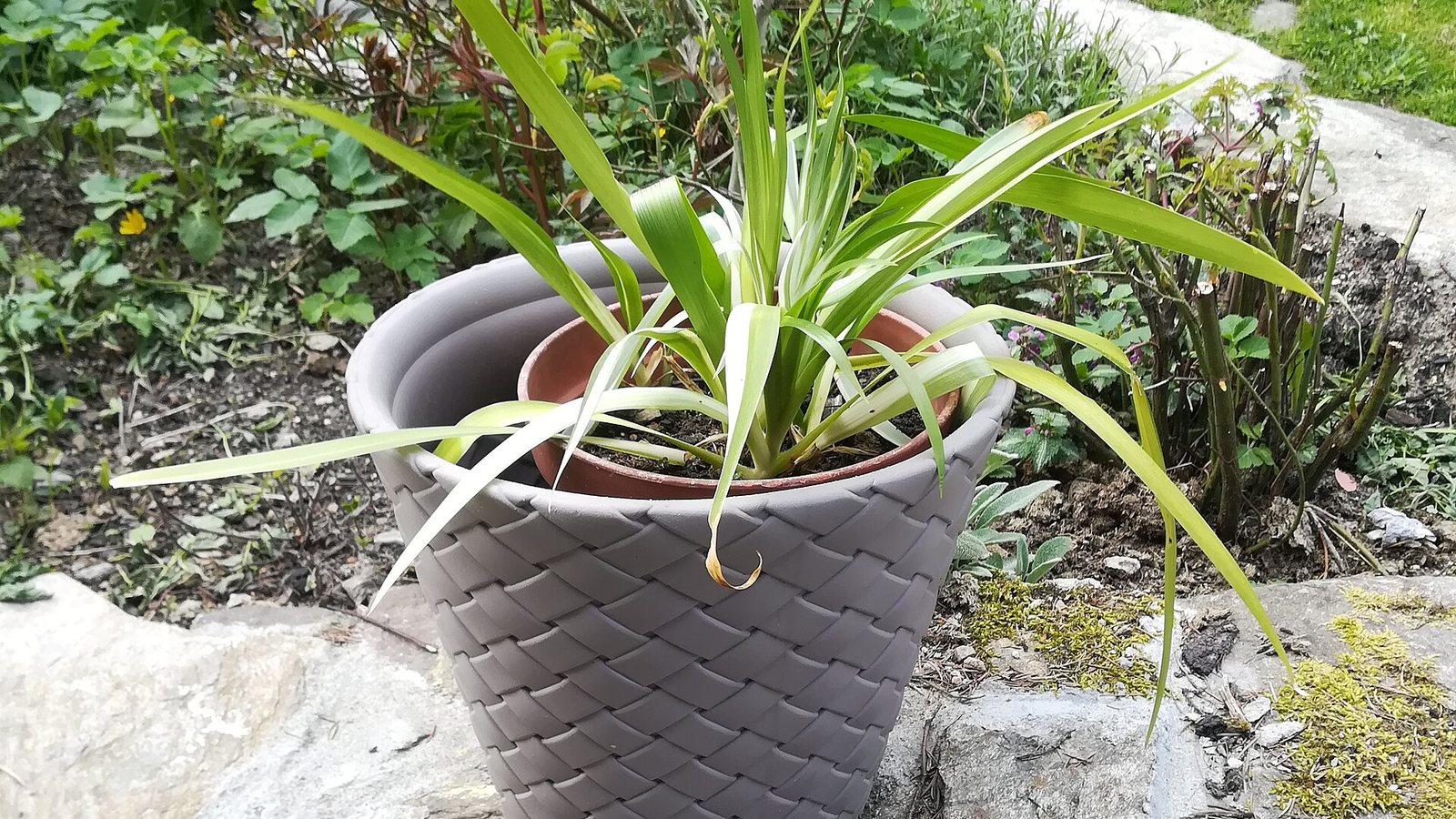
| Dracaena, spider plant, small orchids | Named by Illinois Extension | Bright indirect |
| Succulents, string-of-beads, aloe, kalanchoe | Need less water (Illinois, MBG) | Sun to part shade (MBG) |
| Basil, thyme, mint, parsley | Listed by MBG for sun | Sun to part shade |
Poorer choices are large, fast-growing plants and anything that needs constantly wet soil: the ball will dry between your checks. Pets matter here too. Pothos is toxic to dogs and cats according to the ASPCA, while the spider plant is listed as non-toxic to both, so choose accordingly if an animal could chew a hanging ball.
How do you water a kokedama, and how do you know when it is thirsty?
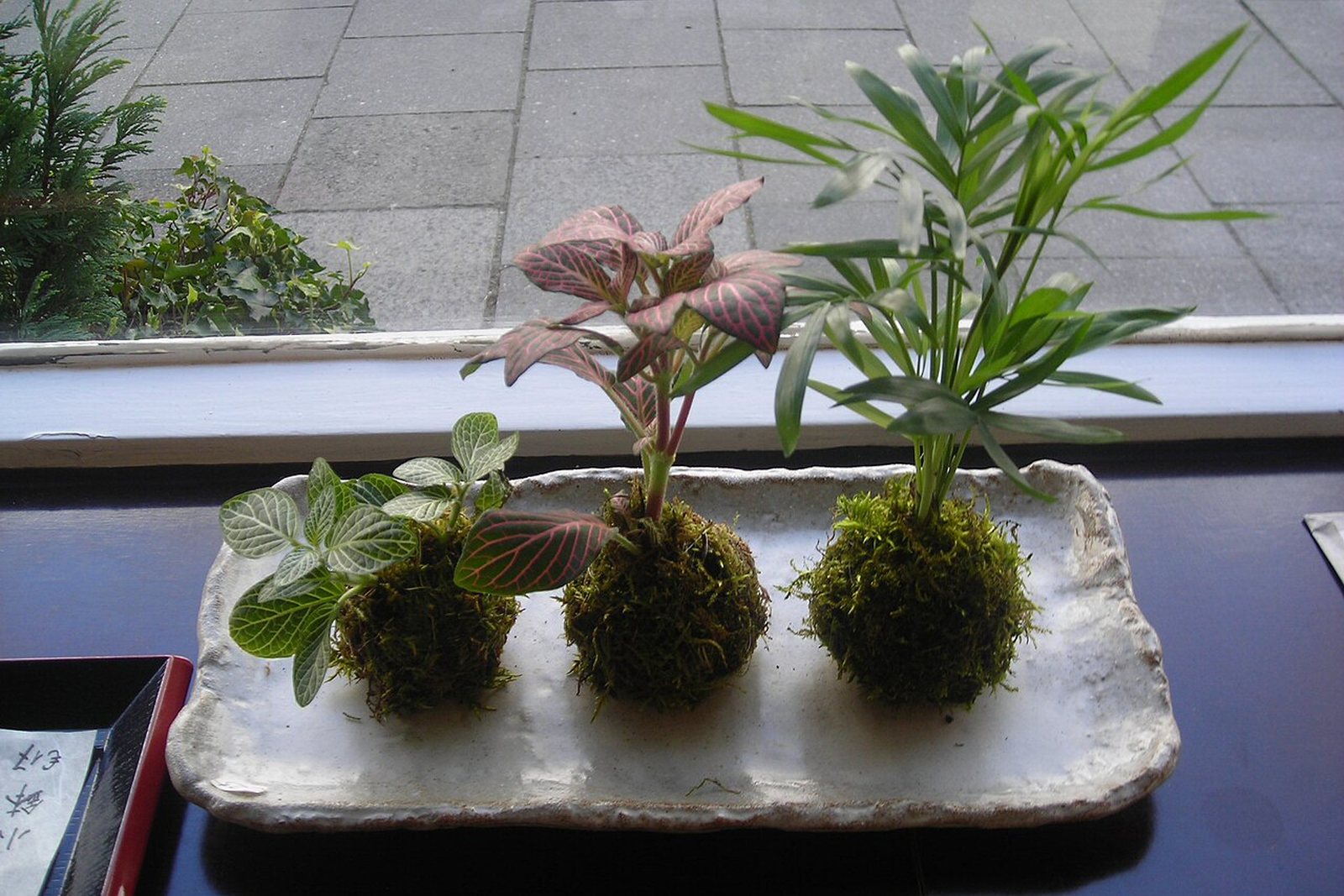
Do not pour water over it; soak it. Put the ball in a bowl of water until it feels heavy. The Missouri Botanical Garden says 5 to 10 minutes, Illinois Extension says 15 to 20 minutes in lukewarm water, so treat the time as a range and go by the weight. Then let it drip until it stops dripping before it goes back on its saucer or hook. Our guide to bottom watering uses a similar idea for pots.
The test is weight. Lift the ball: a dry one feels light, a freshly soaked one feels heavy. You can also press a finger into the soil near the stem. The Missouri Botanical Garden says to soak again when the ball feels light, usually every couple of days; your own interval depends on the plant, the room and the heating, so use that as a starting point, not a rule. Misting the moss between soaks helps stop it drying completely (Illinois, Penn State). Every few weeks you can add a water-soluble fertilizer to the soaking water, as the Missouri Botanical Garden suggests. A bathroom with some humidity suits a kokedama well (Penn State), and our humidity guide and bathroom plants list help you pick one.
What goes wrong with a kokedama?
| Sign | Likely cause | What to do |
|---|---|---|
| Ball feels light, moss is dry and crisp, leaves droop | Dried out | Soak until heavy, then check the weight more often |
| Ball stays heavy for days, plant looks poorly | Soil too wet or too compact; rot is the risk when moss stays soggy (Penn State) | Let it drip longer, soak less often, rebuild with more akadama or cat litter next time |
| Tiny flies around the ball | Constantly damp soil | See fungus gnats; let the surface dry between soaks |
| Plant looks cramped and stressed despite watering and feeding | Outgrown the ball | Move it to a larger soil ball (MBG) |
| Damp marks under it | Wet moss on a surface | Use a saucer or tray (Penn State) |
Pothos is a forgiving first project, and a cutting from a friend's plant costs nothing; our guide to rooting pothos in water shows how to get one. If you are unsure what the plant you bought is, a photo in Flori's identifier gives its name and care profile, and watering reminders can be set for each ball in your collection.
Should you try an outdoor kokedama?
The Missouri Botanical Garden advises mastering an indoor kokedama first. Outdoor ones need very frequent watering and extra protection in cold winters, which makes them harder than they look. For a Turkish reader, a kokedama on a shaded balcony in a hot Mediterranean or Aegean summer would dry out quickly; inland Anatolia adds frost to the problem. In a temperate northern climate it belongs indoors from autumn to spring.
Frequently asked questions
How often should I water a kokedama?
Soak it when the ball feels light. The Missouri Botanical Garden says that is usually every couple of days, but it depends on the plant, the room and the heating, so check the weight rather than the calendar.
How long does a kokedama last?
It lasts as long as the plant is healthy. If it outgrows the ball and looks stressed despite watering and feeding, the Missouri Botanical Garden says to move it into a larger soil ball.
Can I make a kokedama from any houseplant?
Not any. Choose plants with small root systems or slow growth. Thirsty plants dry out fast in a small ball, and big fast-growing plants outgrow it quickly.
Is a kokedama safe for cats and dogs?
It depends on the plant. The ASPCA lists pothos as toxic to dogs and cats and the spider plant as non-toxic to both. If a pet eats a toxic plant, call your vet.
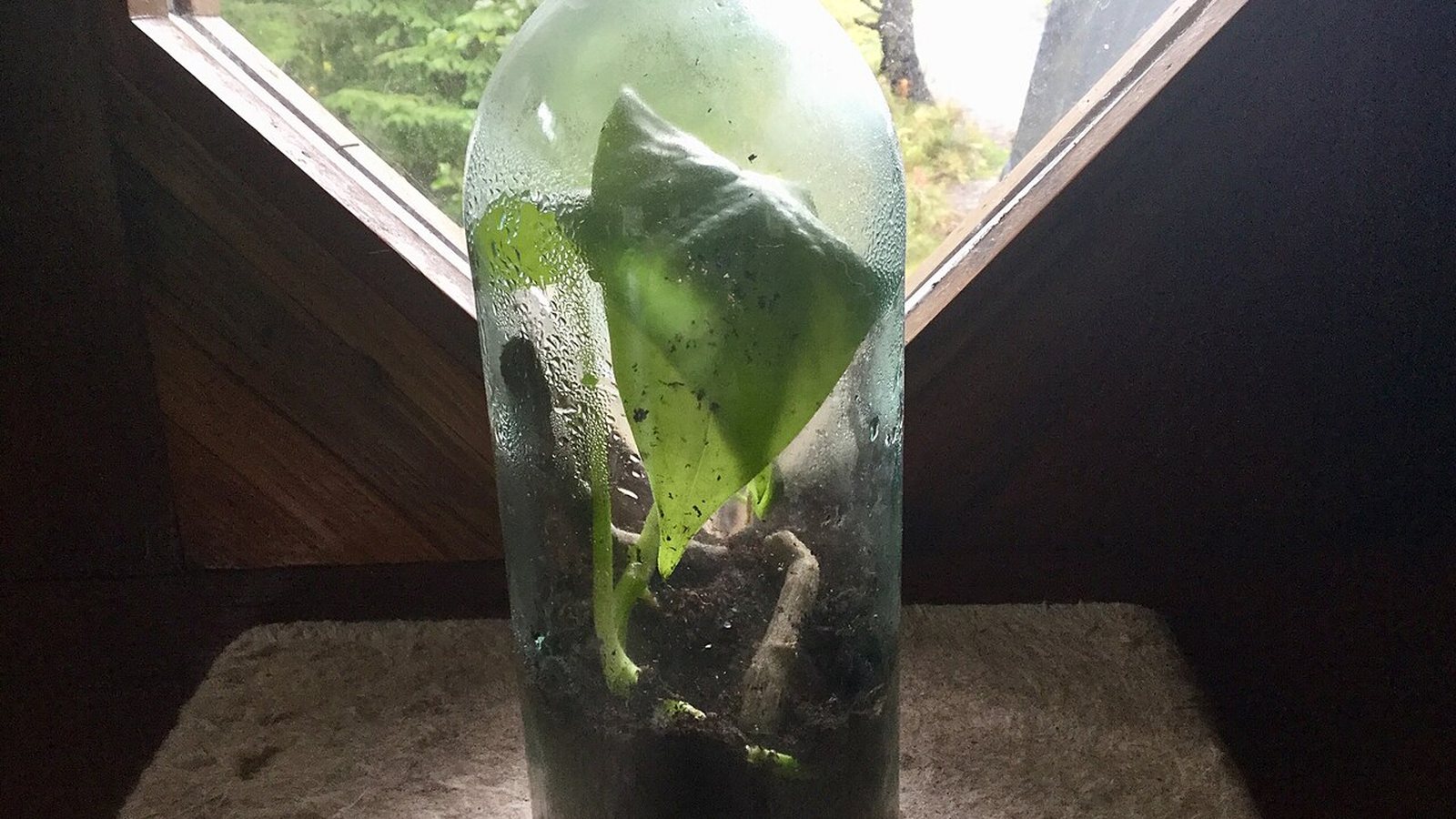
Build a terrarium step by step: clear glass, open or closed, base layer, compost, planting, light and watering, and where the experts disagree.
Sources
Written and fact-checked by the Flori team. Every guide cites horticultural sources such as the RHS, university extension services and the ASPCA, and is updated when the advice changes. How we write our guides
General plant care information. Plants vary; when a plant is valuable or a problem spreads quickly, consult a local nursery or plant specialist.