Bottom Watering: How and When to Do It
How to bottom water houseplants step by step, how long to leave pots in water, which plants benefit and why you still need to flush salts from the top.
 By Flori editorial team · Updated
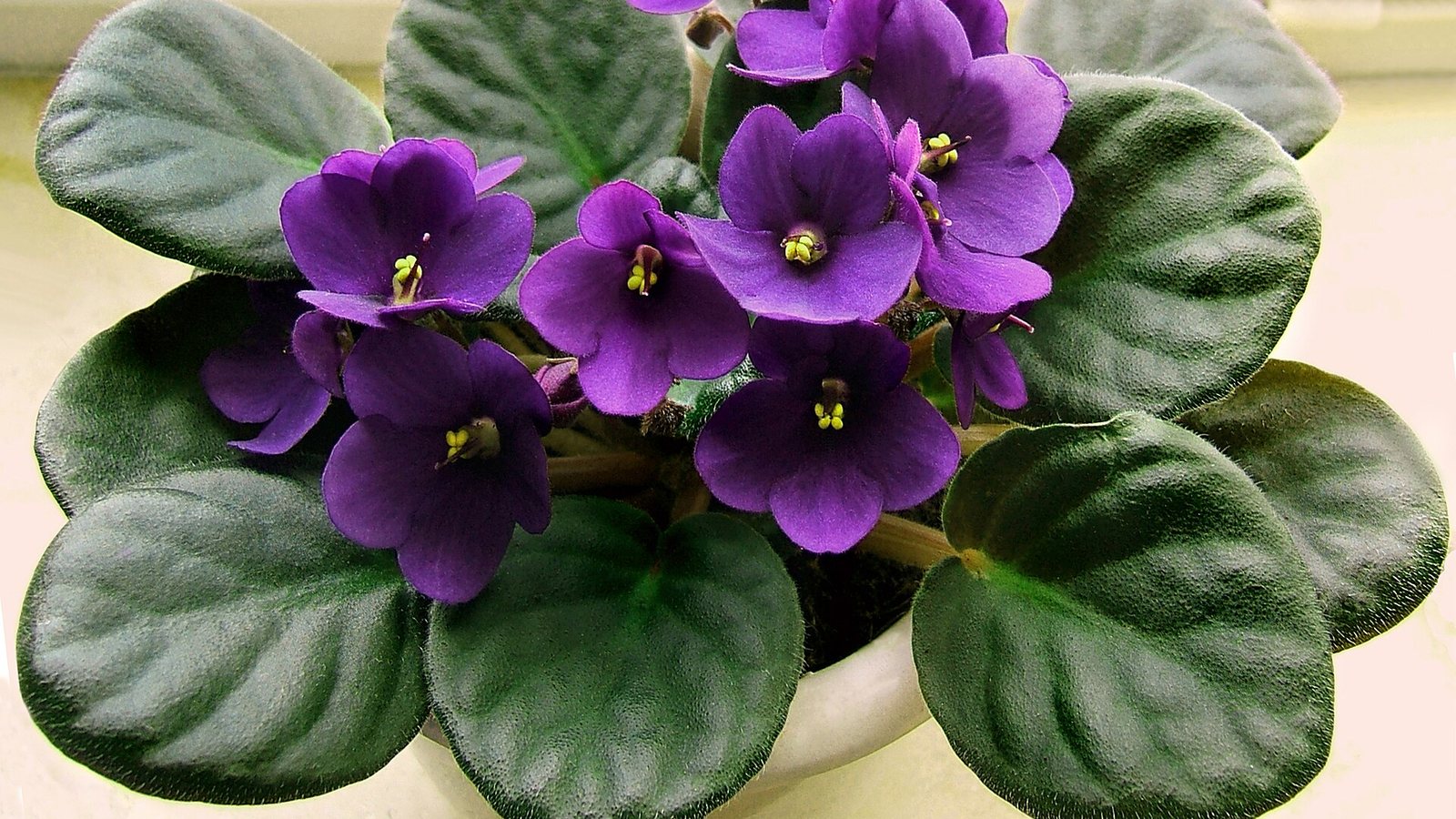 Photo: Wildfeuer · CC BY-SA 3.0
Stand the pot in a few centimetres of room-temperature water until the soil surface feels damp, then lift it out and let it drain. Check it after about 10 minutes and never leave it standing longer than 30–45 minutes. It suits African violets, cyclamen and small pots; water from the top every few waterings to flush out salts.
Key takeaways
- Bottom watering only works in pots with drainage holes.
- Take the pot out as soon as the soil surface is moist; 30–45 minutes is the upper limit.
- African violets and cyclamen benefit most, because their leaves and crowns stay dry.
- Water only from below and salts build up, so water from the top every few waterings.
- Check the mix before watering; bottom watering is a method, not a schedule.
On this page8
- What is bottom watering?
- Why water plants from the bottom?
- How to bottom water a plant, step by step
- How long should you leave a plant sitting in water?
- The catch: salts build up if you only water from below
- Which plants benefit from bottom watering?
- When is top watering the better choice?
- Common bottom-watering mistakes
What is bottom watering?
Bottom watering means standing a pot in a saucer, tray, bowl or sink of water so the potting mix draws moisture up through the drainage holes, instead of pouring water onto the soil surface. It is a favourite for African violets, cyclamen and small pots that are hard to water neatly. This guide explains how to bottom water step by step, how long to leave the pot in water, which plants really benefit, and the one habit most bottom-watering advice leaves out: flushing from the top now and then so salts do not build up in the pot.
The method only works in pots with drainage holes. A decorative cover pot without holes cannot draw water upwards, and a plant left standing in it will sit in wet mix for days. If you are still finding your feet with watering in general, start with our guide on how to water houseplants; here the focus is on doing it from below.
Why water plants from the bottom?
Three reasons hold up against extension advice:
- It keeps leaves and crowns dry. Iowa State University Extension says watering African violets from below prevents injury from cold water on the leaves, which can leave discoloured spots, and makes sure the whole root ball is moistened. The RHS goes further for florist's cyclamen: always water from the base, because the plants are prone to rot.
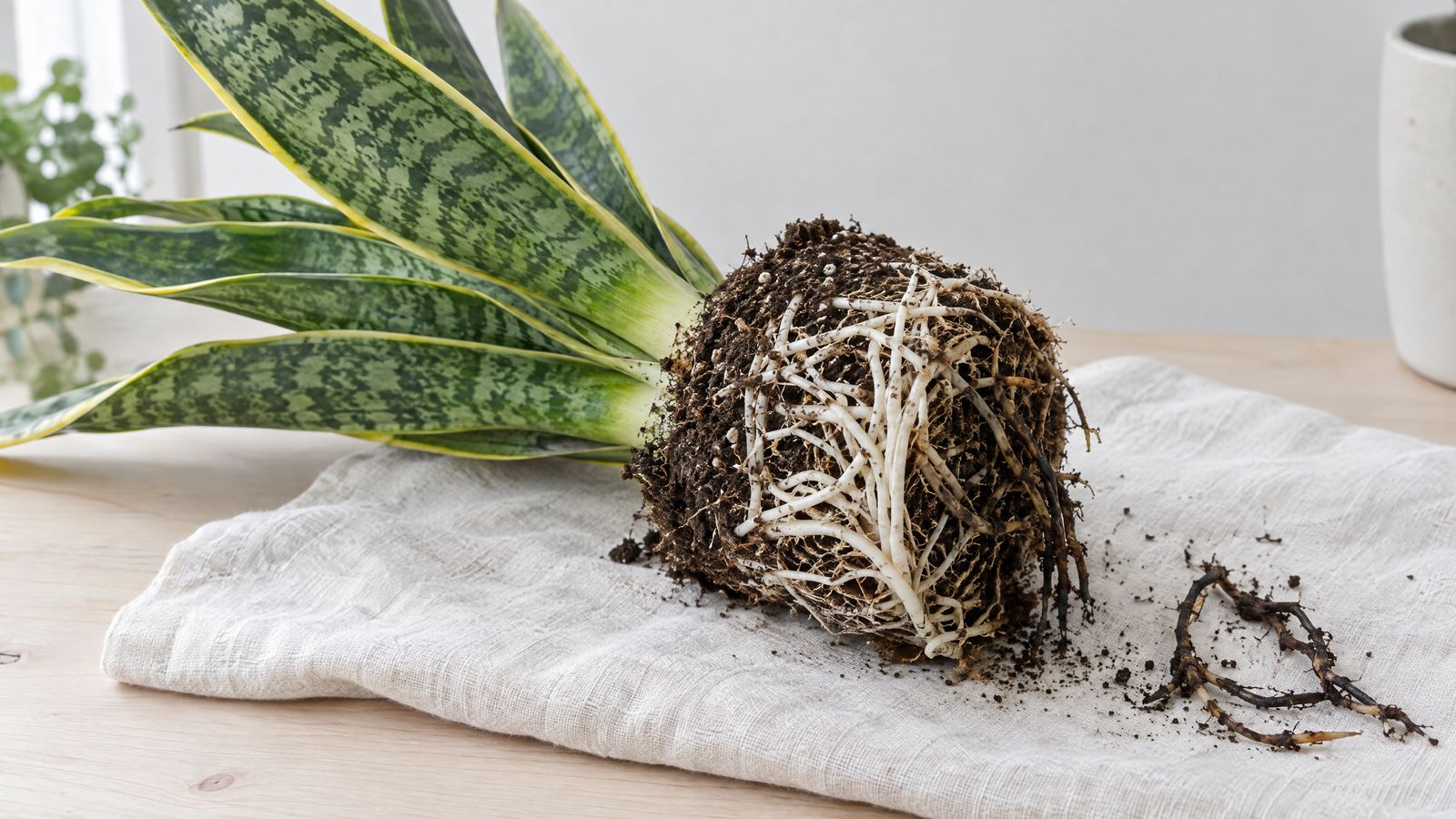
- It rewets dry mix evenly. A peat-based mix that has dried out hard can shed water poured from above; it runs down the gap between root ball and pot and straight out of the holes. Clemson Cooperative Extension suggests soaking such a pot in a sink or bucket and taking it out when the soil surface is moist. Iowa State likewise suggests submerging a very dry root ball for about 30 minutes.
- It is tidy for small pots and dense rosettes, where a watering can spout cannot reach the mix without splashing the leaves.
How to bottom water a plant, step by step
- Check that the plant needs water. Bottom watering is a method, not a schedule. Push a finger into the mix: Iowa State says to water when it is dry to the touch about 2–3 cm (1 in) down, and to wait until the top 2–3 cm (1 in) of an African violet's mix is dry before watering again.
- Fill a saucer, tray, bowl or sink with room-temperature water, a few centimetres deep.
- Stand the pot in the water. Small pots in fairly moist mix take only minutes; a dry 15 cm (6 in) pot takes longer. If the water disappears quickly, the mix was very dry, so add a little more.
- Watch the surface. When the top of the mix turns darker and feels damp, the root ball is wet through. This is the sign Clemson uses: remove the pot when the soil surface is moist.
- Lift it out and let it drain in the sink or on a rack. The RHS guide to moth orchids says a pot stood in a bowl of water should be allowed to drain thoroughly.
- Return it to a dry saucer and pour away any water that collects later.
How long should you leave a plant sitting in water?
Until the surface is moist, and no longer. In practice, check after about 10 minutes and every few minutes after that. Iowa State's general rule for houseplants is to empty water from the saucer or outer pot after 30–45 minutes and never let plants sit in standing water, so treat 30–45 minutes as the upper limit, not the target.
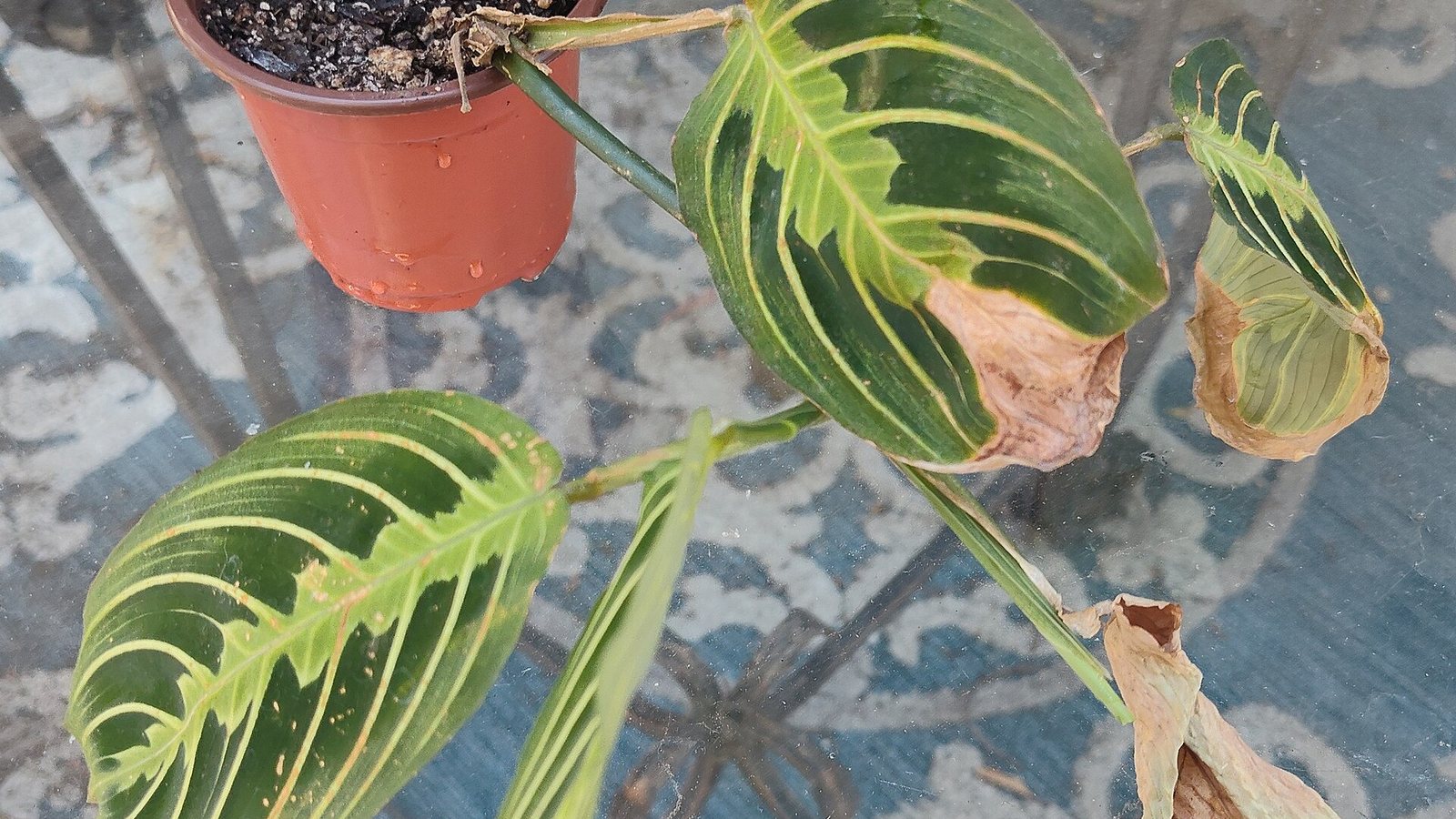
Leaving pots in a tray all day, or simply topping up the saucer as your way of watering, keeps the bottom of the root ball saturated. Iowa State warns that African violets left standing in water for long periods can develop root rot, and the same applies to almost any houseplant. Yellowing lower leaves, a sour smell or wilting in wet mix are the warning signs; if you see them, go to our root rot rescue plan.
The catch: salts build up if you only water from below
Tap water and fertilizer leave dissolved salts in potting mix. When you water from the top until water runs out of the holes, the excess salts leave with it; Clemson describes exactly this, noting that thorough watering washes out excess salts that can otherwise damage roots. Bottom watering moves water only upwards, so the salts are carried towards the surface and stay in the pot. A white crust on the mix or on the rim of a clay pot is the visible sign, and salt damage is one of the causes of brown leaf tips.
The fix is easy. Iowa State recommends occasional top watering for African violets to prevent salt accumulation. A workable routine is to bottom water as usual and, every few waterings, water from the top instead: slowly, until water runs freely from the holes, then let the pot drain and empty the saucer. Clemson also advises against softened water, because it adds sodium and chloride to the mix.
Which plants benefit from bottom watering?
| Plant | Bottom water? | What to know |
|---|---|---|
| African violet (Saintpaulia) | Yes, a good default | Keeps cold water off the hairy leaves; top water occasionally to flush salts (Iowa State) |
| Florist's cyclamen (Cyclamen persicum) | Yes | The RHS says always water from the base; prone to rot; give a dry rest in summer |
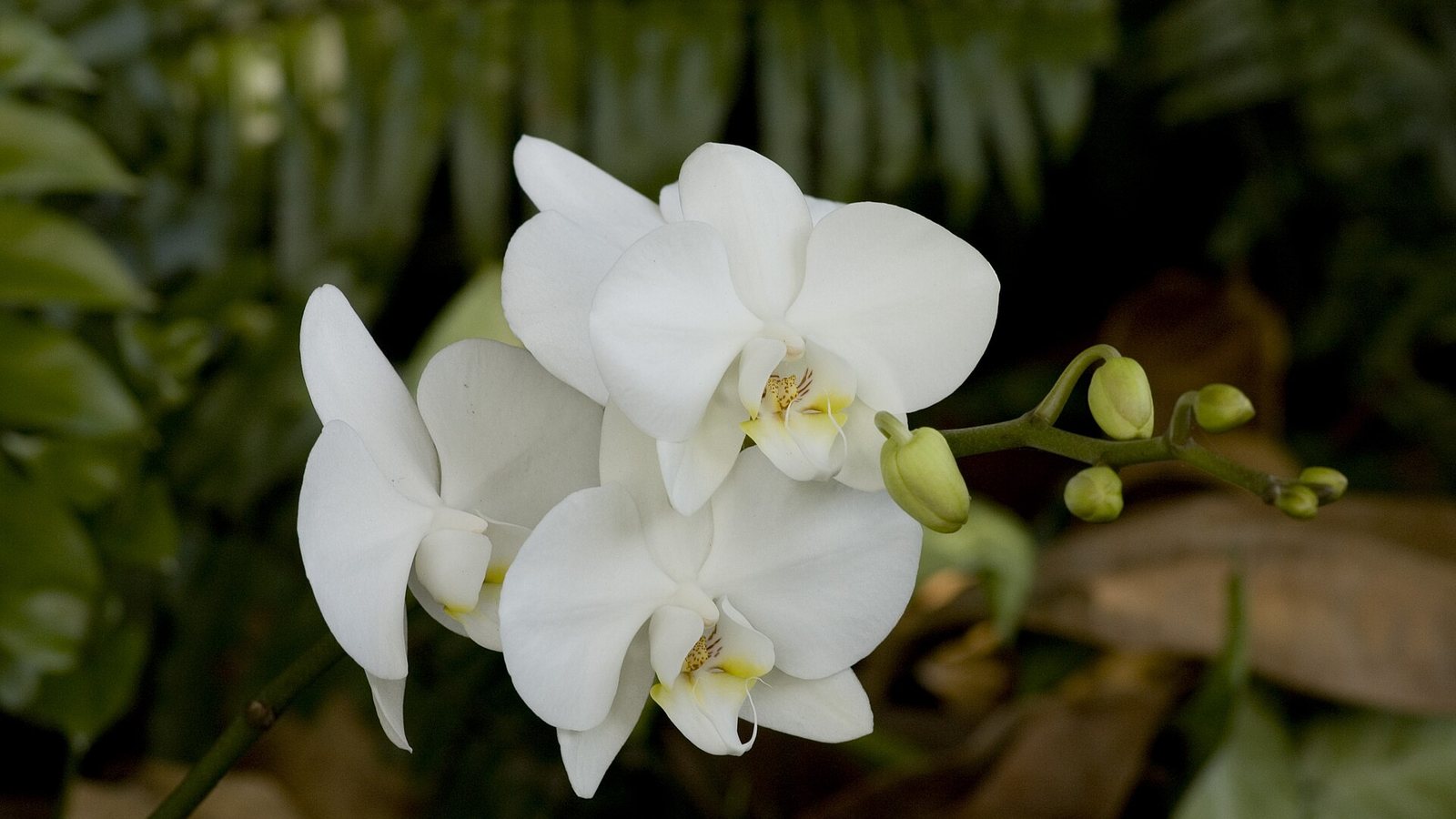
| Moth orchid (Phalaenopsis) | Either way | The RHS allows watering from above or standing in a bowl, then draining thoroughly; keep water out of the crown |
| Small pots, herbs and seedlings | Often easier | Avoids washing mix out of shallow pots; take them out as soon as the surface is damp |
| Succulents and cacti | Occasionally | Only when the mix is fully dry; lift out promptly and never leave standing |
| Large floor plants | Rarely practical | Too heavy to soak; water from the top until it drains and empty the saucer within 30–45 minutes |
When is top watering the better choice?
Bottom watering is not better in itself; it is one tool. Water from the top when the pot is too big to lift, when you need to flush salts, and when the surface is dry but the lower half of the pot is still wet, because standing that pot in water would only soak the part that is already soggy. Take plants out of cover pots before either method.
In winter, use whichever method you like but water less. The RHS points out that with lower light and temperatures plants grow less and need less water, and it singles out plants sitting in water as the thing to watch: tip away any excess from cover pots about 10 minutes after watering. Our guide to how often to water houseplants covers how the rhythm changes through the year.
Common bottom-watering mistakes
- Leaving pots in the tray for hours, or keeping water in the saucer permanently.
- Bottom watering a pot with no holes, which cannot work.
- Never watering from the top, so salts collect near the surface.
- Watering on a fixed day instead of checking the mix first.
- Using softened water, which Clemson advises against.
If you want a nudge, Flori's care reminders can prompt you to check your plants on a rhythm you choose, and the care log keeps a note of when each plant was last watered and how. Checking the mix before you water still matters more than any routine.
Frequently asked questions
How long should I bottom water a plant?
Until the soil surface feels damp; how long that takes depends on pot size and how dry the mix is, so check after about 10 minutes. Iowa State Extension advises emptying standing water after 30–45 minutes, so treat that as the maximum.
Is bottom watering better than top watering?
Not in general. It keeps leaves dry and rewets dry mix evenly, but it does not flush salts. Most plants do best with a mix of both: bottom water routinely and top water every few waterings until water drains out.
Can you bottom water succulents?
Yes, occasionally, when the mix is completely dry. Lift the pot out as soon as the surface is moist and let it drain; never leave succulents standing in water.
Why is there a white crust on my soil after bottom watering?
That is usually salt from tap water and fertilizer carried up to the surface. Water slowly from the top until water runs out of the holes to flush it, and avoid softened water.
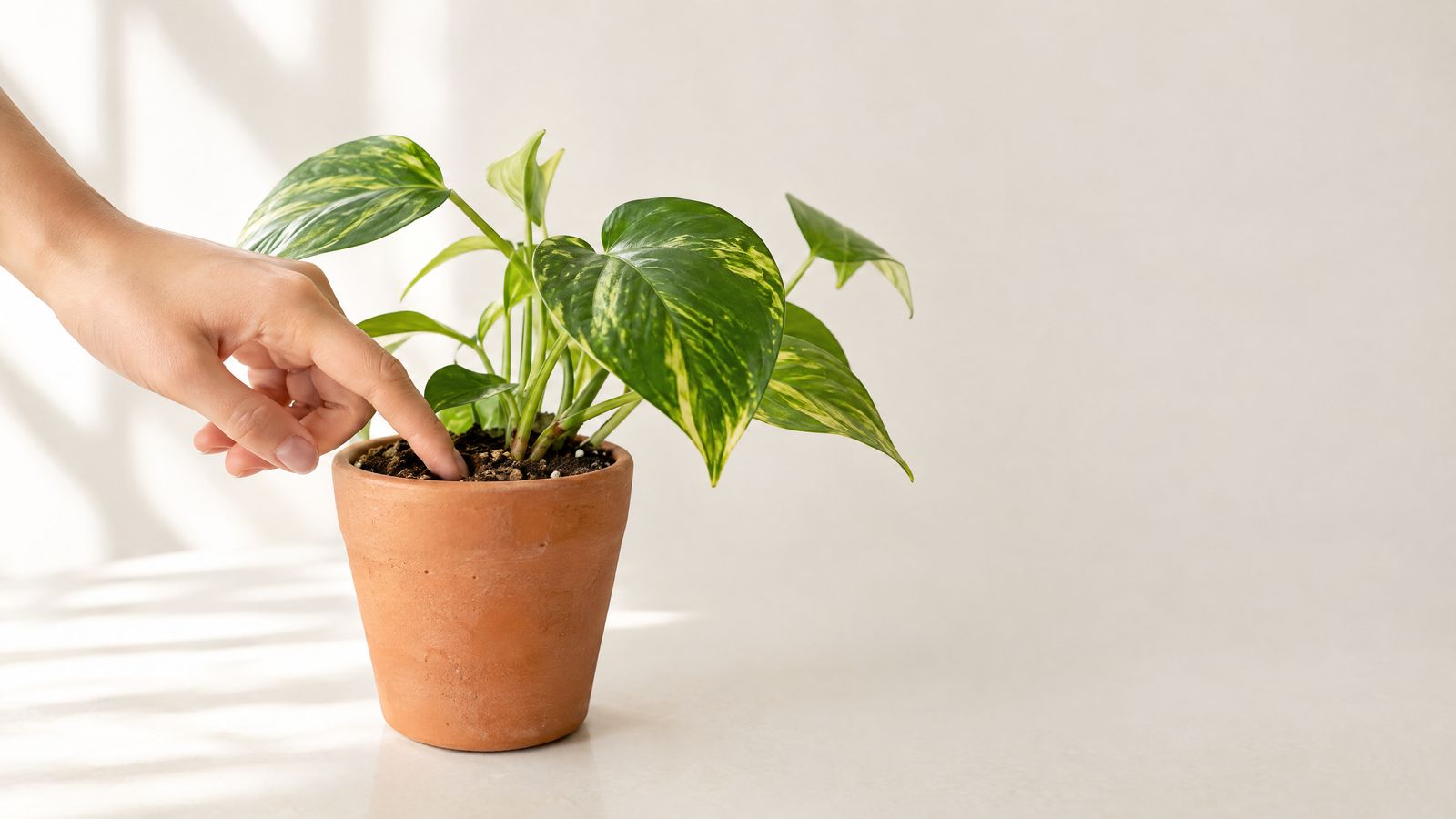
Water houseplants by checking the soil, not the calendar: when to water, how much to give, drainage, seasons and signs of over- or underwatering.
Sources
- Iowa State University Extension: All About African Violets
- Iowa State University Extension: How to Care for Houseplants
- Clemson Cooperative Extension HGIC: Indoor Plants – Watering
- Royal Horticultural Society: Beautiful winter houseplants and care tips
- Royal Horticultural Society: How to grow Phalaenopsis (moth orchids)
Written and fact-checked by the Flori team. Every guide cites horticultural sources such as the RHS, university extension services and the ASPCA, and is updated when the advice changes. How we write our guides
General plant care information. Plants vary; when a plant is valuable or a problem spreads quickly, consult a local nursery or plant specialist.