How to Build a Terrarium Step by Step
Build a terrarium step by step: clear glass, open or closed, base layer, compost, planting, light and watering, and where the experts disagree.
 By Flori editorial team · Updated
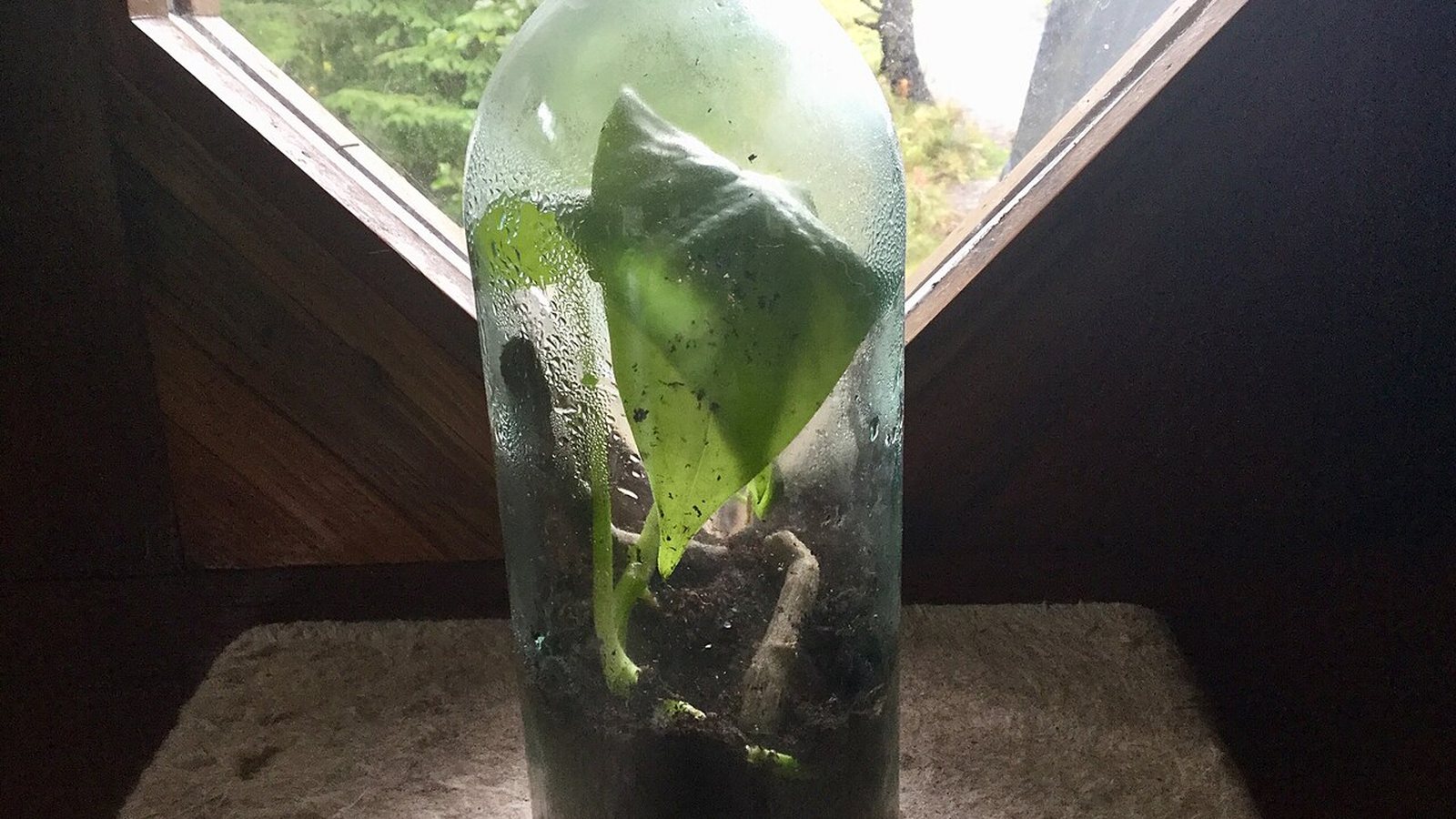 Photo: Beeblebrox · CC BY-SA 4.0
Choose a clear glass jar, clean it, add a base layer and just-damp compost, plant small slow growers, finish with moss, then mist lightly and place it in bright, indirect light. Experts disagree on a gravel base: the RHS uses it, Penn State Extension says skip it.
Key takeaways
- Choose open for succulents and dry-air plants, closed for small humidity-loving tropicals.
- Clean the jar, tools, rocks and plants first; most problems appear in the first few weeks.
- Sources disagree on a gravel layer; either way keep the compost only just damp.
- Give bright, indirect light for at least six hours (RHS), never direct sun, which can overheat the glass.
- A closed terrarium may need water only every four to six months; check the condensation, not the calendar.
On this page11
- How do you build a terrarium step by step?
- Open or closed: which terrarium should you build?
- What do you need to build a terrarium?
- Step 1: Clean the container and everything that goes in
- Step 2: Should you add a drainage layer?
- Step 3: Add compost, rocks and wood
- Step 4: Plant it
- Step 5: Water gently and decide when to close the lid
- Step 6: Where do you put a terrarium?
- How do you care for a terrarium afterwards?
- Terrarium problems: symptom, cause and fix
How do you build a terrarium step by step?
You build a terrarium in eight moves: choose clear glass, decide open or closed, clean everything, lay the base, add compost, place rocks or wood, plant, then water lightly and find the right light. The part most guides skip is that the experts disagree on the base layer, so this guide shows where the Royal Horticultural Society (RHS), Penn State Extension and Clemson differ and what to do about it. For which plants to put in the jar, see our list of the best plants for a closed terrarium; this guide is about the build.
Open or closed: which terrarium should you build?
| Closed terrarium | Open terrarium | |
|---|---|---|
| Lid | Yes, sealable | No, wide open top |
| Plants | Small, slow-growing, humidity-loving tropicals (RHS) | Plants that do not need high humidity, such as succulents and cacti (RHS) |
| Watering | Only a few times a year (RHS) | Occasional light watering; slightly too dry beats too wet (Clemson) |
| Upkeep | Minimal; makes its own rain cycle (Penn State) | Easier to build, drier, less prone to disease (Penn State, Clemson) |
If you want a plant that likes dry air, pick open. Succulents in a sealed jar rot, and Penn State says plainly to avoid succulents and cacti in a closed one.
What do you need to build a terrarium?
- A clear glass container. The RHS says about 30 cm (12 in) wide and tall is ideal; smaller works but limits plant choice. Tinted or cloudy glass reduces light (Clemson). Avoid metal screw tops, which can rust, and opaque lids (RHS). Fish bowls, jars, jugs and bottles all work, and none has a drain hole.
- Compost or potting mix. Use a soilless, low-fertility mix (Penn State) or peat-free multi-purpose compost with horticultural grit at about 4 to 1 (RHS). Garden soil compacts too easily.
- Charcoal (optional), small rocks or clean wood, moss.
- Tools. The RHS suggests chopsticks, a spoon tied to a cane, or barbecue tongs for narrow necks, plus a mister and a cloth.
Step 1: Clean the container and everything that goes in
Wash the glass with soap and hot water, rinse and air dry (Penn State). Clemson also gives a rinse of 1 part bleach to 15 parts water. If you use a commercial glass cleaner, keep the lid off and wait a few days before planting (Penn State). Clean rocks, wood and tools too, so you do not bring in pests or disease (RHS). Every plant must be healthy: remove yellow or damaged leaves (Clemson).
Step 2: Should you add a drainage layer?
This is where the sources split.
| Source | Base layer advice |
|---|---|
| RHS | Washed gravel in the base; expanded clay is an alternative |
| Clemson | Pea or aquarium gravel; drainage plus soil should fill about a quarter of the container, with a ½ inch (about 1 cm) layer of horticultural charcoal above it |
| Penn State | Skip the pebble layer, as it is not considered helpful; mix 1 to 2 handfuls of charcoal into the soil instead |
The sources do not agree, so choose one and keep the compost only just damp whichever you pick. A shallow gravel layer gives you extra room for stray water in a jar with no drain hole; the soilless approach is simpler and uses less height. In either case, fill the compost to the depth of the largest root ball (RHS, Penn State).
Step 3: Add compost, rocks and wood
Add the compost (RHS suggests enough to take the root balls; Clemson says at least 1½ inches, about 4 cm). The compost should be just damp, not wet (Penn State). Then position small rocks or wood if you want them (RHS), after the soil but before the plants (Clemson). Choose rocks and ornaments that do not rot; Penn State recommends non-porous items such as glass, resin or porcelain and says to avoid wood. The RHS allows wood if you clean it first, so the choice depends on how often you plan to open the jar.
Step 4: Plant it
- Choose a front and a back. Put the tallest plant in the centre for all-round viewing, or at the back for one-sided viewing (Penn State).
- Plant small ones first (Penn State), or back to front if the jar has a wide opening (Clemson).
- Make a well in the compost, insert the plant, fill around it and firm in (RHS). Set each root ball level with the soil surface, at its original pot depth (Clemson).
- Trim any circling roots (Clemson) and leave room to grow; plants with similar light and moisture needs belong together (Penn State).
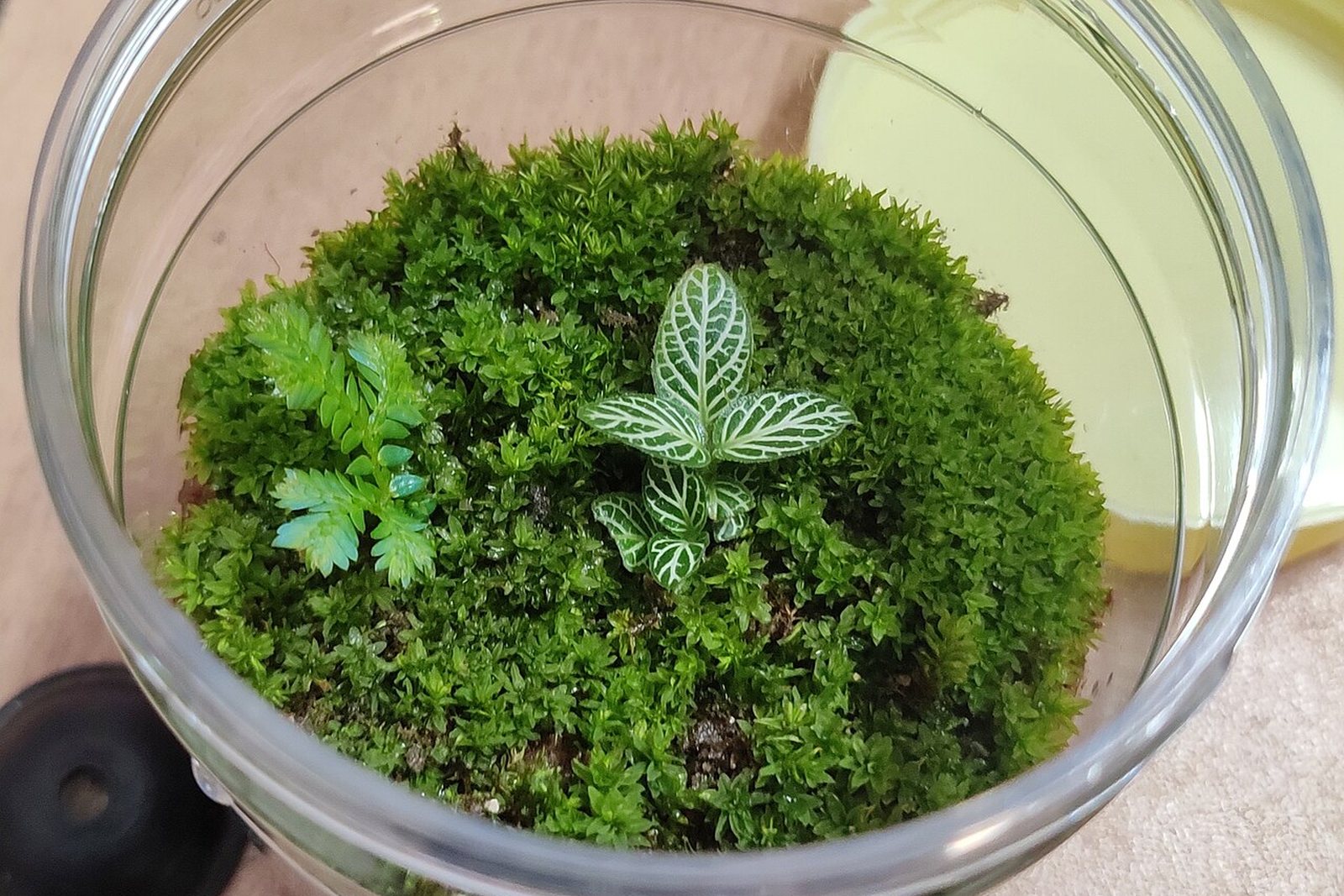
- Add moss last over the compost: cushion moss or sustainably sourced sphagnum (RHS). Never take moss from the countryside without the landowner's permission (RHS).
Less is more: Penn State says "more is not better" in a small space, so limit coloured foliage and decorations.
Step 5: Water gently and decide when to close the lid
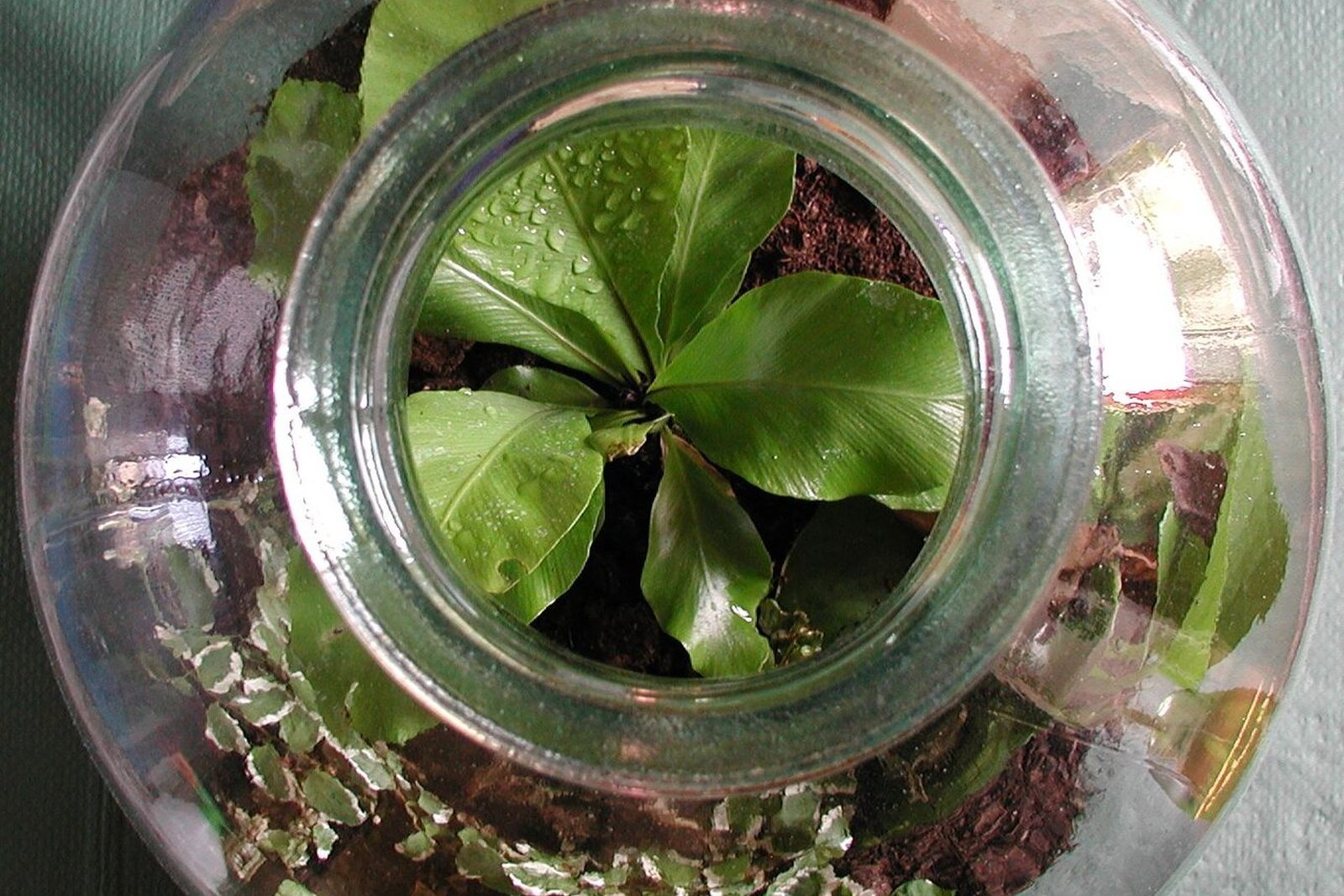
Mist lightly so the water runs down the glass and clears compost off leaves (RHS). Penn State's rule is to let water on the foliage dry before adding the lid; Clemson says the standing water at the base should not exceed a quarter of an inch (about 6 mm). Once the lid is on, you want a light fog on the glass that drips back down. Check after a couple of days: light condensation means the moisture is right, none may mean you need to water, and heavy condensation means you should wipe the glass or leave the lid off for a day or two (RHS, Penn State). Excess water is hard to remove, so add less than you think.
Step 6: Where do you put a terrarium?
The RHS asks for bright, indirect light for at least six hours a day, ideally a north- or east-facing window, with a south- or west-facing one fine in winter. Penn State warns that direct sun can overheat and "cook" a terrarium, so keep it out of direct sun and away from radiators. If the room is dark, use a plant grow light; the RHS says normal domestic lights are not suitable. Our grow light guide explains what to buy. In sunny Aegean and Mediterranean homes, an east window or a spot a metre from the glass often suits better than a south sill, because sealed glass heats up fast.
How do you care for a terrarium afterwards?
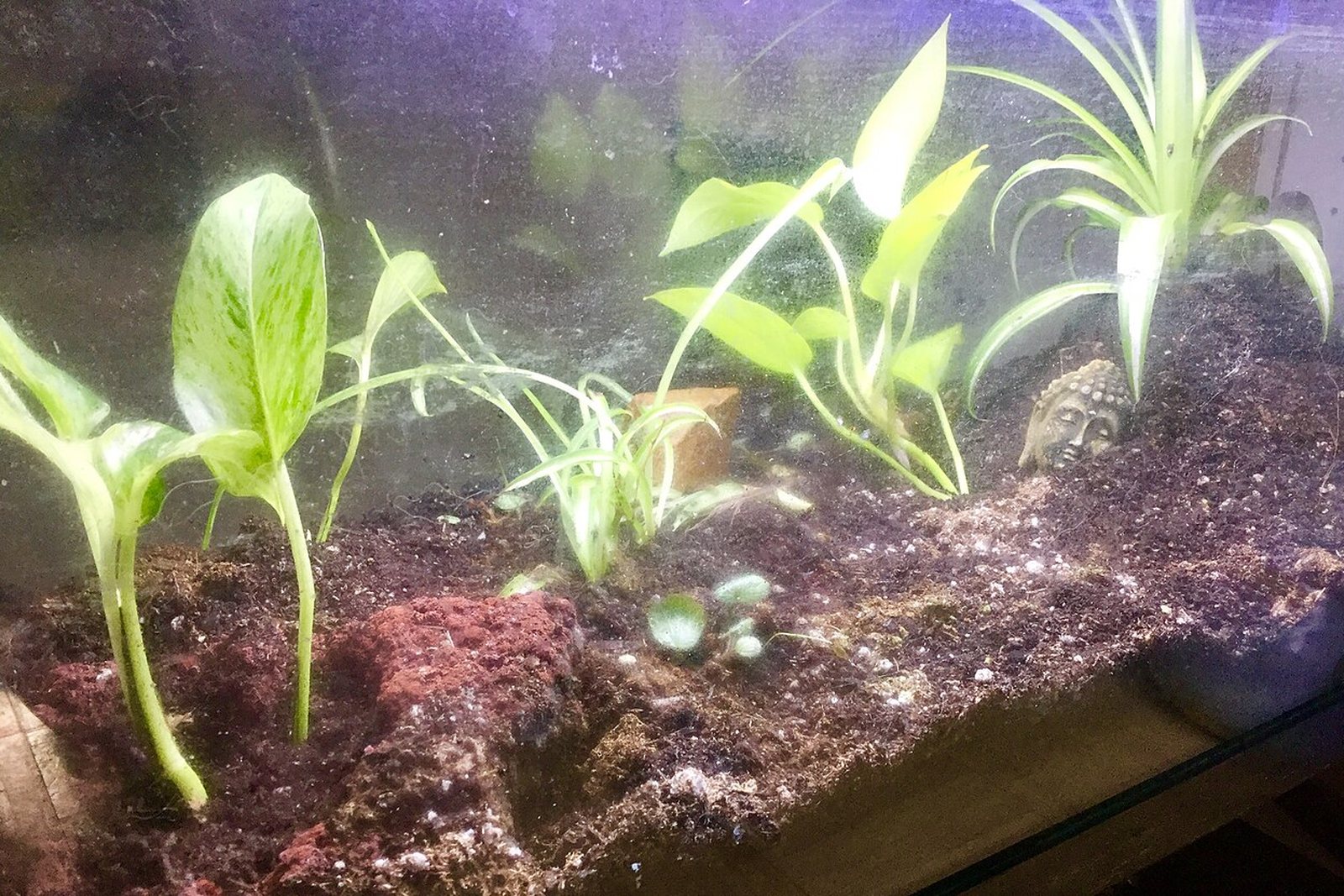
- Watering: only when condensation stops, plants droop, or the soil feels dry (Penn State). A very tight lid can go four to six months without water (Penn State, Clemson).
- Fresh air: some experts suggest removing the lid for up to 15 minutes a week once the rain cycle is established (Penn State).
- Pruning: pinch tips often so plants stay balanced (Clemson), and remove yellow leaves and leaves touching the glass (Penn State).
- Feeding: wait at least a year (Clemson). After that, feed very weakly, and do not feed in winter (Penn State). The two sources give different dilutions, a quarter and a tenth of the normal rate, so start weaker.
- Turning: rotate the jar now and then so plants do not lean toward the light (Penn State).
Terrarium problems: symptom, cause and fix
| What you see | Likely cause | What to do |
|---|---|---|
| Yellow or dying leaves | Usually overwatering (RHS) | Remove dead material; open the lid to dry out |
| Heavy condensation all the time | Too wet or too closed | Wipe the glass, leave the lid off for a day or two |
| Rotting plant | Too much moisture (Clemson) | Remove it promptly and uncover the terrarium |
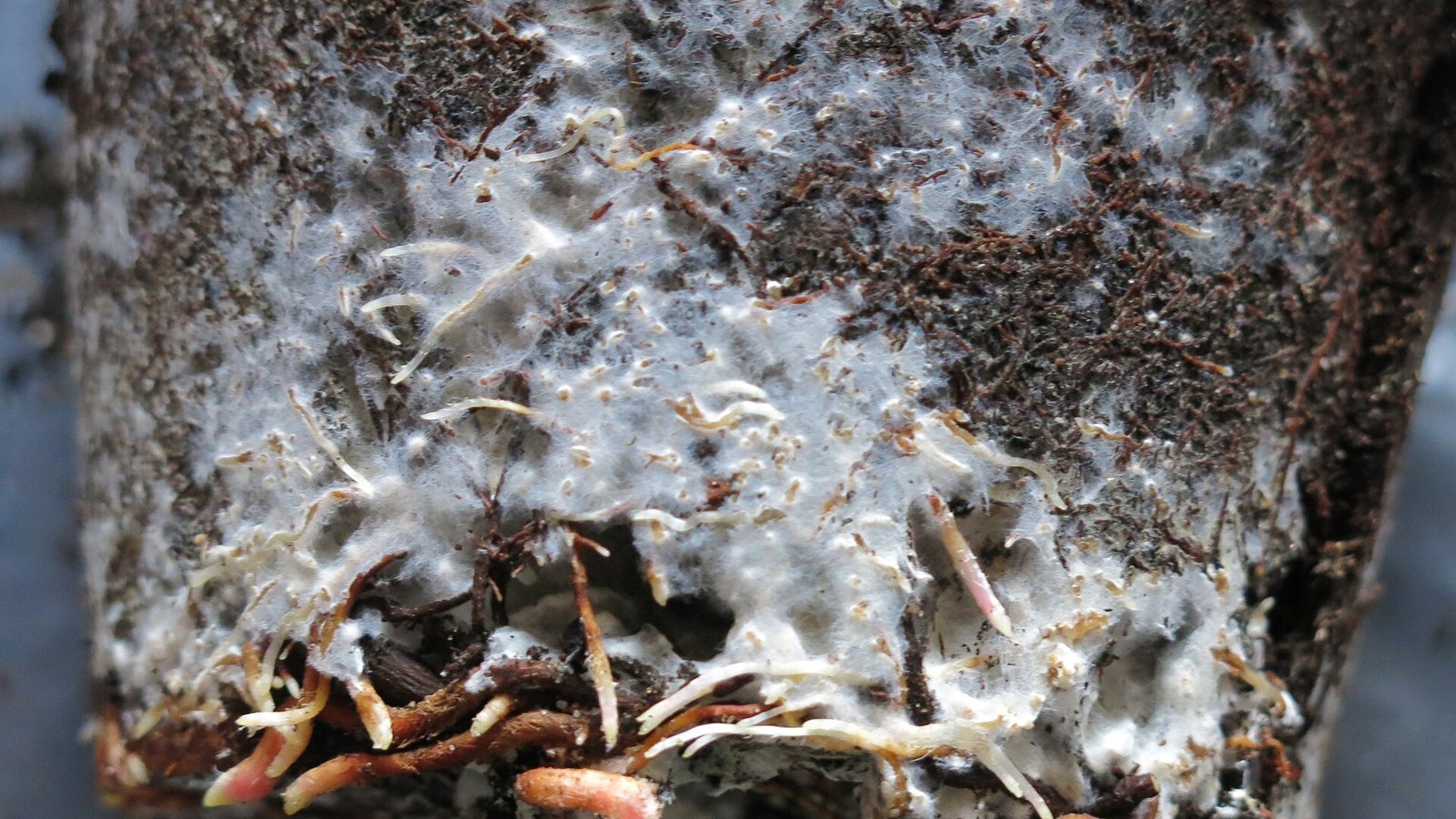
| White fuzz on soil | Common in a new jar | See our guide to white mould on houseplant soil |
| Plants leaning toward the light | Uneven light | Rotate the jar |
Diseases mostly show in the first few weeks (Penn State, Clemson), so look closely early on. If you cannot tell what is wrong, describe it or send a photo to Dr. Flori, which asks follow-up questions and tells you how urgent it is. Flori can also look up a plant's care profile, with its humidity needs, before you buy it for the jar. For how humid a room needs to be in general, see our plant-by-plant humidity guide.
Frequently asked questions
Do you need a drainage layer in a terrarium?
Sources disagree. The RHS and Clemson use gravel at the base, while Penn State Extension says a pebble layer is not considered helpful and suggests a soilless mix with a little charcoal. Keep the compost only just damp either way.
How often do you water a closed terrarium?
Rarely. The RHS says only a few times a year; Penn State and Clemson say a tightly closed one may go four to six months. Water when condensation stops, plants droop or the soil feels dry.
What is the difference between an open and a closed terrarium?
A closed one has a lid and makes its own rain cycle, suiting humidity-loving tropicals. An open one has no lid, needs more frequent watering and suits succulents and cacti, according to the RHS and Penn State.
Where should I put my terrarium?
In bright, indirect light for at least six hours a day, ideally a north- or east-facing window, out of direct sun and away from radiators (RHS, Penn State).
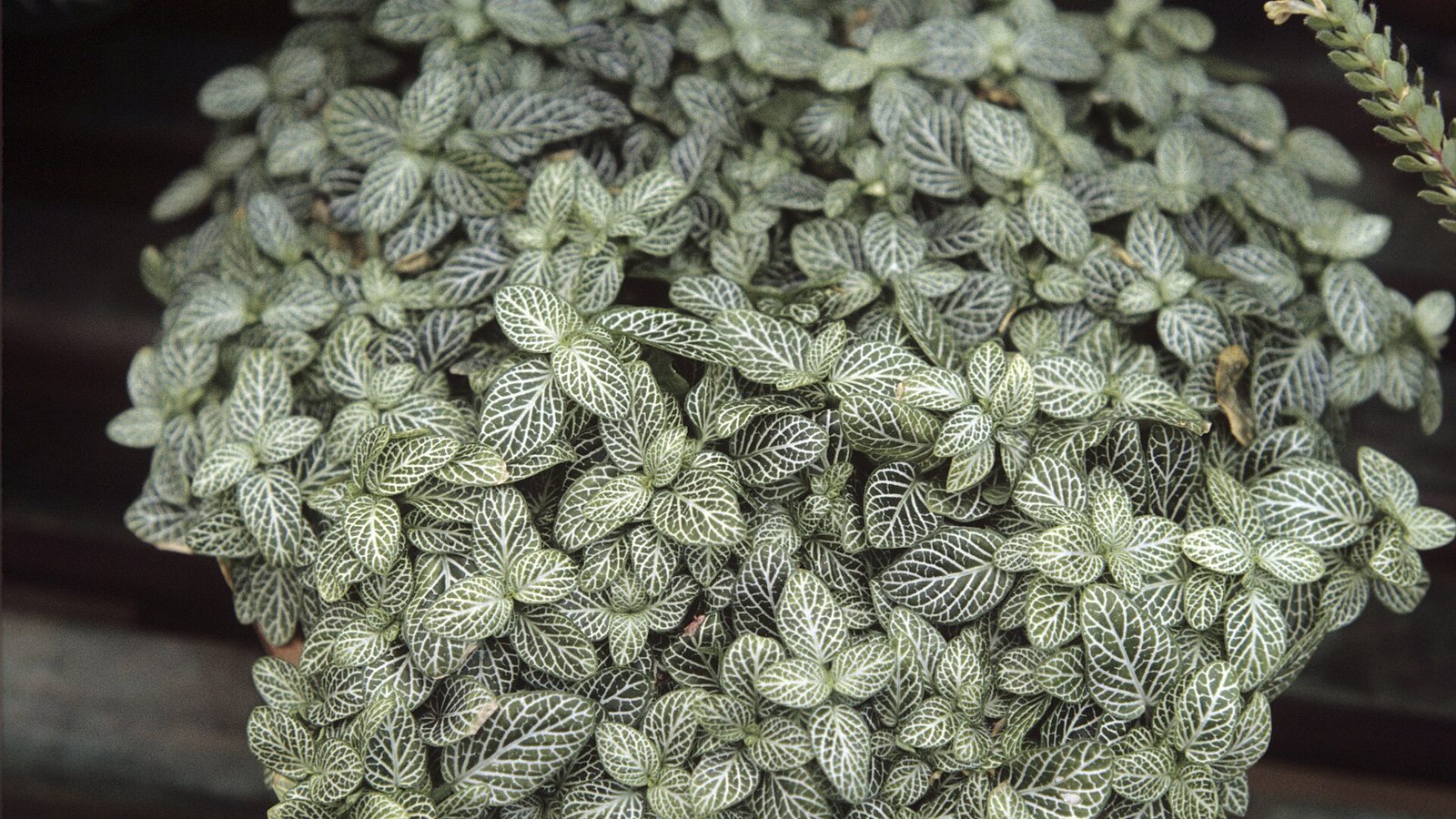
Fittonia, small peperomias, polka dot plant and moss thrive in a closed jar; succulents and big plants do not. Best plants, light, water and pet safety.
Sources
Written and fact-checked by the Flori team. Every guide cites horticultural sources such as the RHS, university extension services and the ASPCA, and is updated when the advice changes. How we write our guides
General plant care information. Plants vary; when a plant is valuable or a problem spreads quickly, consult a local nursery or plant specialist.