How to Prune a Grapevine in Winter
When and how to prune a grapevine in winter, in both hemispheres: rod and spur vs Guyot compared, step-by-step cuts, young vines and the mistakes to avoid.
 By Flori editorial team · Updated
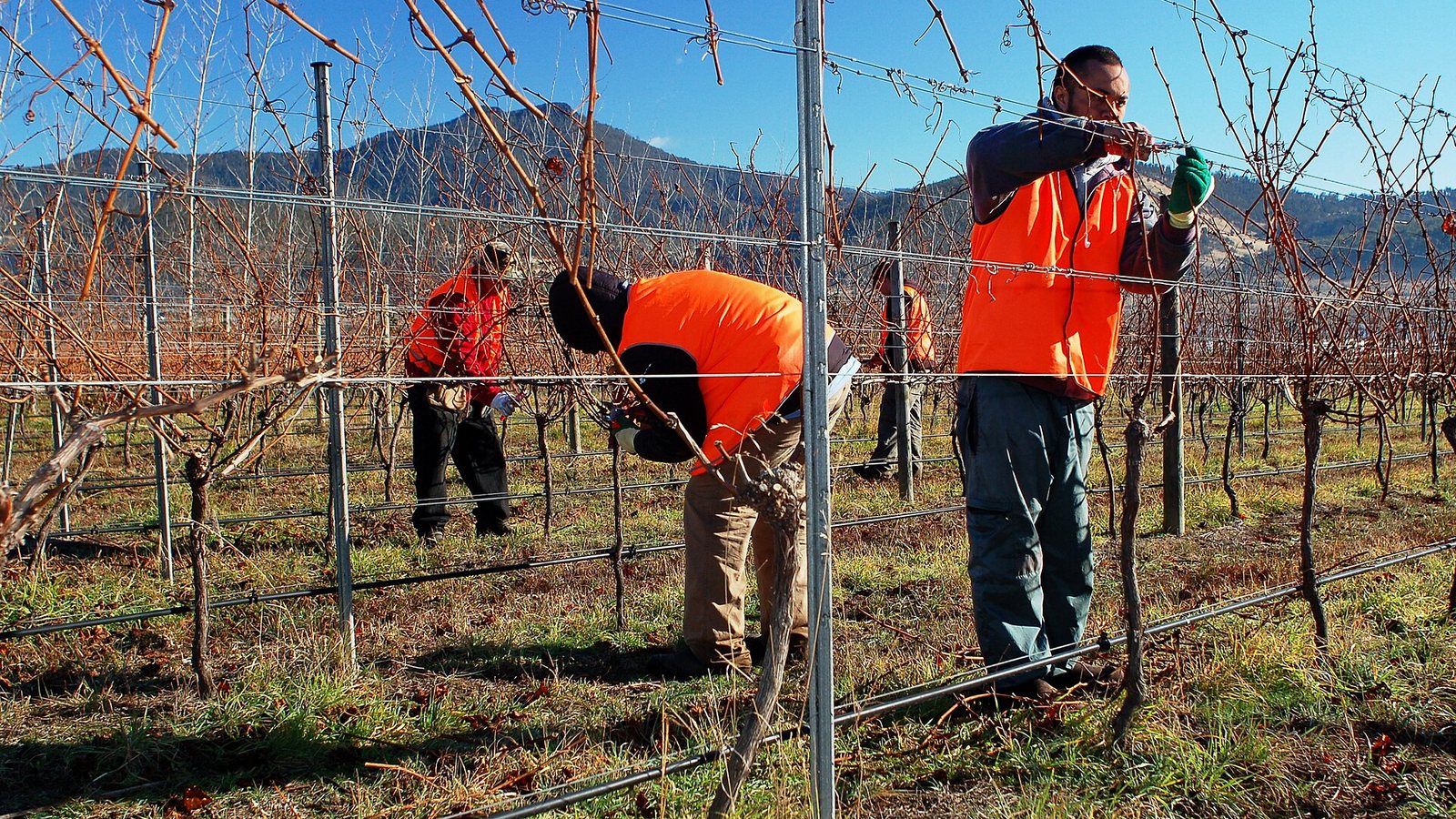 Photo: Mark Smith · CC BY 2.0
Prune grapevines in early winter, once fully dormant, and finish by midwinter to avoid sap bleeding; in frost-prone spots wait until late winter. On a rod-and-spur vine, cut last summer's side-shoots back to one or two buds. On a Guyot vine, remove the arms that fruited and tie down new canes as replacements.
Key takeaways
- Prune when the vine is fully dormant; the RHS says finish by midwinter, as later cuts can bleed sap.
- Grapes fruit on one-year-old canes, so most of last year's growth is cut away each winter.
- Rod and spur: cut each side-shoot back to one strong bud, or two if the first is weak.
- Guyot: remove the old fruiting arms and tie down two (or one) new canes cut to 60–90 cm (2–3 ft).
- Grapes and raisins can cause kidney damage in dogs, so clear up fallen fruit.
On this page8
When should you prune a grapevine?
Prune a grapevine in winter, when it is fully dormant and has dropped its leaves. The RHS names early winter as the main pruning time (late November or December in the UK) and says to finish by midwinter, because cuts made later can bleed sap, which can weaken the plant. Penn State Extension describes the dormant season in the north-eastern US as usually December to March. Where spring frosts are a risk, the RHS suggests delaying pruning until late winter or the very start of spring (March or early April in the UK) so the buds burst later and escape frost, while still making any big cuts into old wood by midwinter.
In the Southern Hemisphere shift those dates by six months: the main window falls in late autumn to early winter, roughly late May to June, with frost-prone gardens waiting until about September. This guide compares the two training systems most home growers use, rod and spur and Guyot, and gives step-by-step cuts for each, plus how to start a young vine.
Why do grapevines need such hard pruning?
Grapes fruit on one-year-old wood: the canes that grew last summer. Old wood does not bear fruit, and an unpruned vine quickly turns into a tangle with hundreds of buds. Penn State says that typically about 90 percent of a mature vine's new growth is removed at dormant pruning. Colorado State University Extension explains why: un-pruned or under-pruned grapes give many small clusters of tiny grapes, while over-pruning simply cuts the yield. Winter pruning sets the balance between the two.
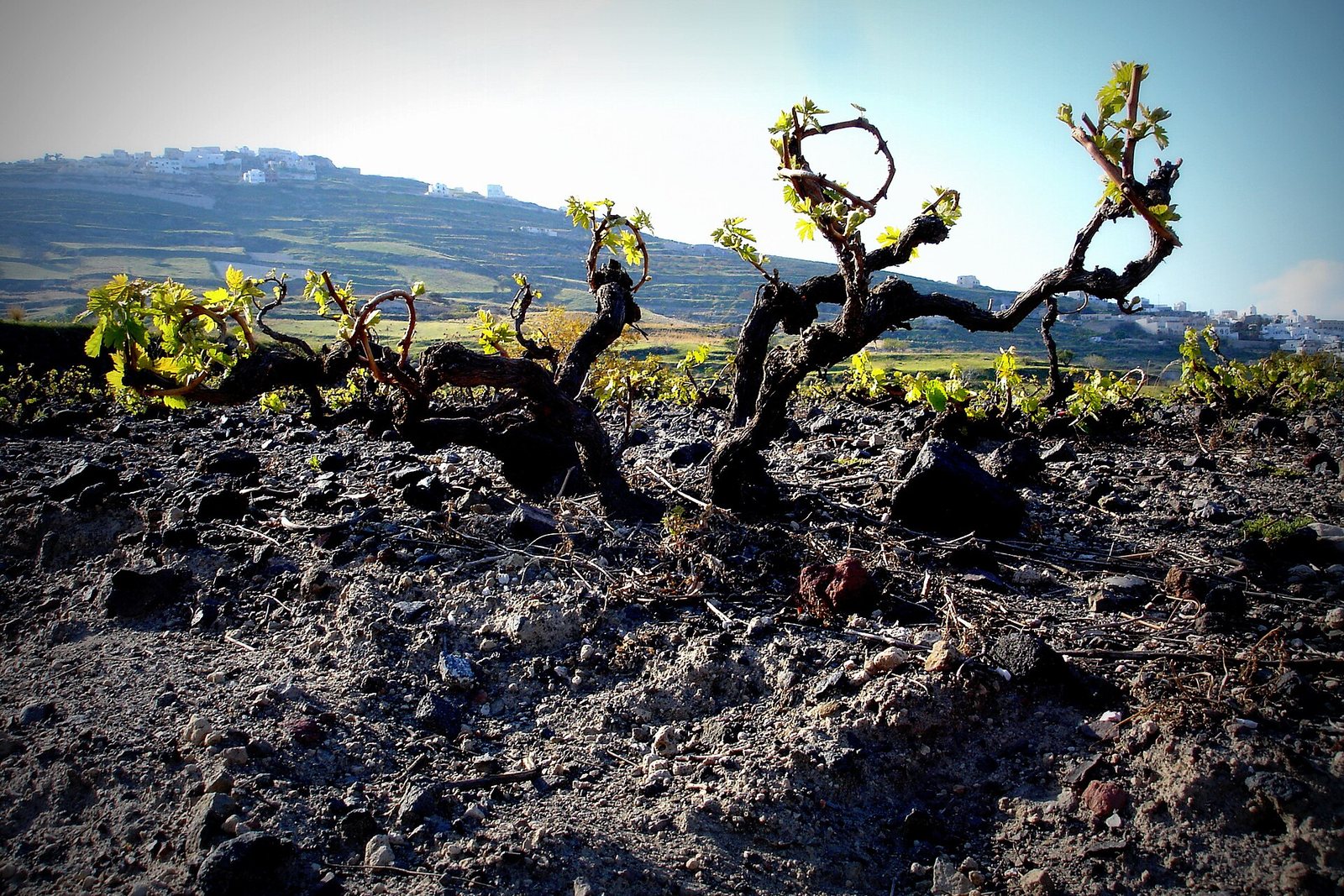
Two words help: a cane is a one-year-old shoot, now brown and woody; a spur is a cane cut short to just a bud or a few. Buds are the swellings along the cane where next year's shoots, and bunches, will grow.
Rod and spur or Guyot: which system is yours?
| Rod and spur (cordon) | Guyot (cane renewal) | |
|---|---|---|
| Permanent framework | One or more long permanent stems (rods or cordons) | A short permanent trunk only |
| Where fruit grows | Shoots from short spurs along the rod | Shoots along one or two arched arms renewed each year |
| Winter cut | Last summer's side-shoots back to one or two buds | Old arms removed; new canes tied down as replacements |
| Best for | Walls, fences, pergolas, arches and greenhouses | Rows of vines on wires in the open |
The RHS suggests rod and spur against a wall, fence, arch or pergola and in greenhouses, and Guyot for vines in rows. If your vine has one thick permanent stem with knobbly stubs along it, it is rod and spur; if it has a short trunk with one or two long arms tied along a wire, it is Guyot.
How to prune a rod-and-spur vine, step by step
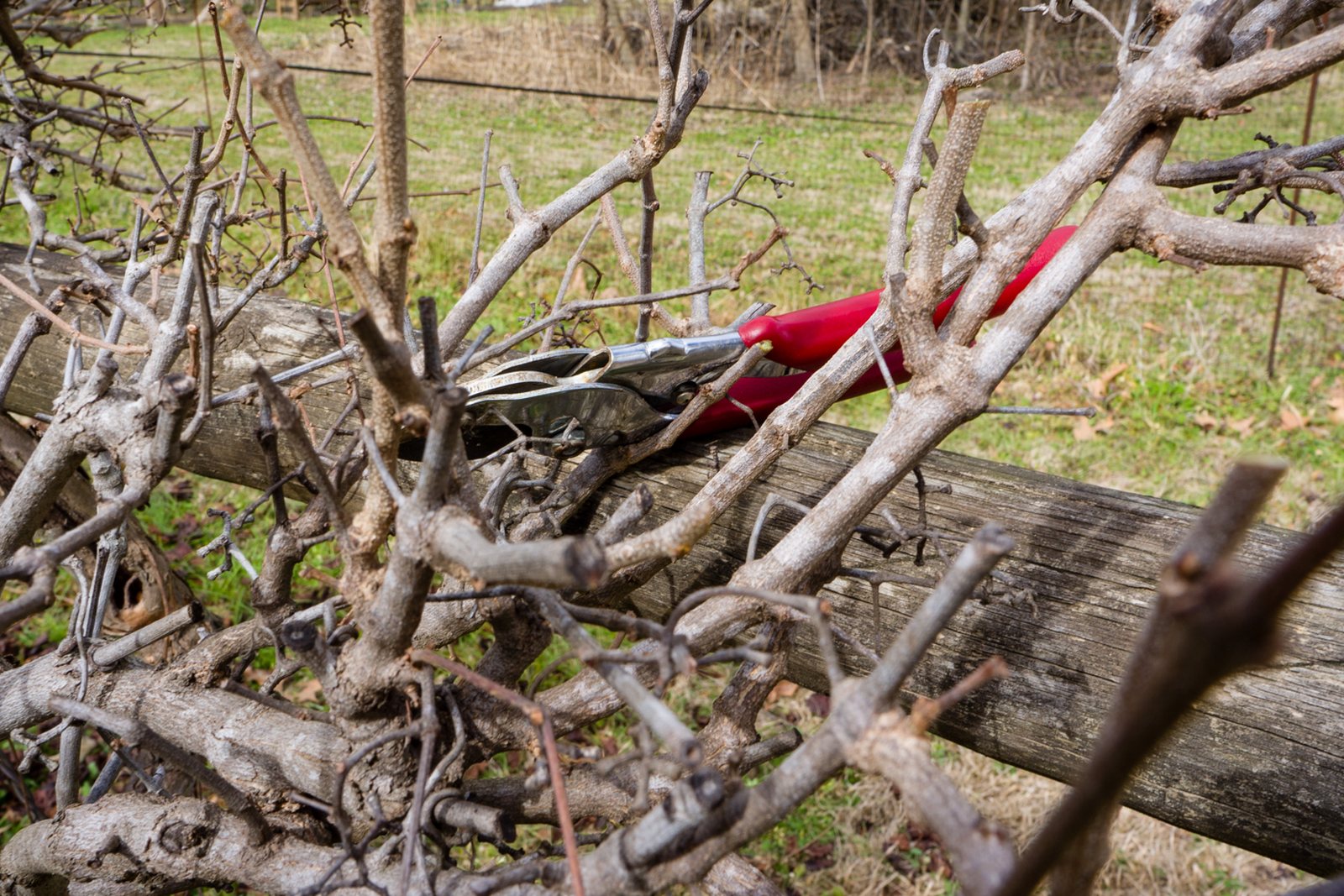
- Cut back each side-shoot. The RHS advice is to prune all of last summer's side-shoots back to one strong, plump bud, or two if the first bud looks weak. These stubs are your spurs, and each will send up next year's fruiting shoot.
- Shorten the main stem. On an established vine, cut the leading stem to a bud just below the top wire or the top of the support.
- Thin crowded spurs. Over the years spurs become knobbly clusters. The RHS says to remove the older parts with a pruning saw, keeping some spurs with plump buds.
- Keep spacing in mind. In summer the RHS spaces the fruiting shoots every 25–30 cm (10–12 in) along the rod, so remove spurs that are much closer than that.
How to prune a Guyot vine, step by step
The RHS method for an established vine, from the fourth year onwards:
- Remove the arms that fruited last summer, cutting close to the short permanent stem.
- Free the two or three shoots that grew from the centre and were tied to the central cane. These become the new arms.
- Tie them down. For a double Guyot, gently bend one to the left and one to the right in an arch and tie them to the lowest wire. For a single Guyot, tie down just one.
- Cut the arms to length: 60–90 cm (2–3 ft), so they do not overlap the next vine.
- Cut the remaining central shoot back to three strong buds (two for a single Guyot). These will grow the replacement shoots for next winter.
If there are not enough replacement shoots in the centre, the RHS suggests using a vertical shoot from the old arm nearest the centre; take care not to cut it off with the arm.
How do you prune a young grapevine?
The first winters build the framework, not the crop. Colorado State's sequence for a young vine: after planting, cut it back to two or three buds; in the second year, choose one strong cane as the trunk and keep one or two renewal spurs, buds close to the trunk that can replace it if it is damaged; in the third spring, choose two one-year-old canes as the arms and keep two renewal spurs of two buds each, removing everything else. On a rod-and-spur vine, the RHS cuts the main stem back by about two-thirds in the second winter and by half to two-thirds in the third, shortening side-shoots to one or two buds each time.
Common grapevine pruning mistakes
- Pruning too late. After midwinter the cuts may bleed sap. Bleeding stops on its own once growth starts, but aim to finish earlier next year.
- Pruning too lightly. Lots of buds give lots of small bunches of small grapes, as Colorado State warns.
- Cutting into old wood for fruit. Only one-year-old canes bear fruit; keep healthy young canes.
- Forgetting summer pruning. The RHS shortens each fruiting shoot to two leaves past the flower cluster and non-flowering side-shoots to five leaves; this keeps winter pruning simple.
Grapes, pets and tidy-up
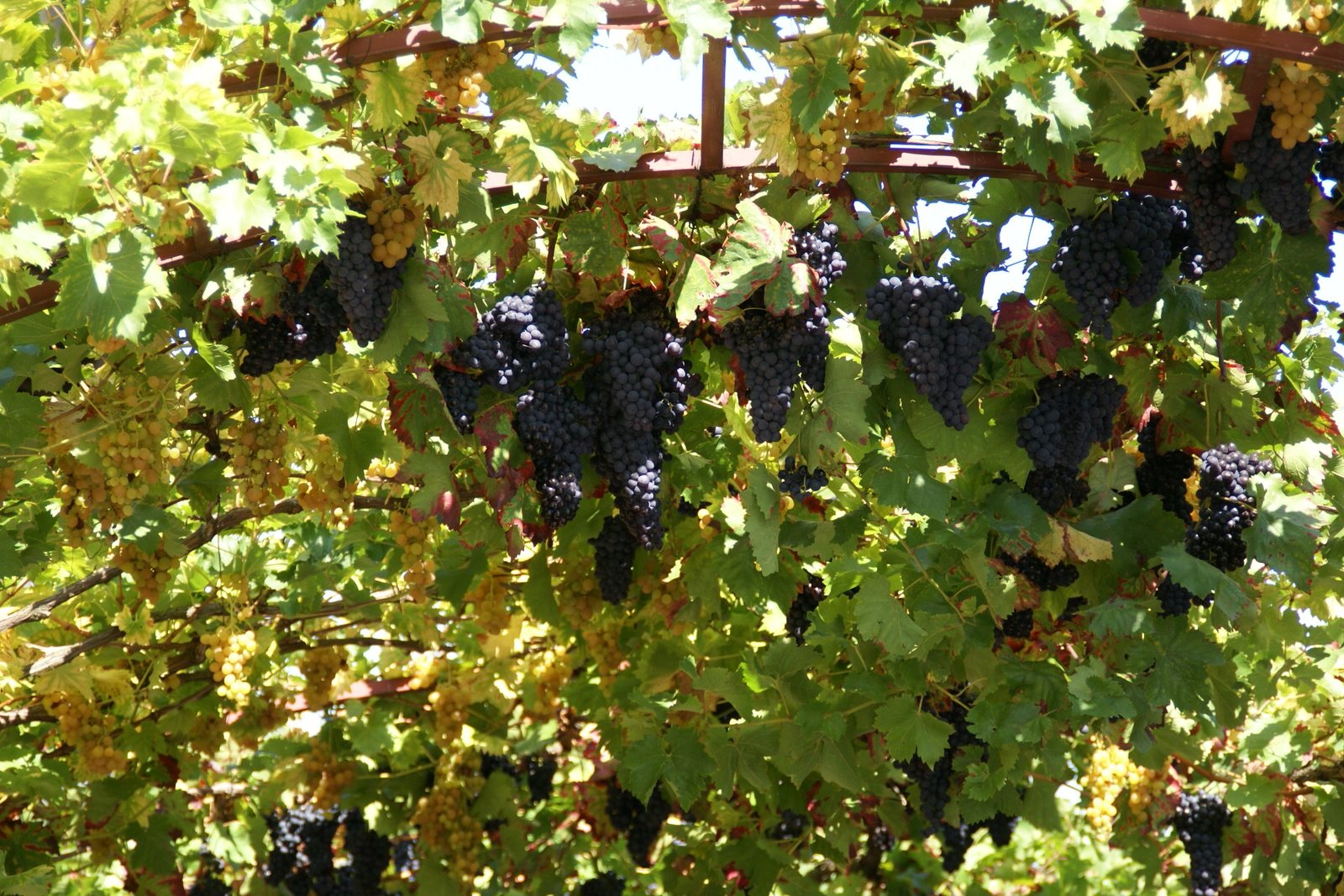
Use sharp, clean secateurs for canes and a pruning saw for old spurs and wood, and clear the prunings away. If you have a dog, also clear up any fallen or dried grapes in autumn: the ASPCA warns that exposure to grapes and raisins can lead to kidney damage in dogs.
Grapevine pruning sits alongside other winter jobs such as pruning roses; our seasonal plant care calendar puts them in order, and what to plant in November covers what goes in the ground now. If you grow grapes alongside other garden plants, Flori's care reminders can include a pruning reminder for each plant so the job lands in the right weeks every winter.
Frequently asked questions
What month do you prune grapevines?
In the Northern Hemisphere the RHS recommends late November or December, finishing by midwinter; Penn State gives December to March for the dormant season. In the Southern Hemisphere that is roughly late May to June, later on frost-prone sites.
How many buds should I leave when pruning grapes?
On a rod-and-spur vine, the RHS cuts each side-shoot back to one strong bud, or two if the first is weak. On a Guyot vine the central shoot is cut to three buds (two for single Guyot).
Is it bad if my grapevine bleeds after pruning?
It happens when pruning is done late. The RHS says bleeding can weaken the plant but stops once growth starts; aim to finish pruning by midwinter next time.
Can you prune a grapevine in summer?
Yes, as well as in winter. The RHS shortens each fruiting shoot to two leaves past the flower cluster and other side-shoots to five leaves, but the main framework pruning is done in winter.
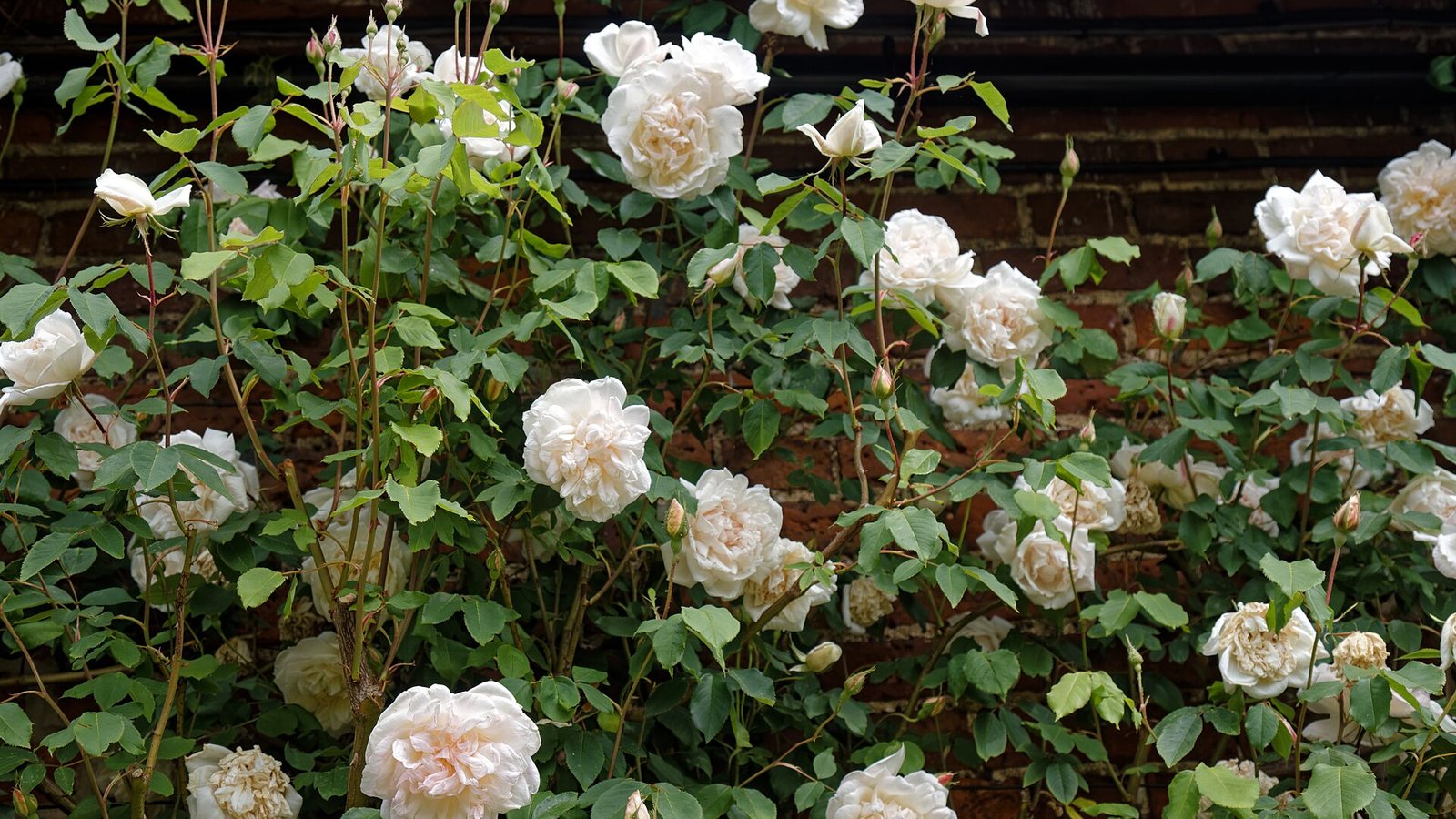
When to prune roses in both hemispheres by rose type, and where to cut: 5 mm above an outward bud, sloping away, after removing dead and crossing stems.
Sources
Written and fact-checked by the Flori team. Every guide cites horticultural sources such as the RHS, university extension services and the ASPCA, and is updated when the advice changes. How we write our guides
General plant care information. Plants vary; when a plant is valuable or a problem spreads quickly, consult a local nursery or plant specialist.