
Saffron Milk Cap: Season, Habitat and Look-Alikes
Saffron milk cap (Lactarius deliciosus), kanlıca in Turkish: where it grows, the orange milk caps and Amanitas it is confused with, and what to do.
 By Flori editorial team · Updated
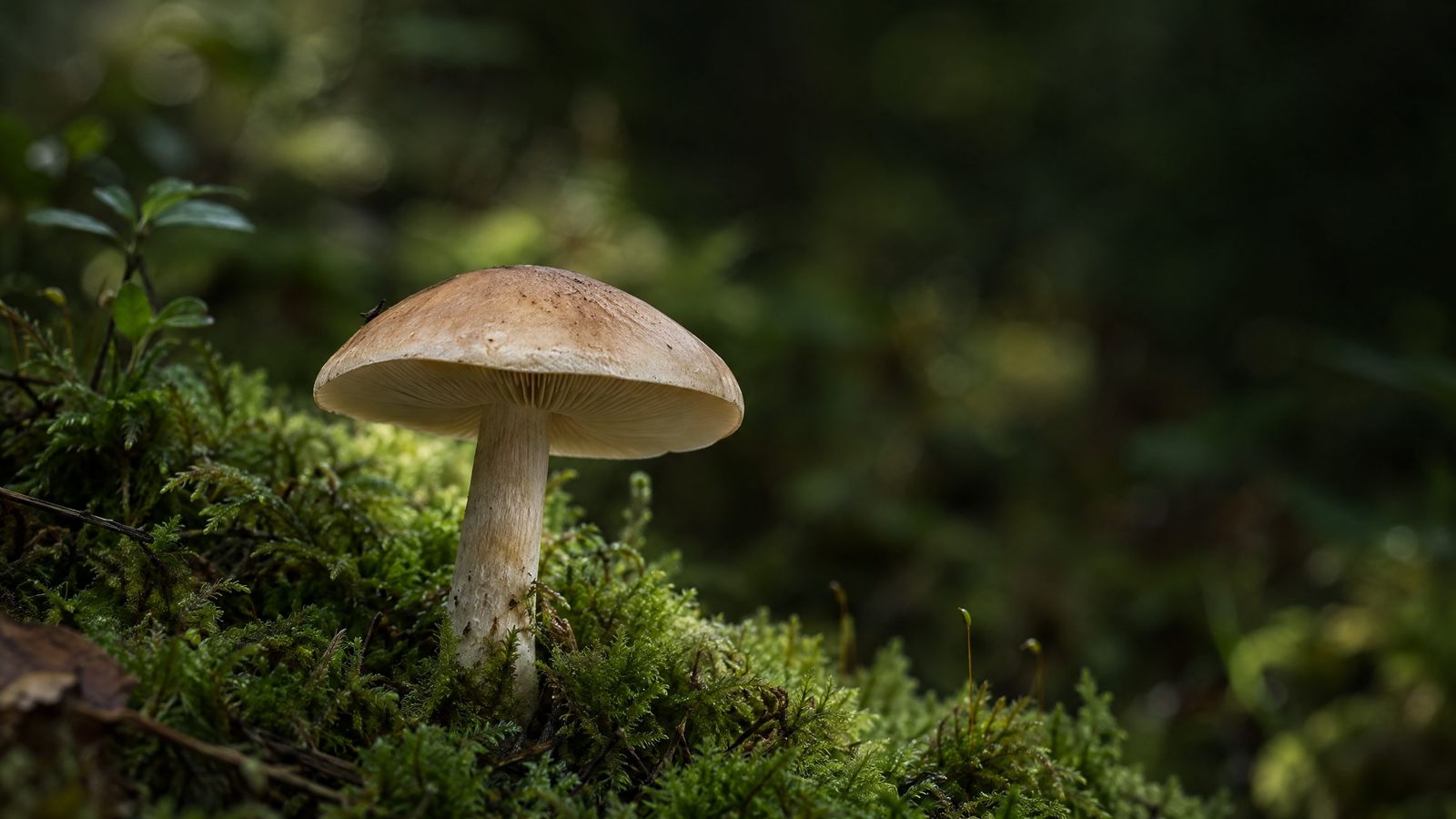
The saffron milk cap (Lactarius deliciosus), kanlıca in Turkish, is an orange milk cap that bleeds orange to reddish milk and tends to turn greenish with bruising or age. It grows with trees, classically in autumn pine woods. Other orange milk caps, poisonous relatives and deadly Amanitas share those woods, so only an expert examining it can confirm it.
Key takeaways
- Kanlıca belongs to the milk caps, a large group in which some species are edible and many are poisonous.
- Orange milk and green bruising are clues, not proof: several orange milk caps share them and experts still debate where species end.
- Milk caps live with trees such as pines and oaks, and the fly agaric and death cap travel with the same northern trees.
- No test, taste, colour, insect damage or app tells you a wild mushroom is safe to eat.
- After eating an unknown mushroom, call the poison line at once and keep a sample.
Why the saffron milk cap is harder than it looks
The saffron milk cap (Lactarius deliciosus), called kanlıca in Türkiye, is one of the best-known orange mushrooms of autumn conifer woods, and many families in Türkiye collect it every year. That familiarity is exactly the risk. Kanlıca is not one easy mushroom but one member of a large group, the milk caps, and mycologists say several orange milk caps are hard to separate even with the specimen in hand. This guide covers the season and habitat, what milk caps share, the orange look-alikes and the deadly Amanitas that grow under the same trees, and what to do after a mistake. It is not a picking guide: we do not tell you any wild find is edible. For the general rules, see our guide on whether it is safe to pick wild mushrooms.
When and where does the saffron milk cap grow?
Milk caps do not live on dead wood. Like Amanitas, they form a partnership (mycorrhiza) with the roots of living trees. Mycologist Tom Volk of the University of Wisconsin-La Crosse notes that this group partners especially with oaks and pines, and tells readers to look for milk caps in oak or pine forests. In Türkiye kanlıca is an autumn find in pine woods after rain, which is also the main season for many dangerous mushrooms.
The tree link explains why the saffron milk cap now turns up far from Europe. The Australian National Botanic Gardens lists Lactarius deliciosus among fungi that arrived in Australia by accident with northern trees, and points out that these species are almost always found with introduced trees there. The same list includes the fly agaric (Amanita muscaria), which it says is most common in Australian pine plantations, and the death cap (Amanita phalloides). So in the Southern Hemisphere too, a planted pine wood can hold a milk cap and a deadly Amanita side by side.
What do all milk caps have in common?
The genus name Lactarius means "milk mushroom". Volk explains that the flesh contains special tubes filled with latex, so a cut or bruised milk cap bleeds a milky fluid. Ohio State University's wild mushroom fact sheet adds that the latex can be white or coloured, that all milk caps are mycorrhizal, and sums up their edibility in four words: "some edible, some not". Volk is blunter: some milk caps are edible, but many are poisonous, and he warns that you must be sure of your identification to species before eating any mushroom.
What do experts check on an orange milk cap?
The Burke Museum Herbarium at the University of Washington describes the orange milk caps of the deliciosus group as orange to salmon, with orange to reddish-orange milk and a tendency to turn greenish when bruised or as they age. It also says that the North American forms probably should not be considered the same species as the European saffron milk cap, and that species concepts for orange milk caps still need much work. The table shows what experts look at and why none of it is a shortcut.
| Feature | What the sources say | Why it is not a shortcut |
|---|---|---|
| Milk (latex) | Orange to reddish orange in the deliciosus group (Burke); white or coloured across the genus (Ohio State). | Several orange species share coloured milk; Volk says they are told apart by the first colour and the colour it turns in air. |
| Greening | Turns greenish with bruising or age (Burke). | Old, wet or damaged mushrooms change colour; greening alone names no species. |
| Cap | Orange to salmon, faintly zoned (Burke). | Other orange mushrooms, with or without milk, grow in the same woods. |
| Partner tree | Milk caps are mycorrhizal, especially with oaks and pines (Volk). | Fly agaric and death cap also grow with planted northern trees (ANBG). |
| Taste | Some milk caps are very peppery; Volk does not recommend eating them. | Taste never proves a mushroom is safe. |
Read the table as reasons to stop, not as a checklist. Ticking every box still does not make a mushroom safe to eat.
What can be mistaken for kanlıca?
Three groups matter most, and only the last one is famous.
- Other orange milk caps. Volk describes several orange Lactarius species that are separated by the colour of their milk and how it changes, and the Burke Herbarium says even experts are unsure where one orange species ends and the next begins. A local name like kanlıca can cover more than one species.
- Peppery and poisonous milk caps. Many milk caps are poisonous, according to Volk, and some are so peppery that he does not recommend eating them. They bleed milk too, so "it has milk" is not a test.
- Amanitas under the same trees. The fly agaric and the death cap are mycorrhizal with northern trees and travel with them (ANBG). A mixed basket picked in a hurry is how a deadly mushroom reaches the kitchen; our death cap guide explains why one cap can be enough.
Myths that fail with milk caps
Ohio State is clear: there is no test or characteristic that separates edible from poisonous mushrooms, and you should assume every mushroom is poisonous until it is properly identified. Our guide on how to tell if a mushroom is poisonous covers the myths in detail.
- Orange milk means kanlıca. Several orange species bleed coloured milk.
- Green bruises prove it. Colour changes with age and handling; they are one clue among many.
- Insects ate it, so it is fine. The Burke Herbarium notes that fresh-looking orange milk caps can be full of larvae. Insects say nothing about safety for people.
- An app confirmed it. Flori can identify wild mushrooms from a photo, which helps you learn names and describe a find to an expert, but no app, Flori included, can tell you a wild mushroom is safe to eat. A photo cannot show milk colour changing over minutes. See can an app identify mushrooms.
What to do if someone eats an unknown mushroom
The North American Mycological Association (NAMA) says gastrointestinal irritants usually cause nausea, vomiting, cramps and diarrhoea within 20 minutes to 4 hours, while death cap poisoning starts with a symptom-free period of 6 to 24 hours as the liver and kidneys are damaged. A quick upset does not rule out a second, slower toxin in a mixed basket.
- Call the poison line now, before any symptoms. Türkiye: UZEM 114 (Ulusal Zehir Danışma Merkezi). United States: Poison Control 1-800-222-1222. United Kingdom: NHS 111. Elsewhere, call your local emergency number. Amanita poisoning can feel better before liver damage shows, so do not wait.
- Keep a sample. Save leftovers, uncooked pieces or more of the same mushroom in a paper bag in the fridge for an expert.
- Write down who ate it, how much, when, and whether it was raw or cooked.
- Pets too. If a dog or cat may have eaten a wild mushroom, call your vet or ASPCA Animal Poison Control straight away.
Frequently asked questions
Is the saffron milk cap edible?
It is widely collected in Türkiye and Europe, but we do not give an edibility verdict for any wild find. Milk caps include many poisonous species and several orange look-alikes, so a local expert must check the actual mushroom in hand; never eat one based on a photo, an app or this article.
When does kanlıca come up?
Kanlıca is an autumn mushroom, found with trees, classically in pine woods after rain. The death cap and fly agaric can grow under the same introduced northern trees, so season and place prove nothing.
Why does the saffron milk cap turn green?
Orange milk caps in the deliciosus group tend to turn greenish when bruised or as they age, according to the Burke Museum Herbarium. Greening is one clue among many, not a way to name the species.
What should I do if someone ate a wild mushroom?
Call the poison line at once (Türkiye UZEM 114, US 1-800-222-1222, UK 111), keep a sample and do not wait for symptoms. Death cap symptoms can take 6 to 24 hours to appear.
Sources
- Tom Volk, University of Wisconsin-La Crosse: Lactarius indigo, the indigo milk mushroom (Fungus of the Month)
- Burke Museum Herbarium, University of Washington: Lactarius deliciosus (image collection)
- Australian National Botanic Gardens: Mycogeography - imports, exports and puzzles
- Ohio State University CFAES: Wild Mushrooms (PLPATH-GEN-11)
- North American Mycological Association: Mushroom Poisoning Syndromes
Written and fact-checked by the Flori team. Every guide cites horticultural sources such as the RHS, university extension services and the ASPCA, and is updated when the advice changes.
General plant care information. Plants vary; when a plant is valuable or a problem spreads quickly, consult a local nursery or plant specialist.