Whiteflies on Houseplants: Control Guide
Whiteflies on houseplants: spot the nymphs under leaves, rinse, vacuum and trap adults, spray soap or oil on nymphs, and repeat across the life cycle.
 By Flori editorial team · Updated
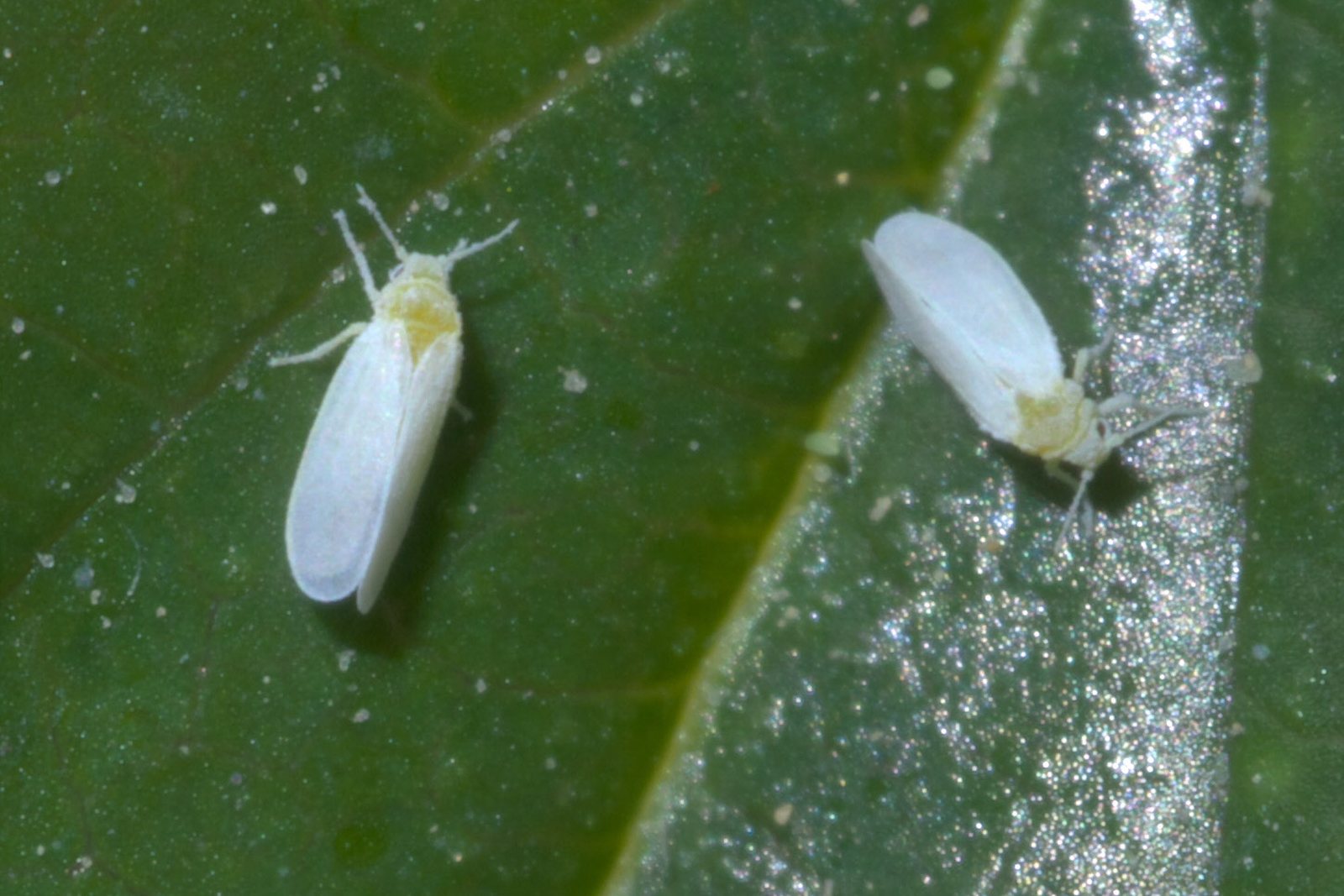
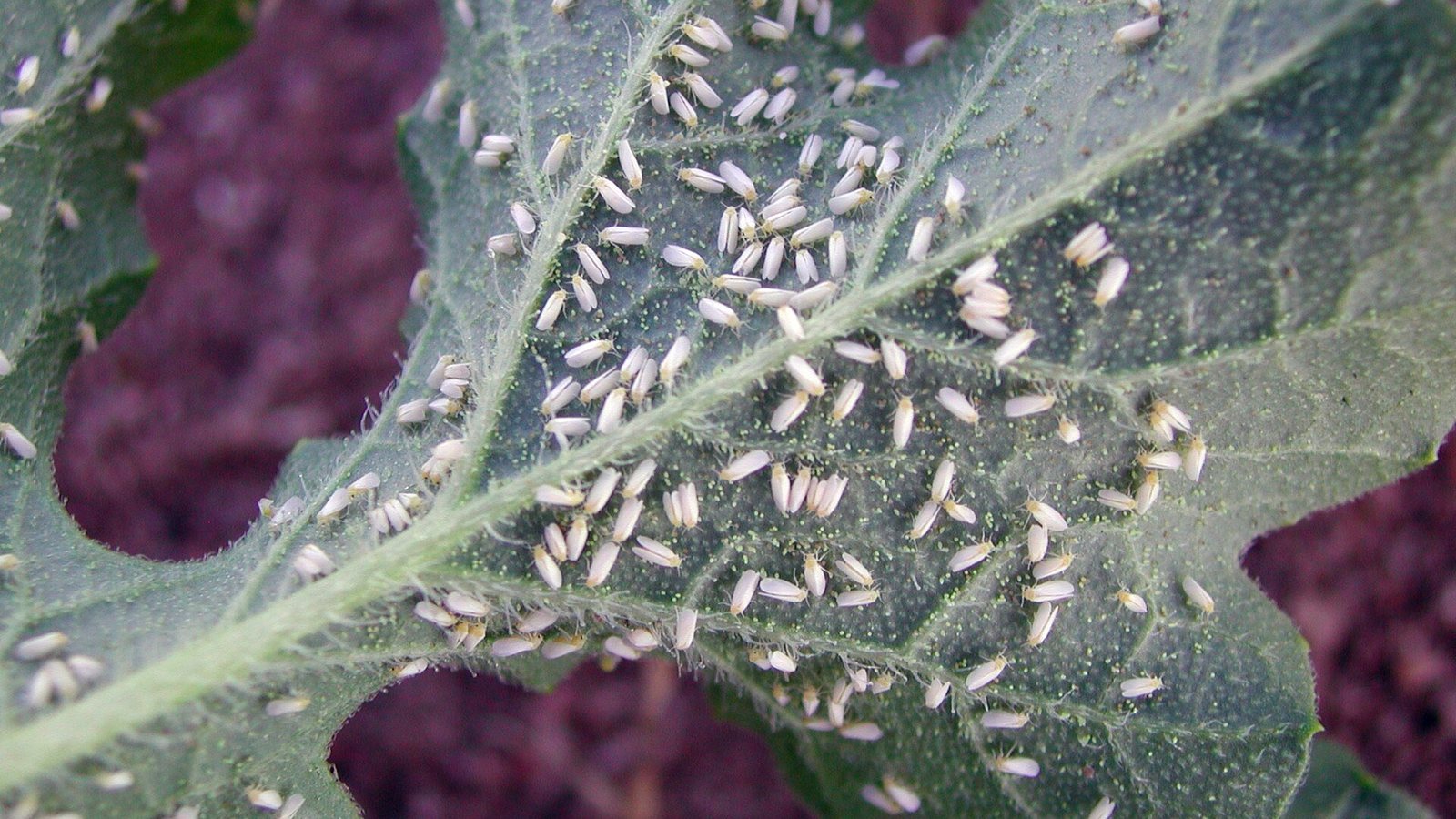 Photo: division, CSIRO · CC BY 3.0
To control whiteflies on houseplants, isolate the plant, remove infested leaves and rinse the leaf undersides. Vacuum or trap adults with yellow sticky cards, then spray insecticidal soap, horticultural oil or neem on the nymphs, following the label. Repeat for several weeks, because new nymphs keep hatching while adults keep laying eggs.
Key takeaways
- Whiteflies are tiny white sap-suckers related to aphids and scales, not true flies.
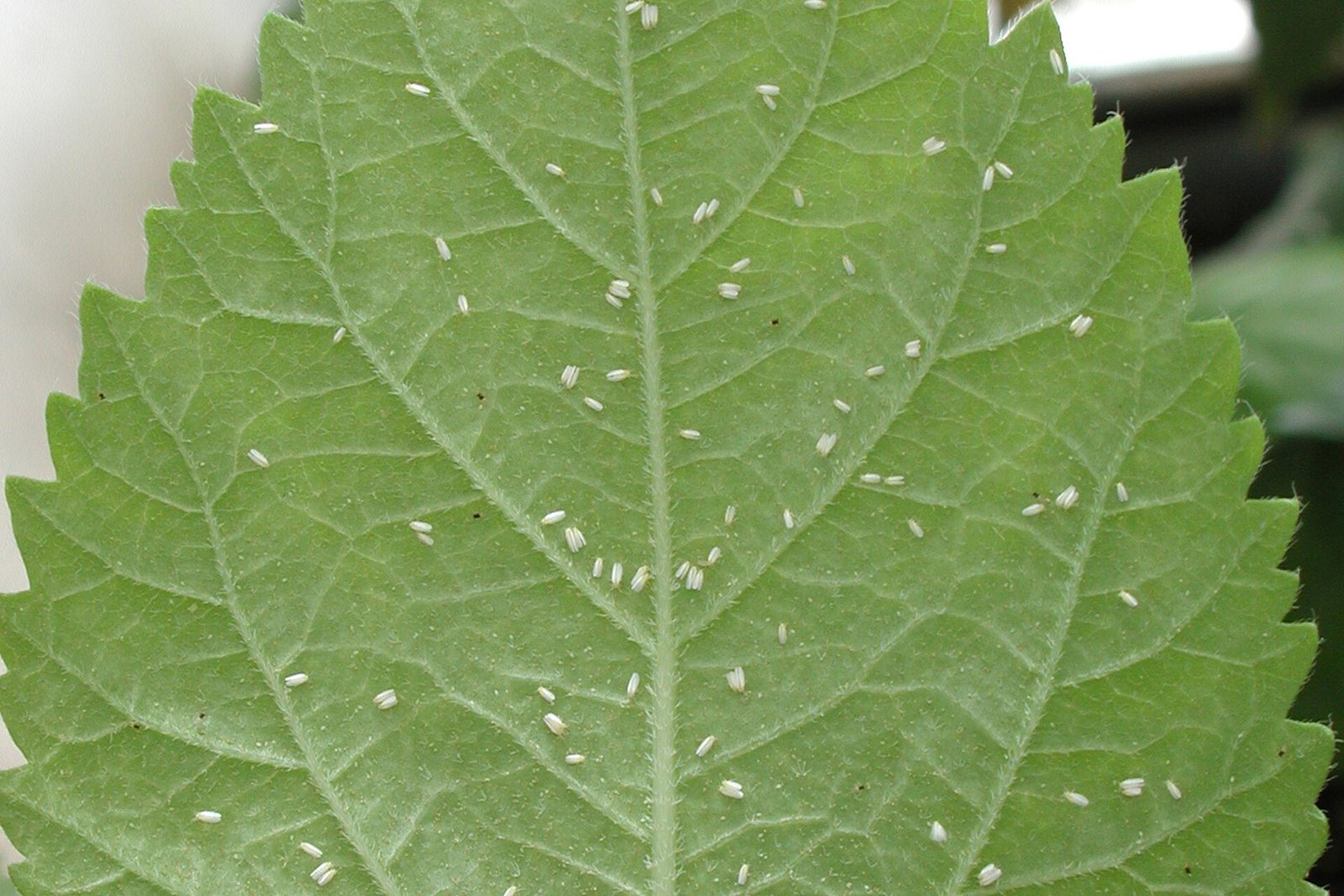
- The nymphs sit flat and almost invisible on leaf undersides, so always turn leaves over.
- A generation takes roughly three and a half to seven weeks, so treatments must be repeated for several weeks.
- Soap, oil and neem work on nymphs; rinsing, vacuuming and sticky cards deal with adults.
- Avoid broad-spectrum insecticides: whiteflies build resistance fast and spider mites can flare up.
On this page8
How do you get rid of whiteflies on houseplants?
Whiteflies on houseplants give themselves away the moment you brush a leaf: a small cloud of white specks lifts off and settles again. Getting rid of them takes a plan rather than one spray, because the adults you see are only part of the problem. The eggs and young nymphs sit, almost invisible, on the undersides of the leaves. This guide sets out a life-stage table showing which step reaches which stage, so you can time your control instead of spraying blindly, and it covers what not to use indoors.
What do whiteflies look like?
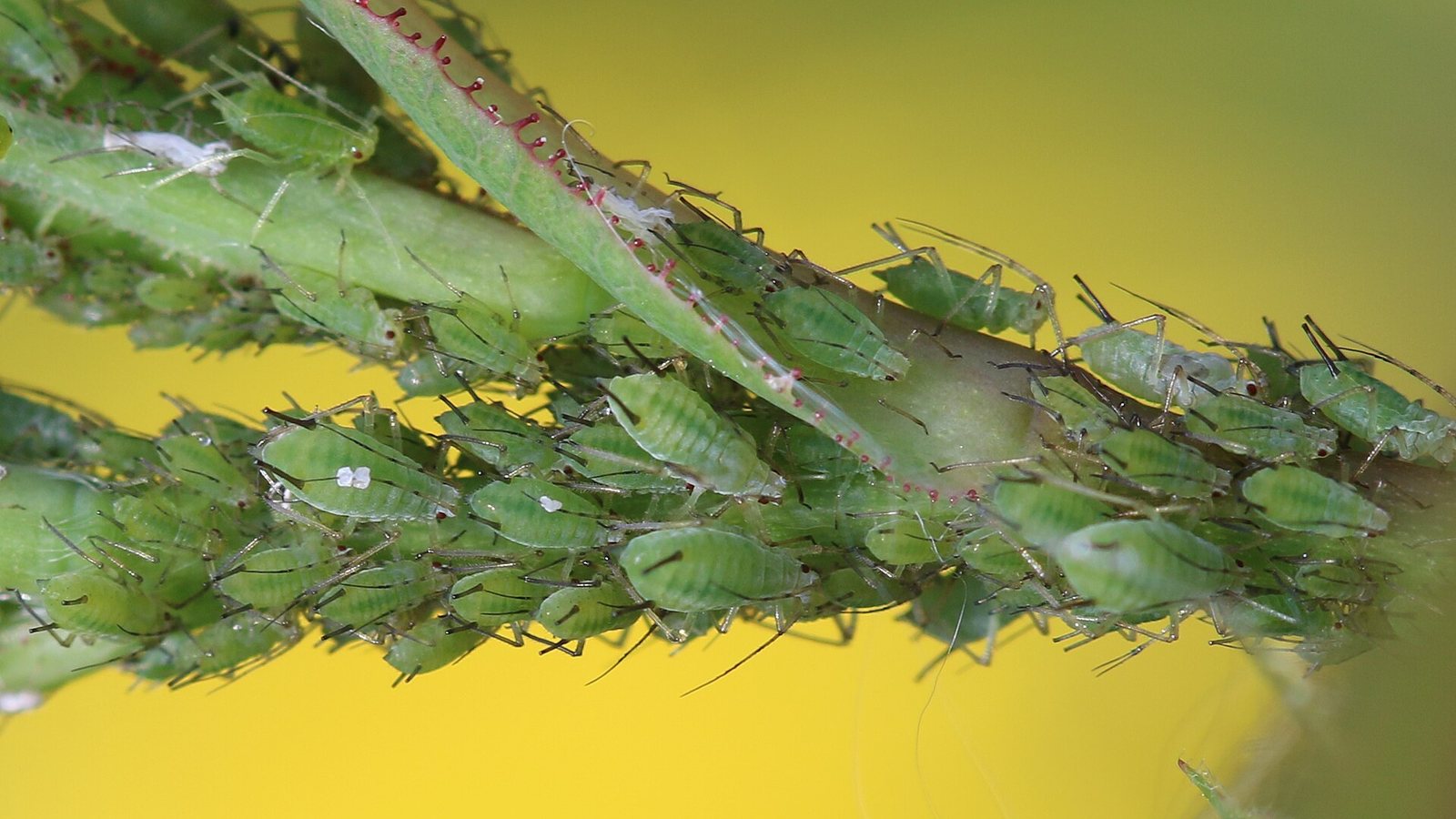
Clemson Extension describes whiteflies as about 1.5 to 2.5 mm (1/16 to 1/10 in) long, powdery white and rather like tiny moths, with the wings held roof-like over the body at rest. Despite the name they are not true flies: they are related to scales, mealybugs and aphids, and like them they feed by sucking sap. Colorado State Extension names the greenhouse whitefly (Trialeurodes vaporariorum) as the usual houseplant species.
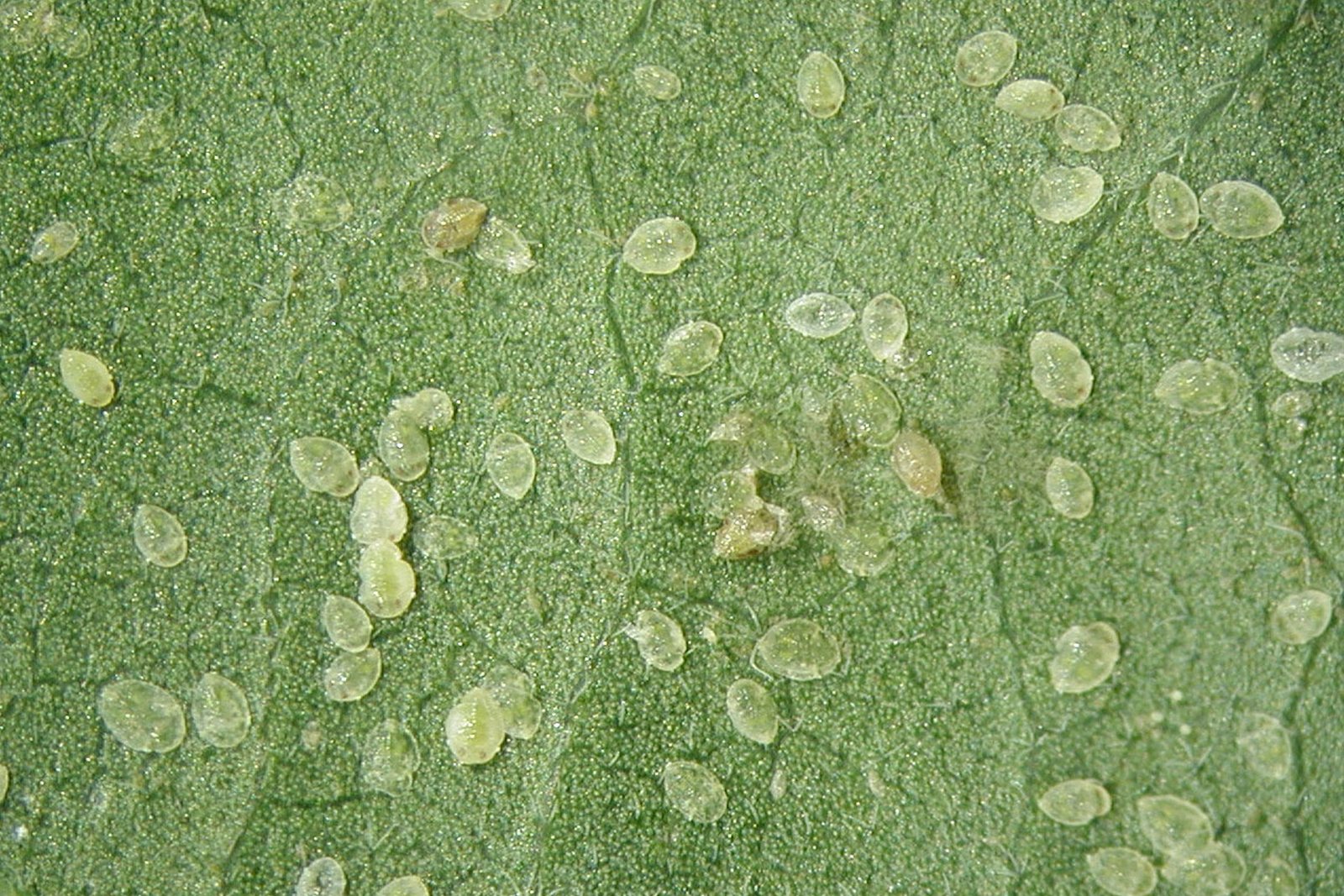
The young stages are the ones most people miss. Colorado State describes the nymphs as scale-like, translucent and immobile, often overlooked on leaf undersides. UC IPM adds that the first-stage nymph is barely visible even with a hand lens and wanders for only a few hours before settling for good.
Whiteflies or something else?
| What you see | Likely cause | What to do first |
|---|---|---|
| Tiny white insects fluttering up from leaf undersides when touched | Whitefly adults | Turn leaves over and look for flat, oval nymphs |
| Sticky, shiny leaves, sometimes with a black film | Honeydew and sooty mould from whiteflies or another sap-sucker | Check above the sticky patch |
| Yellowing leaves, leaves dropping, a stunted plant | Sap loss from a heavy population of nymphs | Count how many leaves carry nymphs |
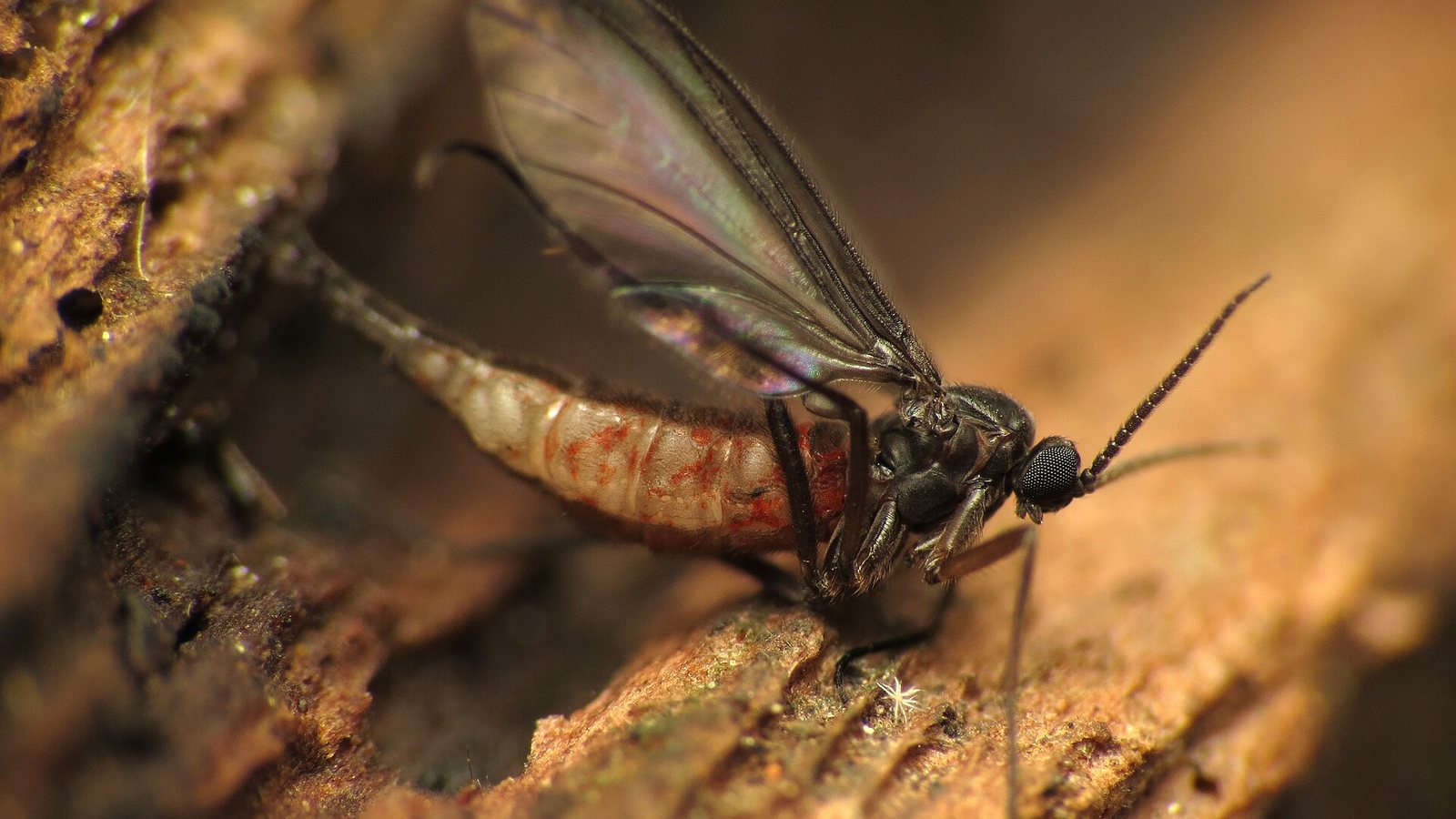
| Small dark flies walking on and around the soil, not under leaves | Probably fungus gnats, not whiteflies | See our fungus gnats guide |
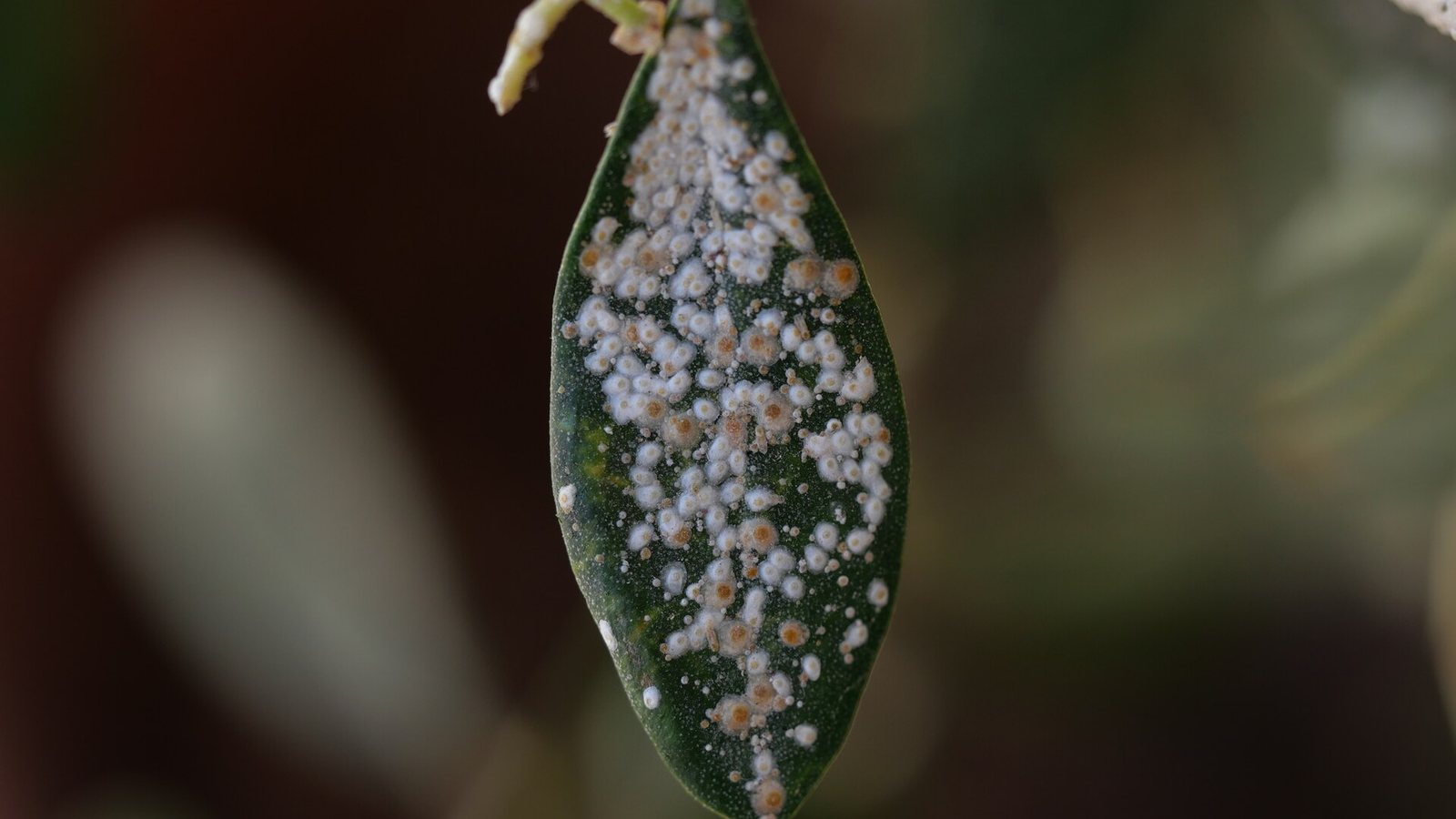
| White cottony clumps that do not fly | Probably mealybugs | See our sticky leaves guide |
UC IPM and Clemson both list yellowing, leaf drop and honeydew with sooty mould as whitefly damage, and UC IPM notes that low numbers are usually not damaging. Real losses take a large population of nymphs.
The whitefly life cycle, and why one spray is not enough
| Stage | How long (Colorado State) | Where | What reaches it |
|---|---|---|---|
| Egg | Hatches in 3 to 7 days | Leaf undersides | Removing infested leaves; washing |
| Nymph | Feeds for 2 to 4 weeks | Fixed on leaf undersides | Insecticidal soap, horticultural oil, neem products |
| Pupa (last nymph stage) | 1 to 2 weeks | Leaf undersides | Removing infested leaves |
| Adult | May lay eggs for about two months | Flying, resting under leaves | Rinsing, vacuuming, yellow sticky cards |
Add those numbers up and a new generation takes roughly three and a half to seven weeks from egg to adult, while every adult keeps laying. Whatever you do has to be repeated across several weeks to catch each wave of nymphs as it hatches.
Least-toxic whitefly control, step by step
- Isolate the plant. Clemson advises keeping an infested plant away from the rest until the pest is fully controlled, which may take several weeks or longer.
- Remove infested leaves. UC IPM suggests pruning leaves that carry whiteflies as soon as you find them, while the infestation is still small.
- Wash the plant. Clemson lists washing as the first step, and UC IPM notes that a strong stream of water knocks adults off. Indoors, use the shower, cover the soil and aim at the leaf undersides.
- Vacuum and trap the adults. Colorado State says small plants can be vacuumed to remove adults, and that yellow sticky cards catch them. UC IPM is clear that cards are mainly for monitoring, not control: hang them near the plant, out of direct sun, and use them to see whether numbers are falling.
- Spray the nymphs. Colorado State says horticultural oils, neem products and insecticidal soaps can control nymphs on leaves; Clemson stresses covering the lower leaf surfaces thoroughly. UC IPM warns these sprays reduce rather than eliminate whiteflies, so repeat as the label allows. Spray only when the plant is not drought-stressed and below 32 °C (90 °F), ideally in the early evening.
- Test and follow the label. Clemson notes soap injury can take 48 hours to show, so try a small area first. Only a few products are labelled for indoor plants: check yours is, and follow the label for dilution, timing and pets.
What not to use on whiteflies
Strong, broad-spectrum insecticides are a poor fit. UC IPM lists carbaryl, pyrethroids and imidacloprid as disruptive, notes that imidacloprid can trigger spider mite outbreaks, and warns that whiteflies quickly develop resistance to pesticides. Colorado State calls imidacloprid highly effective but cautions that it can harm non-target insects, especially bees, which matters for any plant that goes back outside. If you do reach for a stronger product, choose one labelled for houseplants and follow the label.
Biological control is mostly for greenhouses. Encarsia parasitic wasps are sold for greenhouse use, but Colorado State says they work well only if temperatures stay at about 22–24 °C (72–75 °F) or above, which most homes do not keep steady.
When should you give up on the plant?
If whiteflies are on every leaf after several weeks of steady work, it may be time to let the plant go. Colorado State notes that seriously infested plants are often best discarded, because control takes a long effort. Bag it before you carry it through the house so the adults do not move to other plants, then check the neighbours for nymphs.
How to keep whiteflies out
Colorado State says whitefly, scale and mealybug infestations almost always come in on recently bought or gifted plants. Keep new plants apart before they join the others, for at least three weeks (Colorado State) or six weeks (Clemson), and check leaf undersides weekly. Clemson also advises inspecting plants that spent the summer outdoors before bringing them back in; our guide to how cold is too cold for houseplants covers when to do that. A healthy plant helps too, since Colorado State notes stressed plants are more susceptible. The natural pest prevention guide has a five-minute weekly check you can follow.
If you are not sure what is flying off your plant, Flori's Lab tools for pest analysis and the Dr. Flori chat can work from a close photo of a leaf underside. Care reminders can then prompt the weekly check and repeat treatments.
Frequently asked questions
Do yellow sticky traps get rid of whiteflies?
Not on their own. UC IPM says yellow sticky cards are mainly for monitoring. Use them to see whether numbers are falling while you rinse, prune and spray the nymphs.
Why do whiteflies keep coming back after spraying?
Sprays mostly hit the nymphs they touch, and eggs keep hatching for weeks while adults lay more. Repeat treatments as the label allows and cover leaf undersides every time.
Are whiteflies harmful to people or pets?
No, they feed only on plants. The main risk is the products used against them, so choose a product labelled for houseplants and follow the label, including any advice on pets.
Can whiteflies spread to my other plants?
Yes. Adults fly to nearby plants, so isolate the infested one and check the leaf undersides of its neighbours for flat, oval nymphs.
Stop spider mites, mealybugs, scale and fungus gnats early: quarantine new plants, check leaf undersides weekly and use the least-toxic fix first.
Sources
Written and fact-checked by the Flori team. Every guide cites horticultural sources such as the RHS, university extension services and the ASPCA, and is updated when the advice changes. How we write our guides
General plant care information. Plants vary; when a plant is valuable or a problem spreads quickly, consult a local nursery or plant specialist.