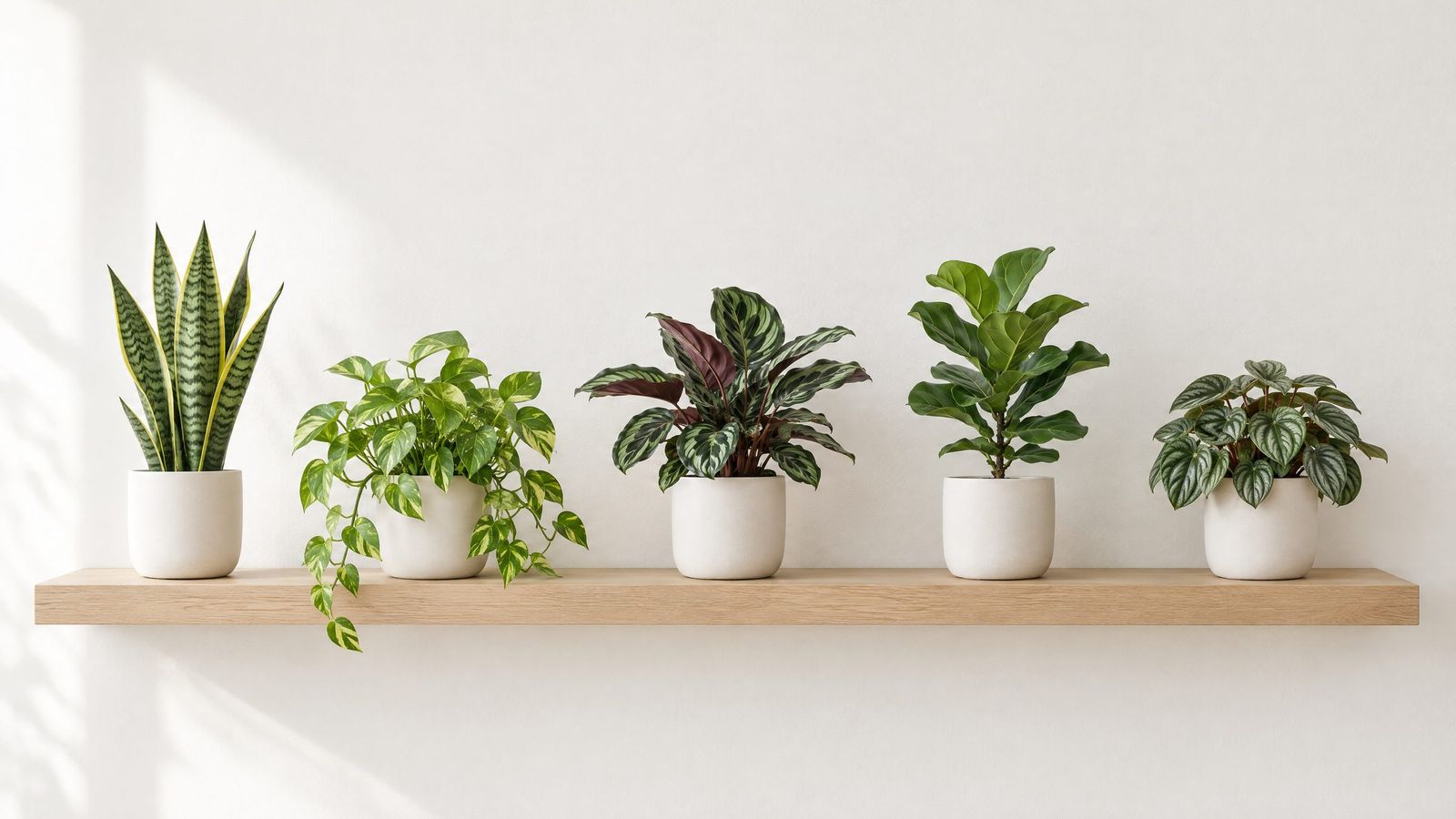
Best Plants for the Bedroom (and the Night-Oxygen Myth)
Do bedroom plants steal oxygen or add it at night? Both claims checked against the RHS, plus 7 easy bedroom plants with light, water and pet safety.
 By Flori editorial team · Updated
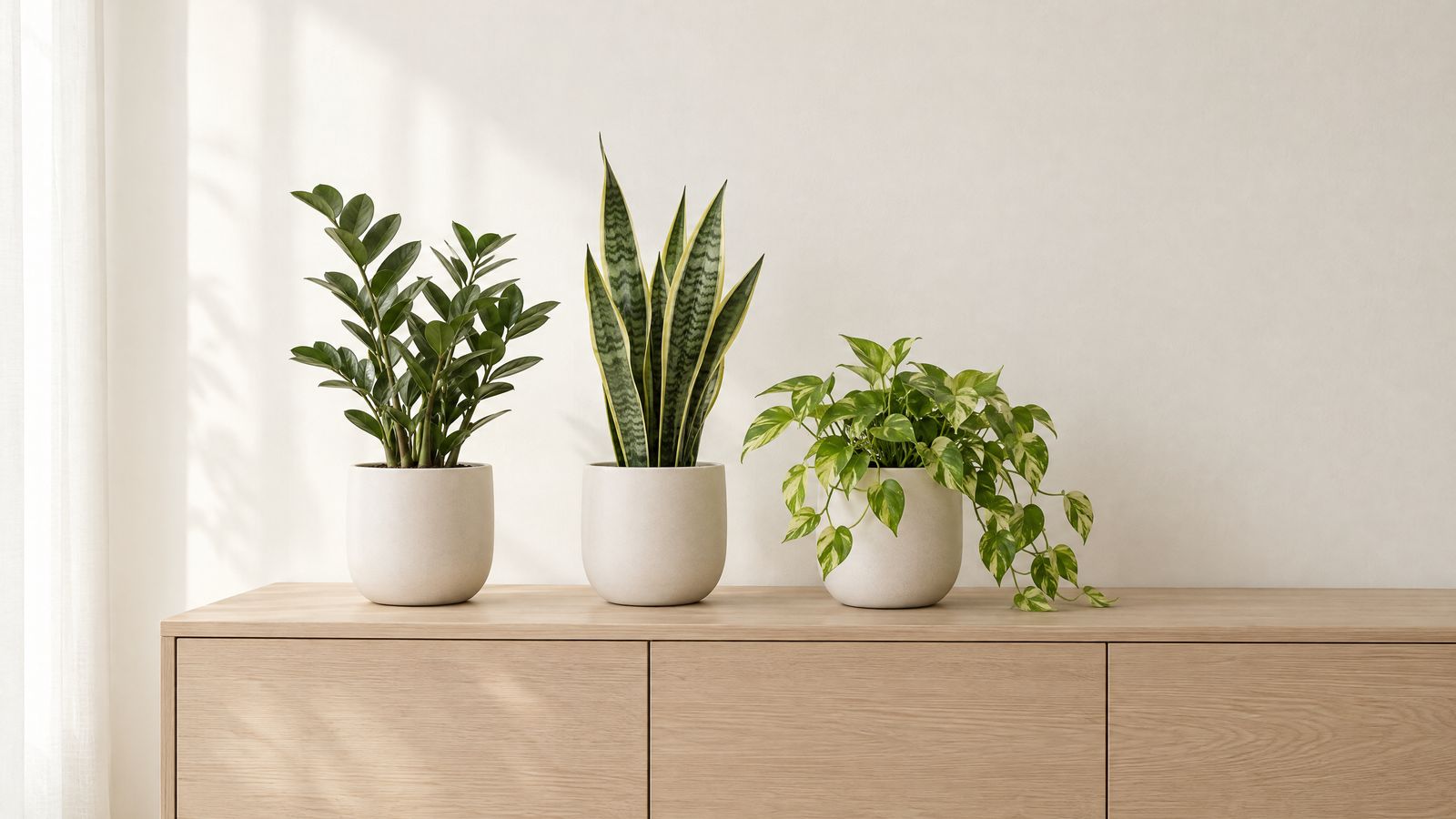
Plants in the bedroom are safe: the RHS says the oxygen they use at night is too small to make any difference to us. The opposite claim fails too: no houseplant meaningfully adds night oxygen or cleans a real room's air. Choose bedroom plants for low light and easy care, such as snake plant, ZZ plant or spider plant.
Key takeaways
- Plants respire at night, but the RHS says the oxygen they use is too small to matter to people.
- Cacti and succulents open their pores at night, but a few pots cannot noticeably change bedroom oxygen.
- Iowa State Extension says houseplants have little effect on real home air, despite the 1989 NASA chamber study.
- Snake plant, ZZ plant and cast iron plant cope best with dim bedrooms and missed waterings.
- With pets, pick spider plant, cast iron plant, parlor palm or moth orchid; lavender and aloe are on the ASPCA toxic lists.
Is it safe to keep plants in the bedroom?
Yes. Two opposite myths follow bedroom plants around. One says plants steal your oxygen at night and should leave the room; the other says certain "night-oxygen" plants like snake plant will purify the air and help you sleep. This guide checks both against horticultural sources, then lists seven plants that suit a typical bedroom, with the light and watering each needs and whether the ASPCA lists it as toxic to cats and dogs. That last column matters more than any oxygen claim if a pet sleeps in the room.
Do plants use up oxygen at night?
They do, but only a trivial amount. The Royal Horticultural Society (RHS) explains that in daylight a plant photosynthesises and respires at the same time, releasing oxygen as a by-product of photosynthesis. At night photosynthesis stops, most plants close their stomata (the leaf pores), and respiration carries on: a little oxygen goes in and carbon dioxide comes out. The RHS mentions the old belief that bedroom plants were harmful because they use oxygen overnight, and says the amount they absorb is too small to make any difference to us. A person sleeping in the same room breathes far more.
The night-oxygen myth: do some plants release oxygen at night?
This is where the internet overreaches. The RHS notes that cacti and succulents have evolved a different rhythm: they keep their stomata closed during the day to save water and open them at night to take in carbon dioxide, which they use for photosynthesis once the sun is up. That night-time uptake is real plant biology, and it is why snake plants, aloes and similar plants are sold as "plants that give oxygen at night".
The problem is scale. If the oxygen used by ordinary plants at night is too small to matter, the gas exchange of a few pots on a windowsill cannot meaningfully raise oxygen in a bedroom either. Choose a snake plant because it tolerates low light and neglect, not because it will change the air you breathe.
Do bedroom plants clean the air?
The clean-air claim usually cites a NASA study. Iowa State University Extension explains that in 1989 NASA scientists found plants could remove volatile organic compounds from sealed test chambers, which led to lists of "air-purifying" plants such as philodendron, peace lily and spider plant. But it concludes that these houseplants have little effect on air quality in a home or office, because a sealed chamber is nothing like a real room. For fresher bedroom air, ventilation does the work; plants do the decorating. Iowa State's advice is still to keep them: they make a home nicer and give you something green to tend in winter. The RHS adds that research has linked houseplants with wellbeing.
Which plants suit a bedroom?
Most bedrooms are used at night, often have curtains half-closed by day and are not where you remember to water. So the best bedroom plants tolerate modest light and occasional neglect. Light and watering below come from Iowa State's list of easy houseplants; pet status comes from the ASPCA's dog and cat lists.
| Plant | Light | Watering | Cats and dogs (ASPCA) |
|---|---|---|---|
| Snake plant (Sansevieria trifasciata) | Low to direct light | Let soil dry between waterings | Toxic |
| ZZ plant (Zamioculcas zamiifolia) | Does exceptionally well in low light | Very tolerant of dry conditions | Not on the lists we checked; keep out of reach |
| Golden pothos (Epipremnum aureum) | Low to moderate light | Let soil dry moderately | Toxic |
| Spider plant (Chlorophytum comosum) | Indirect light | Average moisture | Non-toxic |
| Peace lily (Spathiphyllum) | Low light; flowers best in indirect sun | Keep soil moist | Toxic |
| Cast iron plant (Aspidistra elatior) | Endures low light better than most | Well-drained, evenly moist soil | Non-toxic |
| Heartleaf philodendron (Philodendron hederaceum) | Low to indirect light | Keep evenly moist | Toxic |
Two more pet-safe options from the ASPCA lists are the parlor palm (listed as bamboo palm) and the moth orchid (Phalaenopsis). For more swaps, see our guide to pet-safe houseplants for cats and dogs.
How to choose for your bedroom
- Dim room or north-facing window: ZZ plant, snake plant or cast iron plant. Low light tolerance is not the same as no light, though; our guide to signs your plant needs more light shows when to move it closer to the window.
- You forget to water: snake plant or ZZ plant, both happy to dry out. Avoid the peace lily, which wants moist soil.
- A cat or dog sleeps in the room: spider plant, cast iron plant, parlor palm or moth orchid. Our list of plants toxic to cats explains why the peace lily and pothos are best kept elsewhere.
- You want something to trail from a shelf: pothos or heartleaf philodendron, out of reach of pets.
Our beginner plants guide covers several of these in more depth. If you are not sure which plant you already have, Flori can identify it from a photo and show its care profile, including light, watering and toxicity.
How do you keep bedroom plants healthy?
Bedroom plants rarely suffer from the room itself; they suffer from habits. Four matter most.
- Water by the soil, not the calendar. Snake plant and ZZ plant want the soil to dry between waterings, while peace lily, cast iron plant and heartleaf philodendron want it evenly moist, according to Iowa State. Push a finger into the compost before you water; our guide to watering houseplants explains the rest.
- Keep plants away from heaters. Radiators and heater vents dry leaves out in the heating season, which is winter in either hemisphere, so a windowsill above a radiator is a poor spot.
- Check the light honestly. A corner that feels bright to you at night may be dim for a plant during the day, especially with curtains half-drawn. Pale, stretched new growth is the sign to move it closer to the window.
- Think about who shares the room. A plant on the floor is within reach of a curious cat or puppy; a toxic plant belongs on a high shelf or in another room.
What about lavender and aloe on the bedside table?
Both are popular "sleep" and "night-oxygen" picks, and both appear on the ASPCA's toxic lists for cats and dogs. If pets share the bedroom, choose a plant from the non-toxic list instead. And whichever plant you choose, use a pot with a drainage hole and a saucer you empty, so the bedroom never smells of stale, soggy compost.
Frequently asked questions
Is it bad to sleep with plants in your bedroom?
No. Plants use a little oxygen at night, but the RHS says the amount is too small to make any difference to people sleeping in the room.
Which plant gives the most oxygen at night?
None gives enough to matter. Cacti and many succulents take in carbon dioxide at night, but a few pots cannot meaningfully change the oxygen in a bedroom.
Do snake plants purify bedroom air?
Not noticeably. The NASA work behind the claim used sealed chambers, and Iowa State Extension says houseplants have little effect on air quality in real homes.
What bedroom plants are safe for cats and dogs?
The ASPCA lists spider plant, cast iron plant, parlor palm (bamboo palm) and moth orchid as non-toxic to cats and dogs. Snake plant, pothos, peace lily, lavender and aloe are on its toxic lists.
Sources
- Royal Horticultural Society: How plants breathe and exchange gases
- Iowa State University Extension: Do houseplants actually improve indoor air quality?
- Iowa State University Extension: Easy, low-maintenance houseplants
- ASPCA: Toxic and Non-Toxic Plants List - Dogs
- ASPCA: Toxic and Non-Toxic Plants List - Cats
Written and fact-checked by the Flori team. Every guide cites horticultural sources such as the RHS, university extension services and the ASPCA, and is updated when the advice changes.
General plant care information. Plants vary; when a plant is valuable or a problem spreads quickly, consult a local nursery or plant specialist.