Houseplants With Colorful Leaves (and the Light They Need)
Seven colorful-leaved houseplants with the light each needs, its size and whether it is toxic to cats and dogs, plus why the color fades.
 By Flori editorial team · Updated
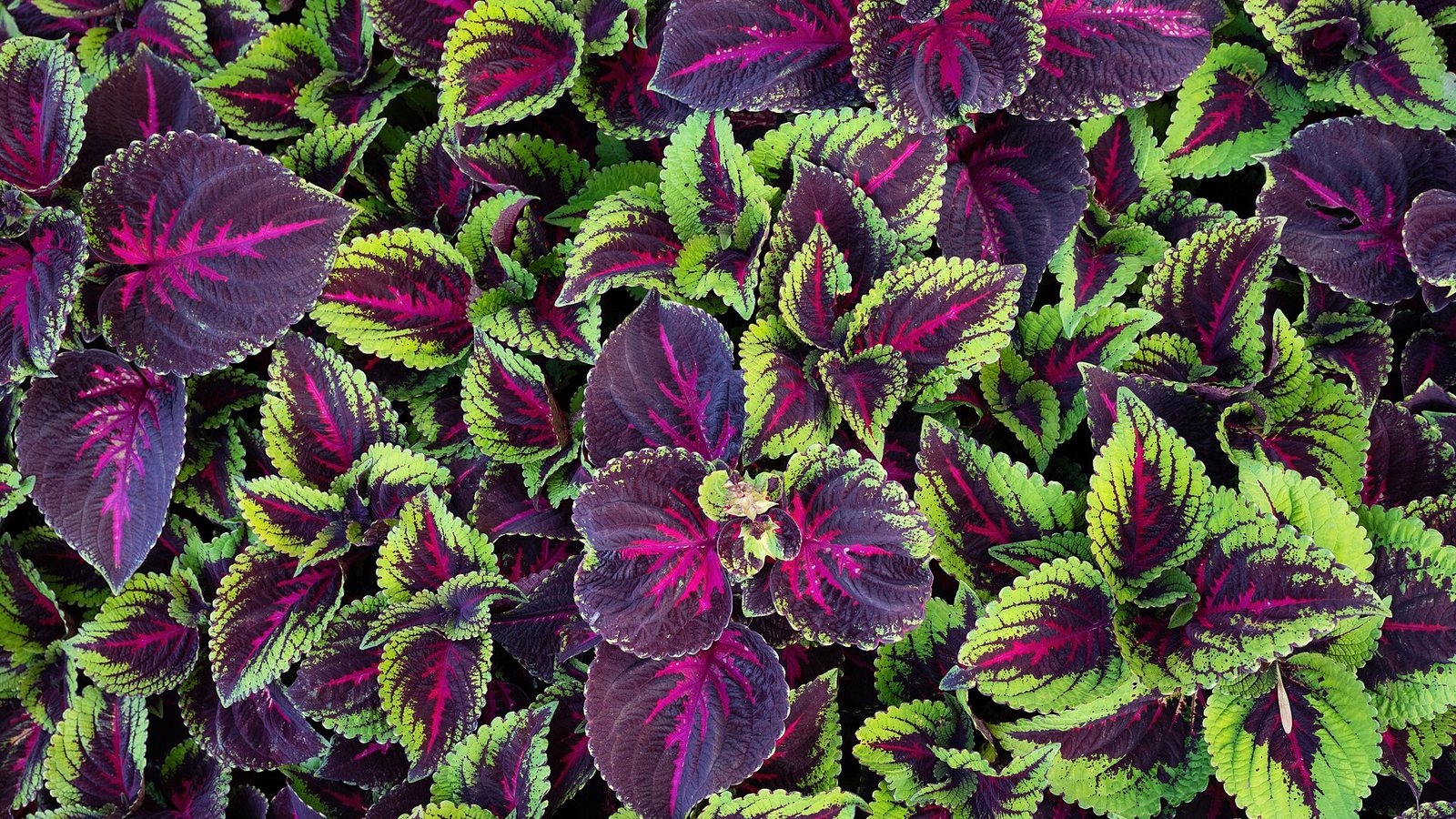 Photo: Wilfredor · CC0
Colorful leaves need the right light: coleus and croton want the brightest spot, caladium, prayer plant, polka dot plant and nerve plant like bright but filtered light, and Chinese evergreen copes with low light. Coleus, caladium and Chinese evergreen are toxic to cats and dogs; the other three are not.
Key takeaways
- Light decides leaf color: too little makes a croton revert to green, too much direct sun makes it dull and gray (NDSU).
- Cornell rates coleus at very high light, croton high, caladium and prayer plant medium, and Chinese evergreen low.
- The ASPCA lists coleus, caladium and Chinese evergreen as toxic to cats and dogs; prayer plant, polka dot plant and nerve plant as non-toxic.
- Pinching the tips keeps coleus, polka dot plant and nerve plant full.
- Choose by your light first, then by your pets.
On this page8
- Which houseplants with colorful leaves are worth growing?
- Colorful foliage plants at a glance
- Why do colorful leaves lose their color?
- Which colorful plants need the most light?
- Which colorful plants cope with medium or low light?
- Which colorful plants are safe for cats and dogs?
- How do you keep the colors bright?
- Which colorful plant should you pick?
Which houseplants with colorful leaves are worth growing?
Most colorful-leaved houseplants are picky about light, and the light they need is the fact that decides whether the color stays. This list covers seven popular foliage plants, each with the light level an extension service gives for it, its size and, because a bright leaf is often a toxic one, what the ASPCA says about cats and dogs. It is a list for choosing, not a care manual for each plant. Read the table first, then the notes on why color fades.
Colorful foliage plants at a glance
| Plant | Color | Light (extension sources) | Size | Cats and dogs (ASPCA) |
|---|---|---|---|---|
| Coleus (Plectranthus scutellarioides) | Red, pink, lime, burgundy patterns | Very high (Cornell) | Up to 90 cm (36 in) | Toxic |
| Croton (Codiaeum variegatum) | Green with white, pink, orange, red, yellow or purple | High (Cornell); bright, indirect (NDSU) | To 1.8 m (6 ft) | Irritating, toxic qualities (NDSU) |
| Caladium | White, silver, pink, red on green | Medium (Cornell) | Up to 60 cm (24 in) | Toxic |
| Chinese evergreen (Aglaonema) | Silver, pink or red patterns | Low (Cornell) | About 30 cm (12 in) | Toxic |
| Prayer plant (Maranta leuconeura) | Patterned green and red veins | Medium (Cornell) | About 45 cm (18 in) | Non-toxic |
| Polka dot plant (Hypoestes phyllostachya) | Pink, red or white splashes | Bright, filtered (NC State) | Compact, pinch to keep small | Non-toxic |
| Nerve plant (Fittonia albivenis) | Red, pink or white veins | Bright to medium (NC State) | 7-20 cm (3-8 in) tall | Non-toxic |
The light words come from a Cornell Cooperative Extension sheet ("very high", "high", "medium", "low") and from NC State's plant database. They describe how much light the plant wants, not a window direction. For turning that into a position in your room, see best plants for north, south, east and west windows and how much light houseplants need.
Why do colorful leaves lose their color?
Almost always because of light. NDSU Extension says higher light gives a croton more vibrant foliage, while too little can make the plant revert to green and too much direct sun makes the leaves dull and gray. NC State says the polka dot plant fades when light is insufficient and also stretches toward brighter light, while too much direct sun makes its leaves crinkle and curl. Cornell also notes that caladium roots rot easily if overwatered, which can look like fading.
So a plant that turns green and leggy wants more light; one that looks bleached or crisp wants less. Our guides on signs your plant needs more light and leggy plants cover the first case, and leaf sunburn covers the second.
Which colorful plants need the most light?
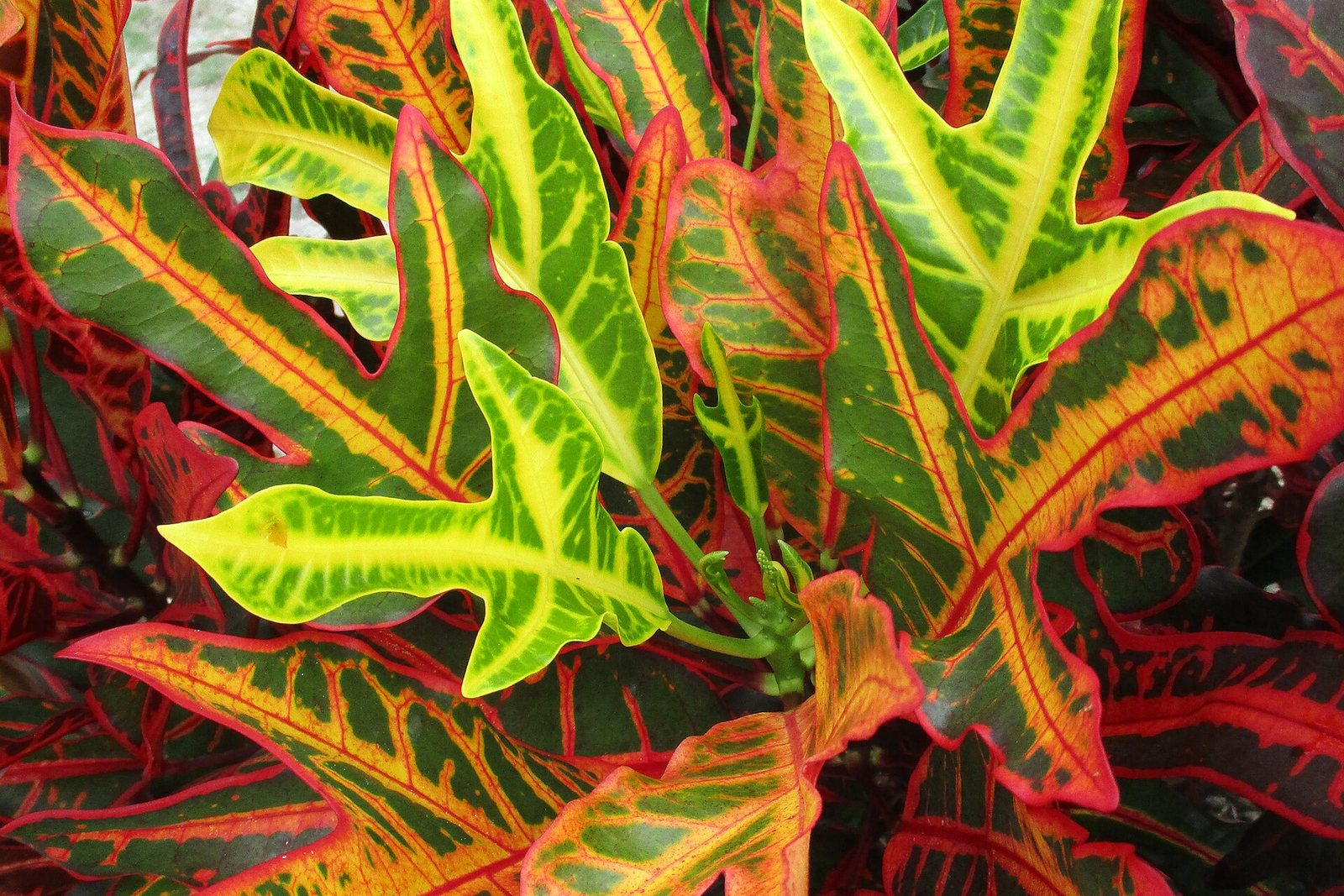
Coleus and croton. Cornell lists coleus at "very high" light and croton at "high", and for croton it adds that the colors are best in full sun. NDSU is gentler and asks for bright, indirect light with too much direct sun a problem, so the safe reading is: the brightest spot you have, behind a sheer curtain if the sun is strong. Cornell advises removing coleus tips often to make it branch, and says it is susceptible to many insects, so check the undersides of the leaves every week.
Which colorful plants cope with medium or low light?
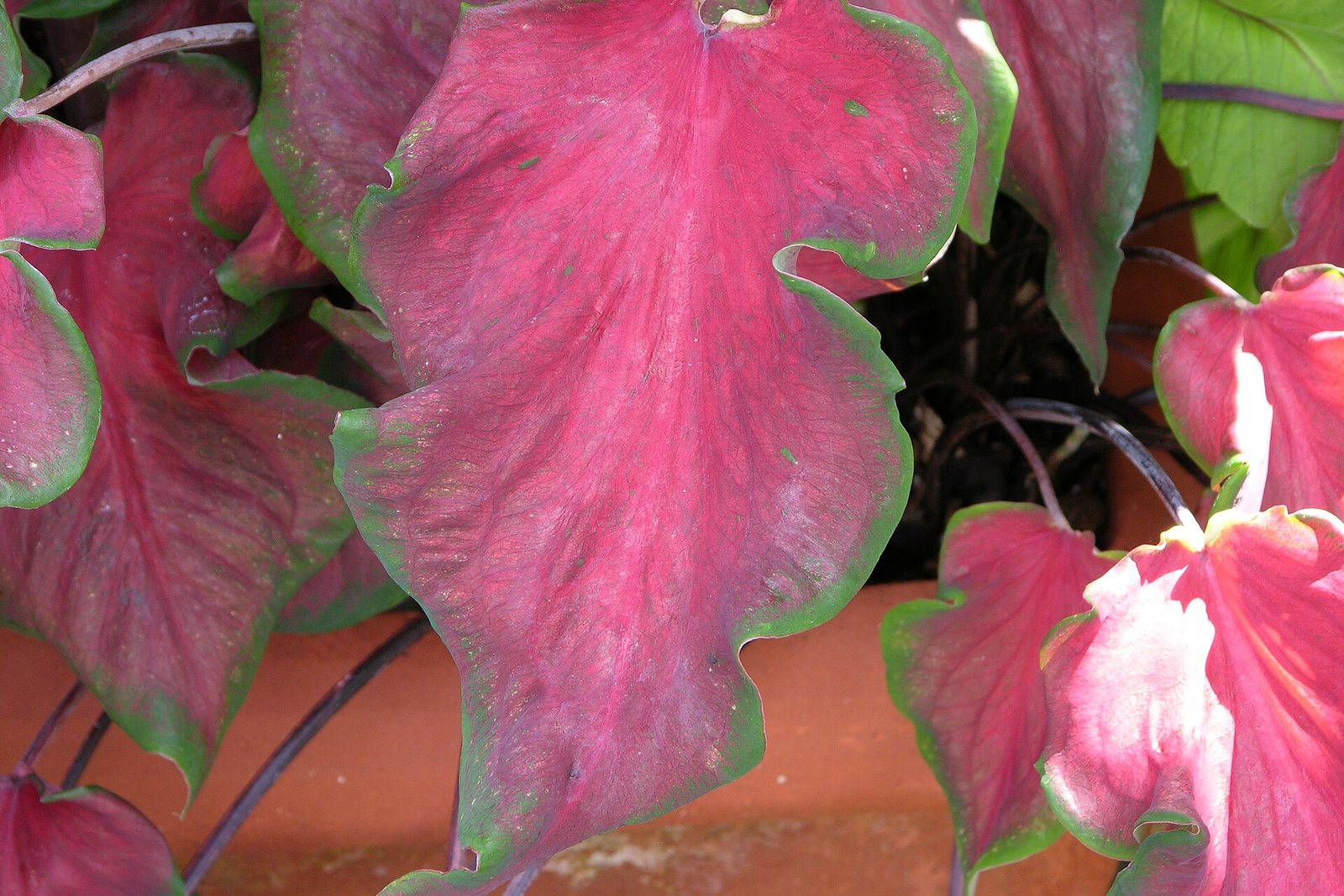
Chinese evergreen is the low-light choice on the Cornell sheet, where it is called "foolproof". Caladium, prayer plant and nerve plant sit in the middle: bright but not direct. The prayer plant is rated medium by Cornell, which also warns that it needs good humidity and moist soil or the leaf ends brown; see humidity for houseplants. NC State says the nerve plant prefers medium humidity, its leaves may be scorched by direct sun, and dry air makes the leaves shrivel and drop.
Which colorful plants are safe for cats and dogs?
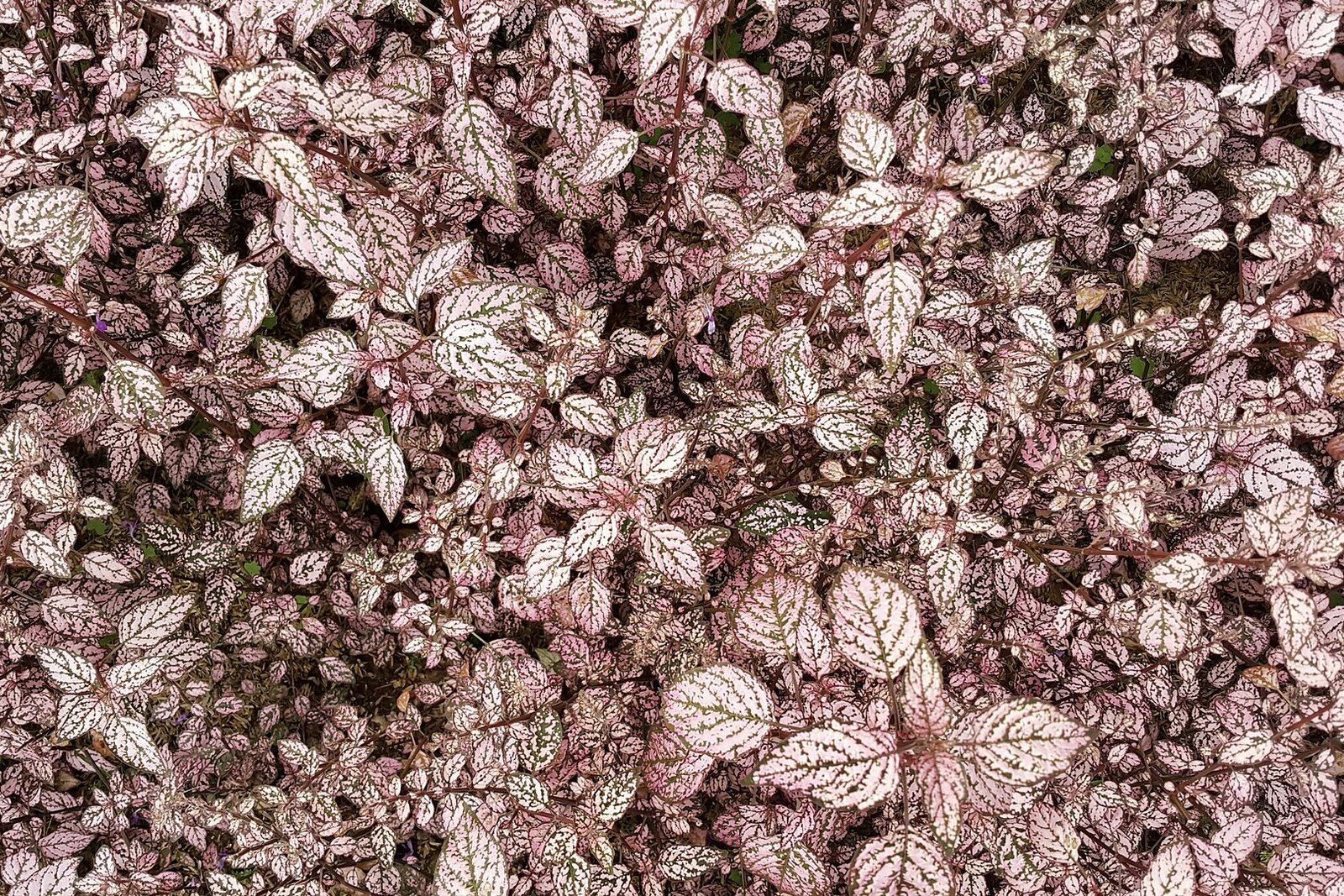
Three on this list are listed by the ASPCA as non-toxic to cats and dogs: the prayer plant, the polka dot plant and the nerve plant. The ASPCA lists coleus, caladium and Chinese evergreen as toxic to cats and dogs. For caladium and Chinese evergreen the ASPCA names insoluble calcium oxalates as the toxic principle, with oral irritation, drooling and vomiting; for coleus it names vomiting, diarrhea, depression and loss of appetite. For croton, NDSU says the plant has irritating and toxic qualities and the sap can irritate skin, so keep it away from pets that chew plants. A "non-toxic" plant can still cause mild stomach upset if a pet eats a lot, as the ASPCA says for the polka dot plant. If a pet chews a toxic plant, call your vet or ASPCA Animal Poison Control straight away. For longer lists see pet-safe houseplants for cats and dogs and plants toxic to cats.
How do you keep the colors bright?
- Match the plant to the spot. Measure the light before you buy: Flori's Smart light meter reads the light where the plant will stand, and its care profile shows each plant's light and toxicity. See measuring light with Flori.
- Turn the pot a quarter each week so one side does not stretch toward the window.
- Pinch the tips of coleus, polka dot plant and nerve plant to keep them full (Cornell for coleus, NC State for the other two).
- Water only when the top of the soil is dry for croton (NDSU says top 2.5 cm, or 1 in); falling leaves can mean too much or too little water.
- Add a lamp in winter if the colors fade; see grow lights for houseplants.
- Keep humidity up for prayer plant and nerve plant, and keep all of them away from cold glass and heaters.
Which colorful plant should you pick?
Pick by your light and your pets, in that order. A bright south or west window suits coleus and croton. An east window or a bright spot back from the glass suits caladium, polka dot plant, nerve plant and prayer plant. A dim room suits only Chinese evergreen, and its color will be quieter. If you have a cat that chews leaves, start with the prayer plant, polka dot plant or nerve plant, and keep the toxic ones out of reach.
Frequently asked questions
Which colorful houseplants need the least light?
On the Cornell sheet Chinese evergreen is the low-light plant. Caladium, prayer plant and nerve plant need medium to bright light that is not direct sun.
Why is my colorful plant turning green?
Usually too little light. NDSU says too little light can make a croton revert to green; NC State says too little light makes a polka dot plant fade and stretch.
Are colorful houseplants toxic to cats?
Some are. The ASPCA lists coleus, caladium and Chinese evergreen as toxic to cats and dogs, while prayer plant, polka dot plant and nerve plant are listed as non-toxic.
Can colorful foliage plants take direct sun?
Mostly not for long. Croton, nerve plant and prayer-type plants lose color or scorch in strong direct sun, so use bright, filtered light unless the source says otherwise.
Why do polka dot plants get leggy?
NC State says too little light makes the plant stretch toward brighter light, and pinching back leggy plants keeps it more compact.
Which houseplants suit a north, east, west or south window? Light needs, distance from the glass and cat and dog safety for each, plant by plant.
Sources
Written and fact-checked by the Flori team. Every guide cites horticultural sources such as the RHS, university extension services and the ASPCA, and is updated when the advice changes. How we write our guides
General plant care information. Plants vary; when a plant is valuable or a problem spreads quickly, consult a local nursery or plant specialist.