How and When to Prune a Fig Tree
Prune a fig lightly after hard frosts end and before growth starts, with a summer pinch. Month table, step-by-step cuts and a fix for no fruit.
 By Flori editorial team · Updated
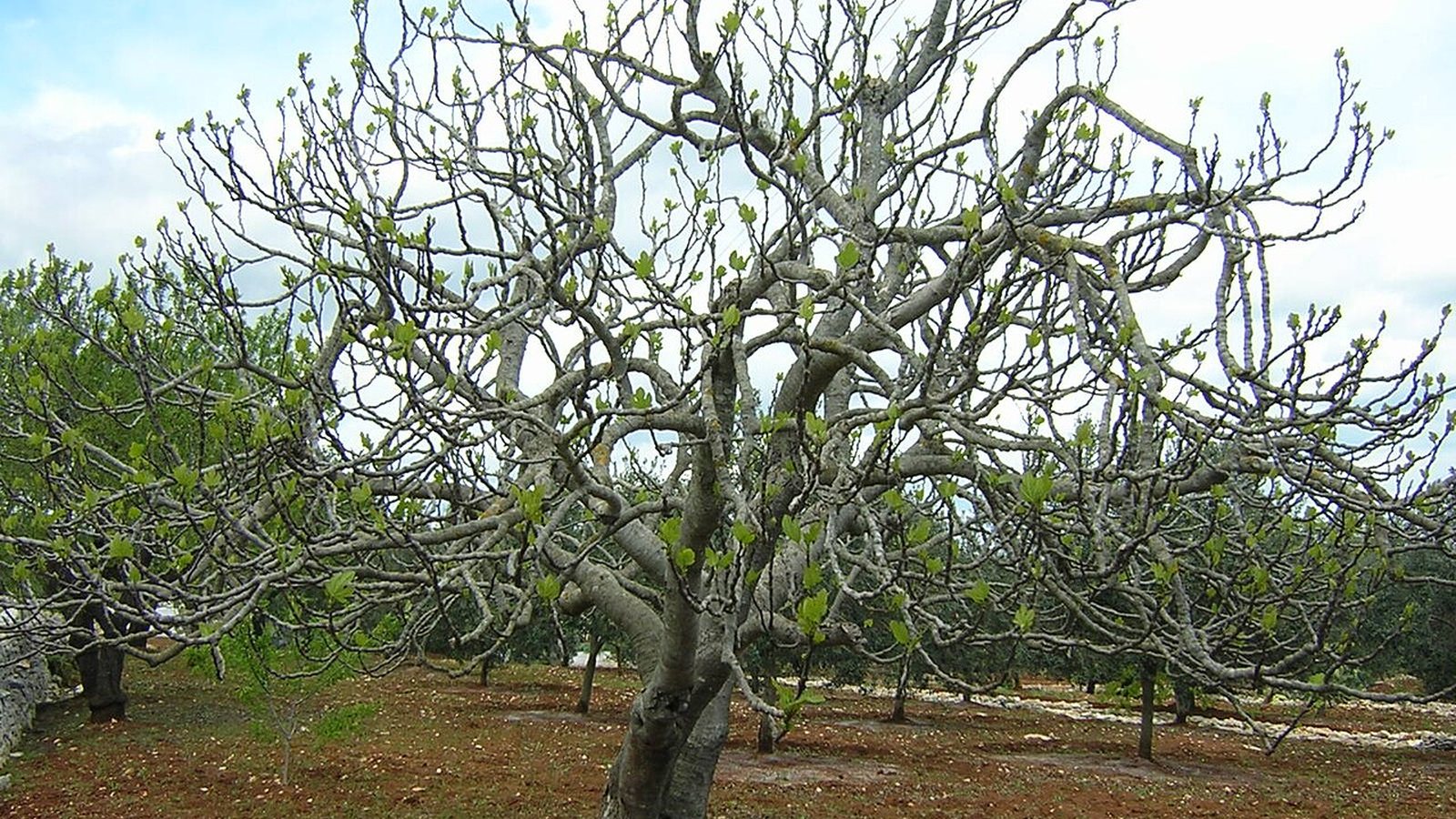 Photo: de:Benutzer:Gibe · CC BY-SA 3.0
Prune a fig tree lightly once the hard frosts are over and before buds break, usually late winter to mid spring, then pinch shoot tips in early summer. Cut dead and crossing wood first, shorten about a third of young shoots, and avoid heavy cuts: figs fruit on last year's wood.
Key takeaways
- Prune after hard frosts end and before growth starts; stop cutting new growth by mid summer.
- Cut dead, damaged and crossing wood first, then shorten roughly a third of last year's young shoots.
- Heavy pruning removes the fruitlets that become next year's crop, so spread hard renovation over three to five years.
- Wear gloves: fig sap irritates skin, and a related fig is listed as toxic to pets.
- Restrict the roots to keep a vigorous fig fruiting instead of leafy.
On this page8
- When should you prune a fig tree?
- Which month is right for your climate?
- How do you prune a fig tree step by step?
- What do you do in summer and autumn?
- How do you prune a fig tree that is out of control?
- Why is my fig tree not fruiting after pruning?
- Is fig sap safe for pets and skin?
- How do you keep the timing straight?
When should you prune a fig tree?
The short answer is: lightly, once the worst frosts are over and before the buds start to move, then a small second tidy in early summer. Advice differs a little between sources, because a fig fruits on last year's wood, so a hard cut at the wrong time removes next year's crop. This guide gives the timing for cold, mild and hot climates, the cuts to make step by step, and how to rescue a fig that has become a tangle.
Two facts explain every rule below. Most figs carry two crops: a light early-summer crop on the previous season's wood, and a main crop in mid to late summer on the current season's wood (Clemson). And the tiny fruitlets at the shoot tips in autumn are next year's figs, so shortening young shoots too hard throws them away (RHS).
Which month is right for your climate?
The RHS prunes in early to mid spring after the last hard frost, and again in early to mid summer. Clemson prunes in winter after the coldest weather has passed but before spring growth begins. These agree on the principle: wait until hard frosts are over, finish before growth starts. In practice:
| Where you garden | Main prune | Second, lighter prune |
|---|---|---|
| Cool and wet (UK, northern Europe, northern US) | Early to mid spring, after the last hard frost | Early to mid summer: pinch shoot tips; stop pruning new growth by mid summer |
| Mild winters (Mediterranean and Aegean coasts of Türkiye, southern US, Australia) | Late winter, once the coldest weather has gone and before buds swell | Light summer tidy only if the tree is too dense |
| Cold winters inland (inland Anatolia) | Spring, after the last hard frost; check for frost-killed tips | Early summer pinching |
Southern Hemisphere readers shift the seasons by six months: late winter becomes July to August, mid spring becomes October to November. Florida's UF/IFAS adds a warning for warm climates: prune only to keep the preferred size, do it after the fruit ripens in early summer, and know that a heavy winter prune can eliminate the next year's crop.
How do you prune a fig tree step by step?
- Dress for it. Fig sap irritates skin, so wear gloves, and long sleeves in summer. Start at the base and work upwards so the sap does not drip on you.
- Remove dead, damaged and crossing wood first. Cut frost-damaged, crossing or weak branches back to a healthy bud or branch, leaving a stub of about 2.5 cm (1 in) in the RHS method, and no bare stubs that can let wood-decay organisms in (Clemson).
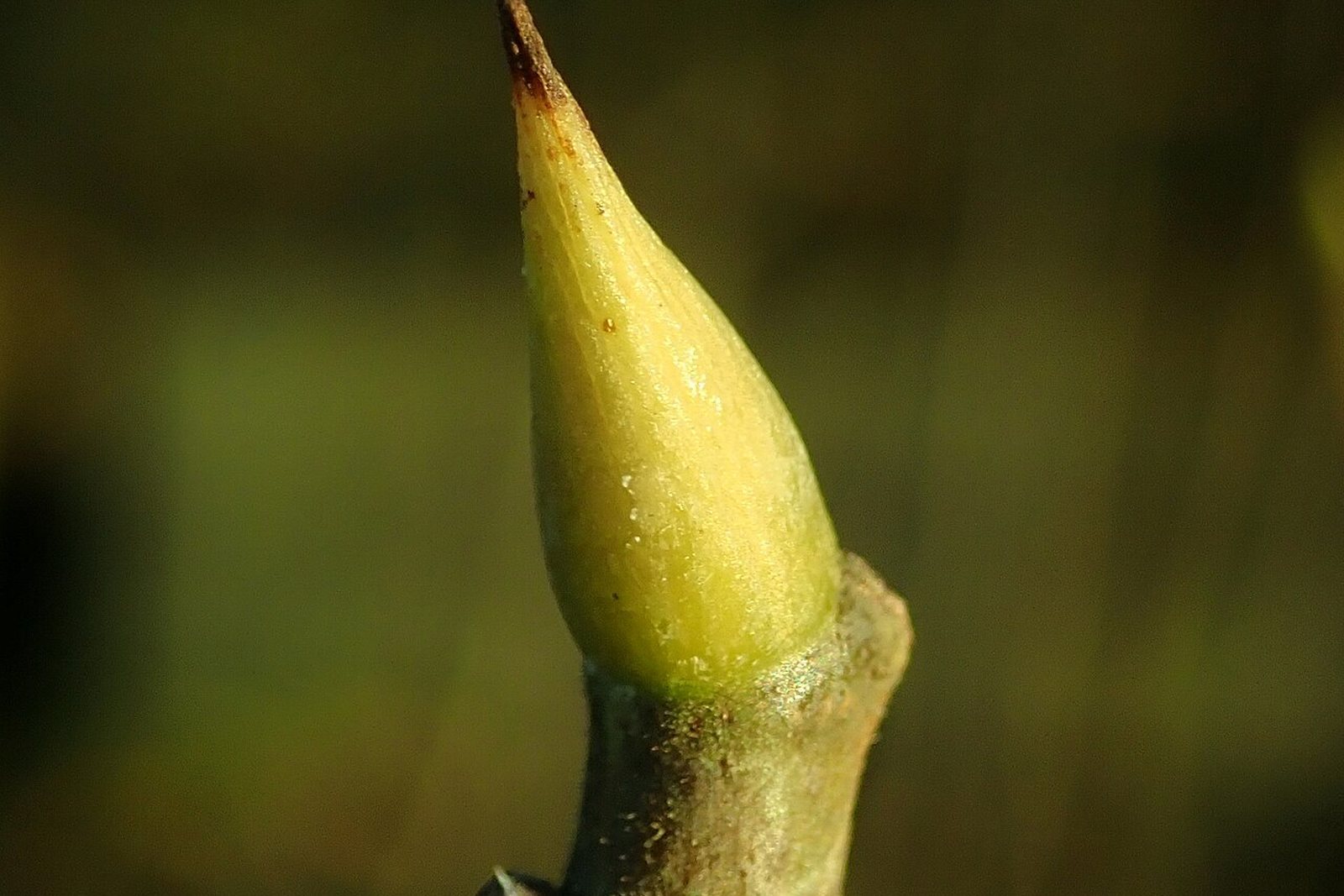
- Look for fruitlets. Tiny figs at the tips of last year's shoots are next year's early crop. Keep shoots that carry them wherever you can.
- Shorten some young shoots. On a fan-trained tree the RHS cuts back about a third of last year's young shoots to 2.5 cm (1 in) stubs, choosing lanky shoots without fruitlets. Clemson cuts long shoots by a third to a half of the annual growth. Do not shorten everything.
- Open the middle. Take out crowded shoots and any growing towards a wall or fence, so sun and air reach the fruit.
- Renew old wood. On a mature tree, cut one or two over-long bare branches to stubs of 5 to 8 cm (2 to 3 in). The RHS notes that shortening long bare branches only a little achieves little: cut them hard so they send up replacement shoots low down.
- Control suckers. Remove those you do not need; keep one only where it can replace a broken main stem.
What do you do in summer and autumn?
Once a shoot has five leaves, pinch out the tip of every other one in early summer to encourage branching (RHS). On bush and standard figs, pinch new shoots once they have five or six leaves. Then stop: new growth made after mid summer has no time to form the embryo fruits for next year.
In a cool climate the second crop rarely ripens outdoors. The RHS says to remove figs larger than a pea at the end of summer, or in mid autumn, so the tree does not waste energy and the tips can form the right fruitlets for next year. In hot climates you simply harvest the second crop.
How do you prune a fig tree that is out of control?
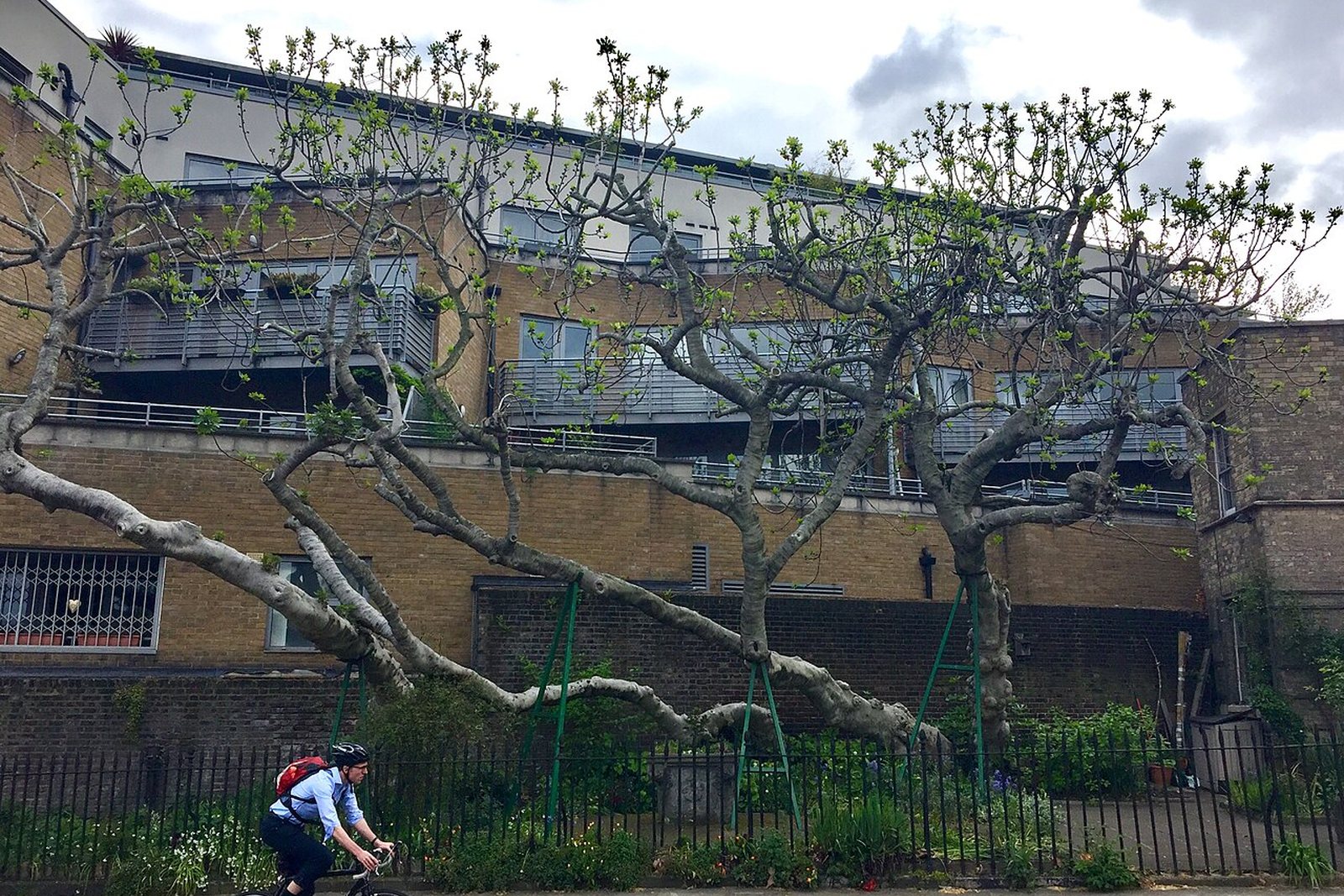
A mature fig tolerates hard pruning but answers with a flush of leafy regrowth, so spread major cuts over several years unless a full renovation is urgent. The RHS removes about a third of the vigorous regrowth each spring and pinches the shoot tips in early summer. For a fig in the ground, bringing strong regrowth under control can take three to five years.
Clemson's bush form gives you a target: choose three to eight vigorous, widely spaced shoots as the permanent leaders and remove the rest. For the general thinking behind opening up a canopy, see our guide to pruning fruit trees in winter, and remember that a fig forgives a light cut but punishes a heavy one with leaves instead of fruit.
Why is my fig tree not fruiting after pruning?
| Cause | What it looks like | What to do |
|---|---|---|
| Heavy winter prune | Lots of leaves, few figs | Prune lightly; the fruit forms on last year's wood (UF/IFAS) |
| Too much vigour | Long, soft, leafy shoots | Restrict the roots: a container about 30 cm (1 ft) wide and deep, or a lined planting pit (RHS) |
| Frost-killed tips | Dead shoot ends in spring | Wrap the branches in winter once the leaves fall; the fruitlets are frost-tender (RHS) |
| Dry roots | Dropped leaves or fruit | Water steadily through the growing season (RHS) |
Is fig sap safe for pets and skin?
No. Fig sap irritates skin, which is why the RHS advises gloves. The ASPCA lists the weeping fig (Ficus benjamina), a relative, as toxic to cats and dogs because of ficin and psoralen, causing stomach and skin irritation; its page does not cover the edible fig, so assume the same caution. Keep pets away from fresh cuts and clippings, and call your vet if a pet chews the plant.
How do you keep the timing straight?
Set a pruning reminder in Flori for the right weeks, and use the pruning calendar by month to place the fig among the other jobs. If you are planting a new tree, see when to plant fruit trees. Grapes follow a different logic; our grapevine pruning guide covers them.
Frequently asked questions
Can I prune a fig tree in autumn?
Not for shaping. In autumn only remove unripe figs (mid autumn in a cool climate, per the RHS); structural cuts wait until after the hard frosts of winter or spring.
How hard can I cut an overgrown fig?
A mature fig tolerates hard pruning but regrows leafily. The RHS takes about a third of vigorous regrowth each spring and says control can take three to five years.
Why does my fig have leaves but no figs?
Usually too much vigour or a heavy prune that removed last year's fruiting wood. Prune lightly and restrict the roots with a container or lined pit.
Is fig sap dangerous?
It irritates skin, so wear gloves and long sleeves and work from the base upwards. The ASPCA lists a related fig, the weeping fig, as toxic to cats and dogs.
Prune apple and pear trees while dormant, removing 10–20% of the canopy; prune olives lightly in late winter to early spring. Timing for both hemispheres.
Sources
Written and fact-checked by the Flori team. Every guide cites horticultural sources such as the RHS, university extension services and the ASPCA, and is updated when the advice changes. How we write our guides
General plant care information. Plants vary; when a plant is valuable or a problem spreads quickly, consult a local nursery or plant specialist.