When and How to Plant Fruit Trees
Plant fruit trees while dormant, from late autumn to early spring, in soil that is not frozen or soggy. Here is the step-by-step method, depth and aftercare.
 By Flori editorial team · Updated
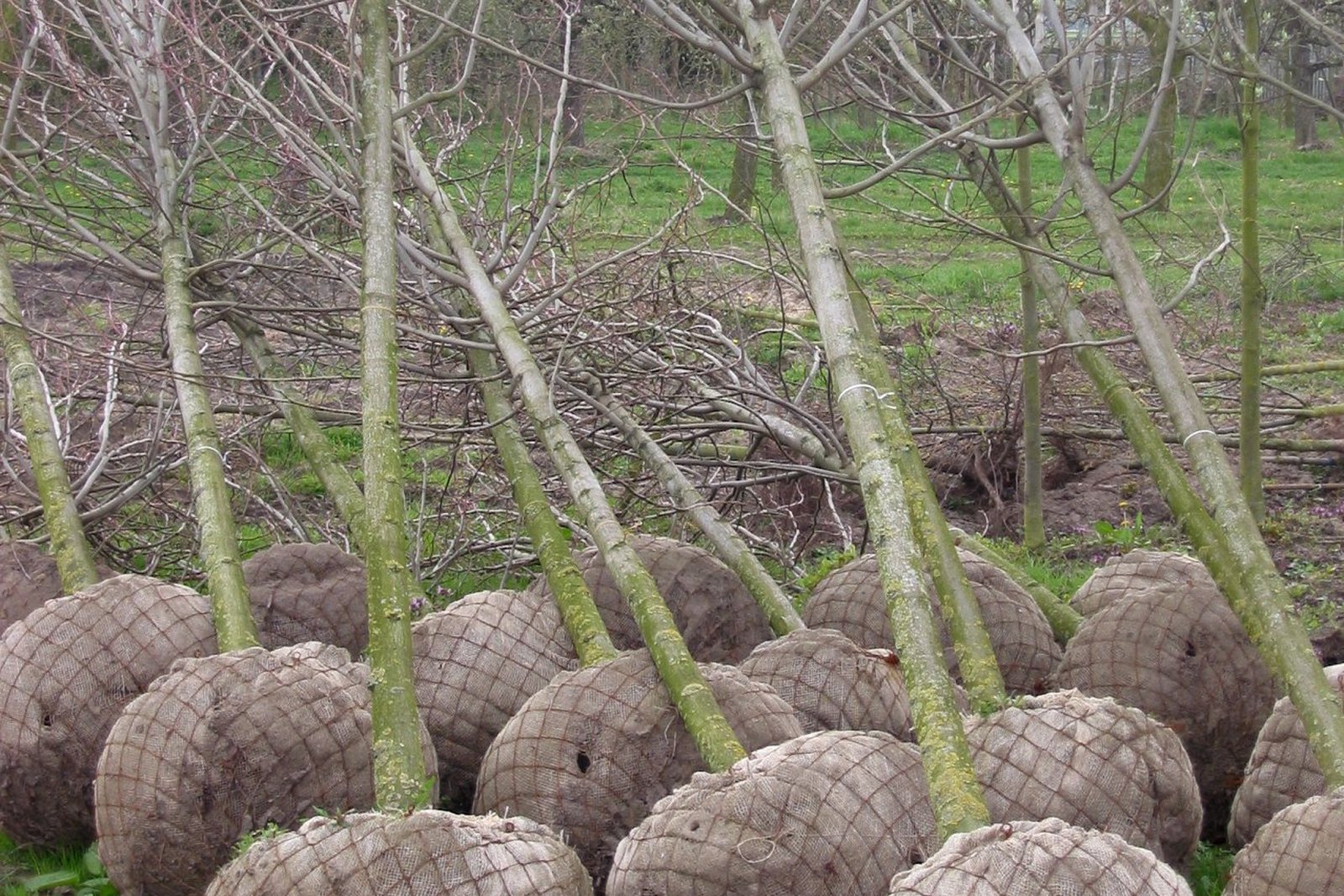
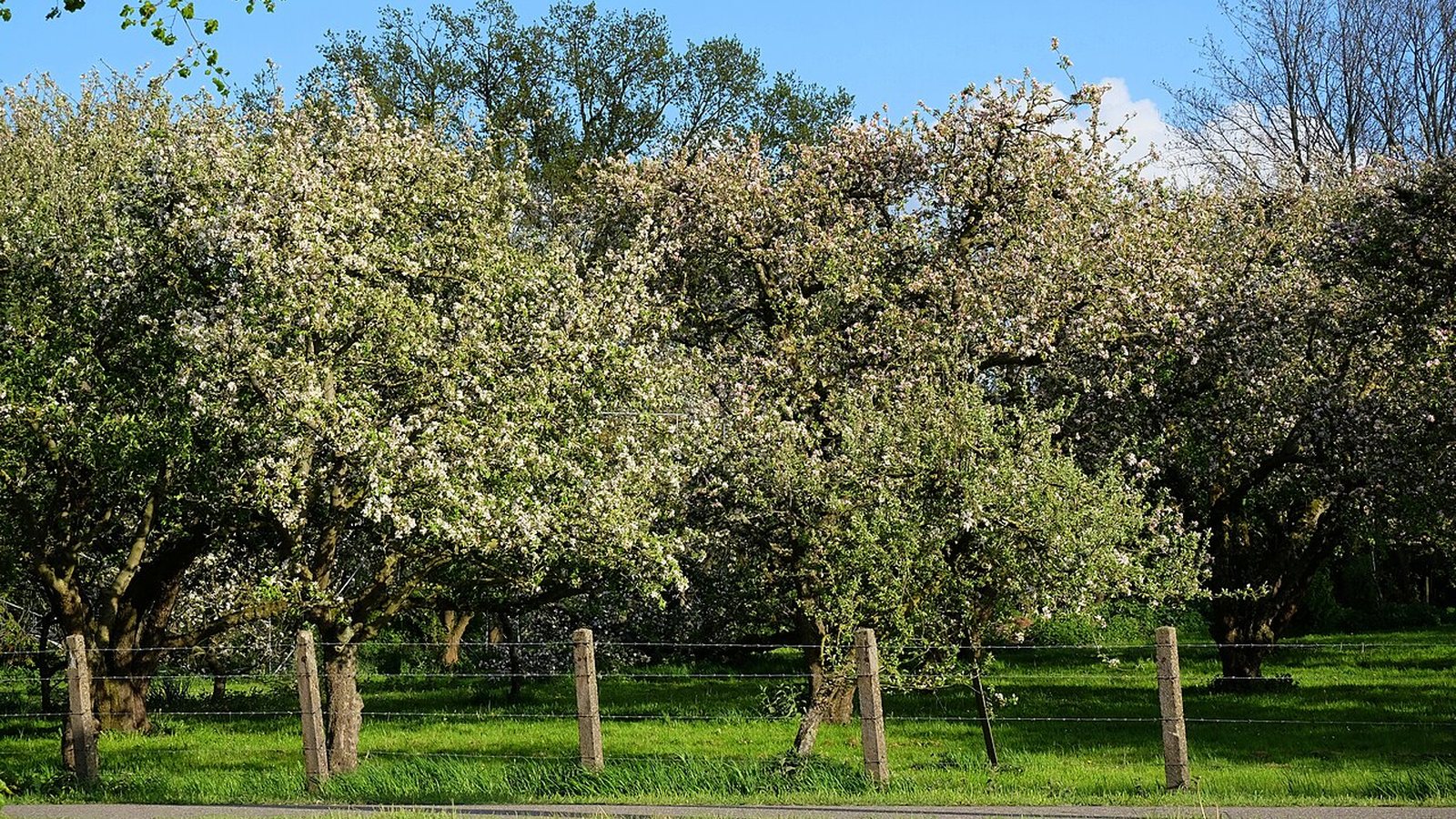 Photo: Lendskaip · CC0
Plant fruit trees while they are dormant: late autumn to early spring in the Northern Hemisphere, roughly May to August in the Southern. Never plant into frozen or waterlogged soil. Dig a wide, not deep, hole, keep the graft union above the soil, stake, mulch and water deeply through the first dry spells.
Key takeaways
- Dormant season is best: late autumn to early spring in the north, about May to August in the south.
- Frozen or waterlogged soil beats the calendar: wait if it sticks to your boots.
- Dig a wide hole, not a deep one, and keep the graft union above the soil line.
- Stake at planting, mulch at least 5 cm (2 in) deep and keep it off the trunk.
- Apple and plum leaves, stems and seeds are toxic to dogs and cats, according to the ASPCA.
On this page8
- When is the best time to plant a fruit tree?
- Bare-root, container or root-balled: which should you buy?
- What if your winters are mild or very cold?
- Which spot suits a fruit tree?
- How do you plant a fruit tree step by step?
- How do you look after a newly planted fruit tree?
- Are fruit trees safe for pets?
- Common planting mistakes
When is the best time to plant a fruit tree?
Plant fruit trees while they are dormant: in the Northern Hemisphere that means late autumn to early spring (roughly November to March), and in the Southern Hemisphere roughly May to August. The Royal Horticultural Society (RHS) says the best time for apples is while the tree is dormant, from autumn to spring, and that bare-root trees are only sold in winter or early spring for exactly that reason. What matters more than the calendar is the ground: never plant into frozen or waterlogged soil. If the soil sticks to your boots or tools, it is too wet.
This guide covers the whole job: when to plant in a mild or a cold climate, how to prepare the tree, how deep to set it, and the first-year care that decides whether it takes. For pruning an established tree, see our guide to pruning apple, pear and olive trees in winter.
Bare-root, container or root-balled: which should you buy?
The type of tree you buy sets your planting window.
| Type | Planting window | Notes |
|---|---|---|
| Bare-root | Only while dormant: late autumn to early spring | Cheaper, wider choice; plant as soon as you get it home |
| Container-grown | Almost any time, but it settles best in the dormant season | Avoid hot, dry weather; water regularly after planting |
| Root-balled (roots in hessian) | Dormant season | Between the two; keep the root ball intact |
According to the RHS, check the roots before buying and avoid trees with torn, split or stripped main roots. If you cannot plant a bare-root tree immediately, the University of California says to keep the roots covered with sawdust or compost and moist until you can.
What if your winters are mild or very cold?
The dormant season is a window, and your climate moves it. Sources agree on the principle but not on exact dates, so treat these as approximate.
- Mild winters (Mediterranean and Aegean coasts of Türkiye, coastal California, much of the UK): late autumn and winter are ideal. The tree roots in while the top is asleep, and spring rain and warmth then feed growth. University of California guidance names winter as the ideal planting season for bare-root trees.
- Cold winters (inland Anatolia, the north-eastern US, central Europe): planting can wait until the soil has thawed in early spring, while the buds are still closed. Autumn planting only works if the tree has weeks to root before the ground freezes.
- Hot, dry summers: avoid planting container trees then; the RHS notes they settle in less readily and warns against hot, dry weather.
If frost is forecast, see our guide to protecting garden plants from frost. For the rest of the autumn job list, see what to plant in November.
Which spot suits a fruit tree?
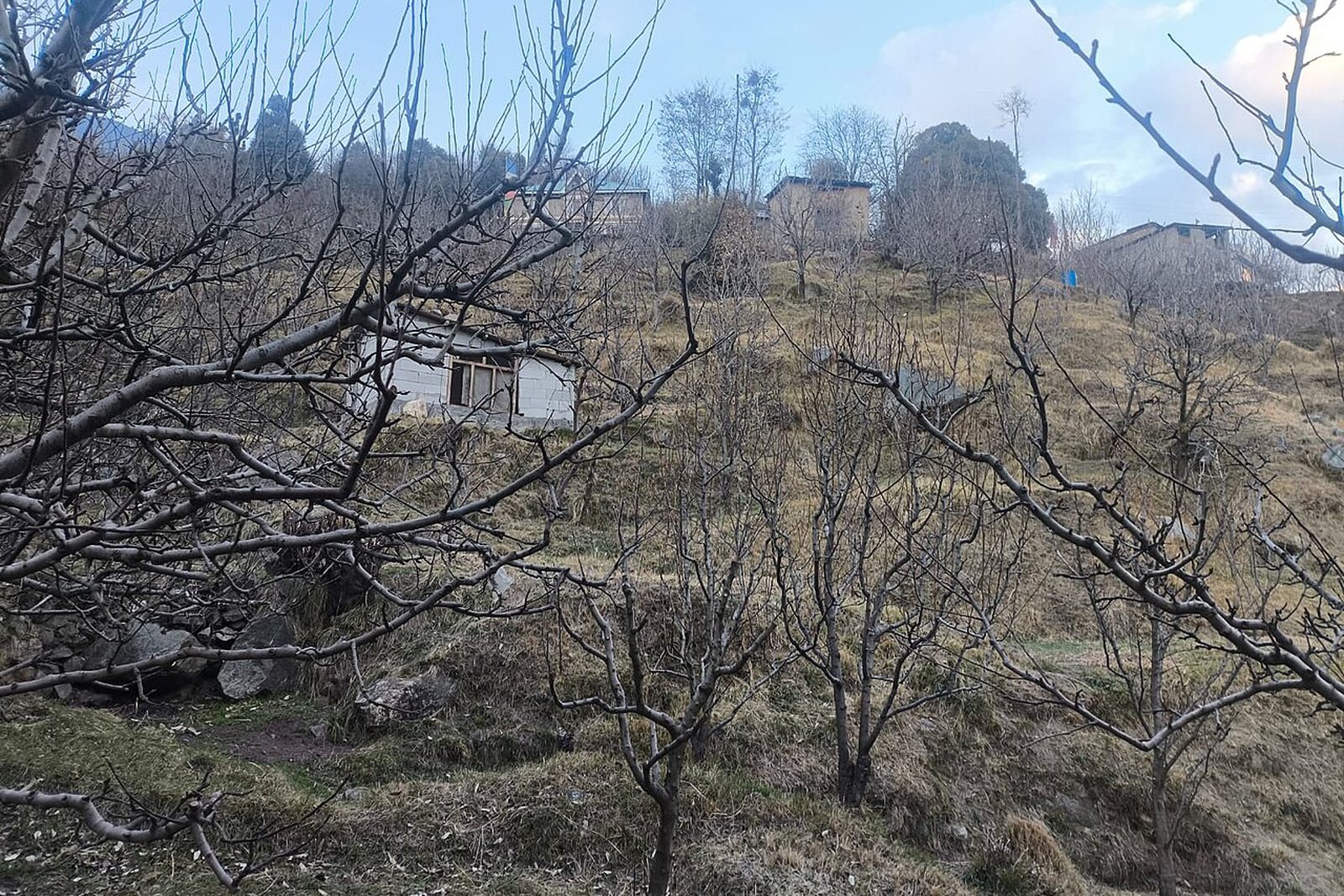
Choose fertile, freely draining soil in a sunny, sheltered position. The RHS says apples like full sun and a warm, sheltered spot away from late frosts, and the University of California suggests at least 6 hours of sun a day. Avoid hollows where cold air and water collect. Check the rootstock on the label: dwarfing rootstocks such as M9 or M26 suit small gardens and pots, while semi-dwarfing MM106 makes a larger tree, up to about 4 m (13 ft) tall, per the RHS. Many apple and pear varieties also need a pollination partner nearby; check the label before you buy.
How do you plant a fruit tree step by step?
- Prepare the roots. The RHS says to stand bare-root trees in a bucket of water for about half an hour and to water container trees thoroughly. Trim only broken or damaged roots, as Penn State Extension advises.
- Dig a wide, not deep, hole. University of California advice is about twice the width of the root spread and no deeper than the roots. The roots should spread out without bending or bunching.
- Set the graft union above the soil. The graft union is the bulge where the variety joins the rootstock. Penn State says no more than about 5 cm (2 in) above the soil line after settling, while University of California gives 10–15 cm (4–6 in). If it ends up underground, the variety can root itself and the tree may outgrow its dwarfing rootstock, so follow your supplier's advice.
- Stake free-standing trees. The RHS says the stake goes in at planting time, not afterwards.
- Backfill and firm. Refill with the soil you removed. Penn State suggests firming with your feet when the hole is half full, then filling and firming again, leaving no depression around the trunk. Do not put fertilizer in the hole.
- Water in. Soak the soil thoroughly to close air pockets.
- Mulch. Apply a layer at least 5 cm (2 in) thick, per the RHS, and keep it several centimetres away from the trunk so the bark does not rot.
How do you look after a newly planted fruit tree?
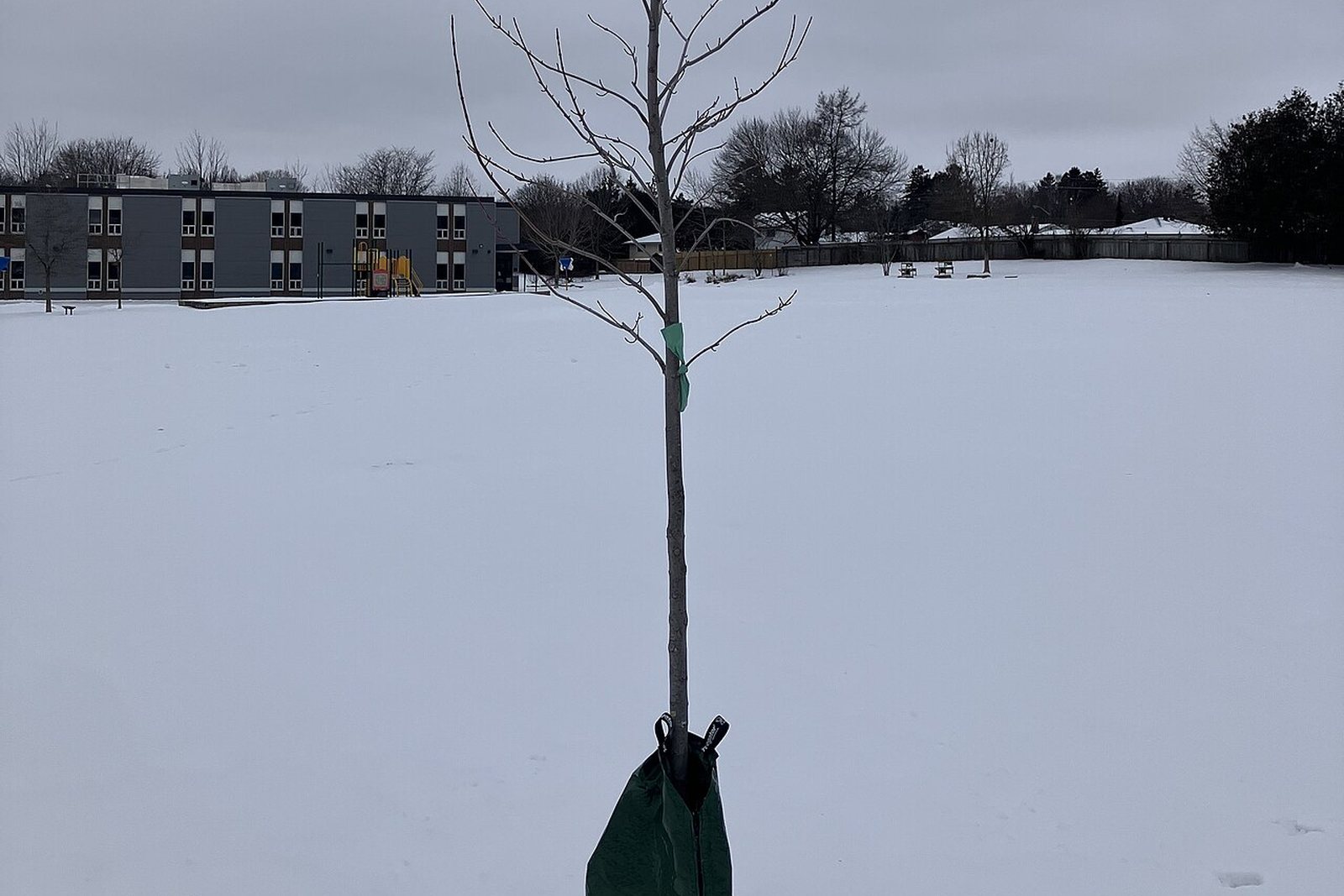
The first two years decide the tree's future. The RHS says to water new trees regularly during dry spells for the first couple of years, at the base of the tree in the early morning or evening. One deep soak beats a daily sprinkle, which keeps roots near the surface. Established trees in the ground usually should not need extra water.
- Lawn: clear a circle at least 1 m (3 ft) across, so grass does not compete for water.
- Top pruning: Penn State suggests cutting back the top by about a quarter to offset the roots lost at digging. University of California advice for bare-root trees is to cut back to a single trunk of about 60 cm (24 in).
- Trunk protection: University of California suggests painting young trunks with white interior latex paint diluted 1 part paint to 2 parts water, to reflect heat and prevent sunscald in sunny climates.
- Fertilizer: wait until the soil has settled after a good rain, and never put it in the planting hole.
A tree in a pot needs different care: the RHS suggests a dwarfing rootstock in a pot at least 45 cm (18 in) across, filled with loam-based compost, in a sunny, sheltered place. For pot choice, see how to choose the right pot. If a young tree shows browning leaves in its first season, check the brown leaf causes and the watering before assuming disease. Flori can identify a plant from a photo, and Dr. Flori can suggest a likely cause from a description or photo of leaf trouble.
Are fruit trees safe for pets?
Take care around dogs and cats. The ASPCA lists apple (including crab apples) and plum as toxic to dogs and cats: the stems, leaves and seeds contain cyanogenic glycosides, and its pages say they are particularly toxic as they wilt. Signs it lists include dilated pupils, difficulty breathing, panting and shock. So clear fallen leaves and prunings promptly, and do not let pets chew seeds or pits. If you think your pet has eaten any part, call your vet or the ASPCA Animal Poison Control Center straight away.
Common planting mistakes
- Planting into frozen, soggy or heavy wet soil.
- Digging a deep, narrow hole instead of a wide, shallow one.
- Burying the graft union.
- Letting a new tree dry out in its first dry spell.
- Piling mulch against the trunk.
- Putting fertilizer in the hole.
Frequently asked questions
Can I plant a fruit tree in summer?
Container-grown trees can be planted at almost any time, but the RHS says they settle best from autumn to spring and warns against planting in hot, dry weather. If you must plant in summer, water regularly.
How deep should I plant a fruit tree?
Only as deep as the roots, in a hole about twice as wide as the root spread. The graft union, the bulge where the variety joins the rootstock, must stay above the soil line.
Do I need two apple trees for fruit?
Many apple and pear varieties need a pollination partner nearby, but some are self-fertile. Check the label or ask the nursery for your variety before buying.
Is it too late to plant a fruit tree in November?
No. November is within the dormant planting window in the Northern Hemisphere, as long as the ground is not frozen or waterlogged. In very cold areas you can wait for early spring.
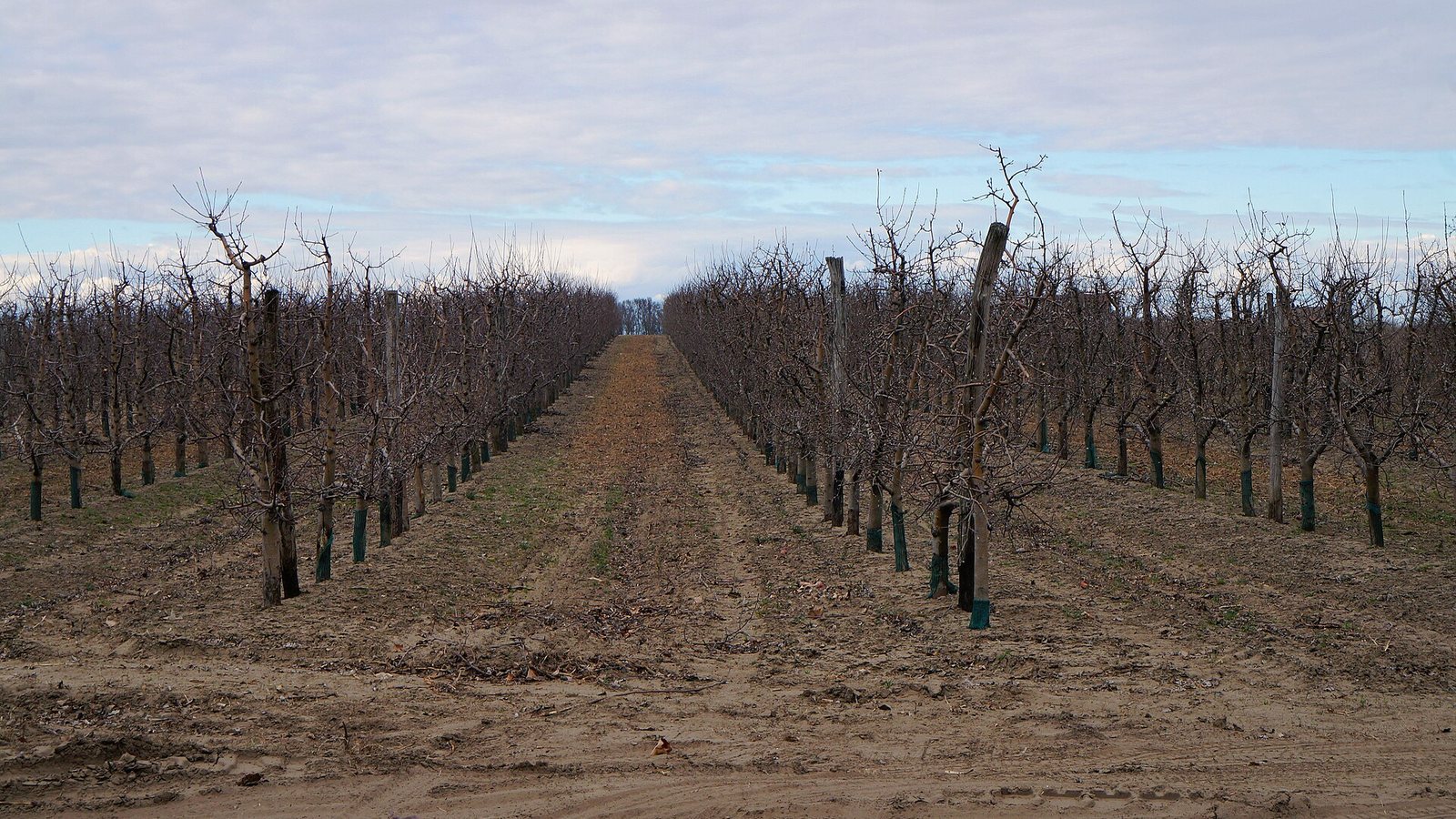
Prune apple and pear trees while dormant, removing 10–20% of the canopy; prune olives lightly in late winter to early spring. Timing for both hemispheres.
Sources
Written and fact-checked by the Flori team. Every guide cites horticultural sources such as the RHS, university extension services and the ASPCA, and is updated when the advice changes. How we write our guides
General plant care information. Plants vary; when a plant is valuable or a problem spreads quickly, consult a local nursery or plant specialist.