Mushrooms Growing in a Circle: Fairy Rings Explained
Mushrooms growing in a circle are fairy rings: a fungus spreading outward underground. Learn the three lawn types, what helps, and why never to eat them.
 By Flori editorial team · Updated
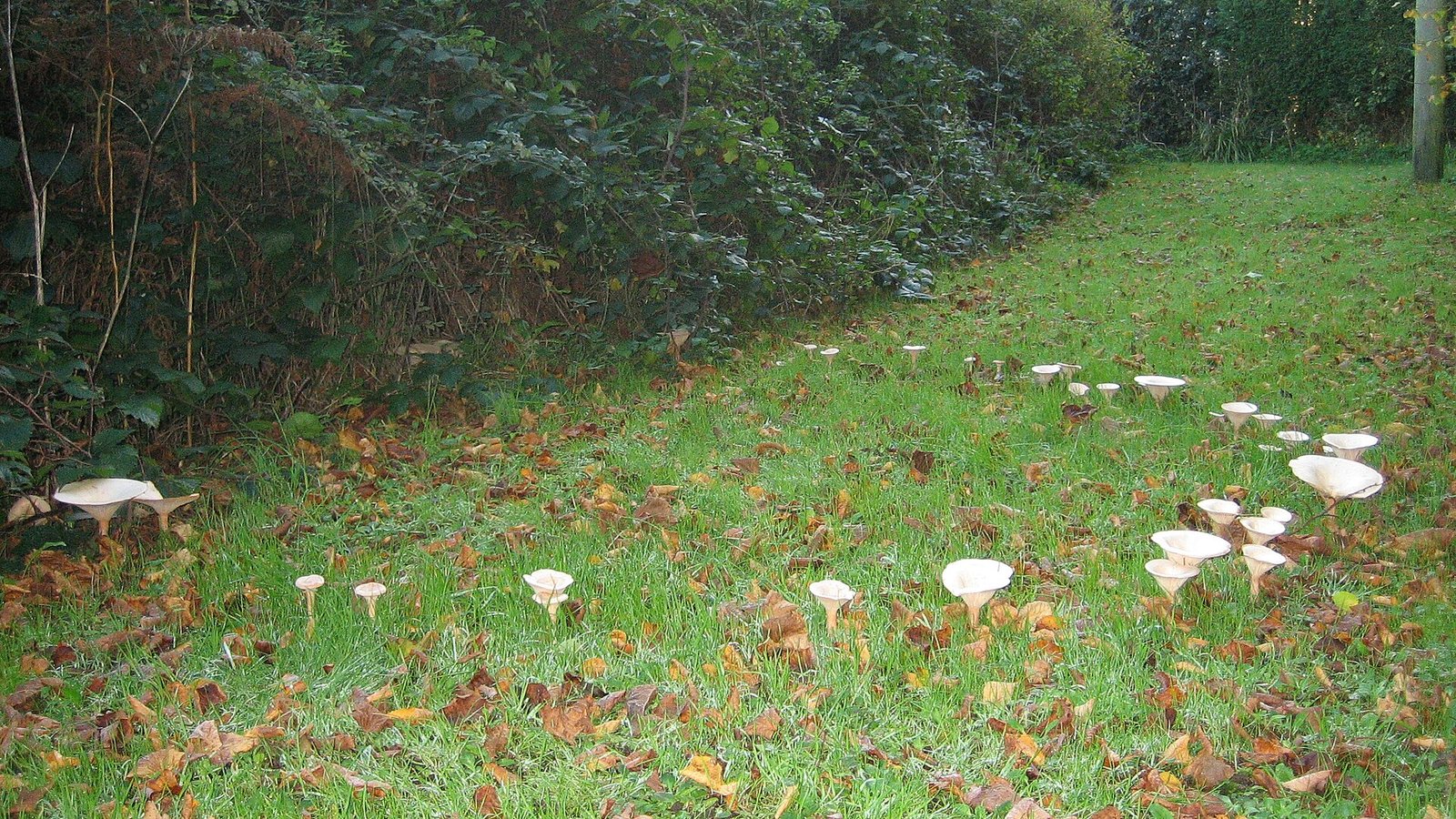 Photo: Cropcircles at English Wikipedia · Public domain
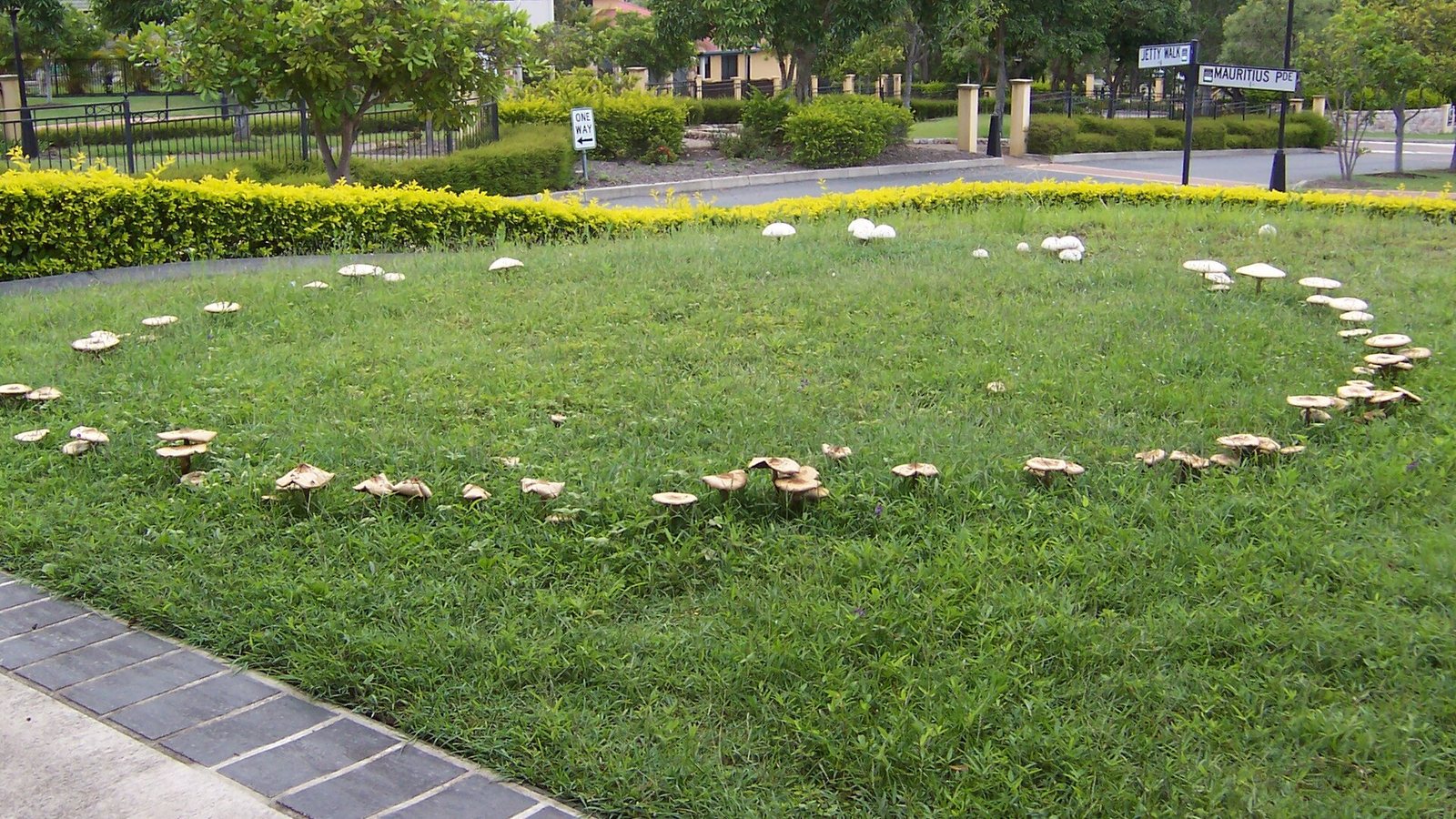
Mushrooms growing in a circle are a fairy ring: a fungus spreading outward underground, often from buried wood or an old stump. Rings are usually harmless to the lawn, and mowing or picking the mushrooms is enough. Never eat them: many ring mushrooms are poisonous, and a circle says nothing about safety.
Key takeaways
- A fairy ring is one fungus spreading outward underground, about 30 cm (1 ft) a year (RHS).
- Lawn rings come in three types: dead grass, dark green grass, or mushrooms only; the last is the most common.
- Removing mushrooms does not kill the fungus; spiking, deep watering and patience handle most rings.
- Many fairy ring mushrooms are poisonous, and the ring shape says nothing about safety; never eat them.
- If anyone eats an unknown mushroom, call the poison line at once and keep a sample.
On this page7
What is a fairy ring?
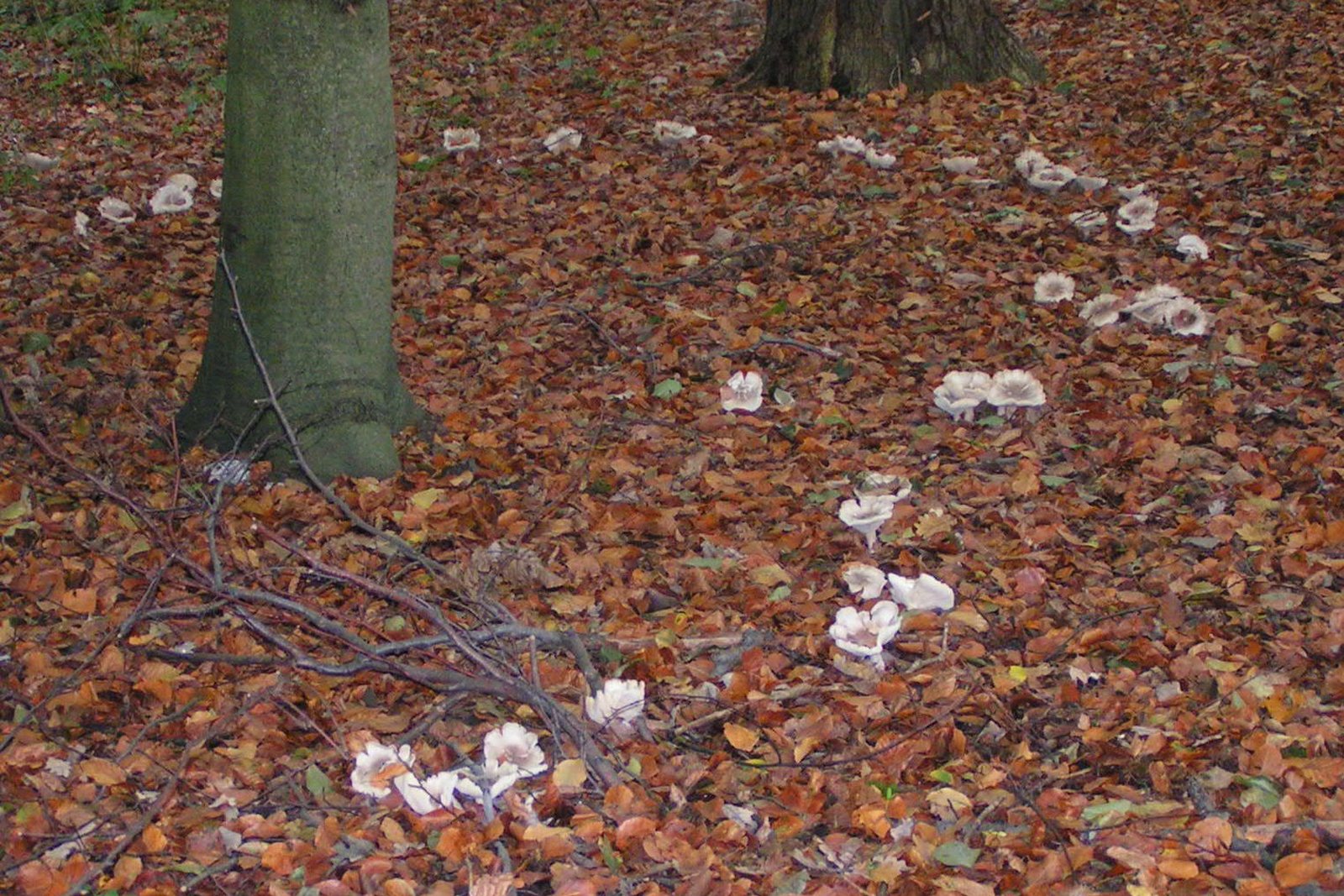
A fairy ring is a circle, or part of a circle, of mushrooms or of oddly coloured grass that grows in a lawn, meadow or woodland floor. Mushrooms growing in a circle are not magic and almost never mean anything is wrong with the lawn: they are the fruiting bodies of a fungus living below ground, spreading outward in all directions from a central point. This guide explains what makes the ring, the three types of lawn rings (dead, dark green and mushrooms only), what you can and cannot do about them, and the one safety rule that matters most: a ring tells you nothing about whether its mushrooms are safe.
The RHS describes fairy rings as circular patterns of dead grass and/or toadstools in lawns and rough grass. The fungi form colonies in the root zone, and airborne spores from the toadstools spread them. If you want a general overview of lawn mushrooms rather than rings, read our guide to mushrooms in your lawn or garden.
Why do mushrooms grow in a circle?
The fungus grows outward from a starting point, so the colony becomes a widening circle. The RHS says colonies expand by about 30 cm (1 ft) per year and, in large areas of turf, can persist for hundreds of years. University of Arkansas Extension says rings range from a few inches to several hundred feet across, and when two rings meet they may inhibit each other and form arcs instead.
The food is usually buried and organic. The Arkansas extension service notes that rings often appear where trees or stumps once stood, and that buried lumber can contribute. It also says up to 50 soil-dwelling fungi can cause fairy rings, and the RHS adds that most of the species have little or no effect on the turf and may even boost growth. The best-known troublemaker is Marasmius oreades, which spreads slowly through the roots of turf.
Which type of fairy ring do you have?
| Type | What you see | What is happening | What to do |
|---|---|---|---|
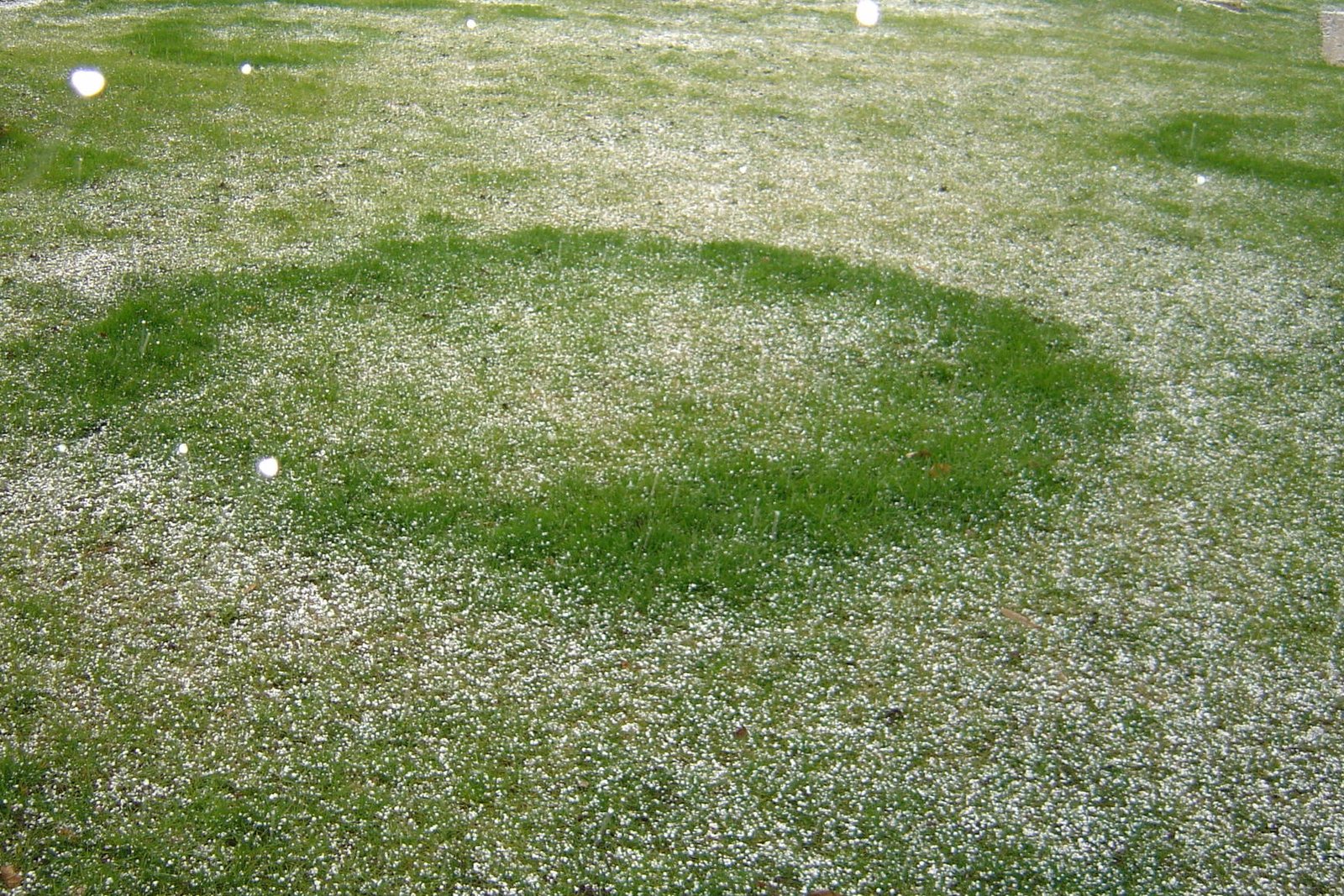
| Type 1 | Dead or badly damaged band of grass | The fungus makes the soil water-repellent, so the grass suffers drought stress (Arkansas) | Spike or core-aerate; deep, regular watering; wetting agents may help |
| Type 2 | Lush, dark green band of fast-growing grass | Nutrients released by the fungus feed the grass (Arkansas, RHS) | Mow it; a light nitrogen feed can even out the colour |
| Type 3 | Ring of mushrooms or puffballs, no turf damage | The commonest type in home lawns (Arkansas) | Remove or mow the mushrooms; nothing else is needed |
The rings are mainly an autumn sight. The RHS says toadstools appear mainly in late summer and autumn, while Arkansas notes they can show from spring through autumn, especially in hot, dry weather. In the Southern Hemisphere that means roughly February to May, and in the Northern Hemisphere roughly August to November. Whichever you have, our guide to when the mushroom season ends shows when the flush usually stops.
How do you get rid of a fairy ring?
Often you do not need to. For a ring of mushrooms only, mowing or picking them is enough for appearance, though Arkansas stresses that removing mushrooms does not kill the fungus, and the ring may take a long time to disappear. The RHS agrees that removing toadstools will not help much because the spores travel a long way.
- Spike or aerate. For dead patches, the RHS suggests spiking, watering and feeding; Arkansas recommends punching holes in dry areas then soaking the soil thoroughly each week for four to six weeks.
- Keep the lawn watered and fed. Arkansas says rings are worse on light soils, heavy thatch and under-fertilised or under-irrigated lawns.
- Dig it out, only if it is small. The RHS says digging out the ring and replacing the soil to at least 30 cm (12 in) is effective but usually impractical, and Arkansas calls excavation costly and not recommended, because rings return if the buried food source remains.
- Do not expect a fungicide to solve it. The RHS says no fungicides are available to gardeners for fairy rings. If a company offers a treatment, check that it is legal for your home garden and follow the label.
Are the mushrooms in a ring safe to eat?
Do not eat them. This is where fairy rings cause real harm. A ring suggests a safe, abundant crop, but the shape of a ring says nothing about the species. The Arkansas extension service states that many fairy ring mushrooms are poisonous, and the RHS notes that several different fungi form rings. NAMA, the North American Mycological Association, says no single visual feature reveals whether a mushroom is edible, and that colour, insect damage, smell and folklore are not reliable tests.
The other myths work no better: peeling the cap, using silver, or watching whether slugs or animals eat it prove nothing. No app can confirm it from a photo either; identification weighs several features, and NAMA says a single photo is not enough. Our guide on whether an app can identify mushrooms explains what a photo can and cannot do, and Flori's mushroom identification should be treated as a clue to take to a local expert, never as permission to eat.
Keep children and pets away
NAMA recommends keeping unidentified mushrooms away from small children and pets, since dogs often eat mushrooms they find in yards or on walks. Arkansas says to remove the mushrooms promptly if children or pets may eat them. Wear gloves, put them in a sealed bag in the bin, and wash your hands. For dogs, see our guide to poisonous mushrooms and dogs.
Do fairy rings harm the lawn or the garden?
Mostly they look odd and nothing more. The Arkansas service says damage is usually cosmetic, though it can be serious on golf greens. The fungus lives on dead organic matter, not on healthy grass roots, but the water-repellent soil of a Type 1 ring can leave a dry patch, especially in a hot dry spell. Watering deeply and spiking solves most of it. If the same circle keeps returning, look for an old stump or buried wood below it.
What to do if someone eats an unknown mushroom
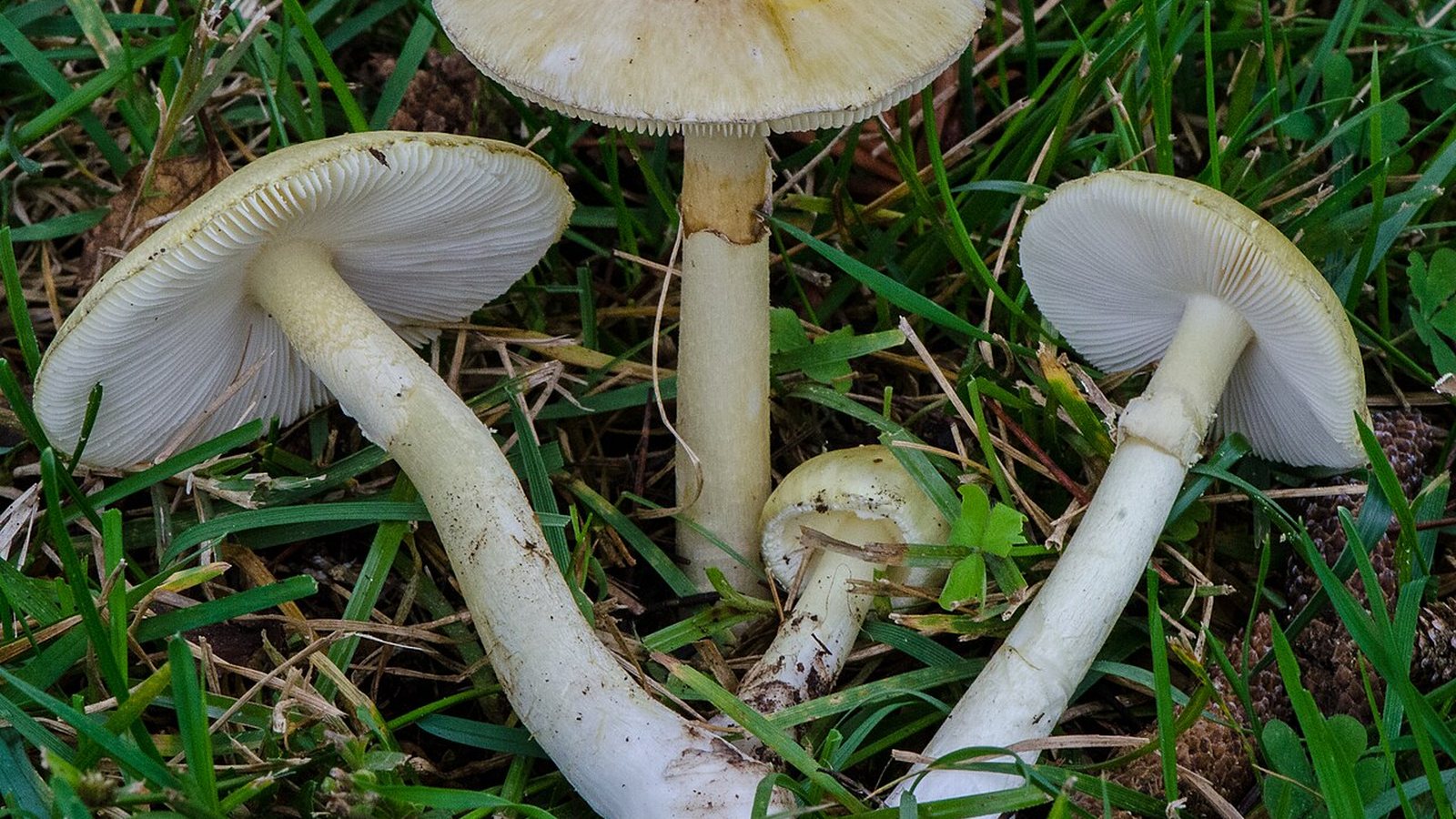
If a person or a pet has eaten any mushroom you cannot identify, call the poison line now and do not wait for symptoms. In Türkiye call UZEM 114 (Ulusal Zehir Danışma Merkezi); in the United States call Poison Control on 1-800-222-1222; in the United Kingdom call NHS 111. For pets, call your vet or the ASPCA Animal Poison Control Center on (888) 426-4435. Keep a sample of what was eaten and take photographs, because NAMA advises retaining photographs or specimens that may help identification. Some poisonings, including from Amanita species, can seem to improve before serious liver damage shows, so feeling better is not a reason to wait. This guide gives no treatment advice; follow what the poison line tells you.
Frequently asked questions
Why are mushrooms growing in a perfect circle in my lawn?
A fungus is spreading outward from a central point underground, often feeding on buried wood or an old stump, and the mushrooms mark its edge. The RHS says colonies expand by about 30 cm (1 ft) a year.
Are fairy rings bad for my lawn?
Usually not. Arkansas Extension says the damage is mostly cosmetic. The worst type makes the soil water-repellent, leaving dry patches in hot weather.
Can I kill a fairy ring with fungicide?
The RHS says no fungicides are available to gardeners for fairy ring control. Spiking, deep watering and feeding help, or dig out a small ring to at least 30 cm (12 in).
Are mushrooms in a fairy ring safe to eat?
No. Many fairy ring mushrooms are poisonous, and the circle says nothing about the species. NAMA says colour, insects, smell and folklore are not reliable tests of edibility.
Mushrooms in the lawn rarely harm grass, but some are deadly if eaten by children or pets. Why they appear, which matter and how to remove them safely.
Sources
Written and fact-checked by the Flori team. Every guide cites horticultural sources such as the RHS, university extension services and the ASPCA, and is updated when the advice changes. How we write our guides
General plant care information. Plants vary; when a plant is valuable or a problem spreads quickly, consult a local nursery or plant specialist.