Deadly Mushroom Look-Alikes: Side by Side
Deadly mushroom look-alikes in one table: death cap, yellow stainer, jack-o'-lantern and false morel versus the edible mushrooms they are mistaken for.
 By Flori editorial team · Updated
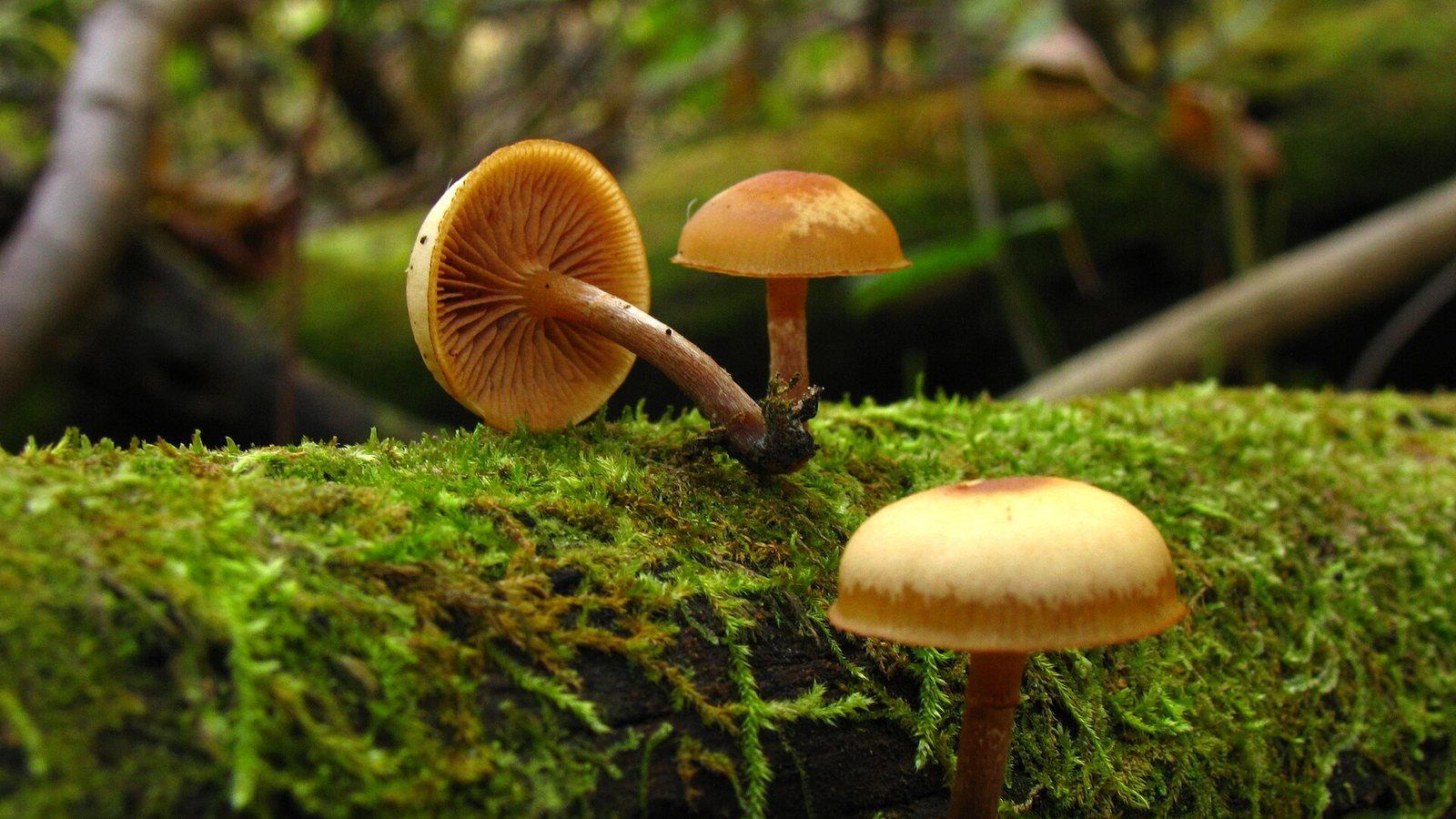
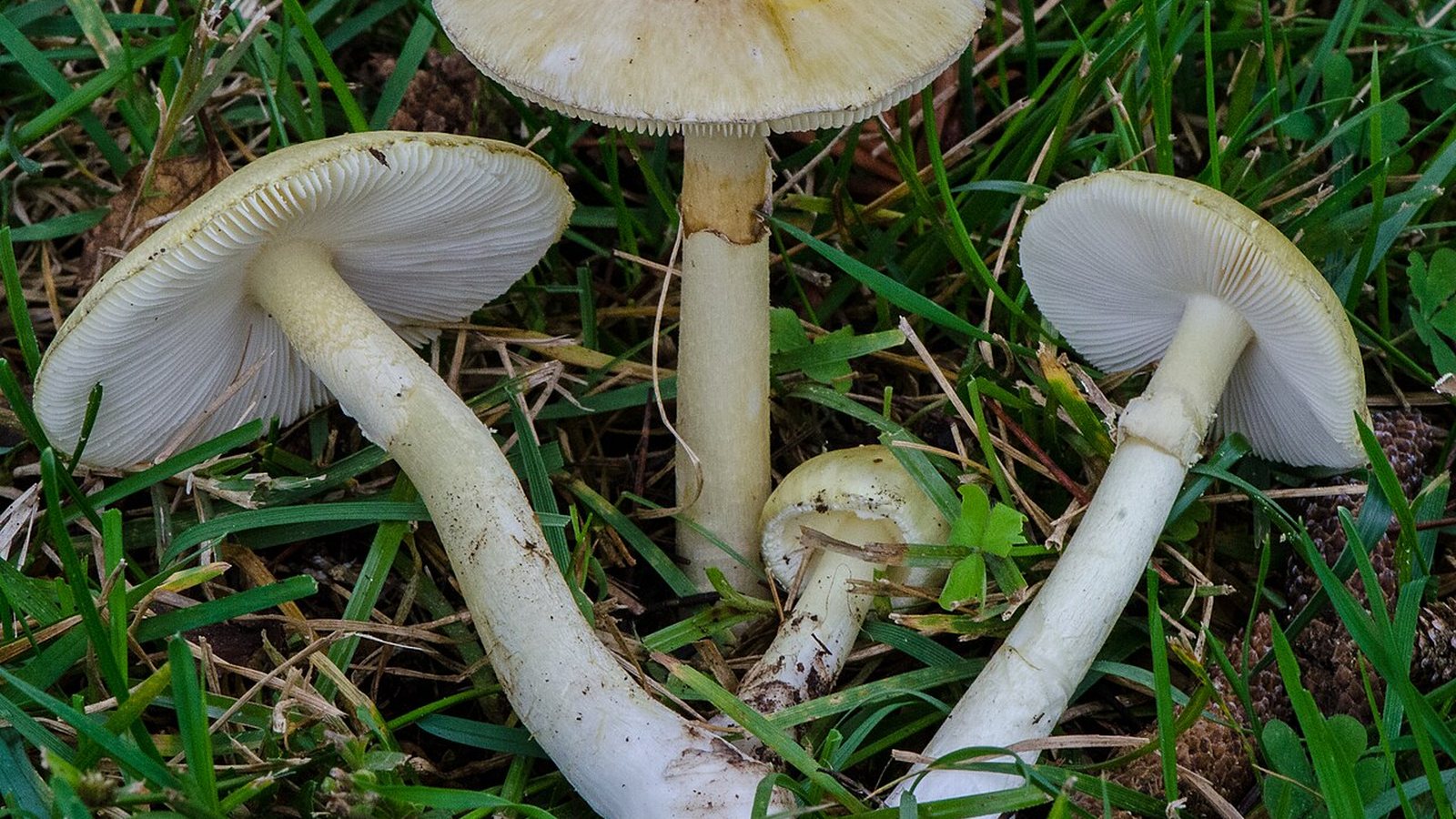 Photo: Daniel Neal from Sacramento, CA, US · CC BY 2.0
Several deadly mushrooms resemble edible ones: death cap and field mushroom, jack-o'-lantern and chanterelle, false morel and morel, yellow stainer and field mushroom. Experts check base, gills, stem and habitat in hand. No feature, photo or app proves a wild mushroom safe, and cooking does not help. If anyone ate one, call the poison line now.
Key takeaways
- Each deadly mushroom has a common edible double, so the pair matters more than any single mushroom.
- Features such as a buried cup, gill type or staining are reasons to avoid a mushroom, never proof of safety.
- Cooking, peeling, smell and animals eating a mushroom do not make it safe.
- Symptoms can start from 1 hour to 3 weeks later, and feeling fine is not reassurance.
- After eating an unknown mushroom, call the poison line at once and keep a sample.
On this page8
- Which deadly mushrooms look like edible ones?
- The look-alike table: dangerous mushroom, its double, what experts check
- Why does the death cap fool so many people?
- What about the "egg" mushroom, yumurta mantarı?
- How should you use this table?
- Myths that do not protect you
- How late can poisoning symptoms appear?
- What should you do if you think a look-alike was eaten?
Which deadly mushrooms look like edible ones?
The short answer: a handful of dangerous mushrooms each have a harmless-looking double that people really do pick and eat. This guide puts the main pairs in one table so you can see what experts compare. Every feature below is a reason to walk away, never a test that clears a mushroom. A photo, an app, a smell or a table like this cannot make a wild mushroom safe to eat.
The look-alike table: dangerous mushroom, its double, what experts check
| Dangerous mushroom | Often mistaken for | What experts check in hand | What it does |
|---|---|---|---|
| Death cap and destroying angels (Amanita phalloides, A. virosa) | Field and button mushrooms, young puffballs, straw mushrooms | A sac-like cup at the base (often hidden), a loose ring, white gills; field mushroom gills go from pink to brown (Australian National Botanic Gardens) | Amatoxins: liver and kidney failure (NAMA) |
| Yellow stainer (Agaricus xanthodermus) | Field and horse mushrooms | Cap and stem base turn bright chrome yellow when scratched; smell of ink or iodine (State Herbarium of South Australia) | Severe stomach pain, vomiting, diarrhoea (State Herbarium) |
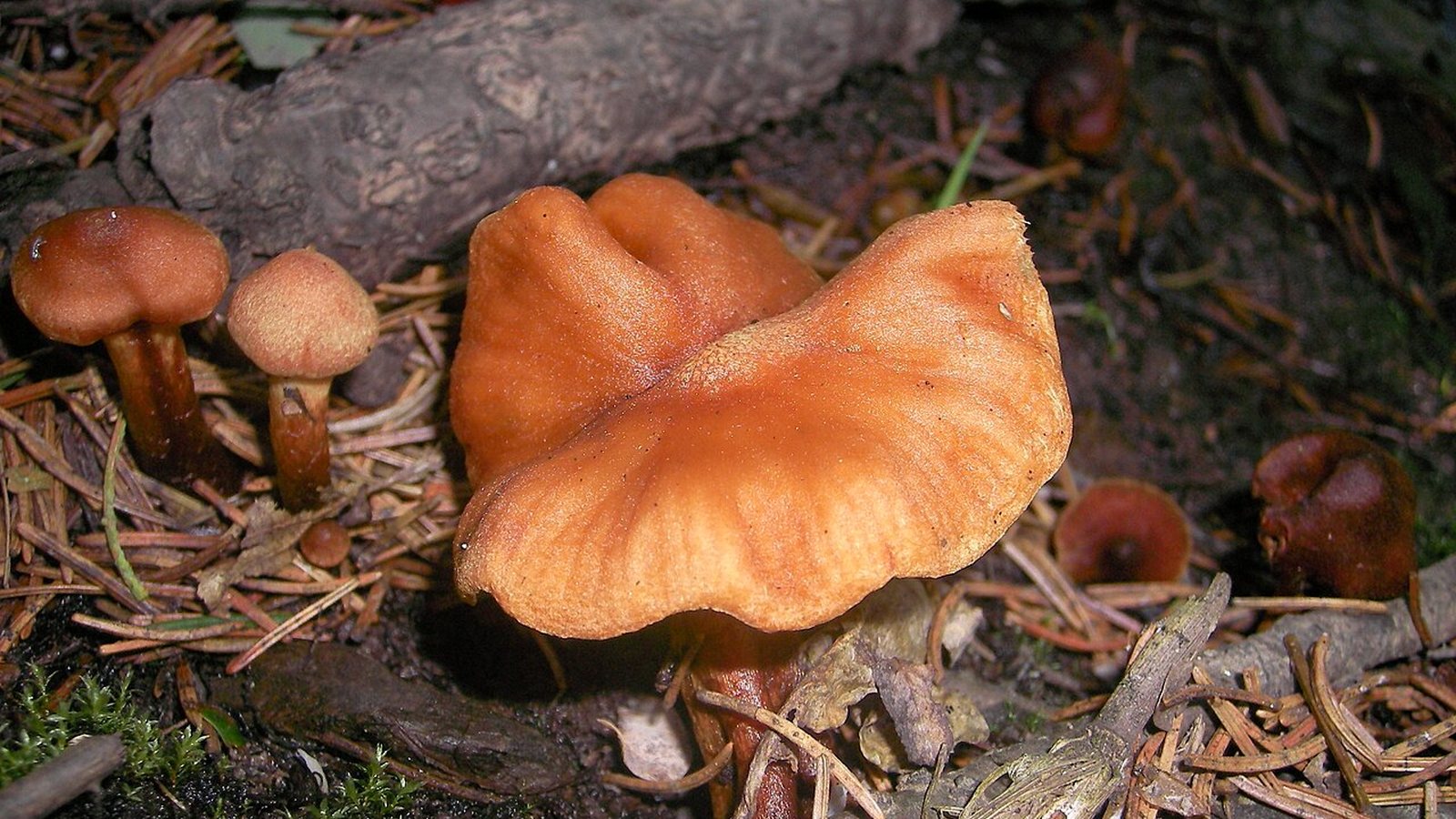
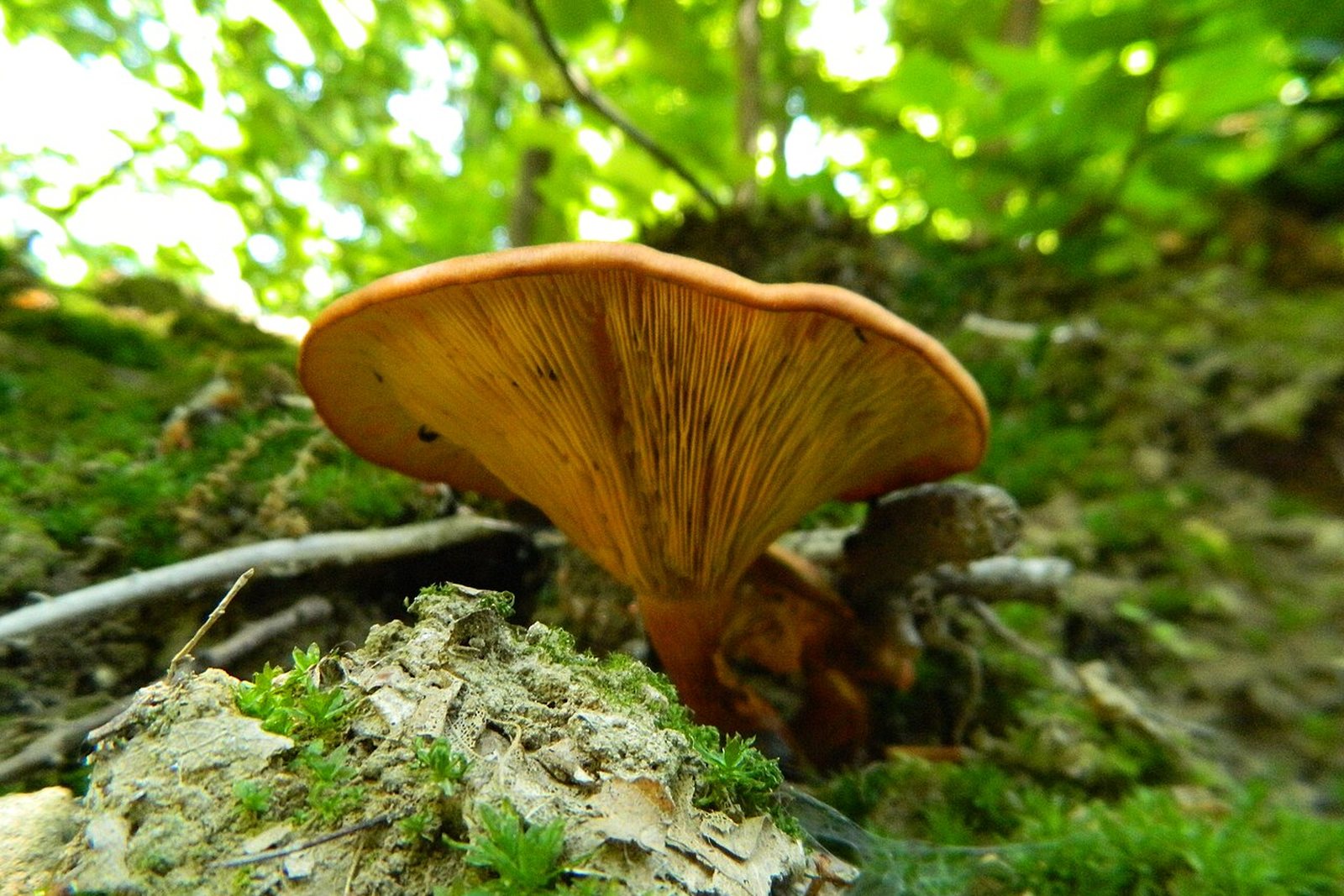
| Jack-o'-lantern (Omphalotus) | Chanterelles (horoz mantarı) | Grows in clusters on wood and has true gills, not wrinkles or veins (University of Illinois Extension) | Nausea and vomiting from 1 to 3 hours after eating (NAMA) |
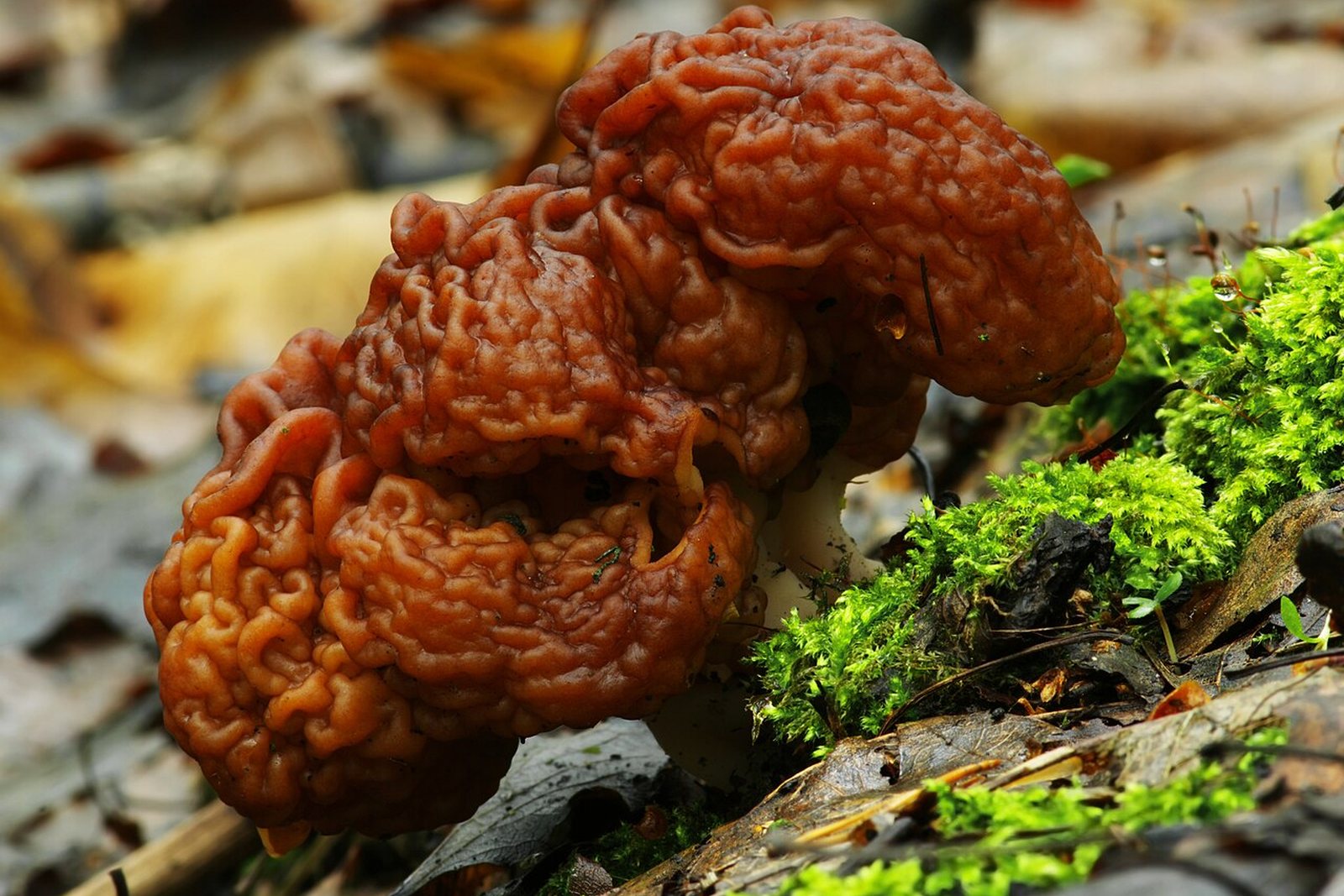
| False morels (Gyromitra) | True morels (kuzugöbeği) | Irregular, lobed cap instead of a uniform honeycomb; stem partly hollow or irregular (Nebraska Extension) | Gyromitrin: liver, kidney and blood damage (NAMA) |
| Deadly galerina (Galerina marginata) | Other small brown mushrooms, including hallucinogenic ones | Only an expert reading the whole mushroom | Amatoxins (NAMA) |
Most pairs have their own guide: destroying angel vs death cap, yellow stainer vs field mushroom, chanterelle look-alikes and morels and false morels.
Why does the death cap fool so many people?
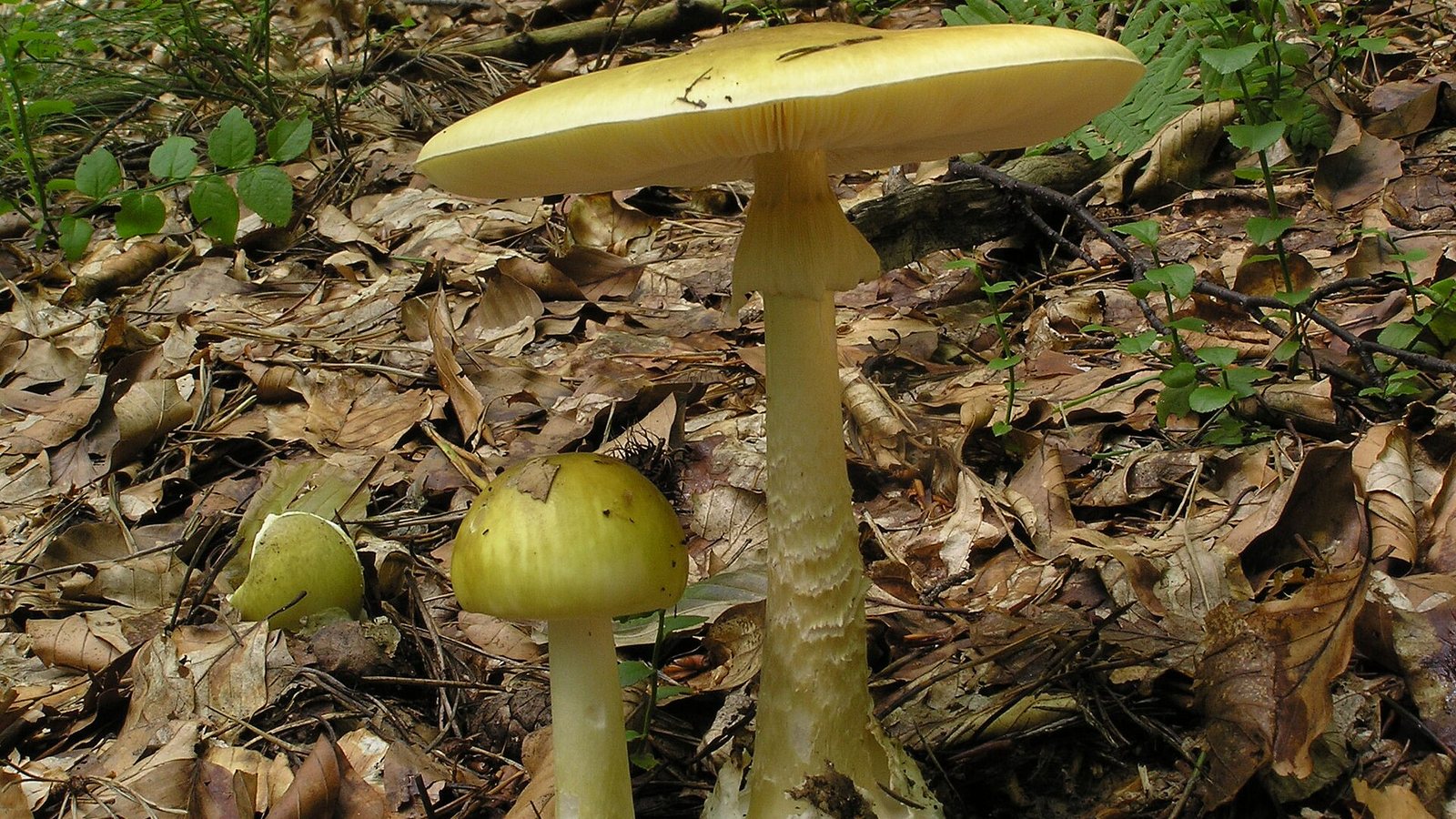
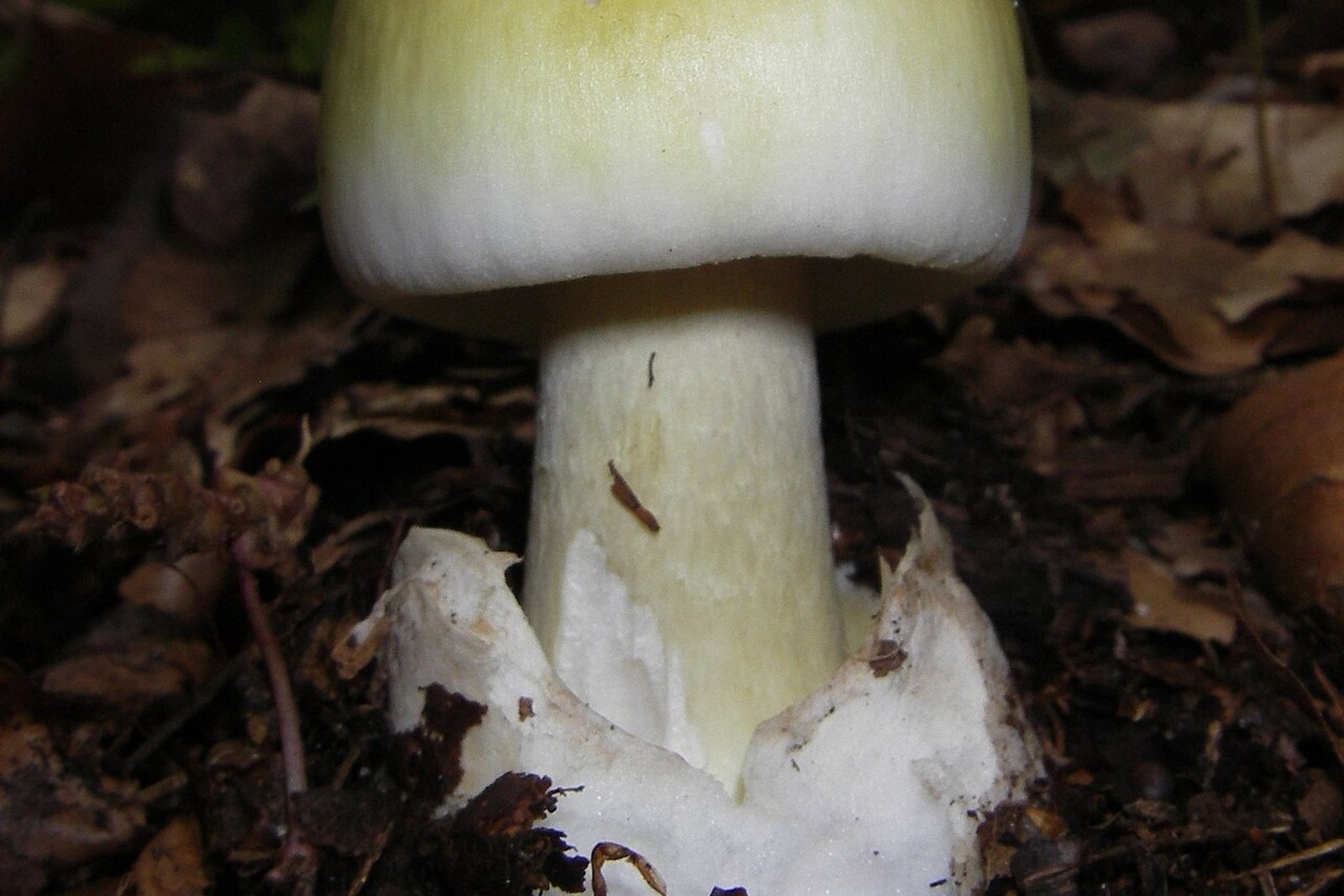
Because it looks plain. The Australian National Botanic Gardens describes a usually yellowish-green cap, a white spore print, a loose white skirt-like ring and a cup around the swollen base that can be hidden by grass and leaf litter. Pull the mushroom up by the stem and the cup may stay in the ground, so the clue that matters is gone. The same source names what it is confused with: Agaricus (field mushrooms), which have a ring but no cup and gills that start pink and turn brown; straw mushrooms (Volvariella), which have a cup but no ring and pinkish-brown gills; and young puffballs, which are solid white when cut, while a young death cap shows a stem and gills inside. See the puffball vs young death cap guide for why that cut can only rule a mushroom out.
In Türkiye the death cap is called ölüm meleği. Its white relatives have no everyday Turkish name, so "beyaz amanita" plus the Latin name is the clearest wording.
What about the "egg" mushroom, yumurta mantarı?
Caesar's mushroom (Amanita caesarea) belongs to the same genus as the death cap, and young Amanitas of different species look alike while they are still closed. Because the cup at the base is the clue and can be buried, a mushroom pulled from the ground without it tells you very little. Never take an unopened egg from the woods; leave that to experts. Our Caesar's mushroom guide covers how to think about it.
How should you use this table?
Use it to understand why identification is hard, not to pick mushrooms. Three habits follow from it. First, treat the base, the gills and the habitat as things only an expert can read, and photograph all of them if you want help. Second, never decide from one feature: the experts above combine several. Third, remember that the dangerous mushroom is often growing right next to the edible one, so "I found the good one" does not tell you what else went into the basket. Mixed baskets are how poisonings happen. If a mushroom is going to be eaten, a local expert or mycological society should hold it in their hands first, and when they are unsure, the answer is no.
Myths that do not protect you
- "Cooking destroys the poison." The Botanic Gardens states you cannot remove death cap toxins by soaking, cooking or drying.
- "Peeling the cap, a silver spoon, or insects and animals eating it prove it is safe." None of these detect toxins. Peeling and silver do nothing; the death cap's own poison is stable.
- "It smells good, so it is fine." Chanterelles are known for a fruity, apricot-like smell (Illinois Extension), but NAMA reports that victims of jack-o'-lantern poisoning often believed they were picking chanterelles. Smell clears nothing.
- "I know it from home, so it is the same here." Look-alikes differ by region, and skills from one country may not carry to another.
- "A photo or an app can confirm it." Flori can identify wild mushrooms from a photo, which helps you learn names and show an expert what you found, but no app can tell you a wild mushroom is edible, and a photo often misses the base, the gills and the habitat.
How late can poisoning symptoms appear?
Later than people expect, and that is part of the danger. NAMA describes amatoxin poisoning in stages: 6 to 24 hours with no symptoms while the liver and kidneys are already damaged, about a day of violent vomiting and diarrhoea, about a day of apparent recovery, then kidney and liver failure. Its figure is about 50% fatal without prompt, knowledgeable treatment, and about 10% in the United States and Canada. False morel symptoms begin 2 to 24 hours after eating, and webcaps (Cortinarius) can take from 36 hours up to 3 weeks to show kidney damage. By contrast, jack-o'-lantern symptoms start within 1 to 3 hours. Feeling well hours later is not reassurance.
What should you do if you think a look-alike was eaten?
- Call the poison line now, before any symptoms. Türkiye: UZEM 114 (Ulusal Zehir Danışma Merkezi). United States: 1-800-222-1222. United Kingdom: NHS 111. For a pet, call a vet straight away.
- Keep a sample or photographs. A leftover piece of the mushroom or a photo of the base and gills helps doctors and experts. Do not eat more to "test" it.
- Do not wait for symptoms to appear or become severe. NAMA is clear on this.
- Follow the professionals' instructions. This guide gives no treatment advice and no home remedies.
If you only want to learn, take photos, leave the mushrooms where they are and show them to a local mycological society.
Frequently asked questions
Which mushroom is most often mistaken for the death cap?
The Australian National Botanic Gardens lists field mushrooms (Agaricus), straw mushrooms (Volvariella) and young puffballs as the usual confusions. Only an expert holding the whole mushroom, base included, can tell them apart.
Can an app tell me whether a look-alike is edible?
No. Flori can identify wild mushrooms from a photo, but a photo often misses the base, gills and habitat, and no app can say a wild mushroom is safe to eat.
Does cooking remove the poison from a look-alike?
No. The Australian National Botanic Gardens says death cap toxins cannot be removed by soaking, cooking or drying.
What should I do if someone ate a mushroom I could not identify?
Call the poison line now, before symptoms: UZEM 114 in Türkiye, 1-800-222-1222 in the United States or NHS 111 in the United Kingdom. Keep a sample or a photo.
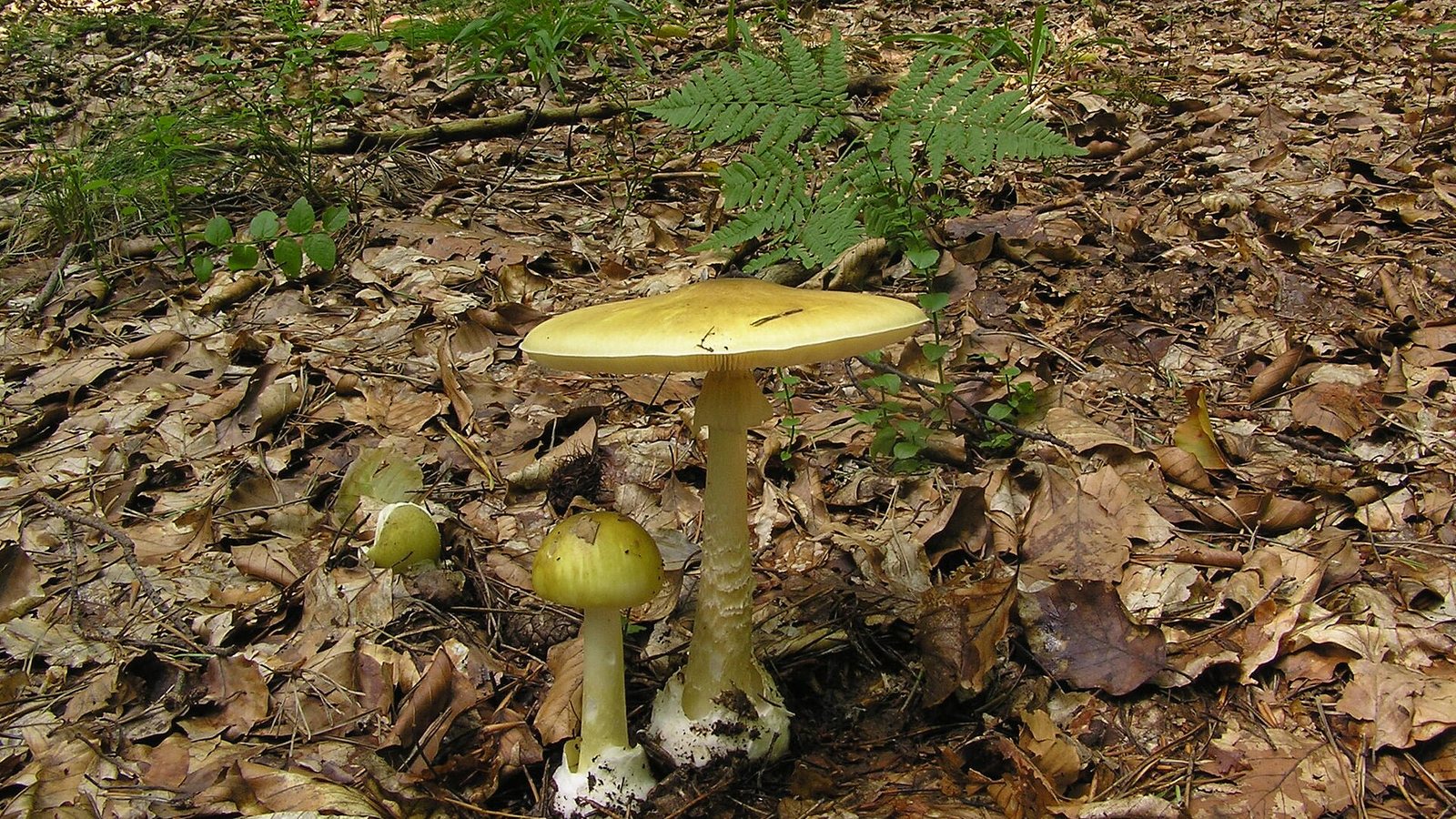
Death cap mushroom ID: greenish cap, white gills, a skirt-like ring and a buried cup. Look-alikes, myths that kill and what to do if someone eats one.
Sources
- North American Mycological Association: Mushroom Poisoning Syndromes
- Australian National Botanic Gardens: Deathcap (Amanita phalloides)
- University of Illinois Extension: Mushrooming for Beginners (handout)
- Nebraska Extension Backyard Farmer: Morel Mushroom Hunting
- State Herbarium of South Australia: Yellow Stainer factsheet
Written and fact-checked by the Flori team. Every guide cites horticultural sources such as the RHS, university extension services and the ASPCA, and is updated when the advice changes. How we write our guides
General plant care information. Plants vary; when a plant is valuable or a problem spreads quickly, consult a local nursery or plant specialist.