Common Poisonous Mushrooms: 8 Dangerous Types to Know
Eight dangerous mushroom types to know, from death cap and false morel to jack-o'-lantern: toxins, onset times and what to do after eating an unknown one.
 By Flori editorial team · Updated
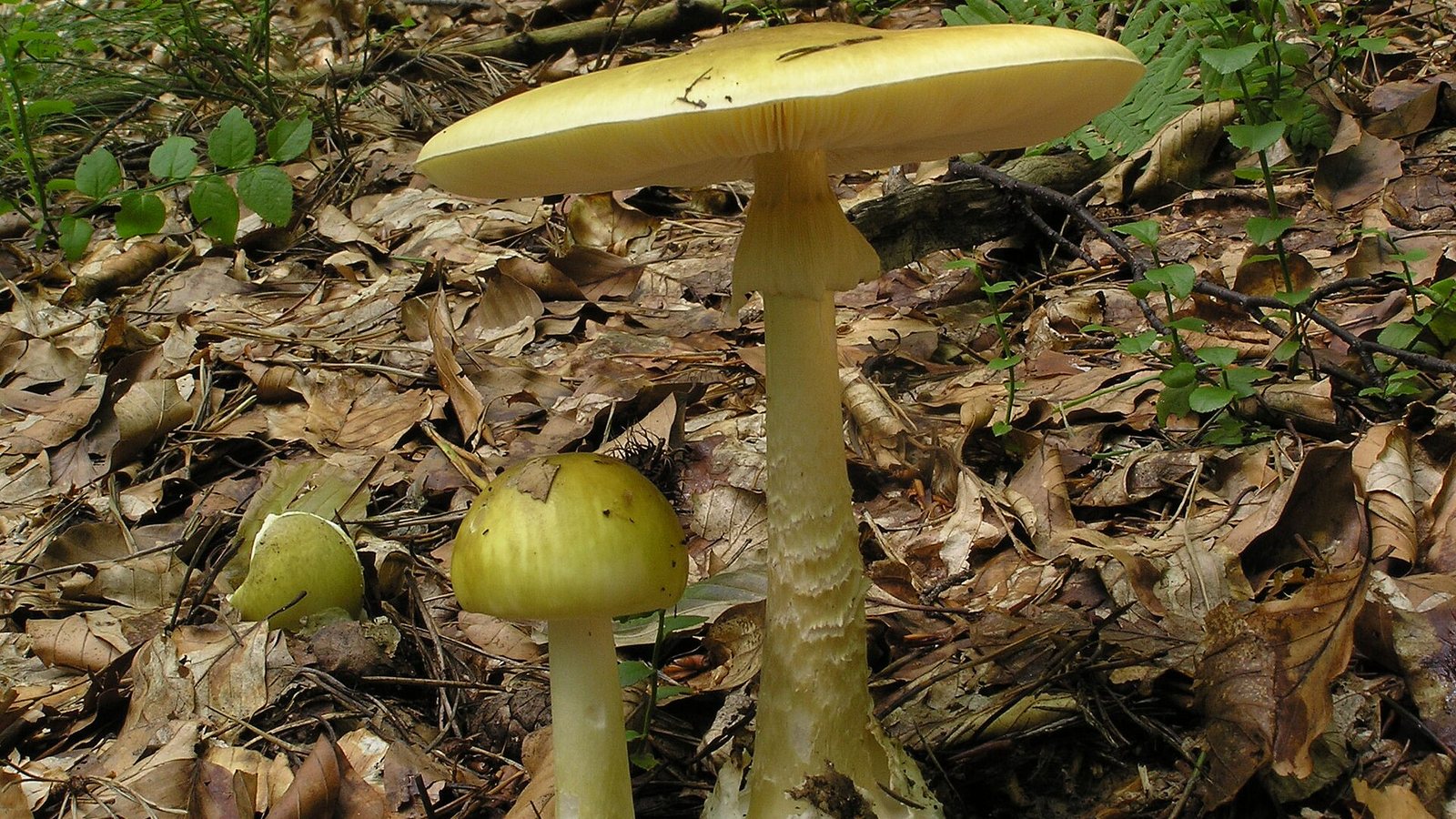 Photo: Krzysztof Ślusarczyk (upload by Marek Ślusarczyk ) · CC BY 3.0
Eight dangerous types to know: death cap, destroying angels, deadly galerina, small Lepiota, deadly webcaps, false morels, fly agaric and panther cap, and jack-o'-lantern. Several look ordinary, cooking does not make them safe, and symptoms can be delayed. If anyone ate an unknown mushroom, call the poison line now.
Key takeaways
- The amatoxin group (death cap, destroying angels, galerina, some Lepiota) causes most deaths, with symptoms delayed 6 to 24 hours.
- Deadly webcaps can show symptoms days or weeks after the meal, so do not wait.
- False morels can seem safe to people who have eaten them before, but the effect is unpredictable.
- Cooking, peeling, colour, smell and animal feeding are myths, and an app or photo cannot clear a mushroom.
- After eating an unknown mushroom, call the poison line now and keep a sample.
On this page9
- Which poisonous mushrooms are the most dangerous?
- Eight dangerous mushrooms at a glance
- Death cap, destroying angels, galerina and Lepiota: the amatoxin group
- Deadly webcaps: poisoning that shows up days later
- False morels: cooking is not a fix
- Fly agaric and panther cap: dramatic but rarely fatal for people
- Jack-o'-lantern: the chanterelle impostor
- Do apps, tests or folk rules work?
- What to do after eating an unknown mushroom
Which poisonous mushrooms are the most dangerous?
The deadliest mushrooms are the ones that look ordinary: white, brown or olive, growing in a park or a garden. The North American Mycological Association (NAMA) groups poisonous mushrooms by the toxin they carry and how soon the symptoms start, and that is the most useful way to meet them. This guide covers eight dangerous types, ordered roughly from most to least life-threatening, with a table to compare them. It is a safety guide, not an identification key. Knowing these names helps you stay away from a mushroom; it can never prove that another mushroom is safe to eat. Ohio State University Extension says it plainly: there is no test or characteristic that separates edible from poisonous mushrooms, so treat every wild mushroom as poisonous until an expert has identified it.
Eight dangerous mushrooms at a glance
| Mushroom | Toxin | First symptoms | Why it matters |
|---|---|---|---|
| Death cap (Amanita phalloides) | Amatoxins | 6 to 24 hours | Liver and kidney failure; apparent recovery in between |
| Destroying angels (Amanita bisporigera group, A. ocreata) | Amatoxins | 6 to 24 hours | Same toxins; white, so easy to dismiss |
| Deadly galerina (Galerina marginata) | Amatoxins | 6 to 24 hours | Small and plain, nothing like a classic toadstool |
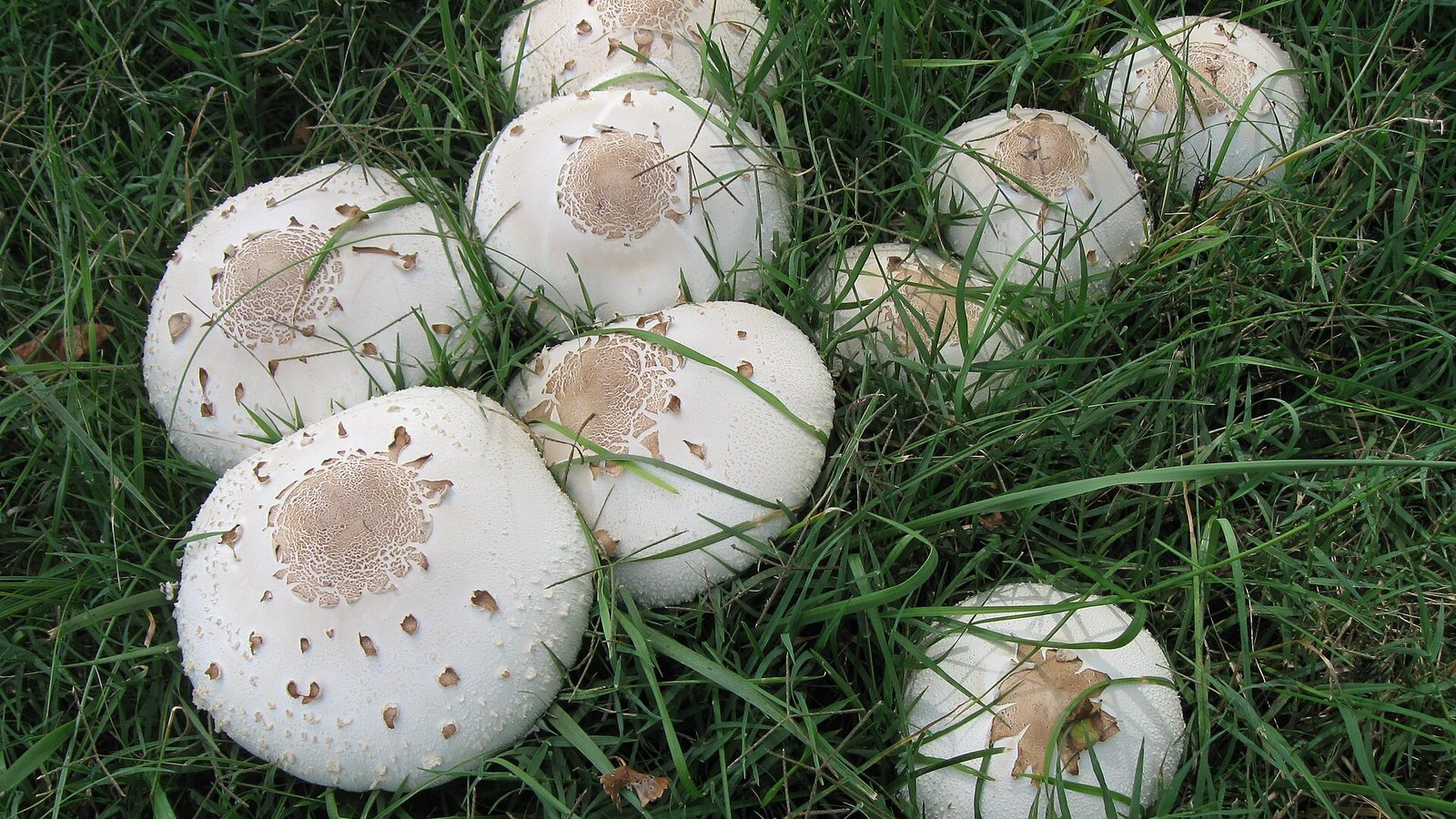
| Small Lepiota species | Amatoxins | 6 to 24 hours | Some are amatoxin species; the green-spored Lepiota is also poisonous |
| Deadly webcaps (Cortinarius orellanus and relatives) | Orellanine | 36 hours to 3 weeks, about 8 days on average | Progressive kidney failure; very late warning |
| False morels (Gyromitra) | Gyromitrin | 2 to 24 hours | Unpredictable; has killed people who cooked it |
| Fly agaric and panther cap (Amanita muscaria, A. pantherina) | Ibotenic acid and muscimol | 30 minutes to 2 hours | Confusion, delusions, convulsions; dogs and cats can die |
| Jack-o'-lantern (Omphalotus) | Illudins | 1 to 3 hours | Often mistaken for chanterelles; usually a hard but short illness |
Death cap, destroying angels, galerina and Lepiota: the amatoxin group
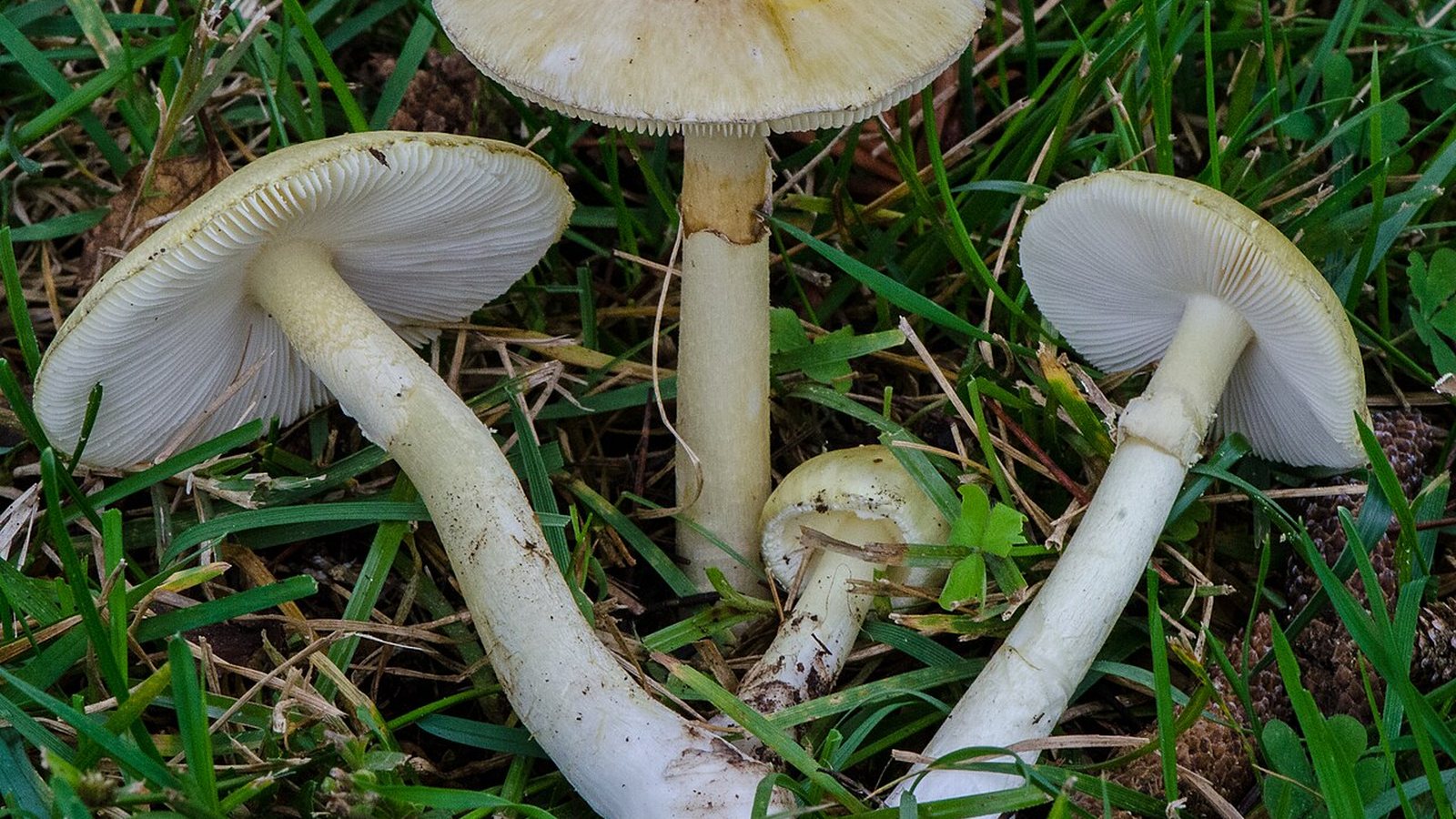
The first four share one toxin family, the amatoxins, and they cause most deaths. NAMA says symptoms are delayed by 6 to 24 hours, then come violent vomiting, diarrhoea and cramps, then an apparent recovery, then liver and kidney failure. Because patients can feel better, some are sent home. NAMA says there is no antidote. Fatality is about 50% without prompt treatment and about 10% in the United States and Canada.
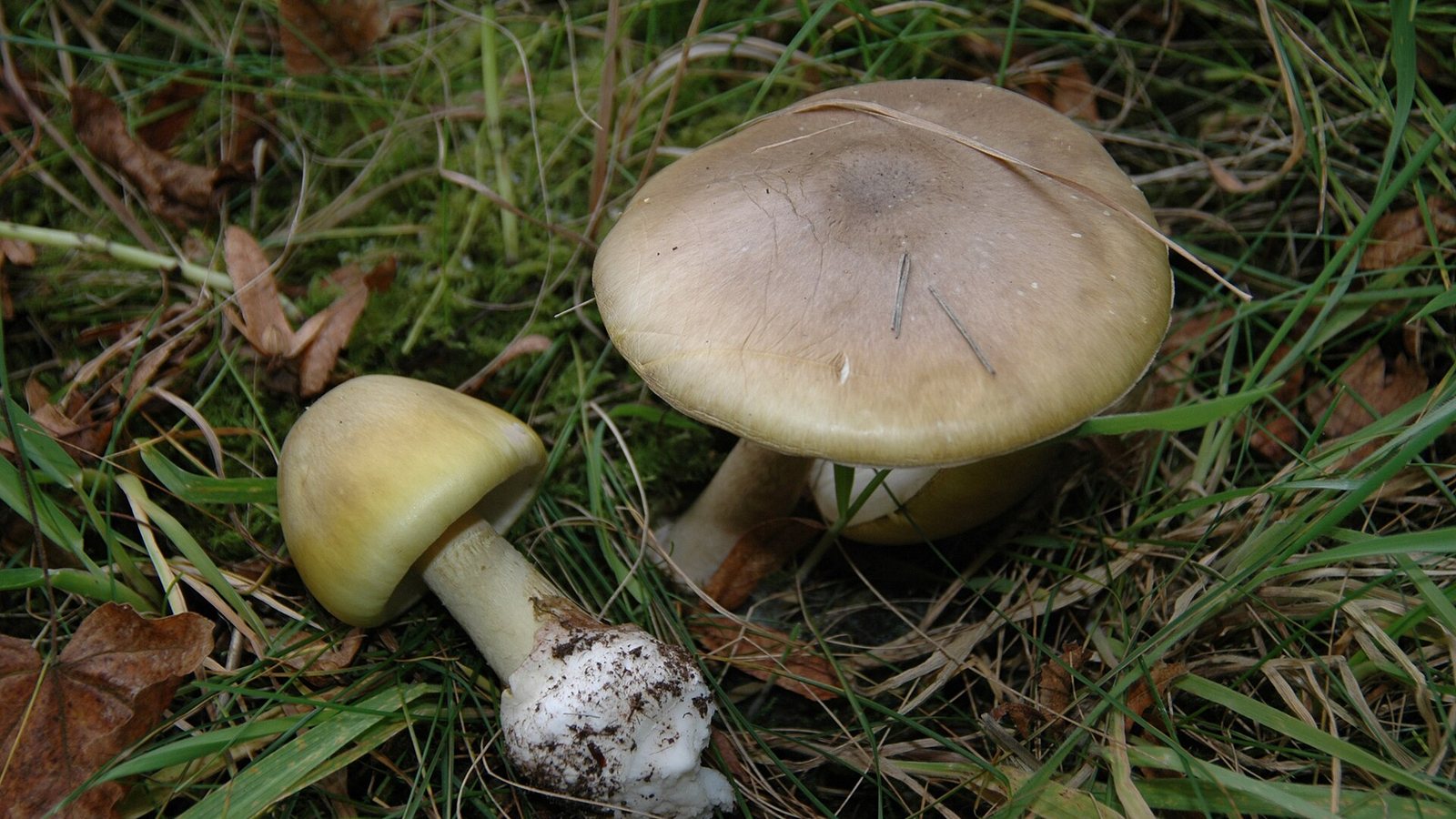
The Australian National Botanic Gardens notes that the death cap is a Northern Hemisphere species that has been introduced to Australia, grows near oaks in autumn, and that one cap can be enough to kill a healthy adult. Cooking, soaking or drying does not remove the toxins. Read our guides to the death cap and to destroying angels versus the death cap for more. The galerina and small Lepiota species are on NAMA's amatoxin list too, which is why a plain little brown or white mushroom in the lawn is not automatically harmless. In Turkish, the death cap is called ölüm meleği.
Deadly webcaps: poisoning that shows up days later
Cortinarius species such as C. orellanus and C. rubellus contain orellanine. NAMA lists the onset as anywhere from 36 hours to 3 weeks, about 8 days on average, with nausea, thirst, headache and progressive kidney failure, and describes the poisoning as extremely serious. Because the delay is so long, people often do not connect the illness with a meal they ate a week earlier. If someone ate a wild mushroom, the call to the poison line should not wait for symptoms.
False morels: cooking is not a fix
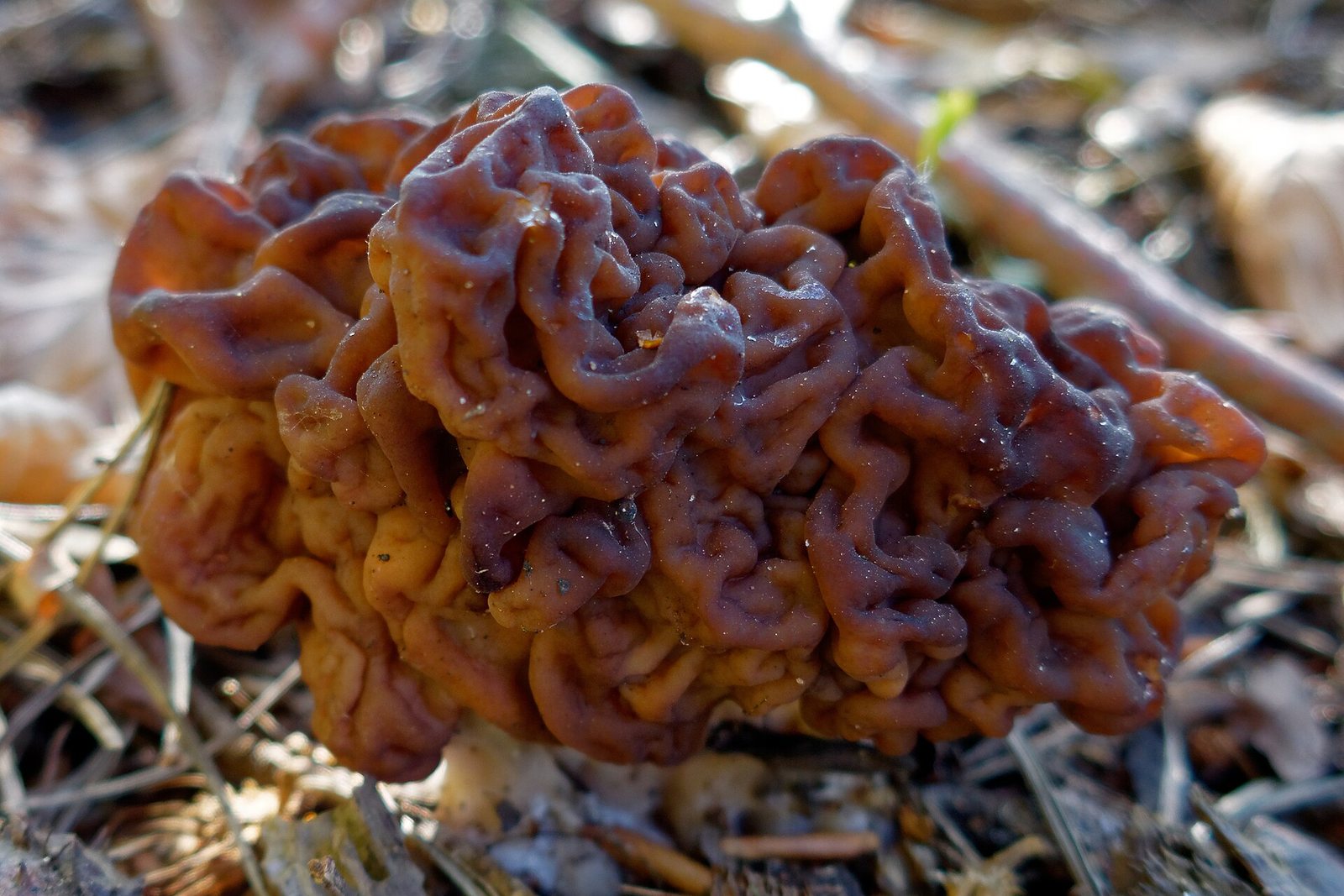
False morels (Gyromitra, sahte kuzugöbeği in Turkish) are sold or foraged in some places as a spring delicacy, and many people have eaten them without apparent harm. That is the trap. NAMA says the effect is dose-dependent and unpredictable, that cooks have died in Europe, and that the breakdown product, monomethylhydrazine, is described as carcinogenic. Ohio State warns against eating them for the same reason. Our morels and false morels guide covers the pair in more detail.
Fly agaric and panther cap: dramatic but rarely fatal for people
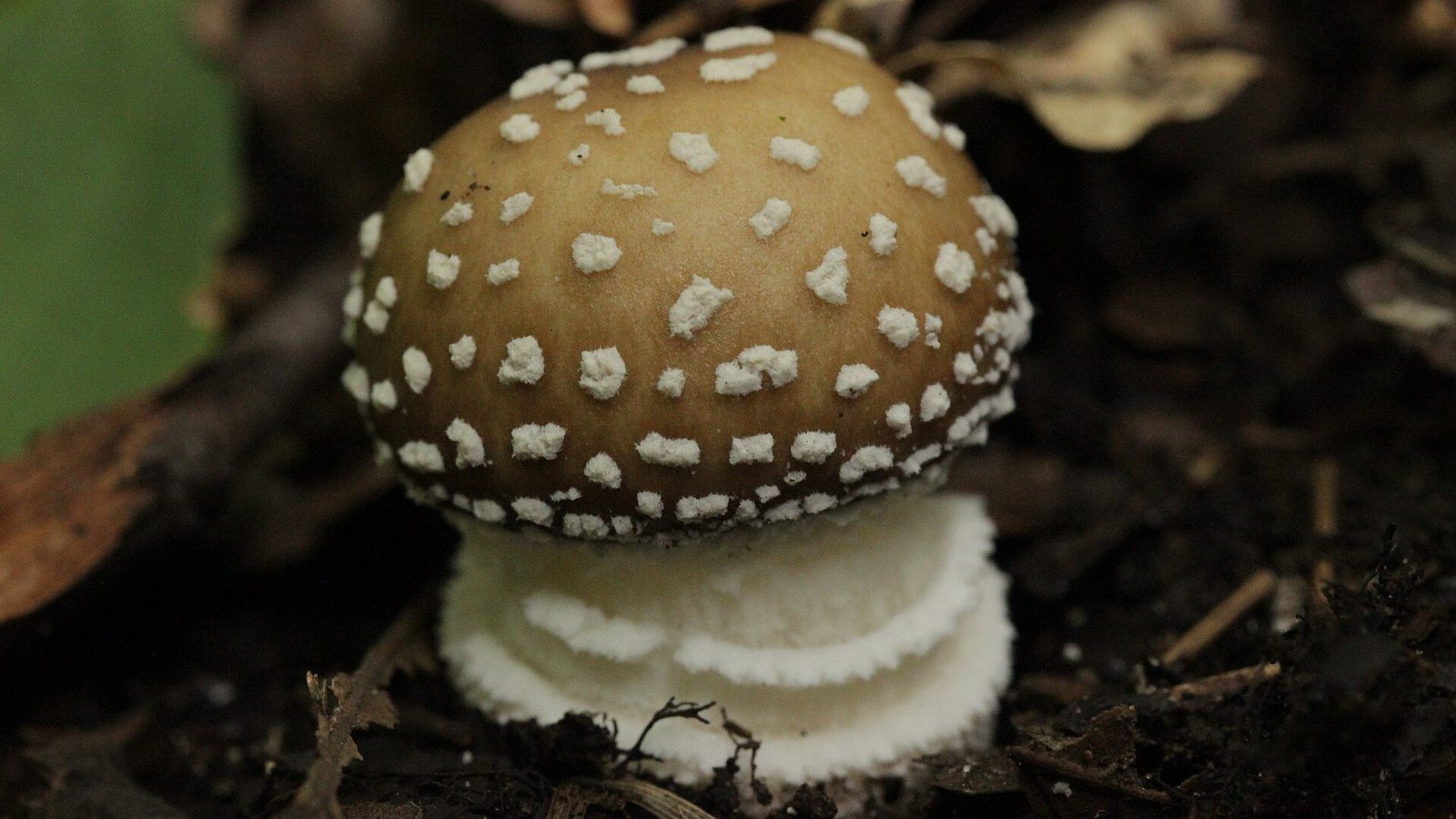
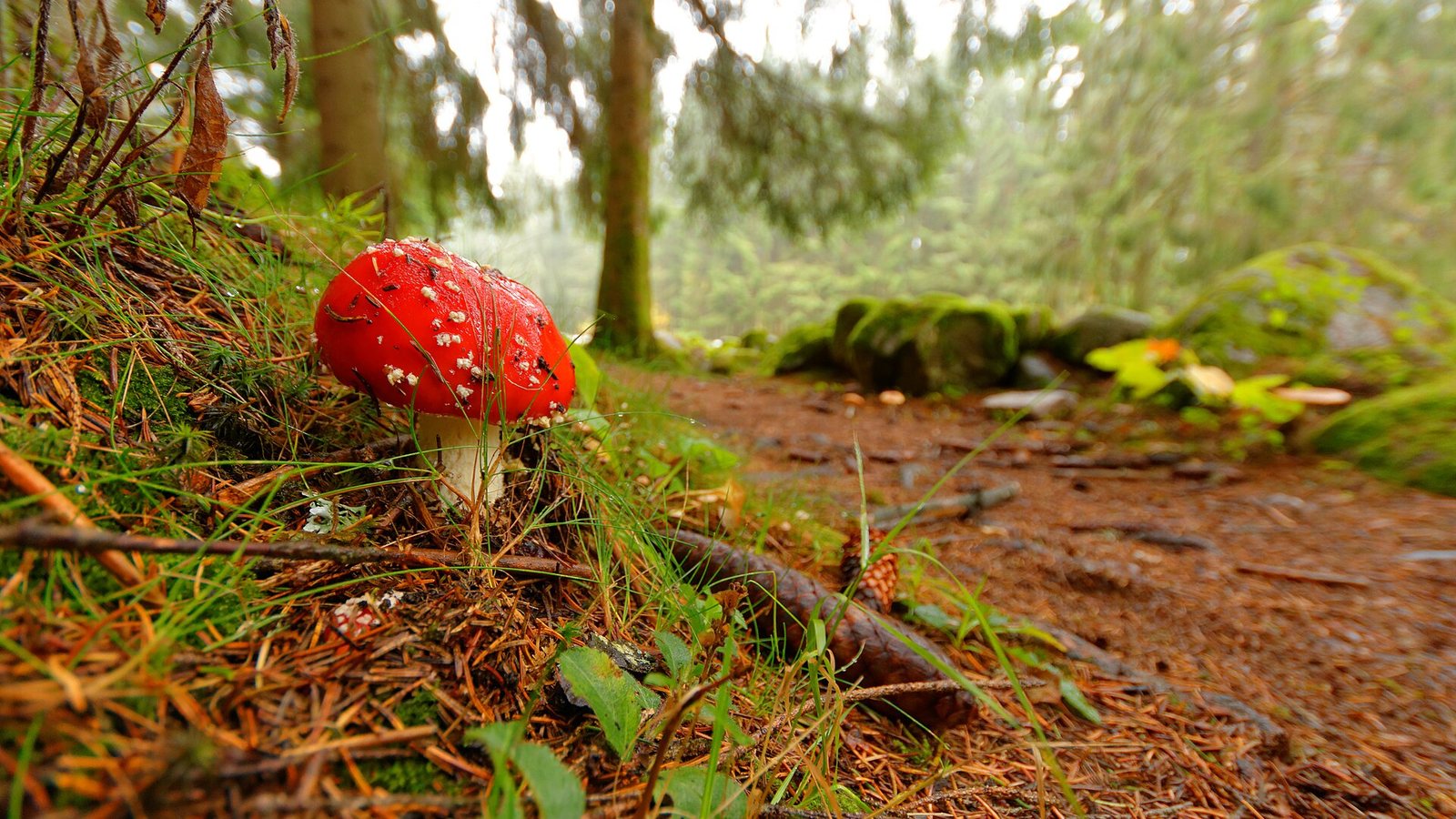
The red cap with white spots is the picture-book mushroom, and its poisoning is real. NAMA lists the onset as 30 minutes to 2 hours, with nausea and vomiting, confusion, visual distortion, delusions, convulsions and drowsiness, and some patients arrive comatose. NAMA says there are no reliably documented human deaths in the past 100 years, but dogs and cats can die, and a poisoned person still needs medical care. The panther cap belongs to the same group. See the fly agaric guide (sinek mantarı in Turkish).
Jack-o'-lantern: the chanterelle impostor
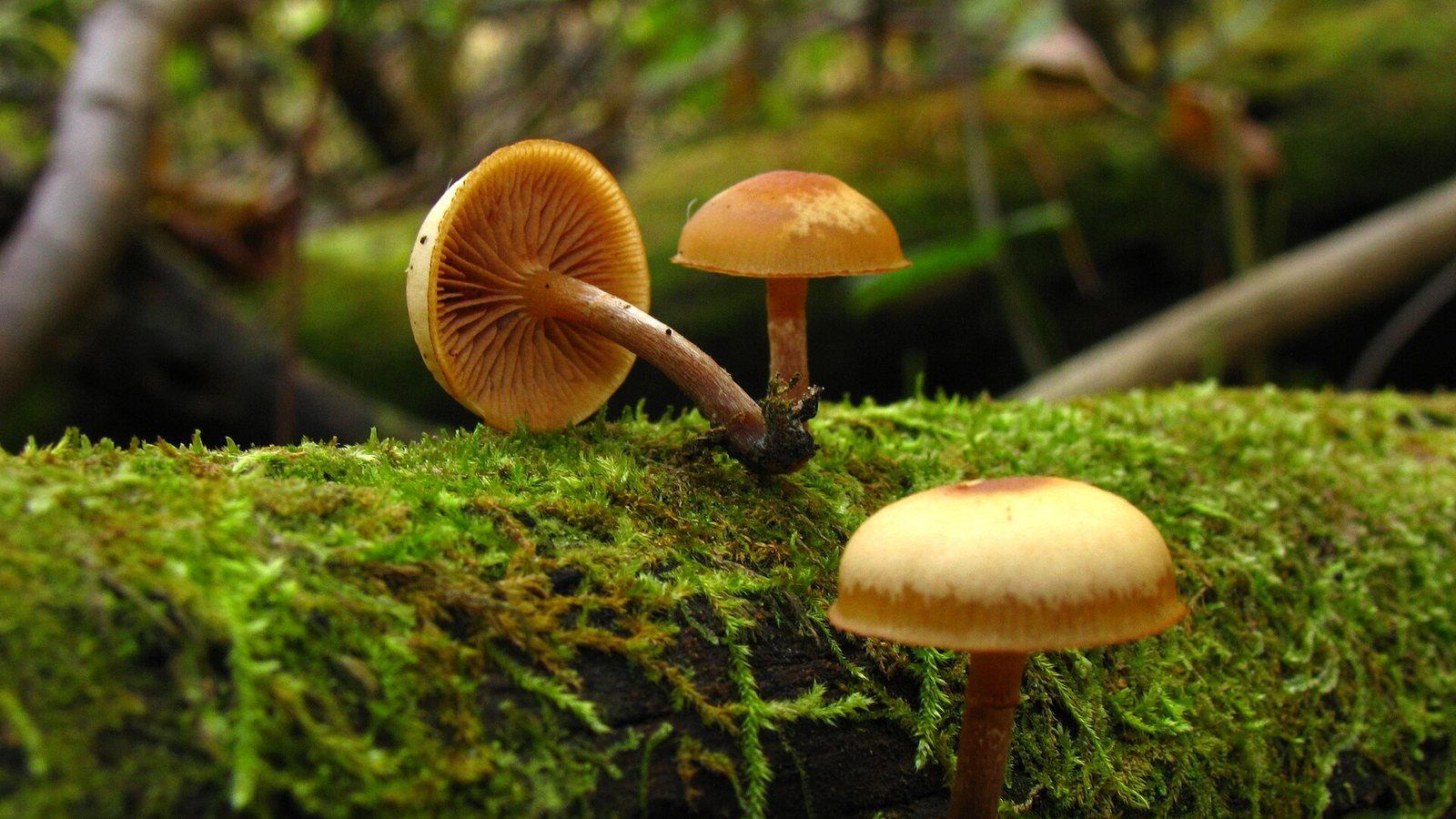
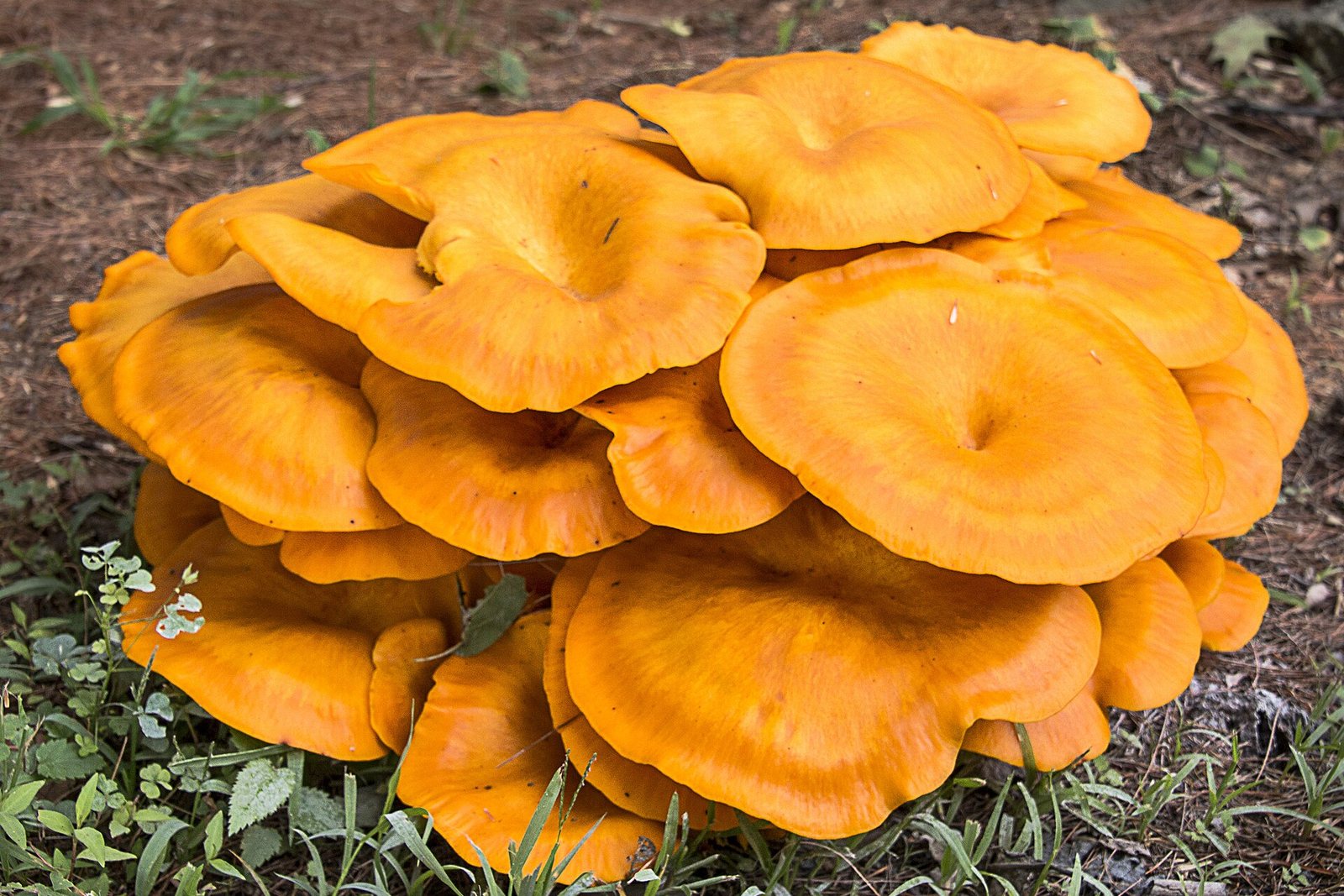
Omphalotus species are orange, grow in clusters and can glow in the dark. NAMA reports that victims often thought they had picked chanterelles. Onset is 1 to 3 hours after the meal, nausea occurs in about 90% of cases and vomiting in about 73%, and most people recover within 12 hours. That is mild compared with the amatoxin group, but severe vomiting is still a medical problem, and the same mistake with another look-alike could be fatal.
Do apps, tests or folk rules work?
No. A silver spoon, peeling the cap, colour, smell, cooking, drying and the fact that insects or animals eat a mushroom are all myths, as our guide on how to tell if a mushroom is poisonous explains. Poison Control adds that mushroom knowledge from one region does not transfer to another, and that cooking does not make a poisonous mushroom safe. The Flori app can identify a wild mushroom from a photo, which is useful for learning names and spotting a mushroom you should avoid, but a photo is never enough to decide that a mushroom is safe to eat. Only an expert examining the whole mushroom in hand can do that. For the symptoms by timing, see mushroom poisoning symptoms.
What to do after eating an unknown mushroom
- Call the poison line now, before any symptoms. Türkiye: UZEM 114 (Ulusal Zehir Danışma Merkezi). United States: Poison Control 1-800-222-1222. United Kingdom: NHS 111. Elsewhere, call your local emergency number. Amatoxin poisoning can feel better before liver damage shows, so do not wait to see what happens.
- Keep a sample. NAMA recommends keeping leftovers or more of the same mushroom from where it was picked in a paper bag or waxed paper, not plastic, in the fridge until an expert can examine it.
- Note who ate it, how much, when, and whether it was cooked.
- Pets too. If a dog or cat may have eaten a wild mushroom, call your vet immediately.
Frequently asked questions
What is the most poisonous mushroom?
The death cap (Amanita phalloides) causes most deaths worldwide. NAMA lists fatality at about 50% without prompt treatment. Its relatives the destroying angels carry the same toxins.
Can you tell a poisonous mushroom by its colour or smell?
No. NAMA says colour and smell are not reliable, and Ohio State says no test or characteristic separates edible from poisonous mushrooms.
Does cooking make poisonous mushrooms safe?
No. Ohio State says parboiling, drying or pickling does not make poisonous mushrooms safe, and Poison Control says cooking does not make them safe either.
How long after eating a mushroom do symptoms start?
It depends on the toxin: 30 minutes for the fly agaric group, 1 to 3 hours for jack-o'-lantern, 6 to 24 hours for amatoxins and up to 3 weeks for webcaps. Call the poison line before symptoms.
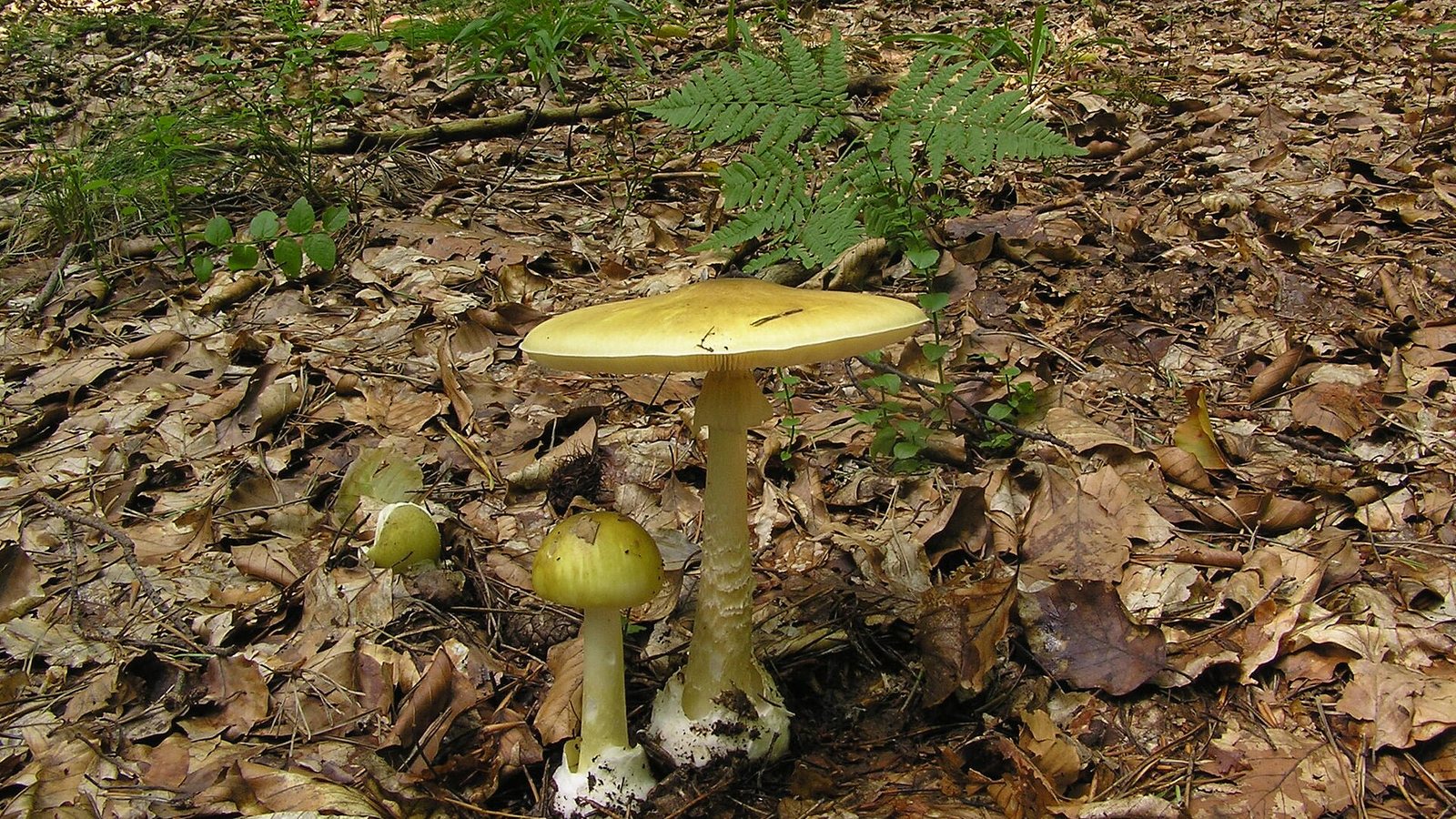
Death cap mushroom ID: greenish cap, white gills, a skirt-like ring and a buried cup. Look-alikes, myths that kill and what to do if someone eats one.
Sources
Written and fact-checked by the Flori team. Every guide cites horticultural sources such as the RHS, university extension services and the ASPCA, and is updated when the advice changes. How we write our guides
General plant care information. Plants vary; when a plant is valuable or a problem spreads quickly, consult a local nursery or plant specialist.